
8 Nevada Ghost Towns Where Kids Still Walk Old Main Streets For Free
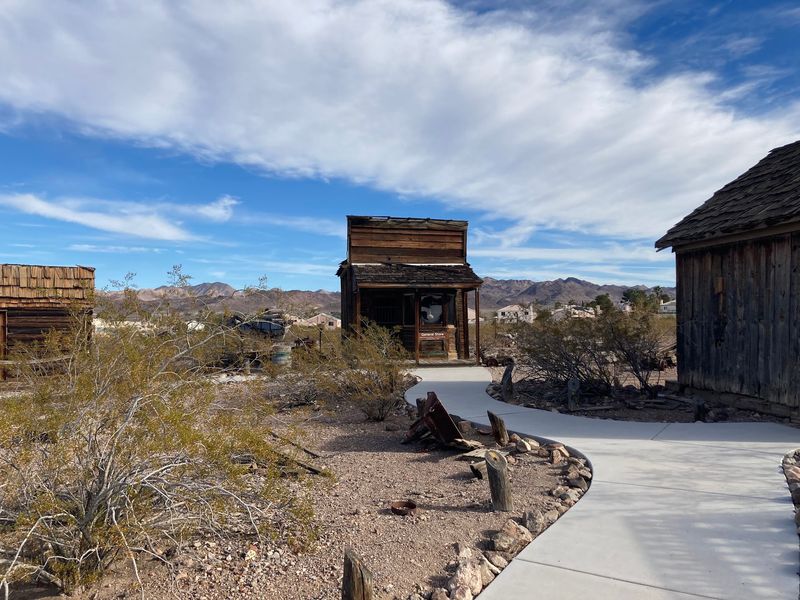
A crooked wooden storefront along a two-lane highway was supposed to be a five-minute stretch break. Two hours later, the kids were still peeking through dusty windows and asking who used to live there.
That kind of detour happens all over Nevada, where old mining towns let families walk historic main streets without paying a cent at the gate. Here are eight places where a tank of gas and a packed lunch can buy a whole day of history.
1. Rhyolite Historic Area, Beatty, NV
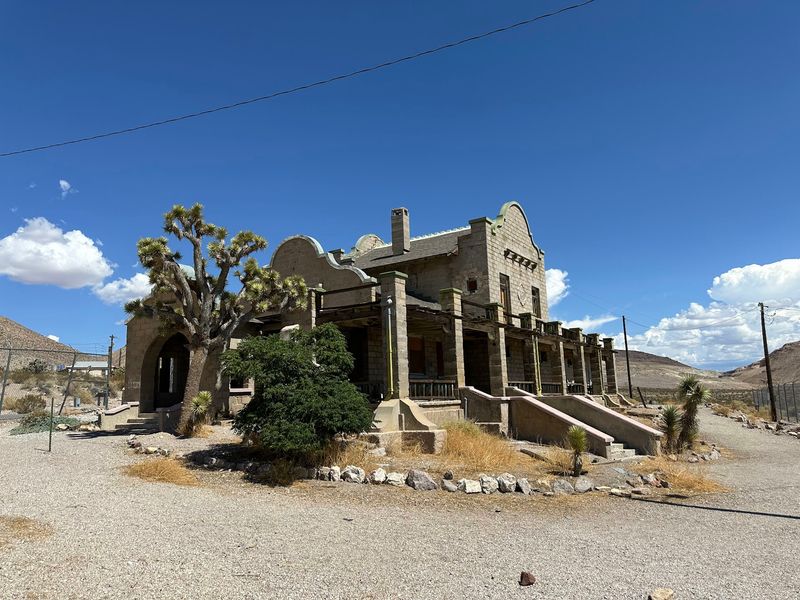
Concrete walls three stories tall still rise out of the sagebrush just outside Beatty, and they look almost too grand for the empty desert around them. Rhyolite boomed fast in the early 1900s, then emptied out around 1910, lasting less than a decade as a working town.
What stayed behind feels like a movie set nobody bothered to take down.
Kids can wander along the old main road past crumbling ruins, and small signs tell the story of each building. The old train depot stands out, and so does the outdoor art collection nearby, with large sculptures that surprise first-time visitors.
Is it a ghost town or an art gallery? Most kids decide it is both.
Admission costs nothing, since there is no gate and no fee. There is also no visitor center or staff on site, so pack water, snacks, and sun hats before leaving Beatty.
The National Park Service shares history about the site, and posted hours often run from 8 AM to 5 PM daily.
Monday mornings tend to be quietest. A family can easily fill an hour or two here.
Check current conditions before driving, since desert heat can be intense in summer.
2. Belmont, Nevada, Manhattan, NV
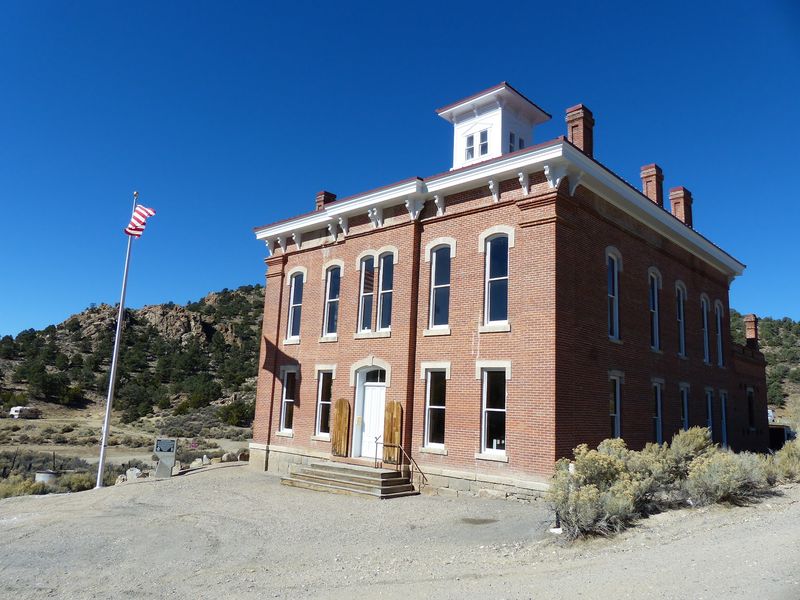
Picture a dirt Main Street where a handful of residents keep an old silver town tidy, even though most of its buildings stand empty. Belmont sits deep in central Nevada, and that remoteness is a big part of its charm.
Back in the 1860s, silver made this place important enough to serve as the county seat. The title later moved to Tonopah, and the crowds drifted off with it.
Today the old courthouse and a tall mill smokestack still mark the skyline, alongside weathered 19th-century buildings, some abandoned and some carefully restored.
So what does a family actually do here? Walk.
Strolling Main Street costs nothing, and kids tend to love peeking at old storefronts and guessing what each one used to be.
Practical comforts are better than you might expect for such an isolated spot. A picnic area sits right outside, and the portable restrooms are kept clean, a real relief on long desert drives.
Pack a cooler lunch and you may spend close to nothing beyond gas.
Locals clearly treat the townsite with care, so stay on public paths and leave everything as you found it. Roads and services out here can change with the seasons, so check conditions before heading out.
3. Gold Point, Goldfield, NV
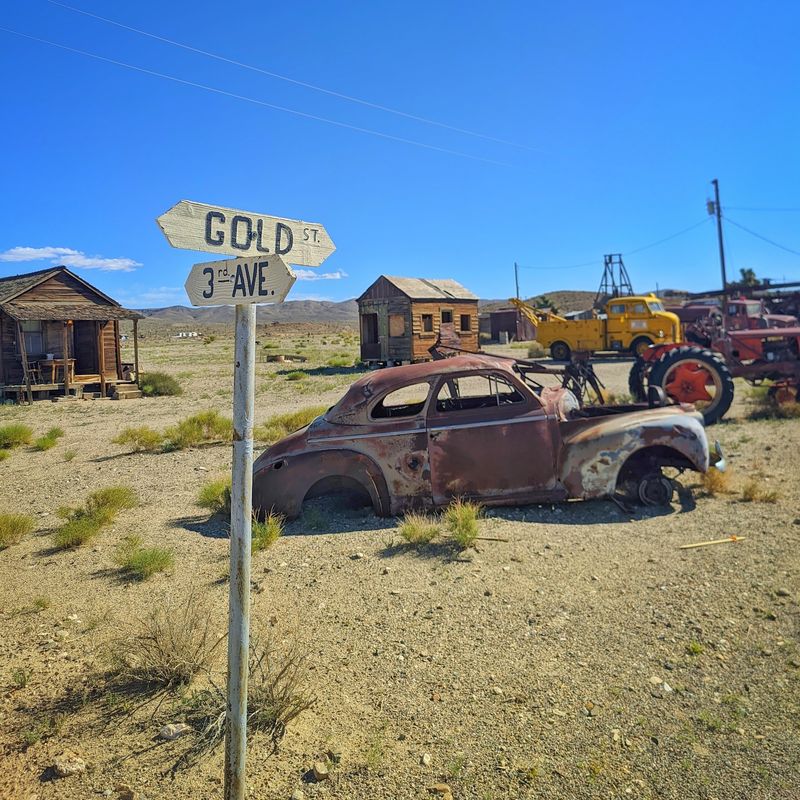
Rusty trucks, old mining machines, and weathered wooden cabins line the dirt streets of Gold Point, arranged almost like an outdoor museum that happens to have neighbors. Yes, people still live here.
A small group of residents works hard to keep the town looking the way it did in the early 1900s.
That living quality is what sets it apart from the other stops on this list. Some buildings are restored, others are lived in, and it is not always easy to tell which is which.
Treat every porch like someone’s front door, because it may well be.
Families can drive in, use the on-site parking, and stroll the streets for free. Kids usually gravitate toward the antique vehicles and heavy equipment, which make great photo backdrops.
Looking is welcome, but climbing and wandering inside buildings is not.
Here is a fun detail for young history buffs: the camp started with silver before gold took over, and the town name changed along with the metal. Nearby trails offer short hikes for anyone with extra energy to burn.
Gold Point sits in rural Esmeralda County, a side trip off US 95 near Goldfield. Services are extremely limited, so fill the tank and pack water before the turnoff.
4. Virginia City Historic District (Virginia City, NV), Virginia City, NV
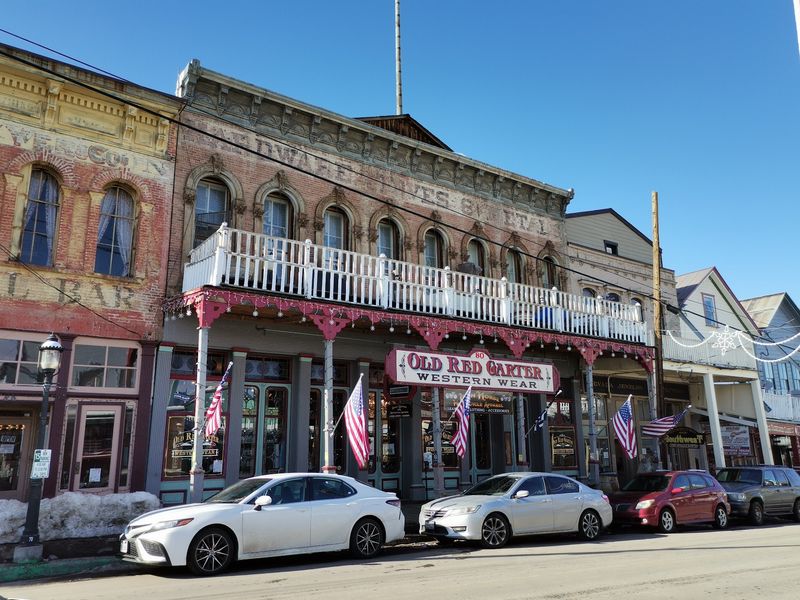
Boots, sneakers, and stroller wheels all make the same hollow thump on the wooden boardwalks of C Street. Virginia City grew rich on Comstock silver in the 1800s, and many of its original buildings still stand shoulder to shoulder along the hillside.
Walking past them feels a little like flipping through an old family photo album.
Here is the best part for anyone watching a budget: strolling the historic district costs nothing. Free street parking and a free lot are available, though paid spots exist too, so read the signs before you walk away from the car.
Shops generally keep hours around 9 AM to 5 PM.
How busy does it get? Saturdays pack the boardwalks from morning through afternoon, while weekday mornings are noticeably calmer.
Arriving early makes it easier for little ones to see the storefronts without a wall of elbows.
Most of the town is essentially one long street, which makes it easy to explore with kids of any age. Many stores lean toward souvenirs, but some sell historical items that spark good questions from young shoppers.
A train ride is available for families who want an add-on, so confirm current pricing before promising it.
5. Metropolis Ghost Town, Wells, NV
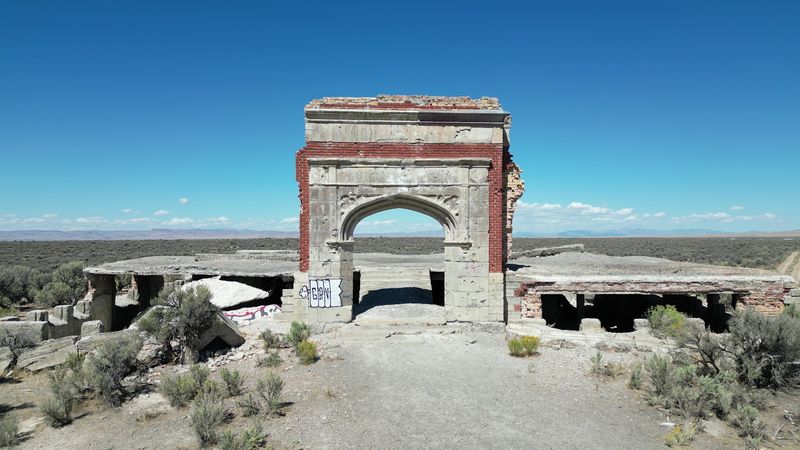
Nearly 2,000 people once called Metropolis home, and they came with big plans to farm wheat in the high desert of northeastern Nevada. Homesteaders began arriving around 1909, and some hung on until 1947.
The desert eventually won that contest, but it left behind some striking reminders.
Compared to a busy boardwalk town, this stop is spare and quiet. The main attractions are the old hotel foundation and the school, where a tall entry arch still stands against the open sky.
For kids, that arch often becomes the moment the whole place clicks.
Walking the old townsite roads turns into a gentle treasure hunt. Bits and pieces from homestead life are scattered across the ground, so remind children to look, snap a photo, and leave everything in place.
A stone memorial honors the town and the families who lived there.
Admission? There isn’t any.
The site is open land along Northcutt Road outside Wells in Elko County, and visiting is free.
Getting there is usually simple, but the dirt road can turn messy after rain, so check the forecast first. Bring water, snacks, and sturdy shoes, since there is nothing to buy on site.
Plan on an hour or so, then head back to Wells for lunch.
6. Stokes Castle
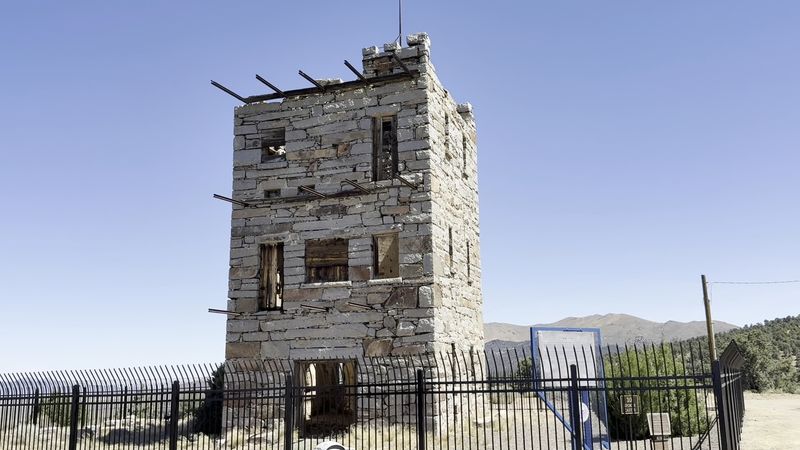
Who builds a three-story castle on a hillside in the middle of Nevada? A wealthy family did, back in 1897, using granite, cedar, and railroad steel.
Stokes Castle still stands just outside Austin, looking a bit like something borrowed from a storybook.
The tower is not huge, and that is part of the fun. Its battlemented terrace gives it a real castle look, and the view across the Reese River Valley stretches for miles.
Kids love spotting US 50 snaking through the basin below.
Visiting costs nothing, and posted hours usually run from 7 AM to 7 PM. A picnic table and fire ring sit near the base, which makes it an easy spot to eat a packed lunch with a view.
Note that there are no restrooms and no food on site, so plan stops in town.
Austin itself is a small former mining town, and the castle pairs well with a slow walk through its old streets. Together they can fill a relaxed afternoon for the price of gas.
Fun fact: US 50 across Nevada earned the nickname The Loneliest Road in America, and this castle is one of its quirkiest landmarks. Weekends see the most visitors, so a weekday stop often means fewer cars in the pullout.
7. Eureka Sentinel Museum, Eureka, NV
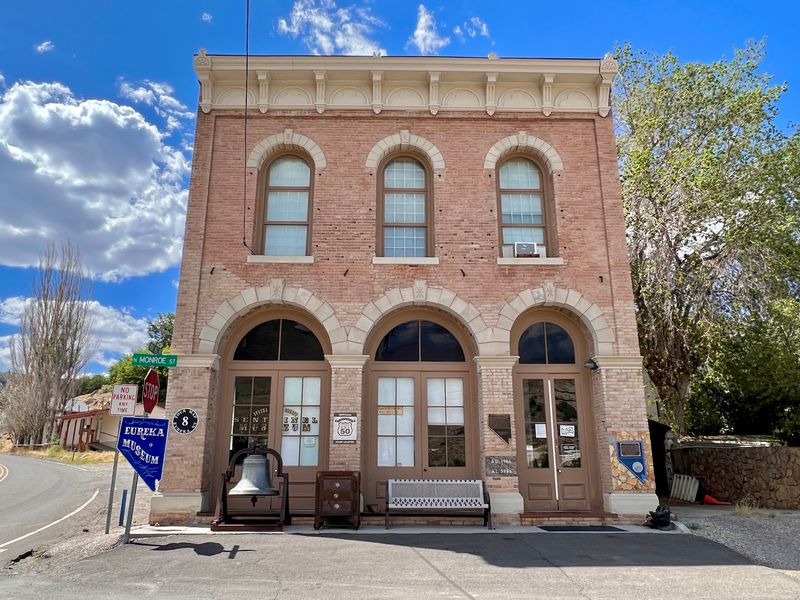
Printing presses once rattled inside this brick building, turning out the local newspaper starting in 1879. Now the Eureka Sentinel Museum preserves that history, along with a surprisingly deep look at nearly every part of life in this old Nevada mining town.
Upstairs is where things get interesting. Room after room covers pioneer days, mining, and everyday life, with plenty to look at for kids and grandparents alike.
Tours are available, and there is a small theater area, a gift shop, and restrooms, a welcome find on a long drive.
Best of all, admission is free. Hours typically run Tuesday through Saturday from 8 AM to 4 PM, and the doors stay closed on Sundays and Mondays, so time a US 50 road trip around that schedule.
Stepping back outside, the museum sits just off Main Street in a town of fewer than 500 people. Old 19th-century buildings line the nearby streets, and a short walk lets families connect what they just saw upstairs to the real storefronts around them.
Think of it as a ghost town experience with the lights still on.
A museum visit plus a stroll can fill a couple of hours for zero dollars. Hours may shift, so confirm with the county before making the trip.
8. Ghost Town and Mining Trail, Henderson, NV
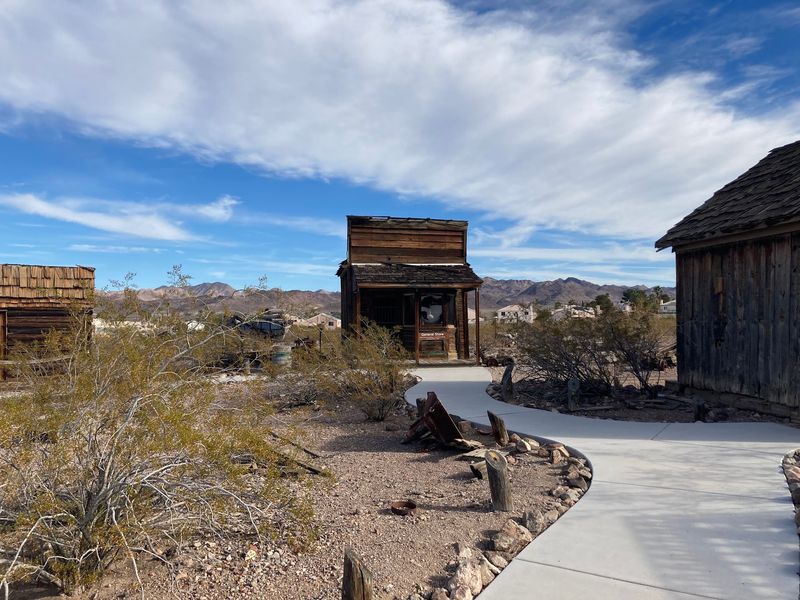
Not every ghost town requires a four-hour drive into the desert. This one sits right off Boulder Highway in Henderson, a short hop from anywhere in the Las Vegas Valley.
Old wooden buildings were gathered here from rural southern Nevada and arranged along an outdoor trail. Kids can peer into an old jail, a general store, and a blacksmith shop, each one hinting at how people lived and worked a century ago.
Rusted mining equipment and other relics sit along the path, giving curious minds plenty to point at.
Why start here? For families with little ones or grandparents who would rather skip long dirt roads, it offers the ghost town feel without the long haul.
It also teaches Nevada history that many kids never hear about in school.
Parking is free in the lot. The grounds are connected to a county museum, and access is often free or very low cost, but policies can change, so confirm before you go.
Southern Nevada summers get scorching, so aim for morning visits from late spring through early fall. Bring hats, water, and closed-toe shoes for the gravel path.
Pair the trail with a picnic at a nearby park, and a family of four may spend little beyond lunch.