
This Tennessee Town Is America’s First National Park City With More Than 70 Parks And 35 Miles Of Trails
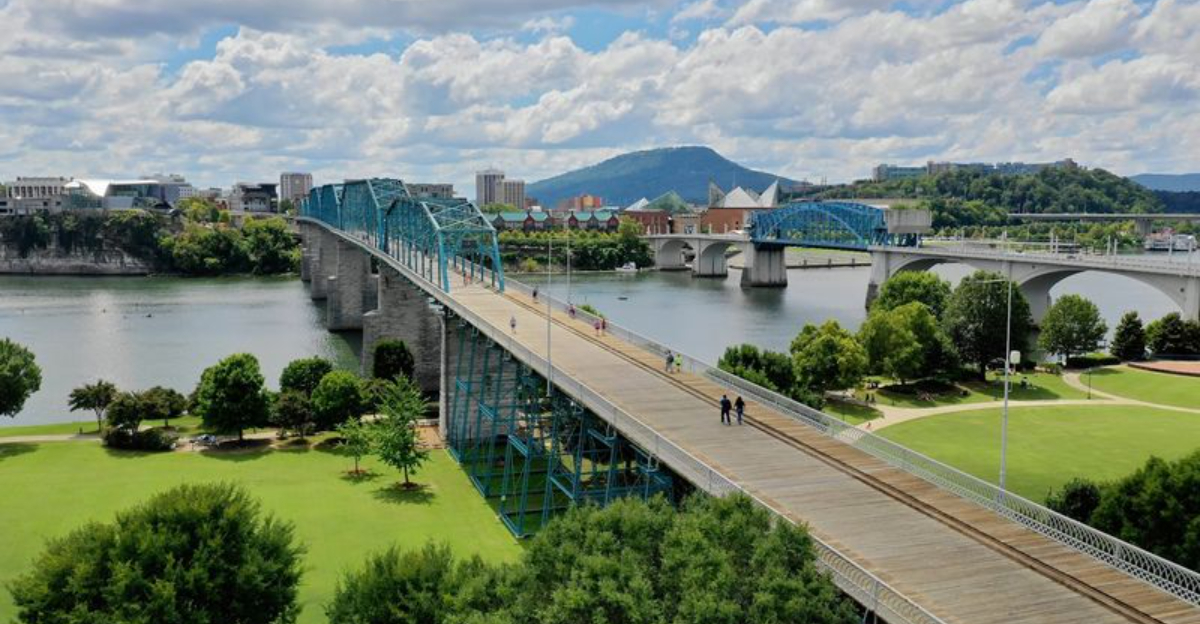
No other city in America has done this. Not one.
Tennessee is home to the country’s very first National Park City and the numbers behind that title are almost hard to believe. Seventy parks.
Thirty-five miles of trails cutting through mountains, river gorges, and city neighborhoods. Green space around every corner and outdoor adventure available before you even finish your morning coffee.
This city did not stumble into this designation. It built an entire way of life around the outdoors and then earned the most prestigious urban nature title in the entire country.
Tennessee wins again.
Over 70 Neighborhood Parks Spread Across The City
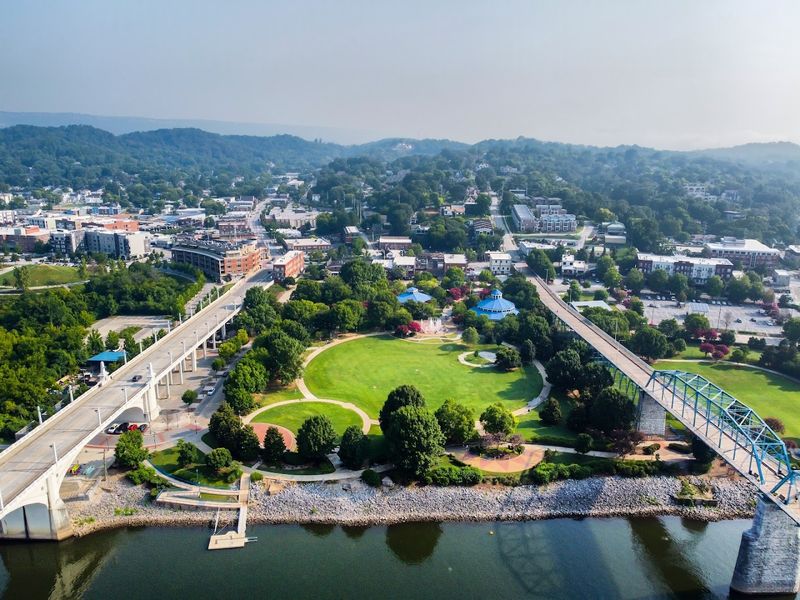
Seventy parks sounds like a large number until you actually start moving through this place and realize how naturally they appear, one after another, in nearly every corner of the city. These are not just decorative green squares on a map.
They are living, functional spaces where residents jog before work, kids play after school, and neighbors gather on weekend afternoons.
The variety is worth noting. Some parks are compact and community-focused, designed for the daily rhythms of the neighborhoods they serve.
Others are larger, offering open fields, sports facilities, and shaded rest areas. Coolidge Park along the North Shore is a particularly beloved example, featuring a restored carousel, open lawns, and direct access to the Tennessee River.
Renaissance Park and Ross’s Landing round out the signature outdoor spaces along the riverfront, each offering its own character and set of activities. Ross’s Landing, located near downtown at 100 Broad Street, serves as both a historical landmark and a lively gathering place.
The sheer number and distribution of these parks means that most residents live within comfortable walking distance of meaningful green space, which is a quiet but significant quality-of-life advantage.
North America’s First National Park City Title Explained

Not every city earns a title this rare. In 2025, Chattanooga, Tennessee, became North America’s very first National Park City, a designation awarded by the London-based National Park City Foundation.
Only three other cities globally have received this honor: London in 2019, Adelaide in 2021, and Breda in 2025.
The designation is not simply a badge of pride. It represents a genuine commitment to weaving nature into the rhythm of daily urban life.
The philosophy behind it asks cities to think of themselves as a “city in a park” rather than a “city with some parks in it.” That distinction carries real weight in how Chattanooga plans its neighborhoods, manages its green corridors, and invites residents to engage with the outdoors.
Chattanooga sits along the Tennessee River in the foothills of the Appalachian Mountains, and its geography has always made this ambition feel natural. City leaders, community organizations, and everyday residents worked together over many years to reach this milestone.
For visitors, the title signals something immediately useful: this is a city where outdoor access is not an afterthought but a defining feature of the place itself.
35 Miles Of Urban Trails And Greenways To Explore
Thirty-five miles of trails running through an active city is a number that deserves some appreciation. Most urban areas struggle to maintain a handful of connected paths.
Chattanooga has built an entire network of greenways and trails that allow residents and visitors to move through the city without ever feeling boxed in by concrete.
The South Chickamauga Creek Greenway and the North Chickamauga Greenway are two of the more prominent routes, offering miles of paved and natural surface paths through some genuinely beautiful riparian landscapes. Stringer’s Ridge provides a more rugged experience, with forested trails and elevated views over the city that reward even a short hike.
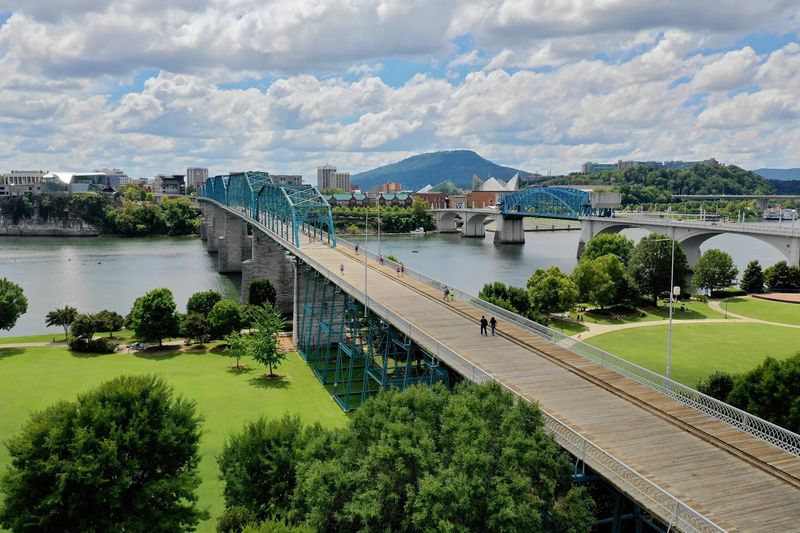
The Tennessee Riverwalk is perhaps the most accessible entry point for first-time visitors. Stretching along the banks of the Tennessee River, it connects several parks and cultural landmarks in a single continuous route that feels both purposeful and enjoyable.
Trail conditions are generally well-maintained, and signage keeps navigation straightforward. For anyone who values the simple act of walking somewhere interesting, Chattanooga’s trail network offers more than most cities three times its size could reasonably promise.
150 Miles Of Hiking Trails Within A 15-Minute Drive
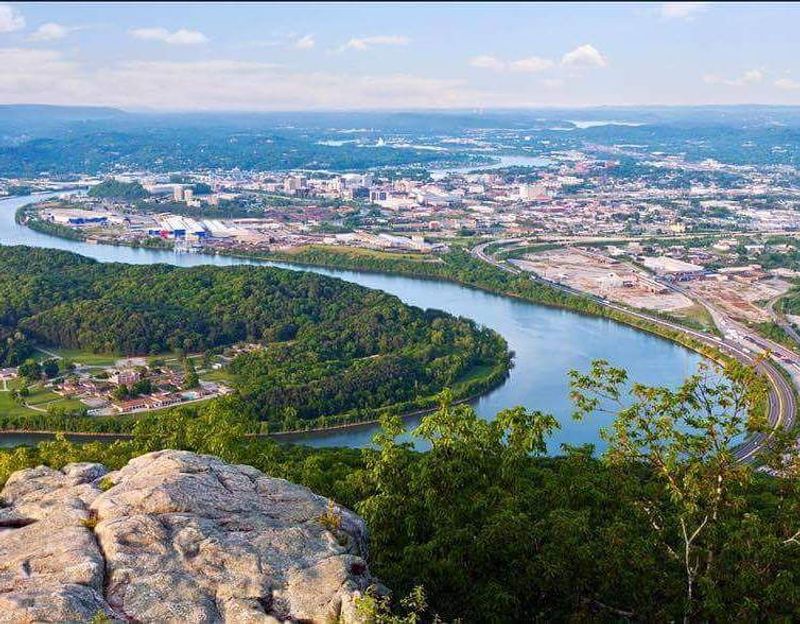
The trails inside the city are impressive, but the real scope of Chattanooga’s outdoor offerings becomes clear when you factor in what lies just beyond the city limits. Within a 15-minute drive of downtown, hikers have access to over 150 miles of trails on public lands.
That figure alone would make Chattanooga remarkable among mid-sized American cities.
Add in the nearly 100 additional miles found within the city’s own parks, greenways, and natural areas, and the total trail network available to residents and visitors becomes genuinely extraordinary. The surrounding terrain, shaped by the Appalachian foothills and the Tennessee River valley, provides the kind of varied landscape that makes hiking consistently interesting rather than repetitive.
Lookout Mountain, visible from much of the city, anchors the southern edge of this trail network and offers routes that range from easy scenic walks to more demanding climbs. Signal Mountain and the Cumberland Plateau extend the options even further for those willing to drive a few extra minutes.
For hikers of any experience level, the access Chattanooga provides to natural terrain is one of the most compelling reasons to spend meaningful time in the area, not just a quick weekend visit.
The Tennessee Riverwalk Connects Parks And Culture
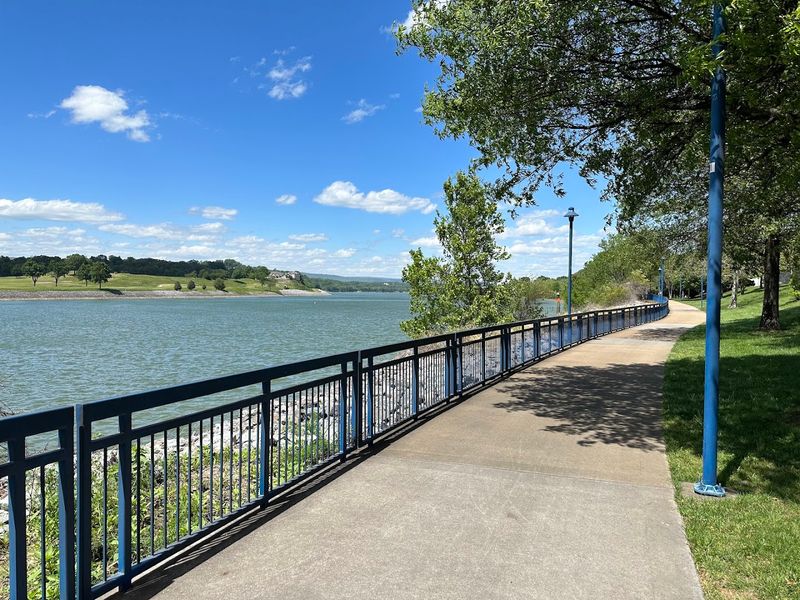
Few urban walking paths manage to be genuinely useful and genuinely beautiful at the same time. The Tennessee Riverwalk in Chattanooga achieves both without much effort.
Running along the banks of the Tennessee River, it connects parks, museums, restaurants, and neighborhoods in a single continuous corridor that gives the city much of its outdoor identity.
The path is accessible, flat in most sections, and welcoming to walkers, joggers, and cyclists alike. It passes by Ross’s Landing, the Tennessee Aquarium, and several riverfront parks, making it an ideal introduction to the city for first-time visitors who want to understand how Chattanooga relates to its river.
That relationship is central to everything here.
On any given morning, the Riverwalk carries a cross-section of city life: commuters on bikes, parents with strollers, retirees on their daily walk, and out-of-town visitors pausing to photograph the water. The path eventually connects to the Walnut Street Bridge, one of the longest pedestrian bridges in the world, which links the downtown area to the North Shore neighborhood.
Walking that bridge at dusk, with the river below and the mountains in the distance, is the kind of simple experience that tends to stay with people long after they leave.
Stringer’s Ridge Offers Wild Green Space Above The City
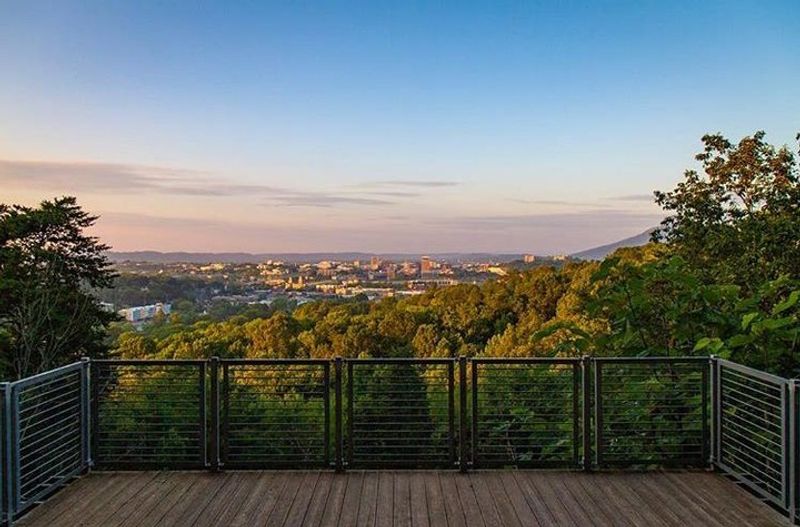
Just minutes from downtown, Stringer’s Ridge feels like a different world. The 92-acre forested park rises above the North Shore neighborhood and offers a network of hiking and mountain biking trails that move through dense hardwood forest, over rocky outcrops, and past unexpected viewpoints where the Chattanooga skyline appears between the trees.
The park is managed with a light hand, which means the trails retain a genuinely natural character. You will not find manicured lawns or ornamental plantings here.
What you will find is honest, uncomplicated forest that happens to be a 10-minute drive from a hotel or restaurant. That proximity is part of what makes Stringer’s Ridge so valuable to the city’s overall outdoor identity.
Mountain bikers have developed a particular affection for the ridge, and several trails have been built with technical riding in mind. Hikers share the space without much conflict, largely because the trail network is well-designed and the park receives a steady but not overwhelming number of visitors.
For anyone staying downtown who wants a quick escape into actual wilderness, Stringer’s Ridge delivers that experience with minimal planning and maximum payoff. It is one of Chattanooga’s most honest outdoor offerings.
Lookout Mountain And Its Remarkable Overlooks
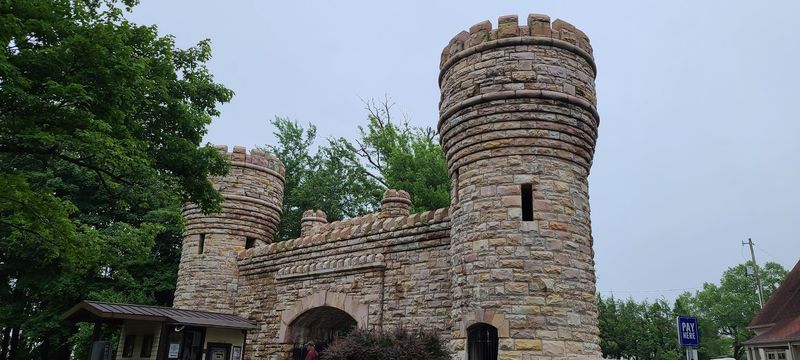
Lookout Mountain has been drawing visitors to Chattanooga for well over a century, and its appeal has not diminished. Rising to roughly 2,100 feet above sea level, the mountain offers some of the most sweeping views in the southeastern United States, with the Tennessee River curving through the valley below and the city spread out in comfortable detail.
Point Park, located at the summit, marks the site of the 1863 Battle Above the Clouds, a Civil War engagement now commemorated at the Battles for Chattanooga Museum. The park is part of the Chickamauga and Chattanooga National Military Park, which is itself the oldest national military park in the United States.
History and landscape combine here in a way that gives the mountain genuine depth beyond its visual drama.
Ruby Falls and Rock City are the two most visited attractions on the mountain, drawing families and curious travelers with their distinct personalities. Ruby Falls is an underground waterfall discovered in 1928, located about 1,120 feet below the surface.
Rock City offers sandstone formations, garden paths, and a famous view said to span seven states on a clear day. The mountain sits at 1 Scenic Highway, Lookout Mountain, Tennessee, just minutes from downtown Chattanooga.
Coolidge Park And The North Shore Neighborhood
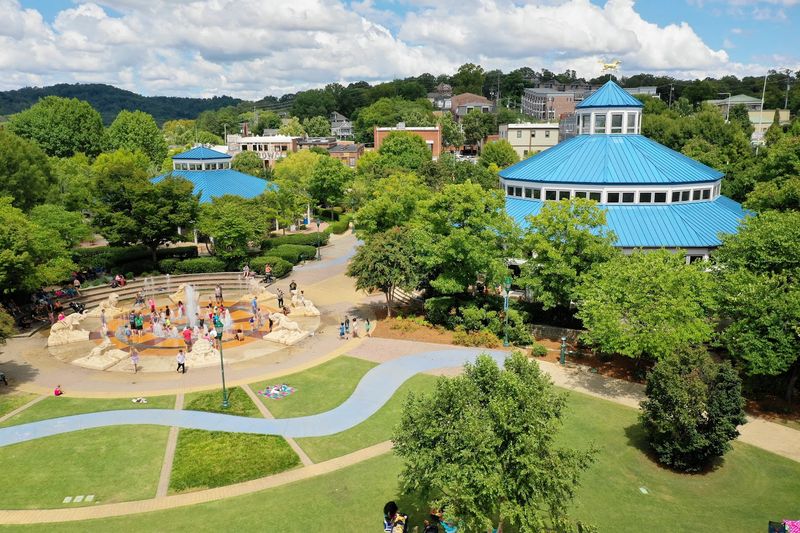
Coolidge Park sits on the North Shore of the Tennessee River and manages to be one of those rare public spaces that works equally well for everyone who uses it. Families come for the restored 1894 antique carousel and the splash pad.
Adults come for the riverfront views and the easy connection to the Riverwalk. Athletes come for the open fields and the proximity to the Walnut Street Bridge, which leads directly into downtown.
The park has a relaxed, unhurried quality that reflects the character of the North Shore neighborhood surrounding it. This part of Chattanooga has developed steadily over the past two decades into a lively area of independent restaurants, coffee shops, and small retailers, all set against a backdrop of tree-lined streets and river views.
On weekend mornings, Coolidge Park becomes something close to the social center of the city. Farmers markets, outdoor festivals, and community events rotate through the space with enough regularity that there is almost always something happening.
The park is located along River Street on the North Shore, easily accessible on foot via the Walnut Street Bridge from downtown. It is one of the most pleasant places in Chattanooga to spend an unplanned afternoon with nowhere particular to be.
Why Chattanooga’s Outdoor Identity Sets It Apart
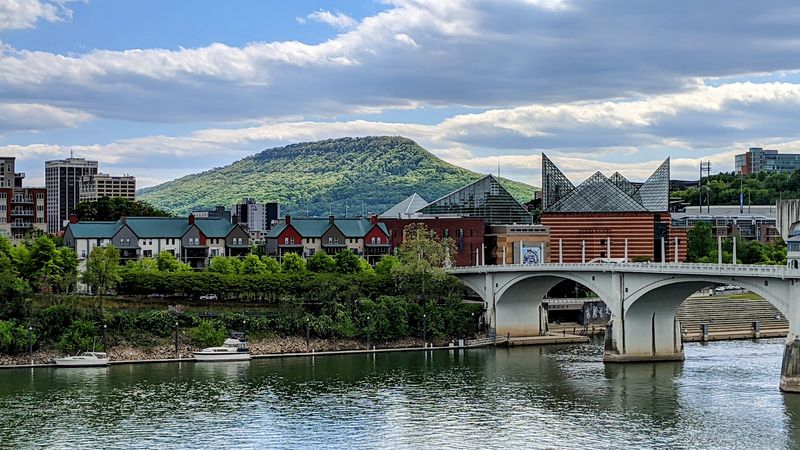
Cities often claim an outdoor identity without fully earning it. Chattanooga has spent decades building the infrastructure, policies, and community culture that make the National Park City designation feel accurate rather than aspirational.
The result is a place where the outdoors is not a feature you seek out but a condition you inhabit simply by being there.
The combination of factors that produced this outcome is worth understanding. Geography played a significant role: the Tennessee River, the surrounding mountains, and the Appalachian foothills gave the city a natural foundation that many urban areas simply do not possess.
But geography alone does not create 70 parks, 35 miles of trails, and a connected greenway system. That requires sustained civic commitment over time.
Chattanooga has also benefited from a culture of reinvention. The city transformed itself from one of the most polluted urban environments in the United States in the 1960s into a recognized model of environmental stewardship by the 1990s.
That trajectory shaped the values of successive generations of city leaders and residents alike. For travelers, the practical takeaway is straightforward: Chattanooga, reachable via Chattanooga Metropolitan Airport or Interstate 24, offers outdoor access, cultural depth, and urban comfort in a combination that is genuinely difficult to find elsewhere in the American South.