
8 Budget Friendly West Virginia Towns That Locals Love To Call Home
Fewer and fewer cities can honestly call themselves budget-friendly anymore. More and more people are packing up and leaving because the cost of living has simply outrun their paychecks.
That is a sad reality that too many families know firsthand. But not every corner of this country has fallen into that trap.
West Virginia has quietly become a refuge for people chasing something that feels increasingly out of reach. Low costs, a real community, and a life that does not require two incomes just to stay afloat.
These cities are becoming home to people who refused to give up on the American Dream. They just got smart about where to find it.
Sometimes the dream is not waiting in a crowded city with sky-high rent. Sometimes it is tucked in a place most people overlook, offering exactly what you need at a price that actually makes sense.
1. Shepherdstown
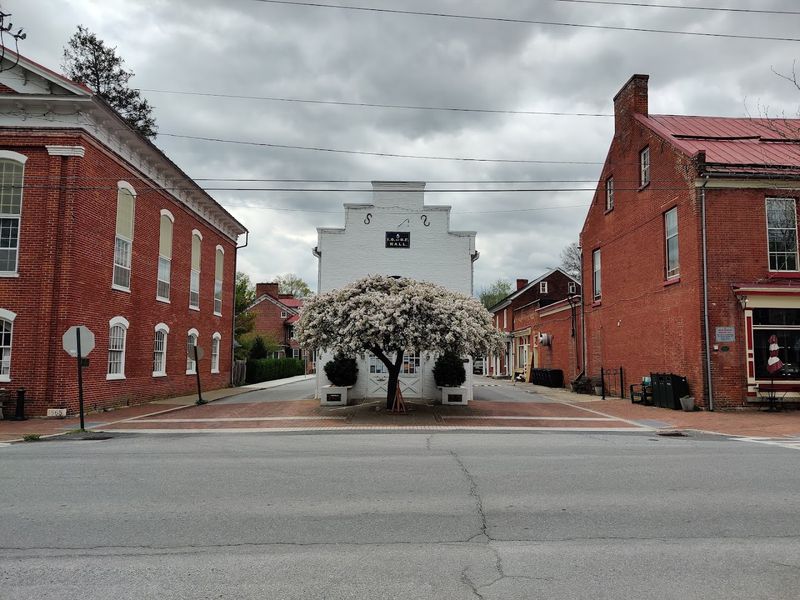
This town is the oldest in West Virginia, and it wears that title with serious swagger. Founded in 1762, it has more history per square foot than most places three times its size.
Walking the streets genuinely feels like flipping through a history book.
Shepherd University anchors the town with energy and culture. Student life keeps things lively without making it feel chaotic.
The arts scene here is surprisingly robust for such a small place.
Housing costs are manageable, especially compared to neighboring Maryland and Virginia. Many people commute to D.C. or Hagerstown while enjoying WV prices.
That combination is basically a cheat code for affordable living.
The Potomac River runs right alongside the town. Kayaking, fishing, and hiking along the C&O Canal are part of everyday life.
Outdoor recreation does not cost much when it is literally steps from your door.
The downtown strip has independent restaurants, coffee shops, and a bookstore that feels like home. No boring chain restaurants are dominating the scene.
Every meal out feels like a local experience.
Shepherdstown also has a strong arts and theater community. The Contemporary American Theater Festival draws visitors every summer.
Locals get to enjoy world-class performances in their own backyard.
The town has a genuine community feel where everyone seems to know each other. New residents are welcomed warmly.
It is the kind of town where you quickly stop being a newcomer.
2. Fayetteville
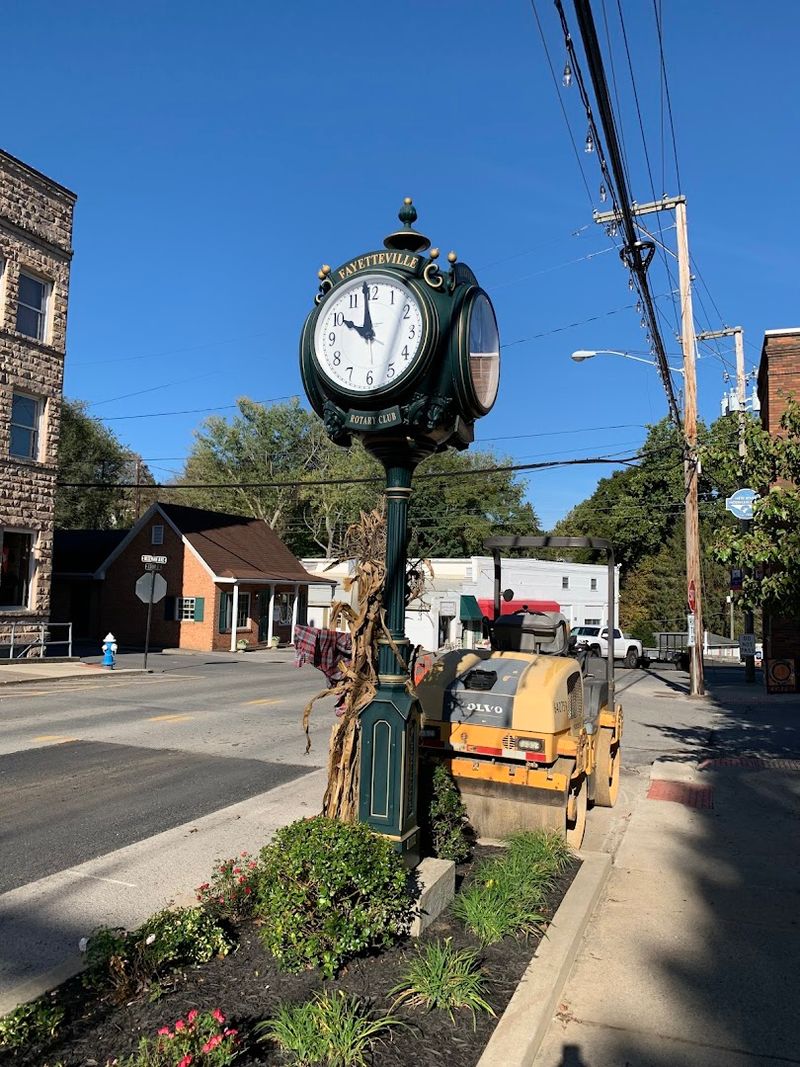
Fayetteville sits right next to the New River Gorge National Park, which became a full national park in 2020. That upgrade put this small town on the map in a big way.
Outdoor lovers have been flocking here ever since.
The town itself is charming and walkable with a laid-back energy. Local restaurants, gear shops, and coffee spots line the main street.
Everything feels intentional and community-driven rather than commercialized.
Housing here is genuinely affordable. You can find a solid home for well under the national median.
For outdoor enthusiasts, the value-to-lifestyle ratio is almost unbeatable.
Rock climbing is huge in Fayetteville. The New River Gorge is one of the top climbing destinations on the East Coast.
Beginners and experts both find their groove here.
Bridge Day happens every October when BASE jumpers and rappellers take over the iconic New River Gorge Bridge. It draws thousands of visitors and is completely free to watch.
Locals treat it like a neighborhood block party.
Whitewater rafting on the New River is another major draw. Outfitters offer trips at every skill level throughout the season.
The river is practically the town’s backyard playground.
The school district is small but tight-knit. Families appreciate the personal attention their kids receive.
It is far from the anonymous experience of big-city schools.
If adventure and affordability are your priorities, Fayetteville checks every box without hesitation.
3. Lewisburg
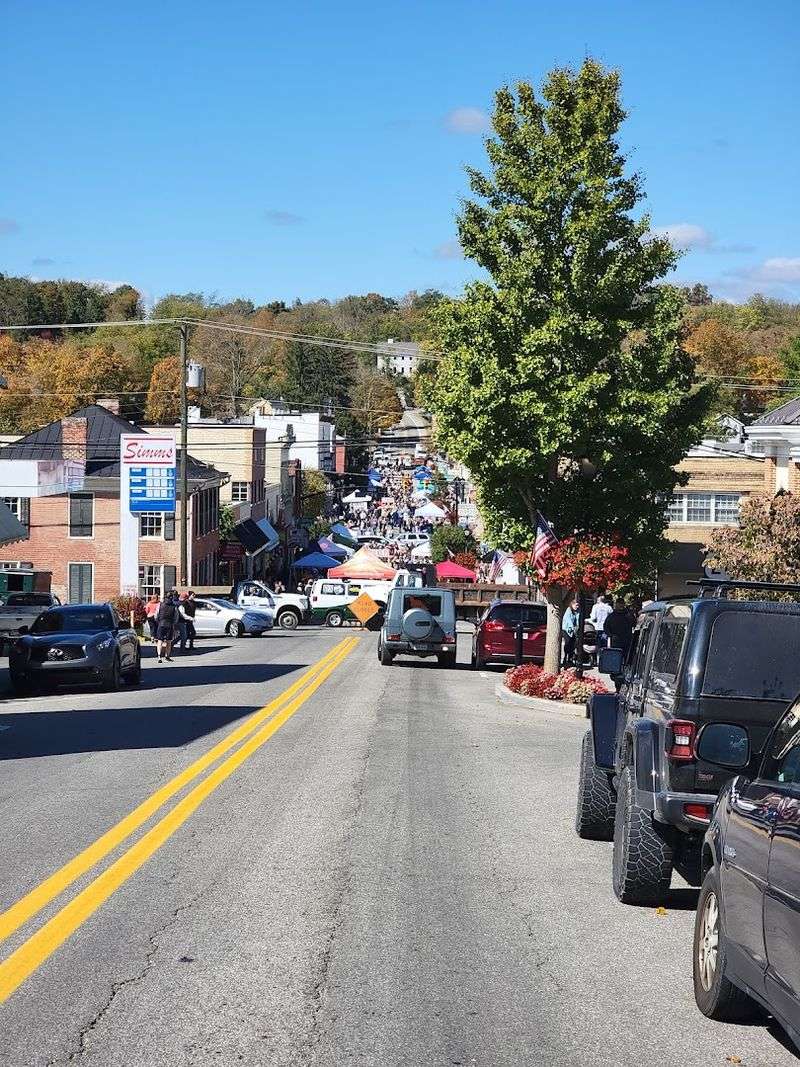
Lewisburg feels like someone bottled up small-town charm and sold it at a reasonable price. It was named one of the coolest small towns in America by Budget Travel magazine.
That is not an accident.
The downtown is walkable, quirky, and full of independent shops. You will find bookstores, art galleries, and cafes that actually have personality.
No cookie-cutter chains running the show here.
The median home price sits well below the national average. Rent is affordable too, making it realistic for young professionals and families alike.
Your money stretches further than you expect.
Carnegie Hall is right in town, and it hosts live performances year-round. Yes, a Carnegie Hall in West Virginia.
It is the real deal, and free or low-cost events happen regularly.
The Greenbrier Valley is nearby, offering hiking, fishing, and scenic drives. Nature is basically your backyard here.
You do not need a vacation when your daily view looks like this.
Locals have a fierce pride in their town. Community events, farmers’ markets, and festivals keep the calendar full.
There is always something happening without feeling overwhelming.
Crime rates are low, and the school system is solid. Families feel safe and supported here.
It is one of those places where neighbors still wave at each other.
If you want culture, nature, and affordability in one package, Lewisburg delivers. It punches way above its weight class.
4. Thomas
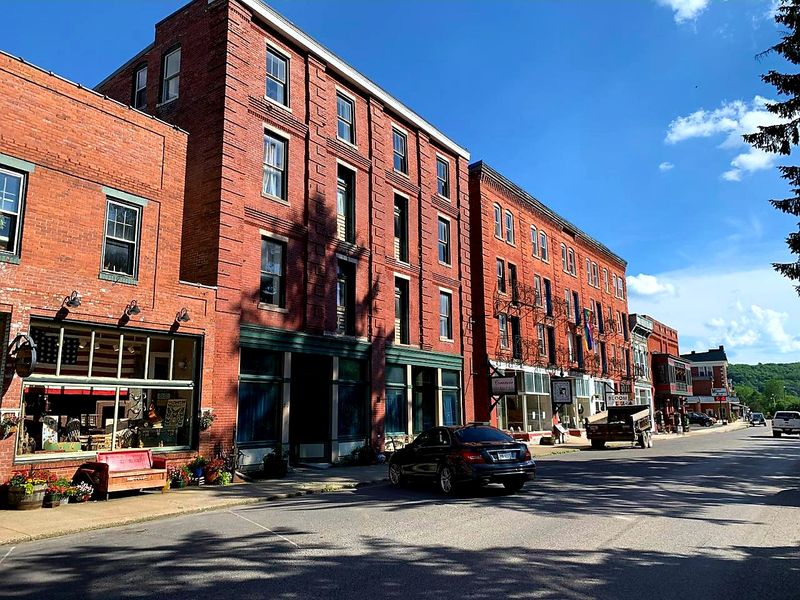
Thomas is the kind of place that surprises you the first time you visit. It is tiny, tucked in Tucker County, and absolutely bursting with creative energy.
The art scene here is wildly disproportionate to the population size.
The town has become a magnet for artists, musicians, and remote workers looking for cheap rent and big inspiration. Houses sell for prices that feel almost too good to be true.
Some locals joke that the entire town costs less than a studio apartment in D.C.
The Purple Fiddle music venue is a local institution. It hosts live bluegrass, folk, and Americana shows in an intimate setting.
Catching a show there on a Friday night is a proper Thomas experience.
Thomas is also close to Blackwater Falls State Park. The falls are genuinely stunning, especially in the fall when the leaves turn.
Hiking trails are well-maintained and free to access.
The main street has a handful of restaurants and cafes that rotate with creative menus. Nothing feels corporate or mass-produced.
Locals take real pride in supporting each other’s businesses.
Canaan Valley is just minutes away, offering skiing in winter and mountain biking in summer. Year-round outdoor recreation keeps residents active without big spending.
A ski pass here costs a fraction of what you would pay at a major resort.
The community is welcoming and intentionally inclusive. New faces are embraced quickly.
People move to Thomas for a season and end up staying for years.
5. Martinsburg
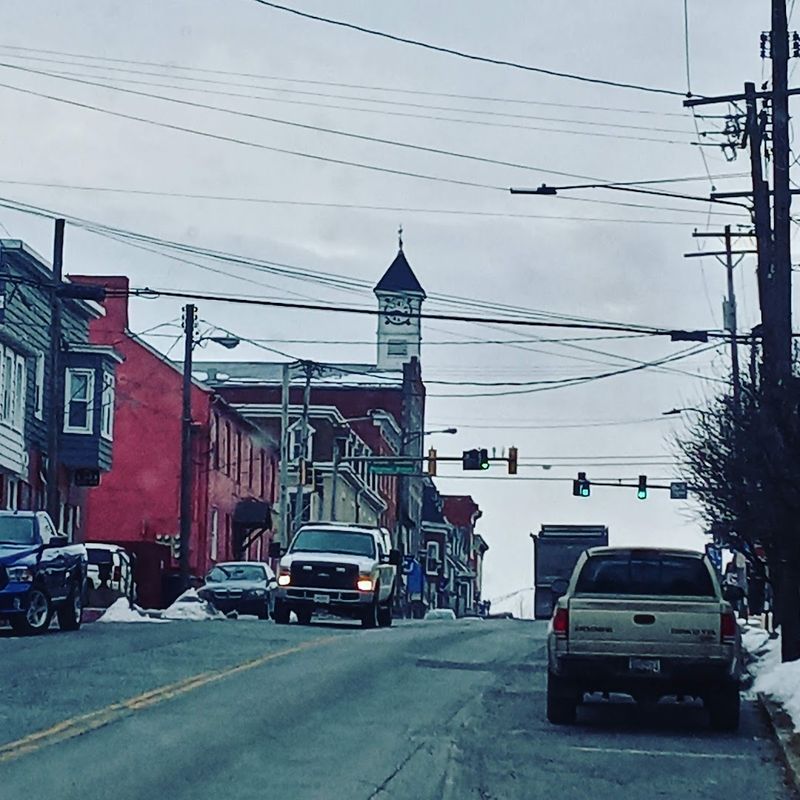
This is one of the fastest-growing towns in West Virginia, and there is a clear reason why. It sits at the crossroads of West Virginia, Maryland, and Virginia, making it a commuter’s dream.
People get WV prices while staying close to major job markets.
The MARC train runs from Martinsburg directly to Washington, D.C. That commuter line is a serious game-changer for remote and hybrid workers.
You can live affordably and still access big-city opportunities with ease.
Housing prices are significantly lower than in neighboring states. A three-bedroom home here might cost half of what the same house would in Northern Virginia.
That kind of savings adds up fast over a few years.
The downtown area has been steadily revitalizing. New restaurants, breweries, and shops have opened along Queen Street in recent years.
The energy feels fresh without losing the historic character.
Martinsburg has a rich Civil War history. The B&O Railroad Museum downtown tells the story of how railroads shaped the region.
History nerds will find plenty to explore on a free afternoon.
The Eastern Panhandle location means the Blue Ridge Mountains are essentially your backyard. Hiking, fishing, and scenic drives are all within a short drive.
You get mountain living with urban access.
Schools in Berkeley County, where Martinsburg sits, have been improving steadily. Families find the combination of affordable housing and decent schools very appealing.
It is a practical and livable place to raise kids.
6. Elkins
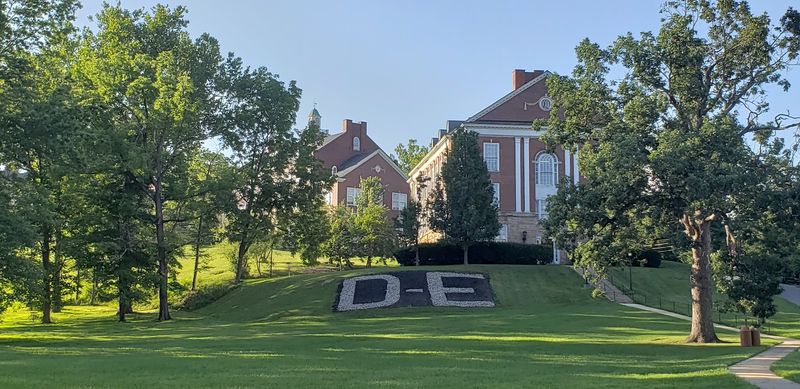
In a town like this, outdoor lovers stumble into and never fully leave. It sits right at the gateway to the Monongahela National Forest, which covers over 900,000 acres.
Having that much wilderness as your neighbor is not something you take for granted.
Davis and Elkins College gives the town a lively academic pulse. Students and faculty add culture, events, and a creative spirit to the community.
The college hosts festivals and performances that are open to everyone.
The Augusta Heritage Center at the college is famous for its traditional music and crafts workshops. People travel from across the country to attend.
Locals just walk down the street.
Housing in Elkins is very affordable, even by West Virginia standards. You can find well-maintained homes with large yards for prices that feel almost old-fashioned.
The cost of living here is genuinely low across the board.
The Mountain State Forest Festival happens every fall and has been running since 1930. It is one of the oldest festivals in the state.
The whole town participates, and it is completely free to attend.
Snowshoe Mountain Resort is about an hour away for skiing and snowboarding. Locals know the back roads and the off-season deals better than any travel site.
Winter here is an adventure rather than a burden.
Fishing, hiking, and mountain biking trails surround the town on every side. You never run out of things to do outdoors.
Elkins residents rarely feel the need to go anywhere else.
7. Harpers Ferry
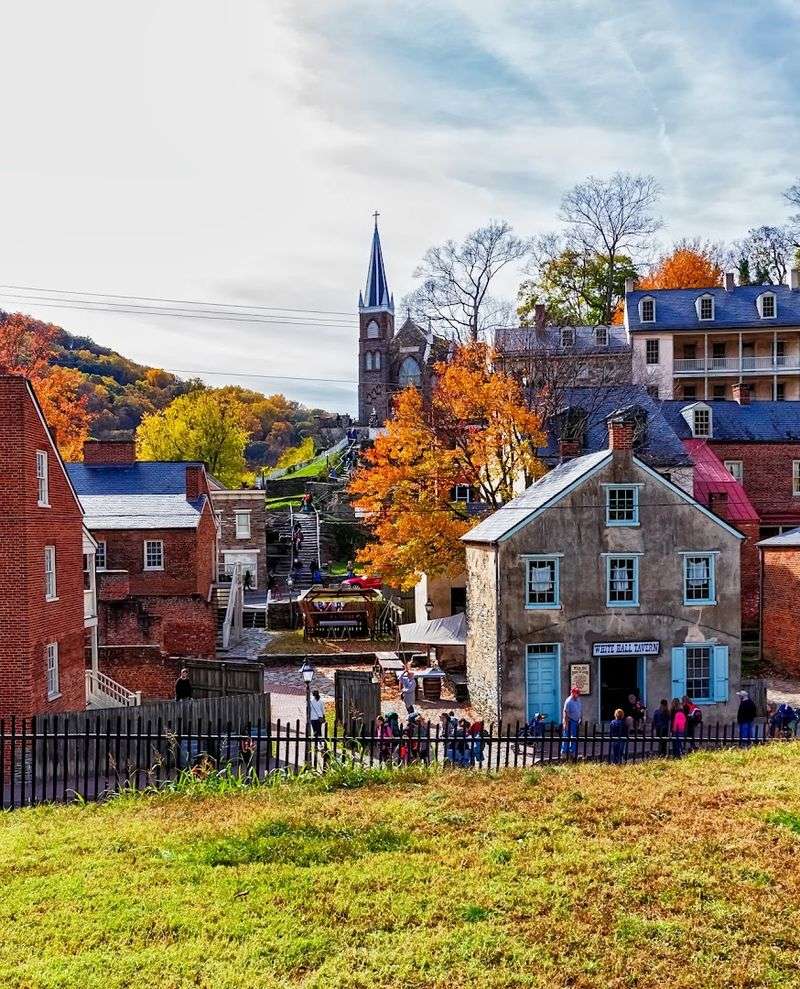
Harpers Ferry looks like a painting that someone forgot to put behind glass. The confluence of the Potomac and Shenandoah Rivers creates a backdrop that genuinely takes your breath away.
It is one of the most photographed spots in the entire state.
The town is famously tied to John Brown’s 1859 raid, a pivotal moment leading up to the Civil War. History is not just mentioned here; it is literally built into the streets and buildings.
The National Historical Park covers much of the lower town.
Living here means walking through a national park on your way to grab coffee. That is not an exaggeration.
Residents enjoy free access to trails and historic sites year-round.
Housing options range from cozy historic homes to modern rentals nearby. Prices are reasonable, especially given the location and scenery.
Many residents commute to nearby Maryland or Virginia for work while enjoying WV costs.
The Appalachian Trail passes directly through Harpers Ferry, making it a hub for long-distance hikers. Locals see thru-hikers regularly and treat them like part of the neighborhood.
The trail culture adds a unique layer to daily life.
The town has a small but loyal dining and shopping scene. Restaurants lean into the historic atmosphere with character-filled spaces.
Nothing feels generic or interchangeable.
Seasonal tourism brings energy without overwhelming the permanent community. Locals know when to enjoy the crowds and when to find the quiet spots.
Living here means knowing all the secret views.
8. Morgantown
Morgantown runs on Mountaineer pride, and it is contagious even if you did not go to WVU. West Virginia University is the heart of this city, bringing energy, research, and a serious sports culture.
Game days here are an experience unlike anything else in the state.
The city regularly ranks as one of the best college towns in the country. That recognition is backed up by real quality of life data.
Strong healthcare, good restaurants, and a buzzing arts scene make it genuinely livable.
Housing costs are low compared to similar-sized college cities. You can find affordable apartments near campus and reasonably priced homes in surrounding neighborhoods.
Students and non-students both benefit from the competitive rental market.
The Monongalia Arts Center and WVU’s performing arts programs keep the cultural calendar full. There is almost always a concert, gallery opening, or theater performance happening.
Most events are free or very low-cost.
The Personal Rapid Transit system, known as the PRT, is a one-of-a-kind automated people mover that connects parts of the city and campus. It is quirky, beloved, and genuinely useful.
No other city in America has anything quite like it.
Coopers Rock State Forest is just a short drive away with stunning overlooks and miles of hiking trails. Locals treat it as a weekend reset button.
The views from the overlook are legitimately jaw-dropping.
Morgantown has all the amenities of a larger city without the big-city price tag. It grows on you fast and keeps you here longer than planned.