
This Old-Fashioned Cattle Town In Wyoming Looks Frozen In Time Since 1890
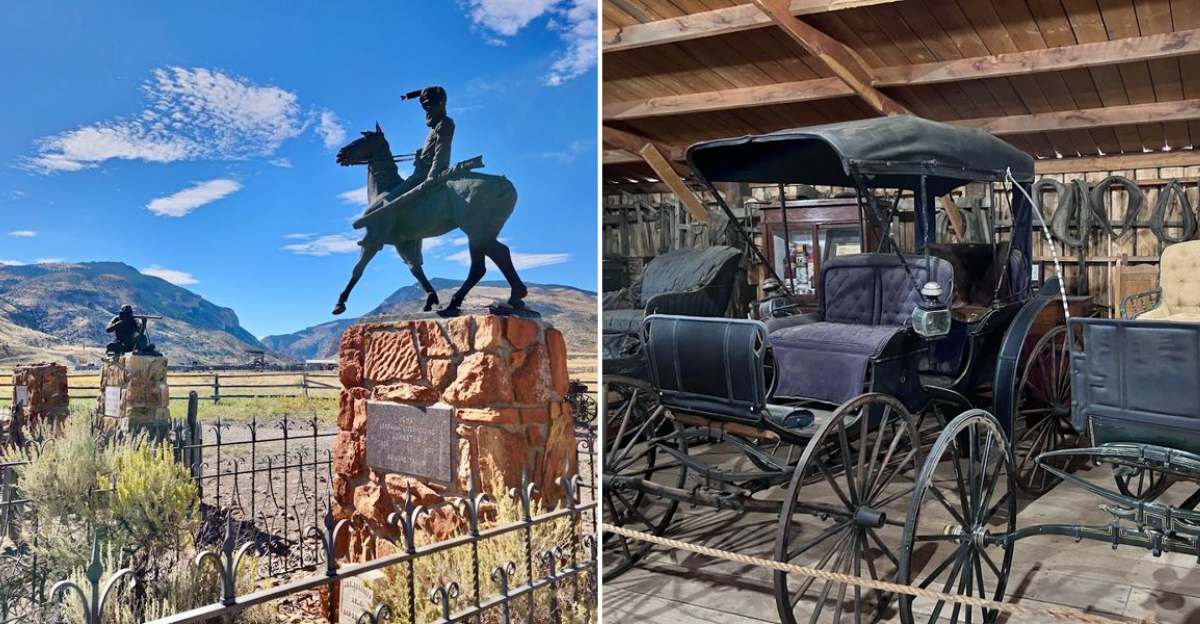
The cattle still move through here the same way they did in 1890. The town watched everything else change and quietly decided it was not interested.
That decision is visible in every corner of this place. The wooden storefronts have not been renovated into boutique hotels.
The saloons never turned into trendy bars with Edison bulbs and overpriced menus. The ranch hands who come through for supplies are not background characters in someone else’s vacation photo.
They are just people doing what people here have always done. Wyoming has its share of towns that wear the cowboy aesthetic like a costume.
This one never needed a costume. The dust on the main street is real dust.
The boots people wear walked through actual mud that morning. And when the cattle drives pass through in the same patterns they have for over a century, nobody stops to film it.
Because around here, that is just a Tuesday.
Historic Buildings And Their Stories
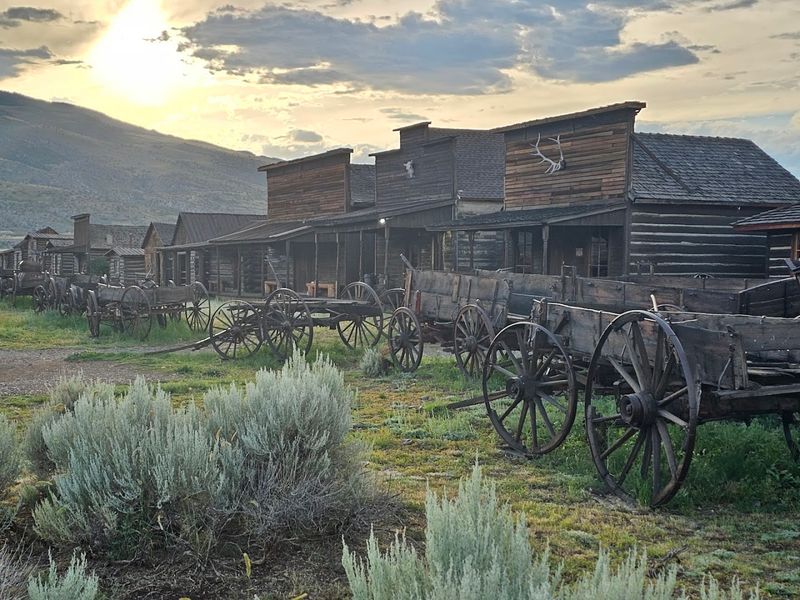
This town does not fake anything. Every single building here is original, pulled from remote corners of Wyoming and Montana and carefully reassembled on this site.
There are 26 to 28 structures in total, all dating from 1879 to 1901. That is not a small collection.
One of the most talked-about structures is Butch Cassidy’s Hole-in-the-Wall cabin. His gang used it as a hideout.
Standing next to it feels genuinely strange, in the best way possible.
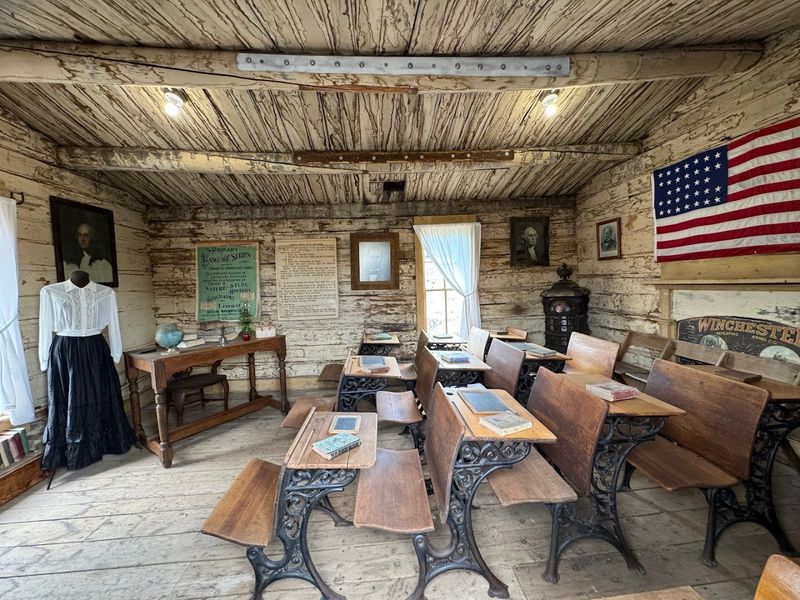
There is also the Coffin School, a one-room schoolhouse from 1884. Kids once sat in that same room learning to read and write.
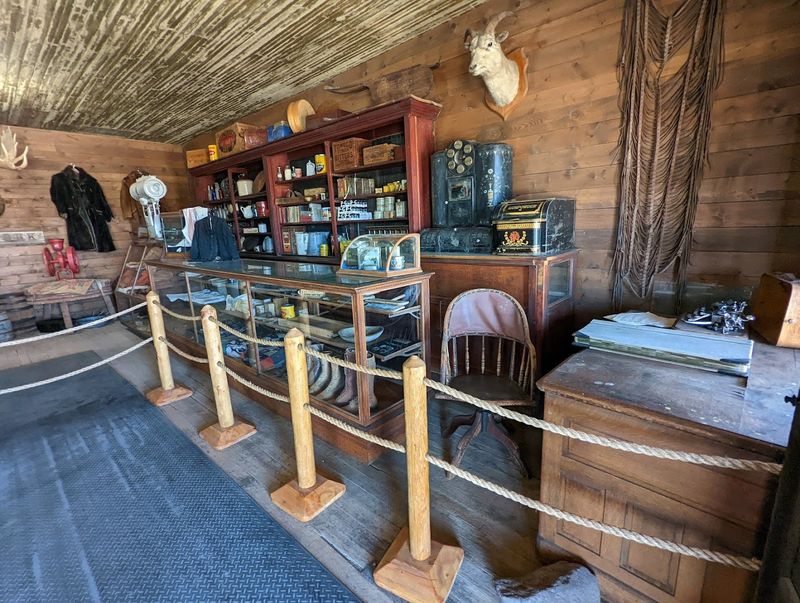
The general store still has its original shelves and goods on display.
Bob Edgar, an archaeologist and historian, founded Old Trail Town in 1967. His goal was to rescue buildings that were slowly disappearing from the frontier landscape.
He succeeded in a major way.
The whole site sits on the original 1895 townsite laid out by Buffalo Bill Cody himself. The address is 1831 Demaris Dr, Cody, WY 82414.
History does not get more grounded than that.
Daily Life In The Late Nineteenth Century
Life in the 1890s American West was not easy or glamorous. People woke up early, worked hard, and made do with very little.
Old Trail Town shows exactly what that looked like through its preserved buildings and original furnishings.
The general store was the social hub of any frontier town. You could buy flour, tools, fabric, and news all in one stop.
The one at Old Trail Town still has its original layout, making it easy to picture the daily hustle.
The one-room schoolhouse tells its own story. Kids of all ages sat together in the same room with one teacher.
Learning happened fast because it had to.
Blacksmith shops were the backbone of frontier communities. Without a blacksmith, wagons broke down, and horses went unshod.
The shop at Old Trail Town still holds the tools of that trade.
A post office building also stands on the grounds. Mail was a lifeline for families separated by hundreds of miles.
Getting a letter back then was a big deal, not just a notification on a screen.
Walking through these spaces gives a real sense of how people managed their days. It was a tough life, but also a very connected one within small communities.
Preservation Efforts And Techniques
Saving a 140-year-old building is not like fixing a leaky faucet. It takes serious planning, skill, and a lot of patience.
Bob Edgar spent decades doing exactly that, one building at a time.
Each structure at Old Trail Town was carefully disassembled at its original location. Every log, board, and nail was labeled and documented.
Then the pieces were transported and rebuilt here in Cody.
The goal was never to make things look new. Preservation means keeping the character and age of a structure intact.
That is why the buildings here look worn and weathered, because they genuinely are.
Keeping original materials together is a core principle of historic preservation. Replacing old wood with new lumber changes the story of a building.
Old Trail Town avoids that as much as possible.
The museum also uses interpretive plaques throughout the grounds. These signs give context to each structure and artifact.
Visitors can read the history of a building while standing inside it.
Ongoing maintenance is a constant challenge for open-air museums. Wood decays, roofs shift, and foundations settle over time.
The team at Old Trail Town works to slow that process while keeping the authentic feel fully intact.
Role Of Cattle Ranching In The Community
Cattle ranching was not just a job in 1890s Wyoming. It was the engine that drove entire communities forward.
Towns grew up around ranches, and the people who worked them shaped everything from local politics to social life.
Old Trail Town sits in the heart of the Big Horn Basin, one of Wyoming’s most historically important ranching regions. The landscape around Cody still looks much like it did when cattle drives were a regular sight on the horizon.
The buildings at the museum reflect ranching culture in a direct way. Blacksmith shops kept ranch equipment running.
General stores stocked the supplies ranchers needed for long seasons on the range.
Cowboys were a major part of frontier society. They were not just hired hands.
They carried news between towns, settled disputes, and formed tight-knit communities on the trail.
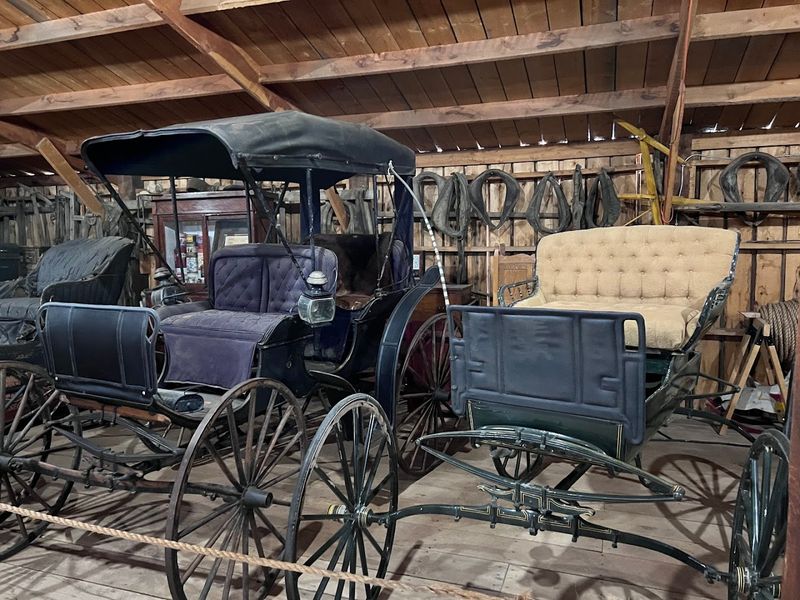
The horse-drawn vehicle collection at Old Trail Town includes over 100 pieces. Wagons, buckboards, and buggies tell the story of how goods and people moved across the open range.
Ranching culture also influenced the social hierarchy of frontier towns. Wealthy ranch owners had significant power.
Workers, including many immigrants and formerly enslaved individuals, built the cattle industry from the ground up with their labor and skill.
Artifacts And Tools From The Era
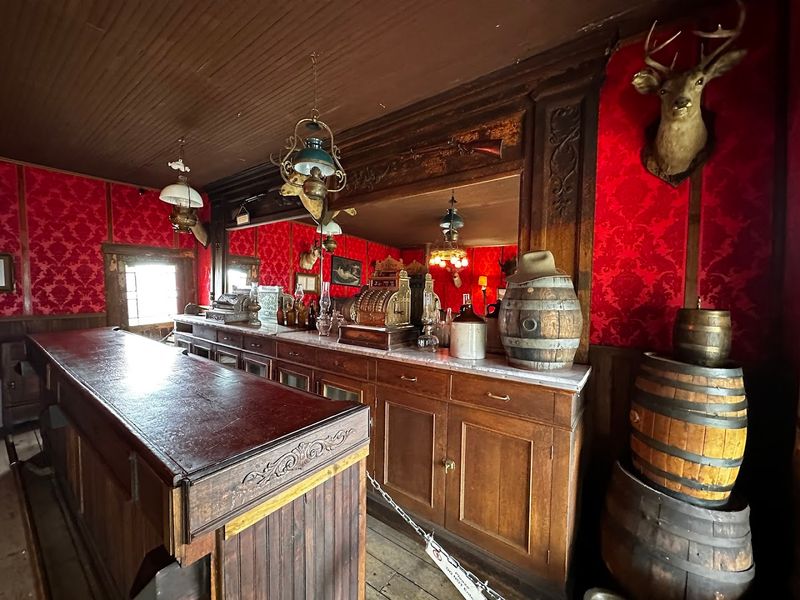
Old Trail Town holds one of the most impressive collections of frontier-era artifacts in the country. We are talking about real objects that real people used every single day in the late 1800s.
Not reproductions. The actual things.
Native American artifacts are part of the collection, too. These items offer a broader view of life in Wyoming before and during the settlement period.
They add important cultural depth to the story being told here.
Horse-drawn vehicles are a major highlight. The museum has over 100 of them, ranging from simple farm wagons to more elaborate passenger carriages.
Each one represents a specific need and lifestyle from the era.
Tools from blacksmith shops, farm operations, and domestic life fill the buildings. Seeing a hand-forged iron hinge or a leather-stitched saddle up close makes history feel very real.
These were not luxury items. They were survival gear.
Firearms, traps, and frontier trade goods are also part of the collection. The variety is genuinely impressive.
A single afternoon walking through the grounds means encountering hundreds of individual objects.
Informational plaques accompany most artifacts. Each one explains what the object was used for and who might have owned it.
That context turns a collection of old stuff into a living, breathing story about real people.
Influence Of The Frontier On Architecture
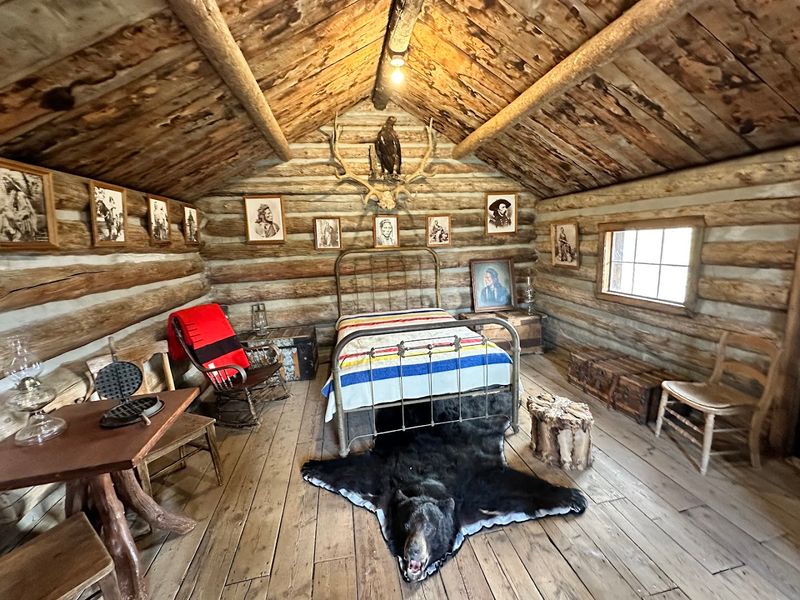
Frontier architecture was built for survival, not style. The buildings at Old Trail Town show exactly how settlers adapted to Wyoming’s harsh climate and limited resources.
Every design choice had a practical reason behind it.
Log construction was the dominant building method in the region. Trees were plentiful in nearby mountain areas, and logs provided excellent insulation against brutal winters.
The thick walls kept heat in and wind out.
Low rooflines and small windows were common features. Large windows let in cold drafts and were expensive to build.
Small openings also made structures easier to defend in dangerous frontier conditions.
Covered porches appeared on many frontier buildings. They provided shade in summer and a dry space to work during rain or snow.
They also served as informal gathering spots for community members.
The variety of building types at Old Trail Town shows how frontier architecture adapted to different functions. A saloon needed a wide front room.
A cabin needed a sleeping loft. A blacksmith shop needed open sides for ventilation.
Buffalo Bill Cody’s original 1895 town plan laid out the grid that Old Trail Town still follows today. That early planning shaped how buildings related to each other spatially.
The layout itself is a piece of architectural history worth studying closely.
Touring Options And Visitor Experiences
Old Trail Town operates as a self-guided open-air museum. That means you walk at your own pace, read what interests you, and linger as long as you want in any building.
No tour group rushing you along.
The museum is open daily from 8 AM to 5:30 PM. That gives visitors a solid window to explore without feeling rushed.
Plan on spending at least two hours if you want to see everything properly.
Informational plaques are posted throughout the grounds. They cover the history of each building, key figures connected to the site, and details about specific artifacts.
Reading them adds a lot to the experience.
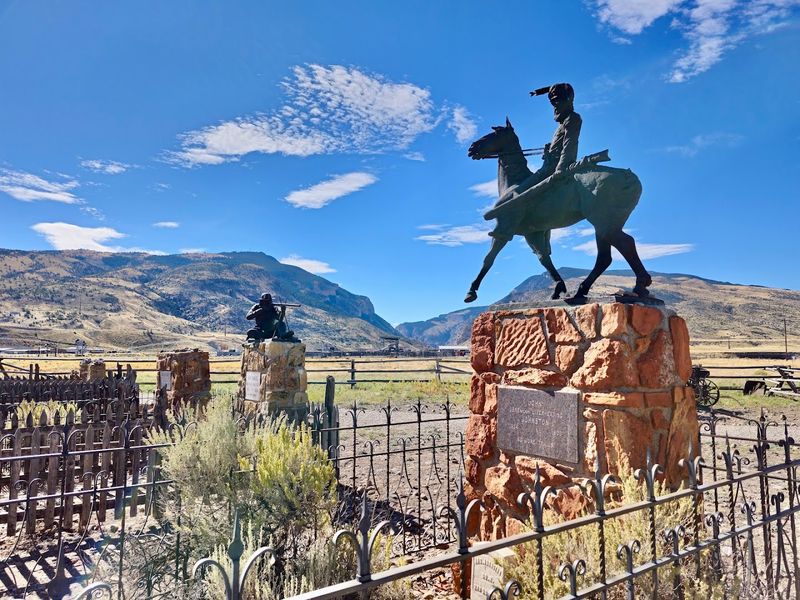
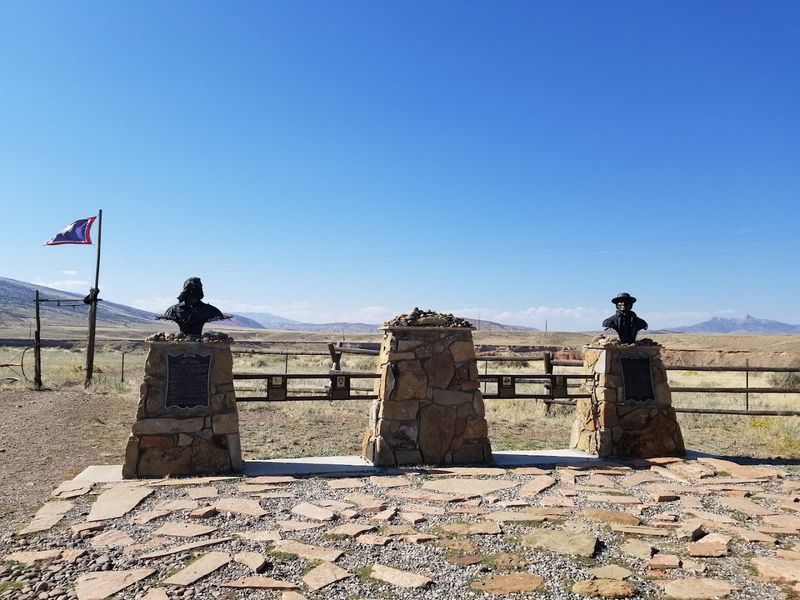
The gravesites of notable frontier figures are also part of the visit. John Liver-Eating Johnson, the mountain man whose life inspired the film Jeremiah Johnson, is buried here.
So is Crow Indian scout Curley, who served under General Custer.
A gift shop is on site and worth a look. You can pick up books, postcards, and historical souvenirs.
The Butch Cassidy most-wanted poster is reportedly a popular item.
Parking is available in a dirt lot adjacent to the museum. The phone number is +1 307-587-5302, and the website is oldtrailtown.org.
No food or drinks are allowed inside the museum grounds, so plan accordingly before you head in.
Cultural Impact On Modern Wyoming
Old Trail Town is not just a museum. It is a cultural anchor for the entire region.
Cody, Wyoming, built much of its identity around the frontier era, and this site helps keep that identity grounded in real history.
The museum draws visitors from across the country and around the world. People come specifically to Cody because of places like this one.
That tourism supports local businesses, hotels, and restaurants throughout the area.
Wyoming’s frontier past is woven into its present-day culture. Rodeos, cattle drives, and cowboy traditions remain active parts of life here.
Old Trail Town connects those living traditions to their historical roots in a tangible way.
The gravesites of John Liver-Eating Johnson and Crow scout Curley bring another layer of meaning to the site. These were real people whose lives shaped the American West.
Honoring them here keeps their stories from being forgotten.
Bob Edgar’s vision in 1967 was about more than saving old buildings. He wanted future generations to understand where Wyoming came from.
That mission continues to resonate with everyone who walks through the gates today.
Modern Wyoming takes pride in its frontier heritage without romanticizing the harder parts of that history. Old Trail Town reflects that balance.
It presents the past honestly, which is exactly what good cultural preservation looks like.