
7 Beautiful Arkansas Rivers So Clear They Reveal The Bottom With Pristine Water And Scenic Floating Spots
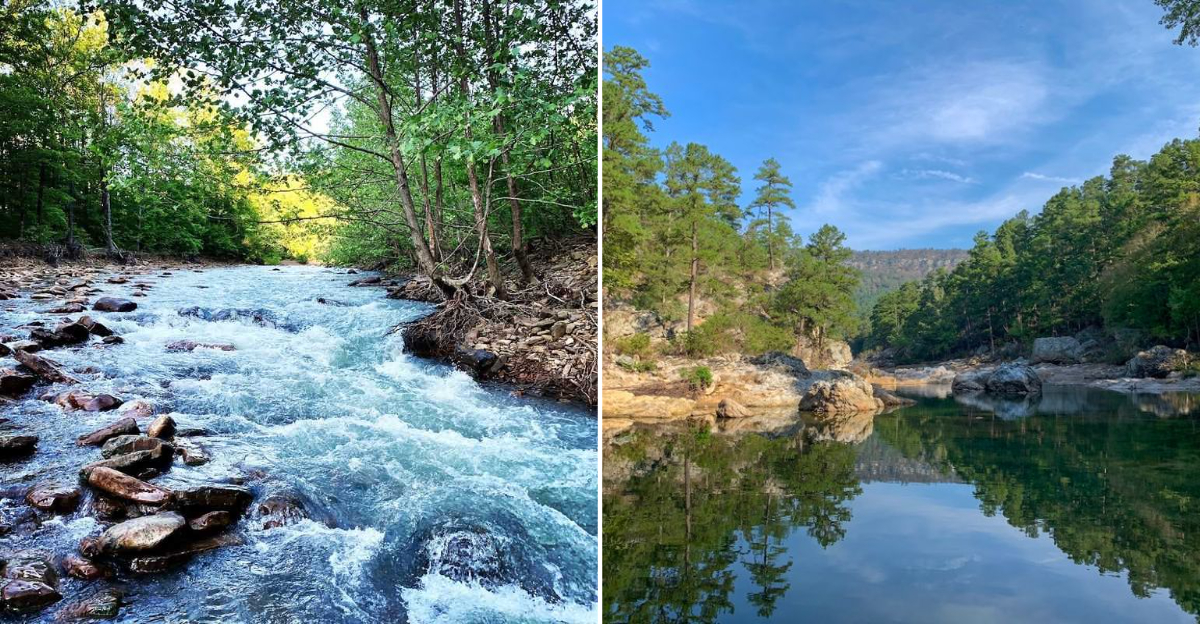
You put your hand in, and the cold hits you before you are ready for it. The water is so clear that it almost looks like nothing is there.
Then the current reminds you otherwise, and you stop thinking about anything except the river. Arkansas does that to people.
The rivers here come out of the ground cold and stay that way. Spring-fed, clean, moving through a landscape that has not been asked to be anything other than what it is.
You can see the bottom from a float tube drifting in the middle of the current. Every stone, every shadow, every fish that has not noticed you yet.
That kind of clarity is not something you forget quickly. Locals who grew up on these rivers take it for granted in the way people take for granted anything that has always been there.
Then they leave for a while and come back and stand at the water’s edge and remember exactly why they stayed as long as they did.
1. Buffalo National River
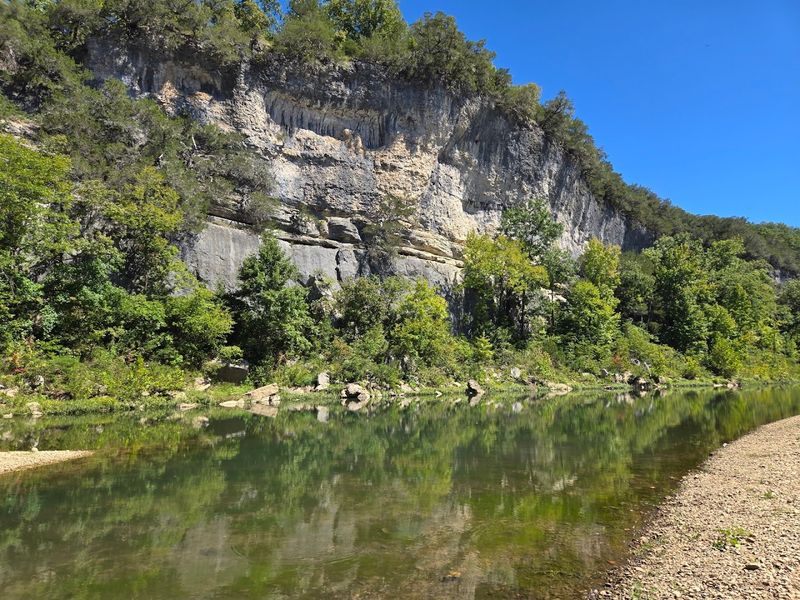
America made it official back in 1972. The Buffalo National River became the country’s very first nationally protected river, and honestly, it earned that title.
Stretching 135 miles through the rugged Ozark Mountains, this river is wild in the best possible way. You can see straight to the bottom like the water is made of glass.
Stones, sand, and little fish are all visible beneath your canoe. It feels almost too perfect to be real.
The upper section moves fast and keeps your heart rate up. If you want something more relaxed, the middle and lower sections are smooth, calm, and family-friendly.
Towering limestone bluffs line the banks and rise hundreds of feet above your head. Bald eagles sometimes circle overhead, and white-tailed deer wander the gravel bars.
Speaking of gravel bars, they are everywhere. Pull over, stretch your legs, eat a sandwich, and take a nap under the trees.
Primitive camping right on the gravel bar is completely allowed and absolutely magical.
The forest surrounding the river shifts with the seasons. Spring brings wildflowers and rushing water.
Fall turns everything gold and orange.
Rental outfitters near Ponca and Gilbert make it easy to plan your trip. They handle the shuttle so you can just focus on paddling and enjoying yourself.
No crowds, no noise pollution, just pure Arkansas wilderness doing its thing. This river reminds you why people fall in love with the outdoors in the first place.
Whether you float for one day or camp for a week, the Buffalo never disappoints. It is the kind of place that gets under your skin and keeps calling you back.
2. Kings River
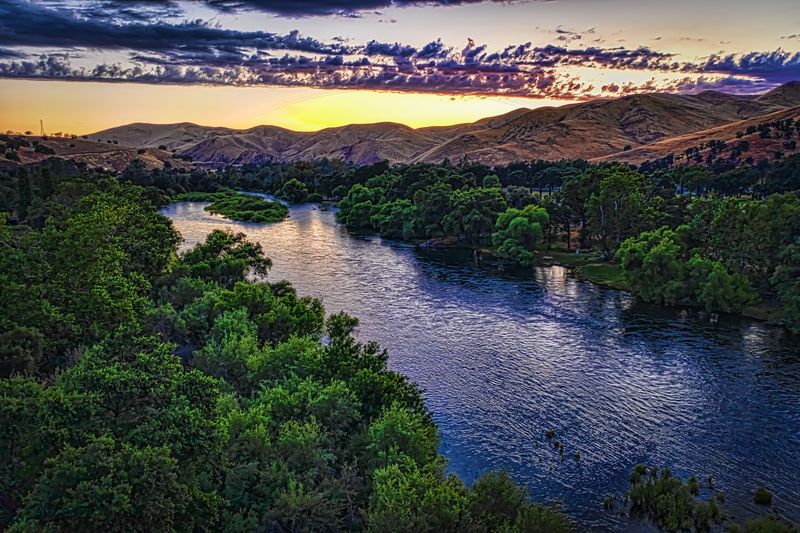
If rivers could win beauty contests, the Kings River would be a serious contender. Originating deep in the Boston Mountains of the Ozark National Forest, it flows 90 miles northward and does not disappoint for a single one of them.
The water clarity here is genuinely jaw-dropping. Every pebble on the riverbed is visible, like peering through a freshly cleaned aquarium window.
Deep pools gather beneath towering limestone bluffs and form natural swimming holes that look like they belong on a postcard. You will want to jump in immediately.
Do it.
The mix of deep pools and playful riffles keeps the float interesting. One moment you are gliding peacefully, the next you are laughing through a small rapid.
There is even a waterfall along the route, which feels like a bonus prize nobody told you about. Rocky cliffs, gravel bars, and dense overhanging trees complete the scenery.
Wildlife sightings are common here. Great blue herons stand perfectly still in the shallows, and river otters occasionally pop up to investigate your canoe with suspicious curiosity.
The Kings River runs through mostly private land, so access points are limited. Plan ahead and book with a local outfitter near Eureka Springs to handle logistics.
Spring and early summer offer the best water levels for floating. The river can get low in late summer, so check conditions before heading out.
Fishing is popular here too. Smallmouth bass practically dare you to cast a line into those clear pools.
The atmosphere feels remote and peaceful even though civilization is not far away. It is the kind of float that resets your brain completely.
3. Crooked Creek
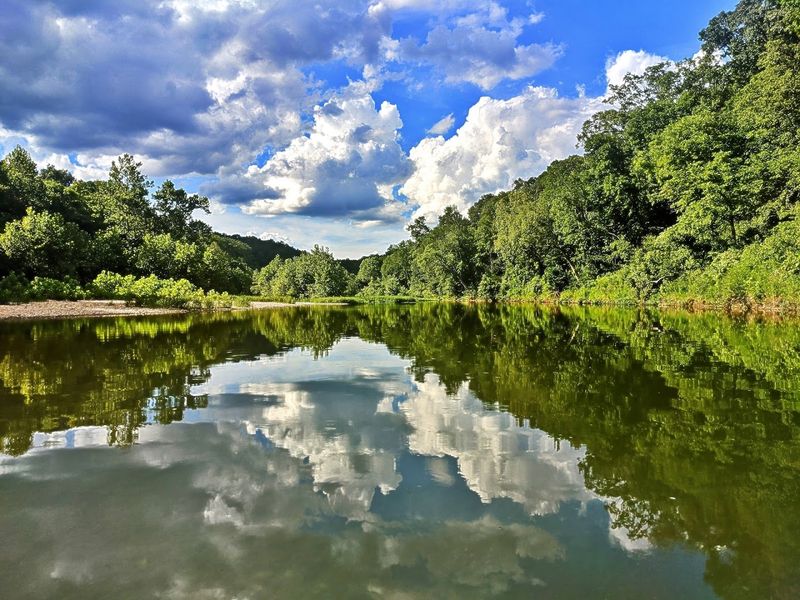
Crooked Creek is the underdog of Arkansas rivers, and I mean that as the highest compliment. Most people drive right past it without a second glance, which means the people who do stop get the whole place to themselves.
The water runs gin-clear over a bed of colorful, smooth rocks. On a sunny afternoon, the light bounces off the bottom in ways that make you stop paddling just to stare.
This creek winds through the hill country near Yellville in Marion County. The surrounding landscape is quiet, green, and wonderfully unhurried.
Crooked Creek is a tributary of the Buffalo National River, so it carries that same spirit of wild clarity. The two rivers share a personality even if they differ in size.
Fishing here is seriously good. Smallmouth bass thrive in the clear, cool water, and serious anglers come from neighboring states just to cast a line in these pools.
Floating is best done in spring and early summer when water levels are cooperative. A canoe or kayak works perfectly, and the shallow stretches make it easy to hop out and wade.
Gravel bars appear around nearly every bend. They make perfect lunch spots or places to skip rocks while your friends catch up behind you.
The creek passes through farmland and wooded stretches, giving you a mix of open sky and shaded canopy. Both are equally enjoyable depending on how hot it gets.
There are no major rapids to worry about, which makes it approachable for beginners and kids. The pace is easy, and the scenery keeps you entertained without needing excitement.
Local outfitters in the Yellville area can set you up with rentals and shuttle service. Do not overthink it, just go.
4. Spring River
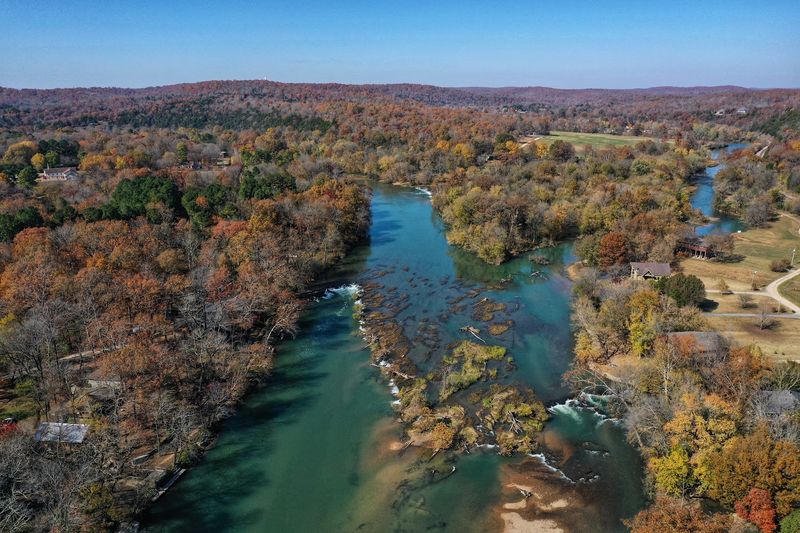
Cold water fans, this one is for you. The Spring River is fed by Mammoth Spring, one of the largest springs in the United States, pumping over nine million gallons of 58-degree water into the river every single hour.
That constant cold flow keeps the water crystal clear year-round. You can float in January if you dress for it, and plenty of people do exactly that.
The clarity is remarkable. Aquatic grasses wave gently beneath your kayak, and trout dart between the rocks like tiny silver arrows.
It is peaceful in a way that feels almost cinematic.
Long glassy pools alternate with small whitewater drops that wake you up just enough to keep the float exciting. The variety makes a full-day trip feel like it went by too quickly.
Hardy, Arkansas, is the main hub for Spring River outfitters. The town is charming and small with a classic Ozarks feel that adds to the whole experience.
Rainbow and brown trout thrive in this cold, clear environment. Fly fishing here is considered some of the best in the region, drawing anglers from across the country.
Hardwood forests line both banks and provide plenty of shade during summer floats. The tree canopy turns brilliant in October, making fall floats especially stunning.
The river is suitable for all skill levels. Beginners handle the calm pools with ease, while the whitewater sections give experienced paddlers something to appreciate.
Summer weekends can get busy near Hardy, especially around tubing areas. Arrive early or choose a weekday for a quieter experience on the water.
Camping options are available nearby, and spending a night under the stars next to a crackling fire after a long float is genuinely hard to beat.
5. Mulberry River
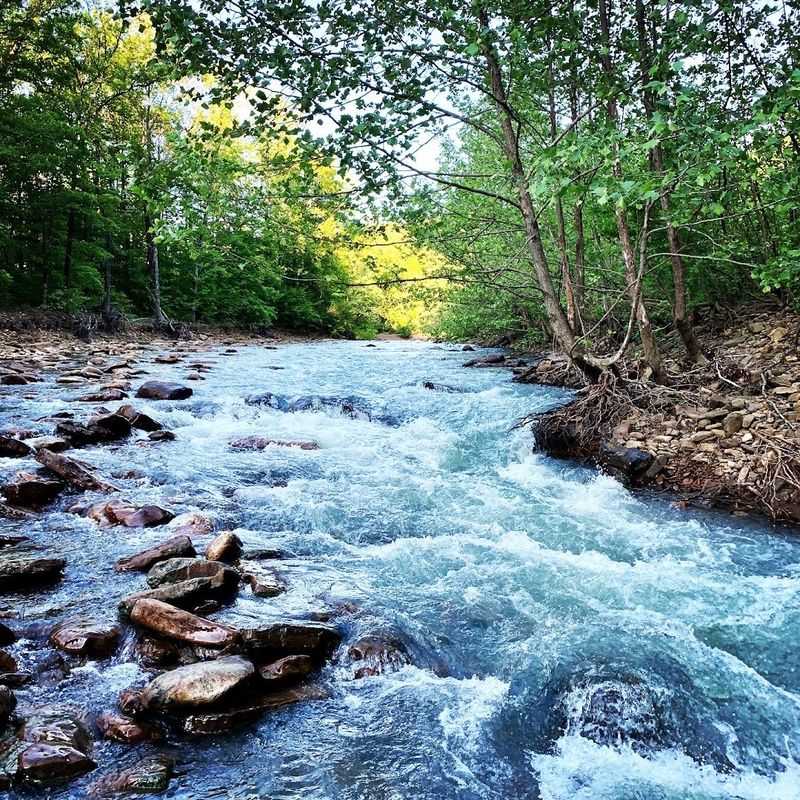
The Mulberry River does not play it safe, and that is exactly why people love it. This river has personality.
It moves fast, bends sharply, and drops over ledges in ways that keep every paddle stroke interesting.
Flowing through the Ozark National Forest for roughly 56 to 70 miles, the Mulberry earned its designation as a state scenic river in 1985. The National Wild and Scenic Rivers program agreed and added it to their list, too.
The water clarity is almost absurd. Even after rainfall, you can count individual stones on the riverbed.
That kind of visibility is rare, and the Mulberry delivers it consistently.
Narrow canyons squeeze the river between towering tree-lined bluffs. The scenery shifts constantly, and you never quite know what the next bend will reveal.
Spring is when the Mulberry truly shows off. Snowmelt and spring rains push water levels up, creating fast-moving sections that whitewater enthusiasts specifically plan trips around.
Summer floats are more mellow as levels drop, but the clear water becomes even more visible. Wading, swimming, and lounging on gravel bars become the main activities.
Wildlife sightings along the Mulberry are frequent and exciting. River otters, kingfishers, and the occasional black bear near the shoreline keep your eyes busy.
Camping along the river is popular and accessible. Several Forest Service campgrounds sit nearby, and primitive camping on gravel bars adds a real wilderness feel to your trip.
Beginners should respect this river during high water. The rapids can be challenging, and scouting before running any unfamiliar drops is always smart advice.
Local outfitters near Ozark and Mulberry handle rentals and shuttles with ease. They know the river well and can match you to the right section based on your skill level.
6. Caddo River
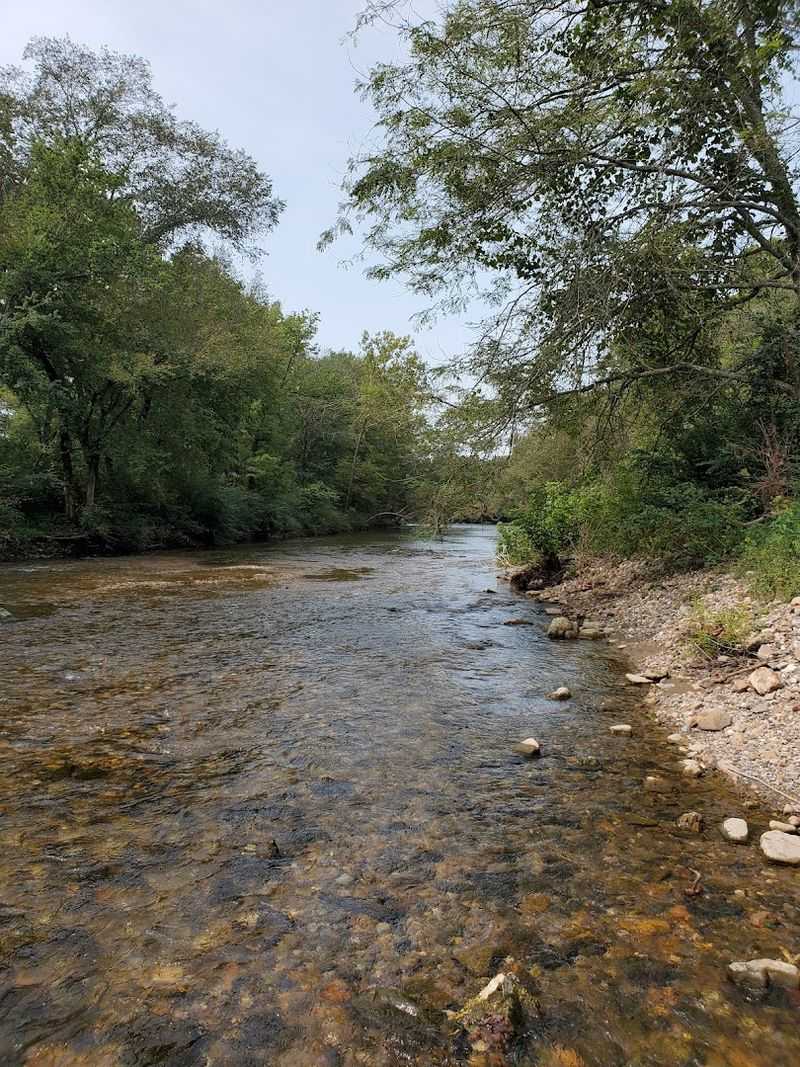
Not every great float has to be an extreme adventure. The Caddo River proves that calm, clear, and beautiful is its own kind of perfect.
Winding approximately 45 miles through the Ouachita Mountains, the Caddo moves at a pace that invites you to slow down. The water shifts between glassy pools and gentle rapids in a rhythm that feels almost intentional.
The clarity here is impressive. Sandy and gravelly stretches on the riverbed are fully visible from your canoe, and the water takes on a gorgeous green tint in the deeper pools.
Families love the Caddo for good reason. The current is manageable, the scenery is stunning, and the gravel bars are perfect for little ones to splash around and hunt for interesting rocks.
Speaking of gravel bars, they appear frequently and generously along this river. Pull over for a picnic, set up a hammock between two riverside trees, or just sit and listen to the sound of moving water.
Primitive camping on the gravel bars is allowed in many sections. Spending a night under an Ouachita Mountain sky with the river gurgling nearby is a genuinely restorative experience.
The surrounding landscape feels different from the Ozarks. Pine forests mix with hardwoods, and the hills have a softer, rounder shape that gives the whole area a distinct character.
Fishing on the Caddo is rewarding. Largemouth and smallmouth bass are common catches, and the clear water lets you see exactly where the fish are holding.
Summer is peak season, but spring floats are equally enjoyable with slightly higher water levels. Fall brings color to the forest canopy and cooler paddling temperatures.
The Caddo is one of those rivers that surprises first-time visitors. Nobody expects it to be this pretty, and that surprise is part of its charm.
7. Little Missouri River
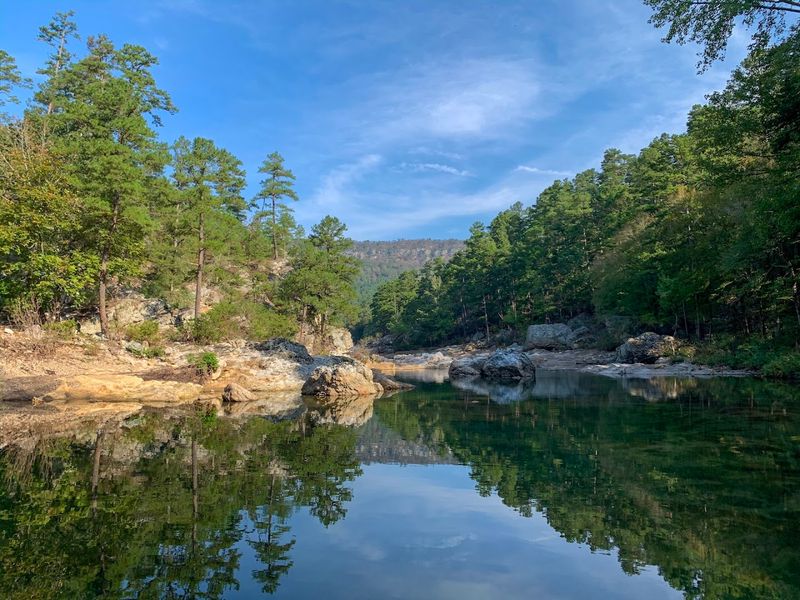
The Little Missouri River is one of Arkansas’s best-kept secrets, and I say that with full awareness that I am about to blow its cover. This river is genuinely stunning, and not enough people know about it.
Located in the Ouachita Mountains near Langley, the Little Missouri runs through a narrow forested valley that feels completely removed from modern life. The water is a deep emerald green in the pools and crystal clear in the shallows.
Smooth boulders line the banks and sit mid-channel, creating natural obstacles that make the float feel like a puzzle worth solving. The scenery around every bend rewards your curiosity.
Little Missouri Falls is one of the highlights of this river corridor. The waterfall drops dramatically into a pool below and is worth the short hike from the campground to see it up close.
The river flows through the Ouachita National Forest, which means the surrounding land is protected and well-maintained. Trails connect to the river in several spots for those who want to mix hiking with paddling.
Water levels fluctuate seasonally, and spring is generally the best time to float. Late summer can see lower levels, but the clear water makes for excellent swimming and wading regardless.
Wildlife along the Little Missouri is abundant. Wood ducks, herons, and songbirds fill the forest canopy with noise.
Deer are commonly spotted drinking at the river’s edge in the early morning.
The atmosphere here is quieter than the more famous Ozark rivers. Fewer crowds mean more solitude, and that solitude feels like a luxury on a warm Arkansas afternoon.
Camping at Albert Pike Campground puts you right on the river. Waking up to the sound of the Little Missouri outside your tent is the best possible alarm clock.