
The Often-Missed Massachusetts Town That’s Basically A Real-Life Postcard
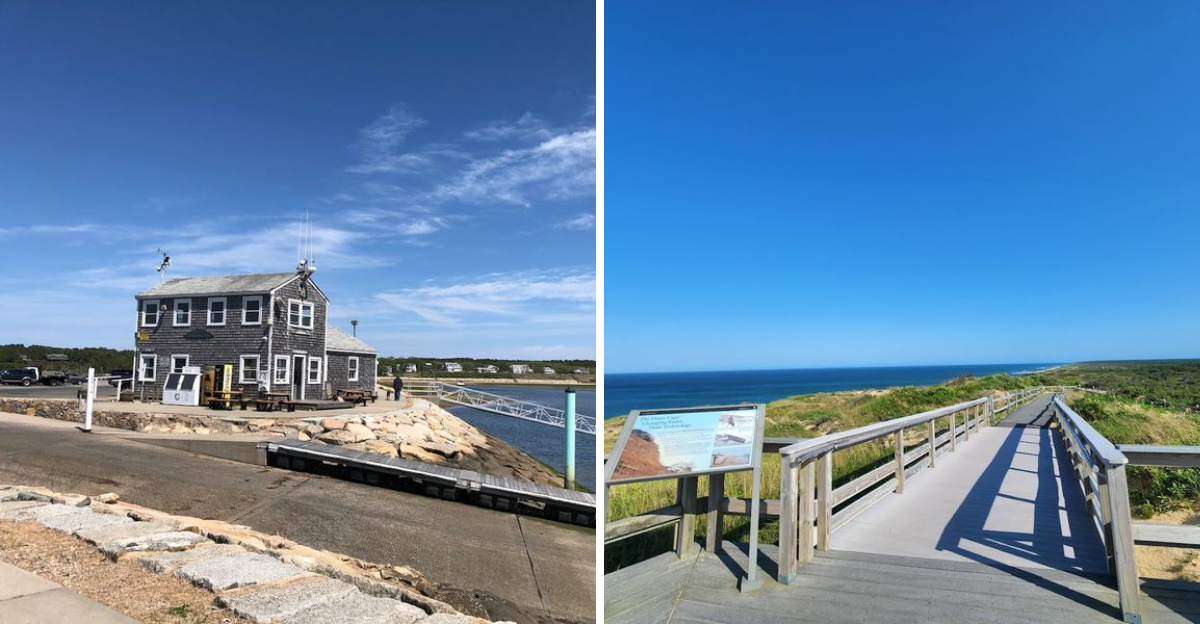
Some towns look pretty in photos. Others make you stop mid-walk and wonder why more people are not talking about them.
Massachusetts has plenty of postcard-worthy places, but this coastal town brings a softer kind of magic. Think weathered cottages, salty air, quiet roads, and water views that seem made for slow wandering.
It is the sort of place where a simple afternoon can turn into something memorable. One minute, you are admiring old storefronts. Next, you are watching the light shift over marshes, beaches, and boats.
There is charm here, but it does not shout. That is exactly the appeal.
For travelers who love Cape Cod scenery without the busiest crowds, this Massachusetts town feels like a calm little frame pulled straight from a postcard.
The Cape Cod National Seashore And What It Means For Wellfleet
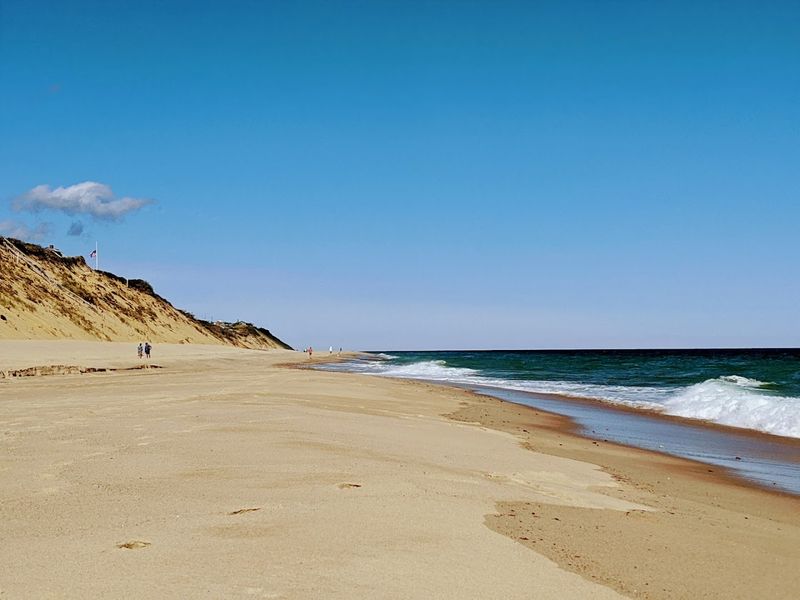
Roughly 70 percent of this town’s land area sits under some form of protection, and a large share of that belongs to the Cape Cod National Seashore. That figure alone tells you something important about the character of this town.
Development here has been kept at a respectful distance from the landscape, which means the beaches, dunes, and forests look largely the same as they did generations ago.
The National Seashore headquarters is actually based here, making the town a central hub for the entire protected region.
Visitors can stop at the Salt Pond Visitor Center nearby to get trail maps, ranger-led program schedules, and exhibits on the area’s natural and cultural history.
For anyone who enjoys walking without a crowd, the preserved land offers trails through Atlantic white cedar swamps, open moorland, and coastal forest.
Marconi Beach, one of the most popular Atlantic-facing shores along the Seashore, draws swimmers and photographers alike.
The cliffs above the beach offer a sweeping view of the ocean that genuinely stops people mid-sentence. The town owes much of its visual identity to this remarkable stretch of protected coastline.
Wellfleet Oysters And The Flavor That Built A Town
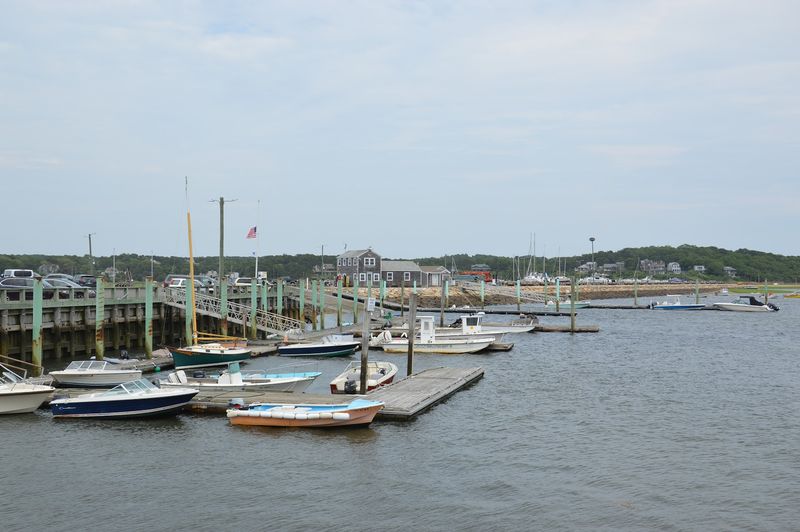
There are oysters, and then there are Wellfleet oysters. Locals will tell you the difference is immediate the moment one touches your tongue.
The cold, clean waters of Wellfleet Harbor produce a shellfish with a distinctly briny, crisp flavor that has made this small town famous far beyond Massachusetts.
Oyster farming has been part of Wellfleet’s identity since the 17th century, when the town’s maritime economy depended heavily on harvesting shellfish from the bay. That tradition never really stopped.
Today, the harbor supports a thriving aquaculture industry, and restaurants throughout the village serve freshly shucked oysters daily during the warmer months.
Every October, the town hosts the Wellfleet OysterFest, an outdoor celebration that draws tens of thousands of visitors for tastings, cooking demonstrations, and live music. It is one of the most attended food festivals on Cape Cod.
Even if your visit falls outside festival season, you can find raw bars and seafood shacks along the harbor serving oysters pulled from the water just hours before. Few culinary experiences in New England feel this honest or this fresh.
Wellfleet, Massachusetts, earned its reputation one shell at a time.
Cahoon Hollow Beach And The Surf Culture Few Expect To Find
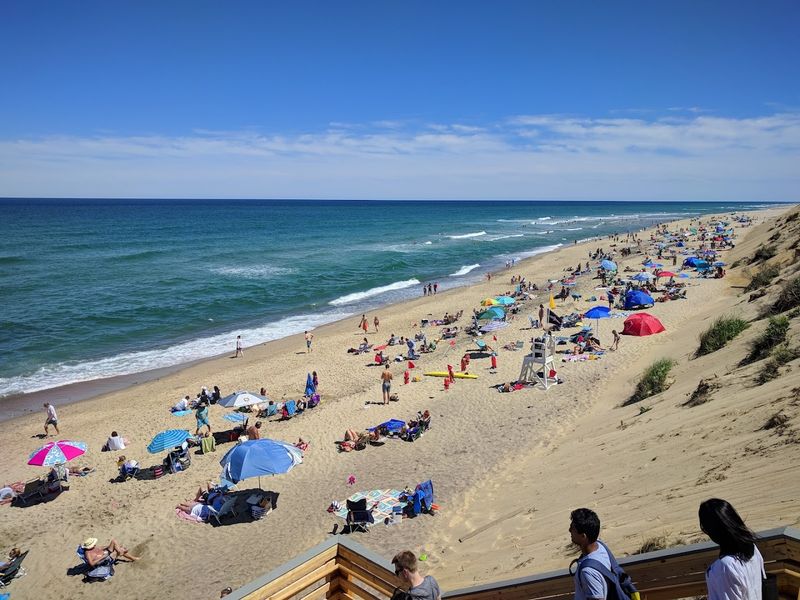
Most people associate Cape Cod with calm bay swimming and sunburned families building sandcastles. Cahoon Hollow Beach offers a different experience entirely.
Facing the open Atlantic, this stretch of coastline produces consistent swells that attract surfers from across New England, particularly in late summer and early fall.
The beach sits below dramatic sand cliffs that glow warm amber in the afternoon light.
A wooden staircase descends from the parking area to the sand, and the walk alone feels like a small reward.
At the top of those cliffs sits the Beachcomber, a bar and restaurant that has operated in a former lifesaving station since the 1970s.
It is one of the most atmospheric places to eat on the entire Cape, with live music most summer evenings and an unobstructed view of the ocean.
Lifeguards are on duty during peak season, and the beach draws a younger, more energetic crowd than some of Wellfleet’s quieter bayside spots. Bodyboarders, paddlers, and casual swimmers all share the water alongside the surfers.
The energy here is relaxed but alive, which makes Cahoon Hollow one of the more memorable stops on any Wellfleet itinerary.
The Art Galleries Downtown And Why Wellfleet Became A Creative Hub

Provincetown gets most of the attention when people discuss Cape Cod’s art scene, but Wellfleet holds a quiet and well-earned second place.
The town was designated a Massachusetts Cultural District in 2017.
Walking through the downtown area on a summer afternoon, you pass gallery after gallery occupying historic clapboard buildings that date back to the 18th and 19th centuries.
The art on display ranges from traditional seascapes and maritime paintings to contemporary sculpture and photography.
Many of the artists represented here live and work locally, which gives the galleries a personal, studio-adjacent quality that larger art markets rarely replicate.
Gallery openings during the summer season draw both collectors and casual visitors, creating an atmosphere that feels genuinely engaged rather than performative.
The bookstores along the main street carry thoughtful selections of local history, regional fiction, and natural science titles that reflect the town’s intellectual character.
A stroll through Wellfleet’s downtown is less a shopping trip and more a slow, pleasurable conversation with a place that takes creativity seriously without making a fuss about it.
The Marconi Station Site And A Moment That Changed Communication
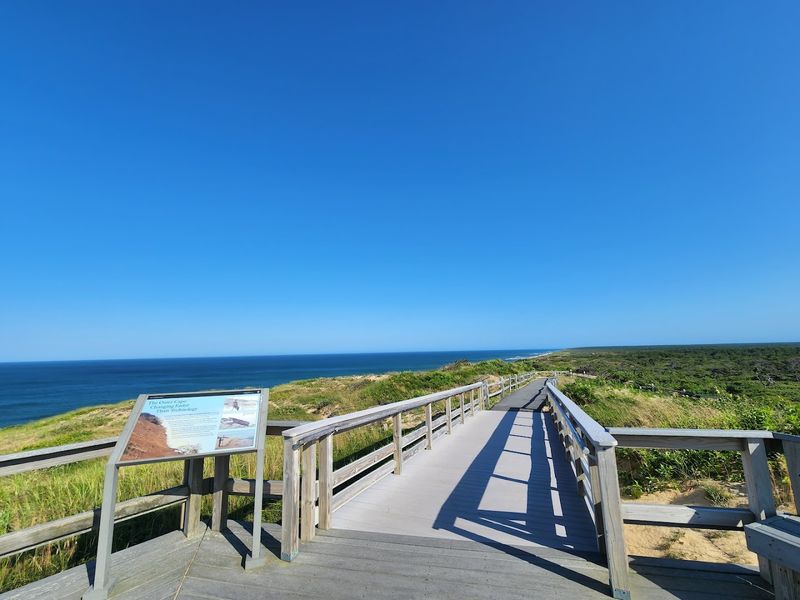
In 1903, President Theodore Roosevelt and King Edward VII exchanged a wireless message across the Atlantic Ocean. That transmission originated from a station built in South Wellfleet, Massachusetts.
Guglielmo Marconi had constructed the United States’ first transatlantic radio transmitter right here on the Outer Cape between 1901 and 1902.
The original towers are long gone, claimed by coastal erosion over the decades.
What remains is a modest but evocative site managed by the Cape Cod National Seashore, with interpretive panels explaining the technology and its historical significance.
The cliffs at this location are striking on their own, offering some of the most dramatic Atlantic views on the Cape.
Standing at the Marconi Site, it is easy to appreciate just how bold the experiment was. The equipment was enormous, the science was new, and the stakes were high.
Yet the signal crossed the ocean and changed everything.
A short trail leads from the parking area to the overlook, and the Atlantic White Cedar Swamp Trail begins nearby, offering a completely different kind of walk through a rare inland ecosystem.
History and nature share the same address here in Wellfleet.
Mass Audubon Wellfleet Bay Wildlife Sanctuary And The Birds That Pass Through
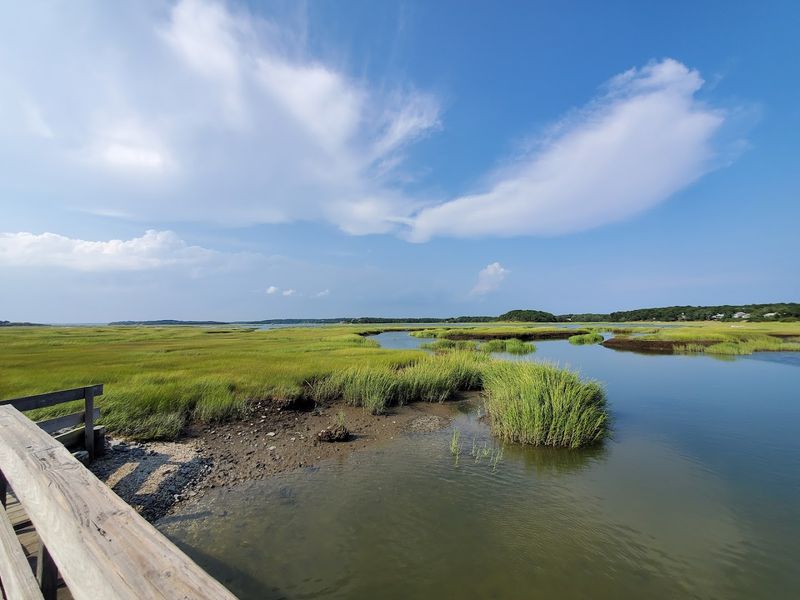
Over 1,000 acres of salt marsh, pine woodland, and tidal flat make the Wellfleet Bay Wildlife Sanctuary one of the most ecologically significant properties on the Outer Cape.
The sanctuary sits along the western edge of town facing Cape Cod Bay and functions as a critical resting point for migratory shorebirds traveling the Atlantic Flyway each year.
Five miles of well-maintained trails wind through habitats that shift dramatically within short distances.
You can move from open marsh to dense forest to tidal creek within a single walk, and the diversity of bird species you encounter along the way reflects that habitat variety.
Ospreys, herons, terns, and dozens of shorebird species use the sanctuary regularly during migration periods in spring and fall.
The sanctuary also runs educational programs for adults and children, including guided bird walks, marine biology explorations, and evening bat watches.
A small nature center at the entrance provides maps and species information.
Even visitors with no particular interest in birds tend to find the trails calming and visually absorbing. The quality of light over the marsh in the late afternoon is the kind of thing painters travel long distances to capture.
The sanctuary is located off Route 6 on the western side of Wellfleet, Massachusetts.
The Kettle Ponds Of Wellfleet And The Glaciers That Made Them
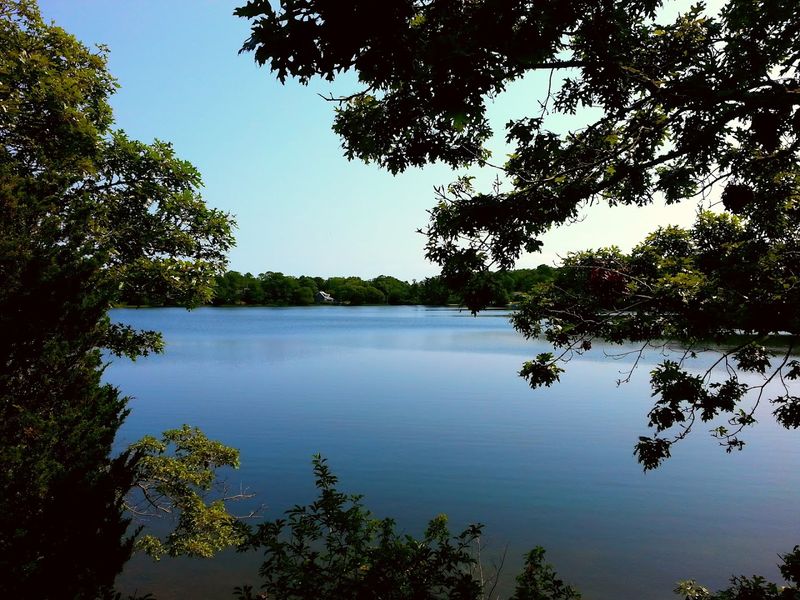
Long after the last glaciers retreated from Cape Cod roughly 18,000 years ago, they left behind something remarkable: hundreds of bowl-shaped depressions in the landscape that eventually filled with cold, clear groundwater.
These are kettle ponds, and Wellfleet has some of the finest examples on the entire Cape.
Gull Pond, Higgins Pond, and Long Pond are among the most visited, offering calm freshwater swimming in conditions that feel almost tropical on a warm August afternoon.
The water clarity in these ponds is exceptional, a product of the sandy, glacially deposited soil that filters groundwater naturally over centuries.
There are no motorboats allowed on most of them, which keeps the surface smooth and the atmosphere peaceful.
Families with children appreciate the kettle ponds because the water warms more quickly than the ocean and the absence of surf makes swimming more manageable for beginners.
Kayakers and canoeists use the larger ponds for gentle paddling, and the surrounding pine and oak forest provides shade along the shoreline.
On a busy beach day when the ocean crowds feel overwhelming, the ponds offer a quieter and equally beautiful alternative. Wellfleet’s glacial ponds are one of the town’s most underappreciated features.
Uncle Tim’s Bridge And The Walk Every Visitor Remembers
Short walks can leave long impressions.
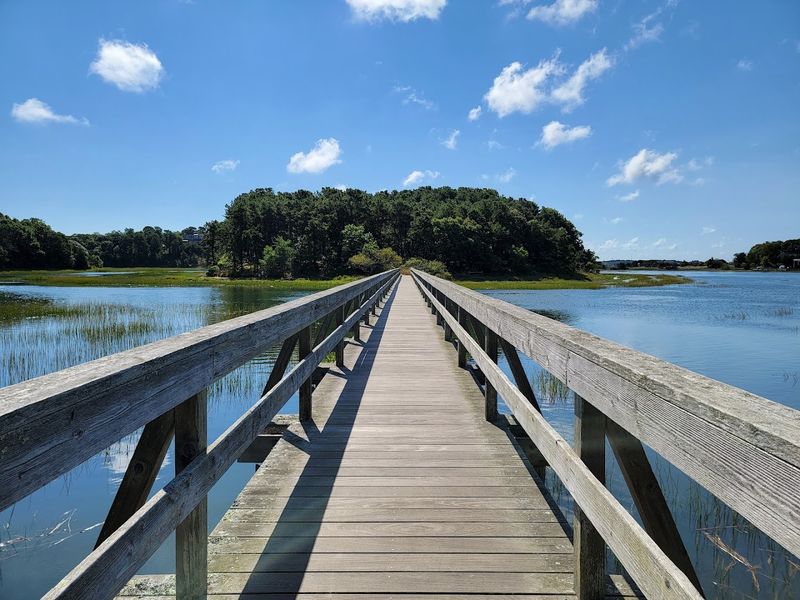
Uncle Tim’s Bridge, a wooden pedestrian footbridge spanning a tidal creek and salt marsh just off the Wellfleet village center, is one of experiences visitors mention years after their trip.
The bridge leads to a small wooded island called Cannon Hill, and the views from the crossing are quietly extraordinary.
At low tide, the marsh grasses glow a vivid green-gold, and the creek below reveals its sandy bottom. At high tide, the water rises around the bridge supports and the whole scene takes on a more dramatic, open quality.
Early morning fog adds yet another dimension, turning the marsh into something that looks lifted from a watercolor painting.
The walk across and around the island takes no more than thirty minutes at a leisurely pace, making it accessible for nearly everyone regardless of age or fitness level.
Locals use it as an evening stroll, photographers use it as a reliable spot for golden-hour images, and first-time visitors often find it unexpectedly moving.
The bridge is located near the intersection of Chequessett Neck Road and Kendrick Avenue in Wellfleet and there is a small parking area nearby. It costs nothing to visit and asks only for your attention.
The Wellfleet Drive-In And A Tradition That Refuses To Fade
Drive-in theaters have largely disappeared from the American landscape, which makes the Wellfleet Drive-In feel like a minor miracle.
Operating since 1957 on Route 6, it remains one of the few functioning drive-ins in all of New England and has become as much a cultural institution as a place to watch movies.
During the day, the property transforms into one of the largest outdoor flea markets on the Cape, with vendors selling antiques, clothing, produce, and curiosities of every description.
Families browse the market in the morning and return in the evening for double features under the stars.
The combination of flea market and cinema on the same site gives the property a lively, communal character that feels genuinely rare in contemporary travel.
The drive-in shows first-run films throughout the summer season, and the concession stand serves the kind of popcorn and hot dogs that seem to taste better outdoors at night.
Tuning your car radio to the broadcast frequency and watching a film with the windows down on a warm Cape Cod evening is a simple pleasure that most visitors find memorable.
The Wellfleet Drive-In is located at 51 Route 6 in Wellfleet, Massachusetts, and reservations are recommended during peak summer weeks.
The First Congregational Church Clock And The Town’s Maritime Soul

Not every town has a clock that tells time the way sailors once needed it told.
The First Congregational Church of Wellfleet still strikes ship’s time on its bell, a practice carried over from the days when sailors needed to track their watches at sea.
Ship’s time divides the day into four-hour watches, with bells struck in pairs to mark each half-hour increment.
Hearing those bells ring out over the town center is one of those small, specific details that makes Wellfleet feel genuinely different from other Cape Cod villages.
It is not a performance or a tourist attraction. It is simply how the church has always kept time, and the tradition has never been abandoned.
The church itself dates to the early 19th century and sits within the Wellfleet Center Historic District, which preserves the architectural character of the town as it existed in the late 1700s and 1800s.
Walking through the surrounding streets, past Federal-style homes and old burial grounds, gives a clear sense of how tightly Wellfleet holds onto its past.
The church is located on Main Street in Wellfleet, Massachusetts, and the cemetery adjacent to it contains headstones dating back to the colonial period.