
This Scenic Coastal Town In Massachusetts Feels Like Escaping To Scandinavia
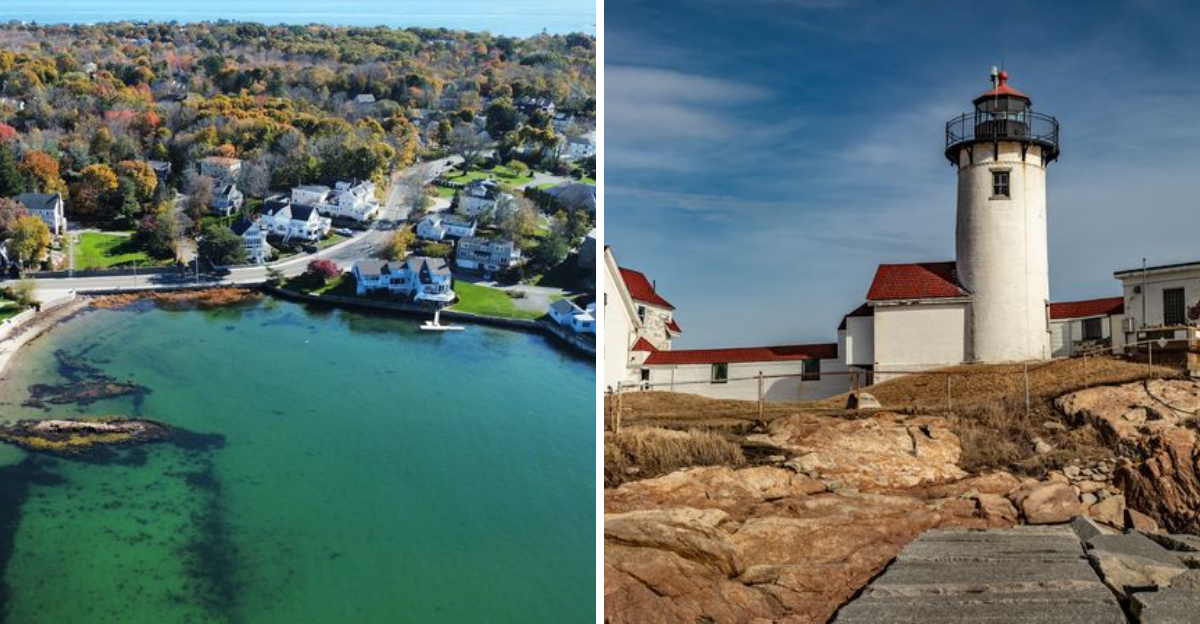
Salt air, rocky shores, and a working harbor can make a place feel worlds away without leaving Massachusetts. This coastal town has that crisp northern charm, the kind that makes you think of weathered boats, bright water, and seaside streets built for slow wandering.
There is a rugged beauty here that feels a little Scandinavian in spirit.
Think dramatic ocean views, old maritime character, cozy places to eat, and a shoreline that looks even better when the light hits it just right.
Want a coastal escape with more personality than a typical beach day? This Massachusetts town brings history, scenery, and salty charm together in one unforgettable setting.
It is not polished in a boring way. It feels real, lively, and beautifully shaped by the sea, making it a summer stop that feels far beyond New England.
America’s Oldest Seaport And Its Living Maritime Soul
Before Boston had a skyline and before Plymouth had a parade, this place was already a working seaport.
Established in 1623, it holds the distinction of being the oldest continuously operating seaport in the United States, and that history is not preserved behind glass. It breathes.
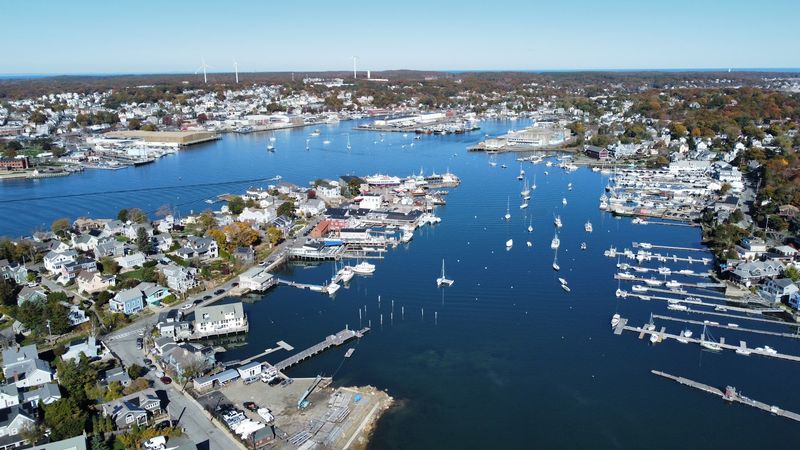
The working waterfront along Rogers Street remains a genuine hub of commercial fishing activity. Lobster traps are stacked high, vessels come and go with the tides, and the smell of the sea is never far away.
This is not a reconstructed fishing village designed for tourists. It is the real thing, operating much as it has for centuries.
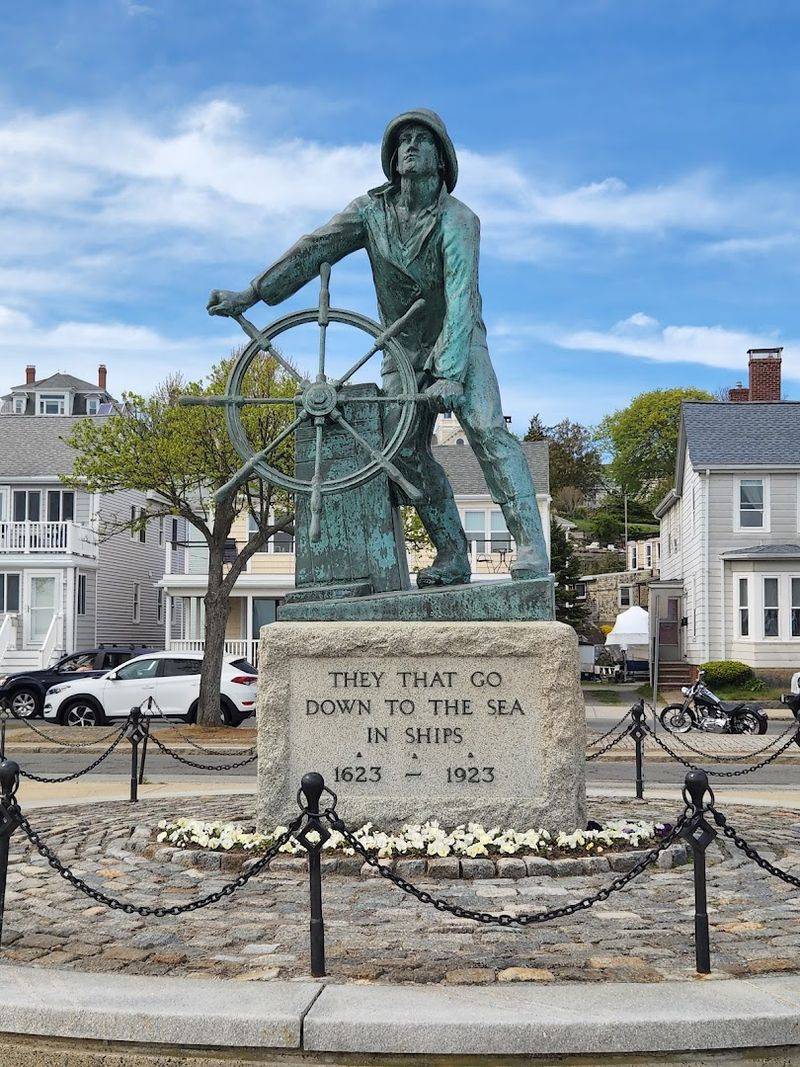
Standing at the harbor, you get a clear sense of what sustained this community through generations. The Fisherman’s Memorial statue, located near the harbor on Stacy Boulevard, pays tribute to the more than 10,000 fishermen lost at sea since the town’s founding.
The inscription reads simply, “They That Go Down to the Sea in Ships.” Few monuments anywhere in New England carry that kind of weight. This place earned its reputation honestly, and the waterfront makes sure you never forget it.
Good Harbor Beach And Wingaersheek Beach Worth Every Step
Not every beach in New England is created equal, and Gloucester’s two signature stretches of sand make a strong case for being among the finest on the entire Atlantic coast.
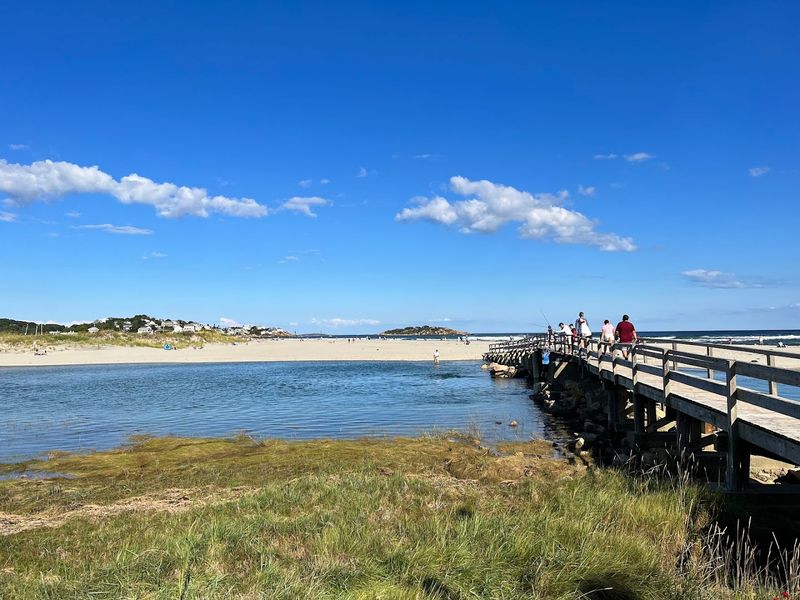
Good Harbor Beach, located off Thatcher Road, offers a wide crescent of pale sand backed by dunes and a barrier beach that connects to Salt Island at low tide.
The water is cold, the way Atlantic water should be, and the views extend across open ocean with no obstruction. Families spread out across the sand, and the surrounding landscape of grass and rock gives the whole scene a distinctly Nordic quality.
It is easy to imagine standing on a shoreline somewhere in southern Finland.
Wingaersheek Beach, situated along Atlantic Street in the West Gloucester area, offers a different experience entirely. The tidal flats here stretch far out at low tide, creating shallow warm pools that are ideal for children and casual waders.
The Annisquam River meets the ocean nearby, adding a layered geography that rewards exploration. Both beaches fill quickly on summer weekends, so arriving early is simply practical advice rather than a casual suggestion.
Scandinavian Immigrant Heritage Woven Into Cape Ann
Starting in the 1870s, a significant wave of Finnish and Swedish immigrants arrived on Cape Ann to work in the region’s booming granite quarrying industry. They brought their languages, their traditions, and their cultural rhythms to a coastline that, in many ways, reminded them of home.
Their descendants are still here.
Lanesville, a neighborhood within Gloucester, became a primary settlement for these communities.
The cultural imprint they left is preserved through organizations like Cape Ann Finns, which maintains archives of family histories that document the Finnish and Finnish-American experience on Cape Ann.
Spiran Lodge continues to celebrate Swedish, Danish, Norwegian, Icelandic, and Finnish heritage through organized events and cultural gatherings.
The Cape Ann Museum has hosted “Scandinavian Winter” events featuring traditional crafts including Swedish Dala Horses and Finnish Stars.
These are not nostalgic performances staged for visitors. They reflect a living cultural thread that has been part of Gloucester’s identity for more than 150 years.
For anyone traveling here with an interest in Scandinavian history outside of Europe, Cape Ann offers a genuinely surprising and well-documented chapter.
Rocky Neck Art Colony, North America’s Oldest Working Art Community
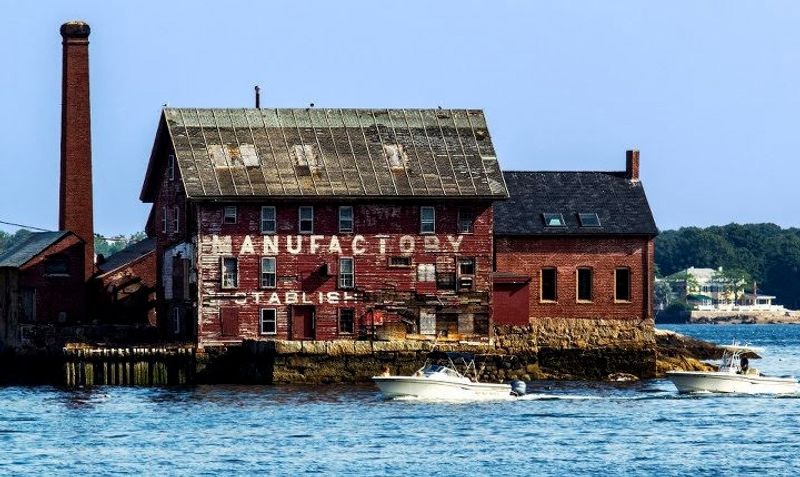
Long before art districts became a selling point for urban redevelopment, Gloucester had Rocky Neck.
Operating continuously since the 1850s, Rocky Neck Art Colony is widely recognized as one of the oldest working art colonies in North America. It remains a functioning creative community rather than a preserved relic.
Located on a small peninsula in East Gloucester, the colony is home to working artists, galleries, and studios that open to the public during the warmer months.
Painters, sculptors, and printmakers share the narrow streets with visitors who come to browse or observe the creative process in a setting that has changed remarkably little over the decades.
The colony’s appeal to artists is easy to understand. The light on the water here is extraordinary, shifting through the day in ways that have challenged and inspired painters for generations.
Winslow Homer, Edward Hopper, and Fitz Henry Lane all spent time working in Gloucester, drawn by that same quality of coastal illumination. Walking through Rocky Neck today, you feel the continuity of that tradition in a way that feels earned rather than manufactured.
Galleries are concentrated along Rocky Neck Avenue in East Gloucester.
The Back Shore’s Dramatic Rocky Coastline
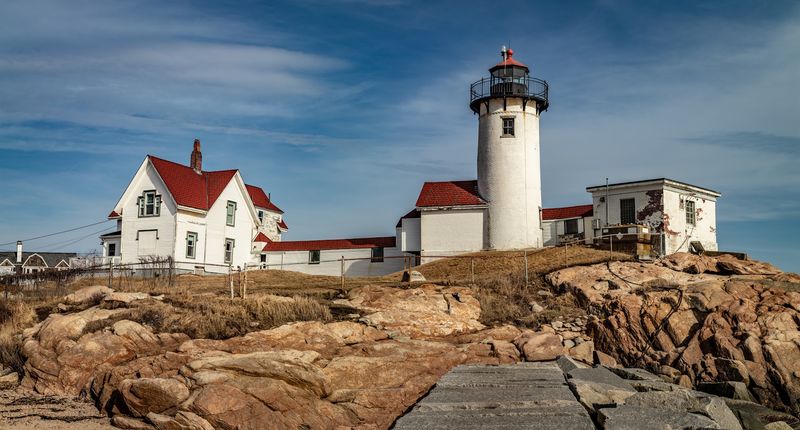
If the sandy beaches represent Gloucester’s softer side, the Back Shore is its unfiltered character.
Stretching along Atlantic Road on the eastern edge of the city, this rugged section of coastline is defined by dark granite ledges, surging surf, and an open horizon.
Driving or cycling along Atlantic Road is one of the most quietly spectacular things you can do in all of Massachusetts. The road hugs the coastline closely, and the views shift with every turn.
On stormy days, waves crash against the rocks with theatrical force. On calm days, the light plays across the water in ways that explain why artists have been coming here for well over a century.
The Back Shore also connects to several parking areas and informal pull-offs where you can simply sit and watch the ocean. There is no admission fee, no organized tour, and no particular agenda required.
The landscape does all the work.
For visitors who associate Scandinavia with rugged coastlines, granite shores, and that particular shade of grey-green sea, this stretch of road will feel immediately and pleasantly familiar.
Hammond Castle Museum And Its Medieval Surprises
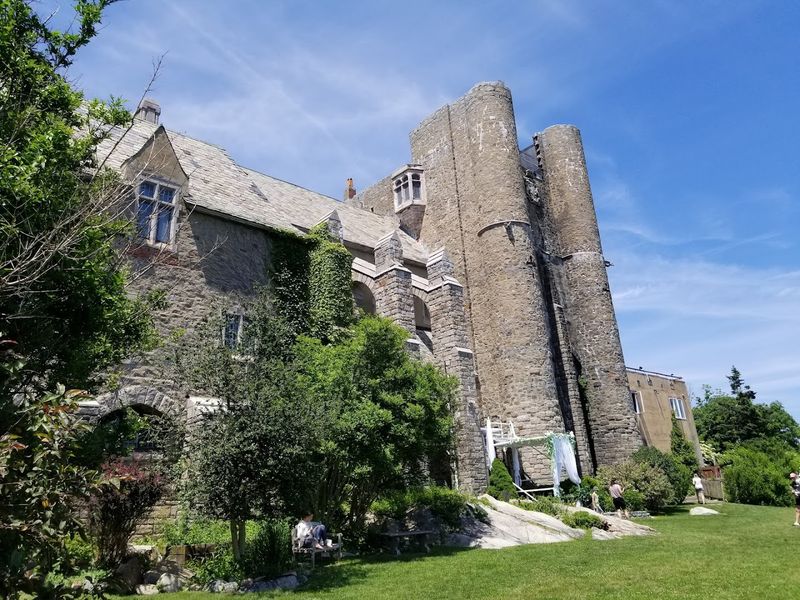
Few buildings in Massachusetts stop visitors mid-sentence the way Hammond Castle does.
This 1920s stone structure was designed to resemble a medieval European castle, complete with a great hall, a Roman courtyard, and an indoor pool.
The castle was built by inventor John Hays Hammond Jr., who held more than 800 patents and had a personality to match his ambitions. He designed the building himself, incorporating architectural elements collected from European structures during his travels.
The result is a layered, eccentric, and genuinely fascinating place that feels unlike anything else in New England.
Inside, the great hall houses one of the largest pipe organs in a private residence anywhere in the world, with over 8,600 pipes. Hammond used it regularly for performances and gatherings.
Today, the museum hosts concerts, tours, and seasonal events that continue to animate the space. For a town already rich in character, Hammond Castle adds a dimension that is entirely its own.
It rewards visitors who appreciate history delivered without predictability, in a building that clearly reflects the mind of someone who never did anything the obvious way.
Dogtown Common, A Forest With A Peculiar History
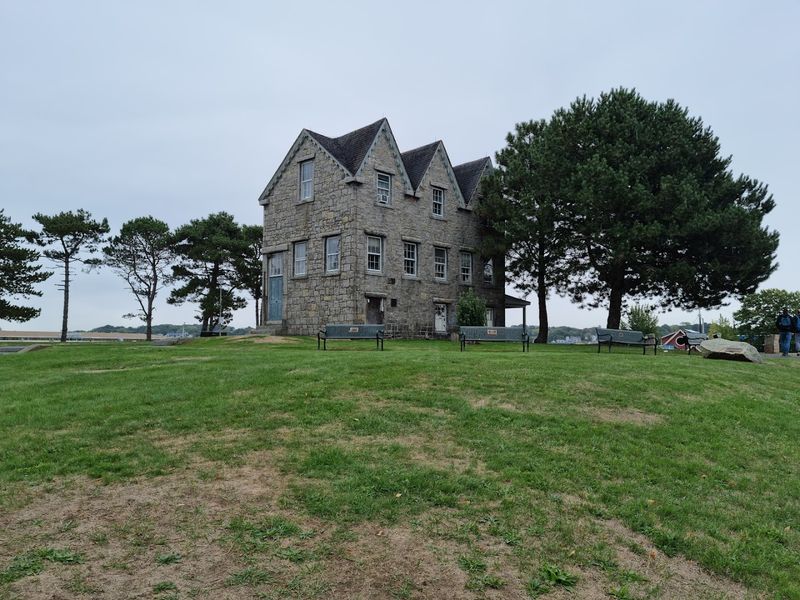
Most coastal towns have a beach or two and call it a day. Gloucester has Dogtown, and Dogtown is something else entirely.
Covering roughly 3,600 acres of forested land in the interior of Cape Ann, this wilderness area is one of the most unusual natural spaces in the northeastern United States.
The area was once a small colonial settlement, abandoned in the early 19th century after its residents died or relocated.
What remained were cellar holes, stone walls, and eventually the large glacial boulders that sculptor Roger Babson had inscribed with motivational phrases during the Great Depression.
Phrases like “Keep Out of Debt” appear carved into granite surfaces throughout the woods, lending the trails a quality that sits somewhere between folk art and outdoor philosophy lecture.
The hiking is genuinely rewarding regardless of the boulders. Trails wind through mixed forest, past reservoirs and wetlands, offering a level of quiet that feels rare this close to a coastal city.
The terrain is hilly and occasionally rough underfoot, so solid footwear is practical rather than optional. Trailheads can be accessed from Dogtown Road off Cherry Street in Gloucester.
The experience is memorable in the way that slightly strange, historically layered places tend to be.
Eastern Point Lighthouse And The Breakwater Walk
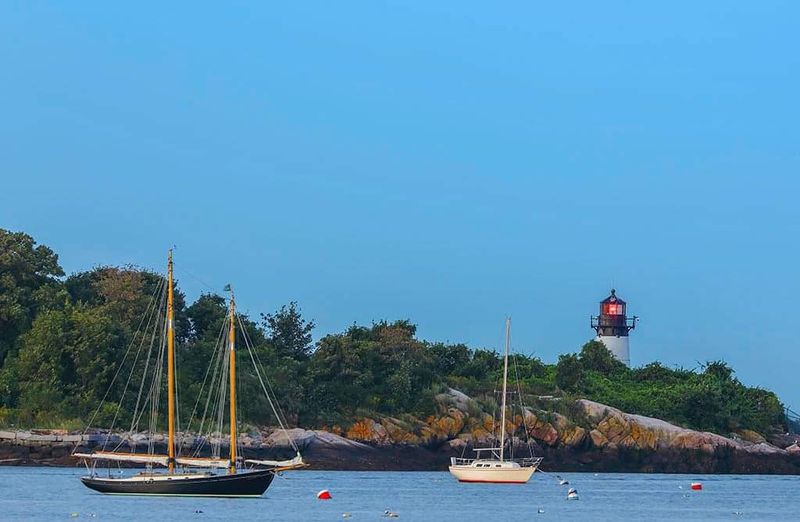
There is a particular satisfaction in walking a long breakwater toward a lighthouse, and the one at Eastern Point delivers it fully. The Eastern Point Lighthouse stands at the southern tip of Eastern Point, a private residential peninsula accessible via Eastern Point Boulevard in Gloucester.
The lighthouse itself dates to 1832, though the current tower was constructed in 1890.
The breakwater extending from the shore is made of rough-cut granite blocks and stretches far enough into the harbor that the walk feels like a genuine undertaking. On calm days, the water on both sides reflects the sky with clarity.
On rougher days, spray comes over the sides and the footing demands attention. Either way, reaching the lighthouse at the end feels appropriately earned.
The surrounding area offers views back toward Gloucester’s harbor and across to the open Atlantic. Dog walkers, photographers, and quiet observers share the space without crowding it.
The lighthouse is listed on the National Register of Historic Places and is maintained by the Coast Guard. It remains an active aid to navigation, which gives the visit a functional dignity that purely decorative landmarks rarely achieve.
Arriving in the early morning, before the day fills in, is the most rewarding time to make the walk.
Ravenswood Park And The Quiet Rewards Of Woodland Trails
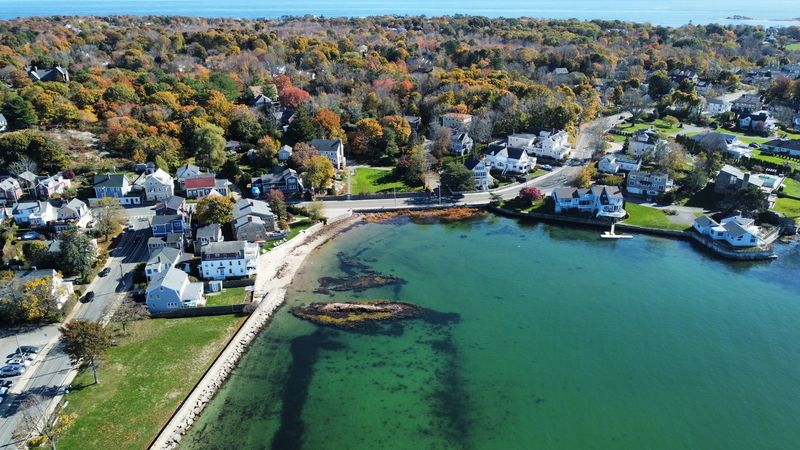
Gloucester’s natural appeal extends well beyond its coastline, and Ravenswood Park makes that case with quiet authority.
This 600-acre woodland preserve sits in the western part of Gloucester along Western Avenue and offers some of the most peaceful trail walking available anywhere on Cape Ann.
The park features a network of well-maintained trails that pass through mature forest, past a Great Magnolia swamp, and along ridges with filtered views of the surrounding landscape.
The terrain is varied enough to stay interesting without becoming demanding, making it accessible to a wide range of visitors.
In spring, the magnolia trees bloom with a density that surprises first-time visitors. In autumn, the canopy turns in deep reds and golds that are easy to appreciate and harder to photograph well.
The park is open year-round and admission is free for Trustees members, with a modest fee for non-members. Wildlife sightings, including great horned owls and white-tailed deer, are common enough to make each visit feel slightly unpredictable.
For anyone who finds that forests restore something that coastlines cannot, Ravenswood offers exactly the right kind of solitude.
Cape Ann Museum And The Art Of Remembering A Place

Understanding Gloucester fully requires a visit to the Cape Ann Museum, located at 27 Pleasant Street in the heart of the city.
The museum serves as the primary cultural repository for the history, art, and identity of Cape Ann.
The collection includes significant works by Fitz Henry Lane, the 19th-century luminist painter whose canvases of Gloucester Harbor rank among the finest maritime paintings in America.
Lane’s ability to capture light on water, particularly in the golden hours of morning and late afternoon, made him one of the most important artists of his era.
Seeing his work in the town that inspired it adds a dimension that reproductions simply cannot replicate.
Beyond Lane, the museum holds collections related to maritime history, decorative arts, archaeology, and the Scandinavian cultural heritage that shaped Cape Ann.
The Scandinavian Winter programming hosted here has introduced visitors to Finnish and Swedish craft traditions in ways that connect directly to the living heritage of Gloucester’s neighborhoods.
The museum is open Tuesday through Sunday and provides an anchor for understanding everything else the city has to offer.