
10 Unusual Facts About Tennessee That Sound Made Up (But Are 100% True)
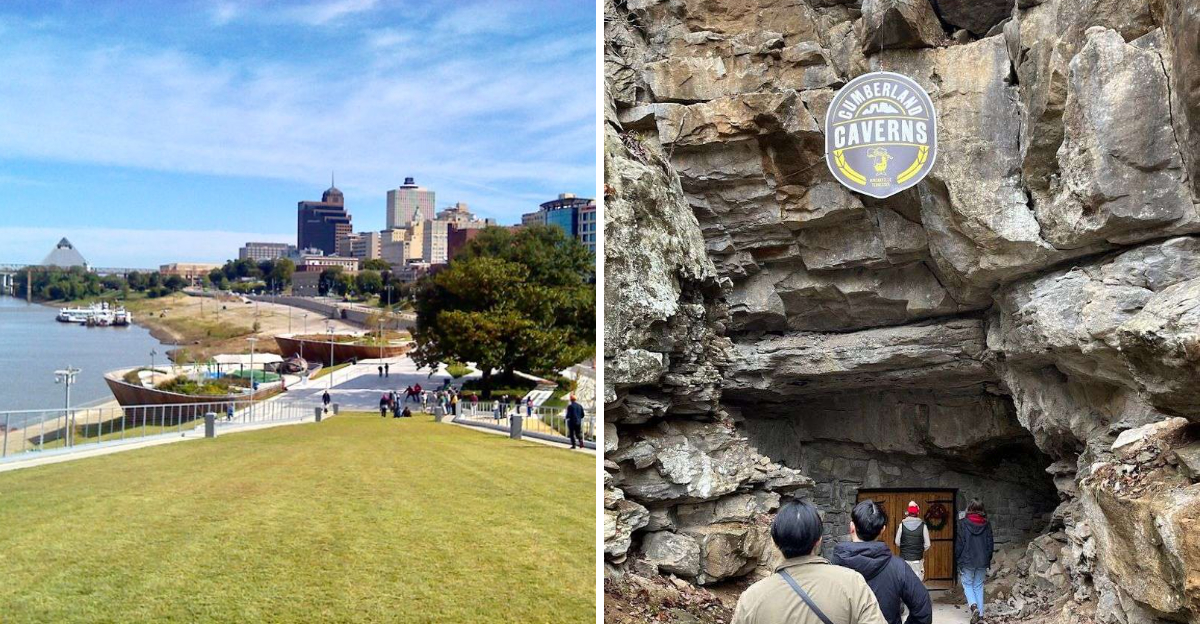
Think Tennessee has already revealed all its secrets? Think again.
This is a state where a town once tried to become the nation’s capital, a cave stretches for hundreds of miles beneath the ground, and a famous soft drink traces part of its story back to a local pharmacy.
Tennessee has a way of turning ordinary conversations into double takes.
One minute you’re talking about music, mountains, or barbecue, and the next you’re learning something that sounds completely invented but happens to be true.
That’s part of what makes the Volunteer State so fascinating.
Beyond the landmarks and well-known attractions lies a collection of stories, records, and oddities that rarely make the front page but never fail to surprise.
Ready for a few facts that sound like they belong in a tall tale? These Tennessee discoveries are real, remarkable, and guaranteed to make you see the state a little differently.
1. Tennessee Is The Birthplace Of The Entire American Music Industry
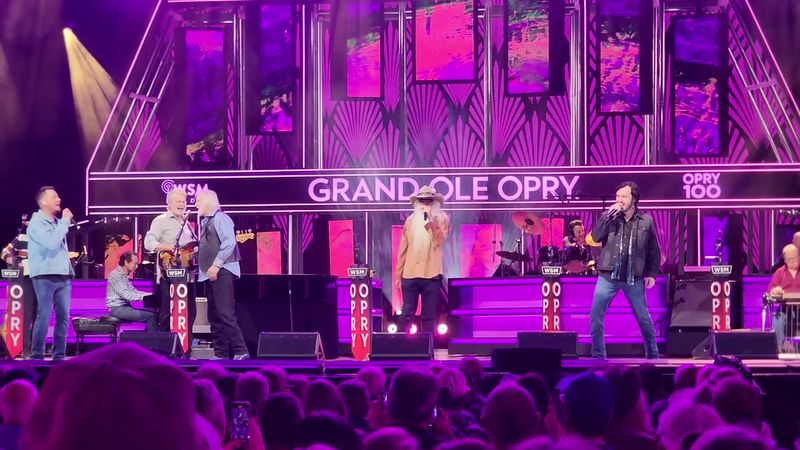
Long before streaming playlists and music festivals took over the world, Tennessee was quietly cooking up the soundtrack for an entire nation.
Nashville gave country music its home, Memphis shaped the blues and soul that shook the world, and Bristol did something so historic that the U.S. Congress officially declared it the “Birthplace of Country Music.”
That is not a marketing slogan. It is a congressional designation, which means the federal government agreed in writing that Tennessee started it all.
Rock and roll, gospel, soul, and country all have deep roots in this one state. You could argue that without Tennessee, American popular music as we know it simply would not exist.
Artists like Elvis Presley, Dolly Parton, Aretha Franklin, and Johnny Cash all built their legends here. Sun Studio in Memphis, the Grand Ole Opry in Nashville, and the Birthplace of Country Music Museum in Bristol are all physical proof of this musical legacy.
Visiting Tennessee with music in mind feels less like tourism and more like a pilgrimage.
Every corner of the state seems to hum with a history that shaped how the whole world listens and dances.
2. Tennessee Is Bordered By More States Than Any Other U.S. State
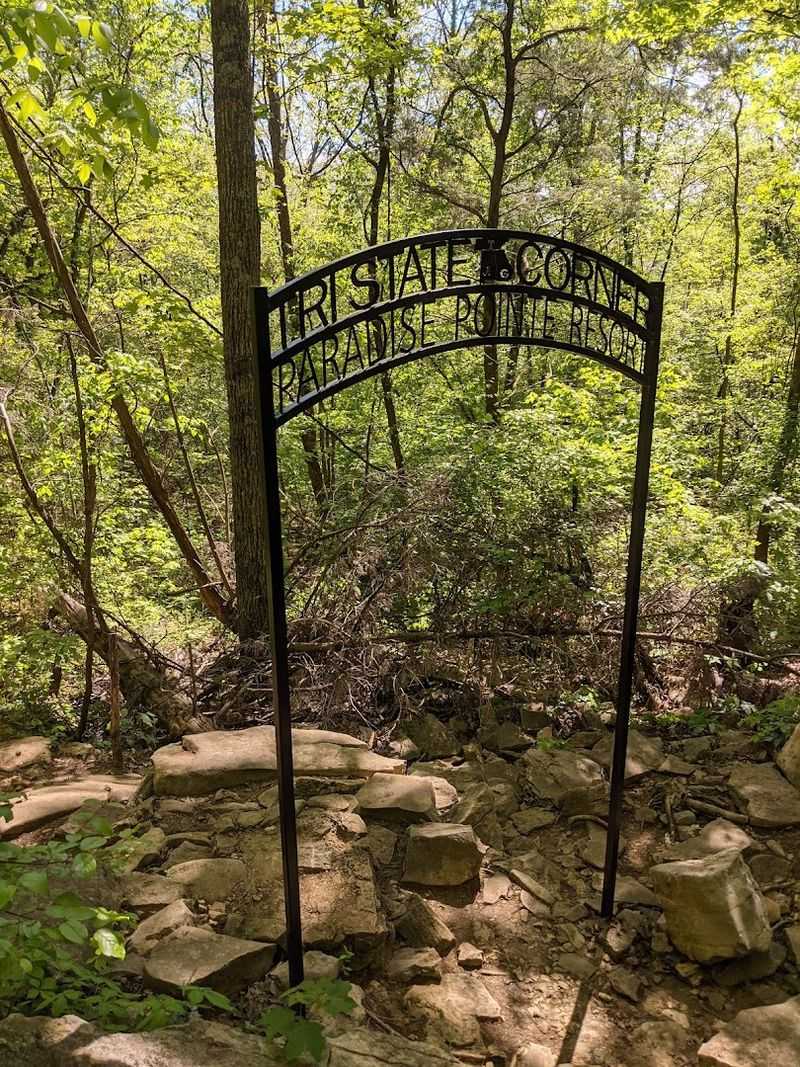
Pull out a map and count the states touching Tennessee. Go ahead, count them carefully: Kentucky, Virginia, North Carolina, Georgia, Alabama, Mississippi, Arkansas, and Missouri.
That is eight states, which ties the record held by Missouri but feels even more impressive when you realize how compact Tennessee actually is compared to its neighbor.
The state stretches roughly 440 miles from east to west but measures only about 120 miles from north to south at its widest point. It somehow managed to squeeze in eight borders without sprawling across a massive area.
This geographic reality makes Tennessee one of the most accessible road trip hubs in the entire country. You can hop into four completely different regional cultures just by driving a couple of hours in any direction.
Craving the Appalachian highlands? Head east.
Want Gulf Coast vibes? Drive south.
Looking for the flat, wide-open Mississippi Delta? Go west.
The Smoky Mountains, the Delta, and the Cumberland Plateau are all within reach from a single Tennessee address.
This state functions almost like a geographic superpower, placing you closer to more destinations than nearly anywhere else on the American map.
3. The Great Smoky Mountains Get More Visitors Than The Grand Canyon And Yellowstone Combined
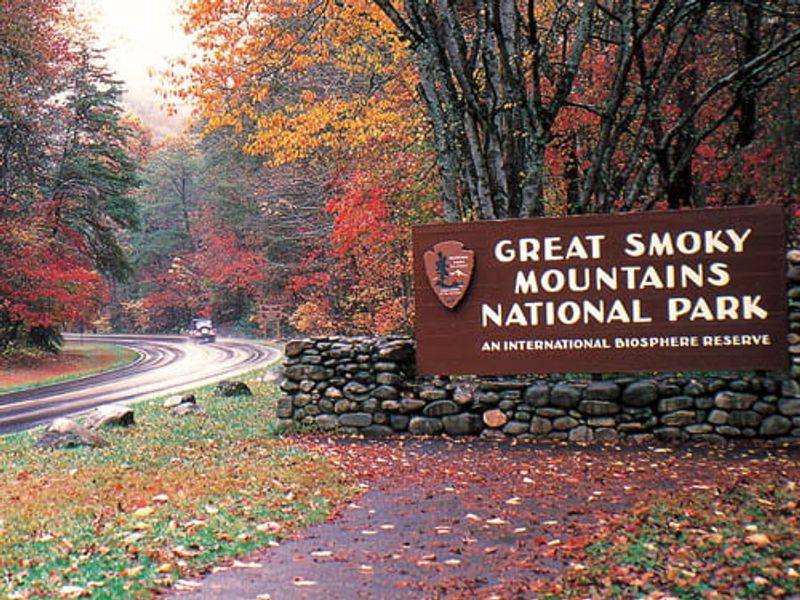
Over 12 million people visit Great Smoky Mountains National Park every single year, making it the most-visited national park in the entire United States by a significant margin.
To put that number in perspective, the Grand Canyon and Yellowstone combined still fall short of what the Smokies pull in annually. That statistic genuinely surprises most people the first time they hear it.
Part of the appeal is accessibility. The park sits within a day’s drive of roughly one-third of the entire U.S. population, and unlike many national parks, it charges no entrance fee.
The scenery certainly does its part too. Layers of blue-gray mist roll across ancient ridgelines in a way that almost looks like a painting someone forgot to finish.
Wildflowers, black bears, waterfalls, and old Appalachian homesteads all share the same trails.
Cades Cove, Clingmans Dome, and Alum Cave Trail are perennial favorites, but even the quieter corners of the park carry an atmosphere that feels genuinely untouched.
If you have never visited, the Smokies have a way of making first-timers feel like they discovered something the rest of the world somehow overlooked.
4. Chattanooga Had The World’s First Electric Streetcar System
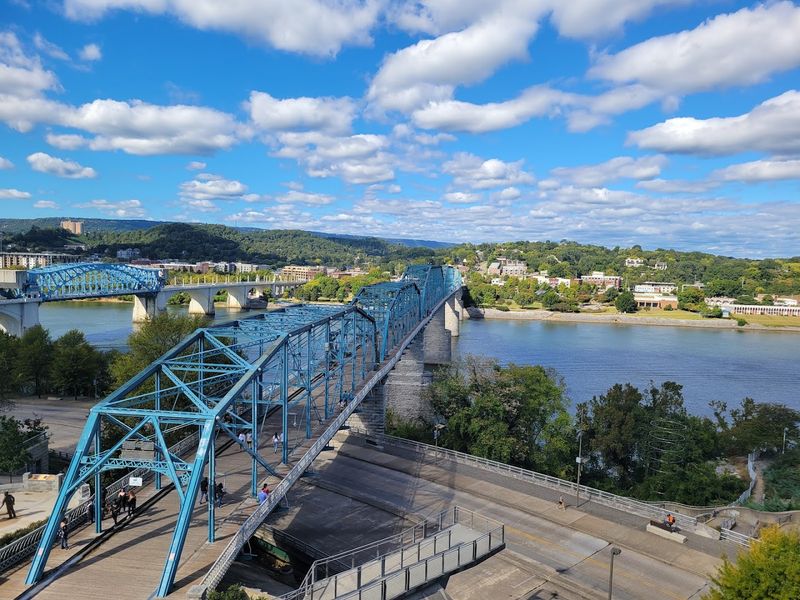
In 1886, most American homes were still lit by candles or oil lamps, and horses were the primary way anyone got around a city. Chattanooga had other ideas.
That year, the city launched the world’s first electric streetcar system, beating out cities like New York, Chicago, and London to a technology that would reshape urban transportation.
The system ran along Electric Street and represented a genuinely bold leap forward for a mid-sized Southern city that most people outside the region had barely heard of at the time.
What makes this fact so strange is the timing.
Reliable electric lighting in private homes was still a novelty for most people, yet Chattanooga was already moving passengers down city streets using electric-powered vehicles on rails.
Today, Chattanooga honors that legacy with its free electric shuttle system, which still operates downtown and connects visitors to the Tennessee Aquarium and the Walnut Street Bridge.
The city has leaned into its reputation as an innovation hub ever since, becoming one of the first U.S. cities with gigabit internet available citywide. Apparently, Chattanooga has always enjoyed being ahead of the curve by a comfortable margin.
5. The State Has More Than 10,000 Caves, Earning It The Nickname ‘The Cave State’ Among Spelunkers
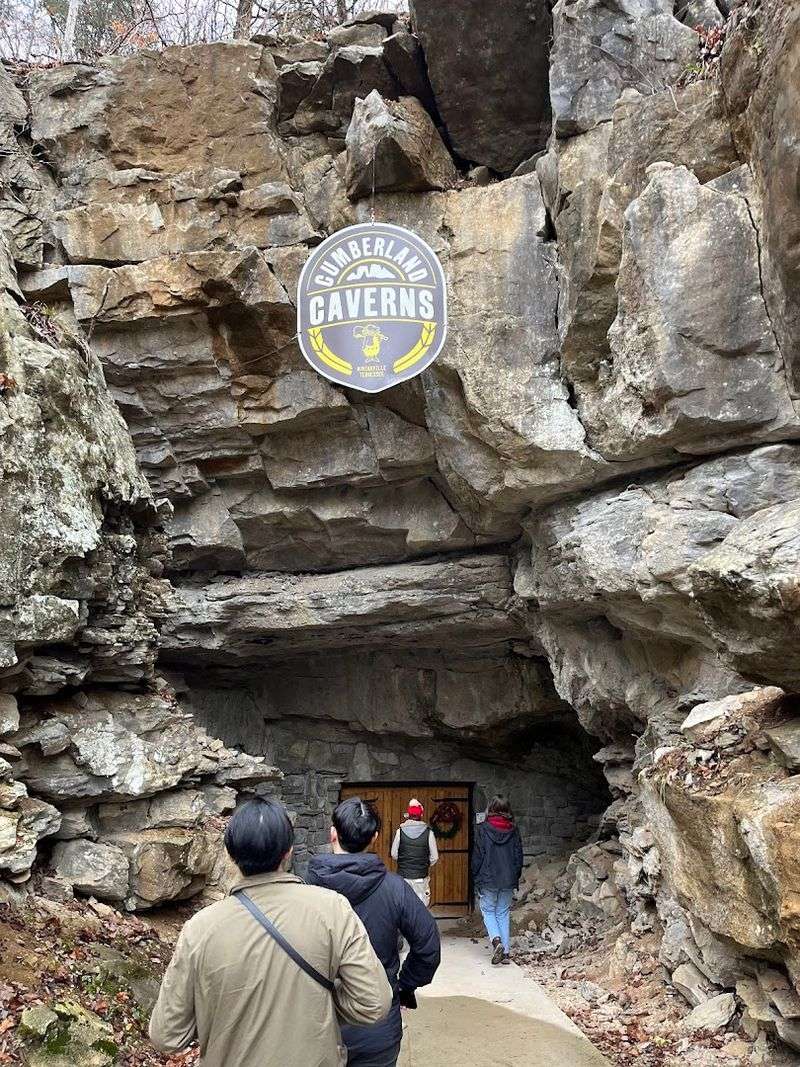
Tennessee sits on top of one of the most cave-rich landscapes on earth, with over 10,000 documented caves carved into its limestone bedrock over millions of years.
Spelunkers, which is the official term for people who explore caves recreationally, have nicknamed Tennessee “The Cave State,” and the title is well earned. The real kicker is that thousands of these caves have never been fully explored.
The Lost Sea in Sweetwater is perhaps the most famous of them all.
It holds the record as the largest underground lake in the United States and has been designated a Natural Landmark by the U.S. government.
Guided boat tours take visitors across the glassy underground water while rainbow trout swim lazily beneath the surface. The experience feels completely surreal, like something out of a fantasy novel rather than a Tennessee afternoon.
Cumberland Caverns near McMinnville is another standout, featuring massive underground chambers large enough to host concerts and events. Yes, actual live music performances happen underground in Tennessee.
For anyone curious about what lies beneath the surface, the answer is a labyrinth of passages, lakes, and chambers that geologists are still actively working to fully understand and map.
6. The Word ‘Tennessee’ Itself Comes From A Cherokee Village Name ‘Tanasi’
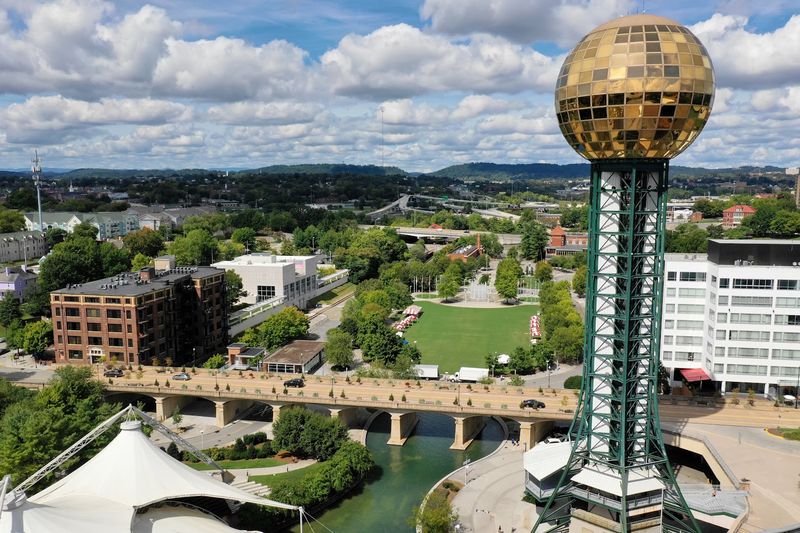
Every time someone says the word Tennessee, they are unknowingly repeating a name that traces back to a Cherokee village that existed centuries before European settlers arrived in the region.
The village was called Tanasi, located along the Little Tennessee River, and historians have debated its meaning for generations. The surprising part is that nobody has settled on a definitive answer.
The origin of the state’s own name is genuinely a mystery.
A state with millions of residents, a rich recorded history, and major universities studying its past still cannot say for certain what its own name originally meant to the people who first used it.
Some researchers believe Tanasi referred to a gathering place or meeting spot. Others suggest it may have described the river itself or a specific geographic feature near the village.
What is clear is that the Cherokee Nation had a profound and lasting presence throughout this region long before Tennessee became a state in 1796. Place names like Chattanooga, Sequatchie, and Tellico all carry Cherokee origins as well.
Traveling through Tennessee with this linguistic history in mind adds a quiet layer of depth to every road sign and map.
7. The First Miniature Golf Course In America Was Built In Tennessee
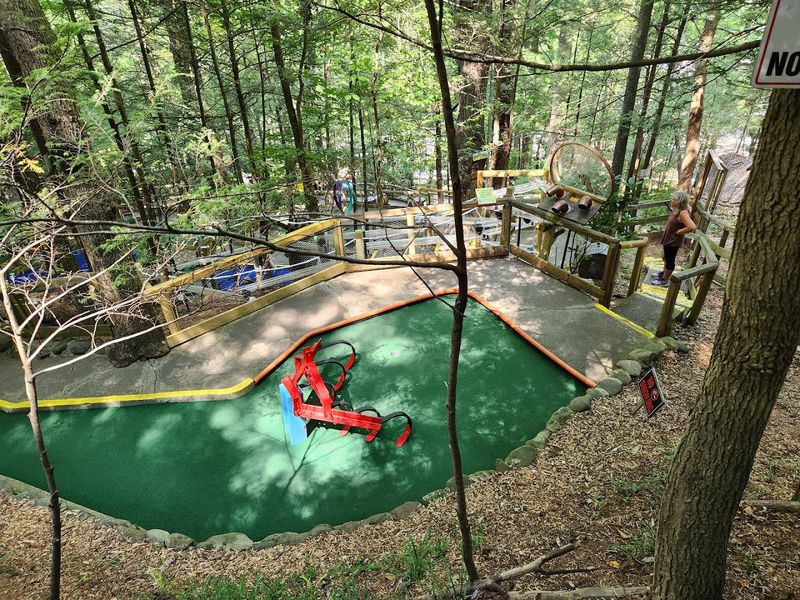
Garnet Carter had a problem in 1927.
His hotel on Lookout Mountain in Chattanooga was struggling to attract guests, so he built a quirky little distraction on the grounds that he called “Tom Thumb Golf.”
That small, obstacle-filled putting course became the first miniature golf course in American history, and the idea spread faster than almost anyone could have predicted.
Within just three years of Tom Thumb Golf opening, there were over 30,000 miniature golf courses operating across the United States. Carter had accidentally invented one of America’s most enduring recreational pastimes.
The courses featured tiny windmills, tunnels, ramps, and whimsical decorations that made the game accessible and entertaining for players of all skill levels. Families, couples, and children all fell in love with the format almost immediately.
Today, miniature golf is a multi-billion dollar industry with courses on every continent.
Next time you line up a putt past a spinning obstacle on a summer evening, you can thank a hotel owner on a Tennessee mountaintop who just needed a clever way to fill his rooms.
8. A Section Of Memphis Was Sucked Into The Mississippi River During An Earthquake
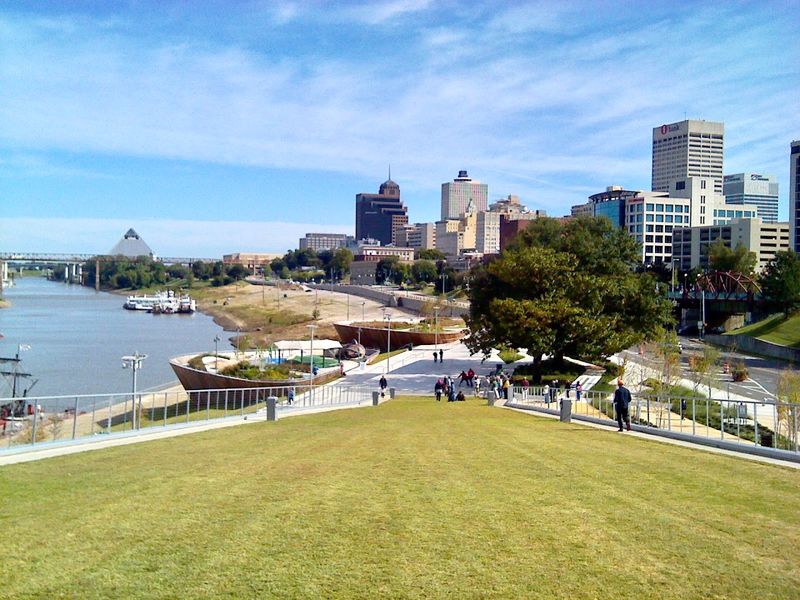
Between 1811 and 1812, a series of earthquakes struck the New Madrid Seismic Zone with a force so staggering that the Mississippi River temporarily reversed its flow direction.
Entire islands vanished. Chunks of riverbank near Memphis were swallowed whole by the river.
The ground liquefied in some areas, and massive waves rolled across the surface of the Mississippi like ocean swells.
Eyewitness accounts from the time describe church bells ringing as far away as Boston from the shockwaves, which gives some sense of how enormous these earthquakes actually were.
Geologists estimate that the largest quakes in the series may have reached magnitudes between 7.5 and 8.0, making them among the most powerful ever recorded on the continent.
The low population density of the region at the time meant that the human toll was far lower than it would be if similar quakes struck today. Scientists have noted that a repeat event in the modern era could affect millions of people across multiple states.
Standing at the edge of the Mississippi and knowing the ground once literally moved beneath this river adds a humbling, almost cinematic quality to the view.
9. Reelfoot Lake Was Entirely Created By An Earthquake
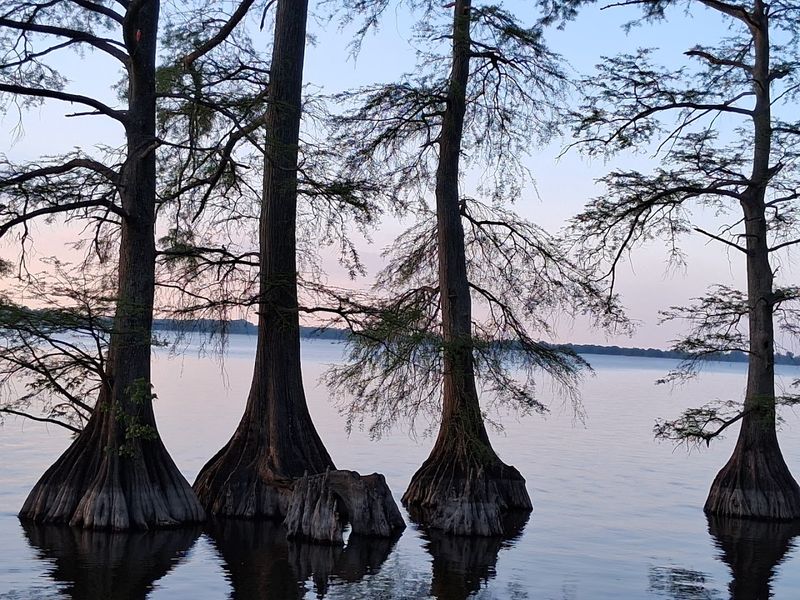
Reelfoot Lake in northwestern Tennessee looks like a painting from another world.
Bald cypress trees rise from the water at strange angles, their roots submerged and their branches draped with Spanish moss.
What makes the scene even more remarkable is that none of this existed before 1811.
The same New Madrid earthquake series that made the Mississippi River flow backwards also caused massive sections of ground to sink dramatically.
Floodwaters rushed in and created an entirely new lake where forests and fields had stood just days before. The trees that were growing there when the ground dropped are still visible beneath and above the surface, preserved as ghostly reminders of the landscape that existed before.
Reelfoot Lake is now a protected state park and wildlife refuge, home to bald eagles, great blue herons, and an extraordinary variety of fish. Winter eagle-watching tours are particularly popular among birdwatchers from across the country.
The lake spans roughly 15,000 acres and reaches depths of only about five feet in most areas, creating a shallow, reed-filled environment that wildlife absolutely thrives in.
Few places in America carry a geological origin story as dramatic as Reelfoot Lake, a landscape literally born from the earth shaking itself apart and then filling with water.
10. Bristol, Tennessee Shares A Main Street With Bristol, Virginia
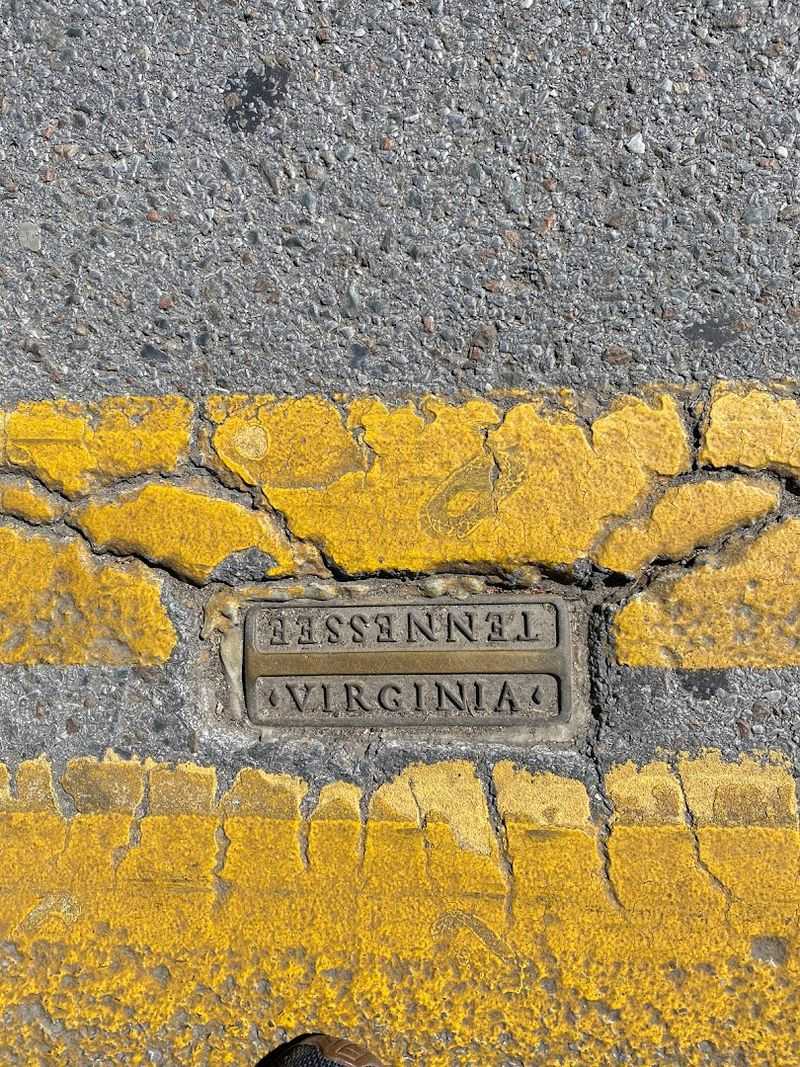
State Street in Bristol runs right down the middle of the state line between Tennessee and Virginia, which means you can literally walk from one state to another without stepping off the sidewalk.
The two cities of Bristol share the same road but operate as completely separate municipalities. Each side has its own city government, its own police force, its own zip code, and its own set of local ordinances.
A painted white line on the road marks the border, and signs on opposite sides of the street proudly announce “Bristol, Tennessee” and “Bristol, Virginia”.
The setup creates some genuinely amusing practical situations. A restaurant on one side of the street operates under different regulations than one directly across from it.
Tax rates, business licenses, and even some traffic laws can differ from one curb to the other.
Bristol also holds deep musical significance as the site of the famous 1927 Bristol Sessions, the recording event that launched the careers of Jimmie Rodgers and the Carter Family.
Walking State Street feels like a geography experiment and a history lesson, which is a combination you really only find in a place as wonderfully strange as Bristol.