
You Could Spend An Entire Day At This One Of A Kind Nevada Museum And Never Get Bored
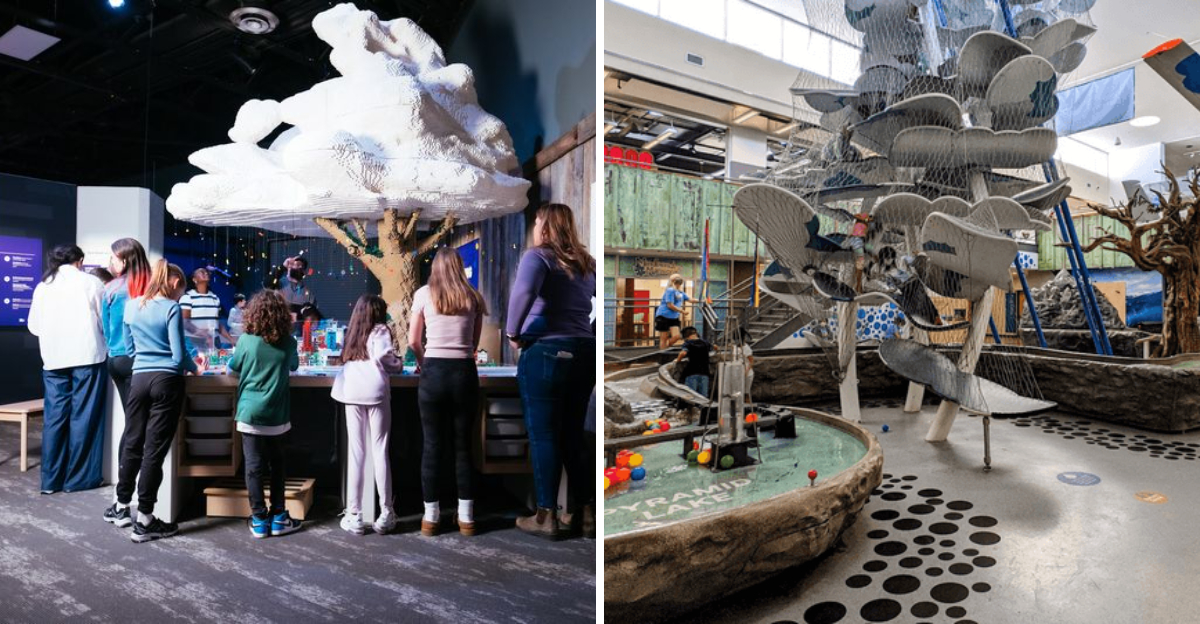
Downtown Reno has a place where “please don’t touch” clearly did not get invited. Inside this Nevada science museum, curiosity gets the run of the room.
Kids can climb, test, build, splash, puzzle things out, and ask the kind of questions that make adults pause for a second. A giant cloud-like structure turns water science into something you can actually move through, while hands-on labs make invention feel less like schoolwork and more like play.
The best part? It works for toddlers, teens, parents, and anyone who secretly still loves pressing buttons to see what happens.
By the time you leave, your brain feels busy in the best possible way.
Cloud Climber Lets Kids Explore Nevada’s Water Cycle
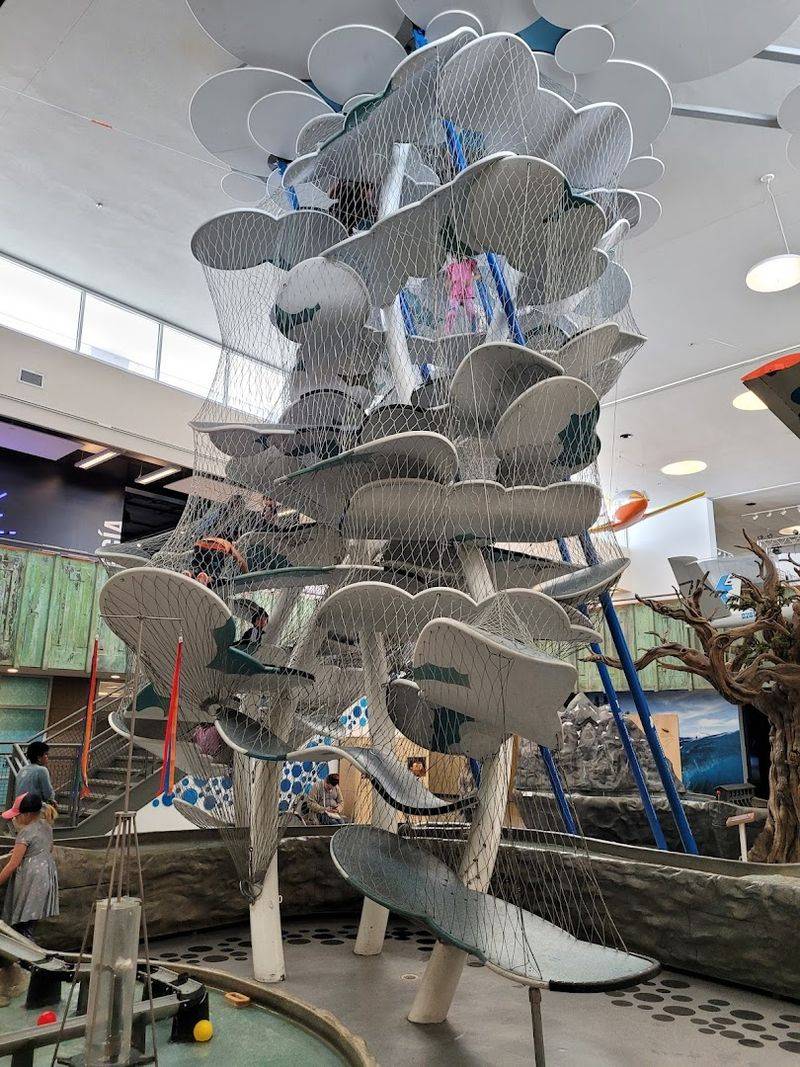
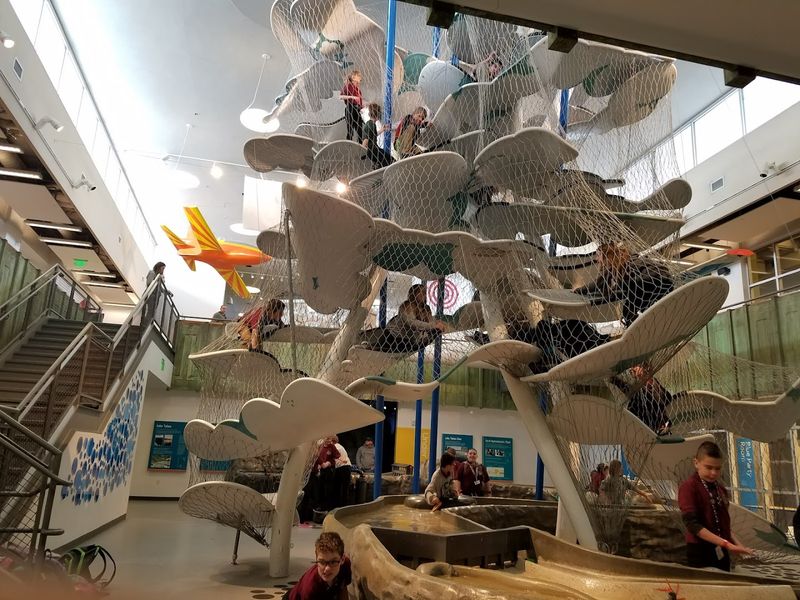
A massive climbing structure shaped like clouds rises through the center of the museum, inviting children to scale its netted levels while learning about precipitation and runoff. This installation turns abstract concepts into physical experiences, as kids ascend through different atmospheric layers.
Steel netting provides safe boundaries while maintaining the illusion of climbing through actual cloud formations.
Parents often settle nearby while their children spend extended periods navigating the structure. The climbing challenge varies by age and ability, making it accessible to cautious preschoolers and adventurous older kids alike.
Some families report their children returning to this exhibit repeatedly during a single visit, unable to resist one more climb.
The educational component integrates naturally with the play. Signs explain how Nevada’s limited water supply moves through the environment, connecting the climbing experience to real-world hydrology.
Children absorb these lessons almost accidentally while focused on reaching the highest point or finding a new route through the clouds.
Inside Out Makes Human Anatomy Interactive
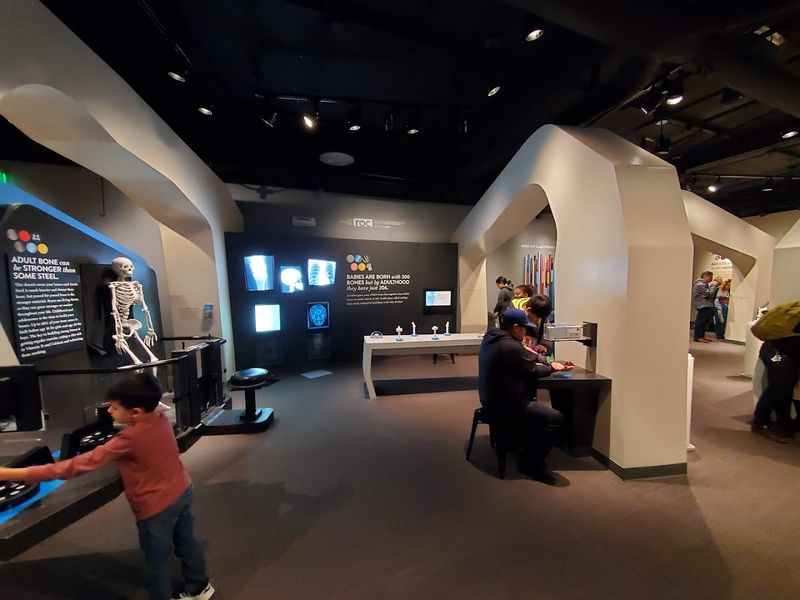
Anatomy becomes approachable when you can touch and manipulate it. Inside Out presents the human body through interactive displays that let visitors explore systems from digestion to circulation without opening a textbook.
Models demonstrate how organs function together, turning abstract biology into concrete understanding through tactile engagement.
Children who might squirm through a science lecture stand fascinated by exhibits showing how their own bodies work. The displays answer questions kids actually ask, like where food goes after swallowing or how bones support movement.
Parents find themselves equally engaged, testing their own knowledge against the information presented.
The exhibit avoids being too clinical or intimidating. Instead, it presents anatomy as something interesting rather than something to memorize for tests.
Younger visitors enjoy the gross factor of certain body functions, while older kids appreciate the complexity of biological systems. This balance keeps the content accessible across age groups without dumbing down the science.
The Museum Covers About 67,000 Square Feet
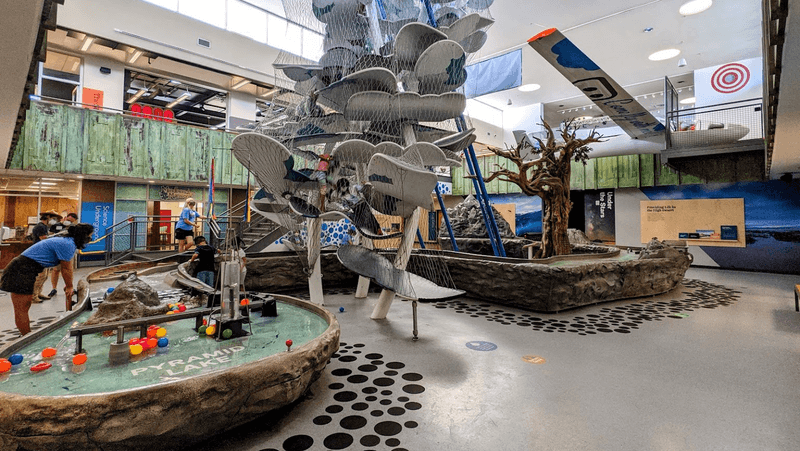
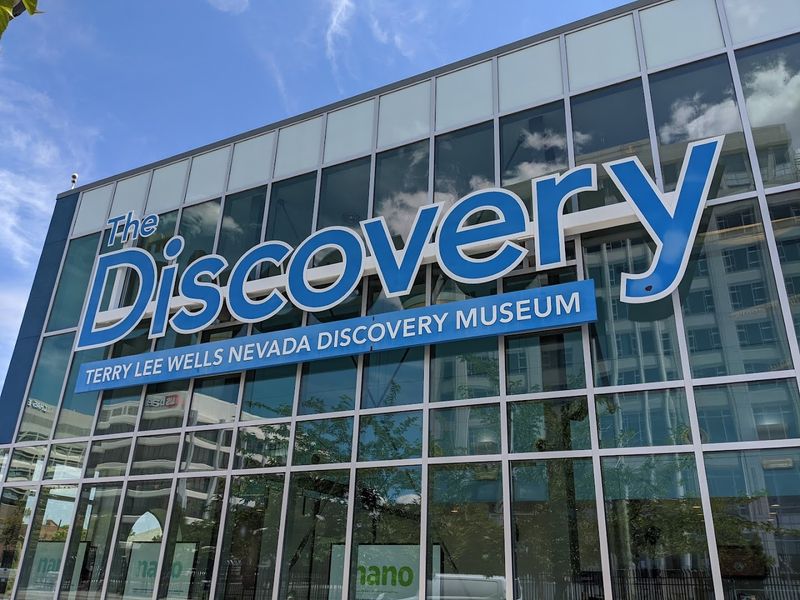
Square footage matters when you want to keep a family entertained for hours. The Discovery fills its expansive space with exhibits that sprawl across multiple rooms and floors, giving visitors plenty of ground to cover without feeling cramped.
Every corner holds something different, from quiet puzzle stations to active climbing structures.
Walking through the museum feels like moving between distinct worlds. One moment you might be examining human anatomy, and the next you find yourself building contraptions in a maker space.
The layout encourages wandering and accidental discoveries, which often become the most memorable moments of a visit.
Families appreciate having room to spread out, especially on busy weekends. Children can run between exhibits without constant collisions, and parents can actually watch their kids explore without hovering inches away.
The generous size means you can return multiple times and still notice something you missed before.
Truckee Connects Turns The Local Watershed Into A Hands-On Exhibit
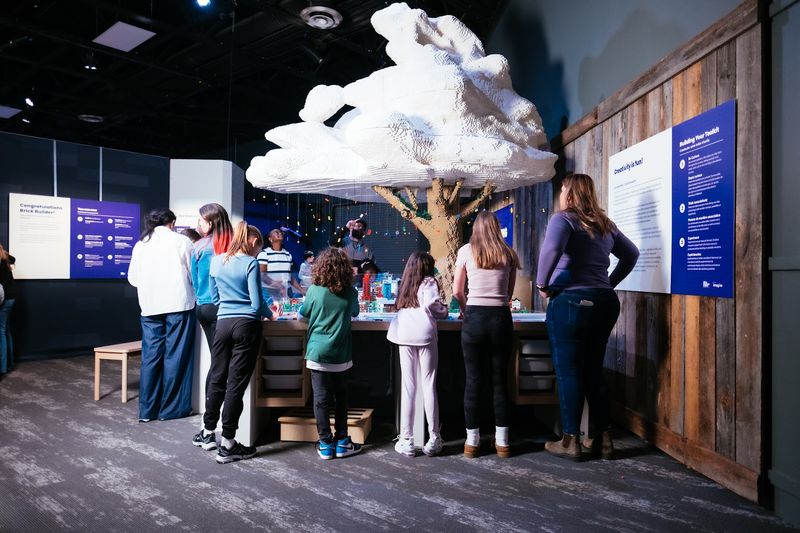
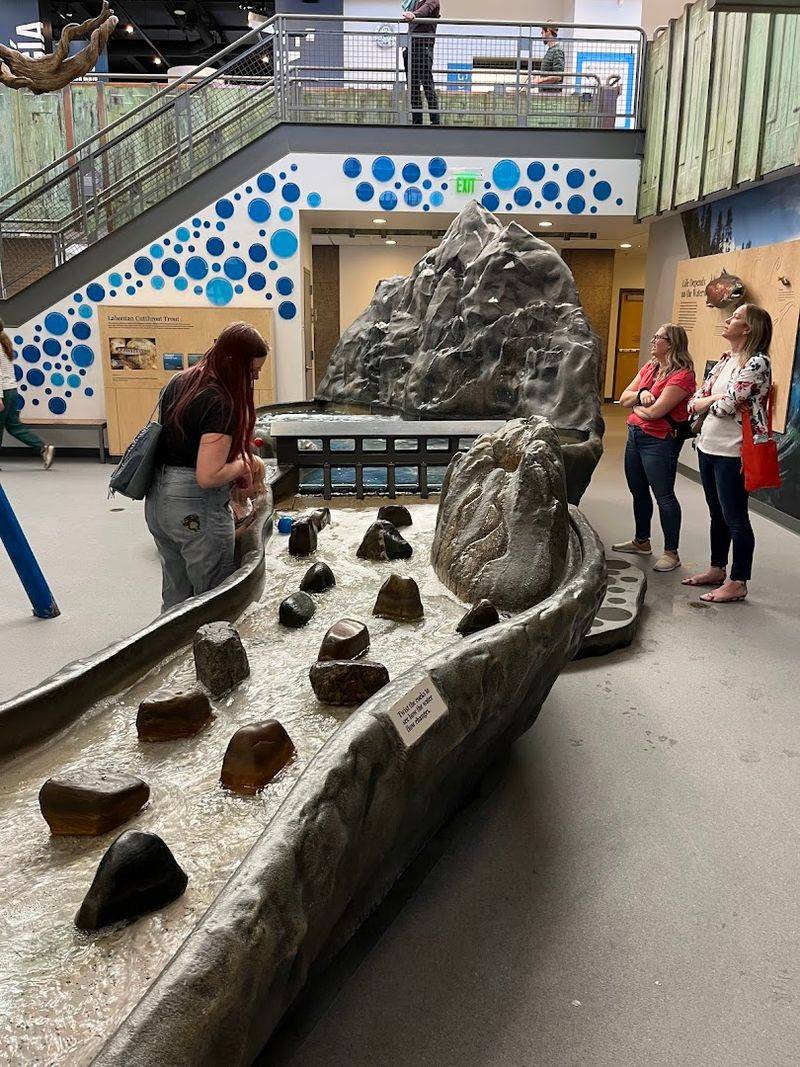
Running water captures attention immediately. The Truckee Connects exhibit recreates the local watershed system with actual flowing water that visitors can redirect, dam, and navigate with small boats.
Children grasp the connection between the Truckee River and Pyramid Lake by physically manipulating the water’s path, seeing cause and effect in real time.
This exhibit gets messy, and the museum accepts that reality. Parents should expect wet sleeves and possibly damp shirts, though the experience justifies a little dampness.
Young visitors become so absorbed in controlling water flow that they lose track of time, experimenting with different configurations to see how the system responds.
The exhibit teaches regional geography without requiring kids to study maps. By playing with the watershed model, they understand how water travels from the Sierra Nevada through Reno and beyond.
Adults often find themselves learning alongside their children, discovering connections they never considered about their local environment.
Da Vinci’s Corner Blends Art, Science, And Creativity
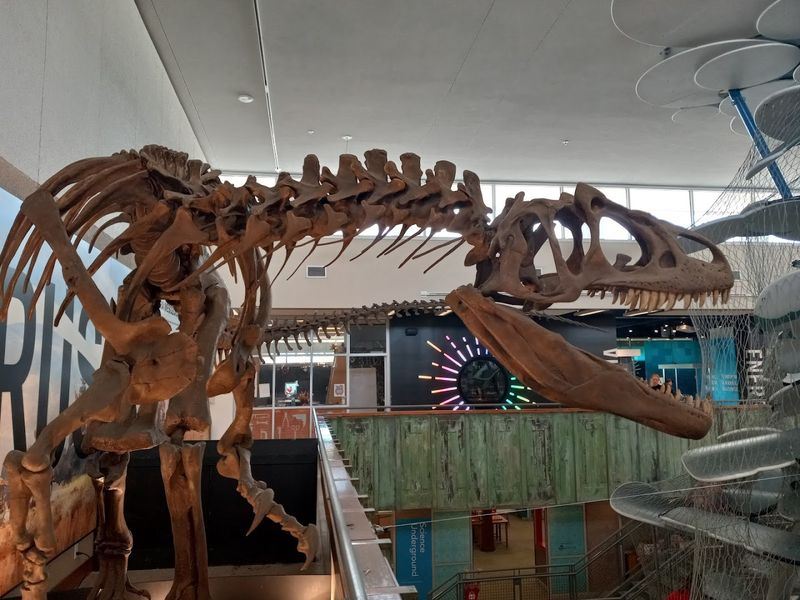
Leonardo da Vinci understood that art and science feed each other. This corner of the museum honors that philosophy by presenting challenges that require both creative thinking and technical problem solving.
Visitors encounter puzzles inspired by da Vinci’s notebooks, mechanical designs that demonstrate Renaissance engineering, and art projects that incorporate scientific principles.
The space encourages visitors to think like polymaths. A child might start by examining a replica of one of da Vinci’s flying machine sketches, then attempt to build their own version using provided materials.
The exhibit demonstrates that the boundaries between disciplines exist mostly in our minds, not in actual practice.
Adults often linger here longer than expected. The complexity of da Vinci’s thinking reveals itself slowly, rewarding careful observation and experimentation.
Parents and children work together on challenges, each bringing different perspectives that mirror da Vinci’s interdisciplinary approach. This collaboration often produces the most satisfying moments of problem solving during a museum visit.
Energy/Energía Explores How Power Is Generated And Used
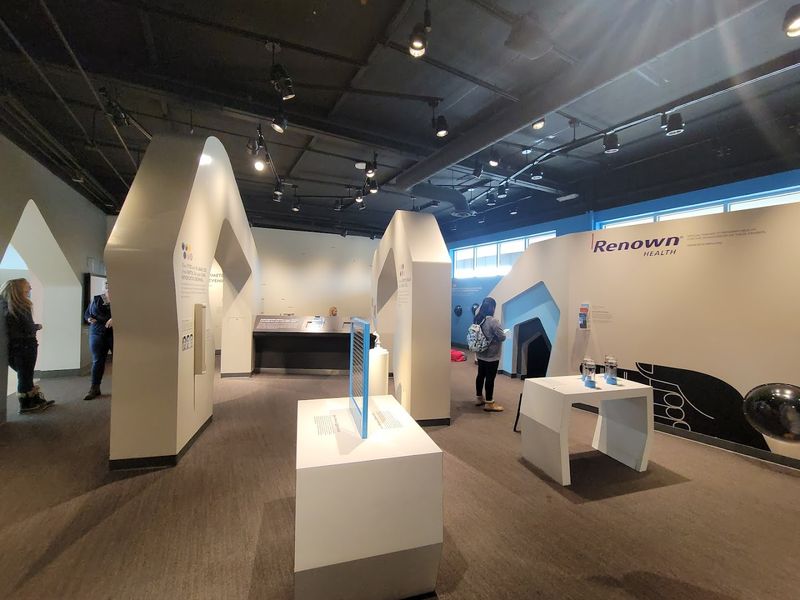
Flipping a light switch seems simple until you consider everything that happens behind the wall. Energy/Energía breaks down power generation and consumption through hands-on demonstrations that make electricity tangible.
Visitors crank generators to light bulbs, comparing the effort required for different types of bulbs and understanding efficiency through physical exertion.
The bilingual presentation reflects Nevada’s demographics while teaching an essential topic. Children experiment with renewable energy sources, seeing how solar panels and wind turbines convert natural forces into usable power.
These demonstrations plant seeds about sustainability without preaching, letting visitors draw their own conclusions about energy choices.
The exhibit connects personal actions to larger systems. Kids discover how much energy their favorite devices consume and consider what it takes to produce that power.
Parents appreciate exhibits that teach practical knowledge their children will use throughout life. Understanding energy production becomes less abstract when you feel the work required to generate even small amounts of electricity.
Spark!Lab Smithsonian Encourages Invention And Problem-Solving
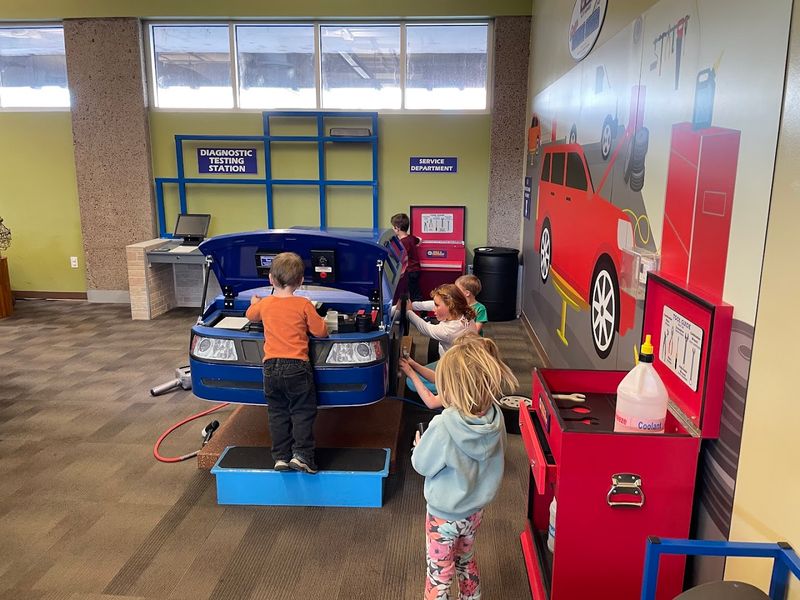
Failure becomes valuable when it leads to better solutions. Spark!Lab Smithsonian provides materials and challenges that require multiple attempts, teaching persistence through invention.
Visitors receive design challenges with specific goals but open-ended approaches, mimicking how real inventors work. The space fills with the productive chaos of creation, where half-finished projects and successful prototypes coexist.
The Smithsonian affiliation brings credibility and tested programming. Activities change periodically, keeping repeat visitors engaged with fresh challenges.
Children learn that engineering involves iteration, not immediate perfection. Watching a design fail, then improving it based on that failure, teaches more than any lecture about perseverance.
Parents often step back and let kids struggle productively here. The exhibit design encourages independent problem solving while keeping frustration manageable.
Staff members offer guidance without giving away answers, helping young inventors think through obstacles. This balance between support and independence helps children build confidence in their ability to figure things out through experimentation and logical thinking.
Little Discoveries Gives Younger Children Their Own Space
Toddlers need their own territory. Little Discoveries creates a contained environment where children five and under can explore without dodging older kids racing between exhibits.
The space features age-appropriate activities that match shorter attention spans and developing motor skills, from simple cause-and-effect displays to soft climbing structures sized for little bodies.
Parents of multiple children appreciate this separation. Younger siblings get exhibits they can actually manipulate successfully, building confidence instead of frustration.
The age restriction means toddlers can move freely without getting overwhelmed by bigger, faster children. Parents relax knowing their little ones can explore safely without constant intervention.
The exhibits here introduce scientific concepts at a foundational level. Simple machines, basic patterns, and sensory experiences lay groundwork for more complex learning later.
Even very young children begin understanding that the world operates according to predictable principles. This early exposure to hands-on learning often determines whether children develop lasting curiosity about how things work.
The Shop Adds A Real Maker-Space Feel
Authentic maker spaces smell like sawdust and possibility. The Shop brings that workshop atmosphere into the museum, providing real tools and materials for building projects that visitors can actually take home.
Workbenches invite experimentation with wood, circuits, textiles, and other materials, while staff members offer guidance on proper tool use and safety.
This space respects children’s capability. Rather than dumbing down the experience with toy versions of tools, The Shop teaches proper technique with real equipment.
Young makers learn to measure, cut, assemble, and troubleshoot their creations. The pride of completing a self-designed project using actual tools stays with children long after they leave the museum.
The maker-space movement emphasizes learning through doing. The Shop embodies that philosophy by providing open-ended opportunities rather than step-by-step craft projects.
Visitors decide what to make, plan their approach, gather materials, and execute their vision. This autonomy teaches planning and resource management alongside whatever technical skills the project requires.
Art Alcove Gives Creative Visitors A Place To Experiment
Science museums sometimes forget that creativity fuels innovation. Art Alcove corrects that oversight by dedicating space purely to artistic expression without scientific justification required.
Visitors find painting supplies, drawing materials, and other media for creating whatever their imagination suggests. The alcove acknowledges that some minds process the world visually and need outlets for that processing.
Children who feel overwhelmed by structured exhibits often gravitate here. The open-ended nature of art provides relief from challenges with right or wrong answers.
Some visitors spend their entire visit in this corner, producing drawing after drawing while their siblings explore more active exhibits. The museum wisely recognizes that different temperaments need different experiences.
Finished artwork covers the walls, creating a gallery of visitor creativity. Seeing other people’s work inspires new ideas and techniques.
The alcove becomes a quiet refuge where contemplative visitors can engage with the museum at their own pace, proving that not every exhibit needs bells and whistles to provide value.