
The Largest Collection Of Historic Naval Ships In The World Is Found At A Small Massachusetts Waterfront And You Can Walk Every Deck
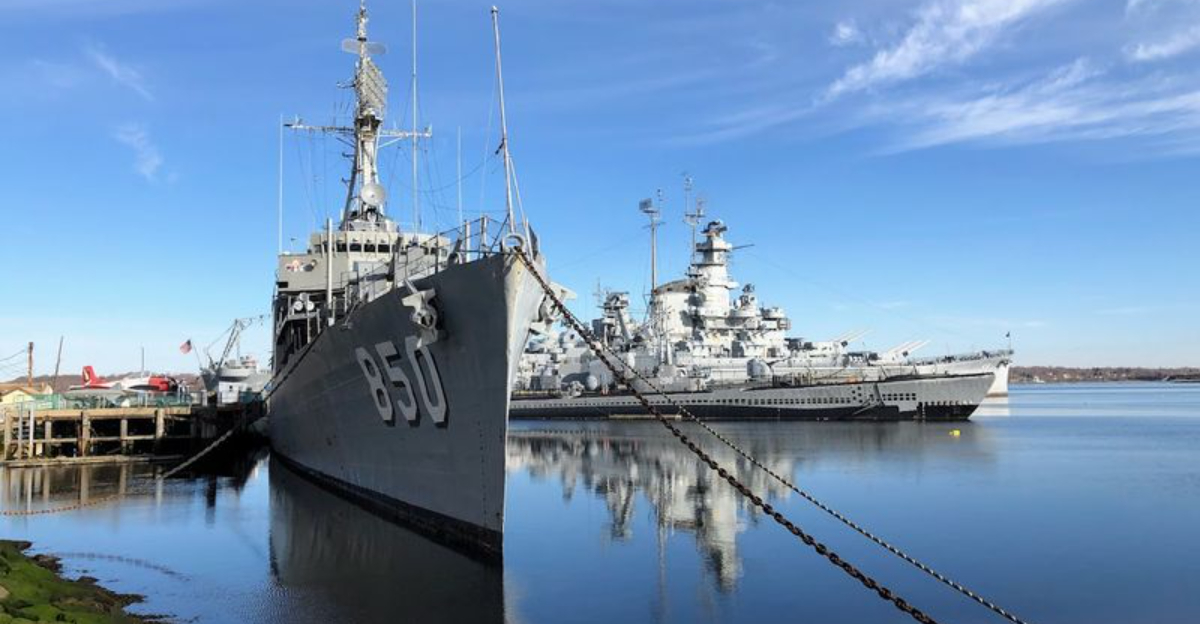
A small Massachusetts waterfront can hold a much bigger surprise than anyone expects.
Here, towering naval ships rise beside the harbor, their steel decks, narrow passageways, command bridges, and crew quarters all open for visitors to explore.
It feels less like a regular museum visit and more like walking straight into a chapter of American history.
Families, history lovers, and curious road-trippers can move through ships that served during major moments of the twentieth century. Each vessel has its own atmosphere, with ladders, bunks, engine rooms, and wide decks that make the past feel close enough to touch.
The scale is impressive, but the details are what stay with you.
Few places in Massachusetts turn naval history into something this hands-on, memorable, and surprisingly easy to spend hours exploring.
USS Massachusetts (BB-59)
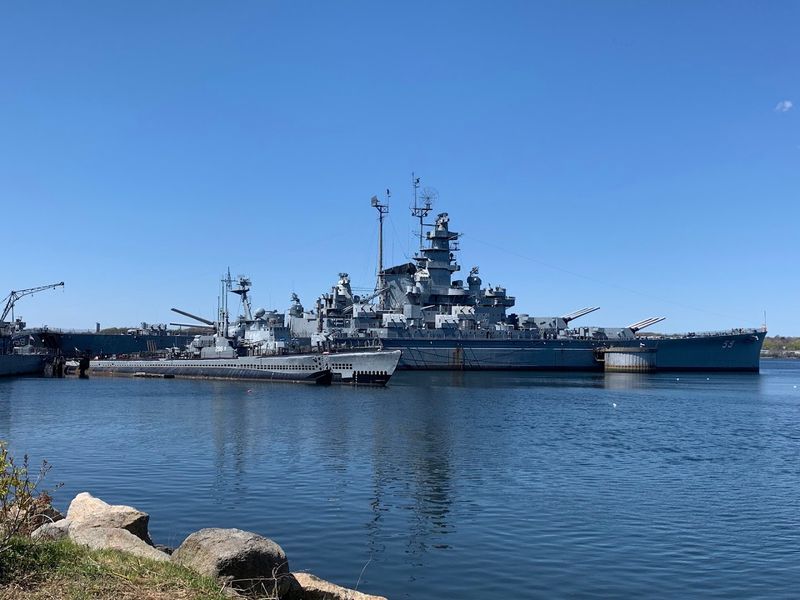
Few things prepare you for the sheer scale of a South Dakota-class battleship until you are standing directly beneath one.
The USS Massachusetts, affectionately called Big Mamie by the sailors who served aboard her, stretches 680 feet from bow to stern and weighs over 35,000 tons.
She is considered one of the most authentically preserved battleships in the world, and spending time on her decks makes that reputation feel entirely earned.
Visitors can explore her 16-inch gun turrets, which fired shells weighing as much as a small car. The combat information center, plotting rooms, engineering spaces, and crew quarters are all accessible, offering a vivid picture of life at sea during wartime.
The bridge offers sweeping views of the Taunton River and the surrounding Fall River skyline.
Big Mamie fired the first and last American 16-inch shells of World War II, a distinction that carries real weight when you are standing inside her turret.
She was commissioned in 1942 and decommissioned in 1947 before being saved by Massachusetts schoolchildren who donated dimes and dollars to bring her home.
She now serves as the centerpiece of Battleship Cove.
USS Lionfish (SS-298
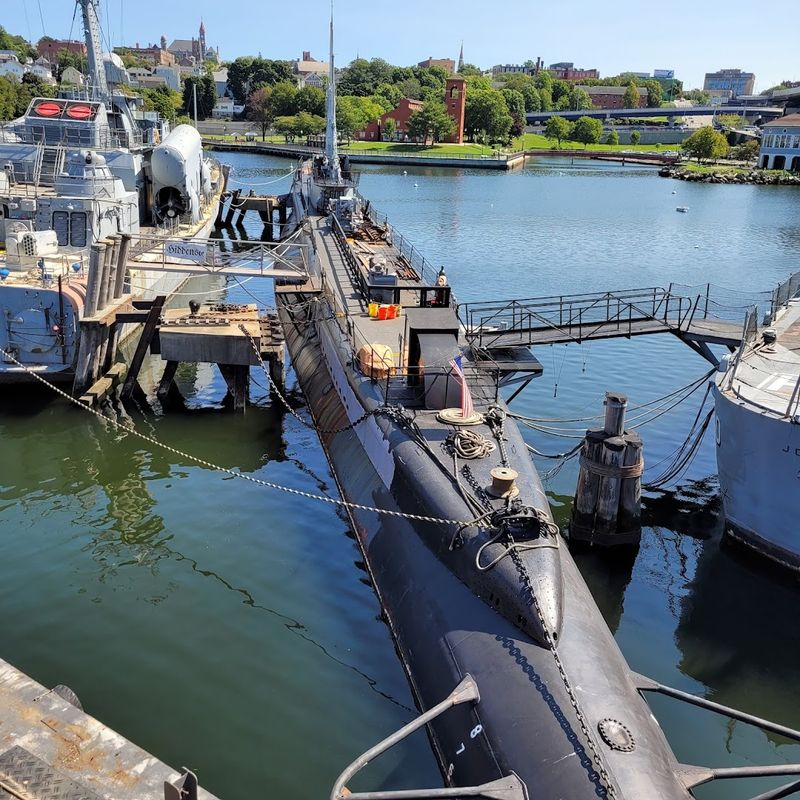
Stepping inside the USS Lionfish is a lesson in how much courage a confined space can hold.
This Balao-class submarine conducted war patrols in the Pacific Theater during World War II, and every inch of her interior reflects the reality of life beneath the surface.
The torpedo rooms, crew quarters, galley, and control room are all preserved and open to visitors who are willing to crouch, squeeze, and climb through some genuinely tight passages.
The Lionfish is one of the few surviving submarines from the WWII era that remains in remarkably original condition.
Volunteers and staff have worked steadily to maintain her authenticity, and some visitors have even encountered knowledgeable guides inside who explain torpedo mechanics and submarine operations in plain, engaging terms.
The experience is physical and immersive in a way that no exhibit panel could replicate.
Claustrophobia is worth considering before you go below, but most visitors find the tightness of the space adds to the experience rather than detracting from it.
The conning tower is accessible from the exterior deck, and the views from up top offer a nice contrast to the compressed world below.
Plan extra time here because the details reward patience.
USS Joseph P. Kennedy Jr. (DD-850)
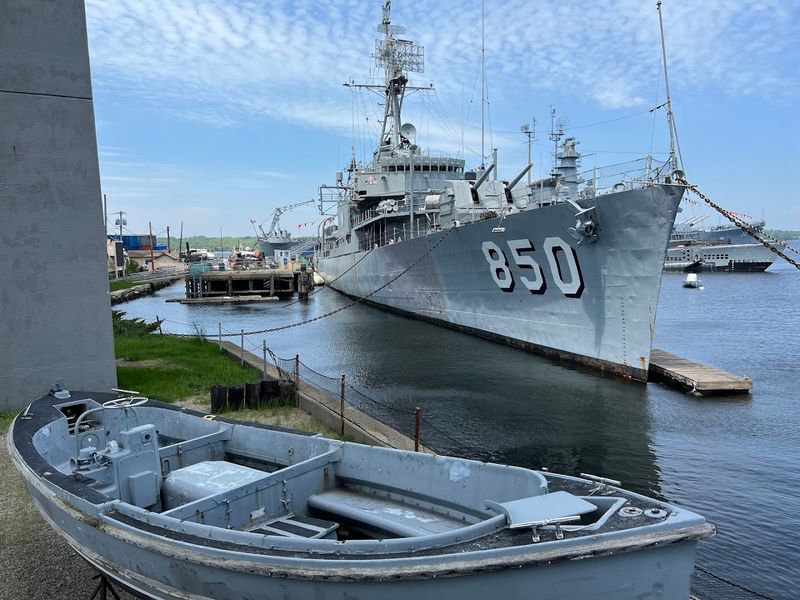
The USS Joseph P. Kennedy Jr. has a biography that reads like a highlight reel of twentieth-century American history.
This Gearing-class destroyer participated in the Cuban Missile Crisis blockade in 1962, standing watch during one of the tensest standoffs of the Cold War.
She also assisted in the recovery of astronauts returning from the Gemini space program, which gives her a rare distinction among naval vessels.
Visitors can walk the flight deck, explore the bow, move through main deck passageways, and access the pilot house and upper decks.
The Kennedy offers a different kind of experience from the battleship, more angular and purposeful in her layout, built for speed and precision rather than raw firepower.
Her spaces feel active rather than monumental, as if she could still be called into service at a moment’s notice.
The engine room is currently closed for restoration work, but the accessible areas are more than enough to fill a meaningful visit. Staff members like the one reviewer Larry have been praised repeatedly for their depth of knowledge and genuine enthusiasm for the ship’s history.
The Kennedy sits alongside the Massachusetts at the Fall River waterfront, and the contrast between a destroyer and a battleship is immediately and instructively apparent.
PT-617 And PT-796: The Fast Boats With Famous Connections
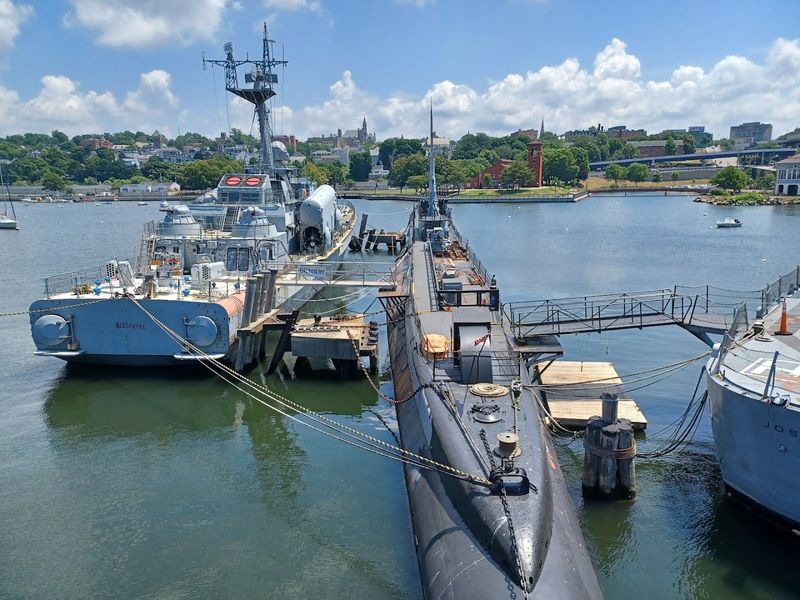
Patrol torpedo boats occupy a unique corner of naval history, fast and small and often crewed by very young officers who were expected to move quickly and think faster. PT-617 is the sole surviving 80-foot Elco-type PT boat in existence, making it a genuinely rare artifact.
It is similar in design to PT-109, the boat commanded by a young John F. Kennedy before his political career began.
Both PT-617 and PT-796 have been fully restored and are displayed at Battleship Cove.
Visitors cannot climb inside the boats, but viewing windows allow a close look at the interiors, and the exterior details are worth studying carefully.
The wooden construction, the torpedo tubes, and the compact deck arrangement tell a story of a different kind of naval warfare, one that relied on surprise and agility rather than armor.
PT-796 currently has its engine room closed for restoration, which reflects the ongoing commitment at Battleship Cove to maintaining these vessels at a high standard.
For visitors with an interest in the Kennedy family or in the lesser-known chapters of WWII naval operations, these two boats provide a satisfying and often overlooked section of the museum.
They are easy to walk past quickly, so give them a proper look.
Hiddensee: The Only Foreign Warship In The Collection
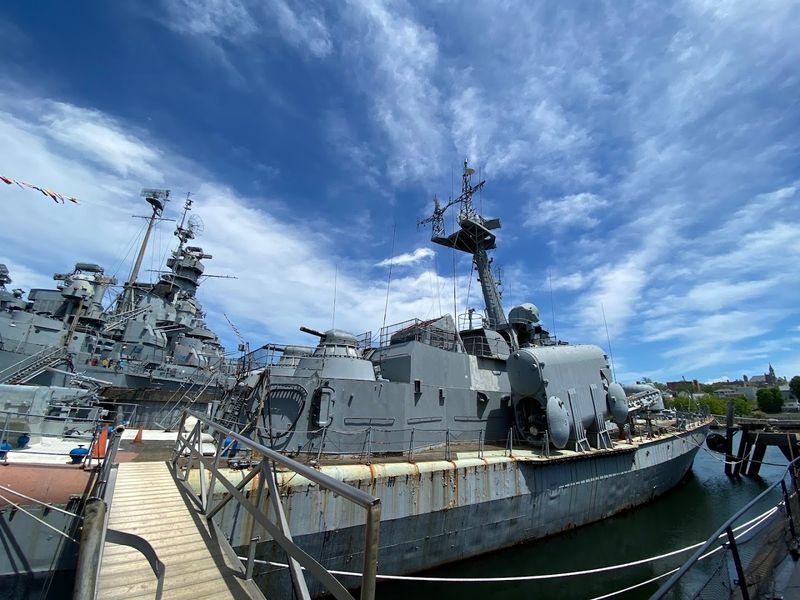
Among the American vessels at Battleship Cove, one ship stands apart in origin and story.
The Hiddensee is an East German missile corvette, Soviet-built and Tarantul-class, and it is the only foreign warship in the entire collection.
Its presence adds an important dimension to the museum, shifting the perspective from American naval history to the broader geopolitical tensions of the Cold War era.
After German reunification, the Hiddensee was transferred to the United States Navy for evaluation and eventually found a permanent home at Fall River.
The corvette is compact but purposeful in design, built to carry anti-ship missiles and operate in the Baltic Sea with speed and low visibility.
Walking its deck gives a concrete sense of how Soviet-bloc naval engineering approached the same problems that American designers tackled from a different direction.
For history enthusiasts who follow Cold War military technology, the Hiddensee is genuinely fascinating. Its presence alongside American vessels from World War II creates an accidental but effective timeline of twentieth-century naval development.
The museum does a solid job of providing context about the ship’s origins and service history.
It is the kind of exhibit that rewards visitors who slow down and read the placards rather than moving straight to the next vessel.
The Maritime Museum And Titanic Exhibit
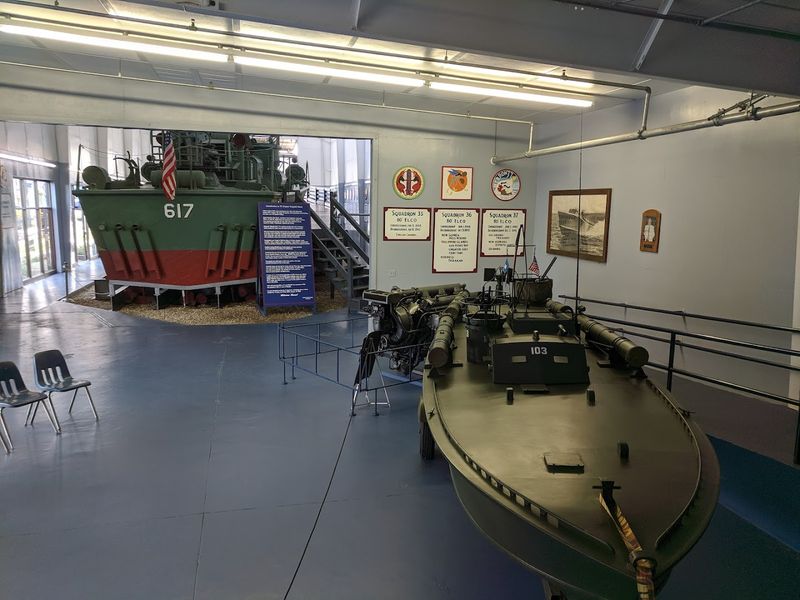
General admission to Battleship Cove includes access to the Maritime Museum, which is a short walk from the main ships and well worth the time.
The museum houses a notable Titanic exhibit along with an impressive collection of scale ship models that illustrate naval architecture across different eras.
For visitors who want historical context before or after boarding the ships, this is an excellent complement to the main experience.
The Titanic exhibit draws interest from visitors of all ages, offering artifacts, documentation, and interpretive displays that connect the famous disaster to the broader history of maritime travel.
The ship models in the main gallery are detailed enough to hold the attention of anyone with a passing interest in engineering or design. The displays are organized in a way that makes the progression of naval technology easy to follow.
Families with younger children often find the museum a useful stopping point when energy levels drop after climbing ladders on the ships. There are areas to sit and rest, and the calmer indoor environment provides a good balance to the physical demands of exploring the vessels outside.
The museum sits within walking distance of the ships at the 5 Water Street complex, so moving between the two requires no driving or additional planning. Budget at least thirty minutes here.
Overnight Stays Aboard The Ships
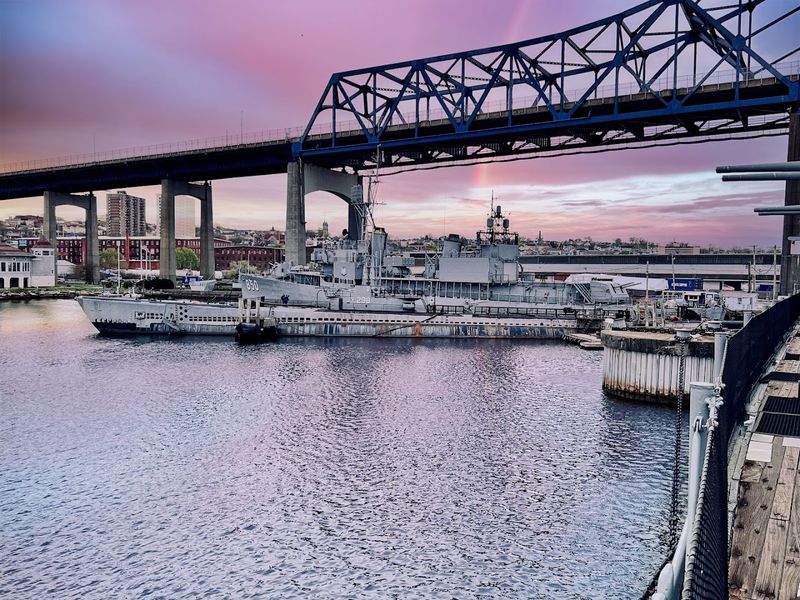
Battleship Cove offers one of the more unusual overnight experiences available at any museum in the country.
Scout troops, school groups, and families can arrange to sleep aboard the ships in the original sailor bunkbeds.
The idea of spending the night inside a WWII battleship is not something most people consider when planning a trip to Massachusetts, which makes it all the more worth considering.
Multiple reviewers who have participated in overnight programs describe the experience as genuinely impactful, particularly for younger visitors.
The combination of sleeping in authentic naval quarters and waking up aboard a vessel that fought in the WWII creates an engagement with history that classroom learning rarely achieves.
Groups typically have access to the battleship and other vessels during the evening hours.
Logistics for overnight stays require advance planning and coordination with the museum, so checking the website or calling (508) 678-1100 well ahead of your intended visit is advisable.
The program is especially popular during the school year, and availability fills up.
This is the kind of experience that participants tend to talk about for years afterward, and the reviews consistently reflect that sentiment.
Practical Tips For Visiting Battleship Cove
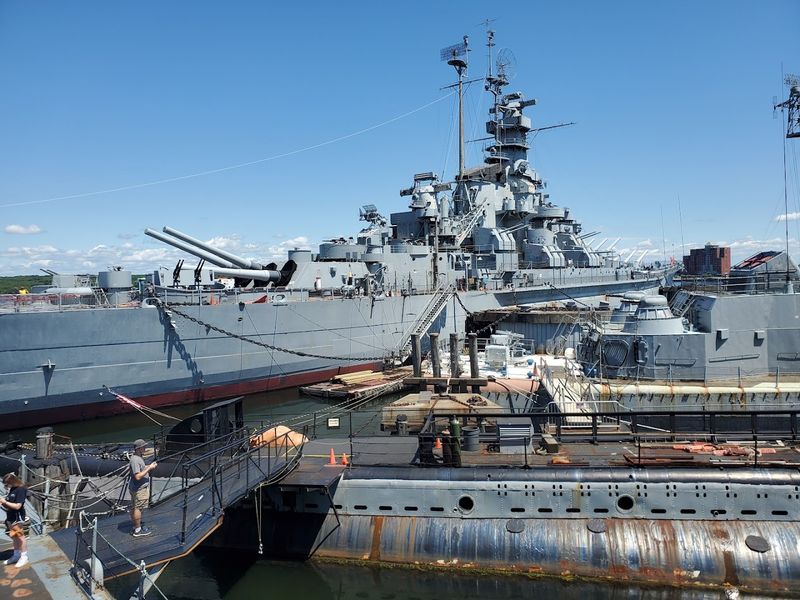
A visit to Battleship Cove rewards preparation. The museum is open daily from 9 AM to 5 PM, every day of the week, which makes scheduling straightforward.
Most visitors spend between two and five hours exploring the full collection, though dedicated history enthusiasts have been known to stretch that considerably.
Arriving early gives you the best chance of moving through the ships without crowds building up around the more popular spaces.
Footwear matters more here than at almost any other museum. Closed-toe shoes are strongly recommended, and sneakers or sturdy flats are ideal.
The ships involve steep metal ladders, narrow passageways, and high door thresholds that require stepping over carefully. Sandals and open shoes create real safety concerns, and the staff will remind you of this at the entrance.
Children should be supervised closely, particularly on the vertical ladders.
Admission pricing is reasonable for the depth of experience offered, and veterans, seniors, and library cardholders may qualify for discounts worth asking about. The USS Massachusetts has a cafeteria on board, which provides a convenient option for lunch without leaving the site.
Parking is free, which is a practical advantage.
The address is 5 Water Street, Fall River, Massachusetts, and the museum phone number is (508) 678-1100 for any questions before arrival.
Why Battleship Cove Stands Alone As A World-Class Naval Museum
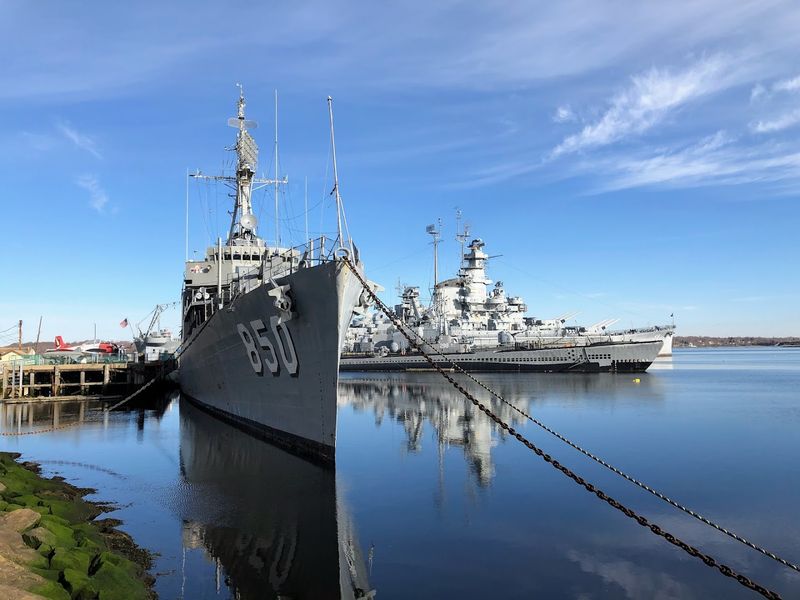
There is no other place in the world where you can board this many historically significant naval vessels in a single visit. Battleship Cove holds the largest and most diverse collection of preserved U.S.
Navy ships globally, and several of its vessels carry National Historic Landmark status.
That designation is not awarded casually, and the collection earns it through the authenticity and condition of the ships rather than through spectacle or recreation.
The museum operates as a nonprofit and war memorial, which shapes the tone of the entire experience. This is not a theme park version of naval history.
The spaces are real, the equipment is original, and the stories attached to each vessel are documented and presented with care. Volunteers and staff who are often veterans themselves bring a personal dimension to the exhibits that printed materials alone cannot provide.
With a rating of 4.7 stars from over three thousand reviews, Battleship Cove has built a reputation that reflects genuine visitor satisfaction rather than novelty. Families, history enthusiasts, military veterans, and curious travelers all find something meaningful here.
The waterfront setting along the Taunton River adds a natural backdrop that enhances the experience without competing with it. For anyone traveling through New England, this is a destination that earns its place on any serious itinerary.