
Why This Covered Bridge In Vermont Is One Of The Most Photogenic Spots In New England
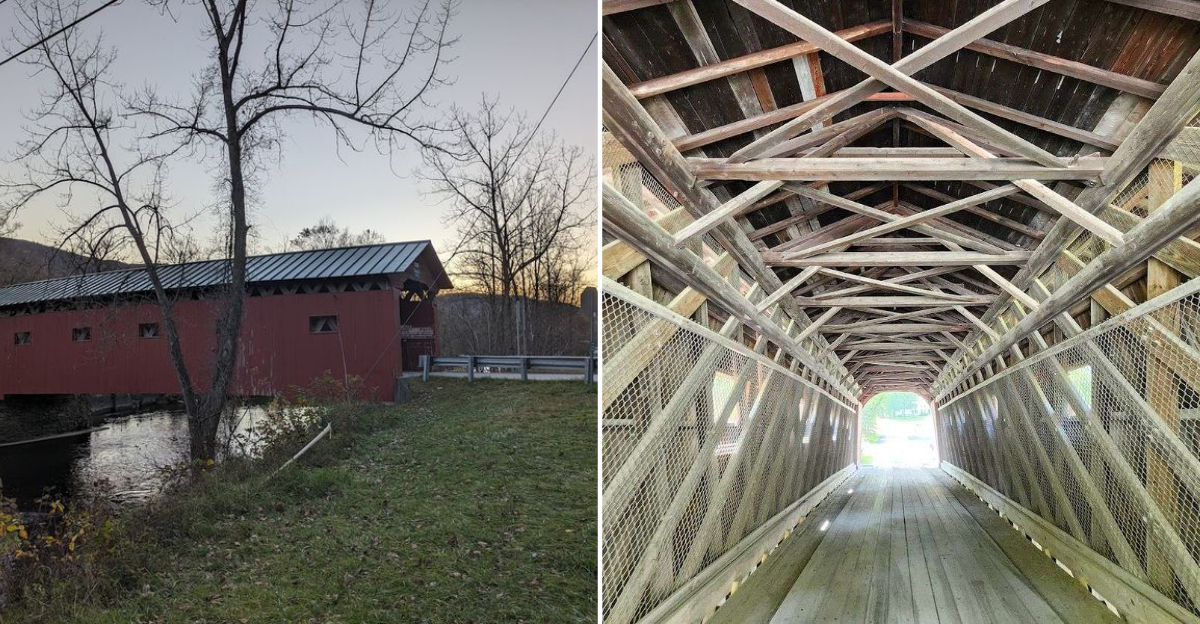
New England has no shortage of photogenic corners, but certain spots stop photographers mid-step in a way that the rest of the region rarely manages. This Vermont covered bridge is one of them.
The structure sits inside a landscape that seems arranged specifically to make every angle worth capturing regardless of the season or the hour.
Autumn turns the surrounding foliage into something that makes the bridge almost incidental to the frame.
Winter strips it back to a simplicity that works just as well in a different way. Vermont has built a strong visual identity around exactly this kind of scene, and this bridge delivers on that identity without requiring any favorable conditions to justify the trip.
Photographers who visit once tend to return across multiple seasons because the light, the color, and the reflection in the water below never quite repeat themselves exactly. The photogenic quality here is not manufactured or staged for tourism.
It developed naturally over time and has been rewarding anyone with a camera ever since.
Architectural Features That Define Bridges
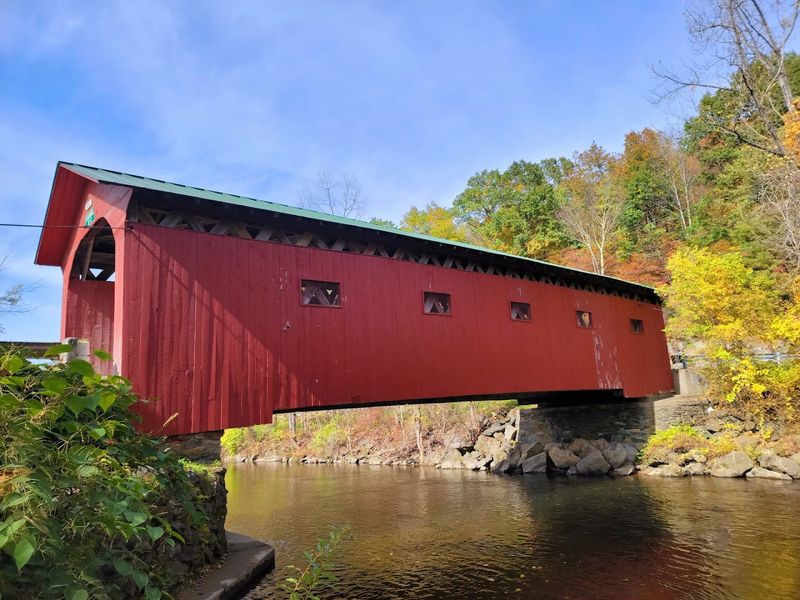
The Town lattice truss design of the Arlington Covered Bridge is genuinely impressive. Built in 1852, the structure uses a diagonal lattice of wooden planks bolted together.
This method was patented by Ithiel Town in 1820 and became popular because it required less skilled labor.
The bridge stretches 80 feet long and 17.5 feet wide. A single-lane roadway runs through the center at 14 feet wide.
Five small square openings line each side, letting in light and offering framed views of the Batten Kill River below.
The red siding is one of the most recognizable features from the outside. It contrasts beautifully against the surrounding green landscape.
The metal roof adds a practical touch while keeping the historic character intact.
What makes this bridge stand out among Vermont covered bridges is its original integrity. No 20th-century strengthening elements were added, which is rare.
Most older bridges in the state received modern reinforcements at some point.
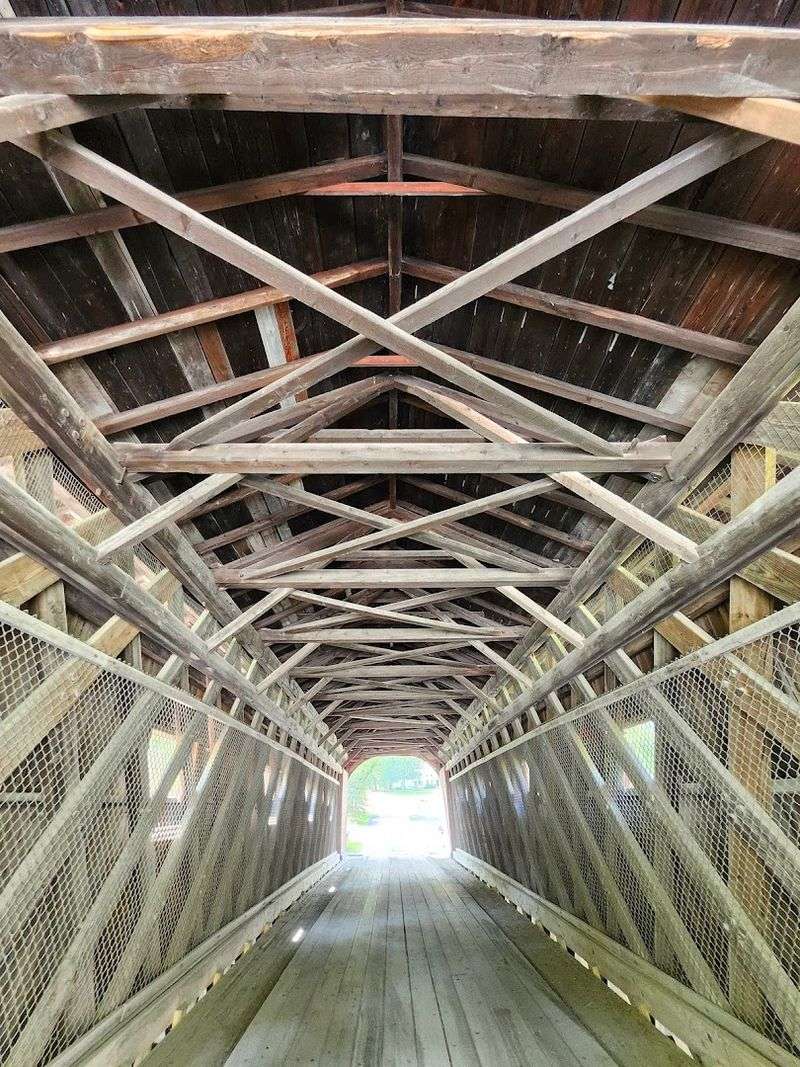
Walking through, you can see the latticework up close. The diagonal wood patterns create a rhythm that feels almost artistic.
It is a working bridge, so you can actually drive through it. You can find it just off Vermont Route 313 in West Arlington.
Seasonal Changes Enhancing The Scenery
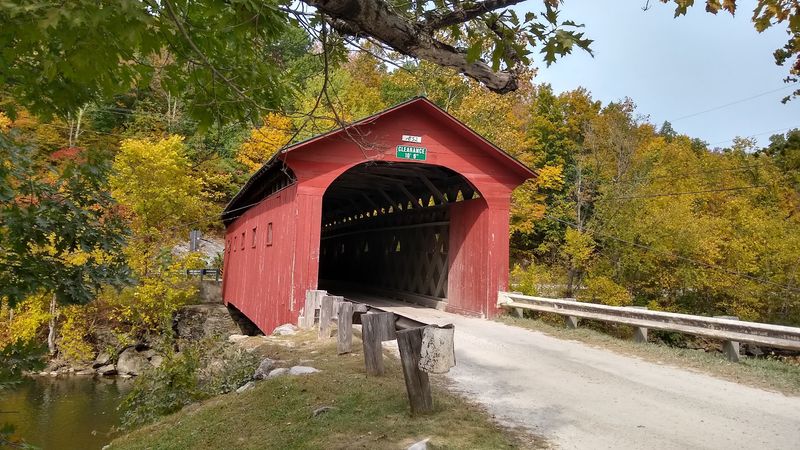
Vermont seasons are not subtle, and this bridge proves it. Each time of year brings a completely different mood to the scene.
Spring brings fresh green leaves and a rushing Batten Kill swollen with snowmelt.
Summer turns the area lush and full. The trees form a canopy around the bridge.
The swimming hole below becomes a popular gathering spot for locals and visitors alike.
Fall is when things get truly spectacular. The foliage in this part of Vermont explodes with reds, oranges, and yellows.
The red siding of the bridge blends almost perfectly with the autumn color palette.
Winter brings a quieter kind of beauty. Snow settles on the metal roof and surrounding fields.
The bare trees open up sightlines that summer completely hides, revealing new angles of the structure.
Each season changes what you see and how you feel standing there. A January visit feels completely different from an October one.
That variety keeps people coming back year after year. The bridge sits in a setting that nature essentially redesigns four times annually.
You never get the same photo twice, which is a big reason photographers keep returning. The surrounding landscape along the Batten Kill is one of the most naturally dynamic spots in all of southern Vermont.
Photography Techniques For Capturing Details
Getting a great shot here takes more than just pointing your phone at the bridge. Early morning light is your best friend at this location.
The golden hour glow hits the red siding and turns the whole scene warm and glowing.
Try shooting from underneath the bridge, looking outward. The lattice framing creates a natural border around the view.
It gives your photo a layered, almost cinematic quality.
The Batten Kill River offers excellent reflection opportunities. Position yourself near the bank and shoot low.
A slow shutter speed will blur the moving water and add a dreamy effect to the image.
Blue hour, just before sunrise or after sunset, creates a cool atmospheric tone. The bridge takes on a moody, quiet character during those minutes.
It is a different feel compared to the warm midday shots.
The Gothic-steepled Chapel on the Green is visible nearby and adds depth to wider shots. Including it in the frame gives context to the broader scene.
It also reinforces that classic New England village composition.
Do not overlook the small square openings along the bridge sides. Shooting through them creates a natural frame within your frame.
That technique highlights the interior lattice while drawing the eye outward to the river and landscape beyond.
Historical Significance Of Bridges In Vermont
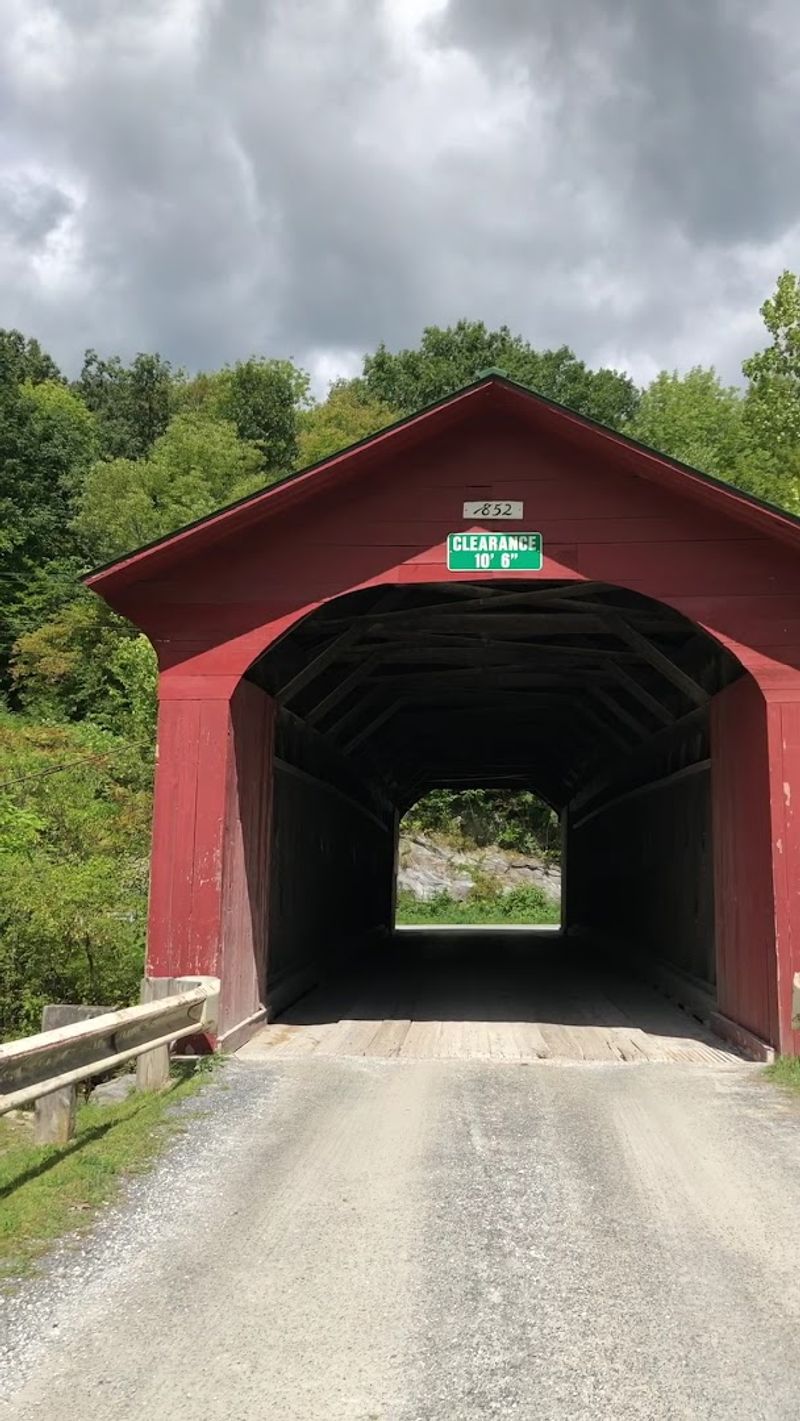
Vermont has more covered bridges per square mile than almost anywhere else in the country. That is not an accident.
These structures were built to protect wooden roadways from the weather, extending their lifespan dramatically.
The Arlington Covered Bridge was built in 1852 and has survived for over 170 years. It was listed on the National Register of Historic Places in 1973.
That recognition helped ensure its protection and long-term preservation.
What makes it historically unusual is the absence of modern reinforcements. Most comparable bridges in Vermont were updated during the 20th century.
Arlington avoided those changes, keeping its original construction methods fully intact.
Norman Rockwell called the area home from 1939 to 1953. He used the surrounding landscape and people of Arlington as inspiration for many of his famous illustrations.
The bridge and its setting were literally part of his daily world.
Rockwell’s former home, now known as Rockwell’s Retreat, is visible right through the bridge opening. That view has not changed much in decades.
Standing at the right spot, you are essentially looking through the same frame Rockwell saw every day.
Covered bridges in Vermont were community hubs. People gathered near them, and they marked the boundaries of towns.
Arlington’s bridge still carries that sense of place and community identity today.
Local Flora And Fauna Surrounding The Bridge
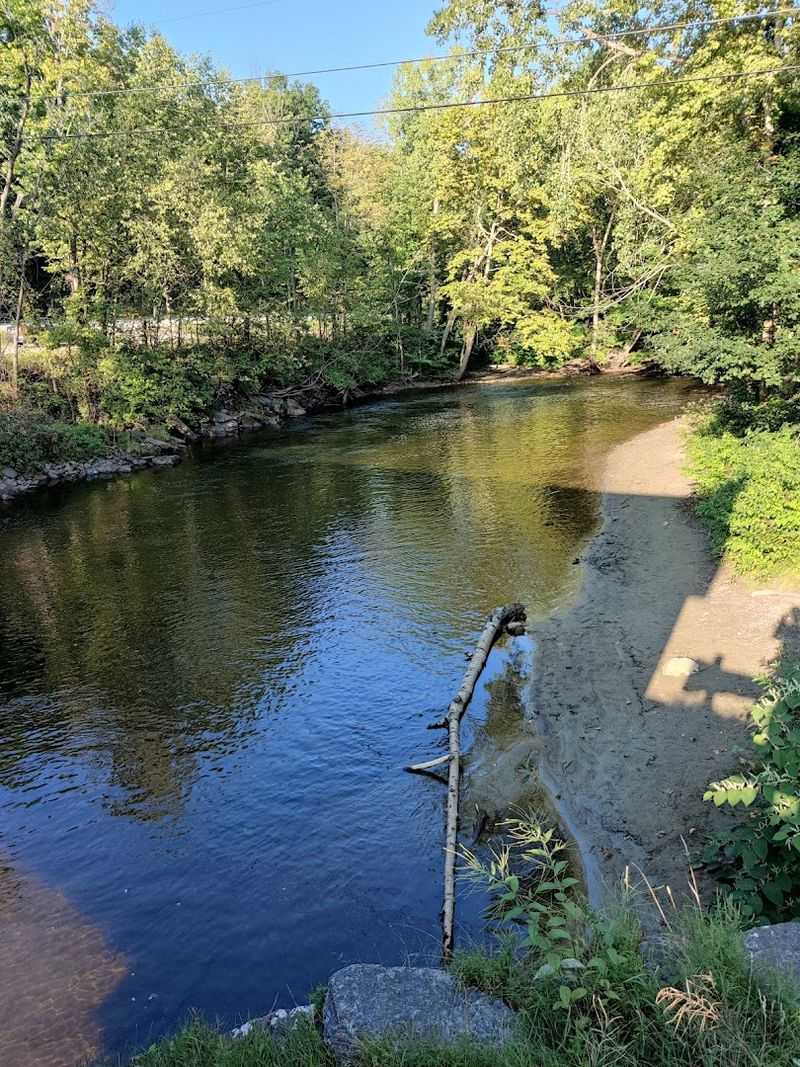
The Batten Kill is one of the cleanest rivers in Vermont. That water quality supports a rich ecosystem right around the bridge.
You will notice how clear and crisp the river looks even from the road above.
Trout are a big deal in the Batten Kill. Fly fishermen wade these waters regularly, and for good reason.
The river is considered one of the best wild trout streams in the northeastern United States.
Along the banks, you will find a mix of deciduous trees, including maples, oaks, and birches. These are the same trees that create the famous fall color show.
In spring and summer, they form a thick green border around the bridge.
Wildflowers appear in the meadow areas near the bridge during warmer months. They add small pops of color to an already scenic environment.
Bees and butterflies are regular visitors to these patches.
Birds are active around the river corridor throughout the year. Herons sometimes stand motionless in the shallows, hunting for fish.
Kingfishers dart low over the water with surprising speed.
White-tailed deer are commonly spotted in the early morning near the tree line. Seeing one cross the meadow near the bridge is a bonus many visitors do not expect.
The whole area around the bridge feels genuinely alive with nature.
Lighting Conditions Best For Photography
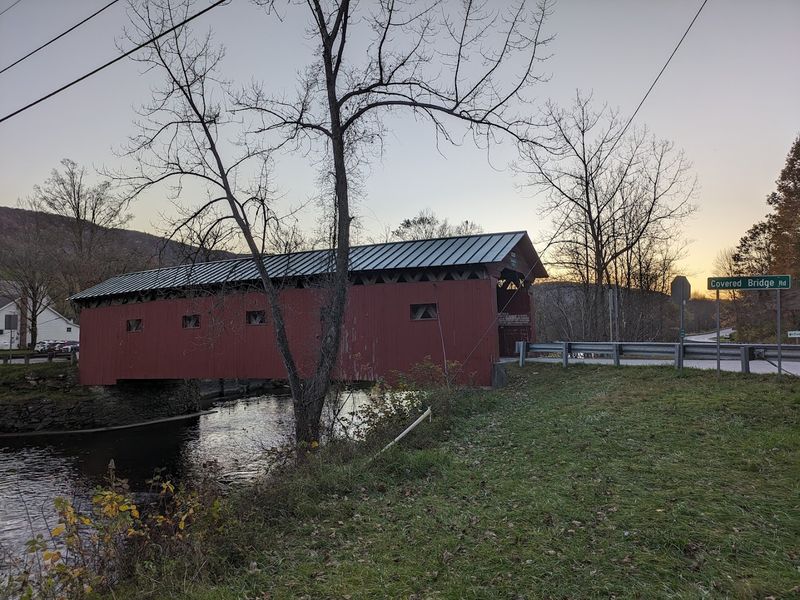
Light makes or breaks a photo at the Arlington Covered Bridge. Morning is the most recommended time for a reason.
The sun rises at an angle that catches the red siding and warms the entire scene beautifully.
Golden hour in the morning runs roughly 30 to 60 minutes after sunrise. During that window, shadows are long and soft.
The Batten Kill surface picks up a golden shimmer that looks almost painted.
Overcast days are underrated for bridge photography. Clouds act as a giant diffuser, removing harsh shadows.
The red siding pops more evenly under flat light without the blown-out highlights of midday sun.
Midday light in summer is the toughest to work with. Shadows go straight down, and the contrast gets extreme.
If that is your only option, shoot from inside the bridge looking outward to control the exposure better.
Evening golden hour gives a warmer, more dramatic tone than morning. The western sky reflects off the water in a way that morning light simply cannot replicate.
It is worth staying late for that window.
Blue hour, just before sunrise or right after sunset, creates a moody and calm atmosphere. The bridge takes on a quiet, almost mysterious quality during those few minutes.
Bring a tripod for the low-light conditions and longer exposures needed to capture it properly.
Construction Materials And Their Impact On Aesthetics
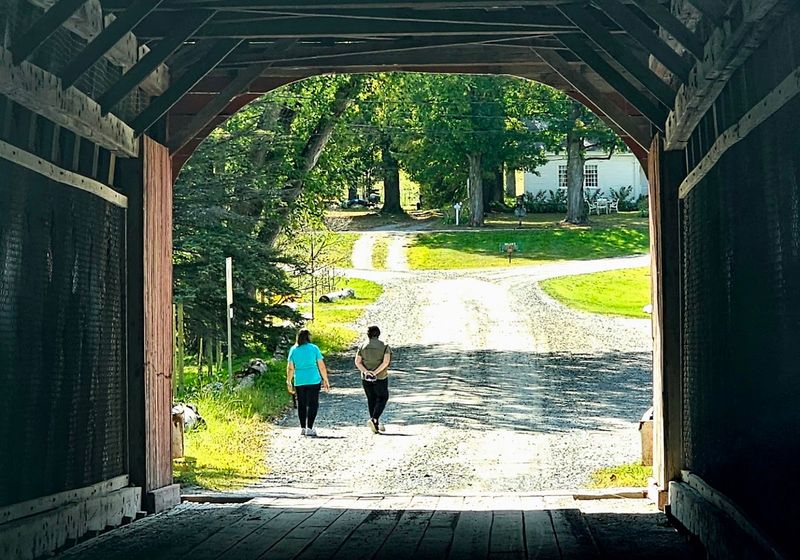
Wood is the star material here, and it tells a story. The Town lattice truss uses planks bolted together in a diagonal grid pattern.
That grid carries the load while creating a visually interesting interior structure.
The red siding on the exterior is one of the bridge’s most iconic visual elements. Red barns and red bridges are a Vermont tradition.
The color was historically practical, using iron oxide-based paint that was cheap and protective.
The metal roof replaced what was likely an older wooden shingle roof at some point. Metal lasts longer and handles Vermont winters more reliably.
It also gives the bridge a slightly industrial contrast against the warm wood tones.
Inside the bridge, the wooden lattice creates repeating diamond shapes along both walls. Sunlight filters through the small square side openings and catches the wood grain.
The effect is warm and almost chapel-like.
The timber used in 1852 came from local forests, which was standard practice. Old-growth wood like this is denser and more durable than modern lumber.
That is part of why the bridge has held up so well for over 170 years.
The combination of red wood, metal roof, and natural river stone below creates a layered visual palette. Each material adds its own texture to the overall composition.
Photographers and painters alike respond to that material richness in a very instinctive way.
Preservation Efforts To Maintain Bridges
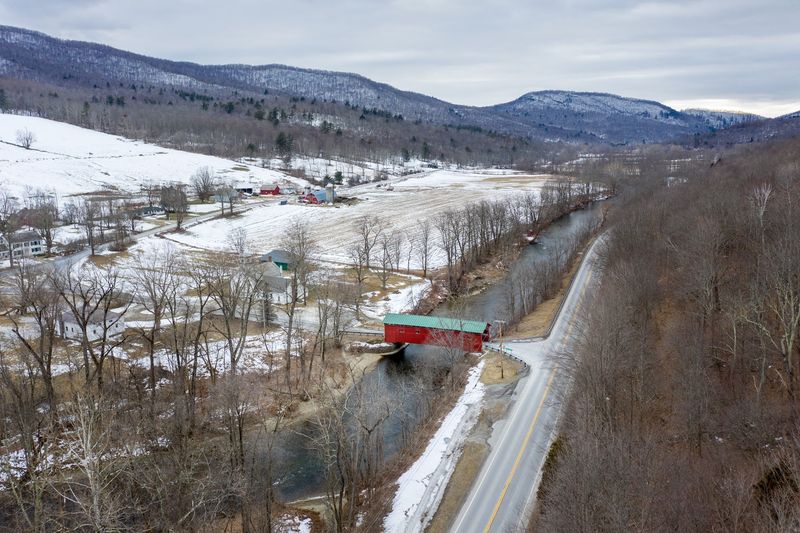
Keeping a 170-year-old bridge standing takes real commitment. The Historic Arlington Covered Bridge has benefited from careful stewardship over the decades.
Its listing on the National Register of Historic Places in 1973 was a turning point in that effort.
One of the most remarkable preservation facts about this bridge is what was NOT done to it. Most Vermont covered bridges received 20th-century structural reinforcements.
Arlington avoided that fate, which kept its original Town lattice design completely authentic.
State and local organizations in Vermont take covered bridge preservation seriously. Funding for inspections, repairs, and material replacement comes from a mix of state programs and federal historic preservation grants.
It is not cheap work, but the results speak for themselves.
Regular inspections check for wood rot, fastener corrosion, and structural movement. Catching small problems early prevents costly failures later.
The goal is always to use period-appropriate materials and methods when repairs are necessary.
The bridge remains a functional, working crossing. Keeping it in active use is actually part of the preservation strategy.
A bridge that serves a purpose gets more attention and maintenance than one that is simply a display piece.
Community awareness plays a big role too. Locals and visitors who care about the bridge help keep an eye on its condition.
That kind of grassroots attention has proven valuable in protecting Vermont’s covered bridge heritage for future generations.