
10 Off-Beat Places In Massachusetts That Will Satisfy Your Craving For Exploration
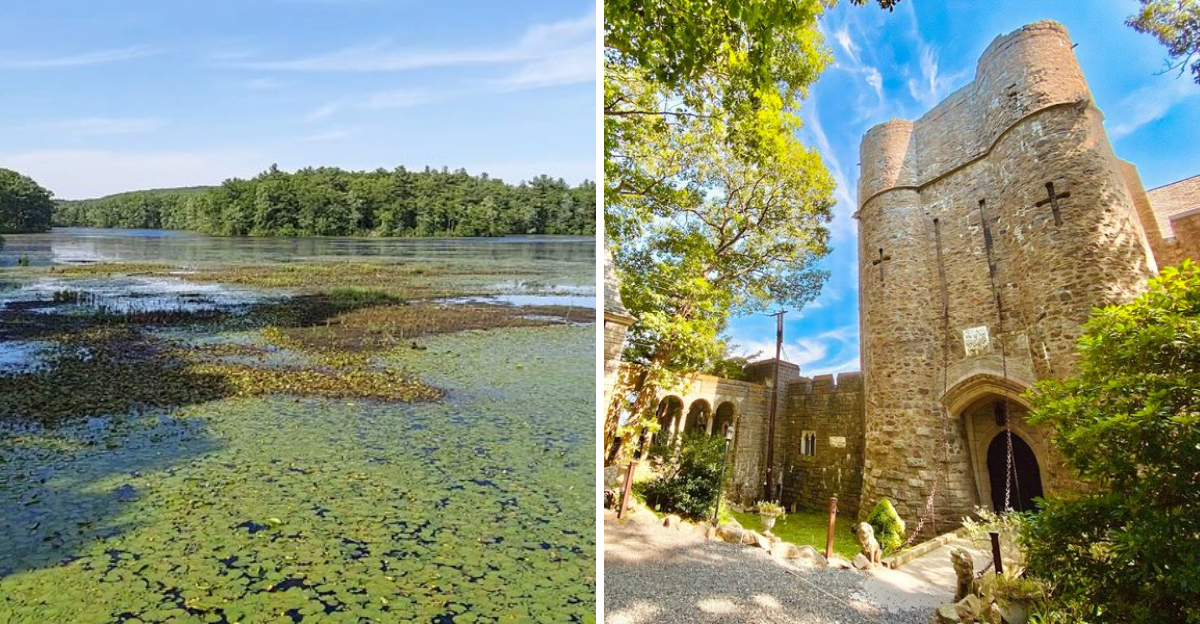
A normal day trip is fine. A strange one is better.
Massachusetts might be known for famous museums, beaches, historic sites, and pretty towns, but the off-beat stops often make the most memorable stories.
These are the places that make you pause, laugh, stare, or wonder how on earth someone thought to create them in the first place.
Maybe it is a quirky roadside attraction. Maybe it is an unusual museum, a curious old structure, or a place with a story that sounds almost too odd to be real.
That is the fun of stepping away from the usual travel checklist and seeing a different side of the state.
These Massachusetts spots are for curious travelers who enjoy the unexpected. One stop might leave you reaching for your camera.
Another could send you down a fascinating rabbit hole of local history.
Keep an open mind, allow extra time for surprises, and get ready to visit places that prove the most interesting adventures are not always the ones everyone already knows about.
1. Ponyhenge, Lincoln
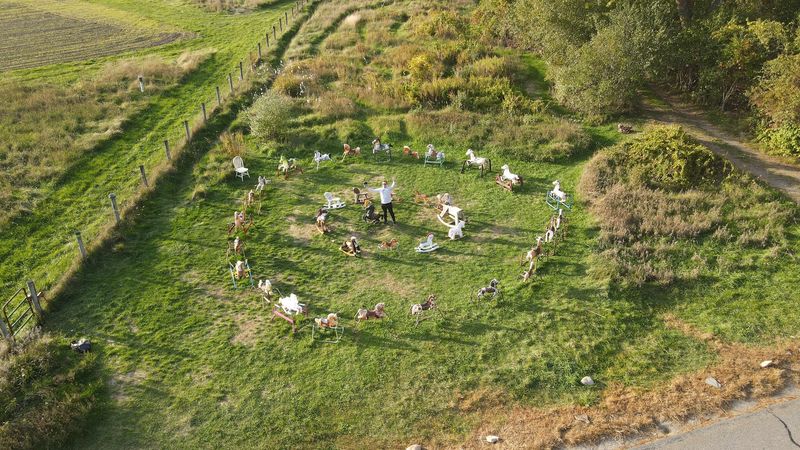
Something strange is happening at the corner of South Great Road and Hill Road in Lincoln and nobody seems to know exactly who is responsible for it.
Since around 2005, a growing collection of rocking horses has been appearing in an open field, multiplying over the years into dozens of horses in all shapes, sizes, and colors.
What makes Ponyhenge truly fascinating is that the horses keep moving.
Visitors return to find them arranged in a circle, lined up in a row as if mid-race, or scattered randomly across the grass, with no explanation and no one taking credit.
Local theories range from a dedicated anonymous artist to a group of neighborhood pranksters, but the mystery has never been solved. The spot sits right off the road and is completely free to visit at any time of day or night.
Families with kids tend to love it, since children enjoy climbing on the horses while adults try to figure out what is going on.
Photographers also flock here because the scene is genuinely surreal, especially on a foggy morning when the horses emerge from the mist like something out of a dream.
Pack a camera, bring your curiosity, and prepare to leave with more questions than answers. Ponyhenge is proof that the strangest art needs no museum.
2. The Mapparium, Boston
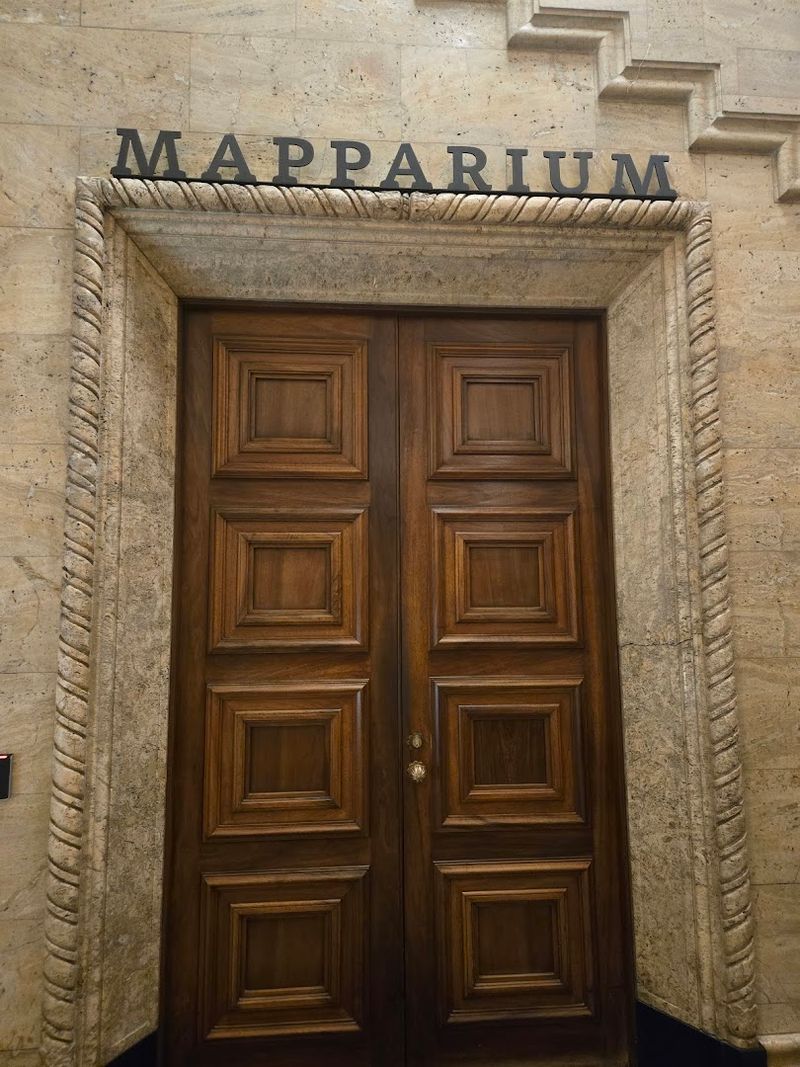
Walking inside a giant globe sounds like something from a science fiction novel, but at 210 Massachusetts Avenue in Boston, it is simply Tuesday.
The Mapparium is a three-story stained glass sphere built in 1935, located inside the Mary Baker Eddy Library, and it is one of the most visually stunning rooms in the entire country.
You enter through a glass bridge that cuts straight through the middle of the globe, placing you at the geographic center of the world.
The backlit panels glow in rich jewel tones, and the continents and countries are mapped exactly as they appeared in the 1930s.
The acoustics inside are one of the most talked-about features.
Because the curved glass reflects sound rather than absorbing it, a whisper spoken at one end of the bridge can be heard clearly at the other end, as if the person were standing right beside you.
Admission is required and includes a short narrated audio experience that adds historical context to what you are seeing. The Mapparium is open Tuesday through Sunday, and the experience typically lasts about 20 minutes.
It is compact, affordable, and completely unforgettable, the kind of place that stays with you long after you have left Boston behind.
3. Paper House, Rockport
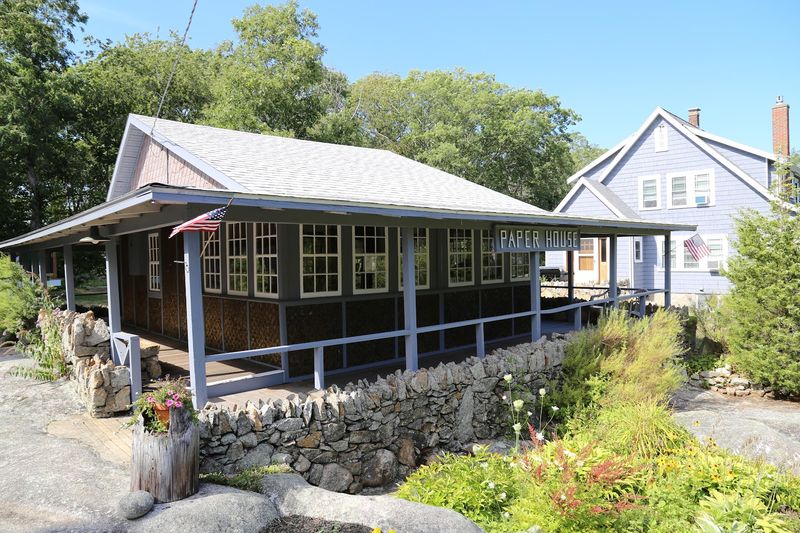
Most people recycle their old newspapers, but Ellis Stenman had a far more ambitious plan for his.
Starting in 1922, Stenman spent years constructing a house at 52 Pigeon Hill Street in Rockport, Massachusetts, using more than 100,000 varnished newspapers as his primary building material.
The walls, the roof supports, and even the furniture inside were all made from tightly rolled and layered paper, then coated in lacquer to preserve them.
The result is one of the most bizarre and genuinely impressive structures in all of New England. You can still make out headlines from old newspapers pressed into the walls if you look closely, giving the building a kind of accidental time-capsule quality.
The desk inside was reportedly made from papers featuring coverage of Charles Lindbergh’s transatlantic flight. The grandfather clock was constructed from papers documenting the travels of President Herbert Hoover.
Rockport itself is a charming coastal town worth exploring on its own, filled with art galleries, seafood spots, and rocky shoreline views. Adding the Paper House to your itinerary turns a pleasant day trip into something truly memorable.
The house is open seasonally, and admission is very affordable. It is a small space, so visits are short, but the impression it leaves is anything but.
Few things in Massachusetts are as quietly, wonderfully weird as this little paper marvel.
4. Thom Reed UFO Monument Park, Sheffield
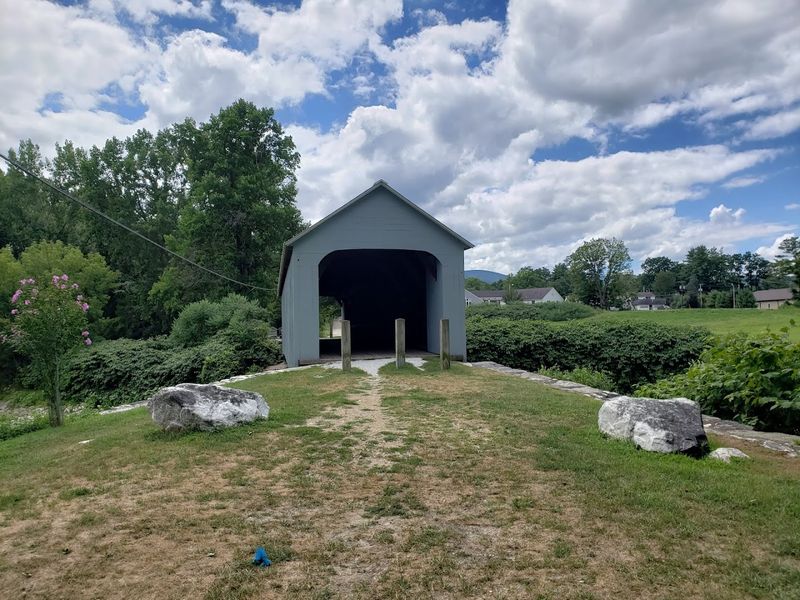
In 1969, along a quiet stretch of road near Sheffield, a family named Reed reported a UFO encounter so credible and so widely witnessed that Massachusetts eventually made history because of it.
The Thom Reed UFO Monument Park on Covered Bridge Lane in Sheffield marks the site of that encounter. It involved multiple witnesses across four surrounding towns and became the first off-world UFO case to be officially recognized as historically true by a U.S. state.
That is not a rumor or a local legend. Massachusetts inducted the incident into its official state historical records, which places this quiet riverside park in a category all its own.
The park sits next to a covered bridge along the Housatonic River, and the setting itself is beautiful in a completely grounded, earthly way.
Tall trees, flowing water, and a weathered bridge create a peaceful scene that feels almost at odds with the extraordinary claim attached to it.
Visitors come from across the country to photograph the monument and reflect on what the recognition means for the broader conversation about unexplained phenomena.
Sheffield is a small town in the Berkshires, and pairing this stop with a drive through the surrounding countryside makes for a full and fascinating day. Whether you are a true believer or a healthy skeptic, the historical weight of this place is hard to ignore.
5. Dighton Rock State Park, Berkley
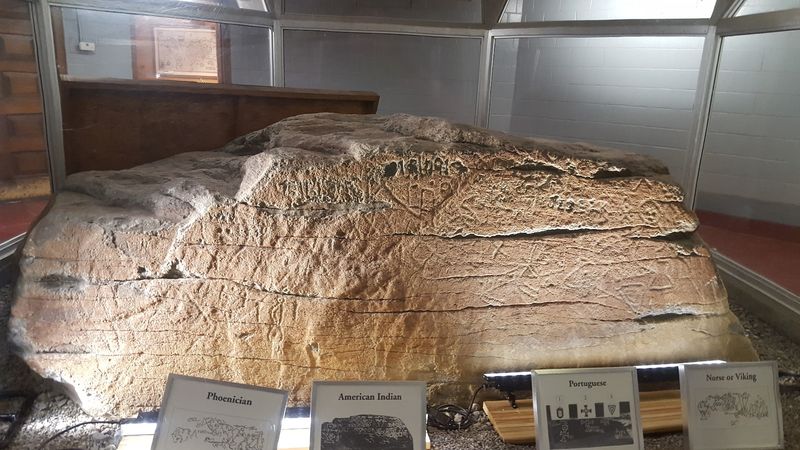
For over three centuries, one boulder in Berkley has been driving historians, archaeologists, and amateur theorists absolutely wild with curiosity.
Dighton Rock, now housed inside a small museum at Dighton Rock State Park on Third Avenue, was first documented by European settlers in 1690.
The rock is covered in a dense array of carvings and markings that have never been definitively decoded. The debate over their origin has produced some of the most colorful theories in American archaeological history.
At various points, scholars have attributed the inscriptions to Phoenician traders, Norse explorers, Indigenous peoples, Portuguese navigators, and even Chinese seafarers. None of these theories has been conclusively proven, and the rock remains officially unexplained.
The museum that now protects the rock is modest but informative, offering displays that walk visitors through the long history of competing interpretations.
The park itself includes a boat launch and picnic areas along the Taunton River, making it a pleasant outdoor destination regardless of how much time you spend with the rock itself.
Admission to the museum is low-cost, and the park is open year-round. The rock weighs about 40 tons and measures nearly five feet tall, so it makes quite an impression in person.
Few mysteries in Massachusetts have lasted as long or attracted as many passionate opinions as this ancient, stubborn, beautifully inscrutable boulder.
6. Freetown-Fall River State Forest, Freetown
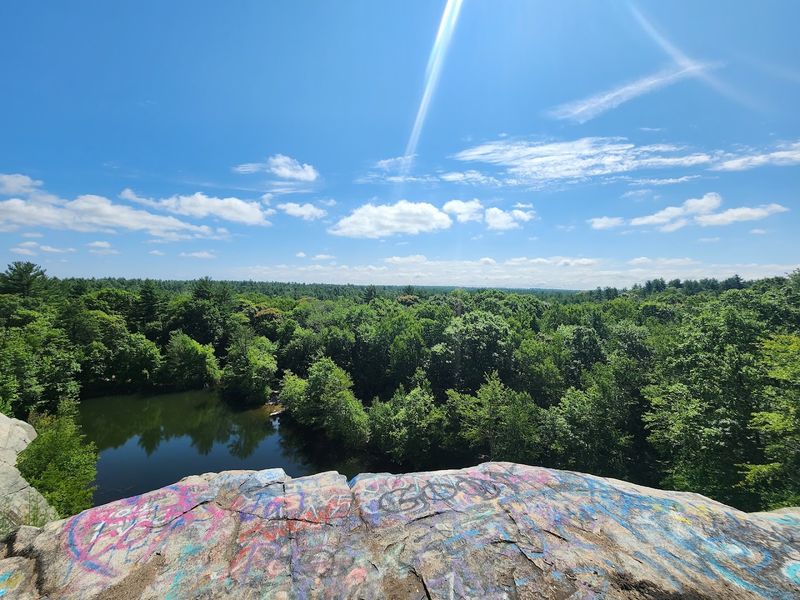
Not every natural space in Massachusetts comes with a cheerful hiking brochure and a sunny reputation. Freetown-Fall River State Forest earns its place on this list for reasons that go well beyond scenic trails.
This forest sits within what locals and researchers call the Bridgewater Triangle, a region of southeastern Massachusetts where strange phenomena have been reported since colonial times.
UFO sightings, unexplained lights, ghostly apparitions, and reports of unusual creatures have all been documented here over the decades.
The forest has its own documented history of strange activity that predates modern interest in the paranormal by centuries.
Even if you are not chasing ghost stories, the forest itself is genuinely striking.
Deep, quiet, and heavily wooded, it has a quality that is hard to name but easy to feel, the kind of silence that makes you pay attention to every snapped twig and rustling branch.
There are trails for hiking and mountain biking, and the forest is accessible via Slab Bridge Road in Assonet. Going in a group during daylight hours is the most practical approach for first-time visitors.
The forest is free to enter and open year-round. Bring solid footwear, a charged phone, and maybe a healthy respect for the fact that some places simply cannot be fully explained.
7. Hammond Castle Museum, Gloucester
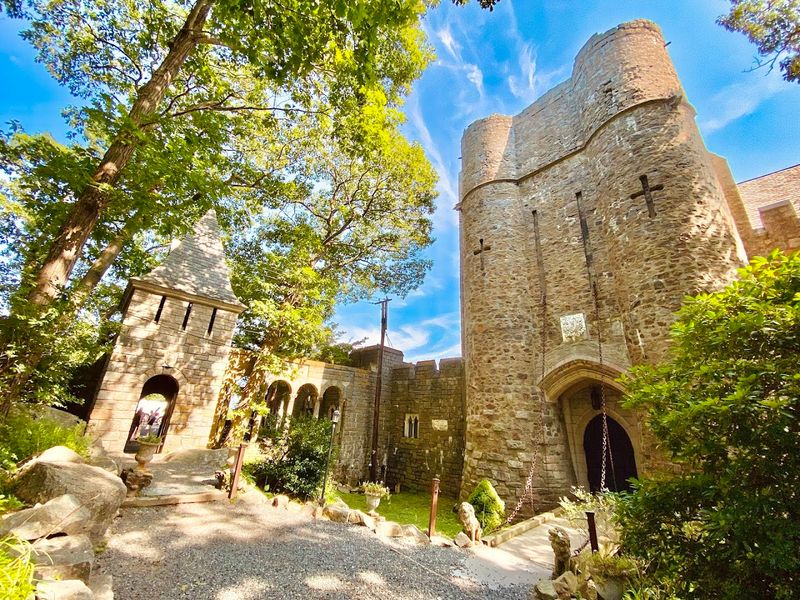
John Hays Hammond Jr. was one of the most prolific inventors in American history, but he is perhaps best remembered for building himself a medieval castle on a cliff above the Atlantic Ocean.
Hammond Castle Museum was constructed in the 1920s and served as both Hammond’s personal home and a showcase for his extraordinary collection of Roman and medieval artifacts.
The castle features towers, a drawbridge, an indoor courtyard with a Renaissance-style facade, and a pipe organ with over 8,000 pipes that Hammond himself played.
The indoor courtyard is particularly striking, a fully enclosed space that feels transplanted from 15th-century Europe and dropped onto the Massachusetts coast without apology.
Hammond collected architectural pieces from actual European buildings and incorporated them into the castle’s design.
The views from the castle grounds over the Atlantic are spectacular, and the rocky shoreline below adds to the dramatic atmosphere. Tours are available, and some areas of the exterior can be explored for free.
The museum hosts events throughout the year, including concerts that take advantage of the pipe organ’s remarkable sound. Gloucester is already worth visiting for its fishing heritage and coastal scenery, but Hammond Castle turns a good trip into a genuinely great one.
8. Forest Hills Cemetery, Jamaica Plain
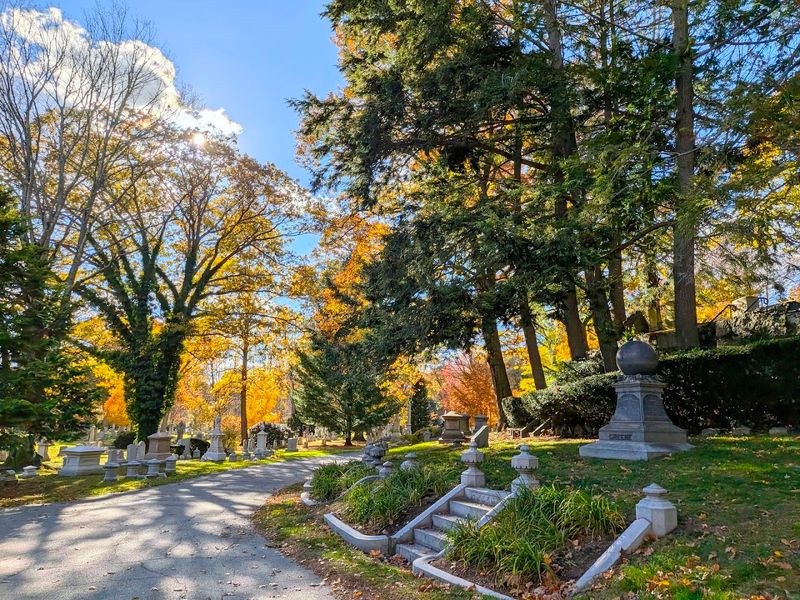
Forest Hills Cemetery in Jamaica Plain is the kind of place that surprises visitors who expect nothing more than quiet rows of headstones and manicured grass.
This historic cemetery is as much a public park and outdoor art space as it is a burial ground. Walking paths wind through beautifully landscaped grounds, and along the way you will encounter some genuinely unexpected features.
One of the most talked-about is a miniature village of tiny cement homes, each one modeled after the actual house in which a permanent resident once lived. The detail in these small structures is remarkable, and the effect is both touching and a little surreal.
The cemetery also contains a large set of xylophones that visitors are encouraged to play, which adds a cheerful and completely unexpected musical element to the experience.
Notable figures buried here include poet Anne Sexton, playwright Eugene O’Neill, and poet E.E. Cummings.
The grounds are free to enter and open daily. Fall is a particularly beautiful time to visit, when the tree canopy turns gold and amber above the winding paths.
Forest Hills is one of those rare places that manages to be contemplative, creative, and quietly joyful all at once, a combination that is harder to find than you might think.
9. Dogtown, Gloucester
Somewhere in the middle of Cape Ann, far from Gloucester’s busy harbor and tourist shops, a ghost town is slowly being swallowed by the forest.
Dogtown was a thriving settlement in the 1600s and 1700s, but by the early 1800s, residents had largely abandoned it, leaving behind stone foundations and cellar holes.
Access is available via Cherry Street or Dogtown Road in Gloucester, and a trail system winds through roughly 3,000 acres of woods and rocky terrain. The hike itself is moderately challenging, with uneven ground and exposed roots, so sturdy footwear is a must.
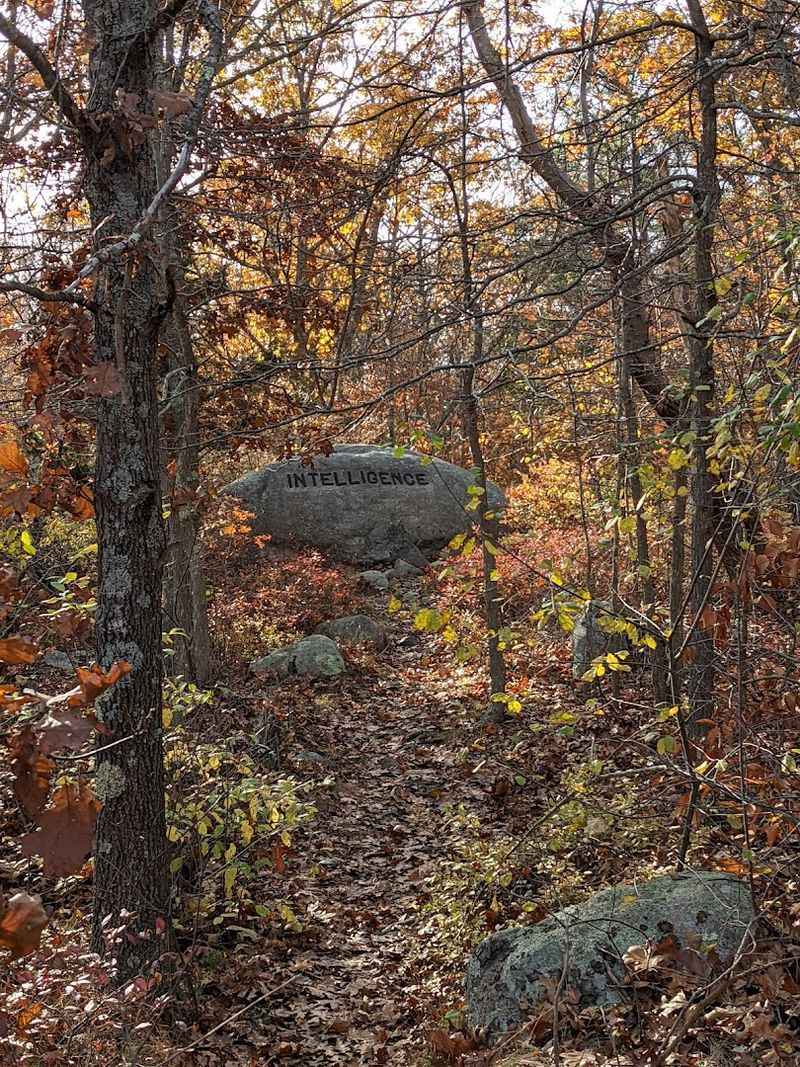
What sets Dogtown apart from other abandoned settlements is a series of massive boulders scattered throughout the forest, each one carved with a motivational phrase.
Words like “Keep Trying,” “Be On Time,” and “Loyalty” are etched into the granite surfaces, commissioned during the Great Depression by local businessman Roger Babson.
The contrast between the eerie, overgrown ruins and the cheerful carved slogans creates an atmosphere that is genuinely unlike anything else in Massachusetts.
Dogtown rewards patient explorers who do not mind getting a little lost.
Bring a trail map, wear layers, and give yourself at least two to three hours to absorb a place that feels equal parts haunted history and outdoor art installation.
10. Lake Chaubunagungamaug, Webster
Say it with confidence: Lake Chargoggagoggmanchauggagoggchaubunagungamaugg.
That is the full, official name of a lake in Webster, Massachusetts, and at 45 letters it holds the record for the longest lake name in the United States.
The name comes from the Nipmuc language and roughly translates to a description of the lake’s geography as a meeting place for different groups of people.
The simplified version, Lake Chaubunagungamaug, is what appears on most maps and road signs.
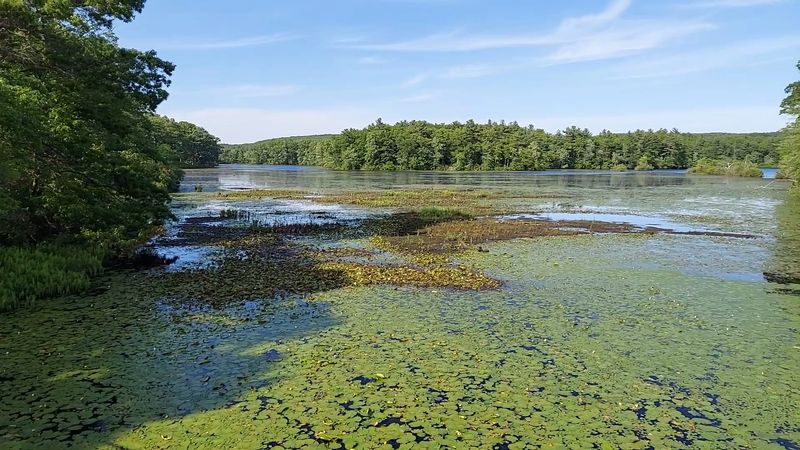
Beyond its legendary name, the lake itself is genuinely beautiful.
Formed by glaciers during the last Ice Age, it is made up of three connected ponds linked by natural channels, covering a significant area in south-central Massachusetts.
Swimming, fishing, kayaking, and boating are all popular activities here during the warmer months. The surrounding town of Webster is small and welcoming, with local restaurants and shops that make it easy to turn this into a full day trip.
The lake is accessible from Lake Road in Webster and is popular with both locals and out-of-towners who make the pilgrimage specifically to photograph the name on the sign.
There is something genuinely joyful about a destination that earns its reputation partly through sheer linguistic ambition. Webster Lake is beautiful, fun, and absolutely worth the tongue workout required to say its name correctly.