
This 1-Mile Massachusetts Trail Ends At A Peaceful Forest And A Secluded Beach On Cape Cod Bay
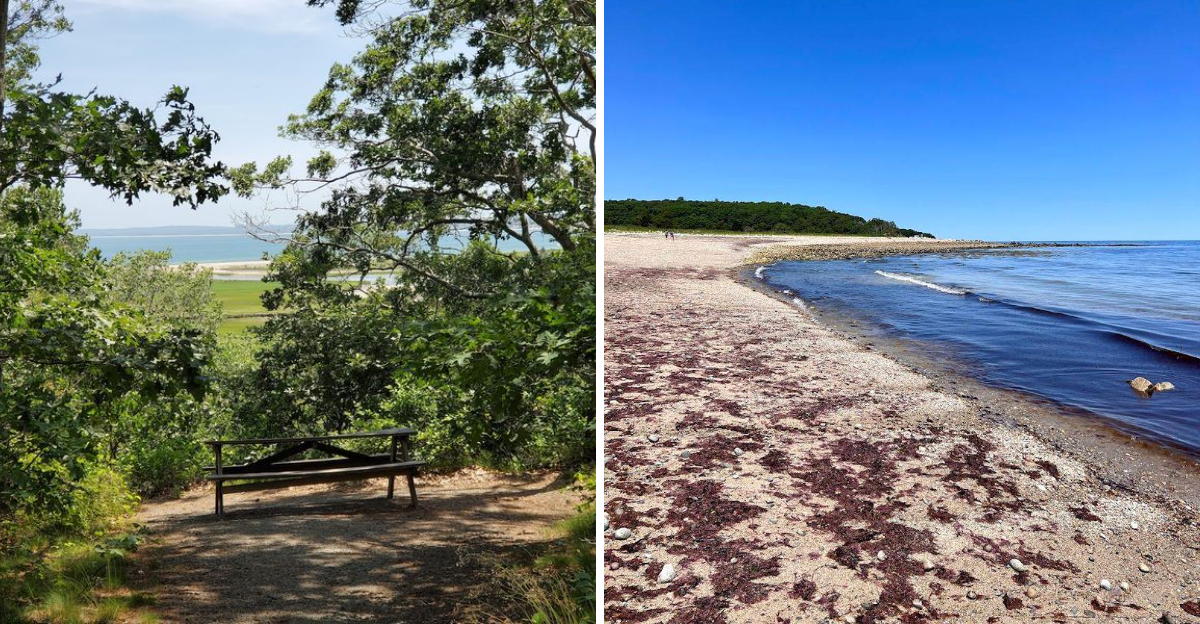
Not every great hike needs to be long. Massachusetts has a way of packing a lot into a short distance, and this one-mile trail on the South Shore is proof of that.
You start in the woods, following a forested path above salt marshes with views that open up as you walk. Then the trees clear, the path drops, and you’re standing on a quiet stretch of Cape Cod Bay with barely anyone around.
Seals are a regular sight offshore. The beach is rocky and wild, the kind that feels completely removed from the rest of the world.
The whole loop takes under an hour, but most people end up staying much longer.
If you’re looking for a quick escape that actually delivers, this trail belongs on your Massachusetts list before summer ends.
The Trail That Starts Simply And Delivers Beautifully
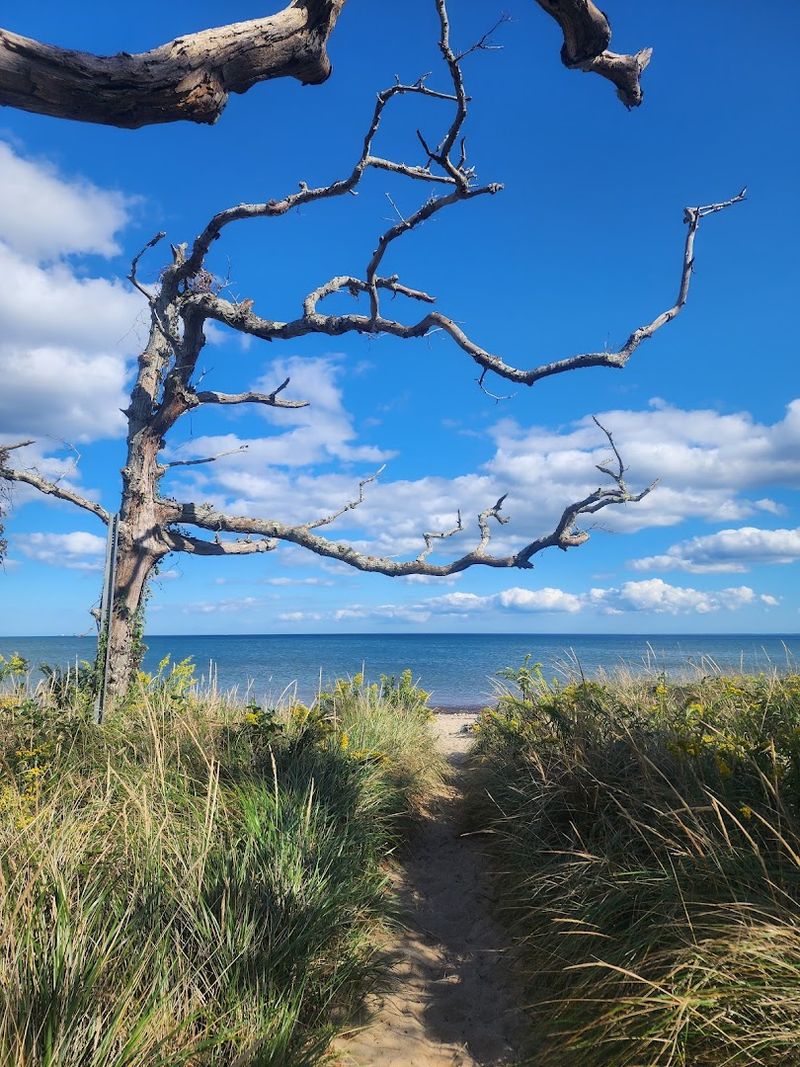
First impressions matter on a trail, and this one opens with a gravel path that feels almost too easy. The first 350 yards are firm underfoot, passing through open grassy patches and light woods that keep things airy and relaxed.
It does not feel dramatic at the start, and that is part of its appeal.
Visitors walking from the parking area will find the route straightforward and clearly passable. The trail does not demand much from your legs or your lungs.
Most people reach the beach in about 15 minutes at a casual pace, making it accessible for a wide range of fitness levels.
There is a slight steepness just before the sand appears, but it is brief and manageable. What makes this trail memorable is not the distance or the elevation.
It is the quiet build-up, the gradual shift from gravel to forest floor to open sky, and the moment the trees pull back to reveal the bay. That moment is worth every step of the half-mile walk.
A Forest With More Character Than You Expect
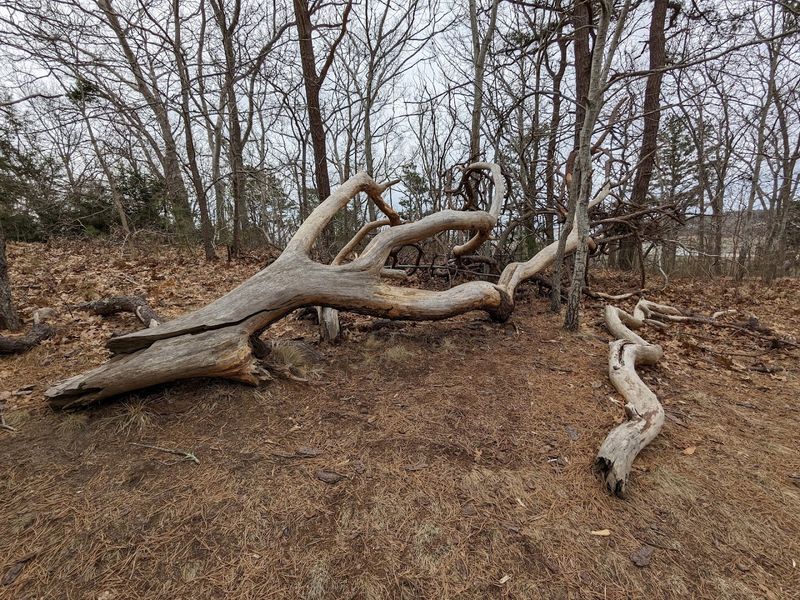
Oak, beech, cedar, red pine, and pitch pine share the canopy here, creating a forest that feels light and open rather than dense or shadowy. Rhododendron and azalea shrubs fill in the understory, adding seasonal color and a quiet elegance that surprises first-time visitors.
The forest does not overwhelm you. It settles around you.
Chipmunks are plentiful along this stretch, darting across roots and disappearing into leaf piles with comic speed. The woods carry a relaxed energy, the kind that makes you slow down without realizing it.
Birdsong moves through the canopy at different heights, and the air carries a faint salt edge even well before you reach the shore.
For photographers, the filtered light between the pines creates long, warm shadows during morning and late afternoon hours. The forest section of the trail is short, but it earns attention.
There are no dramatic overlooks or grand clearings, just a steady, pleasant passage through a coastal woodland that feels genuinely undisturbed. It is the kind of forest that reminds you why walking quietly through trees is never a waste of time.
What The Beach Looks Like When You Finally Arrive
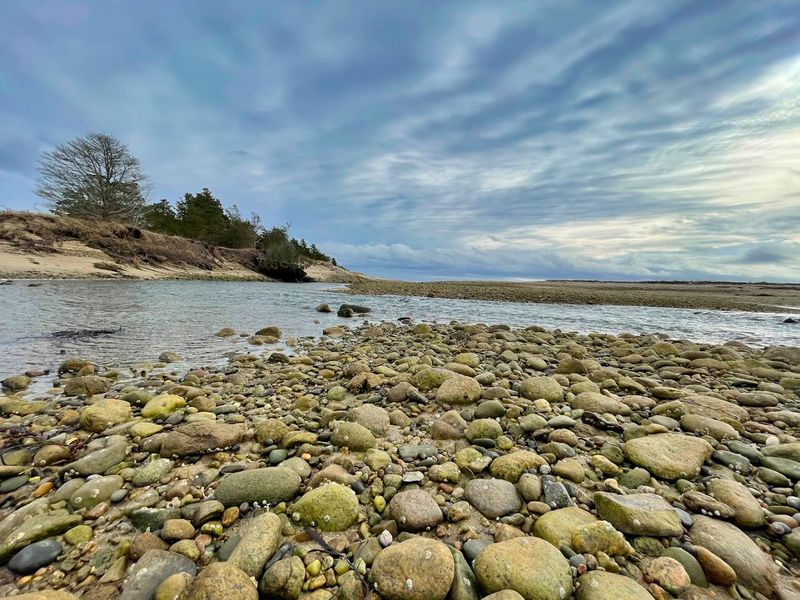
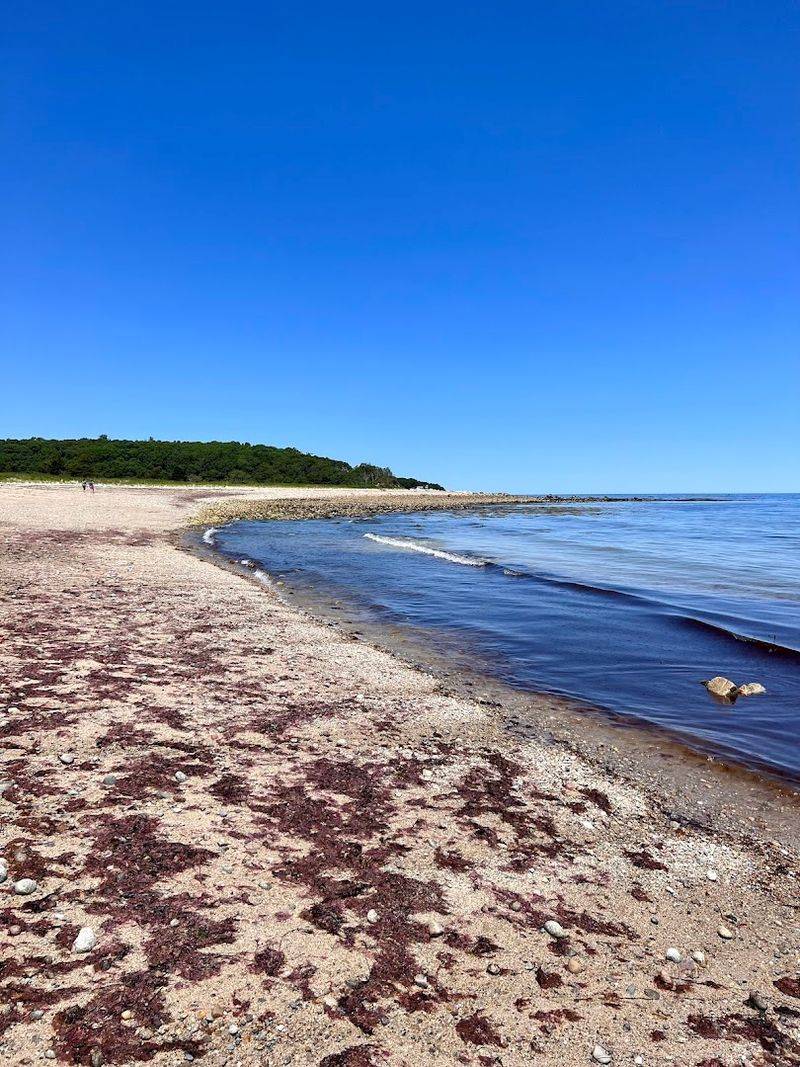
The beach at Ellisville Harbor is not the kind you see on tourism posters, all smooth sand and umbrella rows. Rocky stretches alternate with sandy patches, and the shoreline has a raw, natural quality that feels completely unmanaged.
That is exactly the point. No concession stands, no lifeguard stands, no rental chairs.
Visitors frequently comment on finding sea glass among the rocks, along with colorful stones in shades of gray, rust, and deep green. The tidal pools reveal hermit crabs, softshell crabs, and small snails at low tide, making it a genuinely interesting place to explore rather than simply sit.
Families with curious kids tend to spend far longer here than they planned.
The water is cold, as Cape Cod Bay water tends to be, and the rocky bottom near the shoreline means water shoes are a smart choice for anyone planning to wade. Swimming is permitted, but there are no lifeguards on duty.
The beach earns its reputation not through luxury but through atmosphere. It is quiet, honest, and consistently beautiful in the uncomplicated way that only undeveloped coastline can manage.
Harbor Seals And The Wildlife That Makes This Park Special
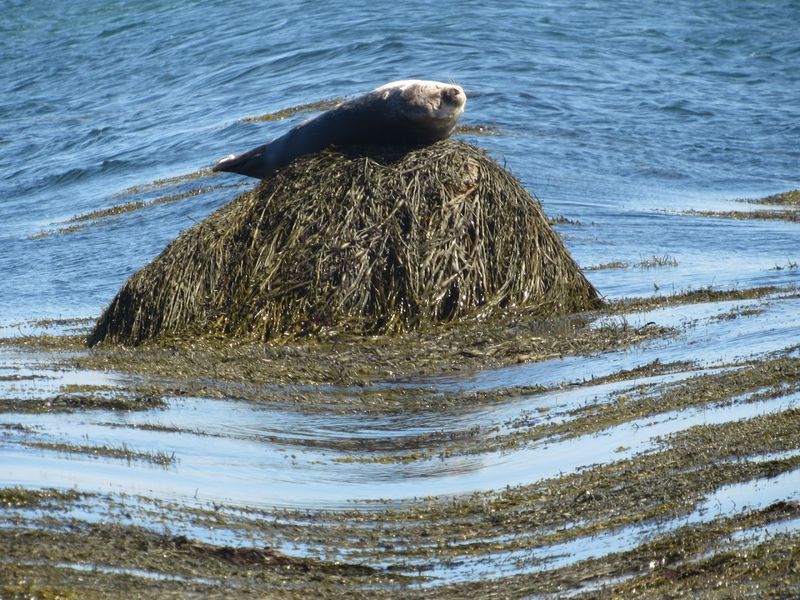
Spotting seals offshore is one of the most reliably exciting things about a visit here, particularly during fall and winter months when harbor seals gather in larger numbers.
Visitors have reported watching groups of ten or more swimming just 50 yards from the beach, close enough to see their round heads bobbing above the surface.
The park is also a significant stop for nesting and migrating birds. Piping plovers and least terns use this shoreline for breeding, which can lead to partial beach closures in spring.
That temporary inconvenience signals something worth respecting: this is a functioning habitat, not just a scenic backdrop. Herons, shorebirds, and various waterfowl pass through regularly.
For birdwatchers, the salt marsh and open meadow areas near the trail provide excellent viewing without requiring any special equipment or advanced knowledge. A pair of binoculars and a little patience go a long way here.
Wildlife at Ellisville Harbor does not perform on a schedule, but the variety and frequency of sightings suggest that patience is almost always rewarded with something worth seeing.
The Salt Marsh That Deserves More Attention
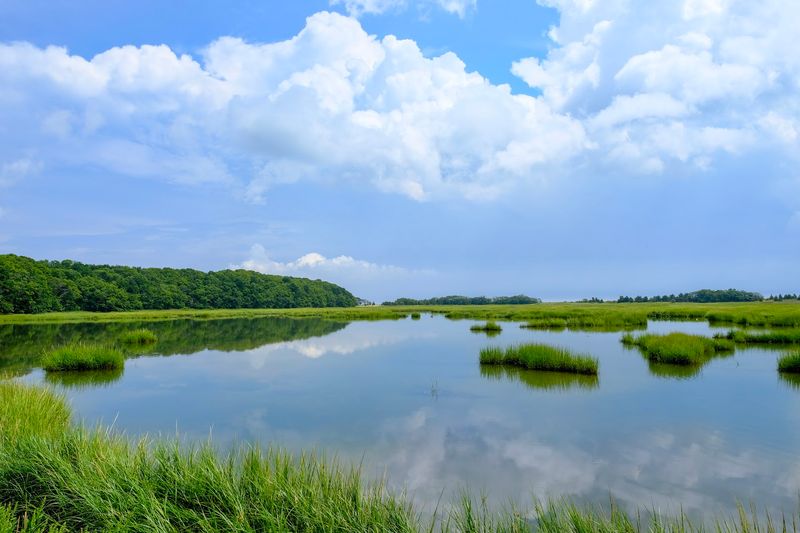
Most visitors aim straight for the beach and walk past the salt marsh without a second look. That is a small but real mistake.
The marsh runs parallel to part of the trail and opens up dramatically at low tide, revealing tidal channels, mudflats, and a landscape that shifts color depending on the season and the hour.
Photographers who have explored the marsh area describe it as one of the most rewarding spots in the entire park.
At low tide, the salt pond area becomes a quiet theater of movement, with birds feeding along the edges and light bouncing off shallow pools in ways that change minute by minute.
One visitor spent over an hour there completely alone, shooting photos in every direction.
The tidal stream that flows through the marsh has its own seasonal appeal.
Families have used inner tubes to float along it when the tide moves in or out, and kayakers have been spotted doing the same.
The marsh is not a dramatic feature, but it rewards the visitors who slow down enough to notice it. Consider spending at least a few minutes there before or after reaching the beach.
Here’s How You Can Feel More Prepared Before You Arrive
Ellisville Harbor State Park sits at 1861 State Road, which is Route 3A, in Plymouth, Massachusetts. The park is open daily from 6:30 AM to 7:00 PM, and there is no admission fee, which makes it one of the more accessible state parks in the region.
Parking is available in a modest lot near the trailhead.
One important navigation note: Google Maps has historically directed drivers to a private exit rather than the correct parking entrance. The actual lot is to the right when approaching from Route 3A, so it is worth confirming the entry point before arrival to avoid confusion.
The park can be reached by phone at +1 508-866-2580 for updated information.
Dogs are welcome on leash throughout the park, but they are not permitted on the beach between May and September. There are no bathroom facilities on site, which is worth planning around, especially for families with young children.
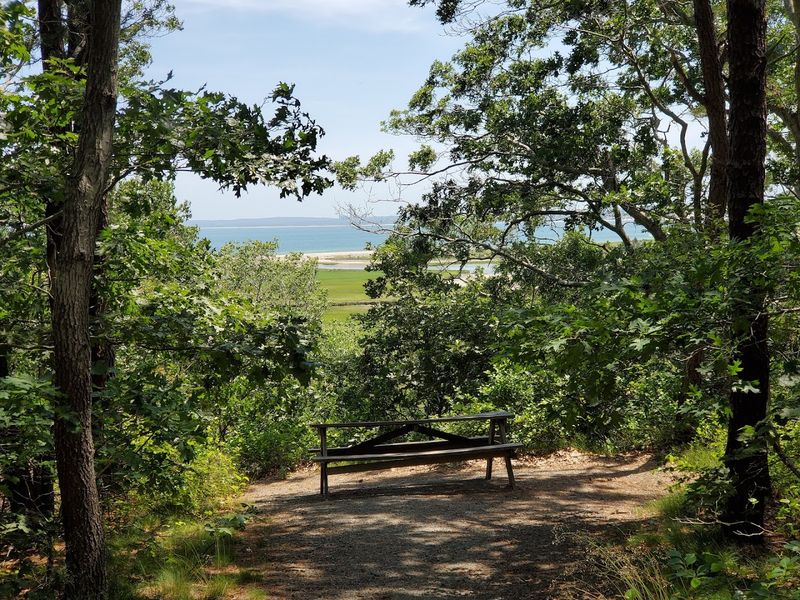
There is a picnic table along the trail, positioned under trees and offering a pleasant rest stop. The park has no food vendors, so bringing water and snacks is a sensible habit before setting out.
Rolling Meadows And Open Fields Worth Wandering Through
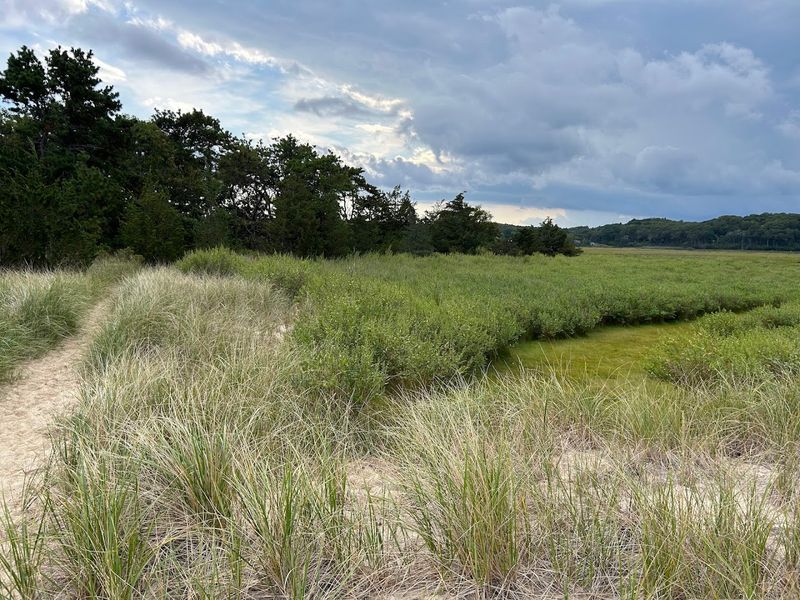
Beyond the main trail to the beach, Ellisville Harbor State Park contains open fields and rolling meadows that give the landscape a broader, more varied character.
One visitor described taking a path that wound through a large open field before eventually connecting back to the main route, turning a simple beach walk into a more satisfying loop.
These meadow areas provide a different kind of visual experience compared to the forest and shore.
The grasses move with the coastal breeze, and in late summer and early fall, the vegetation takes on warm amber and gold tones that photograph well and feel genuinely seasonal.
The openness also makes it easier to spot birds in flight and to get a clearer sense of the park’s 101 acres of diverse coastal landscape.
Sumac grows in several spots along the meadow edges, turning a vivid red in autumn and adding a strong visual contrast to the surrounding green and gold. The meadows are not marked with formal interpretive signs, which keeps the experience exploratory rather than guided.
Visitors who take the time to wander off the direct path to the beach consistently report a richer and more complete experience of the park overall.
Poison Ivy, Rocky Shores, And Other Things To Prepare For
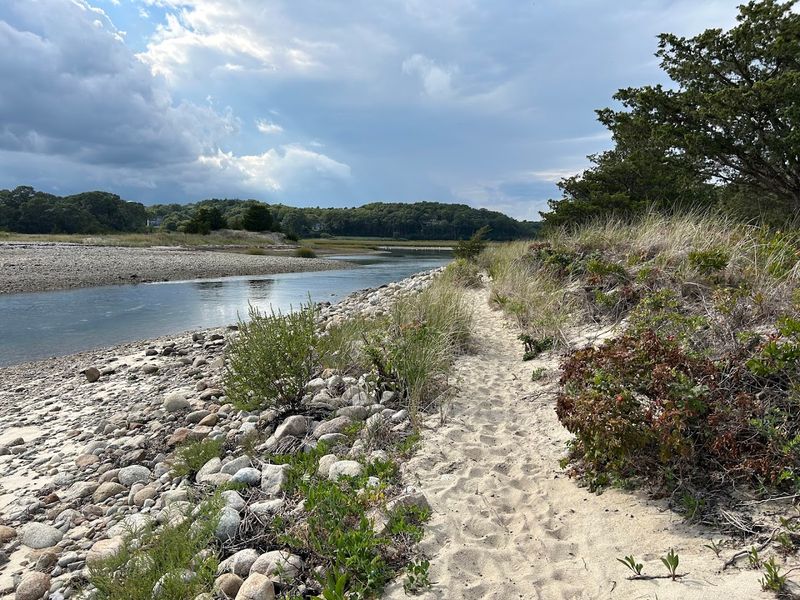
Ellisville Harbor is a genuinely natural space, which means it comes with a few conditions worth knowing about in advance. Poison ivy grows abundantly along the trail, and multiple visitors have flagged it as a significant presence right beside the path for much of the walk.
The classic rule applies here: leaves of three, let it be. Wearing long pants and staying on the trail reduces exposure considerably.
The beach itself is primarily rocky near the waterline, which makes barefoot wading uncomfortable and potentially unsafe. Water shoes or sturdy sandals are a practical choice for anyone hoping to explore the tidal zone or wade in the bay.
The rocky bottom does not make swimming impossible, but it does require a bit more care and awareness than a smooth sandy beach would.
There are no directional trail signs throughout the park, which some visitors find freeing and others find disorienting. Bringing a downloaded map or screenshot of the trail layout is a reasonable precaution.
The lack of signage contributes to the park’s exploratory, unhurried character, but it does mean that first-time visitors benefit from doing a small amount of preparation before arriving. None of these details diminish the experience.
They simply shape it.
The Best Times To Visit If You Want The Beach To Yourself
Weekday mornings are consistently the quietest times at Ellisville Harbor. The park opens at 6:30 AM, and arriving early means having the trail and often the beach almost entirely to yourself.
Several visitors have described walking the full loop, including the marsh and meadow areas, without encountering more than a handful of other people. That kind of solitude is increasingly rare at coastal parks in Massachusetts.
Fall and winter visits offer a different but equally rewarding experience.
Seal sightings become more frequent as the season cools, and the crowds that appear during summer months thin out considerably.
The light in October and November has a low, golden quality that photographers find particularly useful. The beach takes on a more austere atmosphere, which suits the rocky shoreline well.
Spring visits come with the possibility of beach closures near nesting areas for piping plovers and least terns, so checking ahead during April and May is worth doing. Summer brings more visitors but still far fewer than the popular beaches nearby.
Why This Short Walk Stays With You Long After You Leave
There is a particular kind of satisfaction that comes from a short walk that delivers more than it promises. Ellisville Harbor operates on that principle consistently.
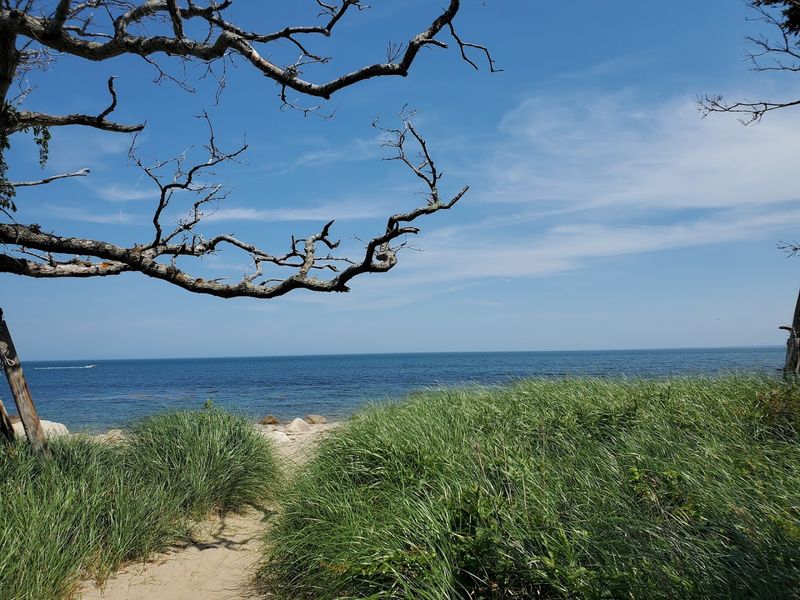
The trail is roughly half a mile, takes about 15 minutes at a relaxed pace, and costs nothing to walk. What it returns is a beach on Cape Cod Bay that feels genuinely undiscovered, even on days when a few other visitors are present.
People return here repeatedly, which is telling. The reviews left by visitors over the years share a common thread: surprise at how good it is, and a firm intention to come back.
That combination of low expectation and high reward is not accidental.
The park’s natural state, its absence of development, and its free access all contribute to an experience that feels honest and unforced.
The sphagnum bog, the old abandoned structure visible from the trail, the chipmunks that seem entirely unbothered by human presence, and the seals that appear offshore like a bonus at the end of the walk all add texture to what could have been a simple beach trip.