
The Beautiful Covered Bridge In New Hampshire That Looks Like A Classic Postcard Destination
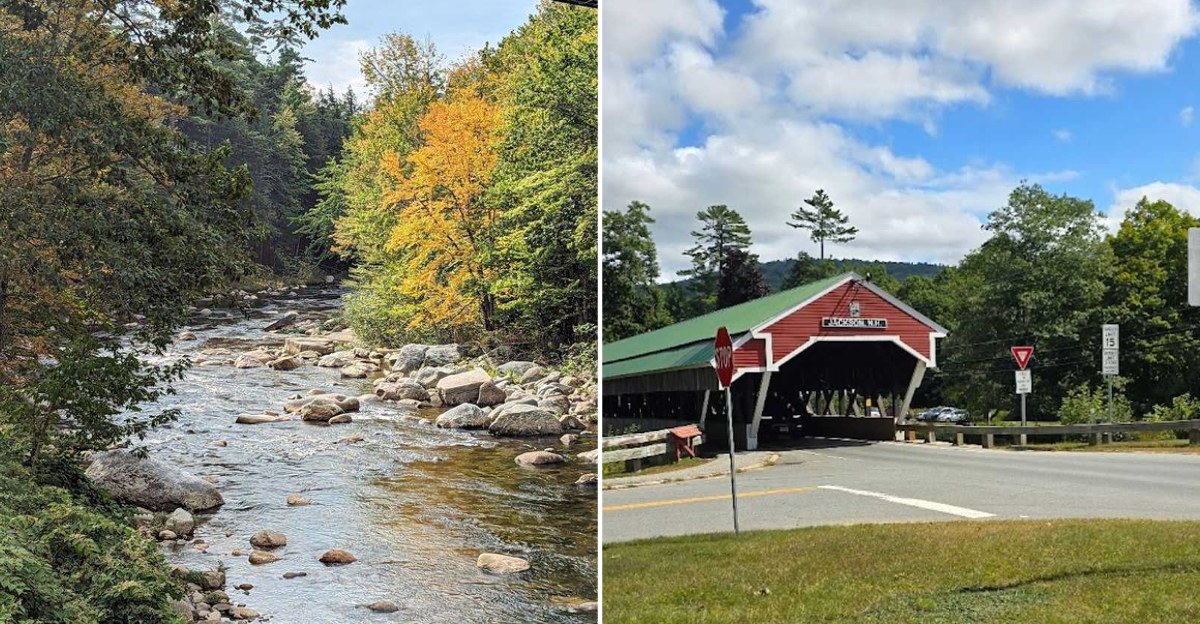
Some structures earn their place in the landscape over time. This one looks like it was always supposed to be exactly where it is.
The bridge appears around a bend in the road at an angle that stops most first-time visitors before they’ve processed what they’re looking at.
Covered bridges exist throughout New England, but few carry this particular combination of setting, preservation, and surrounding scenery.
Fall brings the photographers out in numbers that the road wasn’t designed for. Every other season delivers something different without delivering anything less.
A structure that has been framing the same stretch of New Hampshire countryside for generations and shows no signs of becoming less worth the detour.
Architectural Features That Define Classic Bridges
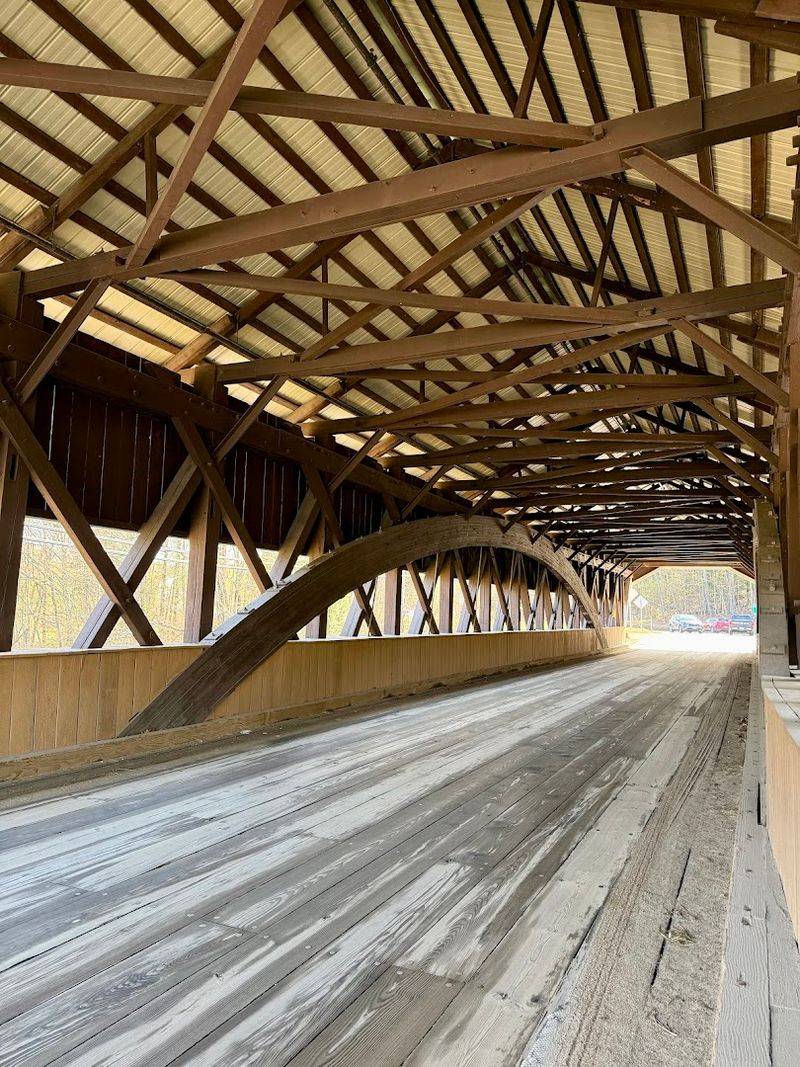
This bridge is not just pretty on the outside. It is built using a Paddleford truss design, which is one of the most respected structural methods in classic covered bridge construction.
Charles Austin Broughton and his son Frank built it in 1876, and they clearly knew what they were doing.
The covered portion stretches 121 feet and 1 inch in length. The clear span between abutments measures 103 feet.
That is a serious amount of wood engineering done without modern machinery.
The bridge stands 26 feet and 5 inches wide overall. The roadway inside measures 16 feet across with a vertical clearance of 12 feet and 3 inches.
Those dimensions are tight by today’s standards but were perfectly practical for 19th-century travel.
A sidewalk was added in 1930, giving pedestrians their own dedicated path. The sidewalk runs along the north side and is also covered.
That addition made the bridge friendlier for walkers without changing its original character.
The arches added to the Paddleford truss give the bridge extra reinforcement. They also add a visual elegance that plain truss bridges simply lack.
You notice them immediately once you look up inside the structure.
The bridge is painted a classic red color. That red against the surrounding green trees and flowing Ellis River creates a visual contrast that is hard to forget.
It is located at Rt. 03860, 16 Main St, Jackson, NH 03846.
Historical Significance And Preservation Efforts
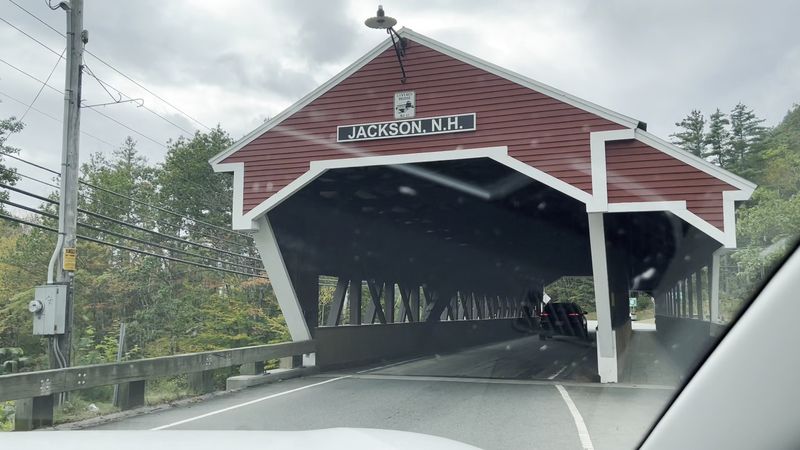
Built in 1876, the Honeymoon Bridge has outlasted a lot of things. It has survived two world wars, countless harsh New Hampshire winters, and the general wear that comes with 148 years of continuous use.
That kind of longevity does not happen by accident.
The State of New Hampshire owns and maintains the bridge. That ownership means professional upkeep rather than relying on local budgets alone.
State involvement has been a major reason the bridge remains in such solid condition today.
A fire protection system was installed in 2001 using a $64,000 federal grant. Sprinklers were added throughout the structure.
Covered wooden bridges are extremely vulnerable to fire, so this addition was genuinely important for long-term survival.
A major renovation was completed between 2003 and 2004. Workers addressed significant rot and decay that had developed over decades.
The renovation restored structural integrity without stripping away the bridge’s original character.
It is officially listed as Covered Bridge No. 51 in New Hampshire. The state currently has 55 remaining covered bridges.
Each one carries a number, making them trackable and easier to preserve as a collective historical resource.
The bridge serves as a celebrated entryway into Jackson Village. It has appeared on countless postcards over the decades.
Seeing it in person confirms why preservation efforts here have always been worth every dollar spent.
Seasonal Views Highlighting Changing Landscapes
Autumn is the crowd favorite at the Honeymoon Bridge, and for obvious reasons. The surrounding White Mountains explode into orange, red, and gold every fall.
The red bridge against that backdrop looks almost too good to be real.
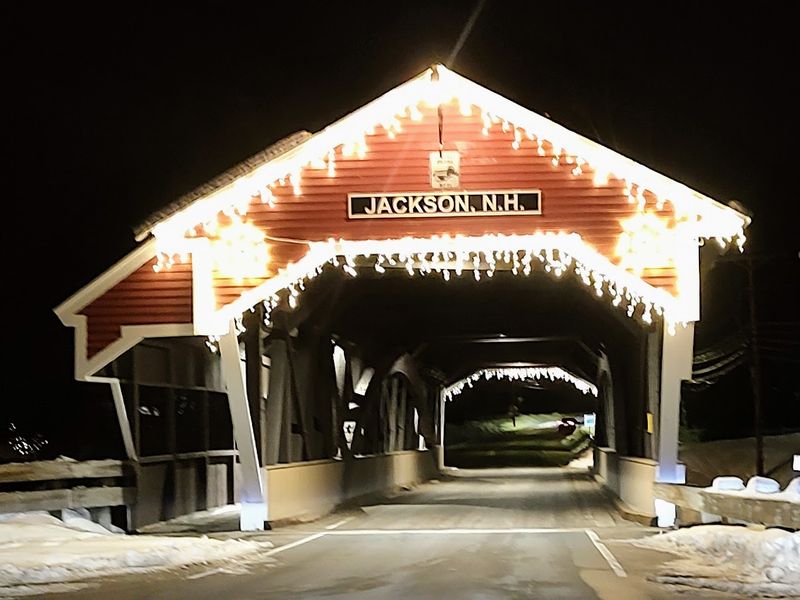
Winter turns the whole scene into something quieter. Snow collects on the bridge roof and along the riverbanks.
The Ellis River sometimes freezes partially, adding a silvery texture that makes winter visits genuinely worth the cold.
Spring brings rushing water under the bridge as snowmelt fills the Ellis River. The surrounding trees bud out in fresh green.
That combination of fast-moving water and new growth gives spring visits a lively, energetic feel.
Summer softens everything into lush green. Families walk the bridge sidewalk in the warm months.
The nearby loop walk is easy enough for wheelchairs, making it accessible to a wide range of visitors year-round.
Jackson Village itself enhances every seasonal experience. The village has been a resort destination since the mid-1800s.
Its White Mountain setting means dramatic scenery is always present, regardless of which month you visit.
Each season changes the mood around the bridge completely. One visit in October feels nothing like a visit in January.
Regulars often return multiple times a year specifically to experience those seasonal shifts firsthand.
Wildlife And Natural Surroundings Near The Bridge
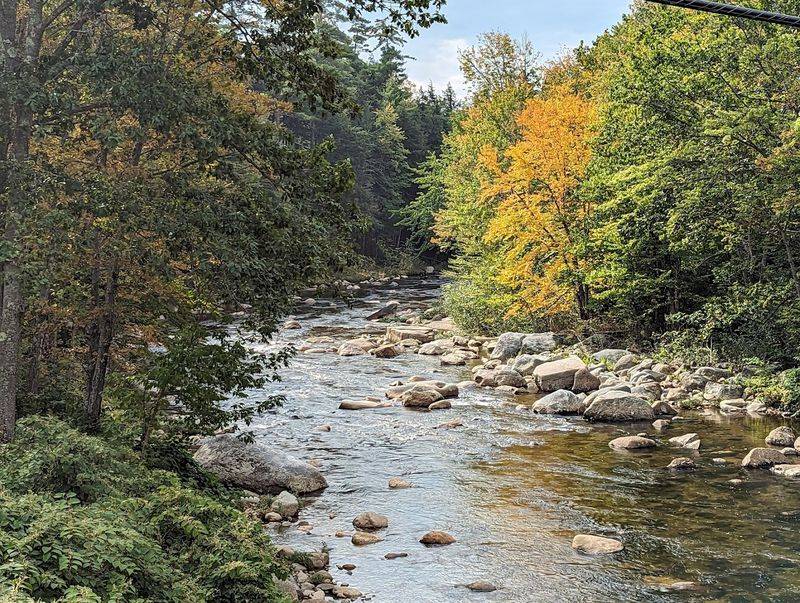
The Ellis River running beneath the bridge is the real wildlife hub here. The river supports healthy fish populations, including brook trout.
Watching the water move through the valley below the bridge is calming in a way that is hard to describe.
Bird activity around the bridge is consistent throughout the year. Red-tailed hawks are spotted frequently in the area.
Smaller songbirds fill the surrounding trees, especially during spring migration season when activity peaks noticeably.
White-tailed deer are common in and around Jackson Village. They move through the wooded areas near the river regularly, especially at dawn and dusk.
Visitors who arrive early in the morning have a decent chance of spotting them nearby.
Moose sightings in the broader Jackson area do happen, though they are less predictable near the village center. The White Mountains region supports a healthy moose population overall.
Patience and early morning timing improve your odds considerably.
The riverbanks near the bridge support a variety of native plant species. Ferns, wildflowers, and hardwood trees line the water’s edge.
That natural vegetation frames the bridge beautifully and provides habitat for the wildlife that calls this area home.
The loop walk near the bridge keeps you close to the river environment. It is an easy, flat route.
Even a short walk gives you enough time to absorb the natural surroundings without needing hiking gear or serious preparation.
Photography Tips For Capturing Timeless Scenes
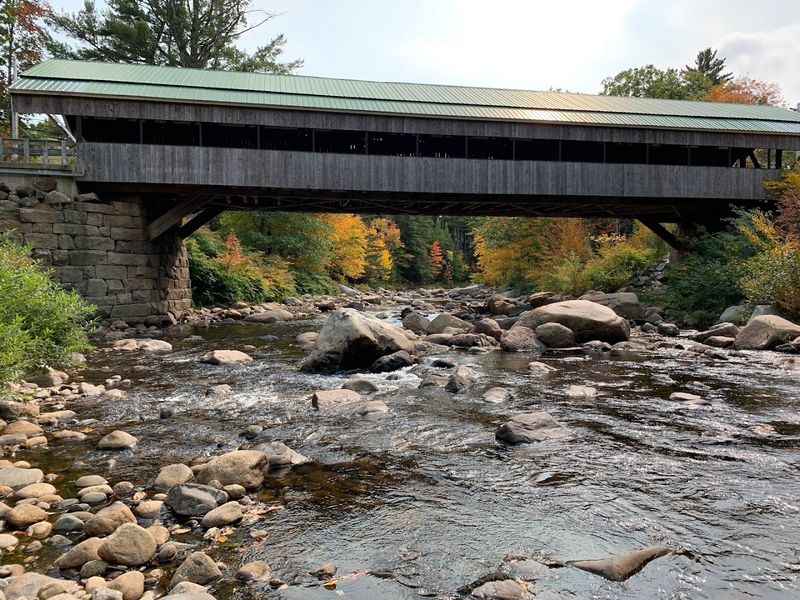
The best light at the Honeymoon Bridge hits during golden hour, roughly 30 to 60 minutes after sunrise. The low angle of morning light catches the red wooden planks perfectly.
Shadows are soft, and the river reflects color beautifully at that time.
Shooting from across the Ellis River gives you the classic full-bridge composition. Walk down toward the riverbank and find a stable spot.
That angle shows the bridge, the water, and the surrounding trees all in one clean frame.
The interior of the bridge offers a different kind of shot entirely. Looking through from one end to the other creates a natural tunnel frame.
The light at the far opening creates contrast that makes for dramatic images.
Autumn is peak season for photographers here. Competition for the best spots can be real on fall weekends.
Arriving early on weekday mornings gives you the bridge mostly to yourself, which is a significant advantage for clean compositions.
A wide-angle lens works well for capturing the full bridge in its landscape context. A longer lens lets you isolate architectural details like the truss work and wooden beams.
Having both options available gives you flexibility throughout the shoot.
Overcast days actually produce surprisingly good results here. Flat light reduces harsh shadows inside the bridge interior.
Colors in the surrounding foliage appear more saturated under cloud cover, which works in your favor during autumn visits.
Local Legends And Folklore Associated With The Structure
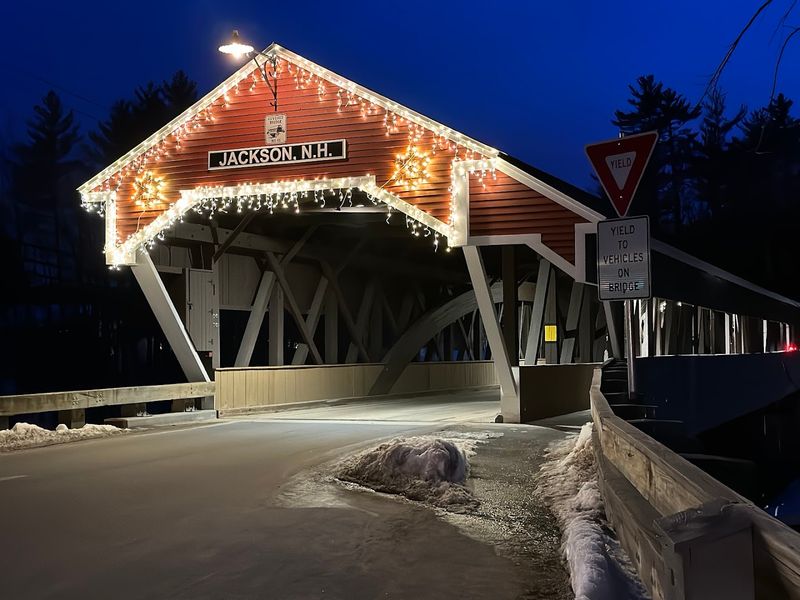
The name Honeymoon Bridge did not come from a marketing meeting. It grew organically from a genuine local tradition that has been going on for generations.
Couples kiss under the bridge for good luck, and that habit eventually became the bridge’s entire identity.
Newlyweds have been photographed on and around this bridge for well over a century. The romantic framing of the structure makes it a natural backdrop for wedding photos.
Jackson locals will tell you the tradition is taken seriously by couples who visit from far away.
The bridge’s nickname stuck so firmly that most people do not even know its official designation is Covered Bridge No. 51. The romantic legend simply overshadowed the bureaucratic numbering system entirely.
That says a lot about how powerful a good story can be.
There is something genuinely fun about a public bridge developing this kind of lore. It transforms an engineering structure into a relationship milestone.
People drive hours specifically to participate in the kissing tradition, which keeps the legend alive and growing.
The Anheuser-Busch Clydesdales were once photographed at this bridge, adding another layer to its visual legacy. That particular photo became widely circulated.
It added a different kind of Americana charm to the bridge’s already rich story.
Jackson Village has leaned into the romantic reputation of its famous bridge. The surrounding area markets itself partly on that charm.
The folklore here is not manufactured. It developed naturally over nearly 150 years of community life.
Impact Of The Bridge On Regional Tourism
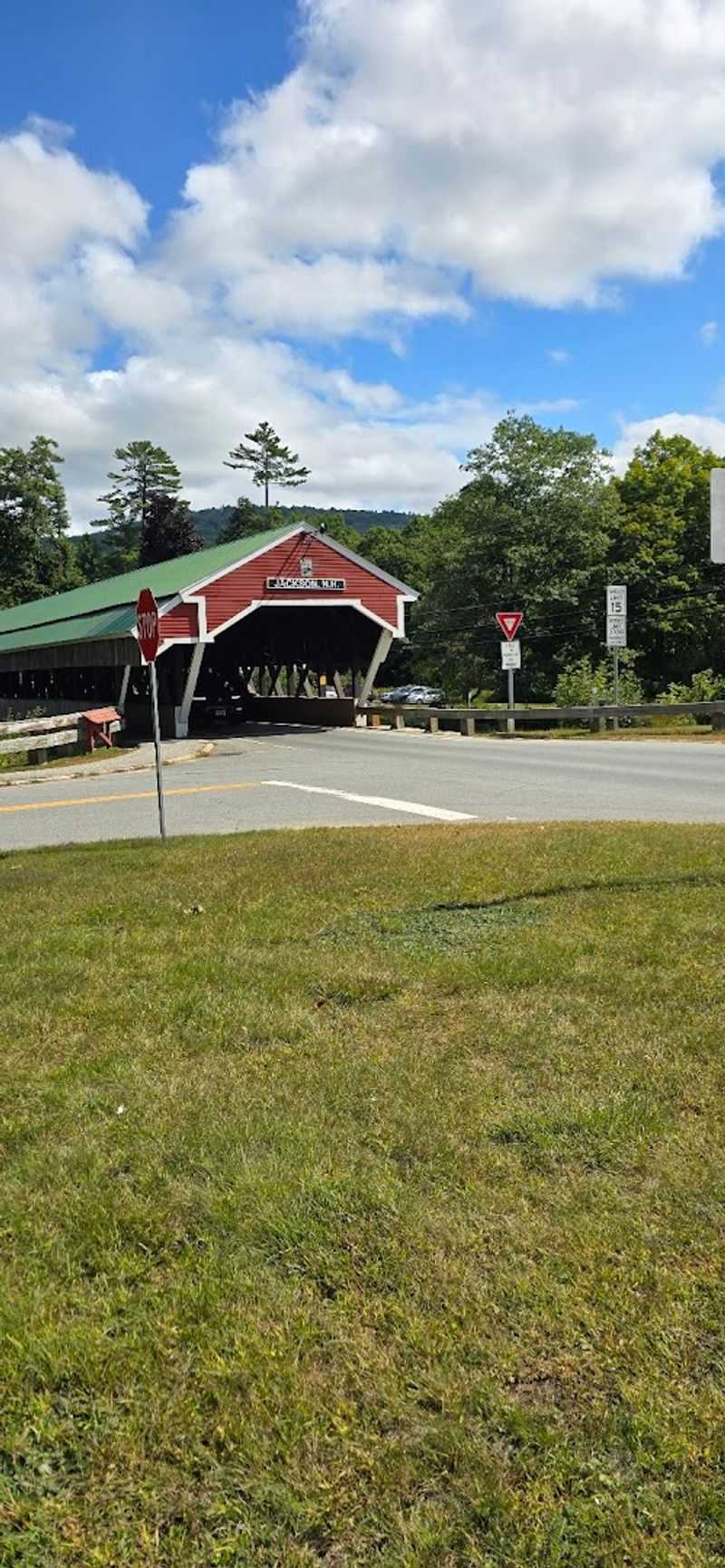
The Honeymoon Bridge functions as the literal gateway into Jackson Village. Every visitor driving into the main part of town crosses it or at least sees it immediately.
That positioning makes it unavoidable and effective as a first impression for the entire village.
Jackson has been a resort destination since the mid-1800s. The bridge has been part of that tourism story for almost as long.
Its presence on countless postcards over the decades has consistently drawn curious travelers to the area.
People are not just visiting, they are leaving enthusiastic feedback about the experience.
Nearby businesses benefit directly from bridge traffic. Flossie’s General Store sits right next to the bridge and sees steady foot traffic from visitors.
Shops, inns, and restaurants throughout Jackson Village all gain from the consistent stream of tourists the bridge attracts.
The bridge is open 24 hours a day, every day of the year. No admission fee is required.
That accessibility makes it a genuinely democratic attraction that anyone can visit without planning around operating hours or ticket costs.
Events like covered bridge dances have been held in the area, drawing visitors who might not otherwise make the trip. Those events expand the bridge’s appeal beyond just sightseeing.
Regional tourism here is directly tied to the bridge’s ongoing cultural presence.
Engineering Techniques Used In Traditional Bridge Building
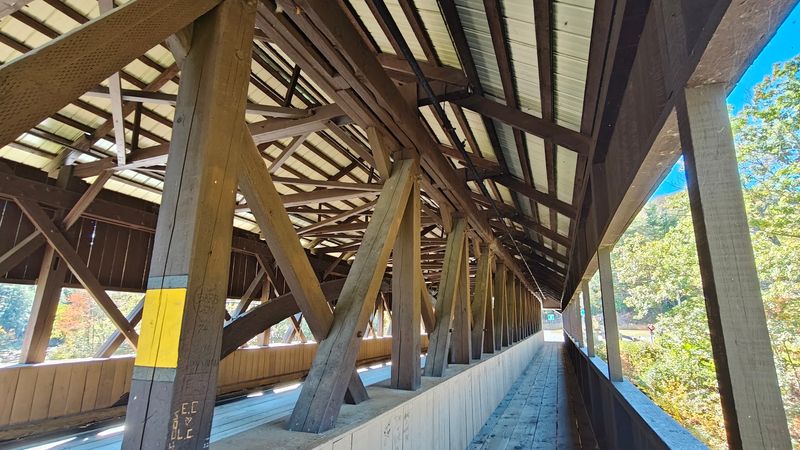
The Paddleford truss is the structural backbone of the Honeymoon Bridge. It was developed by Peter Paddleford of New Hampshire in the 19th century.
The design uses a series of interlocking wooden members that distribute weight efficiently across the span.
The Broughtons added arches to the standard Paddleford truss design. Those arches provide additional load-bearing support.
They also reduce the stress placed on individual truss members, which contributes directly to the bridge’s impressive longevity.
Covered bridges are covered for a very practical reason. The wooden roof and siding protect the structural timbers from rain, snow, and sun exposure.
Without that protection, untreated wood deteriorates rapidly, often within a decade or two.
The builders used mortise-and-tenon joinery extensively in 19th-century covered bridge construction. This technique locks wooden members together without relying solely on metal fasteners.
It creates connections that flex slightly under load rather than cracking under stress.
The 103-foot clear span of the Honeymoon Bridge was a significant engineering achievement for 1876. Spanning that distance with wood required careful planning and precise execution.
The Broughtons accomplished it without the computational tools modern engineers take for granted.
Traditional covered bridge construction relied heavily on local timber resources. White pine and hemlock were common choices in New England.
Using locally sourced wood reduced transportation costs and gave builders materials they understood intimately from years of regional construction experience.