
The Tiny New York Music Club Where Bob Dylan And Jimi Hendrix Played Before The World Knew Their Names Is Still Open Today
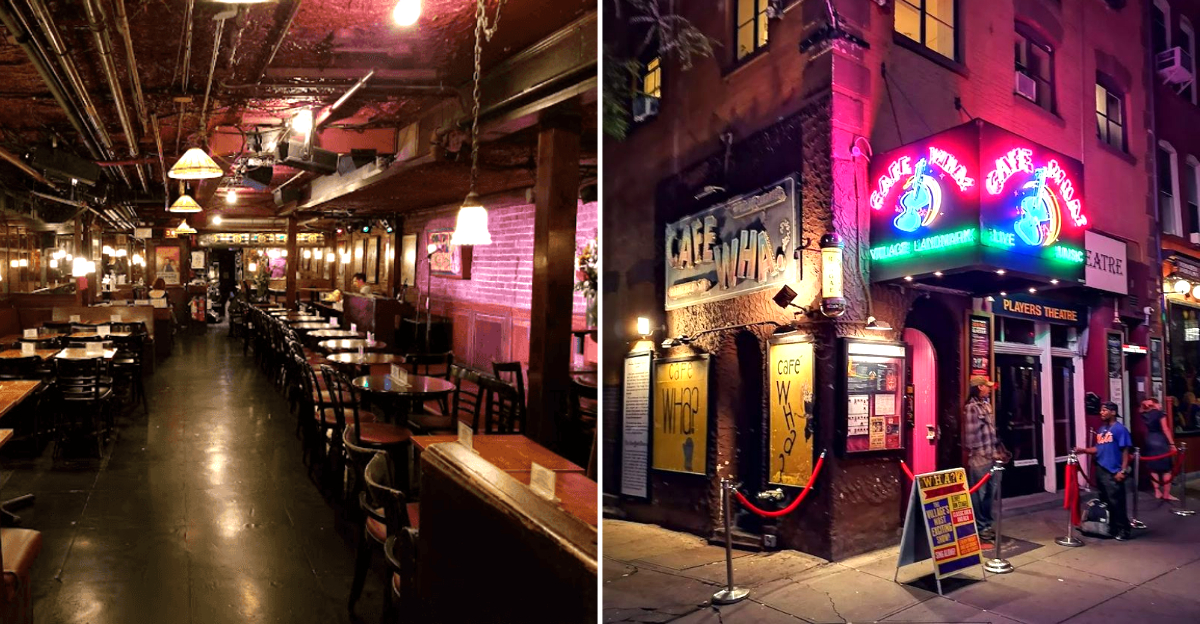
Before the albums. Before the sold-out arenas. Before anyone outside of a small and very lucky New York crowd had any idea what was coming.
Bob Dylan and Jimi Hendrix stood on a stage so small that the people in the back row could see the expression on their faces and played to rooms that had no idea they were witnessing something that would still be talked about decades later.
That stage is still there. The club is still open. The door still opens the same way it always did. Surviving this long in New York requires something sturdier than history to lean on and this club has it.
The music that comes through on any given night carries the weight of everything that happened on that same stage before it and pushes forward anyway.
Regulars sit in the same spots that strangers once sat in and heard something for the first time that changed what they thought music could do.
New York has landmarks that wear their history on plaques outside the door. This one wears it in the sound that comes out of it every single night.
Walk in. Find a seat close to the front. Pay attention to whoever is up there. Someone did that once before and it turned out to matter quite a lot.
A Basement That Changed Music History
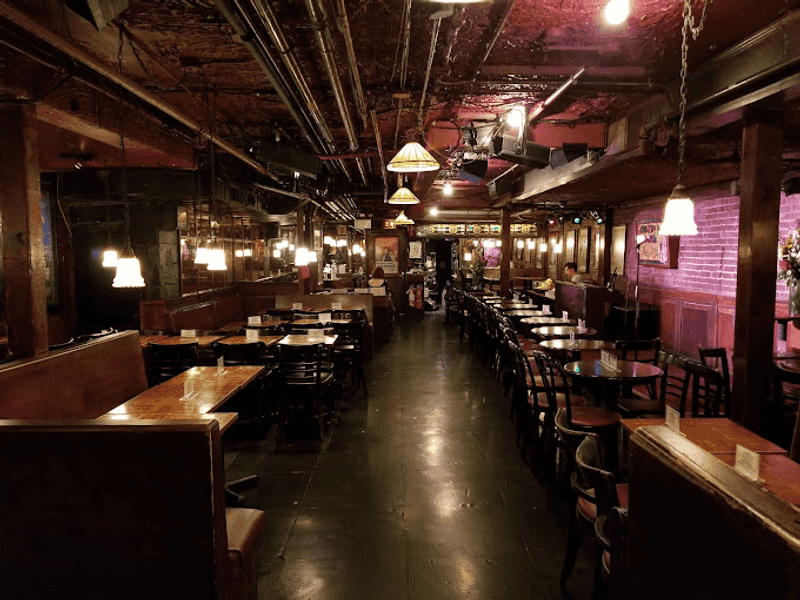
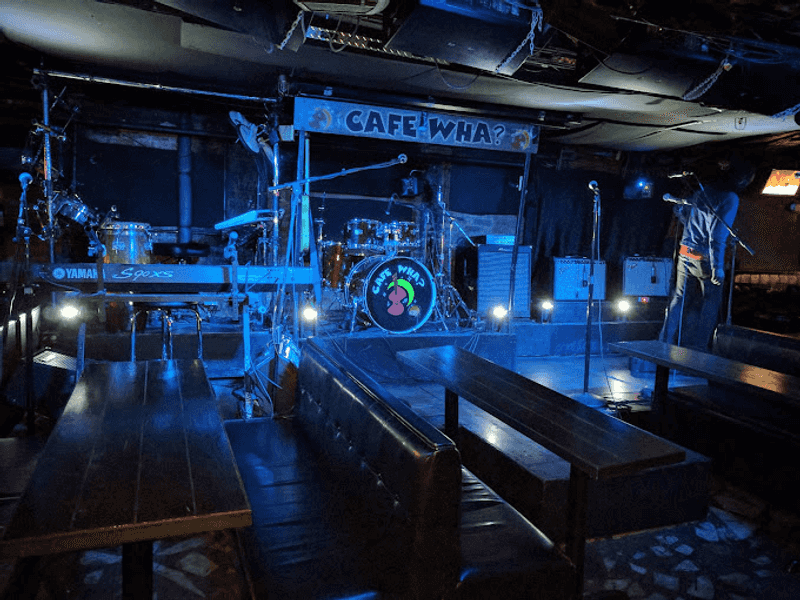
Not every legendary place looks the part. Some of the most important moments in American music history happened in a room that Bob Dylan himself once described as a subterranean cavern with low ceilings and dim lighting.
That description still fits today, and somehow that only makes it better.
Greenwich Village in New York has always attracted artists, thinkers, and dreamers. In the early 1960s, it was the center of a folk music movement that would reshape popular culture entirely.
Young musicians arrived from all over the country, looking for a stage and an audience willing to listen.
Cafe Wha? was one of the first stops for many of them. The club opened in 1959, founded by Manny Roth, and it quickly became a gathering place for raw, unpolished talent searching for its voice.
The energy in that room was different from anything else in the city.
What made the space so special was its lack of pretension. No fancy decor, no elaborate setup.
Just a stage, some seats, and the kind of charged atmosphere that only comes when real talent fills a small room. That combination turned out to be a formula for greatness.
Cafe Wha? At 115 Macdougal Street Is The Real Deal
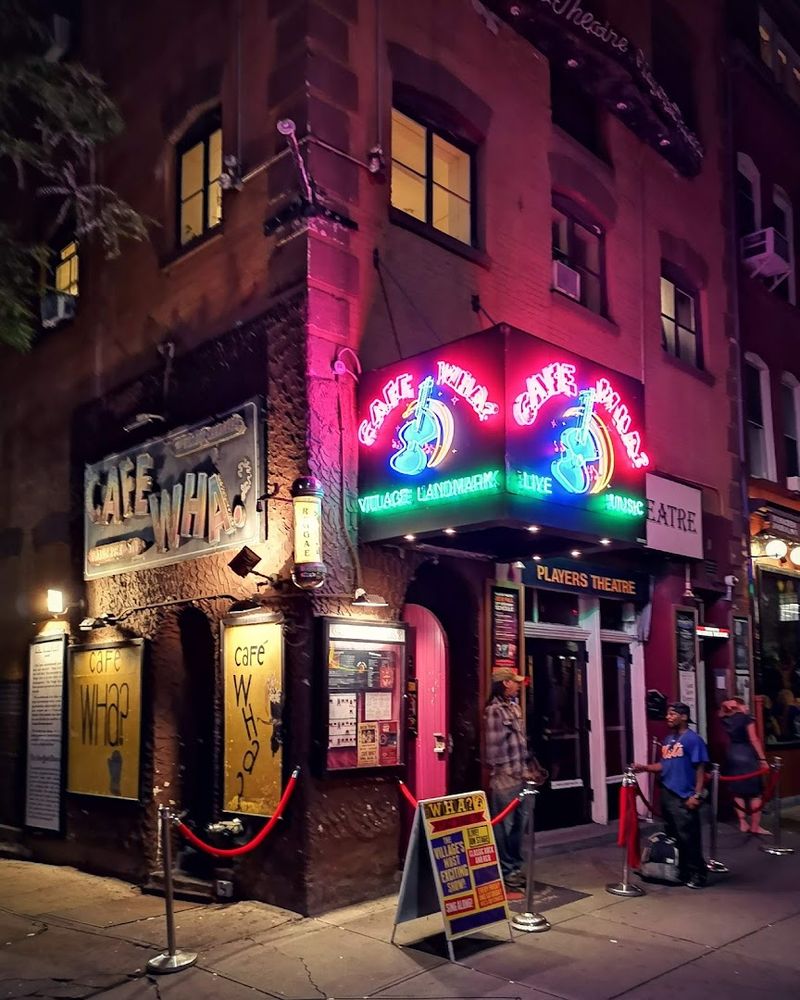
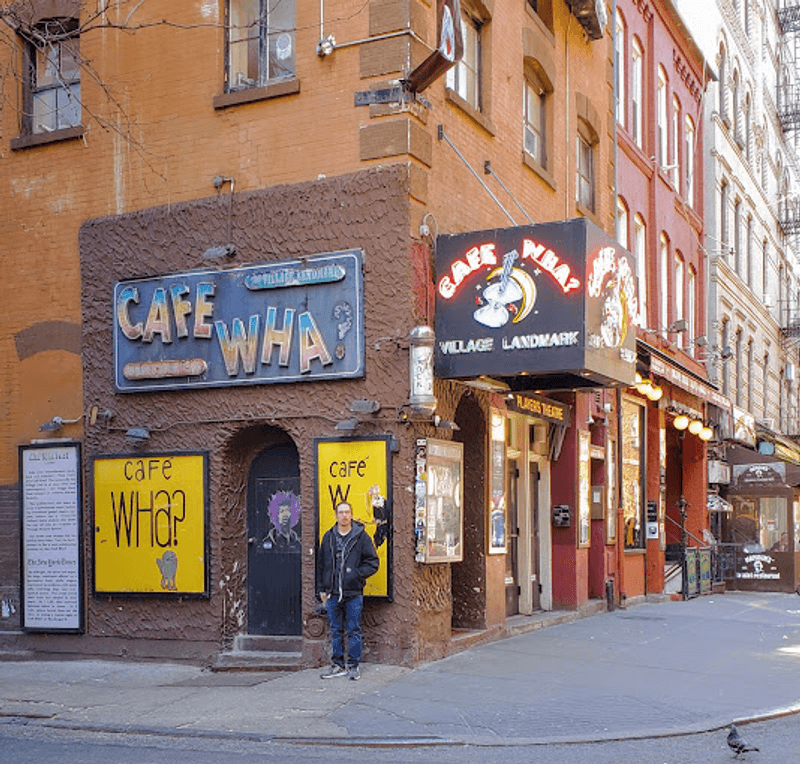
Few addresses carry as much musical weight as 115 Macdougal Street in New York. Cafe Wha? sits right in the heart of Greenwich Village, surrounded by the bookshops, restaurants, and storied sidewalks that have defined downtown New York for generations.
The neighborhood alone is worth the trip.
Founded in 1959, the club built its reputation fast. Performers ranging from folk singers to stand-up comedians used its stage as a proving ground.
The list of names who played here before becoming famous reads like a greatest hits of American pop culture.
Today the venue operates Wednesday through Sunday, opening at 8 PM and running late into the night. Friday and Saturday shows push past 1 AM, giving night owls plenty of time to soak in the experience.
A cover charge applies, along with a two-item minimum per person.
The club holds a 4.3-star rating, which speaks volumes for a venue that packs people into a cozy basement space. Booking tickets in advance online is strongly recommended, especially on weekends.
The phone number is 212-254-3706 if you prefer to call ahead and plan your visit properly.
Bob Dylan Walked In Young And Left A Legend
On January 24, 1961, a young man from Minnesota walked into Cafe Wha? shortly after hitchhiking his way to New York City. He had very little money, no local connections, and a guitar.
His name was Bob Dylan, and he was about to change everything.
Dylan performed at a hootenanny night, one of the club’s open performance sessions where anyone could get up and play. He also took on a role as a backup harmonica player during afternoon sets, which gave him regular stage time while he found his footing in the city.
He later wrote about the venue in his memoir, calling it ill-lit with a low ceiling, more like a wide dining room than a concert hall. That honest, unpretentious setting suited him perfectly.
Dylan was not looking for glamour. He was looking for ears willing to hear something new.
Within a few years of that first visit, he had released his debut album and was being called the voice of a generation. The journey from that basement stage to global icon started right here in New York, in a room most people would walk past without a second glance.
Jimi Hendrix Lit Up The Stage Before The World Caught On
By 1966, a guitarist named Jimmy James was playing five sets a night, six nights a week at Cafe Wha?. His real name was Jimi Hendrix, and he was performing with a group called the Blue Flames.
At that point, almost nobody outside the club knew who he was.
The workload alone was staggering. Playing that many sets in a single evening would exhaust most musicians, but Hendrix used every set as a chance to push his playing further.
The intimate setting of Cafe Wha? gave him a direct connection with the audience that larger venues simply cannot replicate.
A pivotal moment came when Chas Chandler, the bassist for the British band The Animals, happened to catch one of those sets. Chandler recognized immediately that he was watching something extraordinary.
He brought Hendrix to England, where his career launched into the stratosphere almost overnight.
The fact that one of the greatest guitarists who ever lived spent months grinding out sets in a New York basement before the world discovered him says everything about what Cafe Wha? represents. It was not just a club.
It was a launchpad for talent that the world was not yet ready to fully understand.
The Music Never Stopped After The Icons Left
Plenty of historic venues rest on their reputations and forget to keep the energy alive. Cafe Wha? never made that mistake.
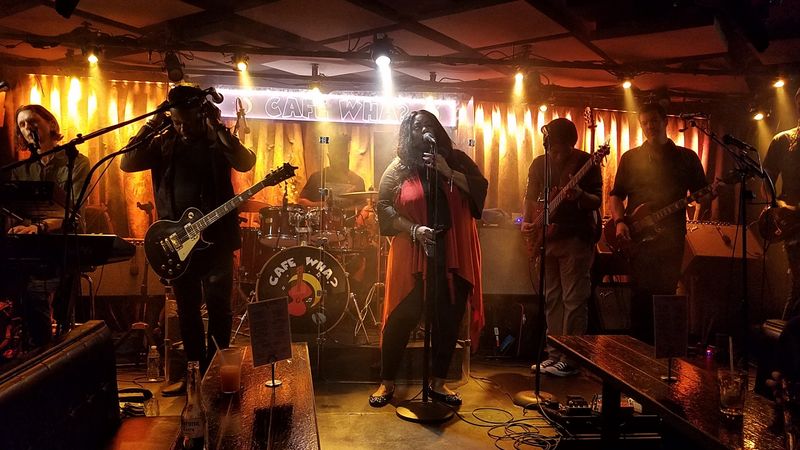
The club has kept its live music programming sharp and consistent, building a house band tradition that regulars return to again and again.
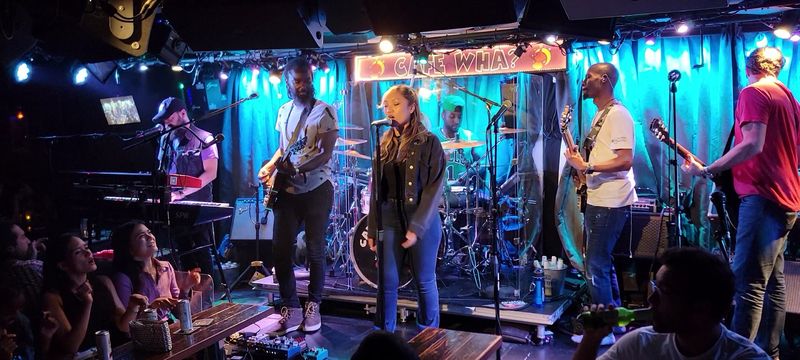
Current performances cover a wide range of styles including Motown, R&B, reggae, and rock. The house band rotates through different lead vocalists during a single show, which gives each performance a natural variety that keeps the energy shifting throughout the night.
No two sets feel exactly the same. Audiences often end up on their feet, dancing between the tables and singing along to songs they know by heart. The tight space actually works in the venue’s favor here.
When the music hits hard and the crowd responds, that energy bounces around the room in a way that larger clubs simply cannot manufacture.
New York has no shortage of places to hear live music on any given night. What sets Cafe Wha? apart is the combination of genuine musical talent and a room with real history behind every note.
The past and the present share the same stage here, and both are worth your full attention.
Greenwich Village Sets The Perfect Stage
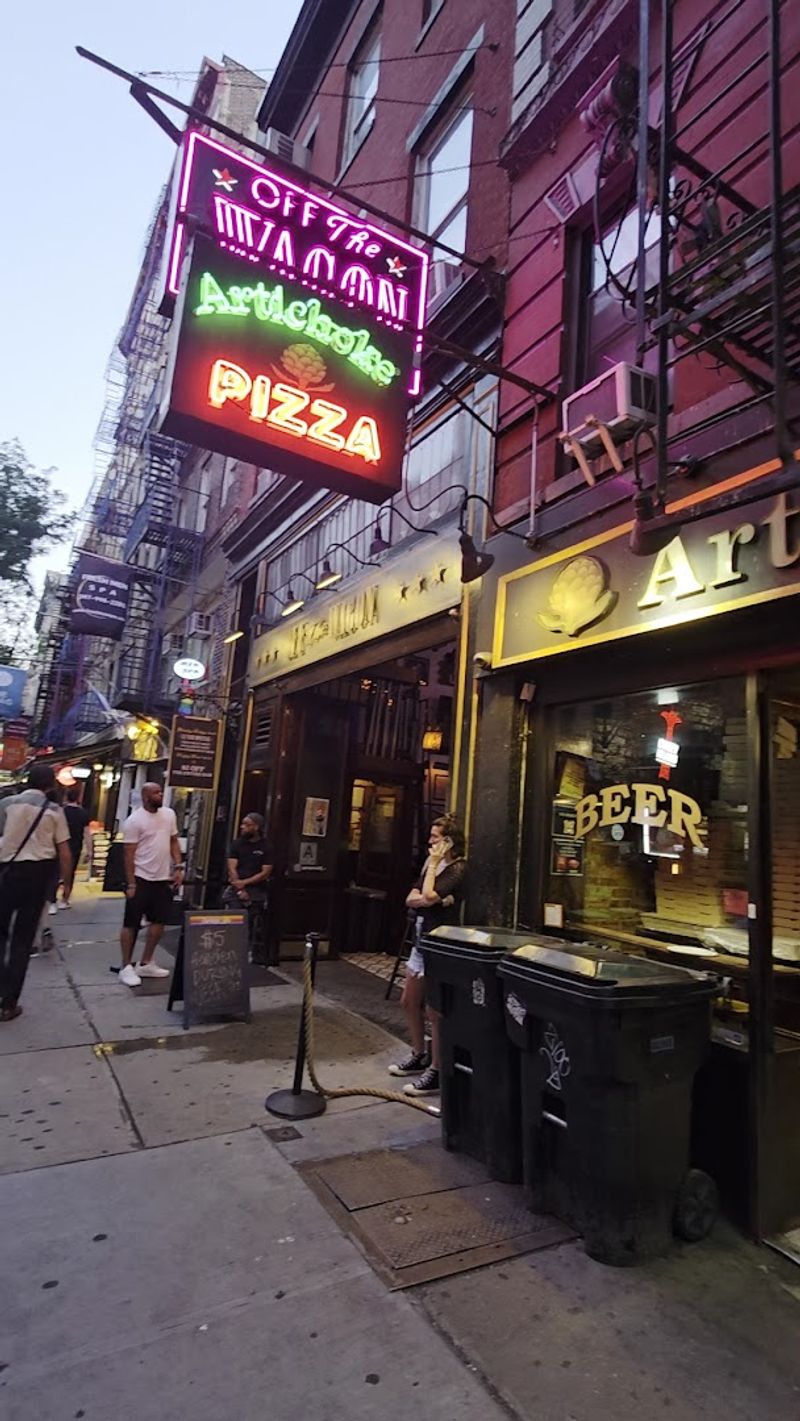
The neighborhood surrounding Cafe Wha? is as much a part of the experience as the music itself. Greenwich Village has been a creative hub in New York for well over a century, drawing writers, artists, musicians, and free thinkers from every corner of the world.
Macdougal Street in particular has a rich history of small venues and cultural gathering spots. A walk down the block before or after a show gives you a real sense of why so many artists chose this neighborhood as their home base during the folk revival era of the early 1960s.
The Village has changed over the decades, as all New York neighborhoods inevitably do. Rents have climbed, storefronts have turned over, and the demographics have shifted.
Yet the creative spirit that defined the area persists in pockets, and Cafe Wha? is one of the most enduring examples of that continuity.
Arriving early and spending some time on the street before the doors open adds real context to the evening. You are not just going to a show.
You are stepping into a stretch of New York City that helped define what American music, comedy, and artistic expression could look and sound like at their most uninhibited best.
Why First-Timers Keep Coming Back For More
Ask anyone who has visited Cafe Wha? what surprised them most, and the answer is almost always the same. They expected a tourist trap riding on old glory, and instead they found a genuinely good night out with real musical talent at its center.
That gap between expectation and reality is where the magic lives.
The venue runs shows Wednesday through Sunday, making it accessible for both weekend visitors and those with flexible schedules.
The cover charge is reasonable for New York City, and the two-item minimum per person is easy to meet since the menu includes food options alongside beverages.
Seating fills up fast, particularly on Friday and Saturday nights, so booking tickets online in advance is the smartest move you can make. The club’s website at cafewha.com has all the details you need to plan around showtimes and availability without any guesswork.
First-time visitors often leave talking about the band, the energy, and the strange thrill of sitting in a room where history actually happened. Repeat visitors come back because the experience holds up.
Cafe Wha? does not rely on nostalgia alone to fill its seats. It earns every return visit with a show that stands completely on its own merits, night after night in New York.