
Fueled By A Waterfall, This Tennessee Mill Is A Living Piece Of 1870s History
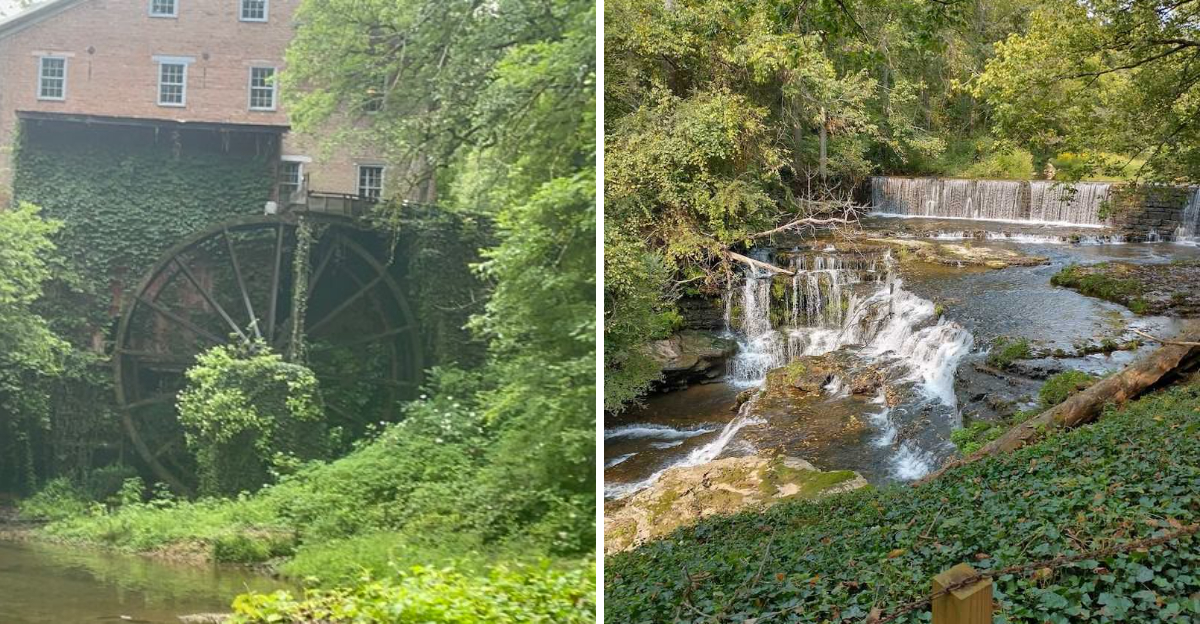
A working waterwheel has a way of making history feel loud, alive, and impossible to ignore. Tennessee still has places where the past does more than sit behind glass, and this old mill proves it the second the waterfall starts doing its job.
Water rushes, gears move, wood creaks, and suddenly the 1870s do not feel so far away. You can almost picture the farmers who once arrived with grain, waiting while the mill turned hard work into something useful.
The setting adds to the spell. A waterfall powers the whole scene, giving the building a rhythm that feels both peaceful and powerful.
Inside, old tools, machinery, and stories show how much skill went into everyday life back then. It is simple, memorable, and a little surprising.
Tennessee history rarely feels more real than when water is still helping it move.
How Its 1873 Story Still Shapes The Visit Today
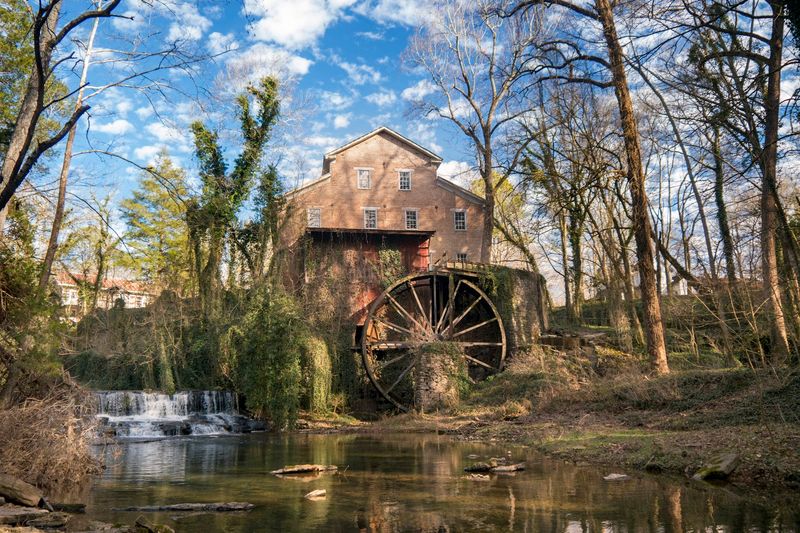
Robert N. Mann and Azoariah R. David had a practical vision when they broke ground in 1873. They needed a mill that could serve the surrounding community, and they built it to last.
Every brick used in the construction was molded and fired directly on the property, and the heavy timber frame was sawed and pegged together by hand.
The site itself had history long before 1873. An earlier cotton spinning factory operated here around 1840, making this land a working hub for industrial activity across two separate eras.
The transition from that earlier structure to the current building represents a deliberate effort to expand local production capacity.
The mill stands today as the direct result of that 1873 ambition. The fact that the original brickwork and timber joints remain visible and intact throughout the building gives visitors a genuine sense of the craftsmanship involved.
Walking through the entrance, you immediately understand that this was built by people who expected it to outlast them by centuries.
Why The Giant Waterwheel Becomes The Moment Everyone Remembers
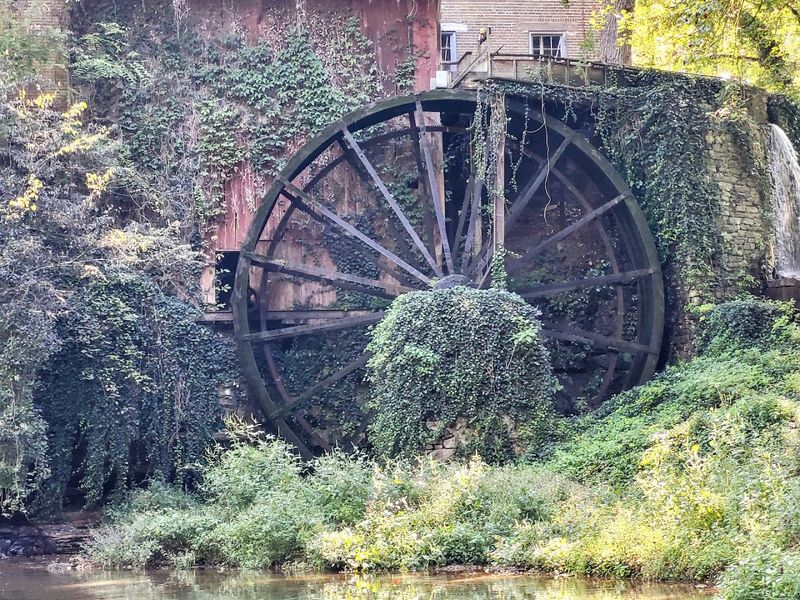
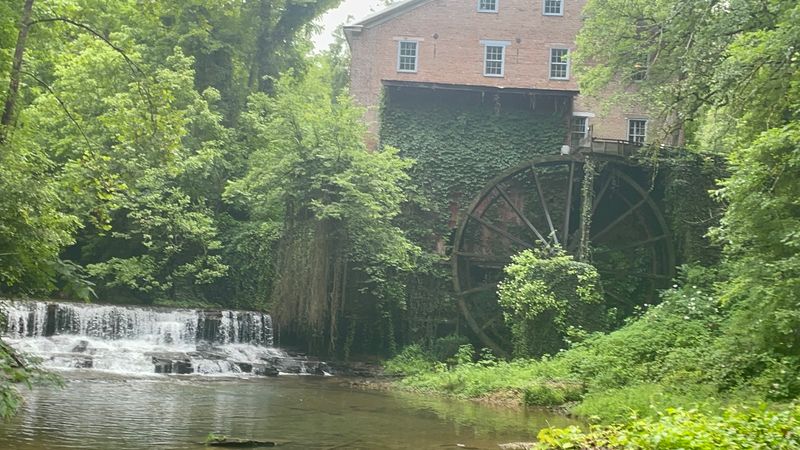
At 32 feet in diameter and 4 feet wide, the waterwheel at Falls Mill ranks among the largest operational wheels of its kind in the entire United States. Installed in 1906, it replaced earlier mechanisms and has been faithfully turning ever since.
The wheel draws its power from Factory Creek through a dam and a carefully constructed mill race that channels water with steady, deliberate force.
Watching it move is oddly calming. The rhythm of the wheel, the sound of water rushing around its paddles, and the mechanical energy transferring through the shaft into the floors above create a sensory experience that photographs simply cannot replicate.
You feel the whole building respond to it. What makes this waterwheel particularly impressive is that it remains fully functional. It does not exist for decoration or nostalgia alone.
The wheel continues to drive machinery across four levels of the mill building, demonstrating that nineteenth-century engineering, when built with care and maintained with dedication, can perform reliably well into the twenty-first century.
Visitors consistently describe standing beside it as one of the most memorable moments of their entire visit to Tennessee.
How This Old Building Kept Finding New Purpose Over Time
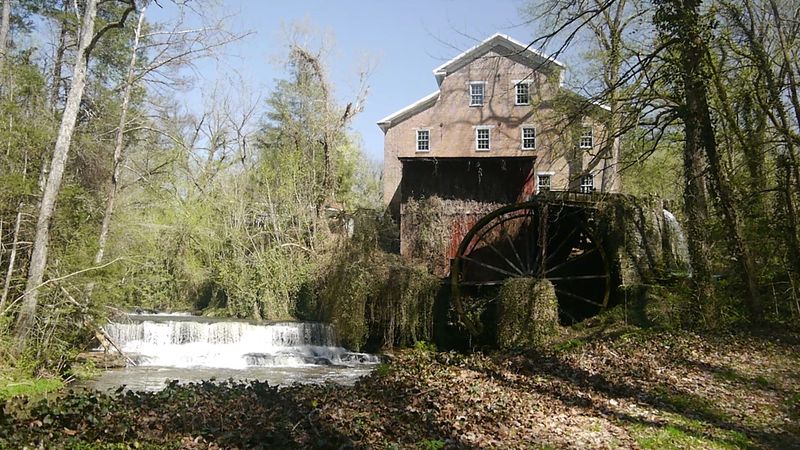
Few buildings in rural America can claim the range of functions that Falls Mill has served across its long operational life. It began as a cotton and woolen textile factory, then shifted to serve as a cotton gin, a woodworking shop, and eventually a grist mill.
Along the way, the space also hosted bale storage, community dances, and even a skating rink.
That last detail tends to surprise visitors. The idea of people lacing up skates inside a working mill building adds a surprisingly human dimension to what might otherwise feel like a purely industrial history.
The mill was not just a place of production. It was a center of community life in an era when such gathering spots were rare and genuinely valued.
Each transition the building underwent reflects the changing needs of the surrounding population. Rather than being torn down and replaced when one purpose became obsolete, it was adapted.
That adaptability is a significant reason the structure survived long enough to become a museum. The story of how this building kept finding new reasons to remain standing is, by itself, worth the drive to southern Tennessee to hear in person.
The Museum Of Power And Industry Inside The Mill
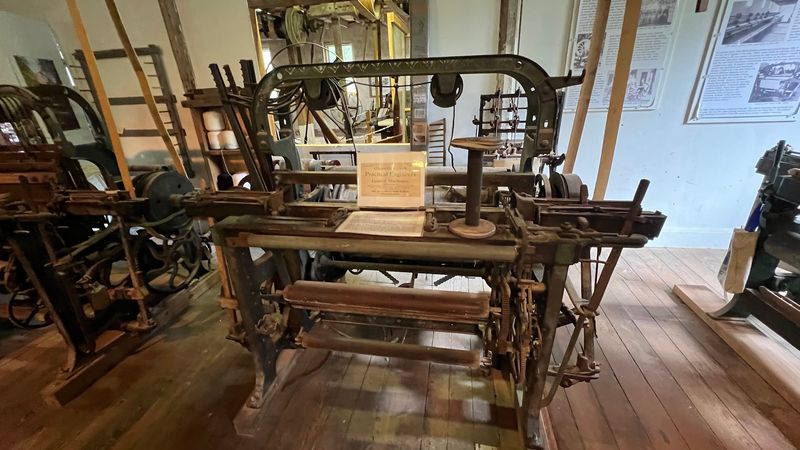
The Museum of Power and Industry occupies all four levels of the mill building, and the collection it holds is genuinely impressive for a site of this scale.
Antique machinery, historical photographs, millstones, broom-making equipment, a printing press, and a dog-powered butter churn are among the many artifacts spread across the floors.
Each one connects to a specific chapter in the mill’s working history.
The weaving exhibit room deserves particular attention. It features hand looms, spinning wheels, and nineteenth-century power looms arranged in a way that makes the textile production process easy to follow, even for younger visitors.
On the third floor, an 1883 model spinning mule holds the distinction of being the oldest and largest self-acting spinning mule currently on display in the United States.
Perhaps the most unexpected exhibit sits on the fourth floor, where historic graffiti scratched into the walls by mill workers and residents between 1885 and the early 1900s has been carefully preserved.
These small inscriptions, names, dates, and brief notes, offer an unfiltered glimpse into the daily lives of the people who actually worked inside this building. No placard can match that kind of directness.
Stone-Ground Grits, Cornmeal, And Flour Worth Taking Home
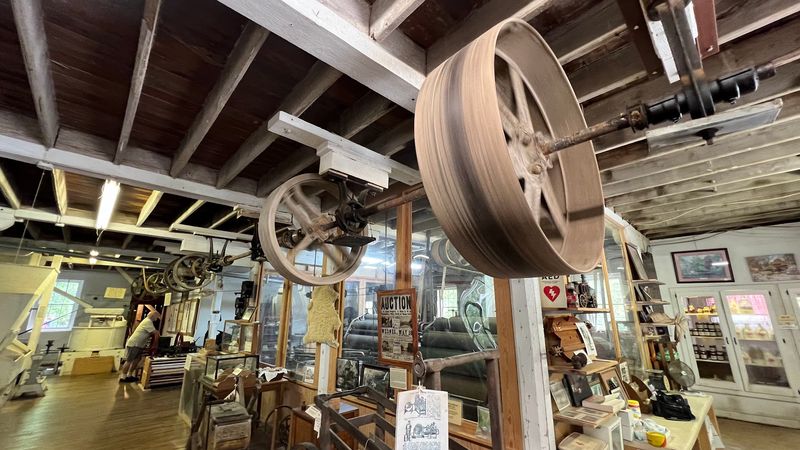
Stone-ground grits have a texture and flavor that commercially processed versions simply do not replicate. Falls Mill has long produced its own line of stone-ground grits, cornmeal, and flour, and purchasing a bag before leaving has become something of a ritual for repeat visitors.
The products carry a direct connection to the mill’s history as a working grist operation.
Production methods shifted somewhat after 2015, with some products now custom-ground by Logan Turnpike Mill. The quality and character of the final product, however, remains consistent with what the mill has offered for generations.
Visitors who pick up a bag of grits and cook them at home with sharp cheddar stirred in often describe the experience as unexpectedly satisfying.
Beyond the grits and cornmeal, the small gift area inside the mill also carries flour, pancake mix, jams, and a selection of souvenirs. It is the kind of shop where you walk in planning to spend five minutes and leave twenty minutes later with more than you intended to buy.
The products make excellent gifts, and they carry a story that store-bought alternatives cannot offer at any price point.
The Grounds Along Factory Creek And What They Offer
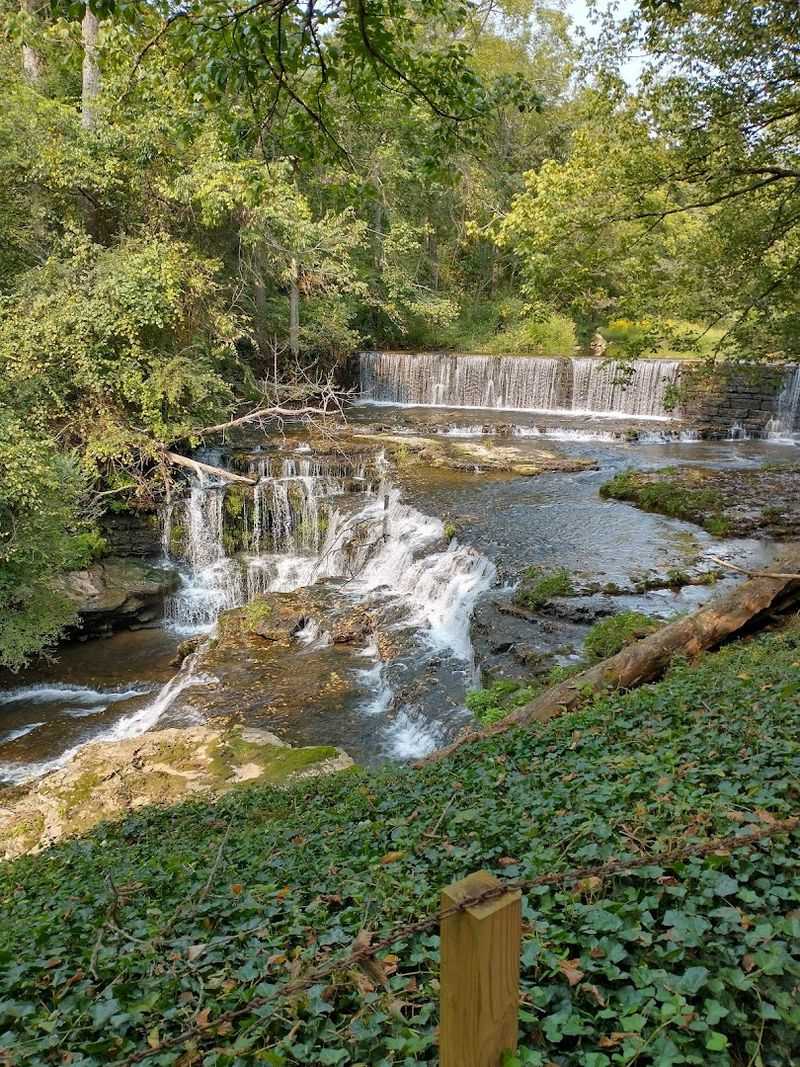
Factory Creek runs through the property with enough force to power a 32-foot waterwheel, and what remains after that energy is harnessed flows through some genuinely attractive scenery.
The grounds along the creek feature small waterfalls, natural rock formations, and several picnic areas positioned close enough to the water that you can hear it clearly while eating.
Multiple reviewers have specifically mentioned packing a lunch and settling in at the picnic tables near the waterwheel side of the building.
The combination of running water, old-growth shade, and the ambient mechanical hum of the mill creates an atmosphere that encourages you to slow down without feeling like you are missing anything.
Leashed pets are welcome on the grounds, which makes the outing practical for families traveling with dogs.
Walking paths wind through the property and connect the main mill building to the surrounding natural features. The trails are well-maintained and manageable for most ages and fitness levels.
Spending a full afternoon here requires no particular agenda. You can tour the museum, eat lunch by the creek, let children wade in the shallows, and still feel like the day had a natural, unhurried rhythm from beginning to end.
Historic Structures Beyond The Main Mill Building
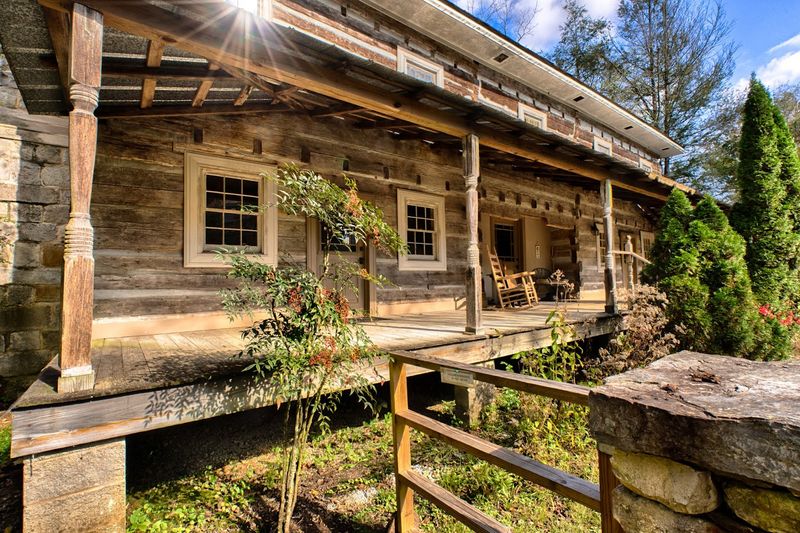
The main mill building draws most of the attention, but the surrounding property holds several additional structures worth exploring.
A replica of a one-room schoolhouse sits on the grounds and gives younger visitors a concrete sense of what education looked like in the rural South during the nineteenth century. Children who visit on school field trips consistently respond to it with genuine interest.
Also present on the property is the 1836 Rocky Springs Stagecoach Inn, which was relocated to the Falls Mill site from its original location.
Moving a structure of that age without losing its character requires significant care, and the inn retains enough of its original presence to feel authentic rather than reconstructed. A working blacksmith shed rounds out the collection of outbuildings.
Together, these structures transform the property from a single-attraction destination into something closer to a living history campus.
Each building represents a different thread in the fabric of nineteenth-century rural Tennessee life, and walking between them gives you a layered understanding of how communities functioned before industrialization fully reshaped the American countryside.
Families who visit often say the schoolhouse and the stagecoach inn surprised them as much as the mill itself did.
The Log Cabin Bed And Breakfast For An Overnight Stay
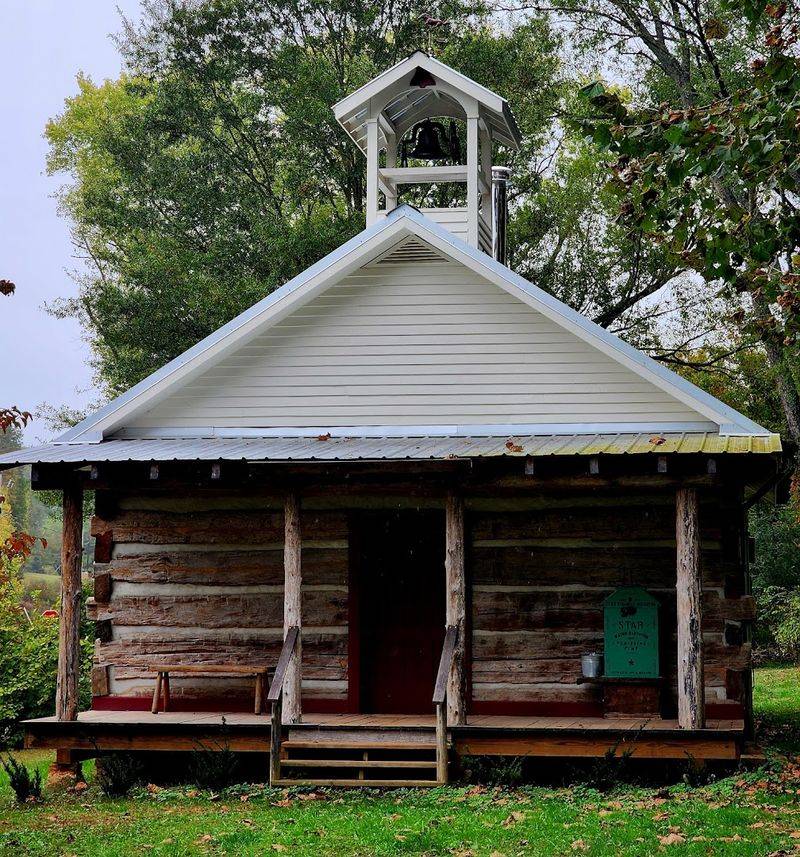
Spending a single afternoon at Falls Mill is satisfying, but staying overnight changes the experience entirely. A log cabin on the property operates as a bed and breakfast, available year-round with advance reservations.
Guests who stay in the cabin have the grounds largely to themselves once day visitors leave, which gives the whole property a different, quieter quality.
John and Janie, the couple who have owned and operated Falls Mill for over 37 years, are known for the warmth they extend to cabin guests.
Visitors who have stayed overnight mention waking up to baked goods and breakfast foods stocked in the refrigerator, a detail that turns a simple rural overnight into something more personal and memorable.
The enthusiasm the owners bring to every interaction is something reviewers mention repeatedly.
Waking up beside Factory Creek, with the sound of water moving over rock replacing the usual morning noise of traffic and notifications, is the kind of reset that most people forget is available to them. The cabin makes Falls Mill a destination rather than simply a stop.
Anyone planning a trip through southern Tennessee should check availability at fallsmill.com well in advance, as the accommodation books up during peak season.
What To Know Before Seeing This Historic Mill For Yourself
Falls Mill and Museum opens for public tours from April through mid-December, Thursday through Saturday, from 9 AM to 4 PM Central Time.
Admission is charged, and the tour begins with an introductory video that provides useful context before you explore the building and grounds at your own pace.
The self-guided format works well for families, since it allows everyone to spend more time with the exhibits that interest them most.
A few practical notes make the visit more comfortable. The mill building is unheated, so layering is advisable during cooler months.
The upper floors are not handicapped accessible, which is worth knowing in advance. Leashed pets are welcome on the grounds, and the picnic areas make it easy to turn the outing into a full-day event with minimal planning.
The address is 134 Falls Mill Rd, Belvidere, TN 37306, and the mill can be reached by phone at 931-469-7161 for any questions about hours, admission, or cabin reservations. First-time visitors and repeat guests alike tend to leave with the same sentiment: they wish they had come sooner.