
Nevada Campground That Feels Like Your Own Private Wilderness
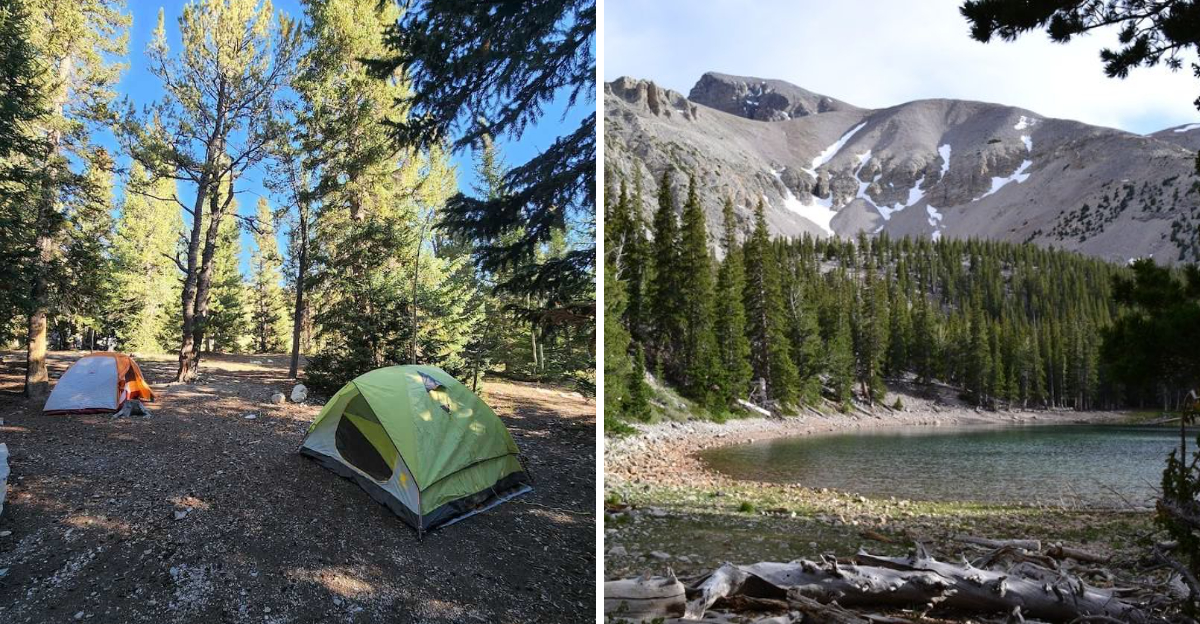
Crowded campsites can make sleeping outdoors feel strangely similar to sharing an apartment wall. High above Nevada’s desert floor, however, a mountain campground offers breathing room, cool air, and nights quiet enough to hear every rustle among the aspens.
Nearly 10,000 feet of elevation separates campers from traffic, neon, and summer heat. Wheeler Peak still rises nearby while trails lead toward alpine lakes, ancient bristlecone pines, and rugged high-country scenery.
Each site comes with practical essentials, yet the surroundings remain refreshingly wild. Deer may wander past breakfast, temperatures can drop quickly after sunset, and stars fill more sky than seems reasonable.
Bring extra layers, plenty of water, and a willingness to completely forget what day it is for a while.
It Is The Highest Campground In The National Park System
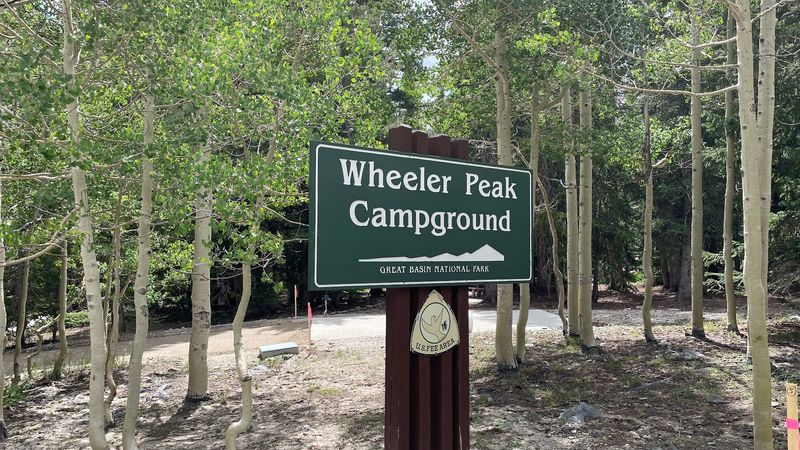
Wheeler Peak Campground holds a distinction that sets it apart from every other developed camping area managed by the National Park Service. Sitting at 9,886 feet above sea level, it claims the title of highest elevation campground in the entire national park system.
This altitude creates an environment vastly different from what most campers experience at lower elevations.
The thin mountain air brings challenges that require preparation and respect. Visitors often notice shortness of breath during simple activities like setting up tents or walking to the restroom facilities.
Physical exertion becomes noticeably harder when your lungs work overtime to extract oxygen from the atmosphere.
Spending a day or two at lower campgrounds before ascending helps your body adjust to the reduced oxygen levels. This acclimatization period makes your stay more comfortable and reduces the risk of altitude-related headaches or nausea.
The elevation also means temperatures drop significantly after sunset, even during summer months when valley floors bake under Nevada sun.
The Campground Sits At Nearly 10,000 Feet
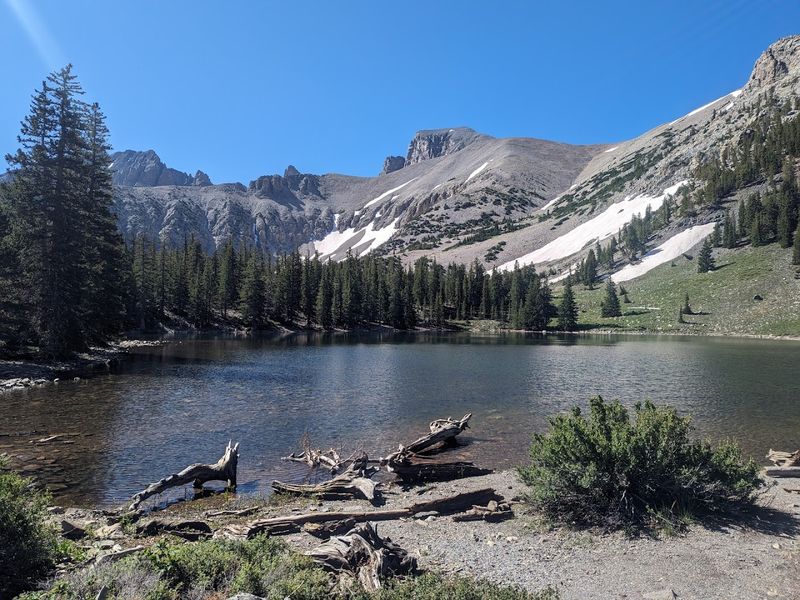
Perched just below the 10,000-foot mark, Wheeler Peak Campground occupies a world that exists between desert basin and alpine summit. The elevation transforms the landscape into something unexpected for Nevada, with forests replacing sagebrush and cool breezes replacing scorching heat.
Water flows freely through streams that would seem impossible in this arid state.
Altitude affects more than just your breathing at this height. Food takes longer to cook because water boils at lower temperatures in the thinner atmosphere.
Your morning coffee might taste different, and dehydration sneaks up faster than at sea level.
The campground’s location at Baker, NV 89311 places it at the end of a winding twelve-mile road that climbs steadily from the visitor center. Each switchback reveals new perspectives on the Snake Range and the vast desert stretching toward Utah.
Nights bring temperatures that can dip below freezing even in July, making warm sleeping bags essential gear rather than optional comfort items.
Aspen Groves Give Many Campsites Natural Privacy
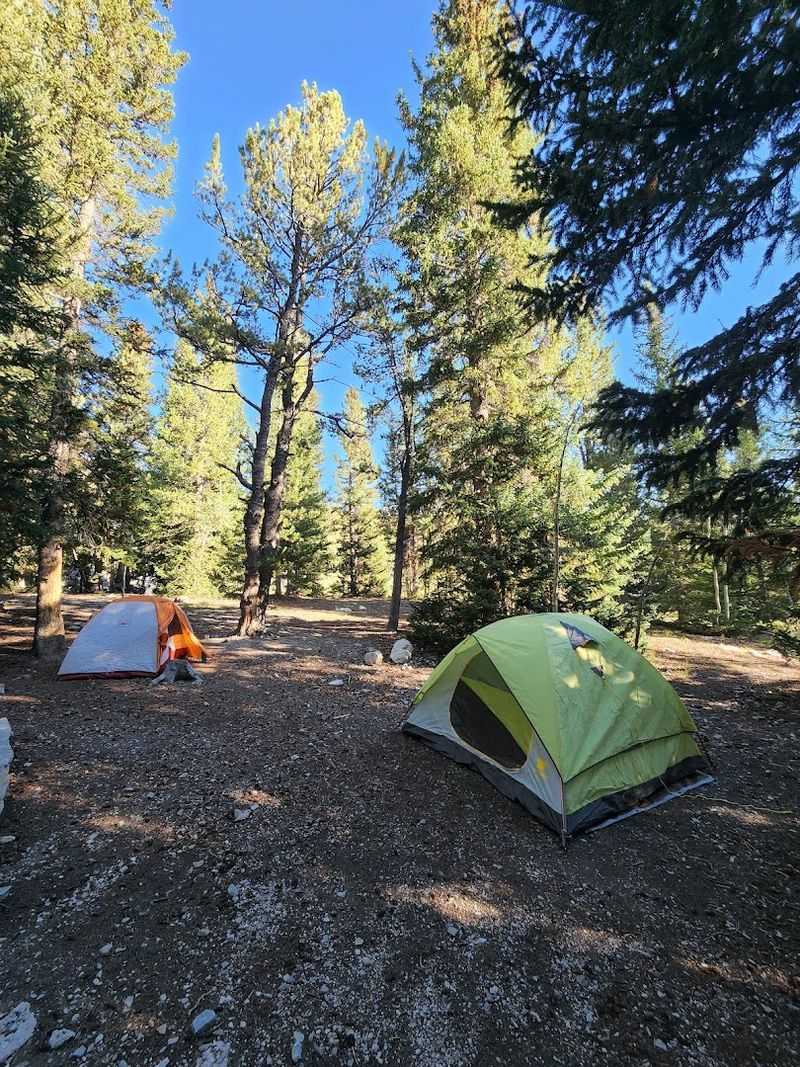
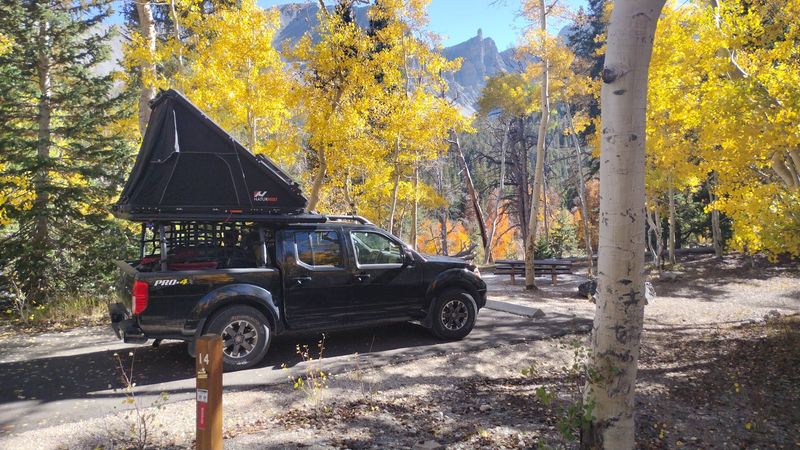
Privacy becomes precious when camping in popular national parks where sites often sit within clear view of neighbors. Wheeler Peak Campground solves this problem through careful placement among mature aspen groves that create natural screens between many camping spots.
The white-barked trees with their shimmering leaves provide visual separation that makes you forget other campers exist nearby.
Each site benefits from thoughtful positioning that takes advantage of the terrain and vegetation. Some spots back against hillsides while others tuck into pockets surrounded by mixed conifers and aspens.
The spacing between sites exceeds what you find at most developed campgrounds.
Recent renovations added paved parking pads and concrete platforms for picnic tables and fire rings at each location. These improvements enhance comfort without destroying the secluded atmosphere that makes this campground special.
During weekdays and shoulder seasons, you might claim a site where the nearest occupied spot sits several hundred feet away, creating an experience closer to dispersed camping than traditional campground life.
Wheeler Peak Rises Above The Campground
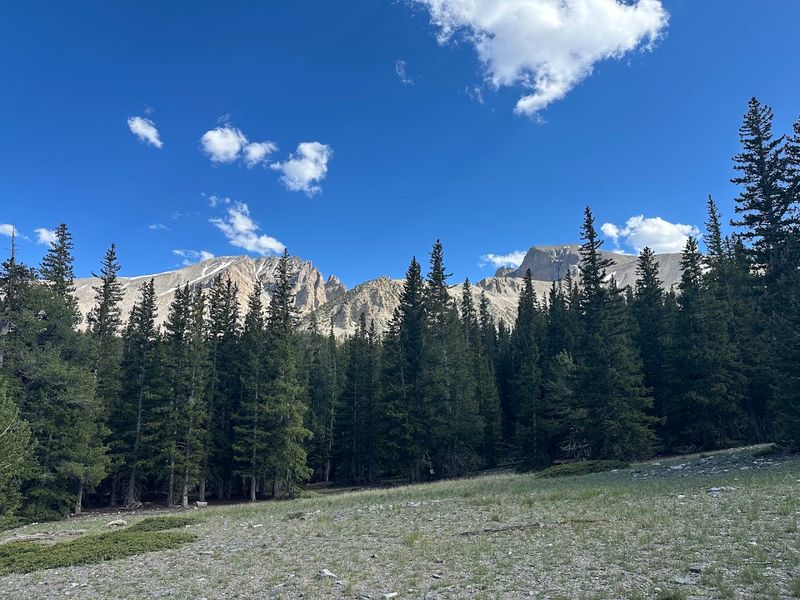
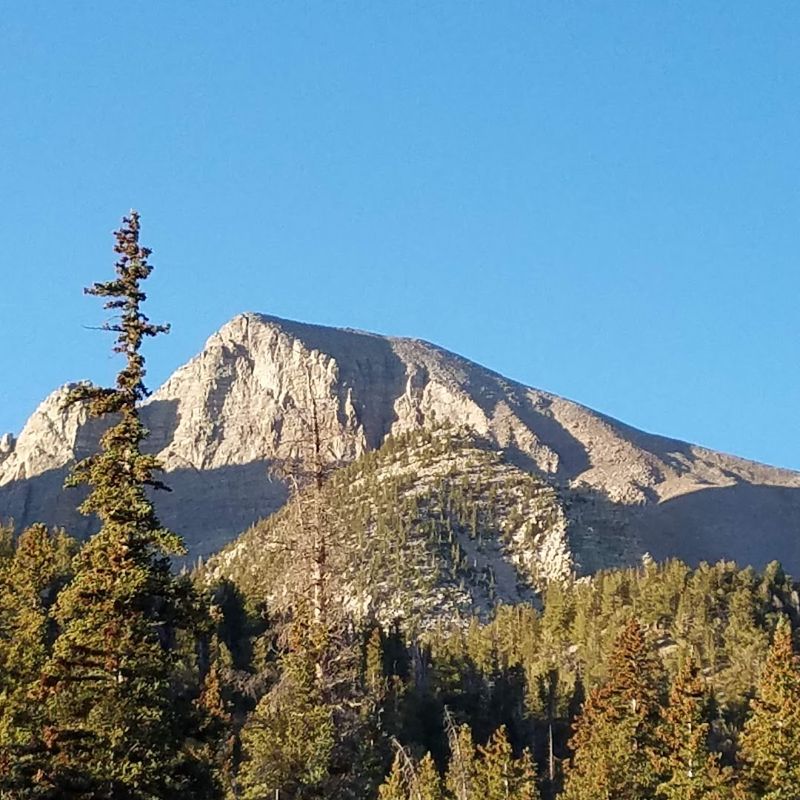
The campground’s namesake mountain dominates the skyline with an imposing presence that commands attention from every angle. Wheeler Peak reaches 13,063 feet, making it Nevada’s second-highest summit and the defining feature of Great Basin National Park.
From your campsite, the mountain appears close enough to touch, though the summit trail requires serious effort and most of a day to complete.
Morning light hits the peak’s eastern face first, painting the rocky slopes in shades of pink and gold while campsites below remain in cool shadow. Throughout the day, the mountain creates its own weather patterns, with clouds forming around the summit even when valleys stay clear.
Afternoon thunderstorms build quickly at these elevations, reminding visitors that mountains make their own rules.
The peak’s proximity to the campground means you can watch climbers making their way up the exposed ridge during summer months. Binoculars reveal tiny figures navigating the rocky terrain thousands of feet above the treeline, providing entertainment and inspiration for your own hiking ambitions.
Cool Mountain Air Offers Relief From Nevada Heat
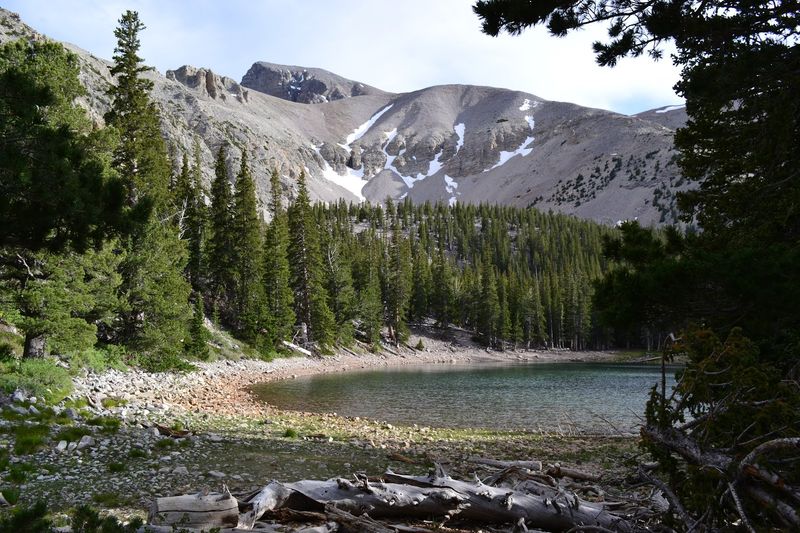
Nevada’s reputation for blistering summer heat makes Wheeler Peak Campground feel like a different planet during June, July, and August. While towns like Ely and Baker swelter under triple-digit temperatures, the campground maintains comfortable daytime highs in the seventies.
This temperature difference of thirty degrees or more creates a mountain oasis that defies Nevada’s desert climate.
The cool air comes with trade-offs that catch unprepared campers off guard. Nights regularly drop into the thirties and forties, even during peak summer weeks.
Frost on your tent in July seems absurd until you experience it firsthand at this elevation.
Layered clothing becomes essential strategy rather than optional preparation. Mornings start chilly enough for fleece jackets and warm beverages, afternoons warm enough for t-shirts in the sun, and evenings require everything you brought as temperatures plummet after sunset.
The constant temperature swings mean you cycle through your entire wardrobe daily, but the relief from valley heat makes the extra laundry worthwhile when you return home.
Wildlife Frequently Wanders Through The Area
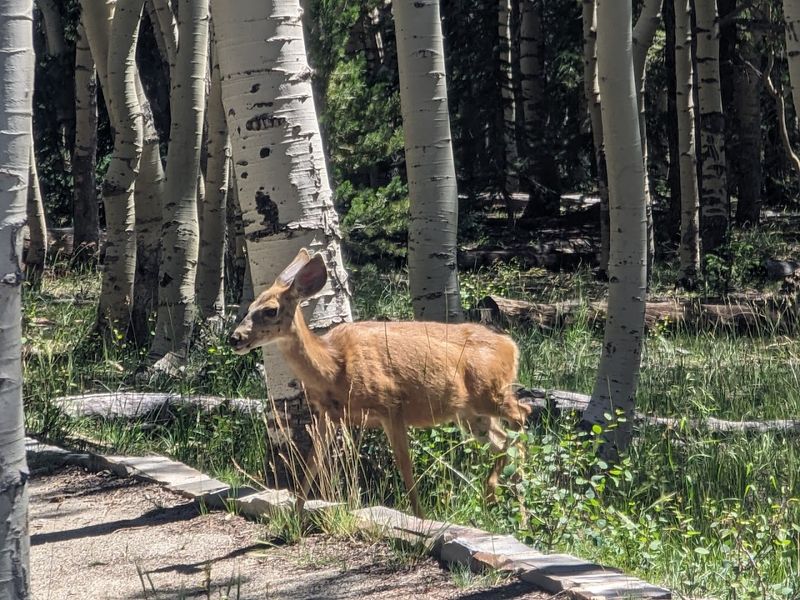
Sharing the campground with wild neighbors becomes part of daily routine at Wheeler Peak. Mule deer wander through campsites with casual indifference to human presence, browsing on vegetation and pausing to observe campers from safe distances.
These encounters happen so regularly that seeing deer each morning and evening becomes expected rather than remarkable.
The animals show little fear but maintain appropriate boundaries when visitors respect their space. Does with fawns move through in early summer, while bucks with impressive antlers appear during fall months.
Smaller creatures also make appearances, including chipmunks that raid unattended food with professional efficiency and Steller’s jays that announce their presence with raucous calls.
Proper food storage becomes critical responsibility rather than suggested practice. The park provides bear-resistant food lockers at some sites, though black bears visit less frequently than deer.
Leaving food, coolers, or scented items unattended invites wildlife problems that rangers work hard to prevent. The close proximity to wild animals enriches the camping experience while demanding conscientious behavior from visitors.
The Scenic Drive Delivers Mountain Views Before Arrival
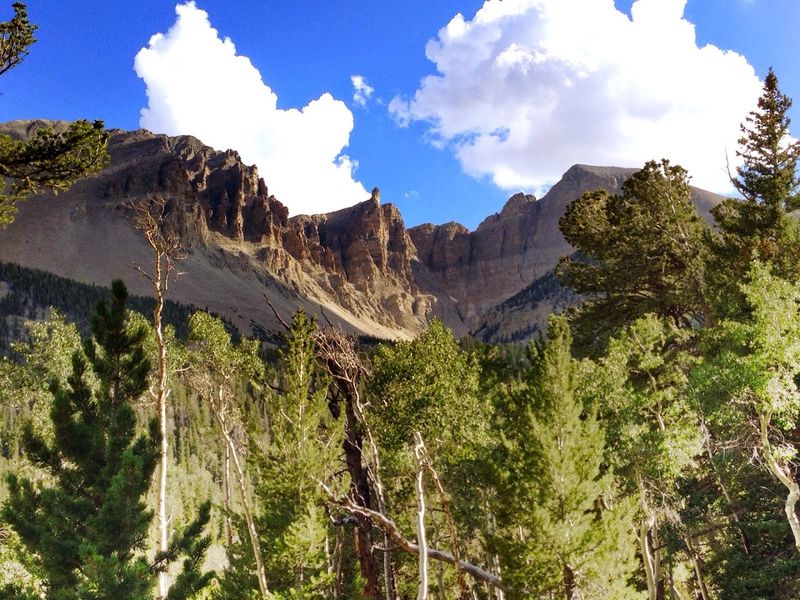
The twelve-mile Wheeler Peak Scenic Drive transforms the journey to the campground into an attraction worthy of attention and frequent stops. Starting from the visitor center at 6,825 feet, the paved road climbs through multiple life zones as it gains over 3,000 feet of elevation.
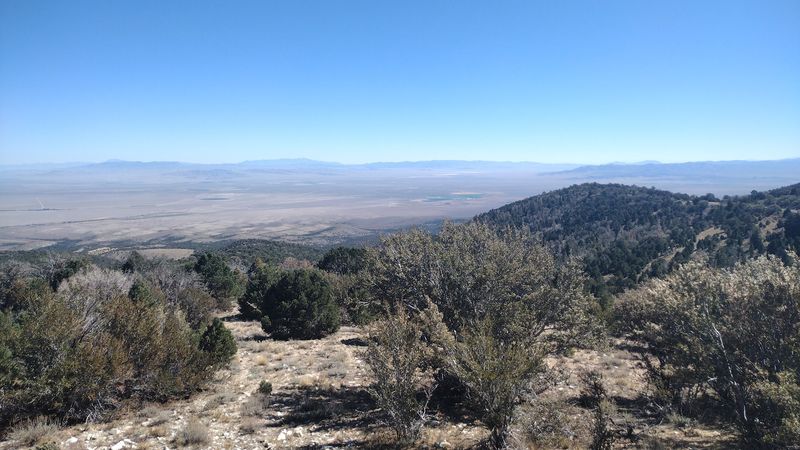
Each curve reveals new perspectives on the Snake Range and surrounding desert basins stretching toward distant horizons.
Pullouts along the route provide opportunities to photograph the changing landscape and let your vehicle’s brakes cool during the steep descent. The road maintains good condition following recent improvements, but its narrow width and lack of guardrails in sections demand full attention from drivers.
Trailers longer than twenty-four feet face restrictions, and pulling any trailer requires confidence in your vehicle’s brakes and your own driving skills.
The drive itself prepares you mentally for the high-elevation environment ahead. Watching the vegetation shift from pinyon-juniper to ponderosa pine to aspen and spruce illustrates the dramatic climate zones compressed into a short distance by the mountain’s topography.
Alpine Lakes Are Only A Hike Away
Two spectacular alpine lakes sit within easy hiking distance of the campground, offering destinations that reward minimal effort with maximum scenery. Stella Lake and Teresa Lake occupy glacially carved basins where snowmelt creates mirror-smooth waters reflecting surrounding peaks and forest.
The Stella Lake trail begins directly from the campground, making it possible to reach this alpine gem in under a mile of moderate hiking.
Teresa Lake requires slightly more effort but remains accessible to most visitors with reasonable fitness levels. The trail winds through stands of ancient limber pine and Engelmann spruce before emerging at the lake’s shore.
Both lakes freeze solid during winter and may hold ice into early summer at this elevation.
Fishing in these high-altitude waters produces brook trout for anglers willing to carry rods up the trail. The lakes also provide peaceful spots for contemplation, photography, or simply sitting on granite boulders while absorbing the improbable beauty of Nevada’s highest country.
Afternoon thunderstorms build quickly around the peaks, making early morning starts advisable for lake hikes during summer months.
Ancient Bristlecone Pines Grow Nearby
Among Earth’s oldest living organisms, bristlecone pines cling to rocky slopes near Wheeler Peak Campground in a grove that inspires awe and humility. These twisted, weathered trees have survived for thousands of years in conditions that would kill most plants within seasons.
Some specimens in Great Basin National Park exceed 4,000 years in age, meaning they sprouted when humans were building the first pyramids in Egypt.
A three-mile loop trail from the campground area provides access to this ancient forest where gnarled trunks and stripped wood reveal the trees’ struggle against wind, cold, and time. The harsh environment at treeline creates the slow growth that produces extremely dense wood resistant to rot and insects.
Dead bristlecones can remain standing for thousands of additional years after their death.
Walking among these ancients puts human concerns into proper perspective. The trees witnessed the entire span of recorded history while maintaining their grip on mountainsides where soil barely exists.
Their presence transforms a simple nature walk into something approaching a spiritual experience for visitors willing to contemplate deep time.
A Trail Leads Toward Nevada’s Only Glacier
The Wheeler Peak Glacier occupies a protected cirque on the mountain’s northeast face, representing Nevada’s only permanent ice field and the southernmost glacier in the Great Basin region. A trail from the campground vicinity leads hikers to viewpoints where they can observe this remnant of the last ice age clinging to existence despite warming temperatures.
The glacier has shrunk dramatically over the past century but continues to persist in its shaded bowl.
Reaching good views of the glacier requires commitment to a strenuous hike that climbs through multiple elevation zones. The trail passes through bristlecone pine groves before ascending above treeline into alpine tundra where only the hardiest plants survive.
Snow can linger on the trail into July, and afternoon lightning poses serious danger on the exposed upper sections.
The glacier itself appears modest compared to massive ice fields in Alaska or the Cascades, but its existence in Nevada defies expectations. Standing near this ice field while looking out over desert basins creates cognitive dissonance that captures the ecological extremes compressed into Great Basin National Park’s compact geography.
The Wheeler Peak Summit Trail Starts Close By
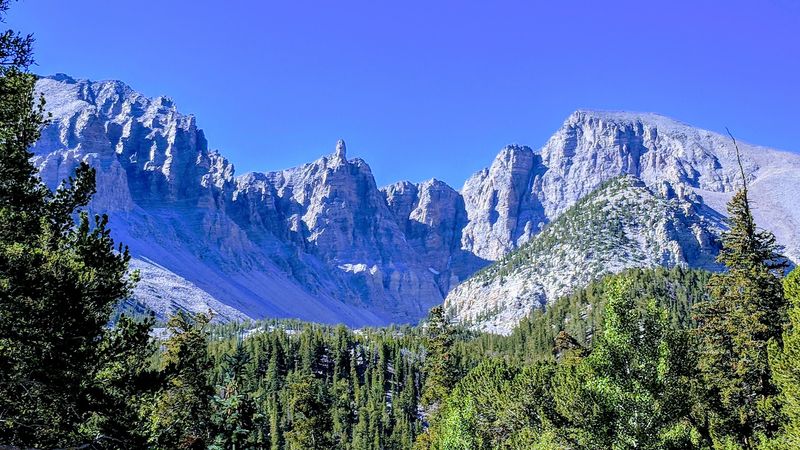
Ambitious hikers find the trailhead for Wheeler Peak’s summit within easy reach of the campground, making it possible to start before dawn and return by afternoon with Nevada’s second-highest peak checked off their list. The 8.6-mile round trip gains over 2,900 feet of elevation as it climbs from forest into alpine tundra and finally onto the rocky summit ridge.
This trail ranks among the most challenging day hikes in Nevada’s national parks.
The route demands proper preparation including early starts to avoid afternoon thunderstorms that build with frightening speed around the exposed summit. Lightning strikes the peak regularly during summer months, turning the final ridge traverse into a dangerous proposition for hikers caught in afternoon weather.
Most successful summit attempts begin by six or seven in the morning.
Views from the 13,063-foot summit extend across Nevada and into Utah, with hundreds of miles of basin and range topography visible on clear days. The sense of accomplishment from reaching this remote peak makes the leg-burning climb worthwhile for hikers capable of handling the altitude and distance.
Dark Skies Make Stargazing Part Of Every Stay
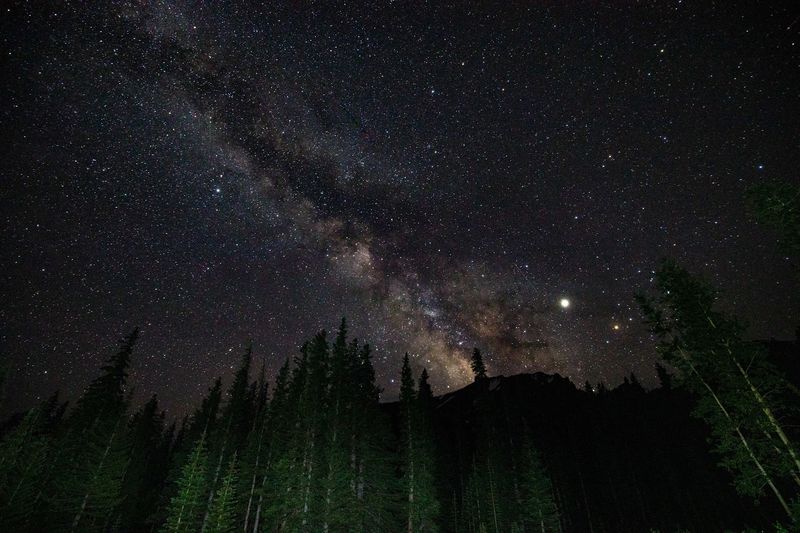
Great Basin National Park earned certification as an International Dark Sky Park, recognizing the exceptional quality of its nighttime environment far from urban light pollution. Wheeler Peak Campground sits in the heart of this darkness, where the Milky Way appears as a brilliant river of light stretching across the sky rather than the faint smudge visible from cities.
Stars invisible to most Americans shine clearly here, numbering in the thousands on moonless nights.
The combination of high elevation, dry air, and remote location creates viewing conditions that rival professional observatory sites. Photographers capture stunning images of the galaxy arching over Wheeler Peak using nothing more than standard camera equipment and tripods.
Even casual observers without telescopes can spot planets, satellites, and meteor showers with remarkable clarity.
Looking up becomes a nightly ritual that keeps campers awake far past their usual bedtimes. The spectacle overhead makes you understand why ancient peoples created elaborate mythologies around the stars.
Seeing the universe in its full glory reminds modern visitors what humans have lost to artificial light in populated areas.