
8 Scenic Tennessee Spots You Can Reach On A Single Tank Of Gas
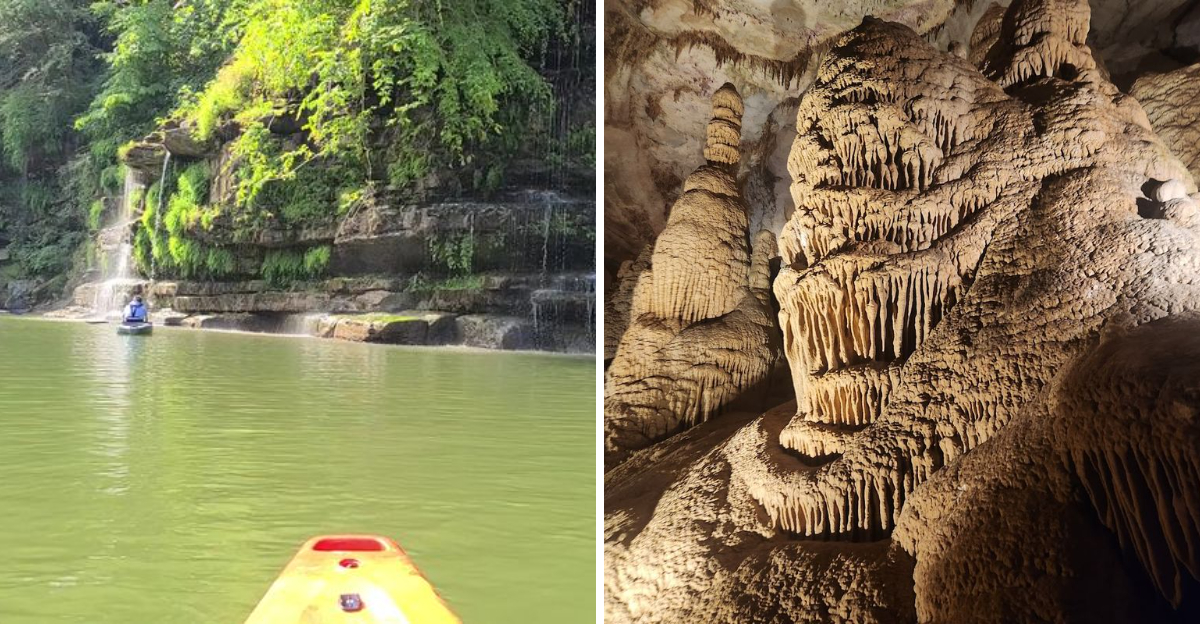
A full tank can feel like a tiny passport when the road ahead is packed with views worth chasing. Tennessee makes that kind of drive easy.
One stretch brings mountain curves, the next leads to waterfalls, quiet overlooks, old roads, and places that make you pull over just because the light looks too good to ignore.
Who says a memorable trip needs plane tickets or a packed itinerary? Sometimes all it takes is a free day, a charged phone, and a playlist that lasts longer than your coffee.
These scenic spots prove that adventure can stay simple.
No complicated planning. No cross-country haul. Just beautiful Tennessee scenery waiting within reach, with enough variety to make each stop feel different.
Roll down the window, watch the landscape change, and let the state remind you how much can fit into one tank of gas.
1. Natchez Trace Parkway And Timberland Park, Franklin
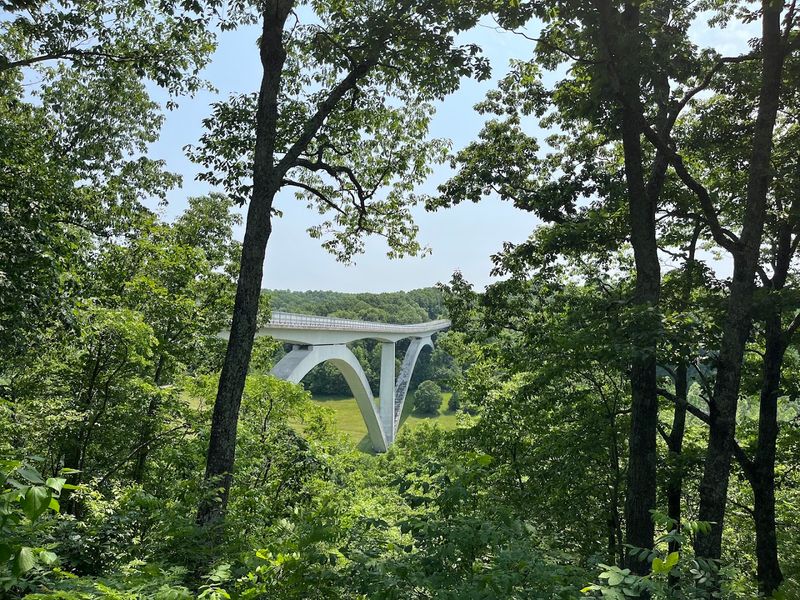
Some roads are just roads, but the Natchez Trace Parkway near Franklin feels more like a slow exhale.
Stretching over 444 miles from Nashville all the way to Natchez, Mississippi, this federally protected scenic byway follows a path used by Native Americans, traders, and explorers for centuries.
The stretch near Franklin is particularly beautiful, especially when paired with a stop at Timberland Park, a local green space that offers wooded trails perfect for a relaxed morning walk or a picnic under a canopy of oak and hickory trees.
The parkway itself is free to access and bans commercial vehicles, which means the drive feels remarkably peaceful. There are no billboards, no semi-trucks, just open road framed by rolling meadows and mature forest.
Spring and fall are the standout seasons here. In April, wildflowers line the roadside in soft bursts of color, while October transforms the tree line into a warm blaze of red and orange.
Wildlife sightings are common along this corridor, so keep your eyes open for white-tailed deer, wild turkey, and the occasional red fox darting across the road.
A few well-placed pull-offs along the parkway offer short interpretive trails and historical markers that add real depth to the drive.
Visiting at sunrise gives you the best chance of catching morning mist hovering over the fields, a view that feels almost too pretty to be real.
2. Leiper’s Fork, Franklin Area

About 35 miles southwest of Nashville, a tiny community called Leiper’s Fork has quietly built a reputation as one of the most charming places in the entire state.
Blink and you might miss it, but slow down and you will find yourself completely captivated by its unhurried pace and genuine personality.
The town sits within the Franklin area of Williamson County and is listed on the National Register of Historic Places.
Its main stretch includes a handful of locally owned shops, a beloved country store, and a small art gallery scene that draws collectors and curious visitors alike.
Music has long had a home here, and on weekends you can sometimes catch live acoustic performances spilling out from local venues.
Famous musicians have been known to show up for impromptu sets, which adds a fun element of surprise to any visit.
The surrounding landscape is just as appealing as the town itself. Gently rolling hills, split-rail fences, and horse farms stretch in every direction, making even the drive into Leiper’s Fork feel like a reward.
Grab a sandwich from one of the local spots and find a shady bench to enjoy it on.
The community here is genuinely welcoming, and the laid-back atmosphere makes it easy to spend far more time than you originally planned.
If small-town Tennessee had a greatest hits album, Leiper’s Fork would be the opening track everyone keeps coming back to.
3. Bell Buckle
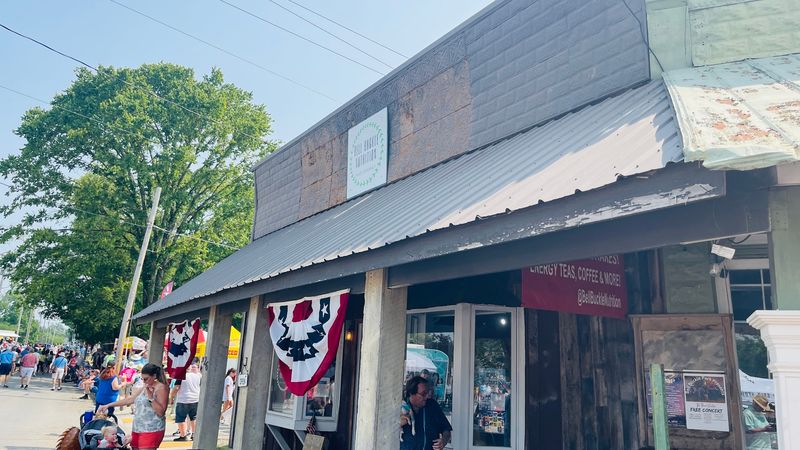
There is a certain kind of joy that comes from wandering through a town where antique shops outnumber chain restaurants, and Bell Buckle delivers that joy in abundance.
Located about 55 miles southeast of Nashville in Bedford County, this small Tennessee community punches well above its weight in charm and character.
Founded in the mid-1800s and named after a cattle brand found carved into a beech tree near a local creek, Bell Buckle has held onto its Victorian-era personality with admirable dedication.
The main street looks like something out of a storybook, lined with carefully preserved storefronts, wooden sidewalks, and hand-painted signs that give the whole place a warm, lived-in feel.
The town is home to the Webb School, one of the oldest and most respected college preparatory schools in the American South, which gives Bell Buckle an interesting academic history alongside its small-town appeal.
Antique hunters will feel right at home here, as the shops are stocked with genuine finds rather than overpriced tourist trinkets. Local artisans also sell handmade goods that make for meaningful souvenirs.
Bell Buckle is perhaps best known statewide for its annual RC Cola and Moon Pie Festival, a beloved event that celebrates a classic Southern snack pairing with music, crafts, and community spirit.
Even on a quiet Tuesday afternoon with no festival in sight, Bell Buckle rewards the curious traveler with a sense of place that is increasingly rare and genuinely worth the drive.
4. Old Stone Fort State Archaeological Park, Manchester
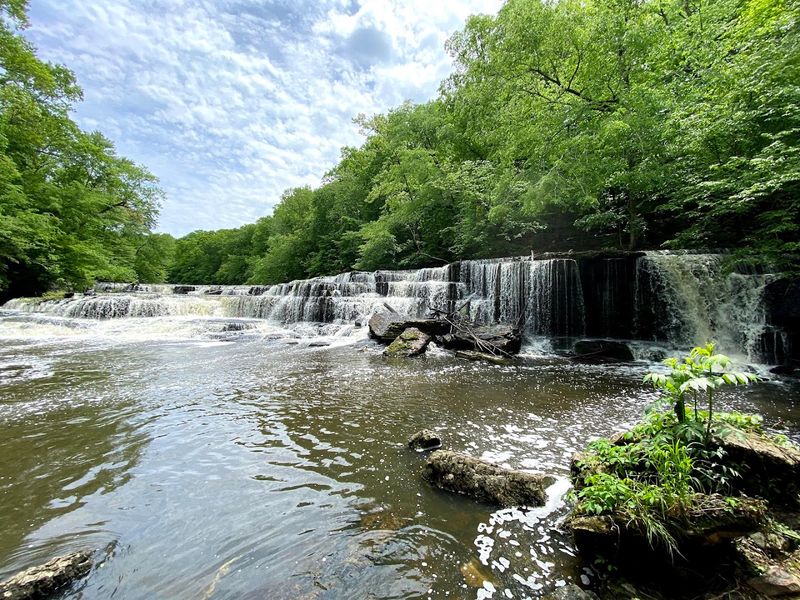
Standing at the entrance of Old Stone Fort State Archaeological Park in Manchester, you get the distinct feeling that the land itself has a story it has been waiting to tell.
Built by Native Americans nearly 2,000 years ago, the stone walls and earthworks here form one of the most significant ceremonial sites in the eastern United States.
The park covers roughly 900 acres and combines archaeological wonder with genuinely beautiful natural scenery.
The stone enclosure stretches for nearly a mile and encloses about 50 acres, a feat of construction that still impresses engineers and historians today.
A museum on site provides helpful context about the people who built the fort and the ongoing research that continues to uncover new details about their culture and practices.
The exhibits are well laid out and easy to follow, making them engaging for both adults and younger visitors.
Beyond the history, the park offers excellent hiking along trails that wind past two rivers, several waterfalls, and dramatic rocky bluffs.
The Little Duck River and the Duck River meet here, and the sound of moving water follows you through most of the trail system.
Fall is a particularly striking time to visit, when the hardwood forest surrounding the ancient walls turns into a tapestry of gold and crimson.
Old Stone Fort manages the rare trick of being equally rewarding as a history lesson and as a simple walk in the woods.
5. Short Springs State Natural Area, Tullahoma
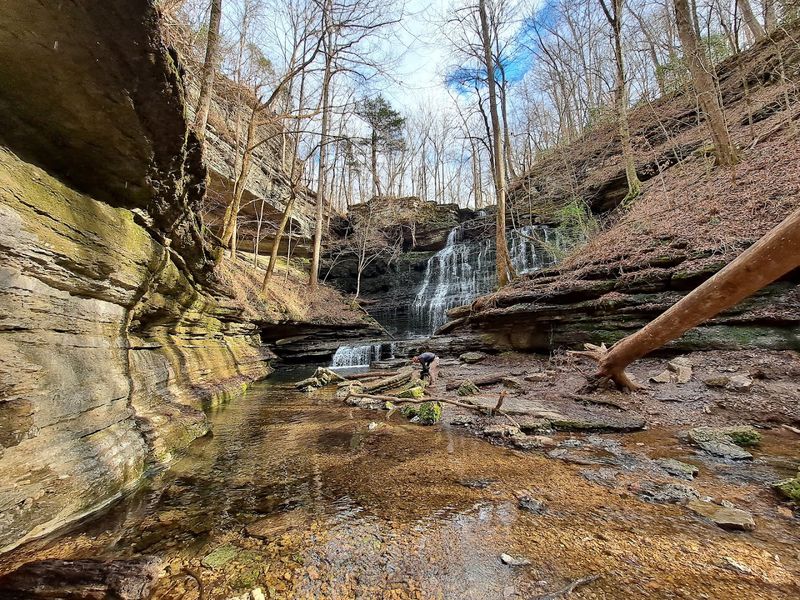
Waterfalls and wilderness come together in a remarkably compact package at Short Springs State Natural Area, a 460-acre preserve just outside Tullahoma in Coffee County.
This spot is a legitimate reward for anyone willing to lace up their hiking boots and follow a trail into the trees.
Short Springs is home to three distinct waterfalls: Machine Falls, Blue Hole Falls, and Suter Falls.
Each one has its own personality, and hiking between them through the dense, moss-covered forest feels like exploring a series of natural rooms, each one more impressive than the last.
Machine Falls is the showstopper of the group, a wide curtain of water that drops dramatically over a sandstone ledge into a clear pool below. On warm days, the mist from the falls provides a welcome cooldown after the hike in.
The trail system here is not heavily trafficked, which means you have a solid chance of experiencing the falls with a level of quiet that is hard to find in more popular parks.
That said, the paths are well-marked and manageable for most fitness levels.
Tullahoma itself is worth a quick exploration before or after your hike. The town has a friendly downtown area with local cafes and a few interesting historical connections to the Civil War era.
Short Springs proves that some of Tennessee’s most rewarding natural experiences are the ones you have to seek out just a little, and that the seeking is half the fun.
6. Cumberland Caverns, McMinnville
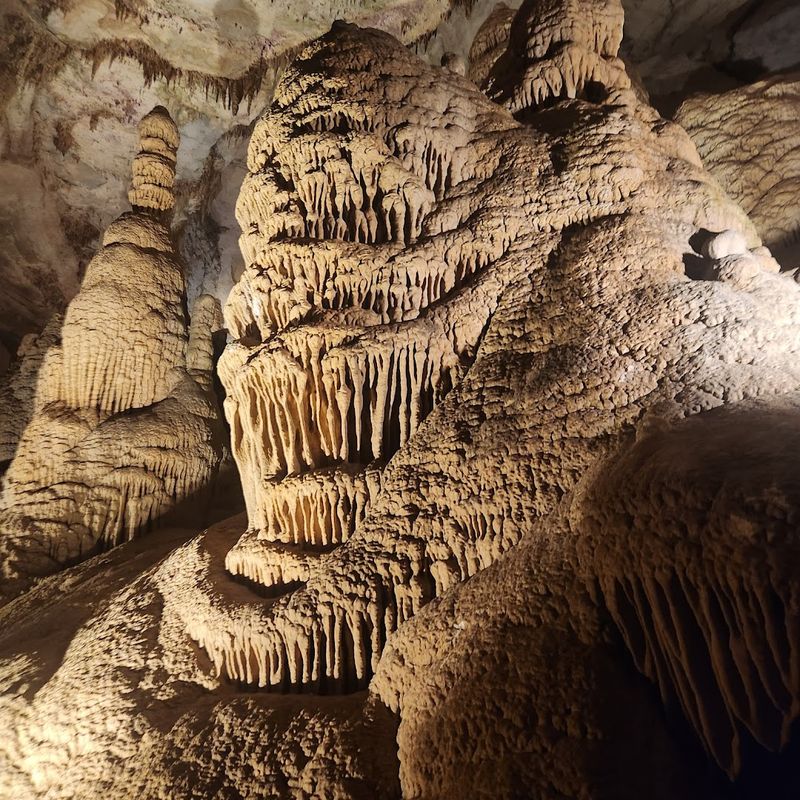
Not every great Tennessee view points toward the sky. Cumberland Caverns in McMinnville takes you in the opposite direction, roughly 333 feet underground into one of the most impressive cave systems in the entire country.
Cumberland Caverns spans over 32 miles of mapped passages, making it the second longest cave in Tennessee and one of the longest in the eastern United States.
The guided tours available to the public cover the highlights in a way that is both informative and genuinely awe-inspiring.
The formations inside are extraordinary. Stalactites hang from the ceiling like stone icicles, stalagmites rise from the cave floor in dramatic columns, and entire rooms shimmer with mineral deposits that took thousands of years to form.
The Volcano Room is a standout, featuring a massive formation that gives the space its dramatic name.
Cumberland Caverns also offers a unique experience called the Volcano Room Concert Series, where live music performances are held inside the cave.
The natural acoustics make for a listening experience unlike anything above ground.
The cave maintains a constant temperature of around 56 degrees Fahrenheit year-round, so bringing a light jacket is a smart move regardless of what the weather is doing outside.
This also makes it a refreshing escape during Tennessee’s hot summer months.
Few day trips offer the kind of complete sensory shift that Cumberland Caverns delivers, trading open skies and rolling hills for a world of stone, silence, and slow geological time.
7. Granville
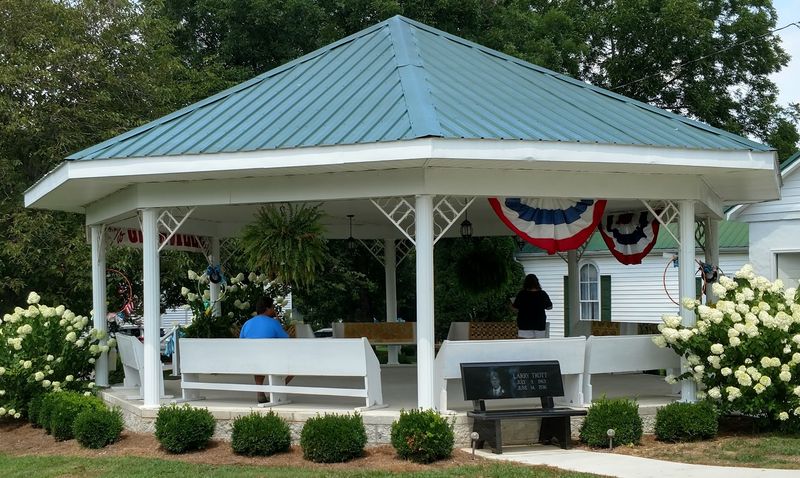
Granville sits on the banks of the Cordell Hull Lake in Jackson County and it carries itself with the quiet confidence of a town that has absolutely nothing to prove.
About 85 miles northeast of Nashville, this small community of fewer than 500 residents draws visitors with its historic charm, riverside setting, and a genuinely unhurried atmosphere that feels increasingly rare.
The town dates back to the early 1800s and has done an admirable job of preserving its heritage.
A walking tour of Granville takes you past a collection of well-maintained historic structures, including an old general store that still operates today and offers a fascinating glimpse into a slower, simpler way of commerce.
The Granville Museum tells the story of the community through artifacts, photographs, and exhibits that cover everything from local industry to everyday life in rural Tennessee across the decades.
Fishing is a favorite activity along the lake, and the calm water also attracts kayakers and canoeists who appreciate the lack of boat traffic and noise.
The reflections of the surrounding hills on the water’s surface make for a genuinely meditative experience.
A small park near the waterfront offers picnic tables and shaded spots perfect for a slow lunch with a view.
The pace of life in Granville has a way of resetting your internal clock, reminding you that not every destination needs a crowd or a headline attraction to be worth the drive.
8. Rock Island State Park, Rock Island
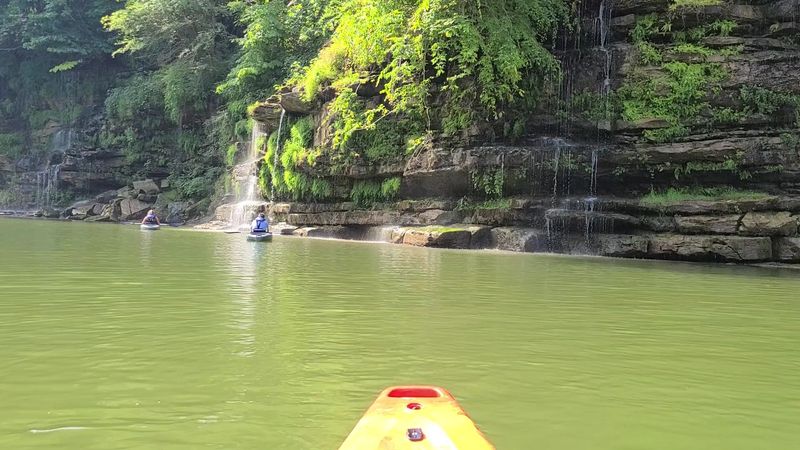
At the far edge of a single tank of gas from Nashville, roughly 95 miles southeast, Rock Island State Park earns its place on this list with the kind of scenery that stops you mid-sentence.
Straddling the border of Middle and East Tennessee in Warren and White counties, the park sits at the confluence of the Caney Fork and Collins Rivers, a meeting of waterways that has shaped a landscape of real dramatic beauty.
The star attraction is Great Falls, a powerful 30-foot waterfall that thunders over ancient rock formations below the ruins of a 19th-century cotton textile mill.
The combination of industrial history and raw natural force makes the falls unlike any other waterfall stop in the state.
Twin Falls is another highlight worth seeking out, where water splits and cascades down separate cliff faces before rejoining in the river below.
The gorge area surrounding both falls is rich with geological character, featuring exposed limestone shelves, carved channels, and swimming holes that draw visitors throughout the warmer months.
Hiking trails wind through the park with varying levels of difficulty, giving casual walkers and more experienced hikers equal opportunity to explore the terrain at their own pace.
The views from the bluffs overlooking the Caney Fork Gorge are among the most striking in all of Middle Tennessee.
Rock Island State Park is the kind of place that rewards those who save it for last, because after a day exploring its falls, gorges, and river bends, heading home feels like leaving something genuinely special behind.