
The Best New Mexico Road Trip For Ancient Ruins Hot Springs And Incredible Natural Beauty
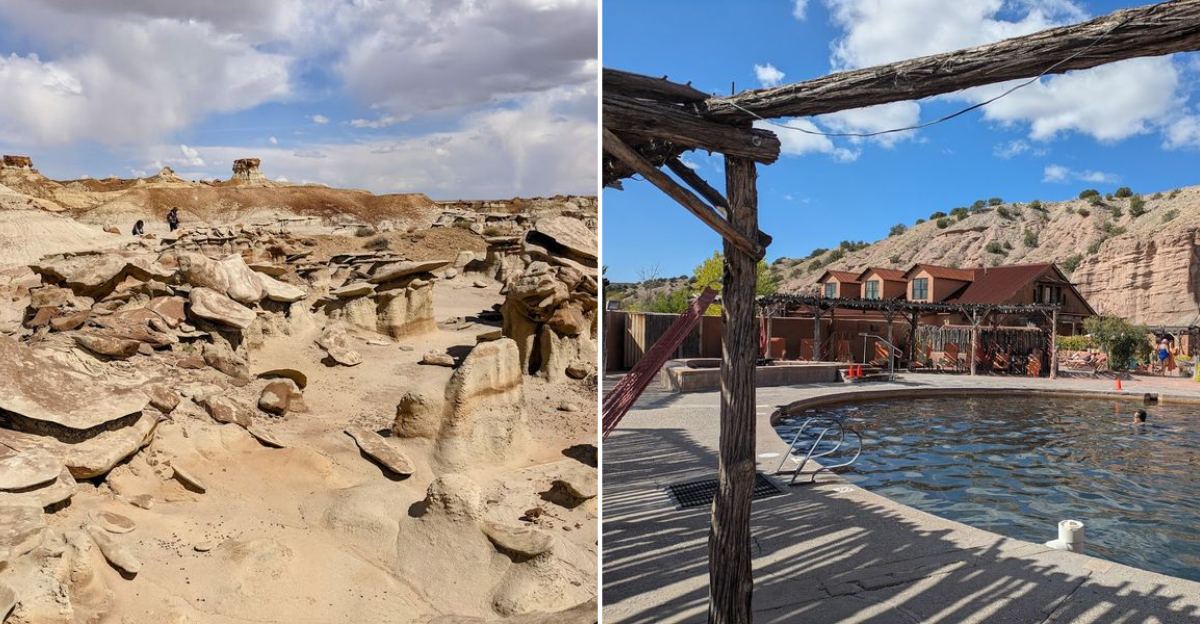
Ancient ruins, hot springs, and landscapes that belong to a completely different geological conversation exist within a single road trip in New Mexico. The itinerary writes itself once the destinations reveal what they are actually offering.
Ruins that predate every map ever drawn of this region sit within driving distance of hot springs that reward the traveler who arrives tired and leaves restored. That sequence is not accidental.
The natural beauty here operates at a scale that makes the word scenic feel insufficient. Red rock, open sky, and terrain shaped by forces that took their time and left evidence everywhere.
A road trip through this corner of the country changes something in the traveler that urban life spent considerable effort accumulating. New Mexico has always understood that, and this route is the most direct proof it has to offer.
1. Taos Pueblo
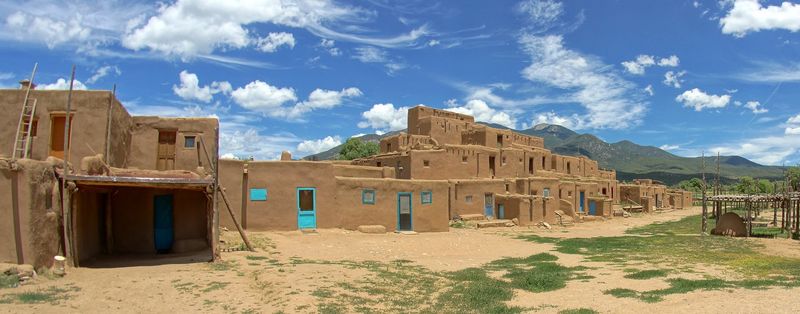
People have been living at Taos Pueblo continuously for over a thousand years. That fact alone should stop you in your tracks.
This is not a reconstructed village or a museum replica; real families still call this place home today.
The multi-story adobe buildings rise like a golden-brown stack of history against the Sangre de Cristo Mountains. You walk through the village and feel the weight of time pressing down in the best possible way.
Guided tours are available, and the residents are incredibly proud to share their story.
The North House and South House are the two main structures, both built without nails or metal of any kind. Thick adobe walls keep the inside cool in summer and warm in winter.
It is old-school engineering that still works perfectly.
Taos Pueblo is a UNESCO World Heritage Site and a National Historic Landmark. That is a double crown that very few places in the world can claim.
It earned both titles for good reason.
The surrounding area is just as beautiful. The Taos Mountain towers behind the village like a protective giant.
The Rio Pueblo runs right through the community, providing fresh water just as it has for centuries.
Plan to spend at least two to three hours here. Pick up handmade pottery or jewelry directly from artisans inside the village.
Every piece you buy supports the community directly, which makes shopping feel genuinely good.
Photography rules apply inside the village, so check the current guidelines before you arrive. Respect goes a long way here.
You are visiting someone’s living, breathing home.
2. Bandelier National Monument
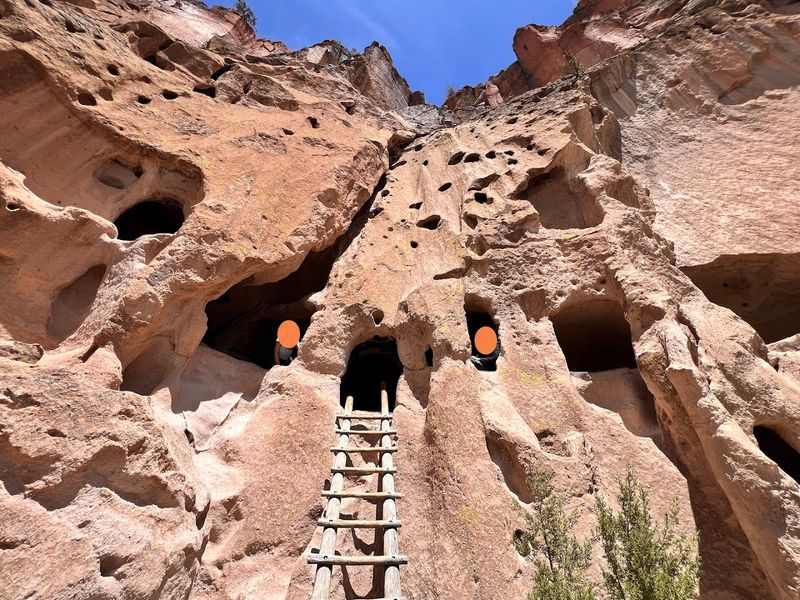
Imagine climbing a wooden ladder into a cave where someone cooked dinner 800 years ago. That is exactly what you get at Bandelier National Monument.
It is one of the most hands-on ancient sites in the entire country.
The Ancestral Puebloans carved their homes directly into the soft volcanic tuff cliffs of Frijoles Canyon. You can actually climb up into some of these dwellings using the wooden ladders provided on the trail.
It feels a little like time travel, honestly.
The main loop trail is about 1.5 miles and winds past carved cave rooms, circular kivas, and petroglyphs etched into the rock. Kivas were underground ceremonial chambers used for spiritual gatherings.
Seeing one up close gives you serious chills.
Bandelier covers about 33,000 acres total, but most visitors stick to the canyon floor trail. The more adventurous can hike up to Alcove House, a large cave site perched 140 feet above the canyon floor.
Four tall wooden ladders get you there, and the view from the top is worth every rung.
The visitor center has excellent exhibits that explain who these people were and how they lived. Rangers lead free guided tours during peak season, and they bring the whole place to life with stories and details you would miss on your own.
Mornings are the best time to visit before the afternoon heat kicks in. The canyon gets warm fast in summer.
Bring water, wear good shoes, and go slow enough to actually absorb what you are seeing.
Wildlife sightings are common here, too. Mule deer wander the canyon like they own the place, which, honestly, they kind of do.
3. Ojo Caliente Mineral Springs Resort & Spa
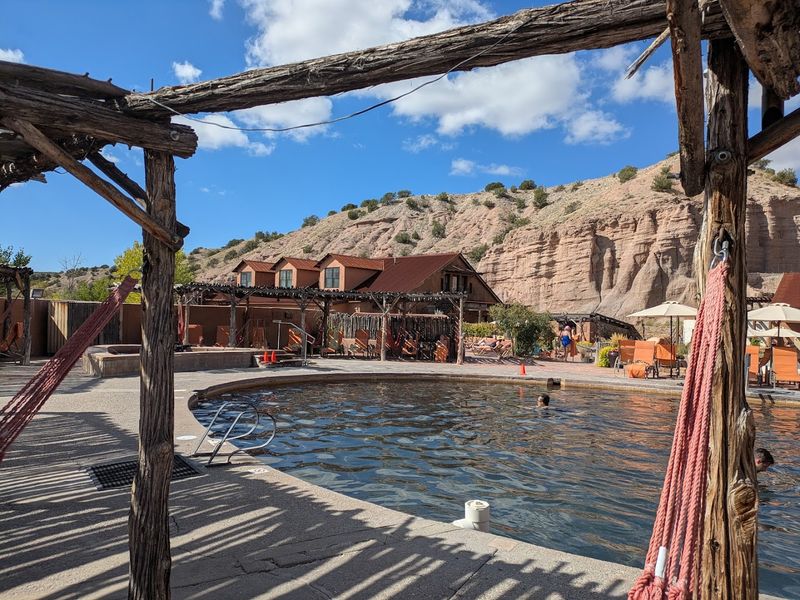
After a day of hiking through ruins and canyons, your legs are going to need a serious reward. Ojo Caliente is that reward.
This place has been drawing people to its healing waters for thousands of years, and once you soak in one of the pools, you will completely understand why.
The springs here are genuinely rare. Four naturally occurring minerals, arsenic, iron, lithium, and soda, flow freely from the earth in this one location.
That combination exists almost nowhere else on the planet. Scientists and historians have been fascinated by it for generations.
There are nine mineral pools spread across the property, each with a slightly different temperature and mineral blend. Some run warmer, some cooler.
You can hop between them and feel the difference in your muscles almost immediately. It is not just relaxing, it is genuinely therapeutic.
The setting is stunning on its own. Red cliffs rise behind the property, and the high desert stretches out in every direction.
Sitting in a warm pool while staring at that landscape feels like something out of a dream sequence in a really good movie.
Ojo Caliente sits between Santa Fe and Taos, which makes it a perfect midpoint stop on the road trip. Timing your visit for late afternoon means you might catch a sunset over those cliffs while still soaking.
That is hard to beat.
The resort also offers mud wraps, massages, and spa treatments if you want to go all in on the relaxation. Day passes are available, so you do not need to book a room to enjoy the pools.
Just show up, soak, and exhale.
Ojo Caliente Mineral Springs Resort and Spa is located at 50 Los Banos Dr, Ojo Caliente, NM 87549.
4. Chaco Culture National Historical Park
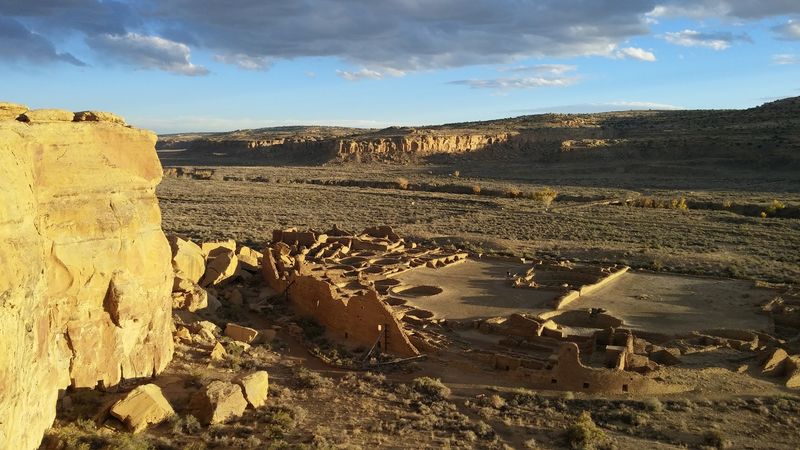
There is a moment when you first see Pueblo Bonito at Chaco that your brain genuinely struggles to process the scale. This was once a building with over 600 rooms.
It was constructed between 850 and 1150 CE without any modern tools or machinery. That is just staggering.
Chaco Culture National Historical Park is a UNESCO World Heritage Site, and it deserves every bit of that designation. This was the beating heart of Ancestral Puebloan civilization in the American Southwest.
Trade routes, religious ceremonies, and political power all radiated outward from this canyon.
The architecture here is precise in a way that feels almost impossible. Many of the structures are astronomically aligned with solstices, equinoxes, and lunar cycles.
These builders were not just constructing rooms; they were encoding their understanding of the cosmos into stone.
Getting to Chaco requires driving on about 13 miles of unpaved road, and that road can get rough after rain. Check road conditions before you go.
The remoteness is actually part of the magic, it filters out casual visitors and leaves you with real quiet.
Night skies at Chaco are legendary. It is a certified International Dark Sky Park, meaning the Milky Way shows up like a glowing river overhead on clear nights.
Camping inside the park puts you under one of the best star shows in the country.
Rangers lead excellent guided tours of the major sites along the canyon. The 9-mile Canyon Loop Drive connects all the major ruins, and you can stop as many times as you want.
Budget a full day here, minimum. Half a day will leave you wishing you had more time.
5. Bisti/De-Na-Zin Wilderness
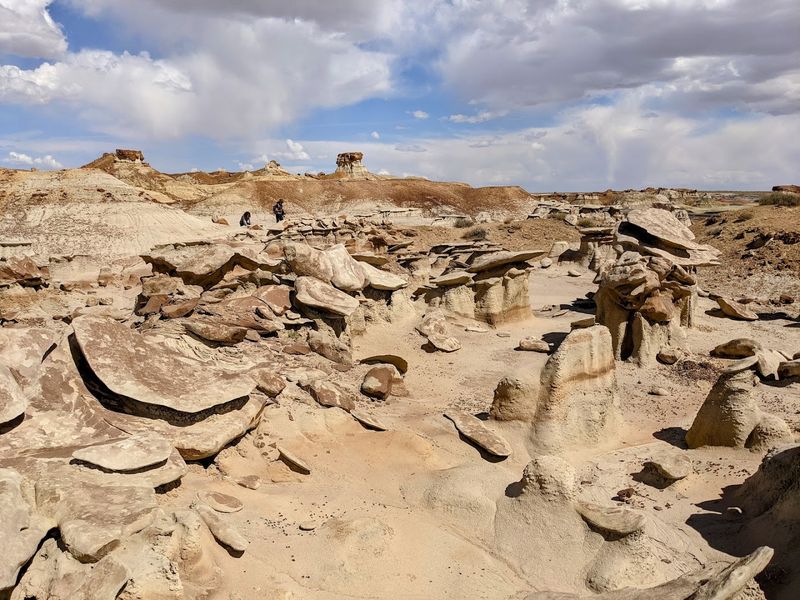
Nobody warned me that New Mexico had a landscape that looked like another planet. Then I went to Bisti.
Now I warn everyone. This place does not look real, and I mean that as the highest possible compliment.
The Bisti/De-Na-Zin Wilderness covers about 45,000 acres of badlands in northwestern New Mexico. Millions of years of erosion have sculpted the landscape into a gallery of hoodoos, spires, and otherworldly rock formations.
There are no official trails inside the wilderness. You just walk in and explore.
That sounds terrifying to some people and thrilling to others. If you are in the thrilling camp, this is your paradise.
Bring a GPS, mark your entry point, and wander freely.
The rock formations change color dramatically depending on the light. Early morning and golden hour are the best times to photograph this place.
At sunrise, the hoodoos glow in shades of orange, pink, and lavender that feel almost too beautiful to be geological accidents.
Most visitors aim for the famous Cracked Eggs formation, which looks exactly like what the name suggests: giant cracked stone eggs half-buried in the ground. Finding them without a guide requires some navigating, but that hunt is part of the fun.
Temperatures here can be brutal in summer. Bring more water than you think you need and start early.
The ground is uneven, so ankle support in your footwear matters more than style. Wear layers in spring and fall because the wind comes out of nowhere.
There is genuinely no other place in New Mexico quite like this one. This place is located off County Road 7297, Bloomfield, NM 87413.
6. NRAO Very Large Array

Okay, this one is not ancient ruins or hot springs, but hear me out. Seeing 27 giant radio telescope dishes rise from the Plains of San Agustin is one of the road trip’s most surreal moments. Your jaw will drop, guaranteed.
The National Radio Astronomy Observatory Very Large Array is a fully operational scientific facility that listens to the universe.
These dishes collect radio waves from deep space black holes, distant galaxies, pulsars, and things scientists are still trying to name. Real science is happening here right now, which is wild to think about.
The visitor center is free and genuinely fantastic. Interactive exhibits explain how radio astronomy works without making you feel like you need a physics degree to follow along.
Kids go absolutely nuts for this place, but honestly, so do adults.
You can walk a self-guided tour that takes you right up to one of the massive dishes. Standing next to one gives you a completely different sense of their scale.
Each dish is 82 feet in diameter and weighs about 230 tons. They move.
They track signals. They are incredible.
The facility was featured in the movie Contact with Jodie Foster, which brought it a whole new wave of fans. Even if you have never heard of radio astronomy, the visual spectacle alone makes the stop worthwhile.
It photographs beautifully in almost any light.
Tours of the interior are available on the first and third Saturdays of each month. Plan around those if you want the full behind-the-scenes experience.
The drive out to the array through open grassland is scenic and peaceful in its own right.
The NRAO Very Large Array is located on Old Hwy 60, Magdalena, NM 87825.
7. Riverbend Hot Springs
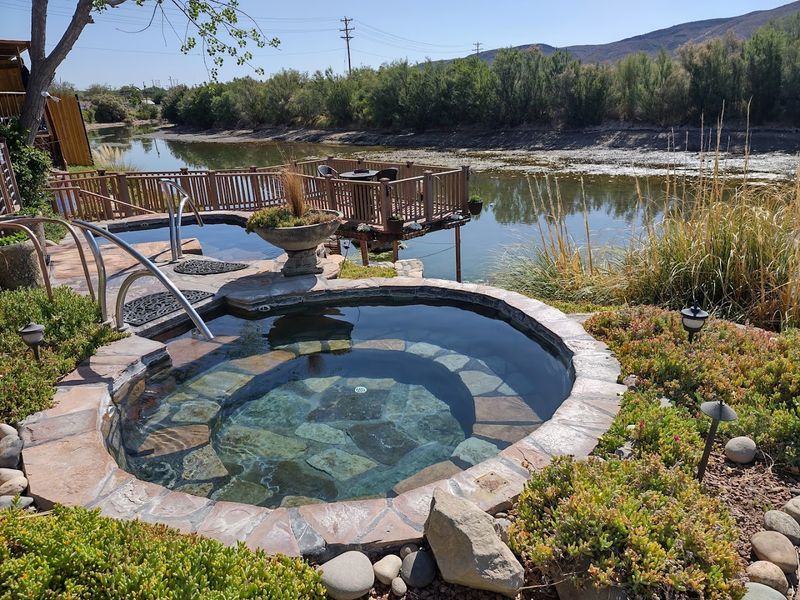
Truth or Consequences is already one of the best town names in America. The fact that it also has outdoor hot springs sitting right on the banks of the Rio Grande makes it almost unfairly cool.
Riverbend Hot Springs is the crown jewel of this quirky little desert town.
The pools here range from 95 to 108 degrees Fahrenheit, so there is a temperature for every preference.
Some pools sit close to the river’s edge, meaning you can soak in hot mineral water while watching the Rio Grande slide quietly past just a few feet below. That combination is deeply satisfying.
The setting is open-air and completely unpretentious. You are not at a luxury resort with marble countertops and a dress code.
You are sitting outside in warm water with mountains in the distance and a river nearby. That is the whole deal, and it is exactly enough.
Truth or Consequences itself is worth a wander before or after your soak. The town has a growing arts scene, vintage shops, and a genuinely laid-back local vibe.
It feels like a place that has not been discovered yet, even though people in the know have been coming here for years.
The hot springs in this area have been used for healing for centuries. Indigenous communities knew about these waters long before the town existed.
Soaking here connects you to a very long line of people who came to this same spot for the same reason: relief and restoration.
Reservations are recommended, especially on weekends when the pools fill up fast. Towels and lockers are available on-site.
Bring a book or just sit quietly and listen to the river. Either choice is a good one.
Riverbend Hot Springs is located at 100 Austin St, Truth or Consequences, NM 87901.
8. White Sands National Park
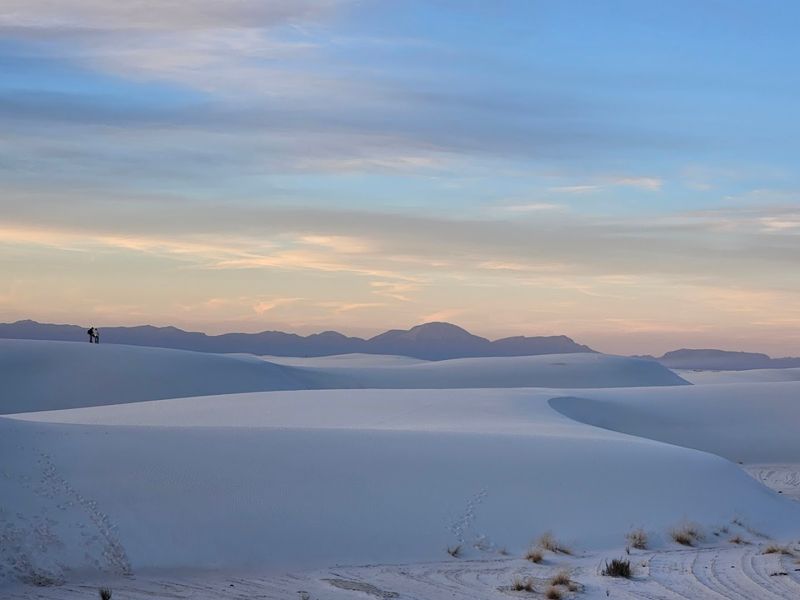
White Sands does not look like it belongs on Earth. The dunes stretch for over 275 square miles, making this the largest gypsum sand field on the planet.
Walking into it feels like stepping onto the surface of a very warm, very beautiful moon.
The sand is made of gypsum crystals, which means it stays cool even in direct summer sun. You can walk barefoot across it without burning your feet, which is a small miracle in the New Mexico heat.
The white color also reflects sunlight in a way that makes everything glow.
Sledding down the dunes is one of the most joyful things you can do as an adult without anyone judging you. Plastic sleds are available for rent at the gift shop.
One run down a steep dune and you will be hiking back up to do it again immediately. It is ridiculous fun.
Sunset at White Sands is a separate experience worth planning your whole day around. The white dunes turn shades of pink, peach, and lavender as the sun drops.
The contrast against the darkening sky is the kind of thing that makes people stop mid-sentence and just stare.
Several hiking trails wind through the dunes, ranging from easy boardwalk loops to longer backcountry routes. The Alkali Flat Trail is the most challenging at five miles round trip, crossing the flattest and most remote section of the dunefield.
Carry plenty of water on that one.
Wildlife here is surprisingly abundant despite how stark the landscape looks. Roadrunners, lizards, and even coyotes move through the dunes regularly.
The park also sits within White Sands Missile Range, so occasional temporary closures happen; check ahead before visiting.