
Wild Parrots Have Nested In This New York Cemetery’s Gothic Gate For Decades And The Legends Buried Inside Are Just As Surprising
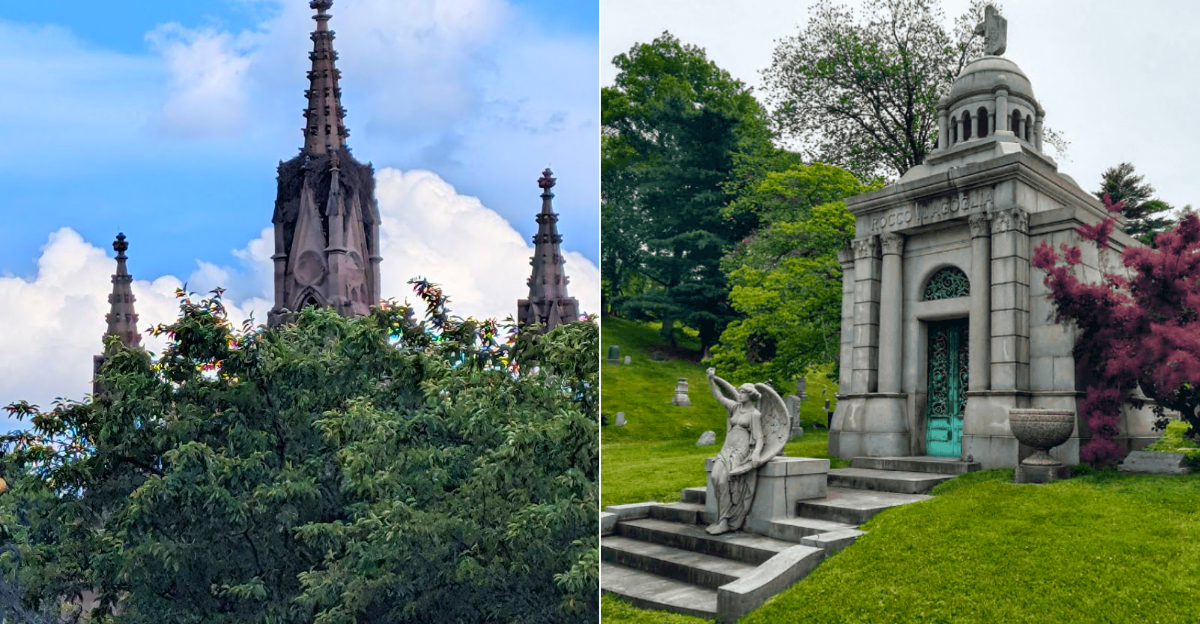
Brooklyn is not the first place most people expect to find wild parrots, Gothic architecture, and buried legends sharing the same address. Yet one New York cemetery manages to hold all three without feeling like a gimmick.
Bright green monk parakeets have nested for decades in the stone gateway, turning a solemn entrance into one of the city’s strangest wildlife scenes.
Beyond that chatter, the grounds unfold across rolling hills, winding paths, and monuments tied to inventors, artists, gangsters, soldiers, and baseball names that shaped American culture.
It feels peaceful, odd, grand, and alive with stories. Even the quiet corners seem ready to surprise careful visitors. Walk through once, and it becomes clear why this place influenced the very idea of a great urban park.
A Gothic Gate With Very Loud Tenants
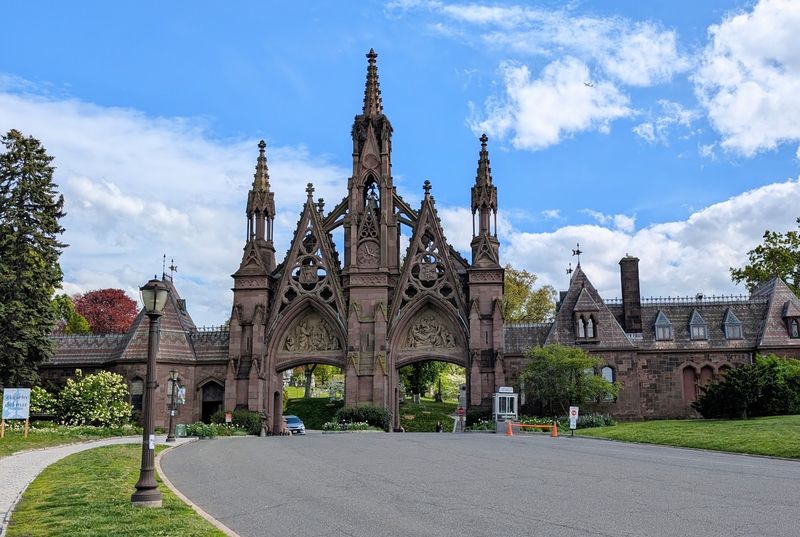
Before you even pass through the main entrance of Green-Wood Cemetery, something unexpected grabs your attention. Loud, cheerful chattering echoes from the spires above the Gothic Revival gate on 25th Street in Brooklyn, NY 11232.
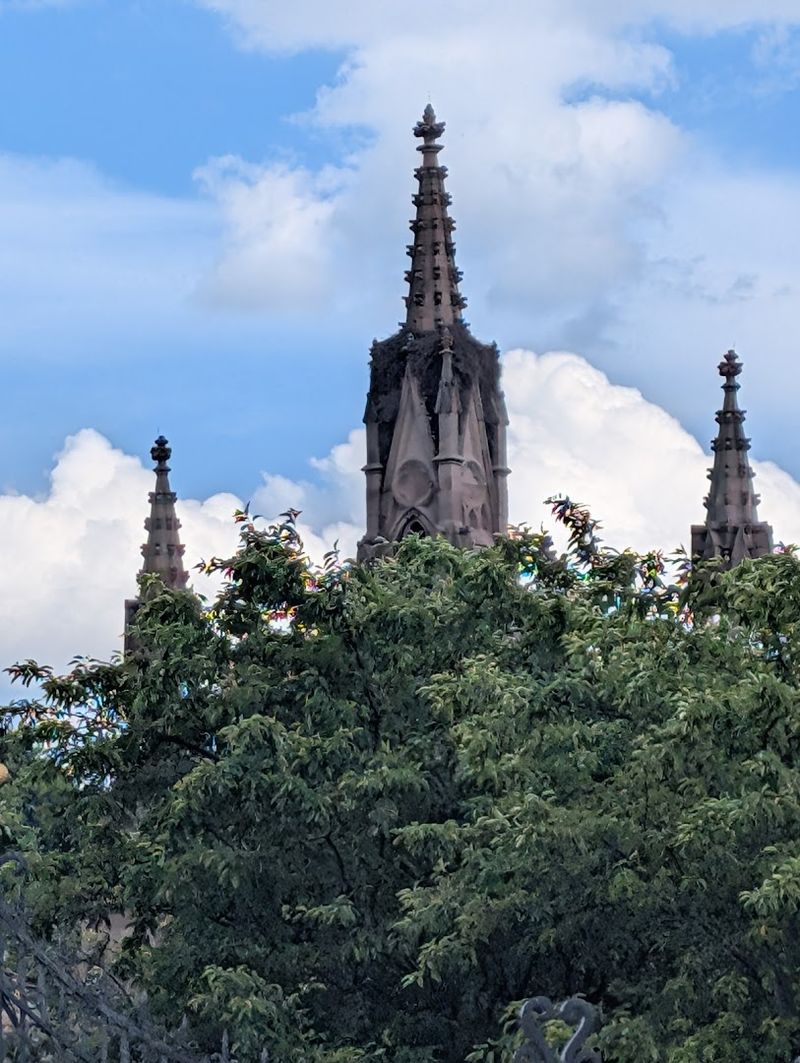
Look up and you will spot a colony of bright green Monk Parakeets, also called Quaker Parrots, going about their very busy day.
A popular legend says these birds trace their Brooklyn roots to a broken crate at JFK Airport back in the 1960s. Whether that story is true or not, the parrots clearly decided New York suited them just fine.
They built large, intricate nests right inside the historic stone archway and have never left.
Remarkably, the cemetery allows the nests to stay. Officials have noted that parakeet droppings are actually less damaging to the landmark stonework than pigeon droppings.
So the birds get to stay rent-free, and visitors get a truly unforgettable welcome. Native to the mountainous regions of Argentina, these parrots handle Brooklyn winters without complaint, which honestly puts most of us to shame.
Arriving at the gate and hearing that chorus overhead is one of New York’s most charming and completely free experiences.
Green-Wood Cemetery: Brooklyn’s Most Underrated Landmark
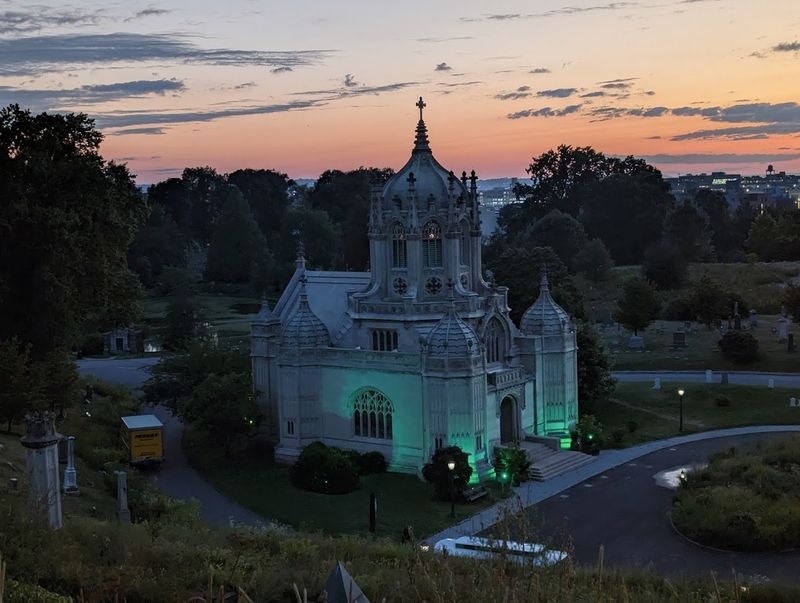
Founded in 1838, Green-Wood Cemetery earned international fame long before most New York landmarks were even planned. It became so popular as a scenic retreat that it reportedly inspired the competition to design Central Park in Manhattan.
For a cemetery to outshine a public park in popularity is a genuinely remarkable achievement.
The grounds cover 478 acres of gently rolling hills, winding paths, two ponds, and a certified arboretum. Over 570,000 individuals rest here, making it one of the most populated historic sites in the entire country.
The cemetery sits in the western portion of Brooklyn, bordered by neighborhoods including Park Slope, Windsor Terrace, and Sunset Park.
Green-Wood was listed on the National Register of Historic Places in 1997 and became a National Historic Landmark in 2006. The 25th Street gate and several other structures carry separate New York City landmark designations.
Admission is free, and the grounds are open daily from 7 AM to 7 PM. Maps are available at the main entrance, and a companion app exists for those who prefer digital guidance.
A phone call to 718-768-7300 or a visit to green-wood.com can help you plan your trip before you arrive.
Jean-Michel Basquiat Rests Here
Few figures in modern art burned as brightly as Jean-Michel Basquiat. His Neo-Expressionist paintings exploded with raw energy, social commentary, and street-level poetry.
He rose from painting on Manhattan walls to selling canvases for millions, all before the age of 28.
Basquiat’s grave at Green-Wood draws a steady stream of admirers who leave behind flowers, notes, and small mementos. Standing at his plot feels less like a solemn moment and more like a quiet conversation with someone whose work still refuses to stay silent.
His presence here adds a layer of cultural weight to the cemetery that few other resting places in the world can match.
For fans of contemporary art, finding his grave is a meaningful pilgrimage. The cemetery’s rolling landscape provides a peaceful contrast to the urgency that defined his paintings.
Green-Wood offers printed maps and a digital app to help visitors locate notable graves without wandering for hours. The grounds are large enough that arriving with a plan saves considerable time.
Basquiat’s story is one of brilliant creativity meeting a world that was not always ready for it, and Green-Wood honors that story simply by holding his name within its gates.
Leonard Bernstein’s Final Curtain Call
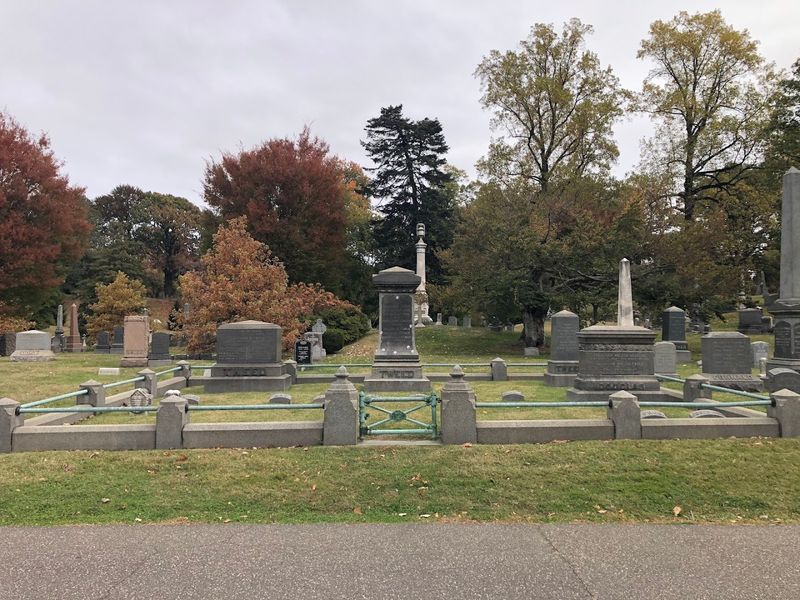
Leonard Bernstein conducted some of the greatest orchestras in the world and wrote music that still fills Broadway theaters every single night. West Side Story alone secured his place in American cultural history.
He was a composer, a conductor, a teacher, and an entertainer all at once, which is an exhausting combination even to read about.
His grave at Green-Wood has become a quiet gathering spot for musicians, theater lovers, and curious visitors who want to pay their respects. It is a grounding experience to stand in a place so peaceful and think about a life so loudly lived.
The contrast between the cemetery’s stillness and Bernstein’s relentless energy is striking in the best possible way.
Green-Wood’s landscape feels appropriate for a man who loved beauty in all its forms. The certified arboretum surrounding the paths offers seasonal color that shifts from bright spring blossoms to deep autumn golds.
Visiting in the fall, when the foliage turns and the crowds thin out, gives the whole experience an extra layer of atmosphere.
Bernstein reportedly loved New York with a fierce, personal pride, and there is something fitting about his resting here in Brooklyn, a borough that has always had a sound all its own.
Boss Tweed’s Long Overdue Silence
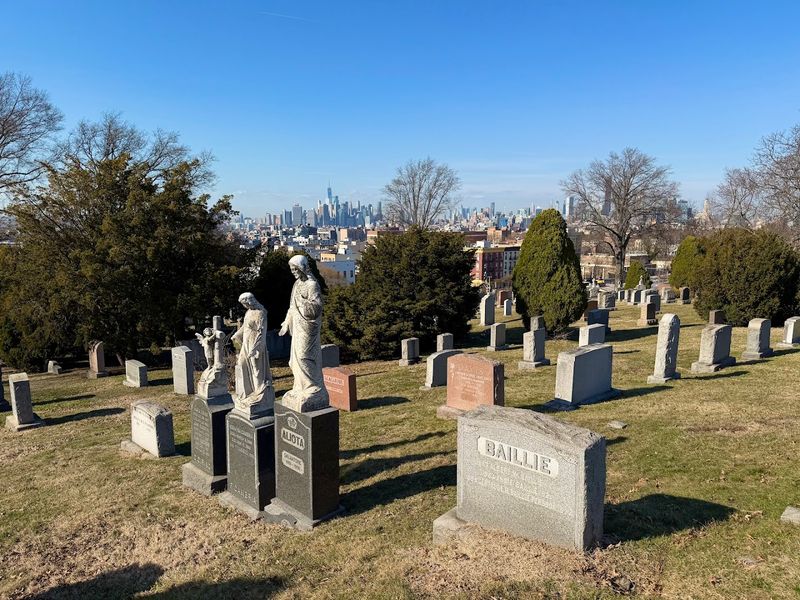
William Tweed, better known as Boss Tweed, ran New York City’s Tammany Hall political machine with an iron grip during the mid-1800s. He was responsible for staggering levels of corruption that drained millions from the city’s treasury.
Cartoonist Thomas Nast famously skewered him in print, and eventually the law caught up with him too.
Tweed’s presence at Green-Wood adds a fascinating moral complexity to the cemetery’s roster. He rests among reformers, artists, and inventors, which makes for an interesting neighborhood dynamic in the afterlife.
History rarely sorts people by their character, and Green-Wood reflects that reality honestly.
For visitors interested in the messier chapters of New York political history, Tweed’s grave is worth seeking out.
The cemetery’s walking maps identify his plot, and the surrounding landscape gives you plenty of quiet time to consider how someone so powerful could fall so completely.
Green-Wood has always attracted people who understand that history is not just a highlight reel. The grounds feel equally welcoming whether you arrive as a history enthusiast, a nature lover, or simply someone who needs a few hours away from the noise of the city.
Brooklyn has always been a place where complicated stories find space to breathe.
Louis Comfort Tiffany’s Stained Light
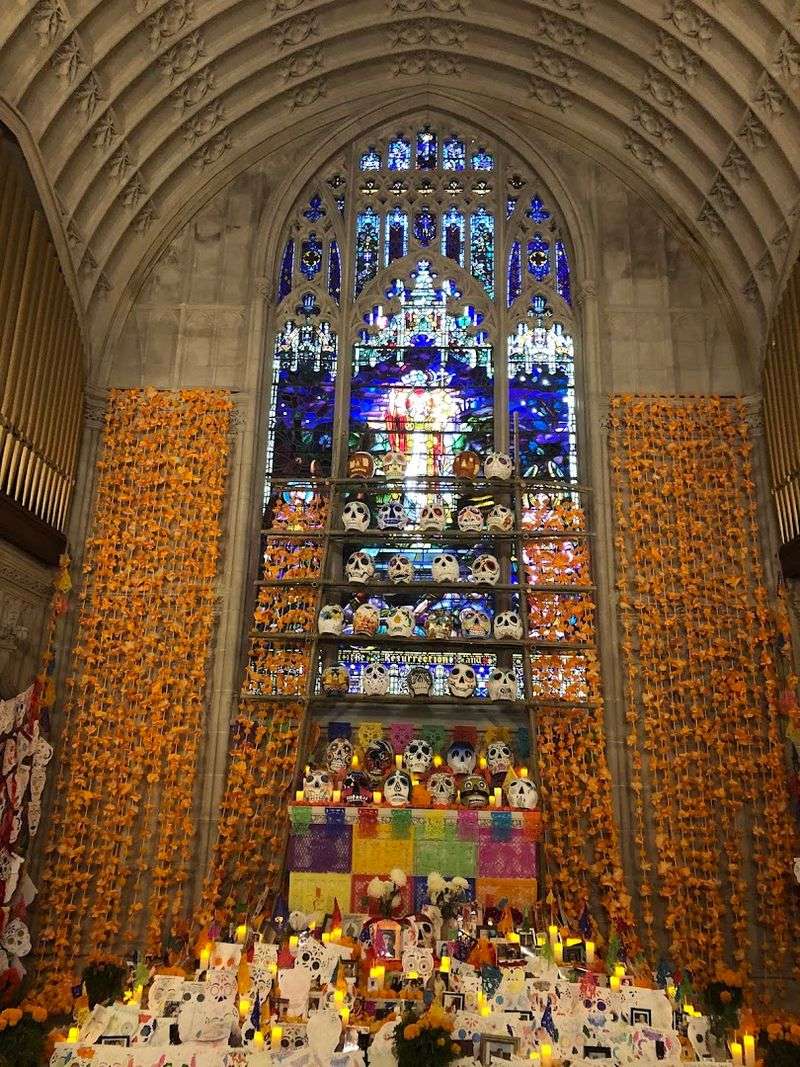
Louis Comfort Tiffany turned colored glass into something the world had never quite seen before. His lamps and windows remain some of the most recognized decorative art objects in American history, and museums around the world compete to display them.
The man had an eye for light that bordered on supernatural.
His resting place at Green-Wood carries an almost poetic appropriateness. A cemetery full of sculptural monuments and dappled sunlight feels like exactly the right environment for someone who spent a lifetime studying how light moves through color.
Visiting on a bright morning, when sunlight filters through the arboretum’s canopy, gives the whole experience a Tiffany-esque quality.
Green-Wood’s collection of artistic graves and elaborate mausoleums makes it a genuine open-air museum. Tiffany is just one of several artists and designers buried here whose work continues to influence contemporary creators.
The cemetery hosts cultural events throughout the year, including tours focused on art and architecture, which are worth checking on their website before your visit.
For anyone with an interest in American decorative arts, connecting Tiffany’s biography to the physical place of his burial creates a richer understanding of his life.
Green-Wood rewards visitors who come with curiosity and leave with far more questions than they arrived with.
The Debutante Whose Tomb Became A Legend
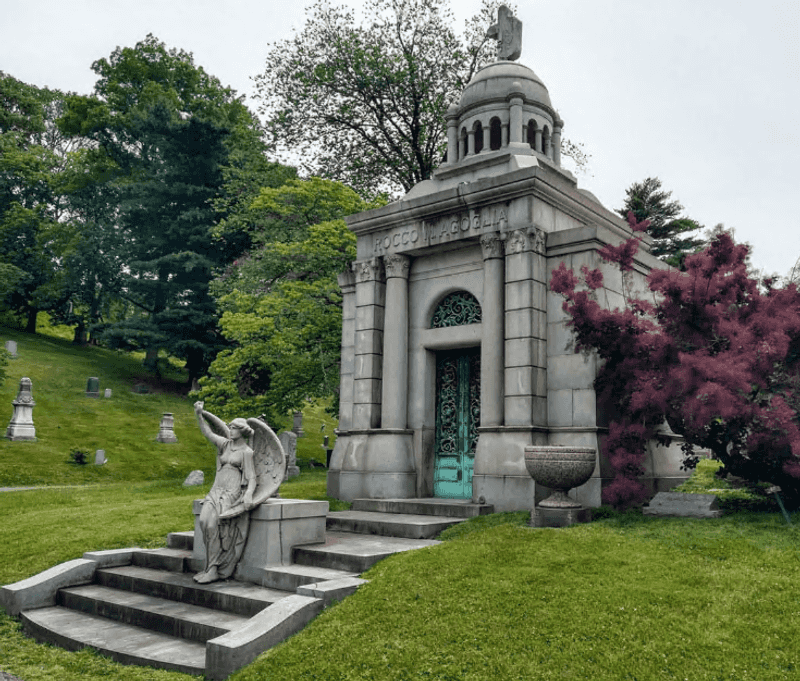
Charlotte Canda’s story is one of the most quietly haunting in Green-Wood’s long history.
She passed away on her 17th birthday in 1845 after a carriage accident, and her grieving family commissioned an elaborate tomb filled with symbolic details tied to her short life.
The monument became one of the cemetery’s most visited attractions almost immediately.
The story deepened when her fiancé, unable to bear the loss, also passed away shortly after and was buried beside her. The tomb’s intricate carvings represent her age, her interests, and the specific details of her life in a way that feels almost encyclopedic in stone.
Visitors have been stopping to study it for nearly 180 years.
Charlotte’s grave represents something Green-Wood does better than almost any other place: it turns individual lives into lasting stories. The cemetery does not just preserve names on markers, it preserves personalities, relationships, and moments frozen in marble and granite.
For visitors who enjoy the human side of history, stories like Charlotte’s make the whole experience feel deeply personal rather than academic. Green-Wood’s guided tours often include her tomb, and for good reason.
Few graves in the cemetery manage to communicate so much about a single life in such a compact and visually striking way.
The Views That Nobody Talks About Enough
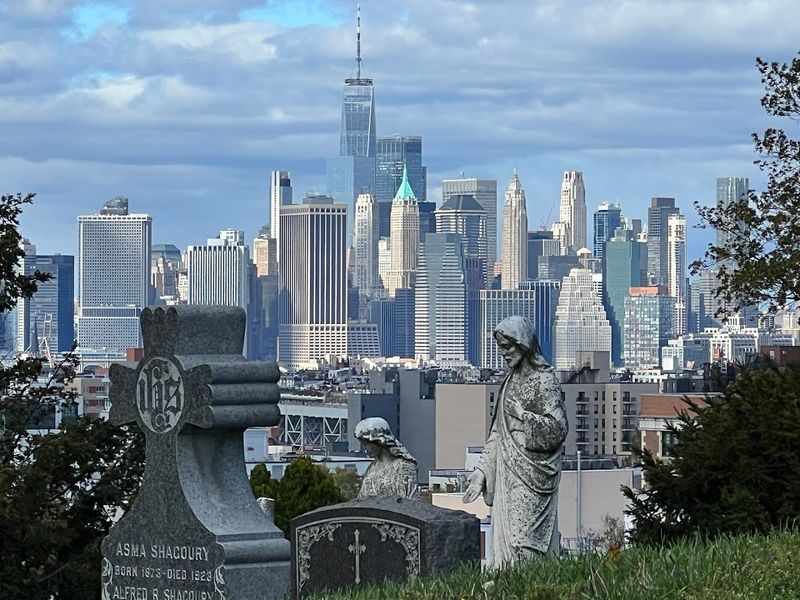
Most people visit Green-Wood for the history, the parrots, or the architecture. Fewer realize that the cemetery sits on some of the highest ground in Brooklyn, which means the views from certain spots are genuinely breathtaking.
On a clear day, the Manhattan skyline appears in the distance like a postcard that happens to be real.
Walk along the perimeter near 24th Street and you can catch a glimpse of the Statue of Liberty. That is not a detail that gets mentioned enough when people talk about this place.
Standing among 19th-century monuments with Lady Liberty visible on the horizon is an experience that earns its own category entirely.
The cemetery’s hilly terrain makes for a more engaging walk than a flat park. The winding paths shift your perspective constantly, revealing new angles on both the monuments and the surrounding borough.
Bring comfortable shoes because the elevation changes are real, and plan for at least two to three hours if you want to cover the main highlights.
Green-Wood opens at 7 AM every day of the week, and early morning visits offer the kind of stillness that the rest of New York rarely provides.
The city sounds fade, the parrots chatter overhead, and for a while, Brooklyn feels like a completely different world.
Why Green-Wood Deserves A Spot On Every Brooklyn Itinerary
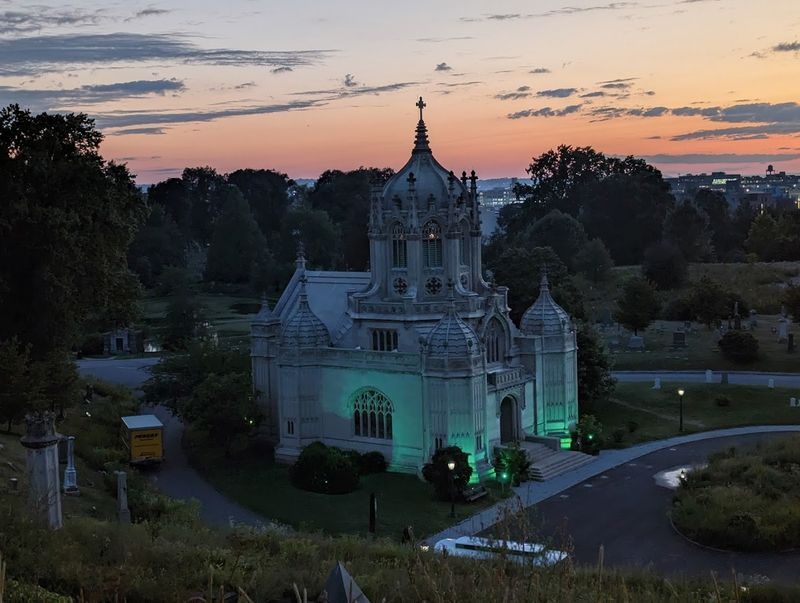
Green-Wood Cemetery earns its place on any serious Brooklyn itinerary not because it is unusual but because it is genuinely excellent.
The combination of landscape, history, wildlife, and architecture creates an experience that very few places anywhere in the world can replicate.
A certified arboretum, two ponds, Revolutionary War history, and wild parrots all share the same 478 acres.
The cemetery hosts cultural events throughout the year, from historical tours to seasonal performances. Their website at green-wood.com and their newsletter keep visitors updated on upcoming programming.
The grounds are free to enter, open daily from 7 AM to 7 PM, and large enough to absorb a crowd without ever feeling congested.
Green-Wood also carries the distinction of predating Central Park as a major New York public attraction. It helped prove that New Yorkers wanted green space, quiet reflection, and natural beauty within reach of the city.
That legacy feels alive every time someone arrives at the Gothic gate, hears the parrots, and forgets for a moment that they are standing in one of the world’s busiest urban environments.
Green-Wood is one of those rare places that rewards every type of visitor, whether you come for history, nature, art, or simply a long and peaceful walk through a story-filled landscape.