
This Massachusetts Pond Has Water So Clear You Can See The Bottom And Locals Want To Keep It That Way
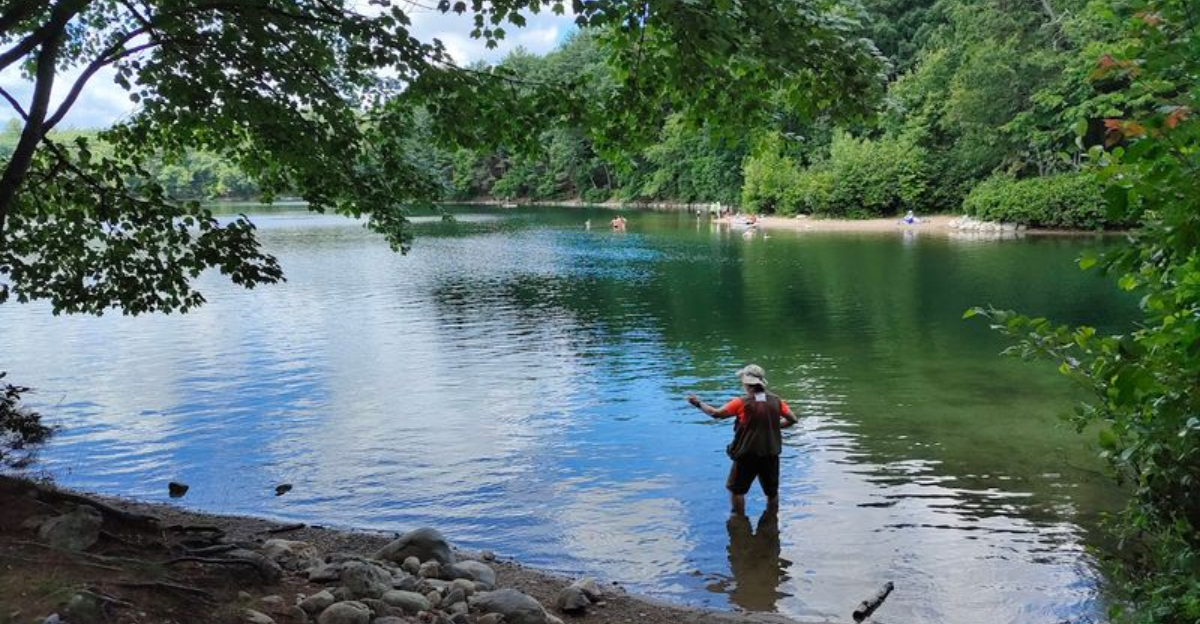
Some ponds just sit there. This one in Massachusetts has been sparking conversations, inspiring literature, and quietly outlasting every attempt to diminish it for well over a century.
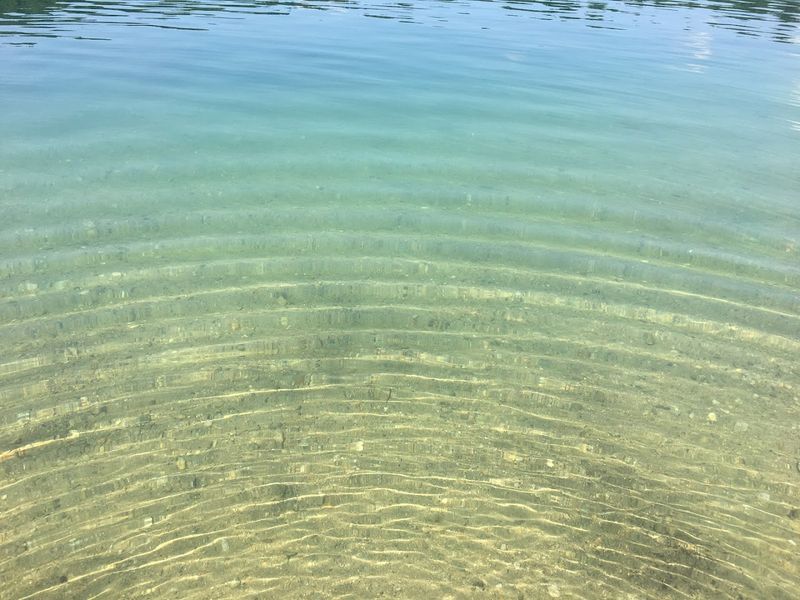
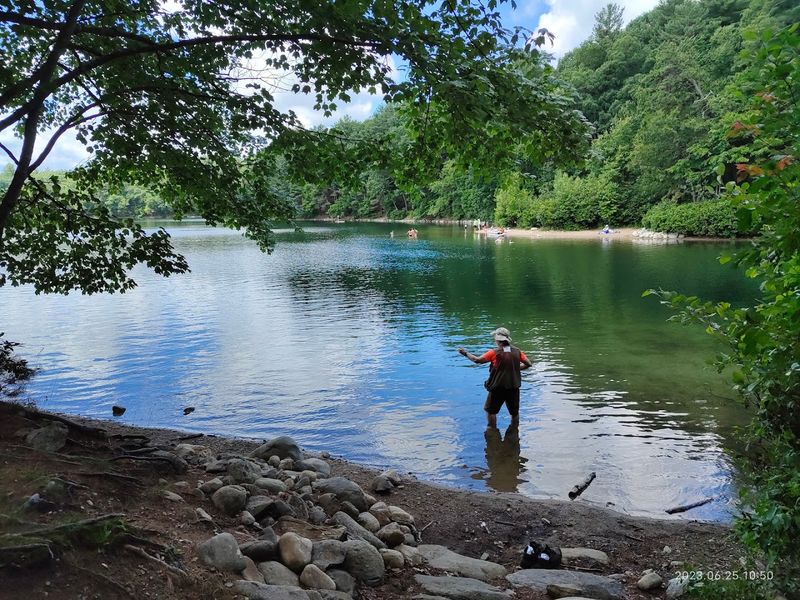
The water is that clear. Stand at the edge on a calm morning and you can see straight to the sandy bottom, the color shifting from pale aquamarine near the shore to a deep blue-green further out.
It formed from a melting glacier thousands of years ago and has no surface inlet or outlet, which is part of what keeps it so pristine.
Thoreau wrote about it. Conservationists have fought for it. Locals still show up early on summer weekends to beat the crowds.
Massachusetts is a state with beautiful water everywhere you look, but this pond occupies a different category entirely.
People who love it really love it, and they are not particularly interested in sharing it with the world.
The Glacial Origins That Explain Everything About This Pond
Long before Henry David Thoreau ever set foot on its shore, a massive block of glacial ice was quietly doing the most important work in its history.
When the last Ice Age retreated roughly 10,000 to 15,000 years ago, enormous chunks of ice buried under sediment melted in place, leaving behind deep, bowl-shaped depressions called kettle holes.
This pond is one of them.
What makes this origin story so relevant today is that kettle hole lakes have no rivers flowing in or out. The pond receives its water almost entirely from an underground freshwater aquifer.
That natural filtration process is a major reason the water stays so remarkably clear year after year.
Unlike lakes fed by surface runoff, which carry sediment, fertilizer, and debris, Walden’s water percolates slowly through layers of soil and sand before arriving.
The result is water with almost no suspended particles, which is exactly why you can see the sandy bottom from the surface.
The pond’s geology is not just fascinating history. It is the living foundation of everything that makes this place worth protecting.
Thoreau Lived Here And Changed American Thinking Forever
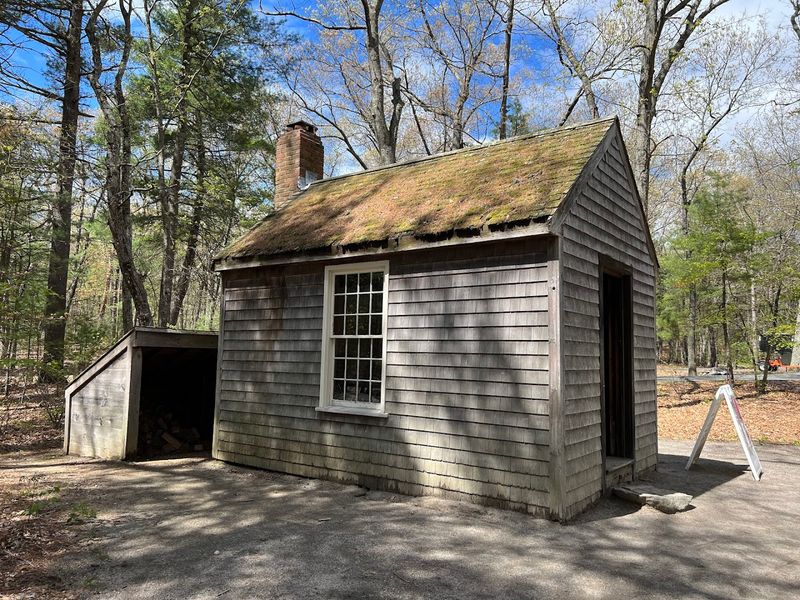
In July 1845, a 27-year-old writer and philosopher moved into a small hand-built cabin on the northern shore of Walden Pond.
Henry David Thoreau spent two years, two months, and two days living there, observing nature with extraordinary attention and writing down nearly everything he noticed.
The book that came out of that experience, published in 1854 under the title “Walden; or, Life in the Woods,” became one of the most influential works in American literary history.
Thoreau described the pond’s water with genuine admiration, calling it among the clearest he had ever encountered.
His writings sparked a broader conversation about humanity’s relationship with the natural world, one that eventually grew into the American conservation movement.
Many historians consider Walden Pond the philosophical birthplace of environmentalism in the United States.
Today, visitors can walk to the site where his cabin once stood, marked by stone posts and a modest cairn of rocks left by generations of admirers.
A full-scale replica of the cabin stands near the visitor center, giving a tangible sense of just how simply Thoreau chose to live.
For many people, standing at that spot feels less like a tourist stop and more like a genuine moment of reflection.
Water Clarity So Rare That Scientists Actually Study It
Most lakes in the northeastern United States carry a noticeable tint. Algae, tannins from decaying leaves, and agricultural runoff all cloud the water over time.
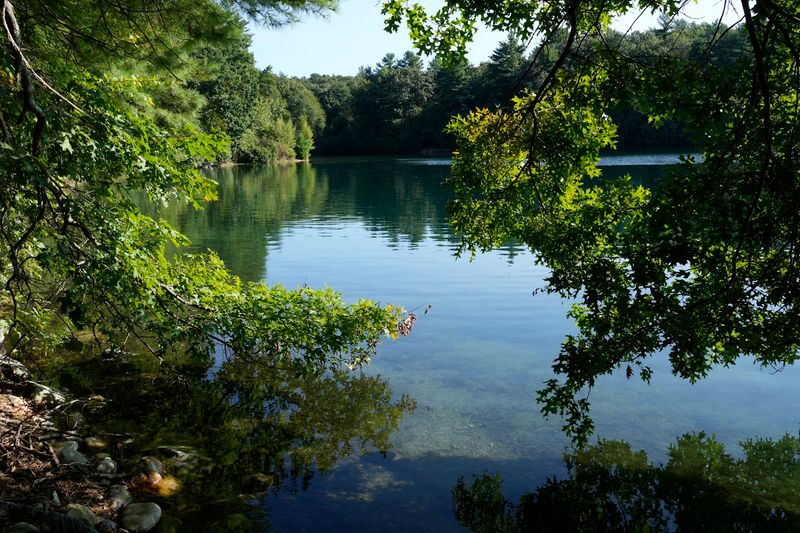
Walden Pond is a striking exception. On a calm day, the water has a blue-green quality that looks almost tropical, and the sandy bottom is clearly visible even in areas that are several feet deep.
Part of the credit goes to a deep-dwelling macroalga called Nitella, which grows on the lake bed and plays a quiet but powerful role in maintaining water quality.
Nitella promotes oxygenation and helps bind phosphorus in the sediment, preventing it from dissolving back into the water column where it would feed algae blooms.
It is essentially a natural water-cleaning system working around the clock.
Researchers and ecologists have monitored Walden Pond’s water quality for decades, tracking changes in clarity, nutrient levels, and biological composition.
Their findings have informed conservation policies and helped park managers make smarter decisions about visitor capacity.
The science behind the clarity is genuinely compelling, and it underscores a simple truth: clean water does not happen by accident. It requires the right conditions, the right biology, and the right human choices working together consistently over time.
Swimming At Walden Pond Feels Unlike Any Other Beach Day
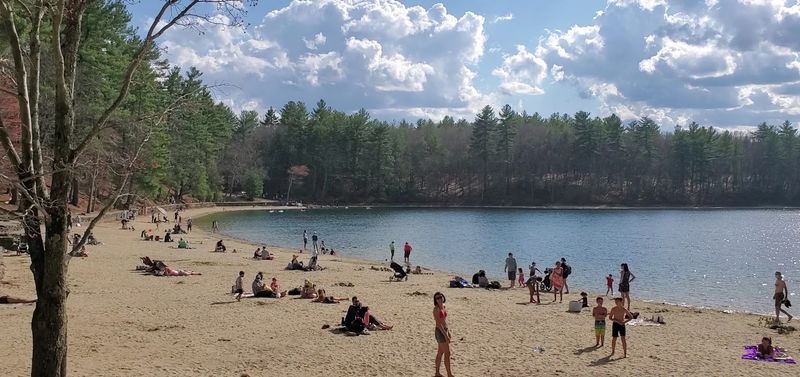
There is something noticeably different about swimming in water you can actually see through.
At Walden Pond, stepping into the shallows means watching your feet clearly on the sandy floor below, with no murky uncertainty about what is down there.
The water stays cool even in midsummer, fed as it is by underground sources rather than warm surface streams.
The main swimming beach is a compact sandy stretch that fills up quickly on hot weekends.
Parking at the reservation, located in Concord, MA 01742, costs $8 for Massachusetts residents and $30 for out-of-state visitors, a pricing structure designed partly to manage visitor numbers and protect the pond’s ecosystem.
Arriving early on summer mornings is a reliable strategy for securing a good spot before the lot fills and closes.
Rules at the beach are taken seriously. No dogs are permitted near the water, and lifeguards enforce capacity limits during peak season.
Occasionally, swimming has been temporarily closed due to elevated bacteria levels following heavy rainfall or water quality monitoring results.
These closures are frustrating for visitors but reflect a genuine commitment to public health and environmental protection.
The pond’s managers are not being overly cautious. They are being responsible stewards of something genuinely irreplaceable.
The Loop Trail Around The Pond Is Quietly One Of The Best Walks In New England
At roughly 1.7 miles, the perimeter trail around Walden Pond is not a strenuous undertaking.
It is flat, well-maintained, and accessible to almost anyone who wants to take a slow walk through a genuinely beautiful landscape.
What it lacks in physical challenge, it more than makes up for in atmosphere and historical resonance.
The trail winds through a mix of pine and oak forest, passing along shoreline sections where the water is close enough to touch. There are quieter coves away from the main beach where you can stand alone and listen to almost nothing.
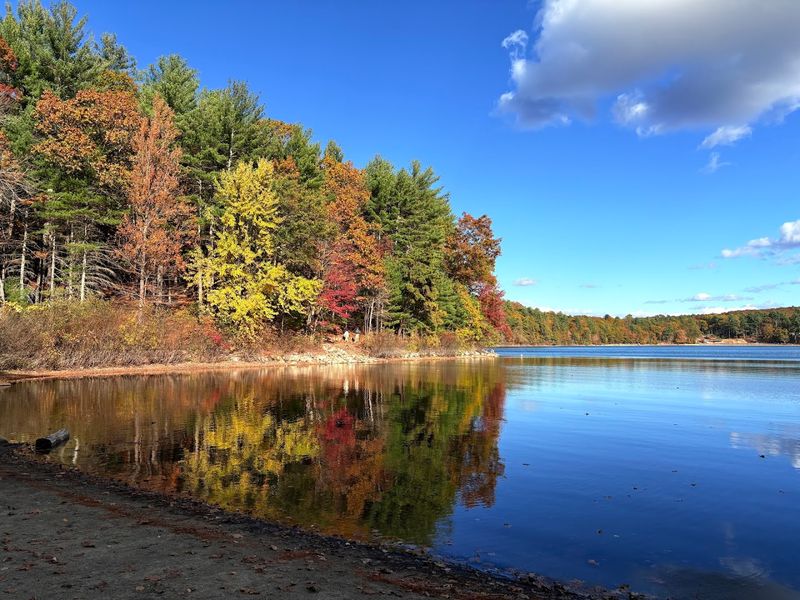
In fall, the foliage around the pond turns in shades of amber, rust, and gold, creating a scene that photographers return to year after year.
In winter, the trails stay open and the frozen pond takes on an entirely different character, stark and still in a way that feels almost meditative.
For those wanting a longer outing, additional trails extend into the surrounding Walden Woods, which covers approximately 2,680 acres of protected land.
The perimeter walk connects naturally to the cabin site and the visitor center, making it easy to combine history with exercise.
Most people finish the loop and immediately want to do it again, which is about the best endorsement a walking trail can receive.
Locals And Conservationists Are Fighting Hard To Keep Development Away
The story of Walden Pond’s preservation is not a passive one. It has required sustained effort, legal battles, fundraising campaigns, and the kind of civic determination that does not make headlines but absolutely makes a difference.
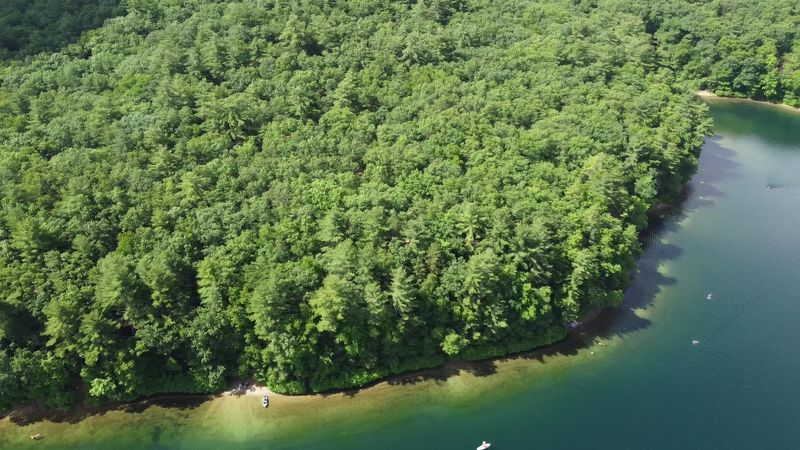
The pond and its surrounding 2,680 acres of Walden Woods are protected as a National Historic Landmark, but that designation alone does not make the land immune to pressure.
In 1990, musician Don Henley founded the Walden Woods Project, a non-profit organization dedicated to preventing commercial development from encroaching on the land surrounding the pond.
The organization has acquired significant parcels of land over the years, and today approximately 80 percent of Walden Woods is permanently protected.
The Walden Woods Project has also been officially designated as the Friends of Walden Pond by the Massachusetts Department of Conservation and Recreation.
Current threats remain real. A former landfill bordering 35 acres of the reservation could potentially face commercial redevelopment.
A proposed regional airport expansion would increase air traffic and noise directly over the pond. Climate change is altering the pond’s seasonal patterns.
None of these challenges have simple solutions, but the community’s record of engagement gives genuine reason for confidence that Walden Pond’s future will be defended with the same tenacity as its past.
Phosphorus And Algae Are The Invisible Enemies Of Clear Water
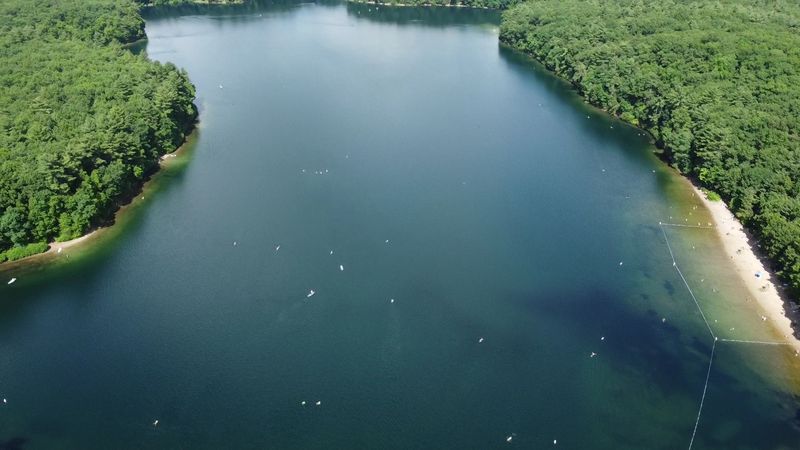
The clearest threat to Walden Pond’s famous water quality is not dramatic or visible. It is chemical and cumulative.
Phosphorus, a nutrient that feeds algae growth, enters the pond in several ways, and one of the most significant sources is actually the swimmers themselves.
Studies have estimated that swimmers’ urine may account for more than half of the phosphorus load entering Walden Pond each year.
When phosphorus levels rise, algae blooms follow. Those blooms cloud the water, reduce oxygen levels, and can produce toxins harmful to both wildlife and humans.
The pond has already experienced nuisance algal species and periodic beach closures as a result. High bacteria levels from stormwater runoff after heavy rain events have also triggered swimming advisories, sometimes closing the beach during the most popular weeks of summer.
Managing visitor numbers is one of the most effective tools park managers have for controlling phosphorus input.
Limiting daily swimming capacity, enforcing parking restrictions, and educating visitors about the pond’s fragility all contribute to keeping nutrient loads within manageable ranges.
It is an unusual situation where enjoying a place too enthusiastically can damage it, and it requires visitors to be conscious partners in the pond’s care rather than passive guests passing through for an afternoon.
Visiting In Every Season Reveals A Completely Different Place
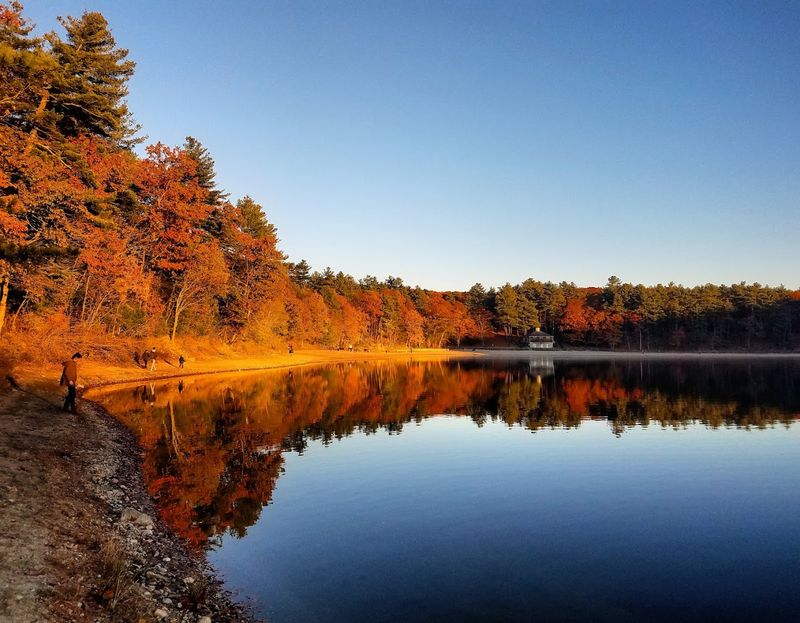
Most places described as beautiful in one season are quietly ordinary in another. Walden Pond is a genuine exception to that pattern.
Each season delivers a version of the pond that feels distinct enough to justify a separate visit, and regulars who have been coming for years often have strong opinions about which season is their personal favorite.
Summer brings swimmers, families, and the lively energy of a popular outdoor destination. The beach fills early, the water sparkles in the afternoon sun, and the trails are busy with people of all ages.
Autumn transforms the scene entirely. The foliage around the pond ignites in deep reds and warm oranges, and the reflections on the clear water create compositions that feel almost deliberately composed.
Crowds thin noticeably after Labor Day, making September and October particularly pleasant months to visit.
Winter visits have their own devoted following. The trails stay open, the parking lot is rarely full, and the frozen pond takes on a quiet grandeur that summer never quite delivers.
Spring brings a gradual awakening, with birdsong returning to the woods and the water warming slowly from its winter stillness. Coming back in different seasons is not repetitive.
It is more like reading the same place in four different languages, each one revealing something the others could not.
Getting There, Parking Realities, And What To Bring On Your First Visit
Planning a visit to Walden Pond requires a little practical preparation, particularly around parking.
The reservation at Concord, MA 01742 charges $8 per day for vehicles with Massachusetts license plates and $30 for out-of-state vehicles.
On hot summer days, the parking lot fills up and closes to new arrivals, sometimes before mid-morning, so arriving early is genuinely important rather than just politely suggested.
Visitors coming from Boston without a car can take the Wachusett Line commuter rail and disembark at Concord Station, from which the pond is roughly a 20 to 25 minute walk.
Some visitors choose to rent a bike share bike from the Concord Visitor Center, which makes for a pleasant 20-minute ride and sidesteps the parking situation entirely.
The visitor center at the reservation is well-maintained and worth a stop before hitting the trails.
A few practical notes worth knowing before you go: dogs are not allowed near the pond area, so leave pets at home or make alternative arrangements.
Ticks are present during warmer months, so wearing long socks and checking carefully afterward is a sensible habit. Bring water, sunscreen, and a small bag for any trash you generate.
The community takes cleanliness seriously here, and matching that ethic is the simplest way to be a good guest at one of Massachusetts’s most cherished places.