
This Tennessee Town Has Ancient History Waterfalls And A Music Festival Legacy
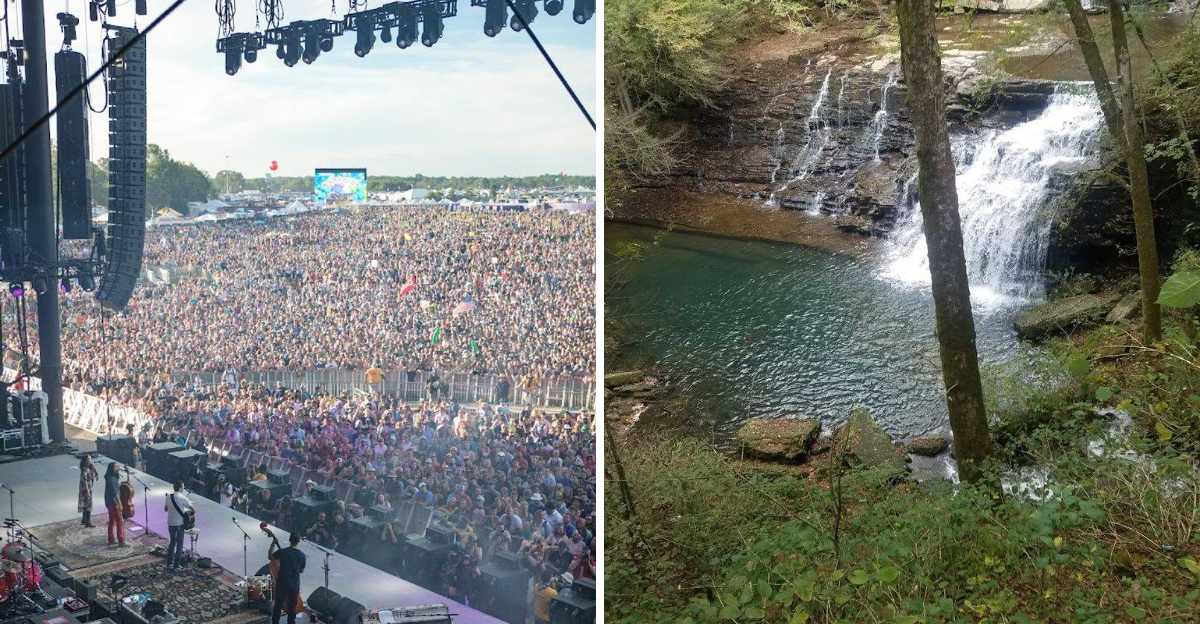
Tennessee has a town where ancient stories, rushing waterfalls, and festival energy all seem to share the same map.
Old earthworks point to people who shaped this land long before highways, stages, and summer crowds arrived. Nearby, water spills over rock ledges with the kind of force that makes everyone pause for a second. Then the music history kicks in.
Wide open fields once turned into a famous gathering place filled with campers, artists, late nights, and songs people still talk about years later. That mix gives the town a rhythm all its own.
History adds weight. Nature adds motion. Music adds the spark.
Anyone who likes a small town with character, outdoor beauty, and a story bigger than expected will find plenty to keep reading about here.
Old Stone Fort State Archaeological Park
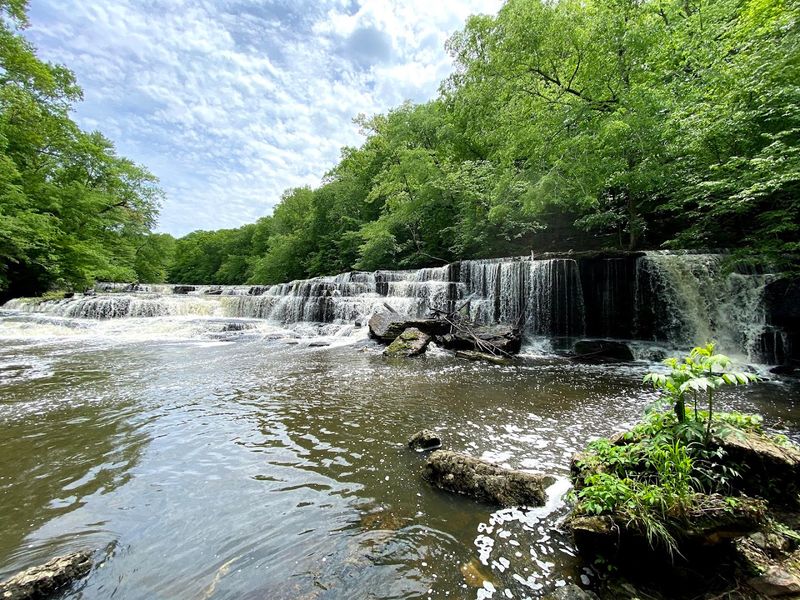
Few places in the American South carry the quiet authority of Old Stone Fort State Archaeological Park.
This 50-acre hilltop enclosure was constructed by Native Americans during the Middle Woodland period, roughly between 100 BCE and 500 CE.
That means people were shaping this landscape more than two thousand years ago.
The site was not a fort in the military sense. Ancient peoples built it as a sacred ceremonial gathering place, using the elevated ground above the confluence of the Duck and Little Duck Rivers to mark rituals and seasonal events.
Remarkably, the mounds and trails align with the summer solstice sunrise, suggesting a sophisticated understanding of astronomy.
Human occupation of the area dates back to at least 6000 BCE, making this one of the oldest continuously significant sites in Tennessee.
The on-site museum displays prehistoric artifacts, tools, and exhibits that bring the daily lives of these early communities into focus.
Hiking trails wind through the enclosure, passing waterfalls and river views. For anyone serious about American prehistory, this park is not optional. It belongs at the top of the itinerary.
The Middle Woodland Period And What It Left Behind
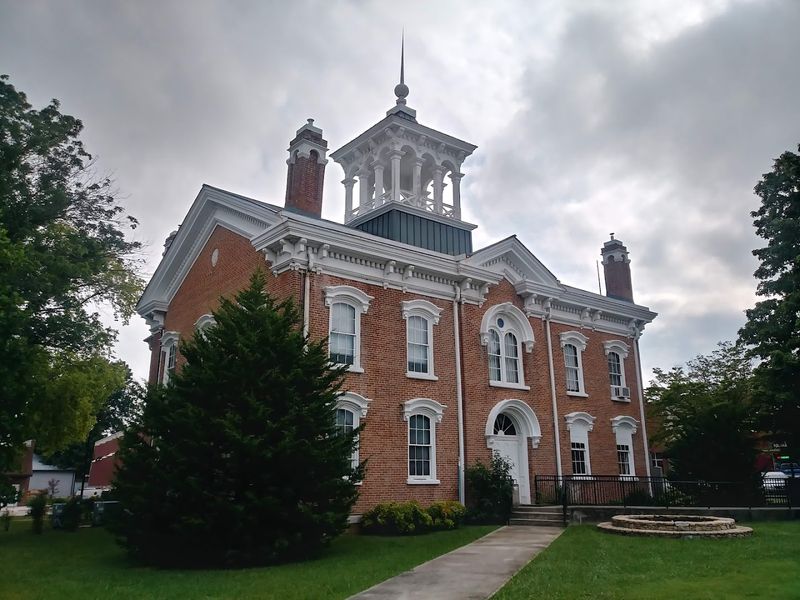
Most visitors to Manchester know about the park, but fewer pause to consider what the Middle Woodland period actually means.
This was a chapter in North American prehistory spanning roughly 100 BCE to 500 CE.
During this time, indigenous communities across the eastern woodlands developed complex ceremonial practices, long-distance trade networks, and sophisticated earthwork construction.
At Manchester, the evidence is literally underfoot. The builders of the Old Stone Fort enclosure moved enormous quantities of earth and stone without metal tools or wheeled transport.
They aligned their work with celestial patterns. They returned to this site generation after generation for ceremonies that bound communities together across seasons and years.
The museum inside the park does an honest job of translating this into something tangible. Pottery fragments, stone tools, and interpretive displays walk visitors through daily life, spiritual practice, and craftsmanship.
The exhibits avoid oversimplification, which is appreciated. History this old deserves careful handling.
The Trail of Tears National Historic Trail also passes through the Manchester area, adding another sobering layer to the region’s indigenous history.
Together, these threads form a picture of a landscape that has witnessed both remarkable human achievement and profound human suffering.
Big Falls And The Waterfall Trails Inside The Park
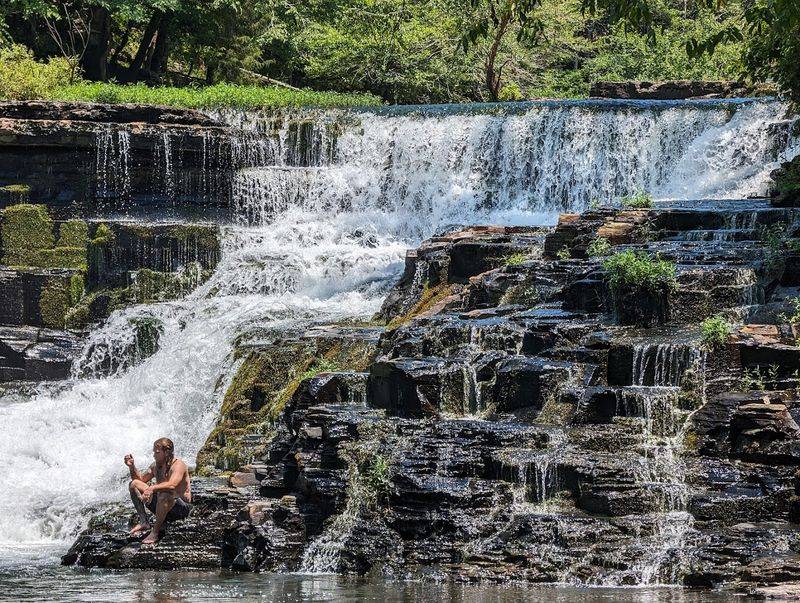
Big Falls is the kind of waterfall that stops a conversation. The water drops with genuine force over a wide ledge of layered rock, sending a fine mist across the trail below.
It sits inside Old Stone Fort State Archaeological Park, which means you can walk from an ancient ceremonial mound to a dramatic waterfall in under twenty minutes.
The park contains several distinct falls. Little Falls is actually a series of smaller cascades that tumble through a narrow gorge, each one quieter and more intimate than the last.
Blue Hole Falls earns its name from the deep pool it feeds, a spot that glows an unusual shade of blue-green in the right light. Step Falls moves differently from the others, spreading wide across a broad shelf of rock in a gentle, layered descent.
The hiking trails connecting these falls are well-maintained and clearly marked, making them accessible for most fitness levels. The loop that links the archaeological features with the waterfall trail is one of the more satisfying short hikes in middle Tennessee.
You leave having seen both ancient history and natural beauty, which is a rare combination for a single afternoon. Bring water and comfortable shoes.
Short Springs State Natural Area And Its Three Waterfalls
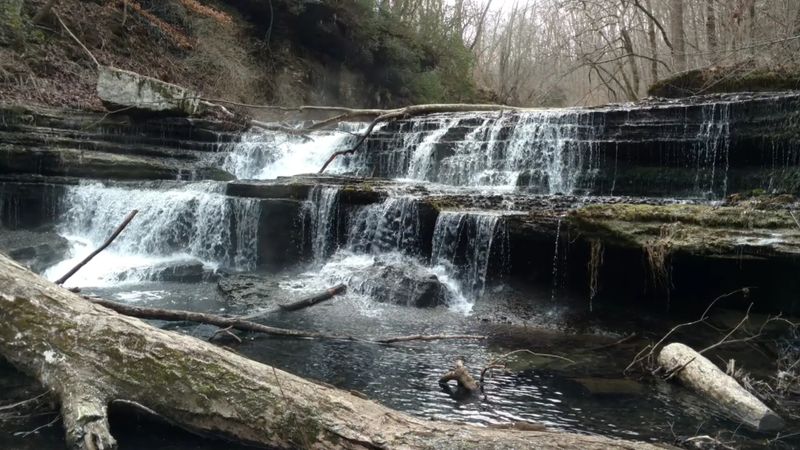
About three miles from downtown Manchester, Short Springs State Natural Area offers a 3.2-mile loop trail that passes three distinct waterfalls in a single outing.
Machine Falls, Busby Falls, and Adams Falls each have their own character, and the trail connecting them moves through a dense hardwood forest that stays cool even in July.
Machine Falls is the tallest of the three and the one most people photograph. The water funnels through a narrow channel before dropping cleanly into a wide pool below.
Busby Falls is broader and more theatrical, spreading across a curved rock face in multiple streams. Adams Falls sits deeper in the loop and rewards the hikers who stay on trail rather than turning back early.
The natural area is managed by the Tennessee Department of Environment and Conservation and remains free to visit. Parking is available at the trailhead on Morrison Mill Road.
Trail conditions can vary after heavy rain, and sections near the falls tend to be slippery, so traction-friendly footwear is worth the effort. The loop is suitable for older children and adults with moderate fitness.
Short Springs does not receive the same crowds as the state park, which makes it a quieter and often more personal experience.
Rutledge Falls And The Swimming Hole Nearby
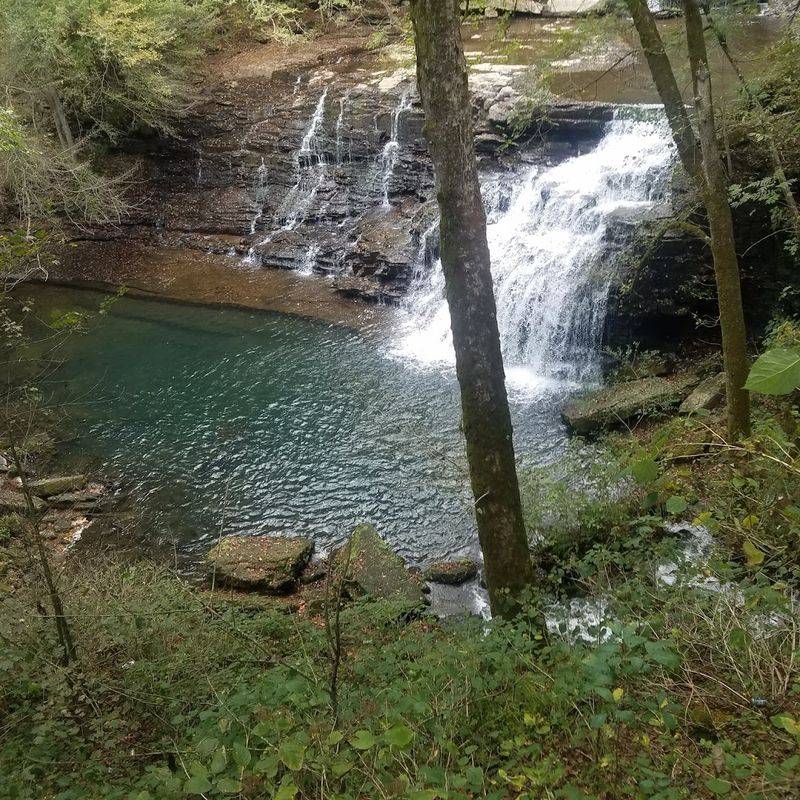
A short drive from Manchester toward Tullahoma brings you to Rutledge Falls, a waterfall that locals have been visiting for generations.
The falls drop into a broad, shallow pool that has served as a natural swimming hole for as long as anyone can remember. On a hot afternoon in June, the appeal is obvious.
The site is privately owned but has historically been open to respectful visitors. That arrangement can change, so checking current access conditions before driving out is a sensible habit.
The falls themselves are modest in height but generous in width, and the surrounding landscape of flat rocks and overhanging trees makes the setting genuinely pleasant for an afternoon outdoors.
Rutledge Falls also draws photographers, particularly in autumn when the foliage around the pool turns amber and red. The water stays relatively clear year-round, and the falls maintain a consistent flow even in drier months.
The area around Tullahoma and Manchester is quietly rich in natural features that most travelers overlook in favor of larger destinations.
Rutledge Falls is a useful reminder that the best swimming holes in Tennessee rarely appear on national travel lists. They get passed down through local knowledge instead, which is half the charm.
Bonnaroo Music And Arts Festival On The Farm

In 2002, a 700-acre farm outside Manchester, Tennessee, became the site of one of the most ambitious music festivals in American history.
Bonnaroo was founded with a straightforward idea: gather a large, diverse crowd in an open field and fill four days with music across every imaginable genre.
What happened next surprised almost everyone involved.
The festival grew into a genuine cultural institution. Over 150 performances take place across multiple stages during a single weekend each June.
The lineup has historically crossed genres without apology, placing jazz next to hip-hop, folk next to electronic, and classic rock next to contemporary indie.
The crowd, known affectionately as Bonnaroovians, developed their own traditions, vocabulary, and sense of shared identity over the years.
The Farm, as the venue is universally called, sits just off Interstate 24 near Manchester. During festival week, the population of the temporary city it creates rivals that of Nashville’s urban neighborhoods.
Sustainability programming, comedy stages, and film screenings round out the schedule beyond the music itself. For many attendees, Bonnaroo is less a concert and more an annual ritual.
Manchester’s identity has been shaped by this festival in ways that extend well beyond tourism revenue and ticket sales.
The Good Friends Music Fest And Local Arts Community

Bonnaroo draws the international headlines, but Manchester also hosts a homegrown festival that reflects the city’s quieter creative side. The Good Friends Music Fest launched in 2018 with a different set of priorities.
Free admission, original music, and a focus on community connection rather than spectacle define its character from the start.
The festival takes place at the Rotary Park Amphitheater in Manchester and uses public spaces throughout the city to stage performances.
Local, regional, and national artists share the lineup, which means an afternoon at Good Friends can move from a Manchester singer-songwriter to a touring band from Nashville without losing the neighborhood feel that makes it special.
The event grew out of a genuine desire to give Manchester residents a festival of their own, one that did not require a ticket purchase or a camping setup. Families bring lawn chairs.
Kids run between the food vendors and the stage. The vibe is relaxed without being unserious about the music.
For visitors who arrive in Manchester outside of Bonnaroo season, Good Friends offers a window into the city’s actual creative community rather than the version of it that exists only during the festival’s four-day run.
It is a meaningful distinction worth experiencing firsthand.
Manchester As A Base For South Cumberland Waterfall Country
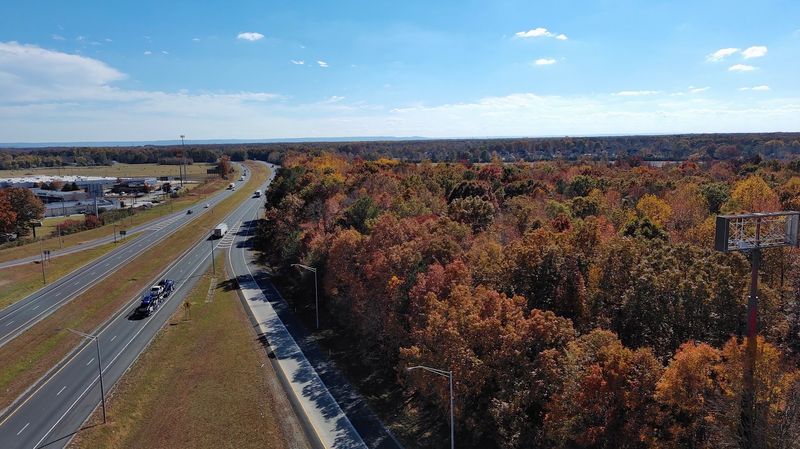
Manchester’s position in Coffee County places it within reasonable driving distance of some of Tennessee’s most celebrated waterfall destinations.
South Cumberland State Park and Savage Gulf State Natural Area contain Greeter Falls, Foster Falls, and Laurel Falls, each one worth a full morning of hiking on its own terms.
Greeter Falls is a two-tiered cascade that drops into a sandstone canyon. The lower falls require a short scramble to reach, but the payoff is a swimming hole surrounded by high bluffs that creates a sense of real seclusion.
Foster Falls drops dramatically into a deep plunge pool and is one of the most photographed waterfalls in the state. Laurel Falls is smaller but set within a particularly beautiful stretch of gorge trail.
Using Manchester as a home base for exploring this waterfall corridor makes practical sense.
The city sits at a central point between the park entrances and offers lodging, restaurants, and fuel that the more remote trailheads do not.
Coffee County’s combination of in-town history, accessible waterfalls, and proximity to South Cumberland creates an itinerary that can occupy three to four days without repetition.
That kind of travel density, in a city of just over twelve thousand people, is genuinely impressive.