
The Illinois Hand Painted Barn That Has Become A Midwest Photography Favorite
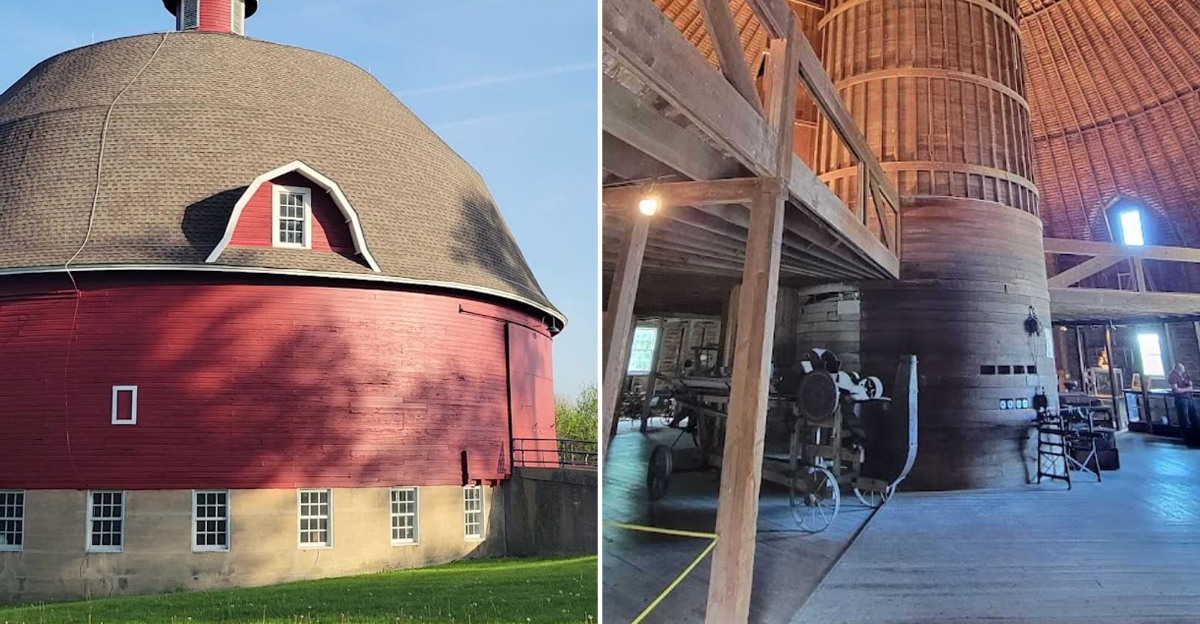
Paint applied by hand to the side of a barn produces something that digital filters spend years trying to approximate and never quite reach. This Illinois landmark settled that argument without knowing it was ever happening.
Photographers who discover it for the first time tend to stay considerably longer than the shot requires. The barn keeps offering new angles, new light, and new reasons to lower the camera and simply look for a moment.
Morning visits produce one version of the scene entirely. Late afternoon produces another, and the barn participates in both without any awareness of the audience it has accumulated over the years.
A photography destination earning regional recognition without any formal promotion behind it got there the honest way. Image by image, shared by people who felt the location was too visually compelling to keep entirely to themselves.
History And Artistic Influence Of Painted Barns
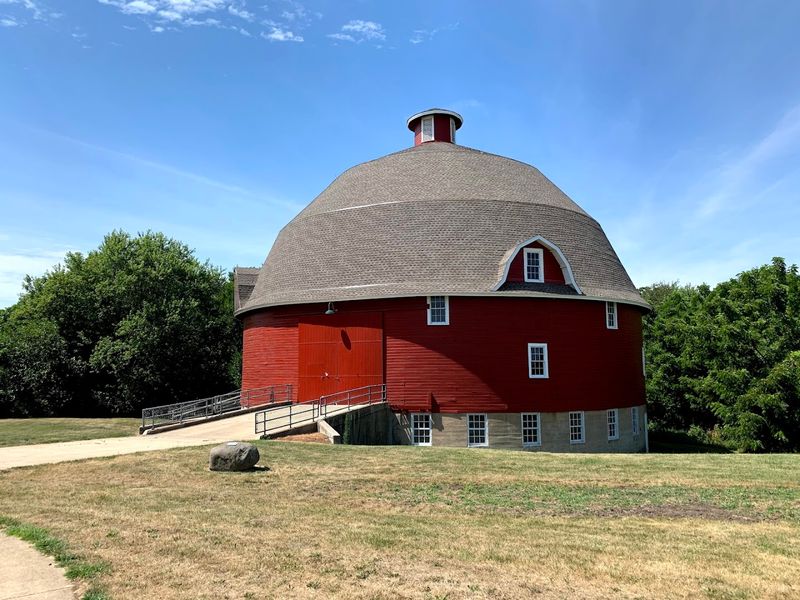
A barn like this carries over a century of history in every board. Built in 1910 for Dr. Laurence Ryan, a Chicago brain surgeon with roots in Kewanee, this barn was no ordinary farm project.
Dr. Ryan bought 320 acres in 1908 to raise purebred Black Angus cattle imported from Scotland.
He hired German immigrant builder Mr. Feurst after other carpenters refused the job. Building a perfectly round structure was considered too complex.
Feurst soaked 16-foot white pine boards to make them pliable, then bent them into a seamless circular form.
The result was a beamless, 360-degree structure that still stands strong today. It is recognized as the largest round barn of its style in Illinois.
Some historians believe it may even be the largest in the entire country.
Painted barns across the Midwest carry artistic traditions dating back generations. Farmers used bold colors and patterns to express regional pride.
Ryan’s barn, with its striking round silhouette, became an accidental canvas that photographers and artists have celebrated ever since.
It was added to the National Register of Historic Places on December 31, 1974. That made it the first round barn in Illinois to receive that honor.
You can find it at N 1200th Ave, Kewanee, IL 61443, inside Johnson-Sauk Trail State Park.
Techniques Used In Hand Painting Surfaces
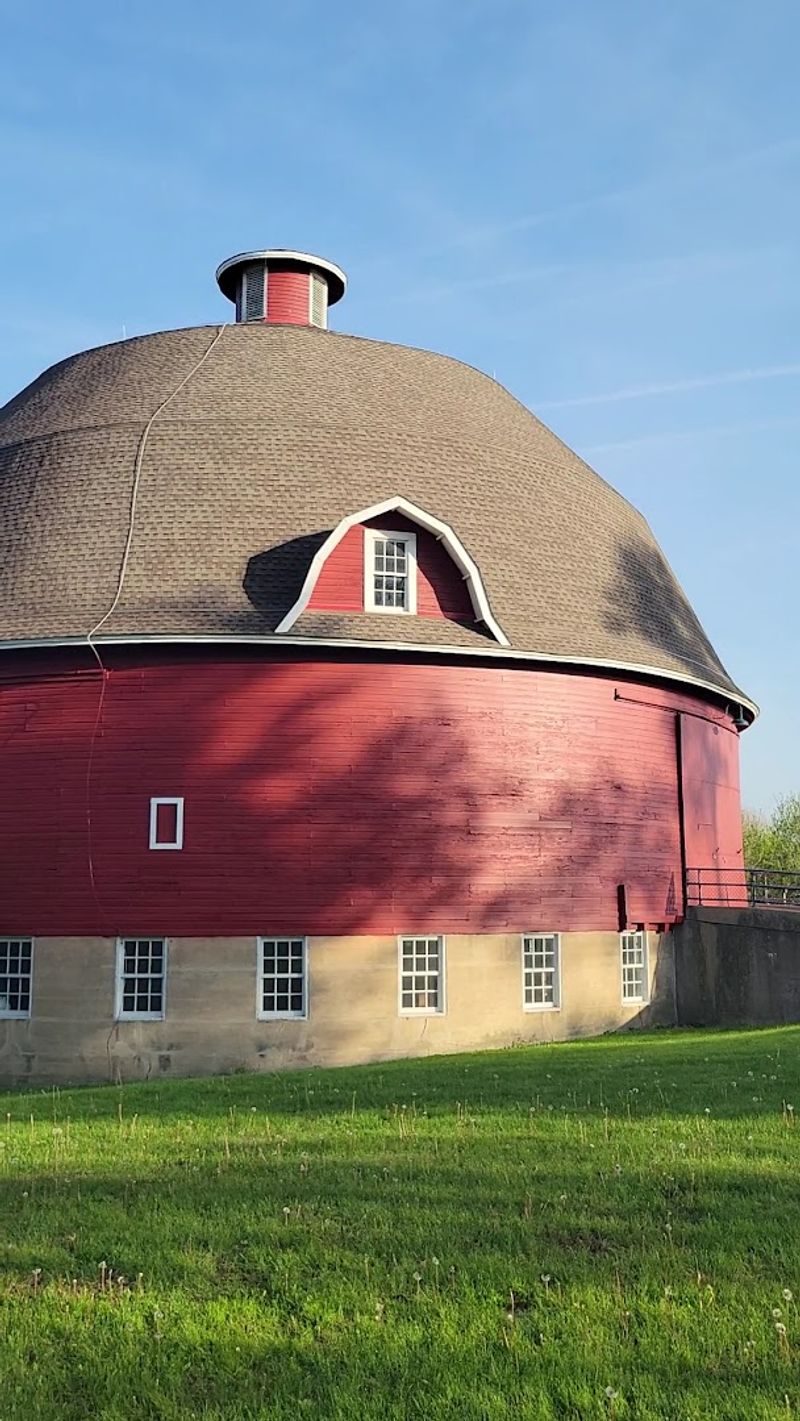
Hand painting a barn is not like rolling paint on a bedroom wall. The surfaces are rough, wide, and exposed to every kind of weather Illinois can throw at them.
Painters who work on historic barns use specific brushes, oil-based paints, and careful prep work to get lasting results.
The curved walls of Ryan’s Round Barn create a unique challenge. Flat brushes struggle to follow the arc of the boards.
Experienced painters often use flexible bristle brushes that can bend slightly with the surface curve.
Priming is a big deal on old barn wood. Without a solid primer layer, paint peels and cracks within one or two seasons.
Many restorers use a penetrating oil primer before applying any top coat.
Color choices matter too. The deep red commonly seen on Midwest barns comes from a historical mix of iron oxide, linseed oil, and turpentine.
That combination was cheap, durable, and happened to look great against green fields.
For decorative lettering or patterns, painters often sketch designs in chalk first. Chalk wipes off cleanly if the layout needs adjusting.
Once the design is confirmed, they trace over it carefully with a thin liner brush.
Volunteers and preservationists at Ryan’s barn work hard to maintain its painted exterior. Their effort keeps the structure looking sharp and photo-ready for every visitor who drives out to see it.
Seasonal Changes And Their Impact On Photography
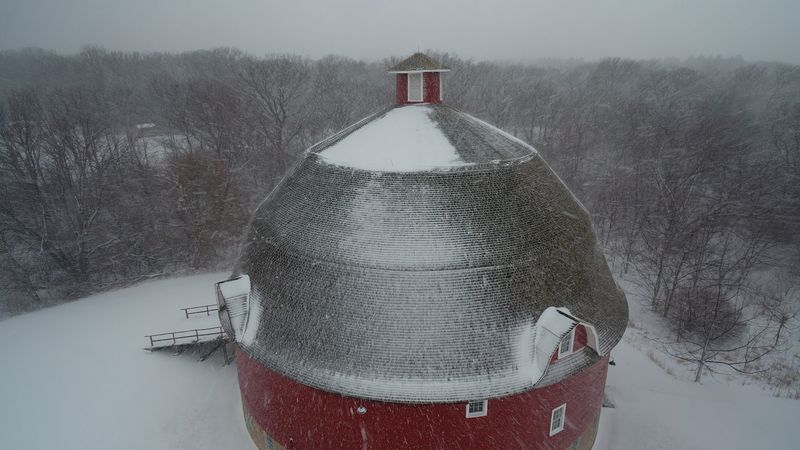
Every season turns Ryan’s Round Barn into a completely different photograph. Spring brings fresh green fields and wildflowers that frame the barn in soft, natural color.
The contrast between new growth and the barn’s aged wood is genuinely striking.
Summer light in Illinois is bold and direct. Midday shots can look flat, but early morning or late afternoon light wraps around the barn’s curved walls beautifully.
Shadows from the dormers and cupola create interesting geometry across the surface.
Fall is when photographers really show up in numbers. The trees inside Johnson-Sauk Trail State Park turn brilliant shades of orange, red, and yellow.
The round barn sitting among that color explosion is the kind of shot that gets shared constantly online.
Winter offers a quieter, more dramatic mood. A light snowfall covering the surrounding fields makes the barn look almost painted itself.
Low winter sun creates long shadows that add real depth to any composition.
The park changes character with every month. Wildlife moves differently across seasons, and the light angle shifts noticeably from summer to winter.
That variety keeps photographers returning multiple times a year.
No single visit captures everything this location offers. Planning multiple trips across different seasons gives you a full picture of what Ryan’s barn can look like.
Each season is its own story, and the barn stays the same steady subject at the center of all of them.
Tips For Finding The Perfect Lighting Conditions
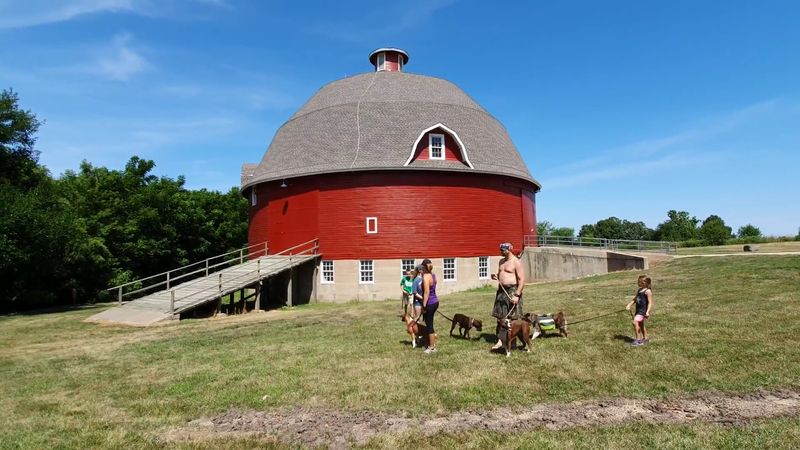
Lighting can make or break a barn photograph. Ryan’s Round Barn faces open land, which means the light hits it differently depending on the time of day.
Golden hour, the period just after sunrise and just before sunset, gives the barn walls a warm, almost glowing tone.
Early morning light comes from the east and hits the eastern face of the barn directly. That side shows off the wood texture and paint detail really well.
Afternoon light swings around to the west and creates a completely different mood on the opposite wall.
Overcast days are underrated for barn photography. Clouds act like a giant softbox, eliminating harsh shadows.
The barn’s color stays rich and even without blown-out highlights from direct sun.
Midday sun in summer is the toughest condition to work with. Shadows go straight down, and the light feels flat.
If you are stuck shooting at noon, try shooting upward at the cupola against a blue sky for a dramatic angle.
Check a weather app before heading out. Partly cloudy days with moving clouds can create dramatic light shifts in minutes.
Being patient and waiting for a cloud to pass or arrive can completely change your shot.
Arrive at least 30 minutes before your target light window. Set up your composition early.
When the light hits the way you want it, you will be ready to shoot instead of scrambling to find your angle.
The Role Of Barns In Midwest Rural Culture
Barns are not just farm buildings in the Midwest. They are landmarks, community gathering points, and living records of how families worked the land.
Ryan’s Round Barn represents a specific chapter of Illinois agricultural history that many people find genuinely fascinating.
Dr. Laurence Ryan built his barn to house 50 purebred Black Angus cattle. He imported those cattle directly from Scotland.
That kind of investment showed serious dedication to quality farming, even from a man whose main career was medicine in Chicago.
Round barns were popular in the late 1800s and early 1900s. Farmers believed the circular design was more efficient for feeding cattle.
The layout allowed one person to move around the interior and reach every stall without backtracking.
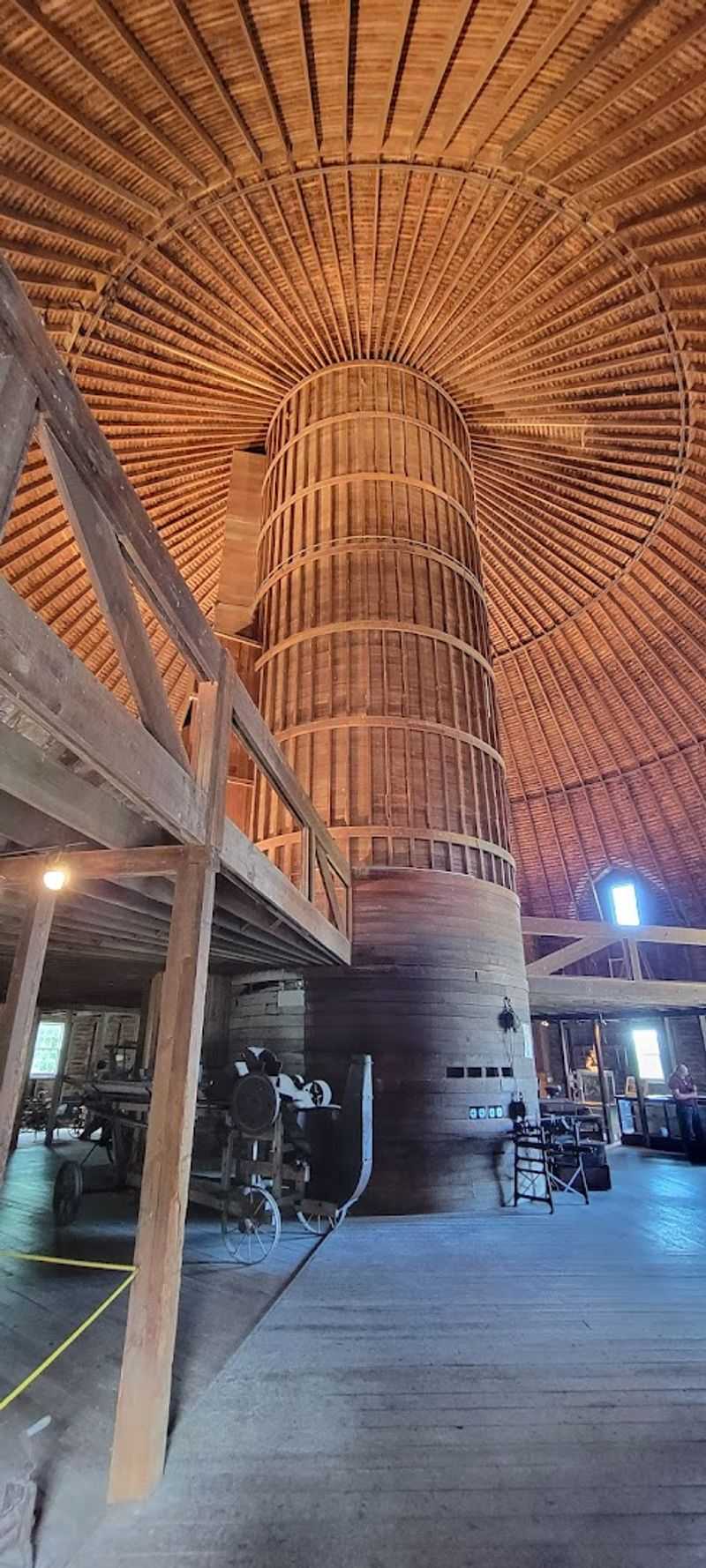
The interior of Ryan’s barn has three and a half levels. A central 16-foot silo stands 80 feet tall and could hold 400 tons of corn.
Steel tracks moved hay and feed throughout the building automatically.
After Dr. Ryan passed away, the barn changed hands several times. The state of Illinois acquired it in 1967.
The Friends of Johnson Park Foundation was formed in 1984 to keep it preserved and open for the public.
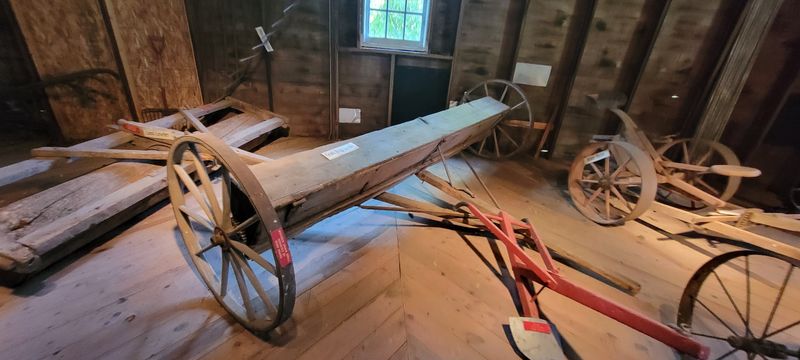
Today, the barn serves as a museum displaying antique farm machinery. Visiting it connects you directly to the agricultural roots of central Illinois.
It is not a recreation of history. It is the real thing, still standing after more than 110 years.
Popular Camera Equipment For Photography
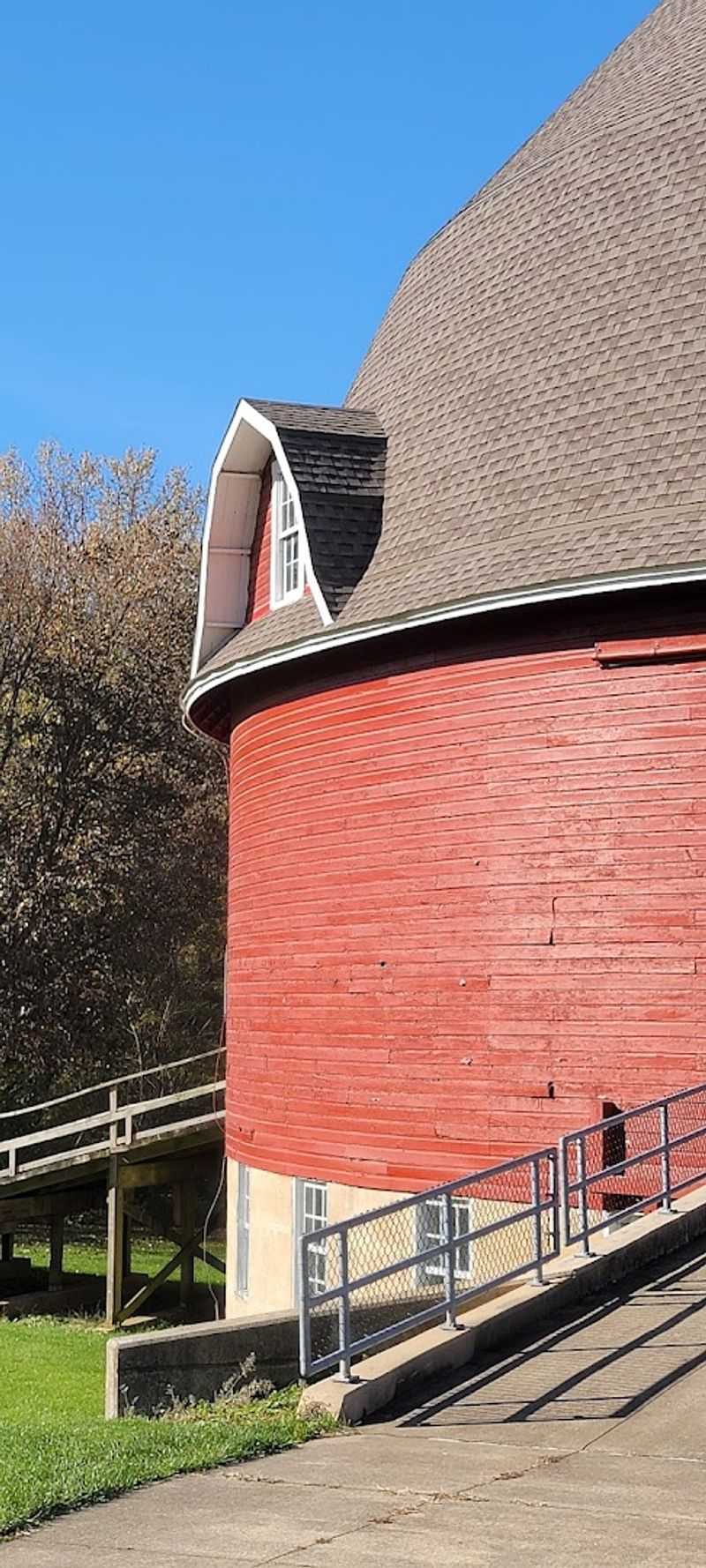
Photographing a structure as unique as Ryan’s Round Barn rewards photographers who bring the right gear. A wide-angle lens is probably the most important tool.
The barn is large, and getting the full circular shape into a single frame requires stepping back and going wide.
A focal length between 16mm and 24mm works well for full structure shots. Anything tighter and you will struggle to fit the entire barn in frame.
Going wider than 16mm can distort the edges in a way that looks unnatural.
A tripod is worth bringing, especially for early morning or late evening shooting. Low light requires slower shutter speeds.
Handheld shots in those conditions often come out blurry, and a tripod solves that problem completely.
A polarizing filter is a smart addition to your kit. It cuts glare off the barn’s painted surface and deepens the blue of the sky behind it.
The difference in color saturation is noticeable right away when you look through the viewfinder.
Mirrorless cameras have become popular choices for outdoor location work. They are lighter than traditional DSLRs and still deliver excellent image quality.
Battery life can be shorter, though, so bring a spare.
Smartphone photographers are not left out here. Modern phone cameras handle wide shots surprisingly well.
Use the portrait or landscape mode and avoid digital zoom to keep image quality sharp when shooting the barn from a distance.
Incorporating Landscape Elements Into Shots
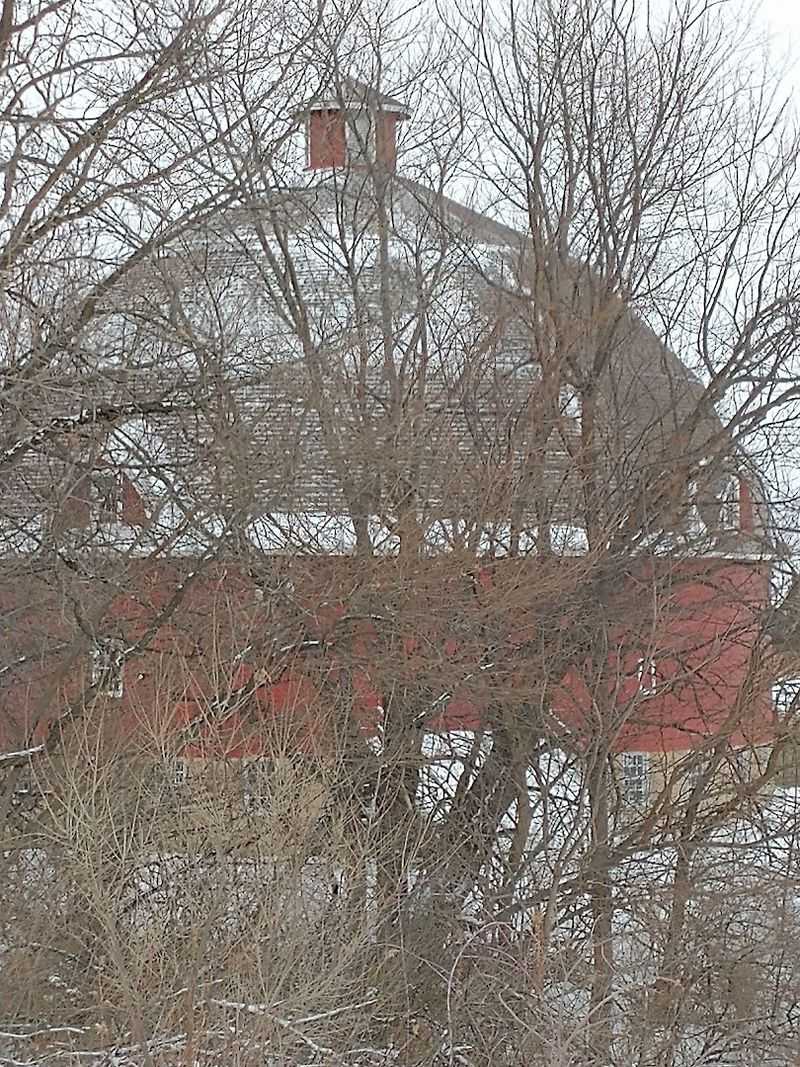
Ryan’s barn does not exist in a vacuum. It sits inside Johnson-Sauk Trail State Park, about six miles north of Kewanee.
The park itself is full of compositional material, including trees, a lake, open fields, and prairie vegetation.
Using foreground elements adds depth to barn photographs. Prairie grasses or wildflowers in the immediate foreground create a layered composition.
The barn becomes the mid-ground subject, and the sky fills the upper third naturally.
The lake inside the park offers reflection shots on calm days. Walking around the property reveals angles where water and barn appear in the same frame.
That combination is not something most barn photographers expect to find.
Trees frame the barn from several positions around the park. In fall, especially, positioning the barn between two trees with colorful leaves creates a natural arch effect.
That framing draws the eye directly to the barn.
Wildlife in the park adds life to otherwise static landscape shots. Birds perched on nearby fence posts or deer moving through the background can turn a good photo into a great one.
Patience helps here more than any camera setting.
Do not ignore the sky. Illinois skies can be dramatic, especially before a storm or right after one passes.
Big clouds rolling over a flat landscape with the round barn sitting below them create a composition that feels genuinely cinematic. The barn earns its place in every frame.
Post Processing Ideas To Enhance Photos
Getting a great shot at Ryan’s barn is only half the job. Post-processing takes a solid image and pushes it to the next level.
Most photographers use Lightroom, Capture One, or even free tools like Snapseed to edit their barn shots.
Start with exposure and contrast adjustments. Barn wood has a wide tonal range from deep shadows to bright highlights.
Pulling down highlights and lifting shadows reveals detail in both ends of the image at the same time.
Color grading makes a huge difference in painted barn photos. Warming up the orange and red tones in the barn walls adds richness without making the image look fake.
A slight green shift in the grass tones completes the earthy Midwest feel.
Sharpening the texture of the barn boards is satisfying work. Use a masking tool to apply sharpening only to the barn surface.
That way, the sky and grass stay smooth while the wood grain pops with detail.
Sky replacement tools work well for flat, gray sky days when the barn itself looks great but the background is boring. A dramatic cloud layer or a deep blue sky can completely transform the mood of the image.
Black and white conversions are worth experimenting with, too. The round shape and vertical board lines of Ryan’s barn translate beautifully into monochrome.
High-contrast black-and-white editing gives the barn a timeless, almost architectural quality that color sometimes cannot match.