
9 Forgotten New York Resort Towns That Are Quietly Beautiful Again
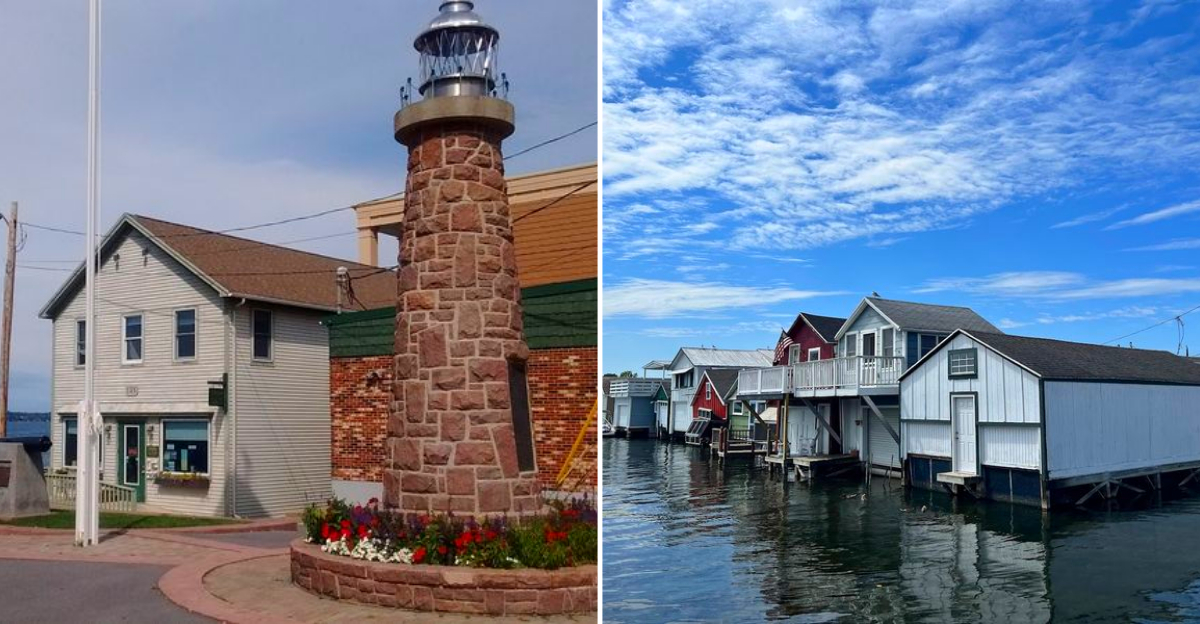
New York’s old resort towns have a strange kind of patience.
They remember the years when steamboats, rail lines, grand hotels, mineral springs, mountain air, and lakefront verandas pulled in presidents, artists, writers, and families looking for an elegant escape.
Then travel habits changed. Highways shifted attention elsewhere.
Some hotels closed, crowds thinned, and the names that once filled society pages became quieter on the map. But quiet did not mean gone.
In many of these places, the beauty stayed behind: walkable main streets, historic architecture, mountain views, old inns, waterfront paths, and a slower rhythm that feels newly appealing.
Now visitors are rediscovering them without the old glamour feeling forced.
These nine New York resort towns prove a faded reputation can become part of the charm, especially when history, scenery, and small-town calm start working together again.
1. Sharon Springs
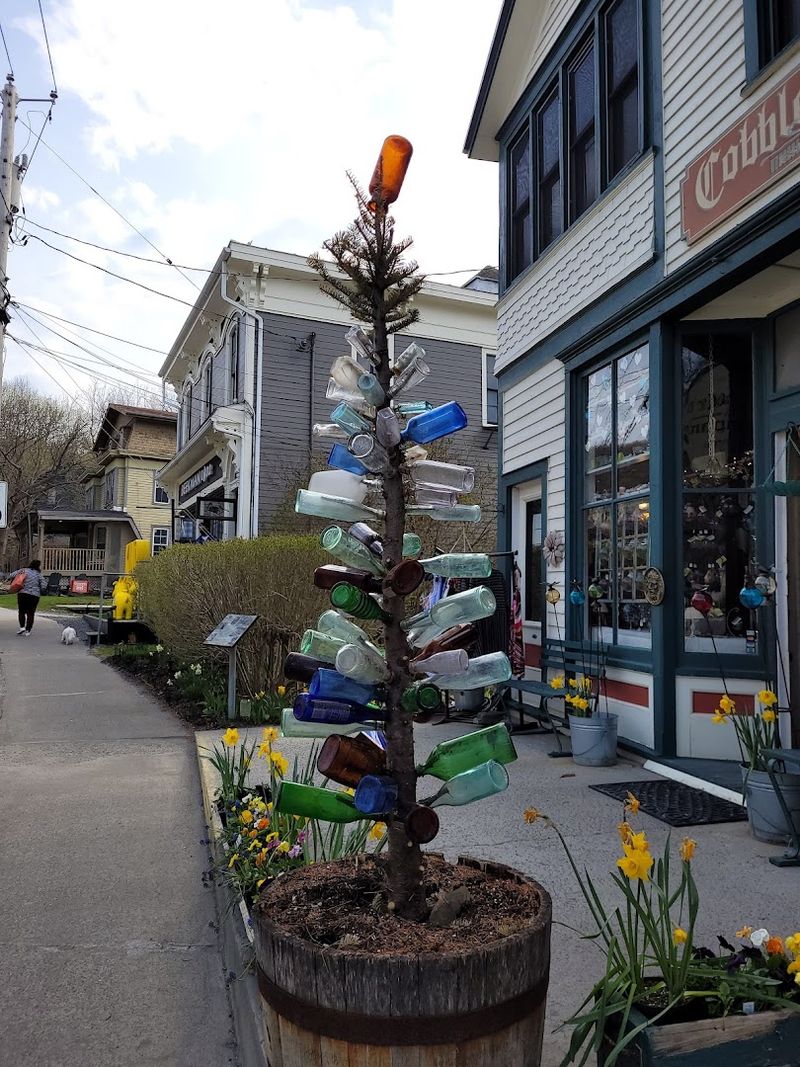
Oscar Wilde once visited Sharon Springs, and honestly, that alone earns it a permanent spot on any must-see list. Back in the 19th century, this small Schoharie County village was the mineral spa capital of the Eastern United States.
The Vanderbilts came here. Society came here.
Everyone came here.
Then the crowds left, and Sharon Springs got very, very quiet. For decades, grand Victorian buildings sat empty while the rest of the world moved on.
But here is the good news: artists and entrepreneurs started noticing how cheap and beautiful the real estate was, and the revival began.
Today, Main Street has boutiques, seasonal restaurants, and restored hotels breathing new life into old bones. The American Hotel on Main Street, Sharon Springs, NY 13459, is one of the most charming places to stay in the entire region.
The mineral springs that made this town famous are still part of its identity. Sharon Springs is proof that a town with good bones never truly goes away.
Schoharie County surrounding Sharon Springs offers genuinely beautiful driving country that makes the approach feel like part of the destination.
The rolling farmland and old stone walls lining the back roads into the village set a pace before you even arrive that the town itself then sustains effortlessly through the entire visit.
2. Richfield Springs
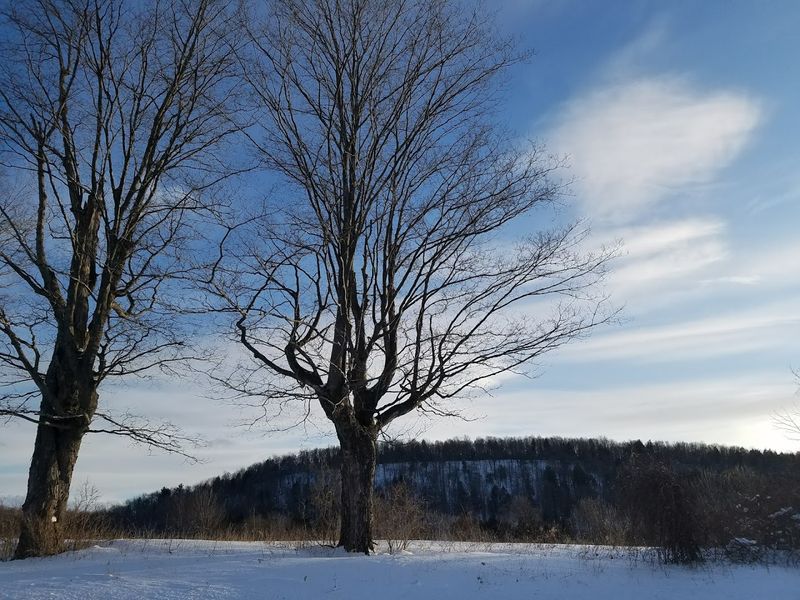
Richfield Springs does not shout. It barely even whispers.
Sitting quietly in Otsego County, this former 19th-century mineral springs resort town never fully bounced back from the era when spas fell out of fashion, and somehow that restraint made it more beautiful.
Canadarago Lake provides a stunning backdrop that most resort towns would charge a premium to access. Grand old homes line the streets, some fully restored, others mid-rescue, all of them telling a story worth reading.
The architecture here is extraordinary, and the price tags are still refreshingly reasonable compared to trendier destinations.
The vibe is quiet in the best possible way. You are not going to find crowds or overpriced brunch spots.
You will find genuine charm, serious natural beauty, and a town that rewards slow exploration. The Village of Richfield Springs sits at the intersection of NY-20 and NY-28, Richfield Springs, NY 13439.
A few dedicated locals and newcomers are leading a thoughtful restoration effort. If you like discovering places before everyone else does, consider this your personal tip.
Canadarago Lake sitting at the edge of town is one of the more underappreciated bodies of water in the entire Finger Lakes adjacent region, offering fishing, quiet shoreline access, and the kind of reflective stillness that overbuilt lakefront destinations have long since traded away.
Otsego County rewards patient exploration, and Richfield Springs is its quietest and most rewarding discovery.
3. Ballston Spa

Saratoga Springs gets all the credit, but Ballston Spa was first. Long before Saratoga became synonymous with horse racing and high society, Ballston Spa in Saratoga County was the mineral springs destination drawing visitors from across the young United States.
Then Saratoga essentially borrowed its entire concept and ran with it, leaving Ballston Spa in the background.
That backstory gives Ballston Spa a wonderfully underdog energy. The architecture left behind from its resort heyday is genuinely impressive.
Federal and Greek Revival buildings line the streets, giving the village a stately, composed feeling that feels earned rather than manufactured.
Lately, people are starting to pay attention again. The village sits right off I-87, making it accessible without feeling overrun.
Milton Avenue in the heart of Ballston Spa, NY 12020 is the place to start any exploration. The National Bottle Museum is here too, which is a genuinely fascinating stop that most visitors overlook completely.
Ballston Spa is the kind of place that rewards curiosity. It never needed to compete with Saratoga.
It just needed people to actually show up.
The National Bottle Museum deserves more than a passing mention.
The collection traces the history of the American glass bottle industry through thousands of pieces, and the building housing it fits naturally into the Federal streetscape surrounding it.
For anyone who thinks they are not interested in bottle history, this museum has a reliable track record of changing that opinion within fifteen minutes.
4. Catskill
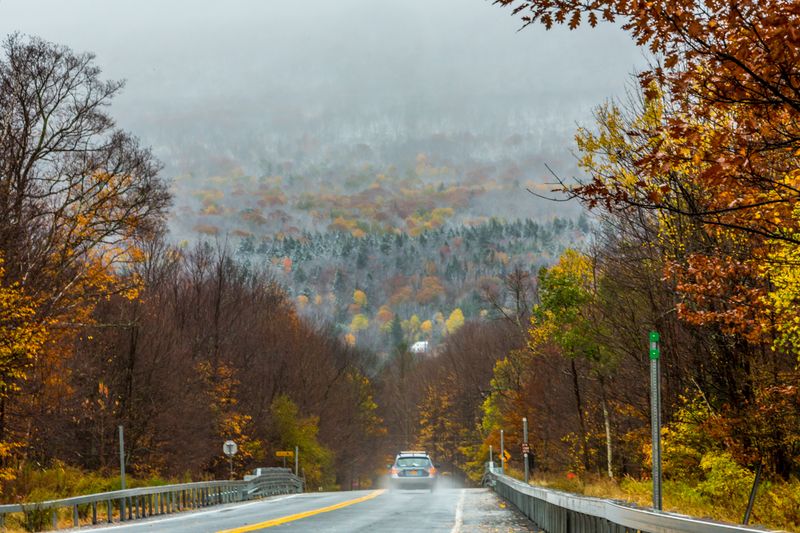
Thomas Cole, the founding father of the Hudson River School of painting, made his home in Catskill, and the landscape here clearly explains why. Greene County’s Catskill village was once the literal front door to the entire Catskill Mountain resort era.
Steamboats dropped visitors here before they headed into the mountains for the summer.
For a long stretch of decades, Catskill was overlooked and underestimated. Then something interesting happened.
Artists who could no longer afford Hudson, just a few miles south, started moving in. Galleries opened.
Farm-to-table restaurants followed. The bones of a great small town started showing again.
Thomas Cole’s actual home and studio, the Thomas Cole National Historic Site at 218 Spring Street, Catskill, NY 12414, is fully restored and open to visitors. The Catskill waterfront along the Hudson River is one of the most underrated scenic spots in the entire state.
New York has plenty of art towns, but Catskill has authentic historical weight behind its creative revival. The transformation happening here feels real and sustainable rather than trendy and temporary.
The Thomas Cole National Historic Site runs thoughtful programming throughout the year that connects the painter’s original landscape vision to the scenery still visible from his property today.
Standing on the grounds and looking toward the same Catskill Mountain views that inspired the Hudson River School of painting is one of those experiences that lands differently than a museum exhibit and stays with you considerably longer.
5. Alexandria Bay
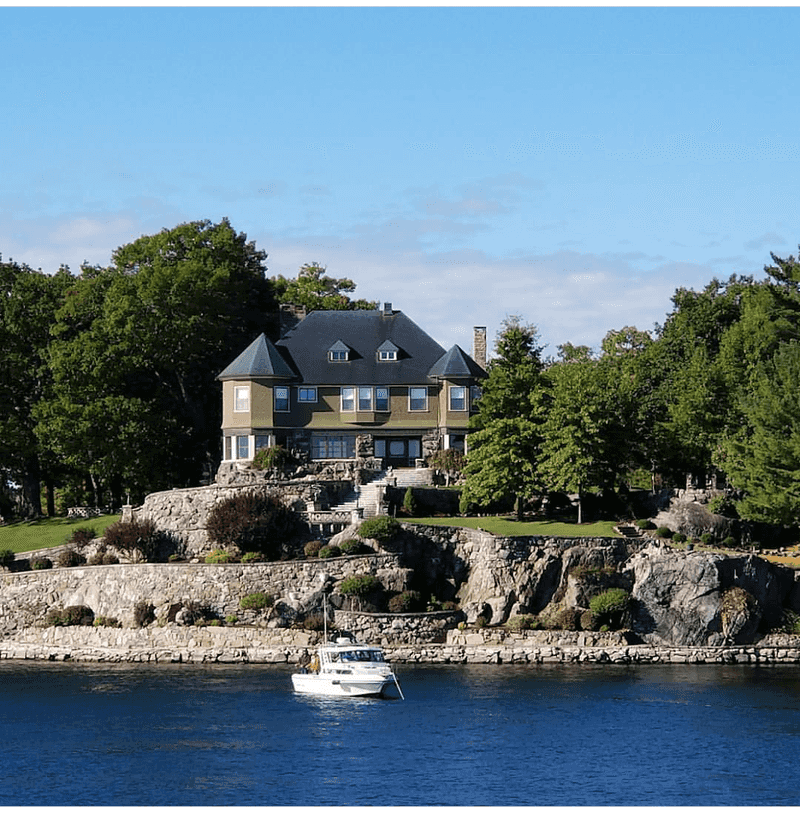
Boldt Castle is one of the most dramatic structures in the entire northeastern United States, and it sits right here in Alexandria Bay.
George Boldt, the owner of the Waldorf Astoria Hotel in New York City, began building this six-story Rhineland-style castle on Heart Island as a gift for his wife Louise.
Construction stopped abruptly in 1904 after her unexpected passing, and the castle sat unfinished for decades before restoration began.
Alexandria Bay in Jefferson County was once a glamorous summer resort destination for American high society. The Thousand Islands region attracted the kind of wealth and ambition that built castles on private islands, and that legacy is still visible everywhere you look.
Today the town is a small but spirited waterfront community working on its second act. The main commercial area runs along James Street in Alexandria Bay, NY 13607, right along the St. Lawrence River.
Boat tours to Boldt Castle run regularly throughout the summer season. The scenery here is genuinely jaw-dropping, and the town itself is warm and unpretentious.
Alexandria Bay is not trying to be anything other than exactly what it is, and that honesty is refreshing.
The Thousand Islands salad dressing was created in this region, reportedly developed by a local fishing guide’s wife and popularized by Boldt Castle’s chef.
That piece of culinary trivia lands surprisingly well when you are actually standing in Alexandria Bay.
Eating lunch along the St. Lawrence River and suddenly realizing that a condiment you have used your entire life has a specific and fascinating origin story from exactly where you are standing is quite the feat.
6. Clayton
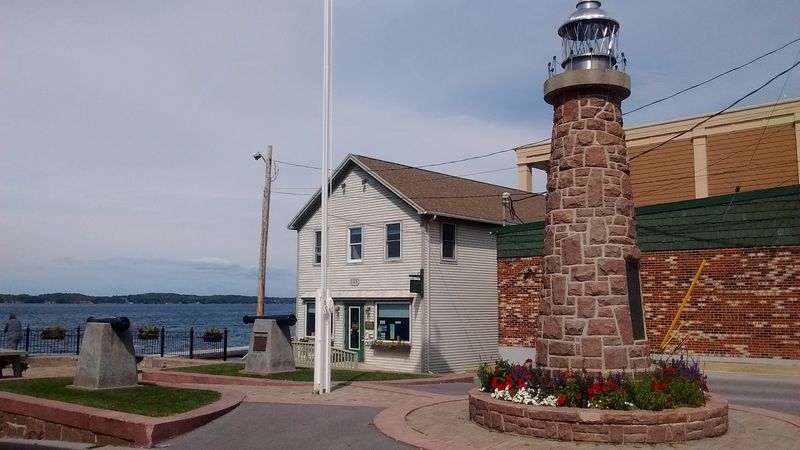
Clayton is what happens when a Gilded Age resort town decides to reinvent itself with taste rather than noise.
Wealthy families from across America once summered in this Jefferson County gem along the St. Lawrence River, bringing their boats, their dinner parties, and their very strong opinions about everything.
The grandeur faded, but the good architecture stayed. Clayton held onto its historic waterfront character while other towns scrambled to modernize themselves into blandness.
That patience paid off because what is happening here now is genuinely exciting.
The Antique Boat Museum at 750 Mary Street, Clayton, NY 13624 is a world-class institution that most people outside the region have never heard of. It houses one of the finest collections of antique and classic watercraft in North America.
Beyond the museum, Clayton now has a growing dining scene, serious antiques shopping, and art galleries that would feel at home in a much larger city. The waterfront views are spectacular on any given weekday when the summer crowds are thin.
Clayton rewards visitors who seek out beauty without needing a publicist to tell them where to find it.
The St. Lawrence River at Clayton has a scale and a current that surprises first-time visitors who expect something more modest.
Watching river traffic move through the Thousand Islands from the Clayton waterfront on a summer evening is genuinely compelling in a way that no planned activity could replicate.
The Antique Boat Museum’s outdoor dock display alone is worth walking down to even before you buy a ticket to go inside.
7. Penn Yan
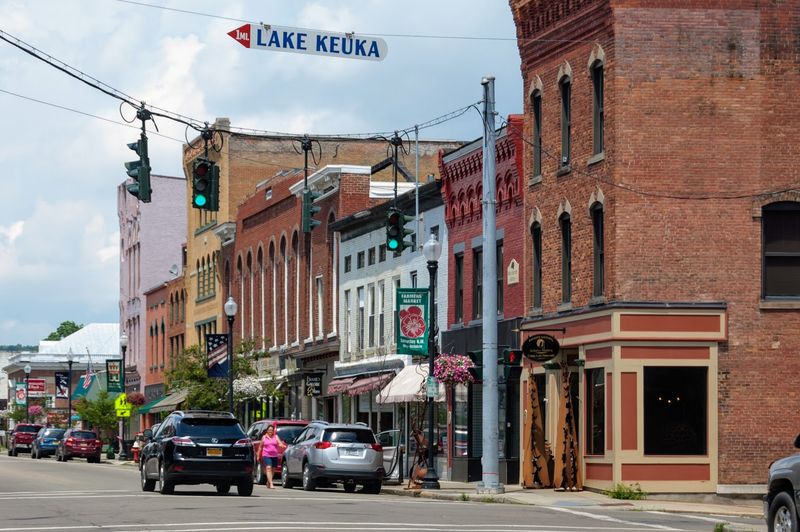
Penn Yan has one of the most interesting origin stories of any town name in the country.
When early settlers from Pennsylvania and New England could not agree on what to call their new home, someone landed on a compromise combining the words Pennsylvania and Yankee, and Penn Yan was born.
That creative stubbornness turned out to be a pretty good founding spirit.
Sitting at the northern tip of Keuka Lake in Yates County, Penn Yan was a thriving resort destination during the 19th century. Old resort hotels welcomed visitors who came for the lake air and the quiet beauty of the Finger Lakes landscape.
The town never fully abandoned that identity, and now the surrounding country growth is lifting it back into the spotlight.
Keuka Lake is genuinely one of the most beautiful bodies of water in New York State, shaped like a perfect Y and surrounded by vineyard-covered hillsides. The main commercial strip runs along Elm Street in Penn Yan, NY 14527.
Keuka Lake access, historic architecture, and proximity to some of the best areas in the Finger Lakes make Penn Yan a legitimate destination. It just has not gotten loud about it yet, and that quiet confidence is part of its appeal.
The Finger Lakes Trail running through Yates County gives Penn Yan a built-in weekend structure that requires almost no planning.
Several highly regarded vineyards operate within a short drive of Keuka Lake. They are visible from multiple points in town, making the whole area feel like endless grape country and lakeside resort destination simultaneously without having to choose between them.
8. Canandaigua
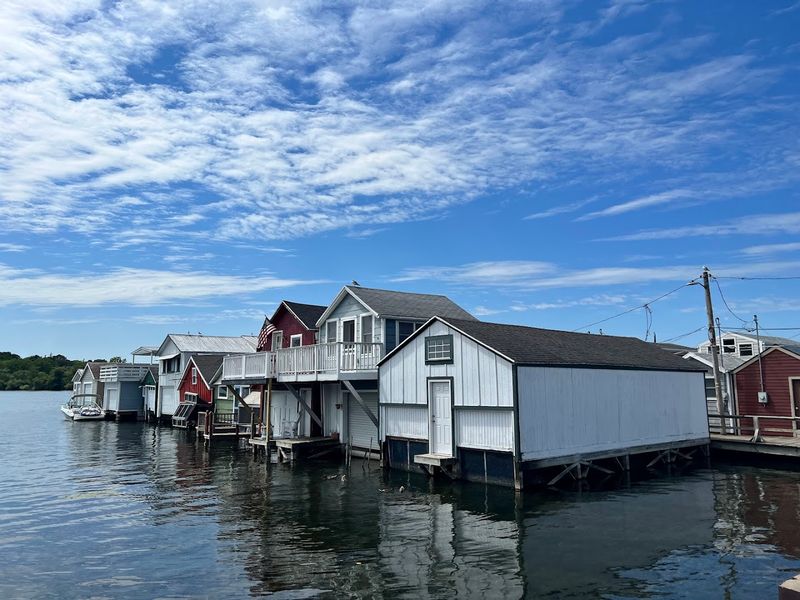
Canandaigua was built for grandeur, and it has never entirely let go of that original ambition.
During the steamboat era, this Ontario County town served as a premier Finger Lakes resort destination, welcoming visitors who arrived by water and stayed in grand hotels that no longer exist but whose spirit still shapes the town’s character.
The Granger Homestead at 295 North Main Street, Canandaigua, NY 14424 is one of the finest Federal-style historic properties in western New York. Built in 1816, it offers a direct window into the early American prosperity that defined this region.
Grand Victorian homes line the streets near the lake, giving Canandaigua a polished, composed atmosphere that feels genuinely earned.
Canandaigua Lake is the definition of spectacular, and the reviving food and drink scene in town makes it easy to spend a full weekend here without running out of things to enjoy.
Farm-forward restaurants, boutique shops, and a lively waterfront area are drawing visitors who want something more substantial than a quick day trip.
Canandaigua is not a hidden secret anymore, but it has not yet crossed into overcrowded territory. Right now is the ideal moment to visit.
The Sonnenberg Gardens and Mansion State Historic Site at 151 Charlotte Street is one of the most undervisited historic properties in the entire Finger Lakes region, featuring nine formal Victorian gardens surrounding a 40-room Queen Anne mansion.
Most visitors passing through Canandaigua head straight to the lake and never find it, which means the gardens offer a genuinely uncrowded and visually extraordinary afternoon even at the height of summer.
9. Callicoon
Callicoon is the kind of town that makes you feel genuinely calm the moment you arrive, which is a rarer quality than it sounds.
Sitting along the Delaware River in Sullivan County, this former railroad resort town once welcomed summer visitors who arrived by train from New York City and spent weeks unwinding in the mountain air.
When railroad travel declined, Callicoon did not collapse. It just got quieter and somehow more itself.
The architecture stayed largely intact. The streets kept their unhurried pace.
And a small, devoted community kept the lights on through the decades when it would have been easy to give up.
The Callicoon Theater on Main Street, Callicoon, NY 12723 is an indie gem that has been showing films and hosting events for the local community for generations. Excellent restaurants have opened in recent years, drawing food-minded visitors from across the Hudson Valley region.
The Delaware River provides stunning natural scenery and recreational opportunities that feel completely unspoiled. Callicoon is the quietest revival on this entire list, and that is not a criticism.
It is a compliment. Sometimes the best comeback is the one that happens without any fanfare at all.
The Delaware River running alongside Callicoon provides some of the finest flatwater canoeing and kayaking access in the entire Catskills region, with outfitters operating nearby for anyone who wants to spend a morning on the water before afternoon in town.
Sullivan County has developed a growing reputation as a food and arts destination over the past decade, and Callicoon sits at the quieter, more authentic end of that movement without any of the self-consciousness that sometimes creeps into trendier nearby towns.