
This Abandoned New York Village Has A History So Dark Locals Say It Still Feels Haunted Today
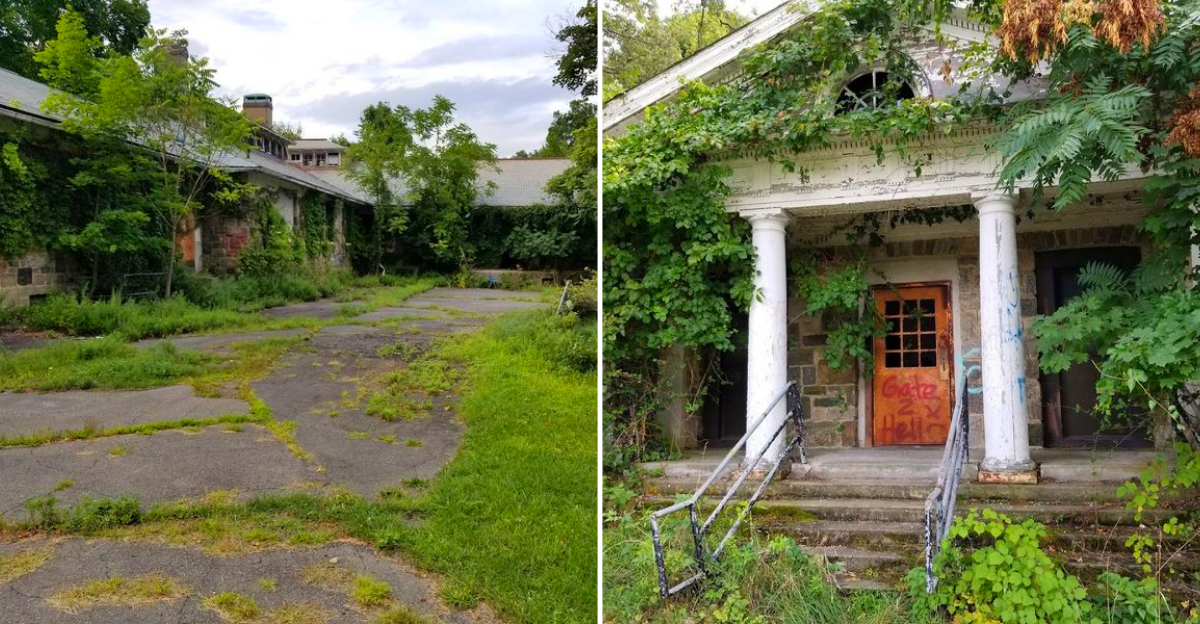
Abandoned places can feel eerie on their own, but this New York site carries something heavier than broken windows and empty roads. In Rockland County, an entire former village sits with a past tied to hope, neglect, reform, and pain.
It began with an idea that sounded compassionate for its time: creating a better place for people who had been pushed aside by society. Over the years, that promise became tangled with overcrowding, controversy, and stories locals still speak about carefully.
Today, the quiet lanes, vacant buildings, and overgrown grounds give visitors the sense that history has not fully left. This is not just another spooky stop for thrill seekers.
It is a place that asks for respect, context, and a clear understanding of what happened there. After dark, many say the silence feels anything but empty.
The Grounds That Time Forgot
Few places in the northeastern United States carry as much visible weight as this one. The moment you approach the sprawling campus, something shifts in the air around you.
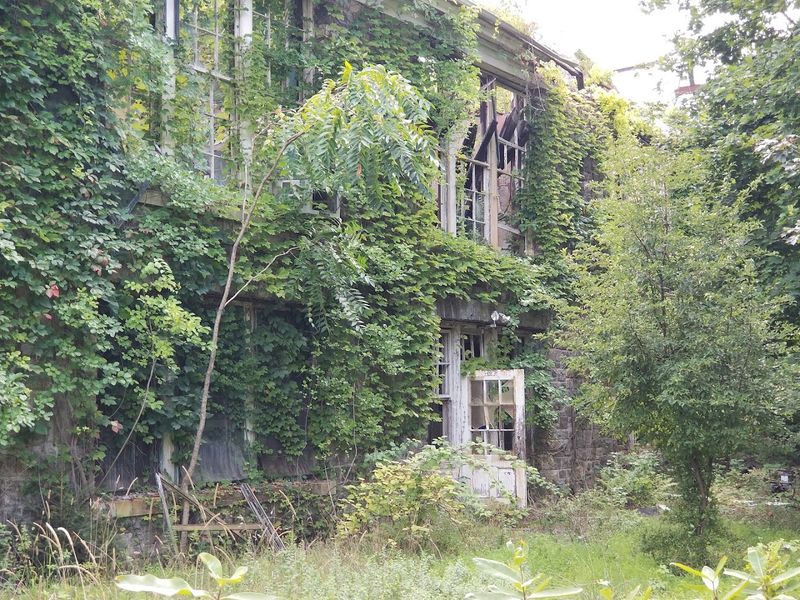
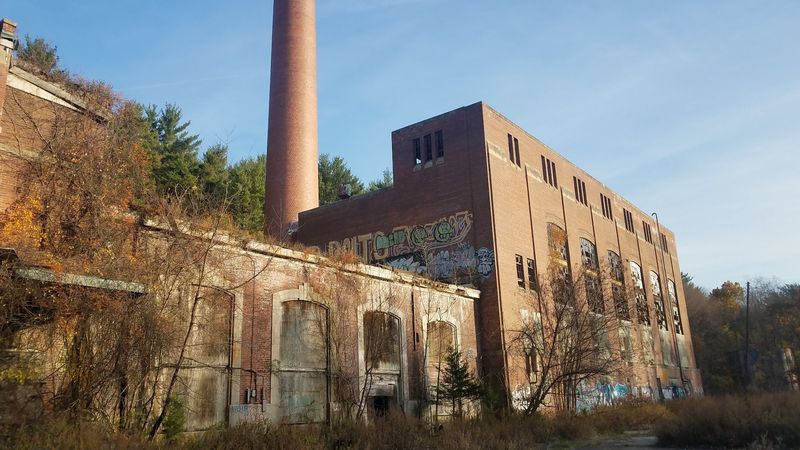
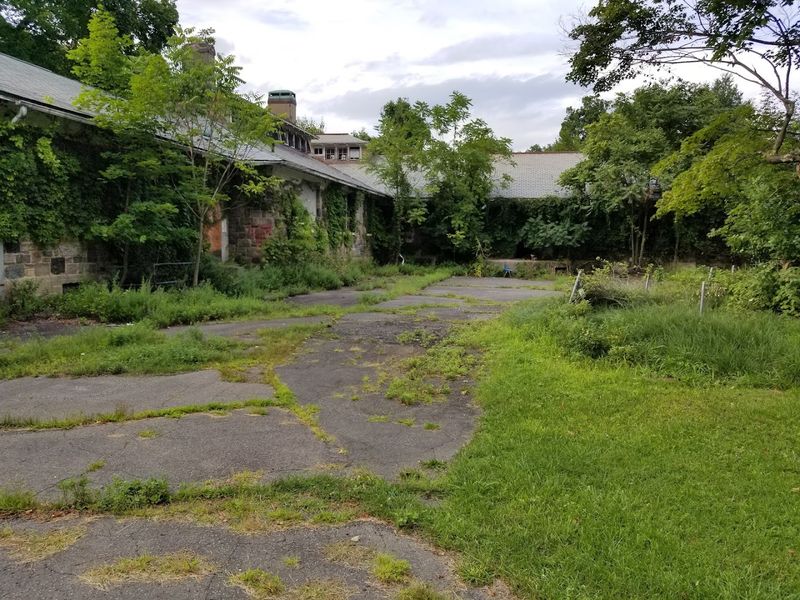
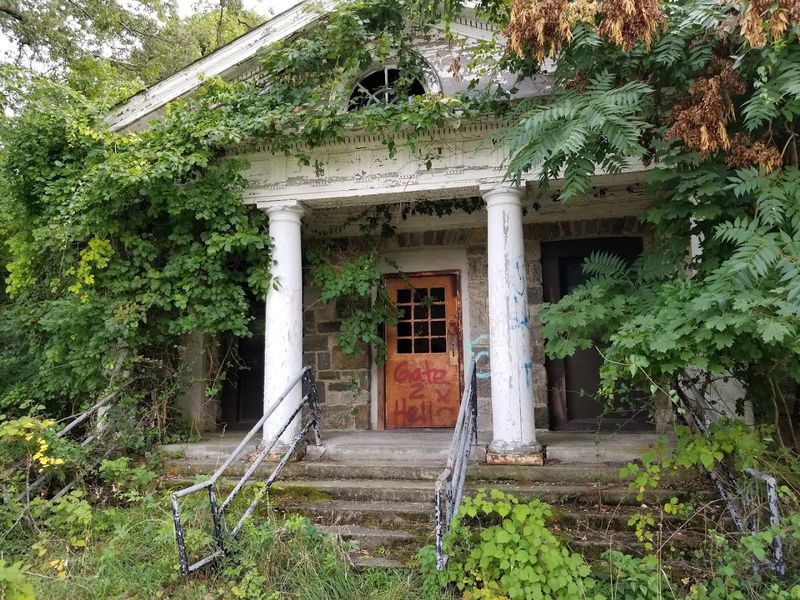
Crumbling brick buildings peer through overgrown trees like old photographs nobody wanted to keep.
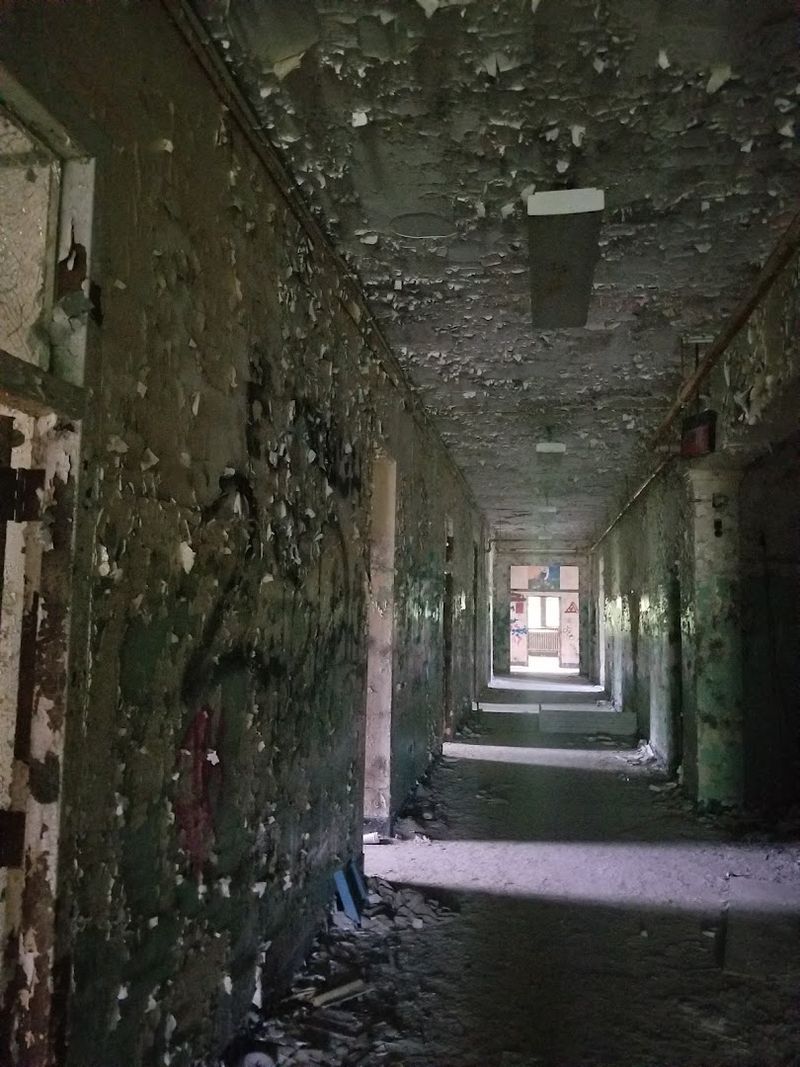
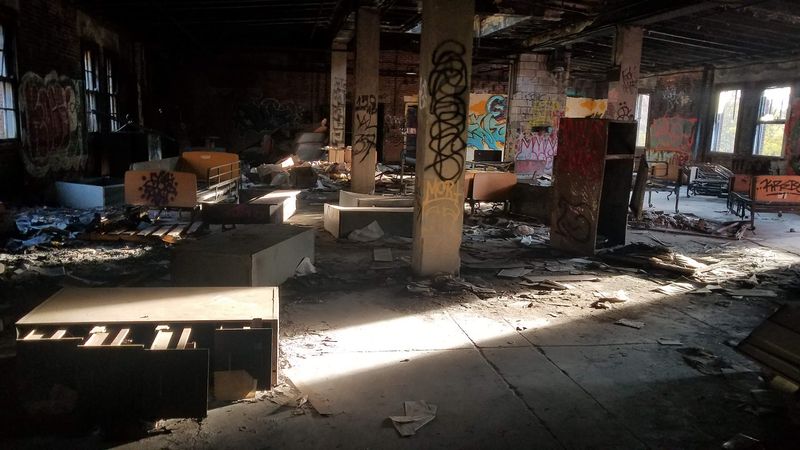
The grounds stretch across hundreds of acres, with more than 130 structures in various states of decay. Some buildings still have their original iron beds rusting inside.
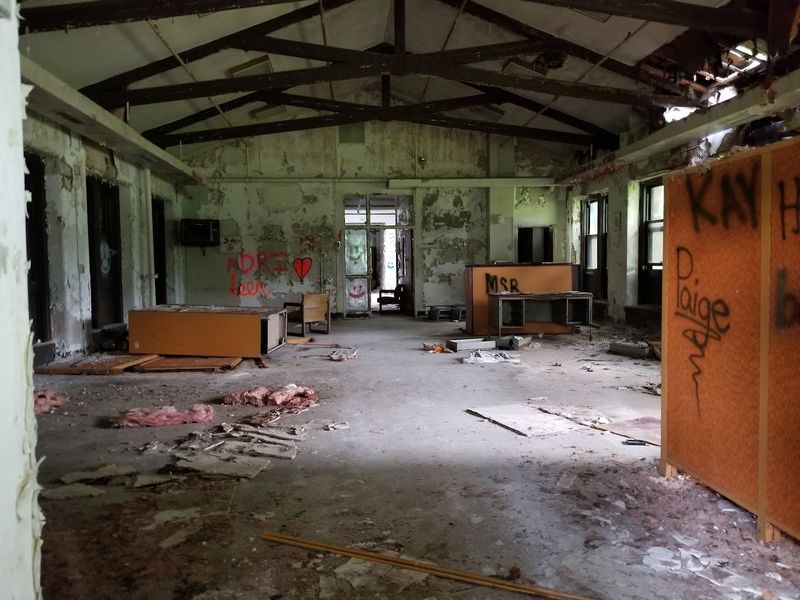
Others have caved roofs and shattered glass that crunch underfoot when the wind moves through.
What makes the atmosphere so unsettling is not just the physical ruin. It is the contrast between what the place was supposed to be and what it became.
The original architects envisioned a peaceful campus modeled after a small town, complete with farms, schools, and open green spaces.
That vision aged poorly. Today the grounds feel like a place that the rest of the world quietly agreed to forget.
Explorers, historians, and curious visitors still find their way here, drawn by a pull that is hard to explain but nearly impossible to resist. The ruins speak without words, and somehow that is the loudest kind of conversation.
The Address Of Ambition Gone Wrong
Letchworth Village sits along Letchworth Village Road in Haverstraw, New York, within Stony Point in Rockland County. It was founded in 1911 with a genuinely progressive idea behind it.
Officials wanted to create a humane, community-style alternative to the harsh asylums that dominated care for people with physical and mental disabilities at the time.
Named after William Pryor Letchworth, a philanthropist who championed the rights of vulnerable people, the village was designed to feel like a real community. Residents would work on farms, attend classes, and live in cottage-style housing rather than cold institutional wards.
The early years carried genuine promise. Photographs from that era show tidy grounds and structured routines.
Funding and oversight, however, could not keep pace with the growing number of people being admitted to the facility.
By the 1920s, cracks were already showing. Reports of neglect and poor conditions began surfacing quietly, while the public remained largely unaware.
The gap between the founding vision and the daily reality grew wider with every passing decade. What started as a bold statement about compassion slowly became a cautionary tale about what happens when good intentions are left without proper support or accountability.
Overcrowding That Broke The System
A facility built for a specific population can only stretch so far before the structure itself starts to fail. Letchworth Village was designed to house around 3,000 residents.
By the 1950s, that number had ballooned to approximately 4,000 people crammed into the same space.
Reports from that era describe dormitory rooms no bigger than a modest apartment holding up to 70 beds. Personal space became nonexistent.
Privacy was a concept that simply did not apply to the residents living there.
Staff numbers did not grow proportionally with the population. One caregiver might be responsible for dozens of residents at a time, making meaningful individual care nearly impossible.
Budgets were stretched thin, and the facility began to show the strain in every corner.
Overcrowding is not just a logistical problem. It creates a culture where people stop being seen as individuals and start being managed as numbers.
That shift in perspective tends to open the door to neglect, and at Letchworth Village, that door was left wide open for decades.
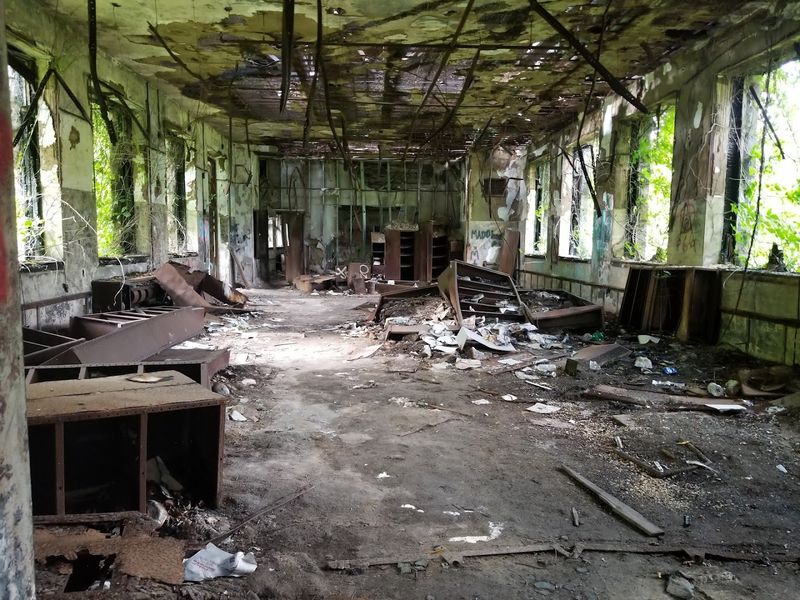
The physical evidence of that overcrowding still lingers in the ruins today. Rows of rusted bed frames in collapsed dormitories serve as a quiet but powerful reminder of just how many lives passed through these walls.
Children Used As Test Subjects
One of the most disturbing chapters in Letchworth Village’s history involves the children who lived there and what was done to them without their knowledge or consent. In 1950, the facility became the site of the first human trials of the live polio vaccine.
Dr. Hilary Koprowski administered the experimental vaccine to children at Letchworth Village, marking a significant moment in medical history. The polio vaccine eventually went on to protect millions of people worldwide.
But the ethical cost of those early trials remains deeply troubling. The children involved had no ability to consent. Their guardians were not meaningfully informed.
They were selected largely because they were considered a convenient and controllable population, which is a fact that sits uncomfortably alongside the medical achievement.
Electroconvulsive therapy was also used experimentally at the facility. Some patients suffered severe consequences as a result.
Reports also indicated that brain specimens from residents who passed away were harvested and displayed in the hospital laboratory without family notification.
Medical progress has always carried ethical weight, but the story of Letchworth Village reminds us that the cost of that progress was sometimes paid by the most vulnerable people in society. That is a debt history has not fully settled.
Geraldo Rivera And The Moment The World Noticed
For decades, what happened inside Letchworth Village stayed largely out of public view. Then 1972 arrived, and with it came a documentary that cracked the silence wide open.
Investigative reporter Geraldo Rivera released a film that exposed the conditions at both Willowbrook State School and Letchworth Village to a national audience.
The documentary was called Willowbrook: The Last Great Disgrace. Rivera entered the facilities with a camera crew and captured what staff and administrators had long kept hidden. Dirty, overcrowded rooms.
Residents left without basic care. People living in conditions that no one in a just society should ever have to endure.
The public reaction was immediate and furious. Politicians who had quietly looked the other way suddenly found themselves under enormous pressure to act.
The documentary is now considered a landmark moment in the history of disability rights in the United States.
Rivera’s reporting helped spark a national conversation about how society treats its most vulnerable members. New York became ground zero for that reckoning.
The exposé did not fix everything overnight, but it permanently changed the conversation and forced accountability where none had existed before.
Sometimes a single camera pointed at the truth can do what years of quiet reports cannot. Rivera proved that in 1972.
The Cemetery Nobody Talked About
Off Call Hollow Road in Stony Point, there is a cemetery that most people never knew existed. From 1914 to 1967, residents of Letchworth Village who passed away and whose remains went unclaimed by family were buried there in unmarked plots.
More than 900 graves fill the grounds. For most of that time, each grave was marked only with a T-shaped steel rod stamped with a number. No names. No dates. No acknowledgment that a full human life had been lived and then quietly ended here.
The numbered markers made the cemetery feel less like a place of remembrance and more like a filing system. That detail alone says a great deal about how the institution viewed the people in its care.
In 2007, a memorial plaque was finally installed with the names of those buried there. It was a long overdue gesture, though many families never knew their relatives had ended up in that field at all.
The plaque exists as both a tribute and an acknowledgment of how much was left undone for far too long.
Visiting the cemetery today is a genuinely moving experience. The contrast between the overgrown stillness and the sheer number of graves gives you a sense of scale that no written account can fully prepare you for.
Closure And The Silence That Followed
After decades of controversy, investigations, and reform efforts, Letchworth Village officially closed its doors in 1996. The closure marked the end of an 85-year chapter that had swung dramatically from optimism to scandal and back again without ever quite finding stable ground.
When the last residents were transferred to other facilities and the staff cleared out, the campus did not disappear. It simply went quiet.
More than 130 buildings were left standing, most of them without maintenance, security, or any clear plan for what would come next.
Parts of the former grounds have since been repurposed. A school now operates on some of the property.
Town offices and recreational spaces occupy other sections. But a significant portion of the original campus remains exactly as it was left, which is to say, slowly falling apart.
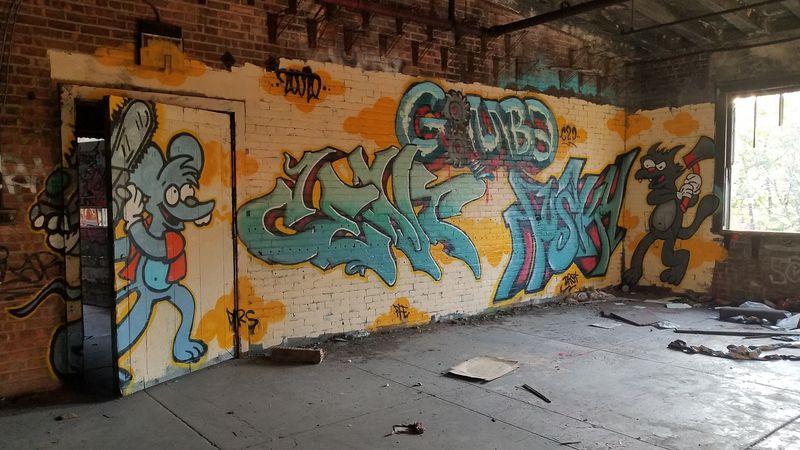
The buildings that still stand carry the weight of everything that happened inside them. Paint peels off walls in long strips. Floors have given way in places. Stairwells lead to nowhere useful anymore.
Yet the structures hold their shape with a stubbornness that feels almost deliberate.
Closure did not bring resolution. It brought a different kind of presence, one that is harder to name but easy to feel the moment you set foot anywhere near the old campus.
Why Locals Say The Energy Never Left
Ask anyone who grew up near Stony Point about Letchworth Village and you will get a reaction. It might be a long pause, a lowered voice, or a very specific story about something they heard from someone they trust completely.
The reputation of the campus runs deep in local memory. Paranormal investigators have visited the grounds repeatedly over the years. They report cold spots in rooms where no drafts exist.
Footsteps echo in empty corridors. Figures appear briefly at windows and then vanish before anyone can get a clear look.
The former hospital building draws the most attention. It sits at the center of most of the local legends and carries a reputation that even skeptics tend to treat with a certain careful respect.
People who enter it often describe an overwhelming sense of being watched. Faint sounds that have no obvious source. Unexplained drops in temperature. The feeling that a room full of nothing is somehow not empty at all.
These are the kinds of experiences that keep the stories alive and circulating through every generation of Rockland County residents.
Whether you believe in the paranormal or not, there is something undeniable about a place that holds this much history. The energy of what happened here did not simply evaporate when the last person walked out.
What Visiting Letchworth Village Teaches You
Places like Letchworth Village exist in a complicated space between historical site and cautionary monument. Trespassing on the abandoned portions of the campus is not permitted, and that rule deserves respect.
But the accessible areas and surrounding grounds still offer a genuine and sobering encounter with history.
Standing at the edge of the campus, you begin to understand how institutions can carry the best intentions right up to the moment they stop being properly supported. Letchworth Village did not fail because the founders lacked compassion.
It failed because compassion without resources and oversight is not enough.
The story of this place in New York is also a story about how society decides who matters and who gets overlooked.
The residents of Letchworth Village were among the most vulnerable people in the state, and for decades their suffering was treated as an administrative inconvenience rather than a human emergency.
Visiting, even from a respectful distance, is an act of acknowledgment. It says that the people who lived and struggled here are worth remembering.
The memorial cemetery, the historical records, and the crumbling buildings all point toward the same truth.
Some lessons only stick when you see them in person. Letchworth Village is the kind of place that makes sure you do not forget what you came to learn.