
The Quiet Massachusetts Island Campground That Feels Miles Away From Boston
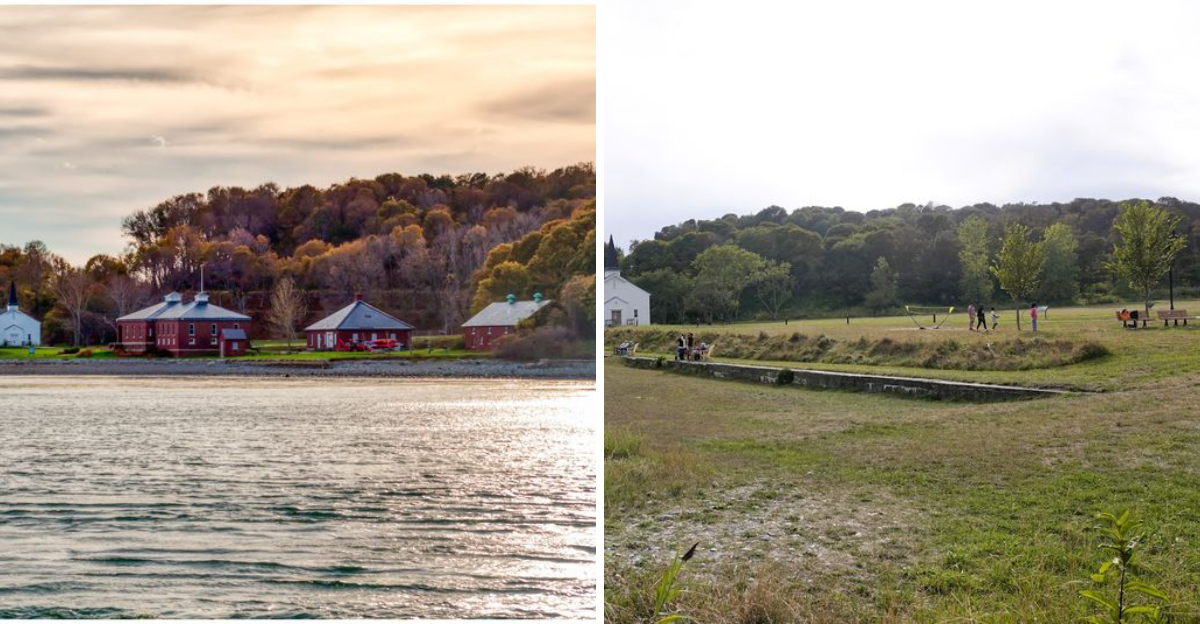
What if Boston noise could fade into island quiet after one ferry ride? Massachusetts has a campground that makes that idea feel surprisingly easy.
The trip starts with city views, salty air, and that small thrill of leaving the usual routine behind. Then the pace changes.
Trees replace traffic. Harbor water surrounds the shore. Campsites give you space to breathe, cook, wander, and watch the sky shift over the water. It feels close enough for a simple weekend plan, but far enough to make your phone seem less important.
That is the magic of camping on a Massachusetts island. You get the adventure without needing a long road trip.
For anyone craving a quieter night near the coast, this campground makes Boston feel much farther away than it really is.
A Seaborne Passage To Serenity
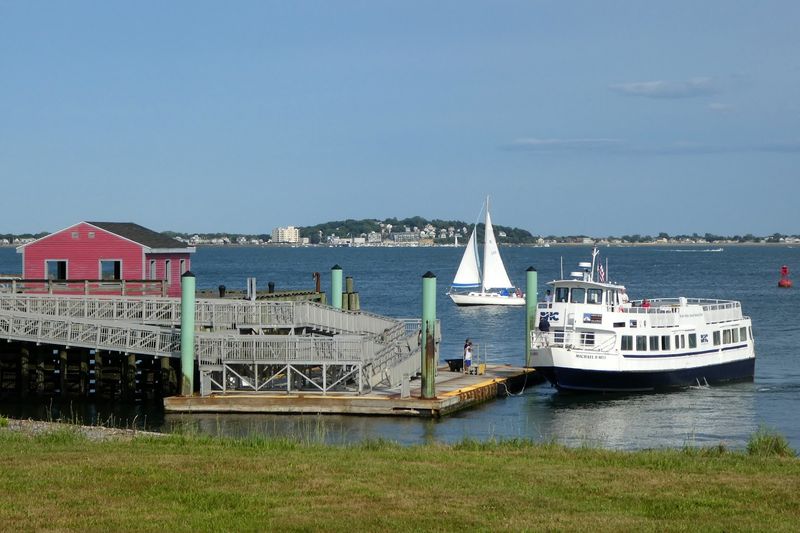
The ferry ride alone is worth the trip. Departing from the Hingham Shipyard at 28 Shipyard Drive, Hingham, MA 02043, the boat pulls away from the dock and the familiar geometry of the mainland begins to soften.
Within minutes, the skyline shrinks to a thin strip on the horizon, and the water takes over everything.
Passengers often grow quiet on this crossing. There is something about the open harbor that invites reflection rather than conversation.
Gulls track the vessel with casual persistence, and the salt air carries a freshness that no city park can replicate. The journey covers roughly 7.8 miles from Boston, and every knot of that distance feels purposeful.
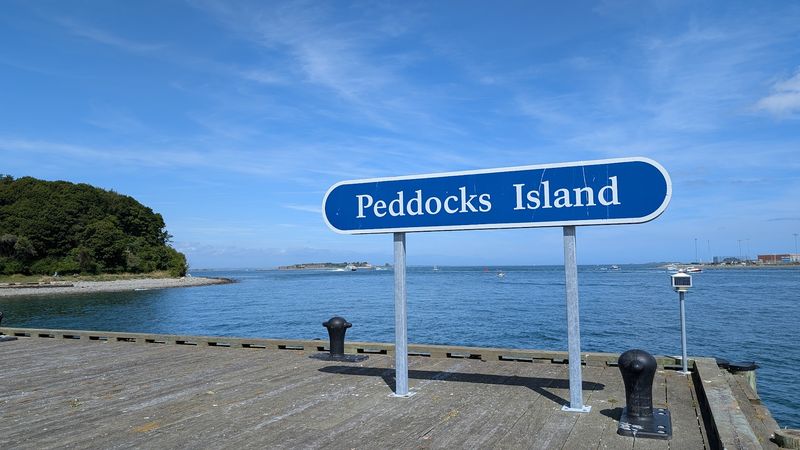
Arriving at Peddocks Island, the dock greets visitors with a simplicity that sets the tone immediately. No vendors, no signage clutter, no rush.
Wheelbarrows wait near the dock to help campers haul their gear up the moderate uphill path to the campsites. That small, practical detail says everything about this place.
It is designed for people who came prepared, who chose this deliberately, and who already understand that the reward is proportional to the effort made to get here.
Echoes Of Defenses Past
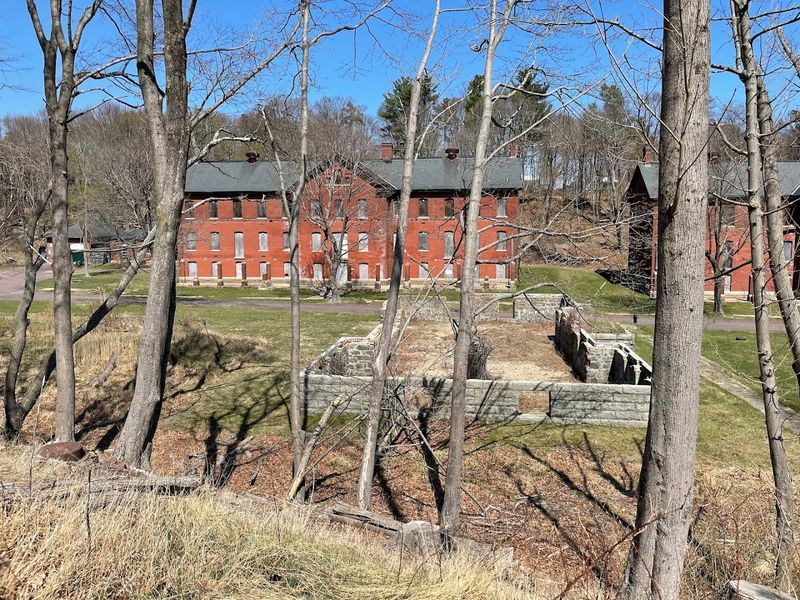
Fort Andrews has a presence that is hard to ignore.
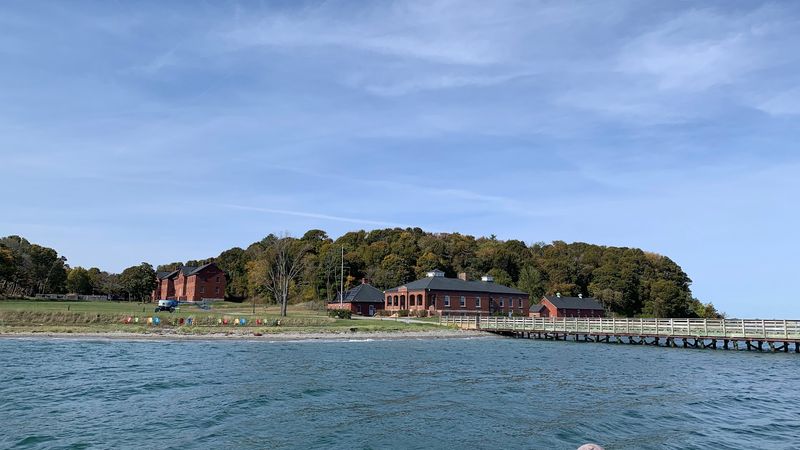
Built in the early twentieth century as a coastal defense installation, the fort occupies a significant portion of Peddocks Island and remains one of the more compelling historic sites within the entire Boston Harbor Islands National Recreation Area.
Its buildings still stand, though most are closed to the public for safety reasons.
Walking among the structures feels like reading a letter that was never quite finished. Brick walls hold their ground against decades of salt wind and seasonal freeze.
The architecture is utilitarian, built for function rather than admiration, yet time has given it an unintended dignity. Vines creep along the facades, and the surrounding fields have softened what was once a strictly ordered military compound.
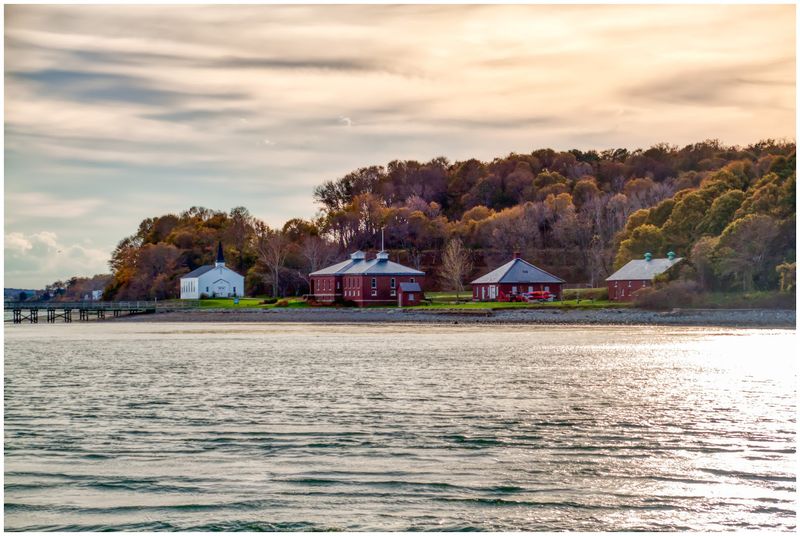
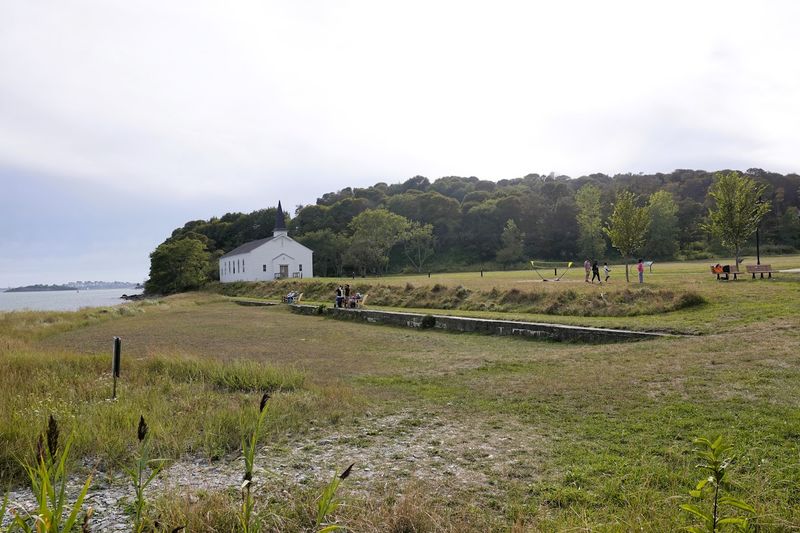
A restored World War II-era chapel also stands on the island, offering a quieter, more contemplative counterpoint to the fort’s imposing scale.
The chapel has been carefully maintained and serves as a reminder that military history carries human dimensions beyond strategy and defense.
Visitors who take time to explore the fort’s perimeter rather than just photograph it tend to leave with a more layered understanding of what this island has witnessed across more than a century of American coastal history.
Wild Edges, Gentle Shores
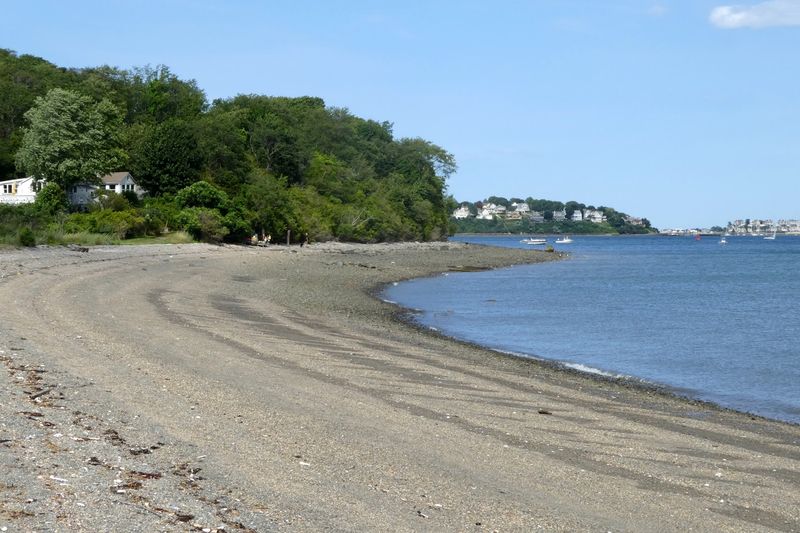
At high tide, Peddocks Island covers 184 acres. At low tide, that figure expands to 288 acres, revealing an entirely different geography.
The shoreline stretches approximately five miles, the longest of any island in Boston Harbor, and it encompasses a remarkable variety of terrain for a single body of land.
Sandy beaches give way to salt marshes without much warning. Coastal bluffs overlook the open Atlantic with a directness that feels almost confrontational on windy days.
Woodlands on the eastern side are accessible via paved pathways, while wooded trails on the western end lead into quieter, less-visited terrain where deer move through the undergrowth with unhurried confidence.
Turkeys have also been spotted across the island, adding an unexpected domesticity to the wilder edges.
Swimming is permitted on the beaches, though there are no lifeguards on duty, so visitors swim at their own discretion. Beachcombing rewards patience here.
Sea glass, smooth stones, and the occasional shell turn up along the waterline with satisfying regularity.
Campfires are allowed on the shore below the high tide line, using naturally fallen wood, which means evenings on the beach carry the particular warmth of a fire built from what the island itself has offered up.
Nights Beneath A Vast Canopy
Cell service on Peddocks Island is unreliable at best, and that turns out to be one of its finest qualities. When the screen goes dark and the notifications stop, the night sky fills the gap with something far more interesting.
Stars appear in numbers that feel almost implausible for a location fewer than eight miles from a major American city.
The camping season runs from mid-June through Indigenous Peoples Day, offering a generous window for overnight visits. Tent sites accommodate up to four adults or two adults with dependent children.
Each site includes a picnic table, and communal charcoal grills are available nearby. The sites do not have direct electricity or water access, which keeps the experience genuinely rustic without veering into hardship.
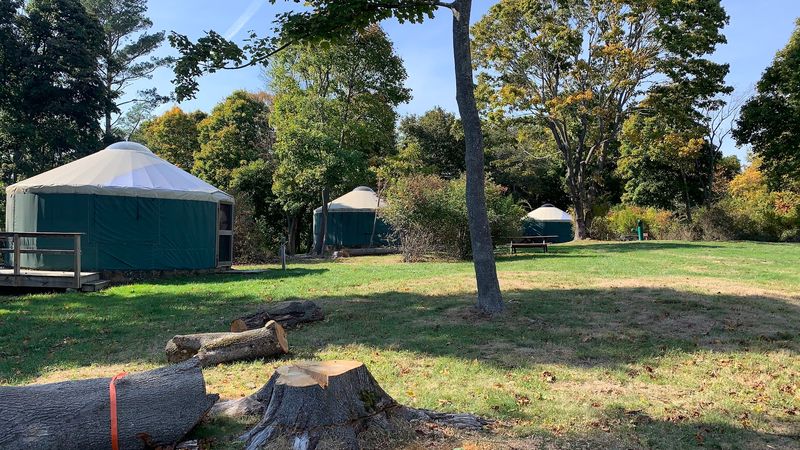
For those who prefer a more sheltered night, yurts are available and can house up to six people. Each yurt includes bunk beds, electricity, an interior table, an outside picnic table, and a grill.
Flush toilets, running water, and showers are located at the Visitor Center, about a ten-minute walk from most campsites. Composting toilets are positioned at each campground for convenience.
Rangers occasionally lead stargazing programs, which add a welcome layer of context to what the sky above the harbor has to offer.
An Enduring Maritime Legacy
Peddocks Island carries its history with a certain understated confidence. Beyond Fort Andrews and the restored chapel, the island has layers of significance that accumulate the longer you spend time there.
A small community of privately owned cottages occupies the western side of the island, with current residents holding life tenancy arrangements that date back generations.
These cottages represent a particular kind of maritime life that has largely disappeared from the American coastline.
Modest in scale and deeply rooted in place, they suggest a community that organized itself around the rhythms of the harbor rather than the demands of the mainland economy.
Walking past them feels like glimpsing a way of life that chose its own terms and held to them.
The island also served as a filming location for Martin Scorsese’s 2010 film Shutter Island, a fact that surprises visitors who arrive expecting pure nature and find instead a place with cinematic atmosphere built right into its bones.
The combination of crumbling military architecture, dense woodland, and harbor fog creates a setting that translates easily to screen.
But the island’s actual history, including its role in American coastal defense and its long-standing residential community, carries more genuine weight than any fictional narrative placed upon it.
The Rhythms Of Island Life
Life on Peddocks Island operates on a schedule that has nothing to do with deadlines. The ferry determines when you arrive and when you leave.
Everything in between belongs to the island. That structure, simple as it sounds, has a clarifying effect on how the hours are spent.
Hiking is the primary activity for most visitors. The trail network covers both the accessible eastern side, where paved paths make walking straightforward, and the wilder western end, where unpaved trails move through woodland and open field.
The contrast between the two halves of the island is significant enough to feel like visiting two separate places within a single afternoon. Bird watching draws consistent interest, with the varied habitat supporting a broad range of species across the season.
Fishing is permitted, and picnicking spots are plentiful across the island. Rangers lead guided programs that include nature walks, Frisbee golf, and occasional evening stargazing sessions.
Visitors should arrive prepared, as there are no stores or food services on the island. All trash must be carried out, as no receptacles are provided.
That requirement, which might seem inconvenient at first, contributes directly to the cleanliness and character of the place. The island stays beautiful because visitors are asked to share responsibility for keeping it that way.
Horizons Shared, Perspectives Shifted
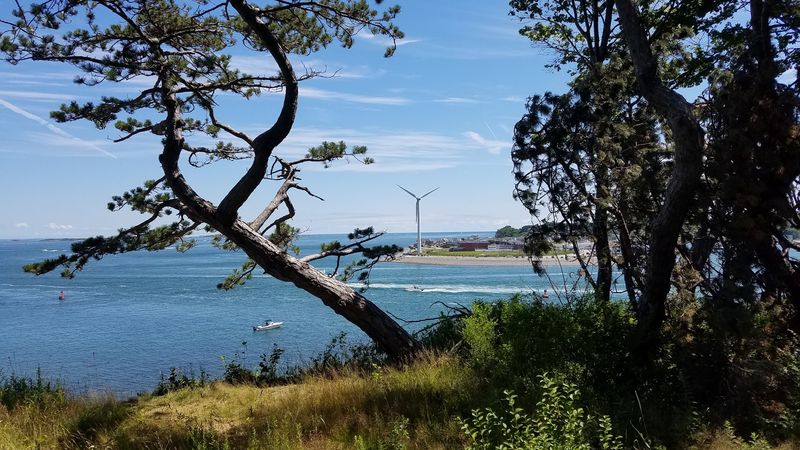
From the coastal bluffs of Peddocks Island, the Boston skyline appears as a thin arrangement of shapes along the horizon. It is recognizable but remote, which is precisely the point.
Seeing the city from this distance, surrounded by open water and the sounds of the harbor, produces a shift in perspective that is difficult to manufacture through any other means.
The island offers panoramic views in multiple directions, taking in Boston Harbor, stretches of the Atlantic Ocean, and the surrounding harbor islands.
On clear days, the visual range is substantial, and the sense of being genuinely out at sea, despite the relative proximity to the mainland, is convincing and welcome.
Groups who visit together often report that conversations deepen out here in ways that do not happen easily back on land.
The car-free environment contributes significantly to this quality of attention. Without the background noise of traffic and engines, the sounds that remain carry more weight.
Wind, water, birds, and the occasional creak of the dock become the acoustic landscape. Visitors who arrive expecting distraction tend to leave having found the opposite, and most find that the exchange was more than fair.
The island does not ask much, but what it returns is difficult to find anywhere closer to the city.
A Haven For Quiet Contemplation
There is a particular quality of quiet on Peddocks Island that takes some getting used to. It is not the absence of sound so much as the absence of urgency.
The salt marshes absorb noise in their own way. The woodland paths carry only footsteps and birdsong.
The beaches offer the steady rhythm of water on stone, which is one of the more reliable forms of mental reset available to anyone within driving distance of Boston.
This Massachusetts island has drawn visitors seeking exactly this quality for as long as the ferry has been running. Its car-free status is not incidental.
It is foundational to the experience. Without vehicles, the pace of movement slows to what the body naturally produces, and the landscape becomes something to move through rather than past.
That distinction matters more than it might initially seem.
Peddocks Island sits within the Boston Harbor Islands National Recreation Area, a designation that ensures its preservation and public accessibility.
Day visitors and overnight campers share the space with a mutual understanding that tends to develop naturally in places like this.
The island has a way of calibrating behavior without posting rules at every turn. People arrive carrying the city and leave carrying something quieter, something that tends to linger well past the return ferry ride.
Journey Beyond The Usual Course
Planning a visit to Peddocks Island requires a degree of intentionality that separates it from most day trips in the greater Boston area.
The ferry departs from the Hingham Shipyard at 28 Shipyard Drive, Hingham, MA 02043, and overnight parking is available there for campers.
Reservations for campsites and yurts should be made well in advance, particularly for summer weekends, as availability fills up faster than most people expect.
Campers must bring all food, water, and supplies for their stay. Nothing is available for purchase on the island.
That logistical reality encourages a kind of deliberate preparation that has become rare in an era of on-demand convenience.
Knowing that every meal and every comfort was carried across the harbor by hand gives the experience a satisfying self-sufficiency that lingers in the memory.
The camping season runs mid-June through Indigenous Peoples Day, offering a substantial stretch of time across the warmer months. For those visiting as day-trippers, the island rewards a full day of exploration rather than a quick loop.
Five miles of shoreline, multiple trail systems, historic fort grounds, and open harbor views create enough variety to fill the hours without any sense of having exhausted the place. Peddocks Island is not a destination that reveals itself all at once.
It gives its best qualities gradually, to those willing to stay long enough to receive them.