
Tennessee Attractions Locals Still Keep To Themselves In 2026
Tennessee has more secrets than a small-town diner has regulars. Ask locals about their favorite spots, and you might get a smile, a shrug, or a sudden change of subject.
That is usually your first clue that something good is waiting nearby. Not the crowded places everyone posts about.
Not the stops with lines wrapped around the building. We are talking about quiet overlooks, odd little museums, peaceful trails, and places that still feel personal. The kind of attractions people mention only after they trust you a little.
In 2026, some of Tennessee’s best adventures are still being protected by the folks who know them best.
Ready to see what they have been keeping to themselves?
1. Secret Overlook, Pikeville
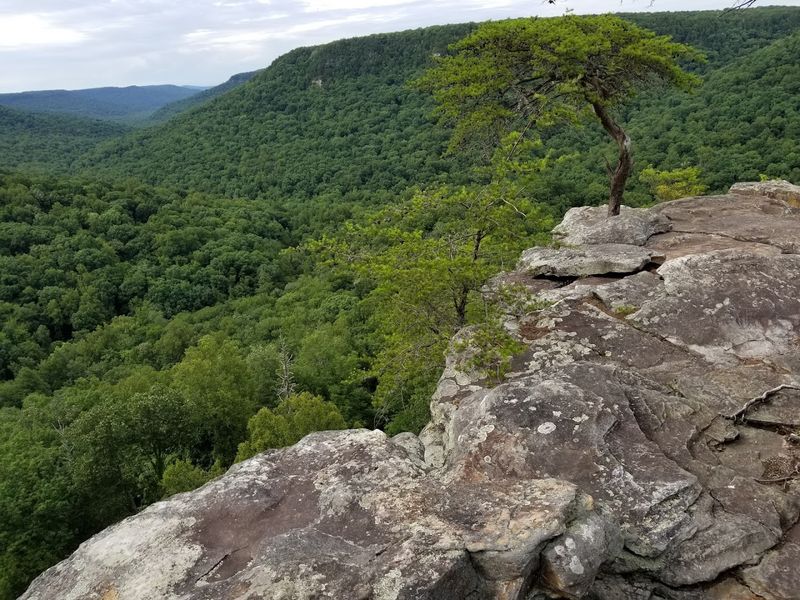
Not every great view comes with a crowd and a gift shop. Near Pikeville, just a short walk from a parking area within Fall Creek Falls State Park, there is a quiet overlook that most visitors drive right past without a second glance.
Locals have been using it for photos and even outdoor wedding ceremonies for years, and somehow it has stayed off the radar.
What makes this spot so appealing is exactly what it lacks: noise, signage, and strangers. You get an expansive look at the park’s dramatic ridgelines and forested canyon without fighting for space on a viewing platform.
The trail to reach it is easy enough for most fitness levels, making it a low-effort, high-reward kind of outing.
Spring and fall are the best seasons to visit, when the foliage either blooms or burns with color. Early morning light hits the canyon in a way that makes even a phone camera look professional.
Go on a weekday if you can, because even quiet spots deserve to stay that way.
Bring a blanket, find a flat rock, and just sit with it for a while, because this is the kind of place that reminds you why you started traveling in the first place.
2. Little Egypt (Triple Falls), Caryville
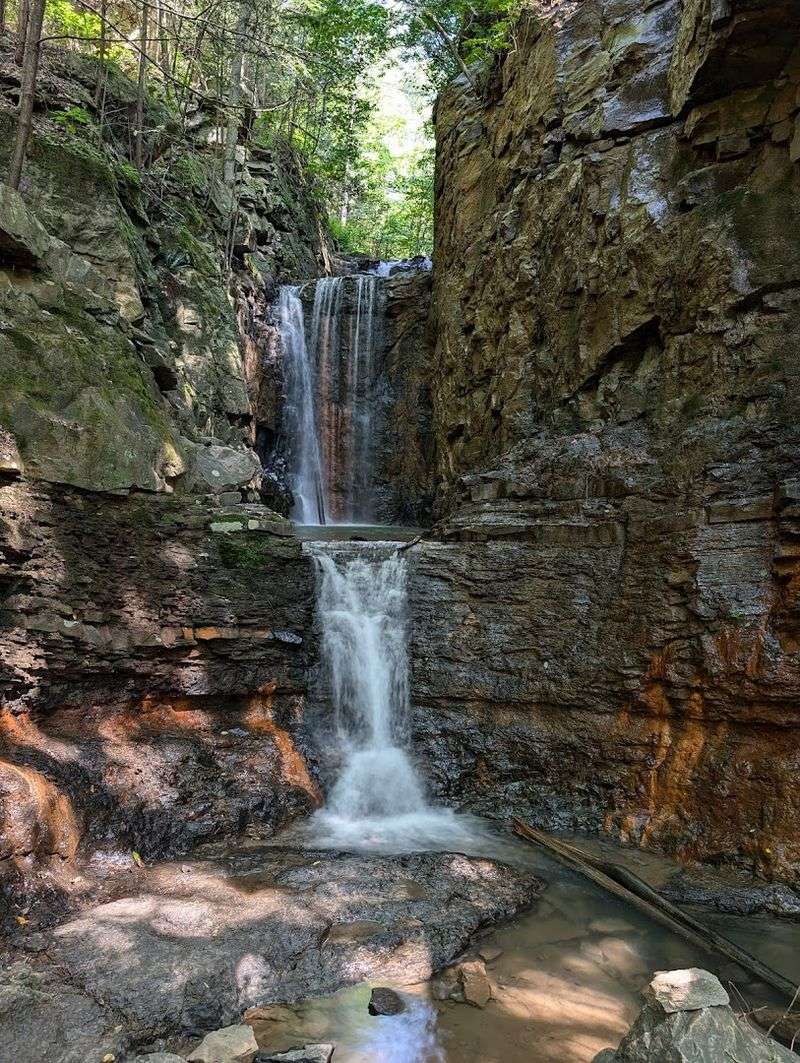
There is a fun piece of trivia attached to this spot that makes it even more interesting: the three-tiered waterfall at Little Egypt near Caryville was not shaped purely by nature.
Back in the 1980s, the Tennessee Department of Transportation rerouted Bruce Creek as part of a road project, and over the decades, the water carved out this stunning cascading scene all on its own.
A short hike from a low-key parking area on Shelton Hollow Lane brings you face to face with the falls, which drop into clear, cool swimming holes that locals treat like their own private pool.
After a rainy stretch, the water volume picks up dramatically and the whole area feels alive in a way that is hard to describe without seeing it yourself.
The trail can get slippery and muddy in wet conditions, so sturdy shoes are a smart call. This is not a groomed park trail with handrails and information boards; it is the real thing, raw and a little rugged.
Swimming is the main draw during summer months, but even in cooler weather the falls are worth the walk just for the view. Few places in East Tennessee blend accidental engineering and natural beauty quite this effortlessly.
3. Short Springs Natural Area, Tullahoma
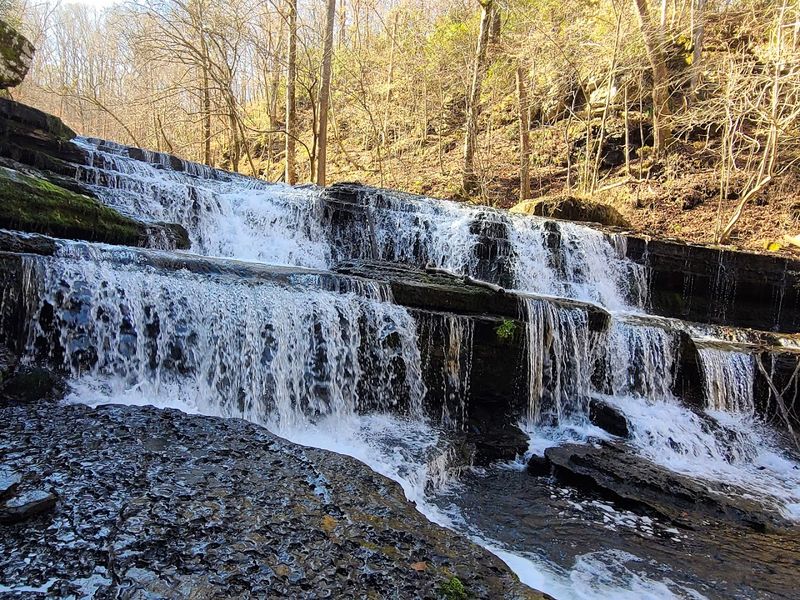
Only 45 minutes from Nashville’s southern sprawl, Short Springs Natural Area near Tullahoma in Coffee County feels like a completely different world.
The 420-acre property holds multiple waterfalls, wooded ravines, and a trail network that rewards explorers of almost every ability level.
Machine Falls is the headline act, dropping sixty feet into a rocky basin that practically echoes with the sound of moving water.
Beyond Machine Falls, Busby Falls and Adams Falls offer quieter moments that feel genuinely off the beaten path.
Spring is the prime season for wildflowers, and the area is well-known among birders who come specifically for the biodiversity packed into these forested slopes.
The trails vary in difficulty, so whether you want a casual stroll or a more demanding loop, there is a route that fits.
Parking is free, and the area sees far less traffic than comparable parks in the region, which means you can often have a waterfall entirely to yourself on a weekday morning.
Wear waterproof boots if rain has recently passed through, since some trail sections near the creek crossings get genuinely soggy.
Short Springs is the kind of place a visitor stumbles onto once and then quietly tells only their closest friends about, which is exactly how the locals prefer it.
4. Pogue Creek Canyon State Natural Area, Jamestown
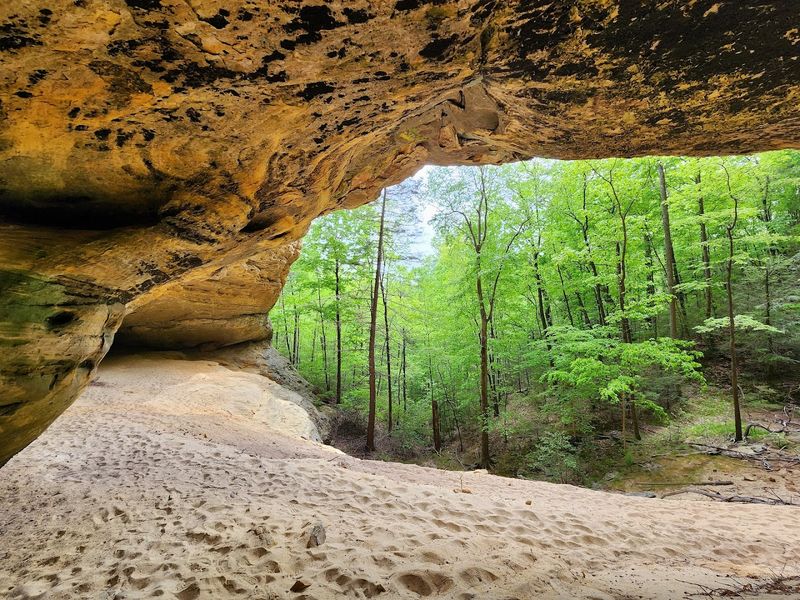
Pogue Creek Canyon State Natural Area near Jamestown in Fentress County holds a certification that most parks can only dream about: it is an officially recognized International Dark Sky Park.
On a clear night, the Milky Way spreads across the sky in a way that feels almost unreal if you have spent most of your life near city lights.
An open astronomy field near the Highway 154 parking area gives stargazers an unobstructed view that is genuinely hard to find east of the Mississippi.
Daytime at Pogue Creek is a completely different kind of adventure. The canyon itself is carved with dramatic sandstone bluffs, tight slot-like passages, and rock formations that look like something out of a geography textbook brought to life.
The Overlook Trail delivers sweeping gorge views without demanding a brutal amount of elevation gain, making it accessible to a wide range of hikers.
The area shares a boundary with Pickett State Park, so ambitious visitors can connect trails for a longer day out. Crowds here are genuinely rare, which is part of what makes the experience feel so personal.
Pack a headlamp, download an offline map, and bring more water than you think you need.
Whether you come for the cosmos or the canyon walls, Pogue Creek has a way of making the world feel enormous and wonderfully quiet at the same time.
5. Greeter Falls, Altamont
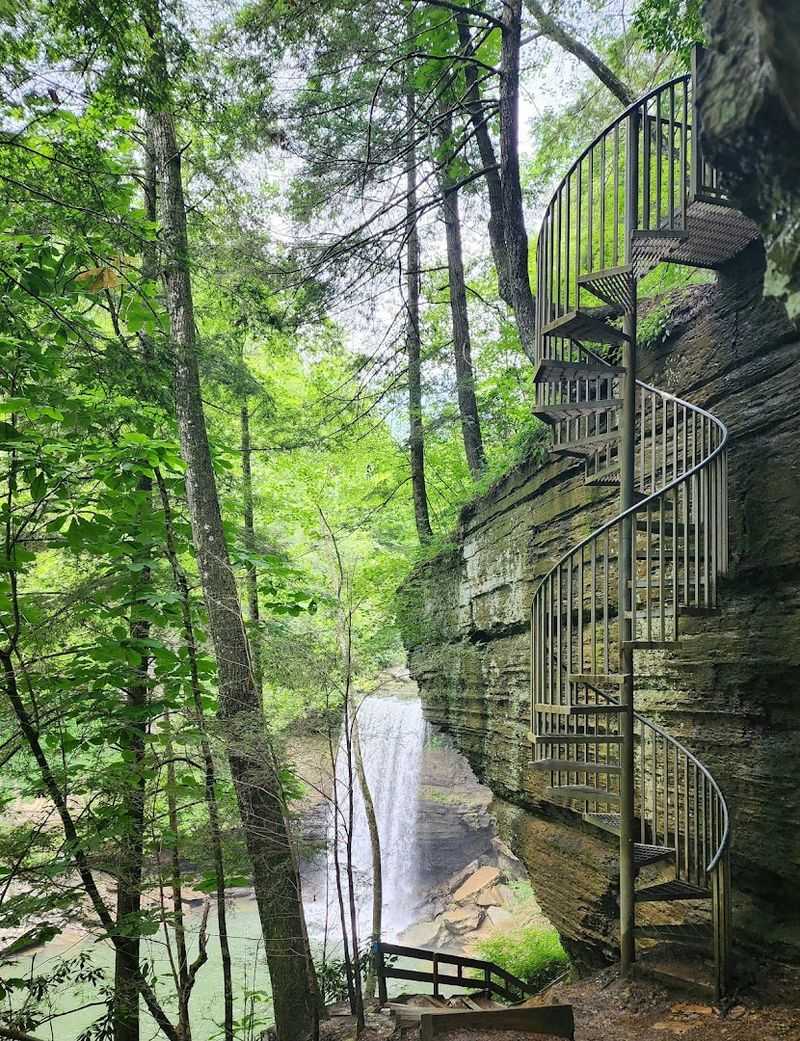
A spiral metal staircase descending into a sandstone gorge is not something most waterfall hikes can promise, but Greeter Falls near Altamont in Grundy County delivers exactly that.
Located within Savage Gulf State Park, this trail leads hikers to both Upper and Lower Greeter Falls, with the staircase serving as the dramatic entry point to the lower falls and the Blue Hole swimming area below it.
The loop trail runs between 1.1 and 2.0 miles depending on the route chosen, and it is rated moderately difficult due to rocky terrain and some elevation change.
The staircase itself can be slippery when wet, so grip matters more than speed here.
That said, the payoff at the bottom is a cool, clear plunge pool that makes every careful step worth it during the warmer months.
There are no restroom facilities on the trail itself, but they are available at the trailhead parking area, so plan accordingly before heading in.
The lack of commercial development around the falls is a big part of its appeal: no vendors, no entry fees, no long lines.
Greeter Falls is the kind of place where you arrive as a hiker and leave feeling like you found something that belongs entirely to you, at least for the afternoon.
6. Earth Experience Museum, Murfreesboro
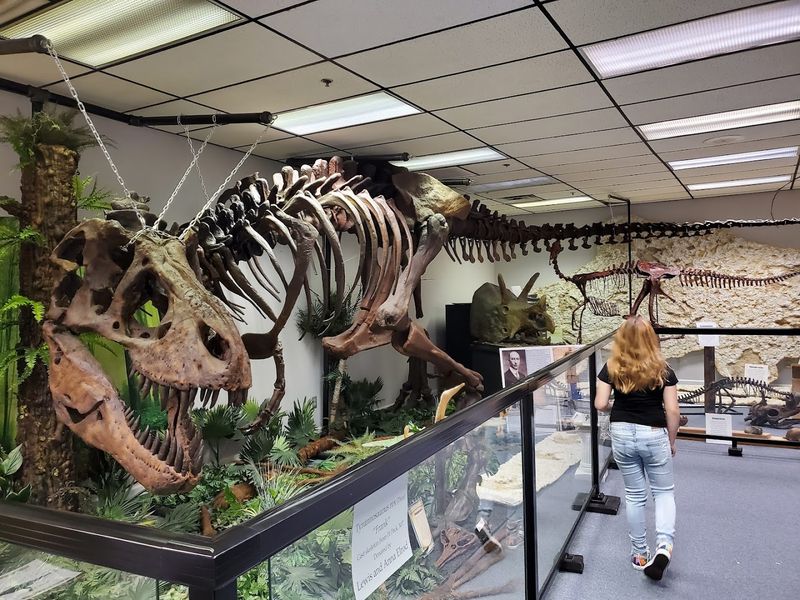
Somewhere between a natural history museum and a working science lab, the Earth Experience Museum in Murfreesboro occupies a category all its own.
Officially called the Middle Tennessee Museum of Natural History, it houses an impressive collection of fossils, gems, minerals, and archaeological artifacts gathered from Tennessee and around the world.
Most people who find it say they almost walked past it, which would have been a genuine mistake.
The real standout feature is the working paleontology laboratory visible to visitors, where scientists can be observed cleaning and repairing actual dinosaur bones in real time.
It transforms what could be a passive museum experience into something that feels alive and genuinely scientific.
Guests are also encouraged to touch real specimens, including dinosaur bones, petrified wood, and a variety of rocks and minerals, which makes the whole visit feel more like an investigation than a tour.
This is a particularly strong destination for curious kids, but adults consistently find themselves lingering far longer than planned.
The staff tends to be knowledgeable and enthusiastic, which adds a conversational energy to the experience that static exhibits rarely provide.
If you find yourself in Murfreesboro with a free afternoon, consider this your sign to skip the chain restaurants and spend a couple of hours somewhere that makes the ancient history of the planet feel surprisingly close.
7. Domes At Hidden Rock, Madisonville
Sleeping under the stars usually means a sleeping bag and a sore back.
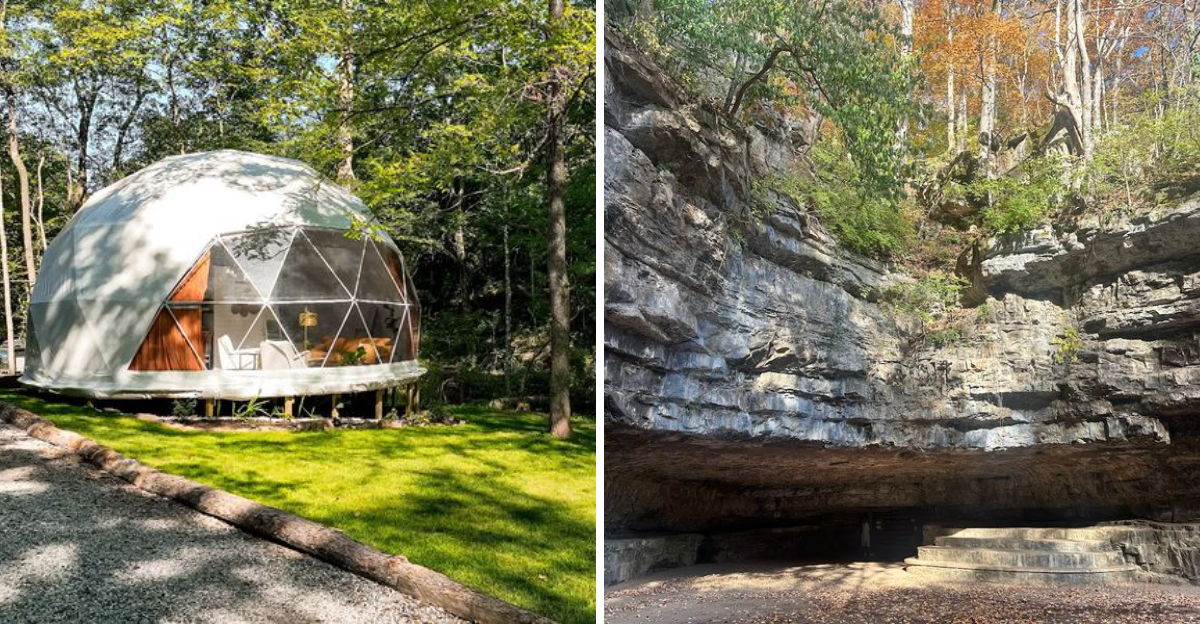
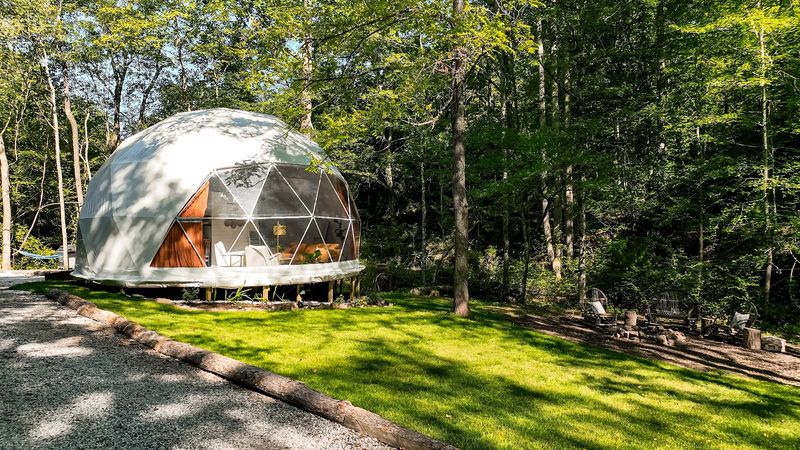
The Domes at Hidden Rock near Madisonville in East Tennessee have a different proposition: a geodesic dome with a transparent skylight positioned directly above the bed, so you get the full night sky experience without sacrificing a single comfort.
Each dome, like the one called The Poplar, uses a high-tension architectural canvas over an aluminum frame that manages to feel both rugged and refined.
The property sits in a forested valley just outside the Cherokee National Forest, surrounded by hills on three sides that create a natural sense of enclosure and calm.
Climate control, quality bedding, and thoughtful amenities mean this is glamping in the truest sense: all the atmosphere, none of the roughing it.
The surrounding landscape invites morning hikes and quiet evenings spent watching the sky shift from orange to deep navy.
The Lost Sea Adventure, one of America’s largest underground lakes, is located nearby in Sweetwater, making this dome stay a natural jumping-off point for a full East Tennessee weekend.
Bookings tend to fill up quickly for fall and summer weekends, so planning ahead pays off.
Hidden Rock is the rare kind of place that looks exactly as good in person as it does in photos, which in the age of social media is saying quite a lot.
8. Tennessee River Freshwater Pearl Museum, Camden
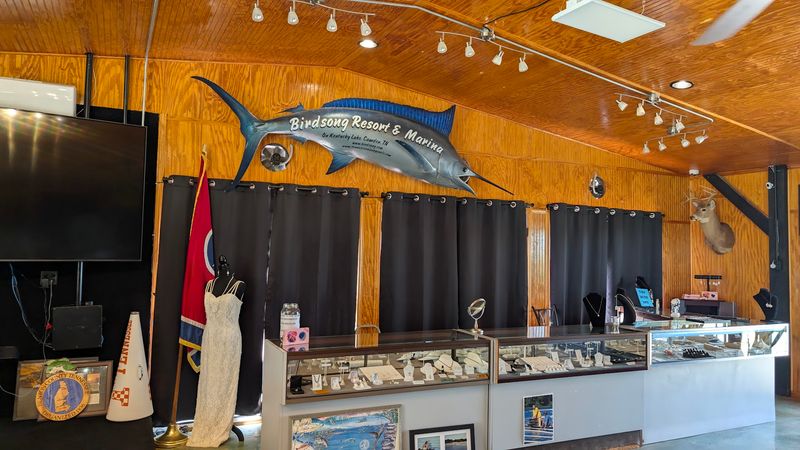
Somewhere along the western shore of Kentucky Lake near Camden, there is a museum dedicated entirely to freshwater pearls, and it is stranger and more fascinating than that sentence might suggest.
The Tennessee River Freshwater Pearl Museum at Birdsong Resort and Marina is built around North America’s only freshwater pearl culturing operation.
This is a legacy created by John Latendresse, who adapted Japanese culturing techniques to the native mussels of the Tennessee River.
Tours of the pearl farm show visitors how indigenous mussels are cultivated to produce Tennessee’s official state gem, which is a fact most Tennesseans do not know until someone tells them.
The museum itself walks through the history of the mussel fishing industry in the region, complete with tools, artifacts, and examples of the finished jewelry that came out of this surprisingly productive river system.
Camden sits on the western edge of the state, making it a logical stop on a road trip that connects Nashville with Land Between the Lakes.
The museum is small, but it uses its space well, and the combination of hands-on exhibits and genuine historical context gives it a depth that larger institutions sometimes miss.
For anyone who has ever worn a pearl and never thought twice about where it came from, this place offers a quietly compelling answer that sticks with you long after you leave.
9. Dunbar Cave State Park, Clarksville
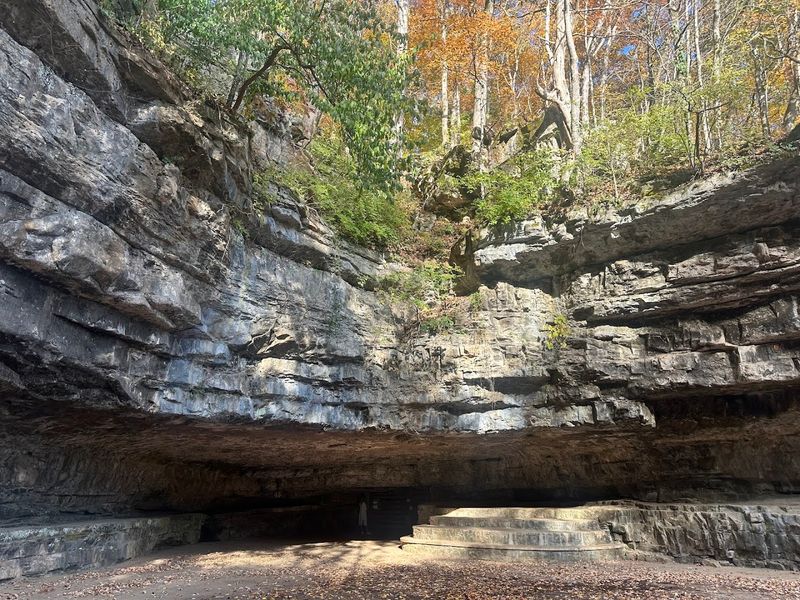
Most people who visit Dunbar Cave State Park in Clarksville, Montgomery County, say they found it by accident, which somehow feels appropriate for a place this quietly extraordinary.
The 144-acre park centers on an eight-mile cave system that has drawn human visitors for thousands of years, including Mississippian Native Americans who left behind rare cave art dating to the 14th century.
That kind of history tends to make a hike feel a little more weighted.
Above ground, the park offers a peaceful network of trails that loop around Swan Lake, a reflective body of water surrounded by upland hardwood forest that feels genuinely removed from the nearby city.
Wildlife sightings are common here, including herons, turtles, and various woodland birds that make the lakeside trail a rewarding walk even without the cave as a destination.
Guided cave tours run seasonally from May through September and offer the chance to see the ancient markings up close in the cave’s cool, constant air.
The temperature inside stays around 58 degrees Fahrenheit year-round, so a light layer is worth packing even on a hot summer day.
Dunbar Cave is the rare park that satisfies history enthusiasts, nature lovers, and casual walkers all at once, and it manages to do so without the lines, fees, or fanfare you might expect from something this genuinely interesting.