
Deep In Tennessee Sits A Waterfall Only Locals Can Track Down
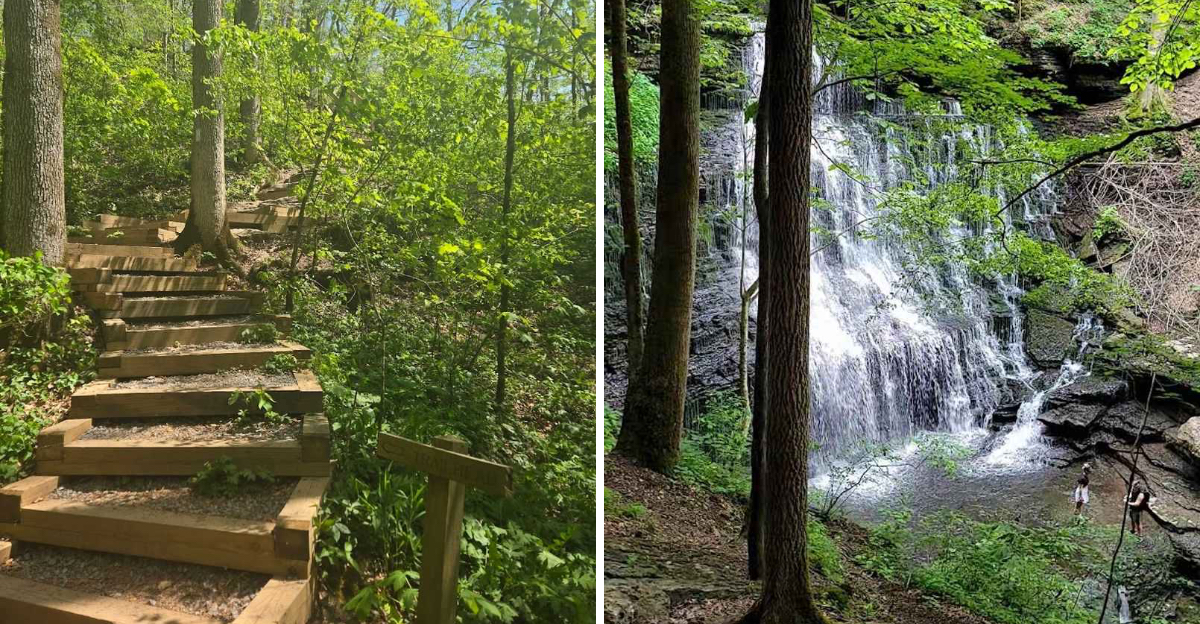
A wall of water crashes down through Tennessee’s forested hills with real force. Mist hits your face before your eyes adjust.
The ground hums low as the sound swallows every conversation whole. Tennessee guards this wild secret behind unmarked trails and steep drops most visitors never dare finish.
Centuries of rushing water carved that jagged rock face from ancient shale and sandstone. The climb there demands creek crossings, soaked shoes, and a trek back out that truly tests your legs.
That struggle is exactly why the crowds stay thin and the payoff feels so earned. Spring wildflowers line the trail too, turning one hike into something far bigger than a single waterfall.
Curious travelers who love wild, hard-earned views already feel the pull of this place calling.
The Waterfall That Earns Its Reputation
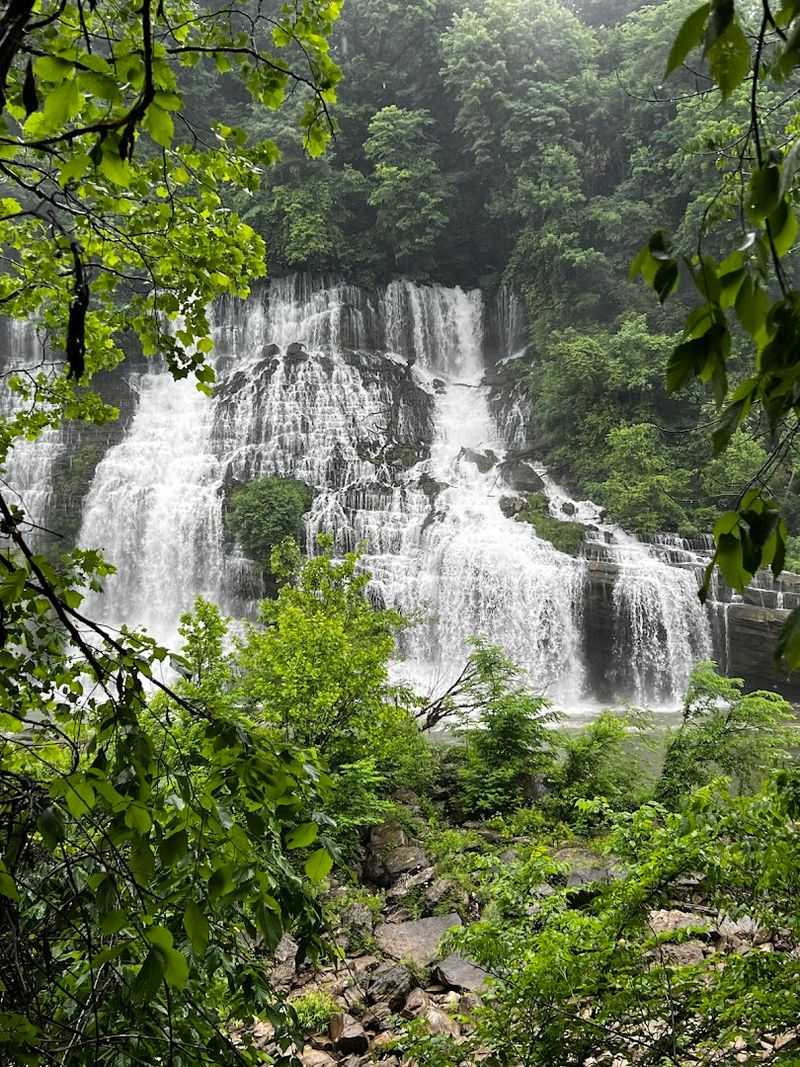
Power is the first word that comes to mind. Machine Falls does not trickle or whisper.
It roars, sending a wide curtain of water crashing more than 60 feet down a jagged, tiered rock face.
The width of the falls is nearly as impressive as the height. Water spreads across the stone in sheets, breaking apart and reforming as it drops over each ledge.
The result is a cascade that feels almost theatrical in scale.
The falls sit inside Short Springs State Natural Area near Tullahoma, Tennessee, and they are the undisputed centerpiece of the entire park. The rock face is carved from sandstone and shale, shaped by centuries of flowing water.
Each layer tells a different chapter of the region’s geological story.
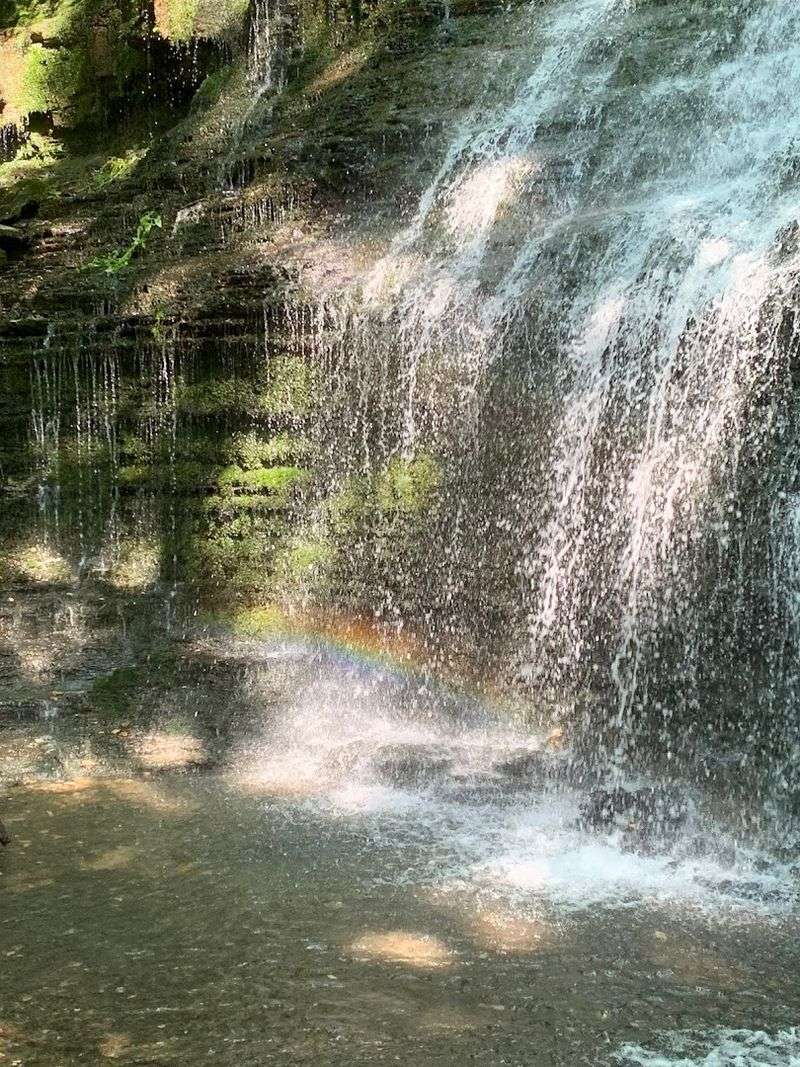
Standing at the base, the mist hits the face before the eyes fully adjust to the scene. The air drops noticeably in temperature.
The sound is constant and all-consuming, the kind that makes conversation feel unnecessary.
A Name With Roots In The Past
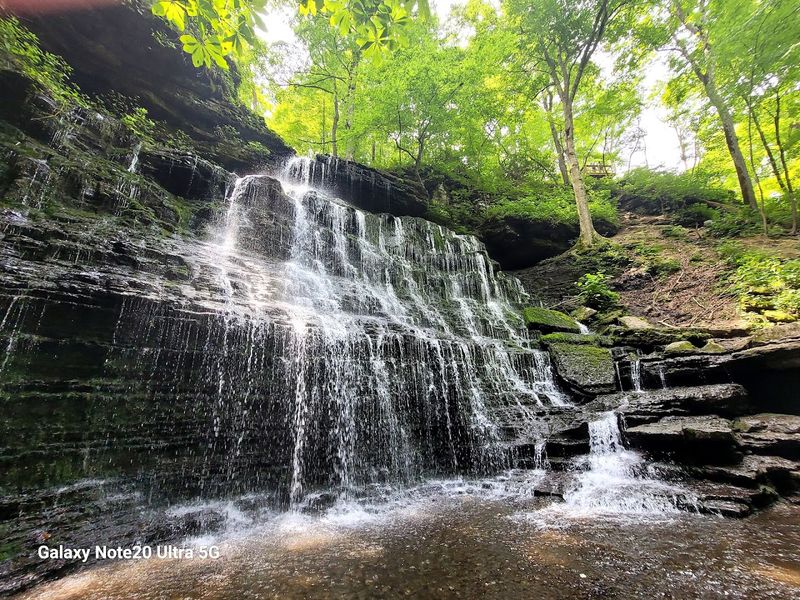
The name Machine Falls is not random. It carries a story rooted in the working history of the land around Tullahoma, Tennessee.
The waterfall is believed to take its name from the old sawmill operations that once ran in the area. Machinery powered by water and manpower shaped this part of Coffee County long before hiking trails were ever cut through the forest.
The creek that feeds the falls still carries the name Machine Falls Branch.
That connection between industry and nature adds a layer of meaning to the visit. The same water that once powered local mills now tumbles freely over ancient rock, watched by hikers rather than workers.
History has a way of making landscapes feel richer. Knowing that this place once hummed with human activity makes the current silence feel earned.
The forest has reclaimed what industry left behind, and what remains is something far more enduring than any mill could have been.
The Geology Beneath Your Boots
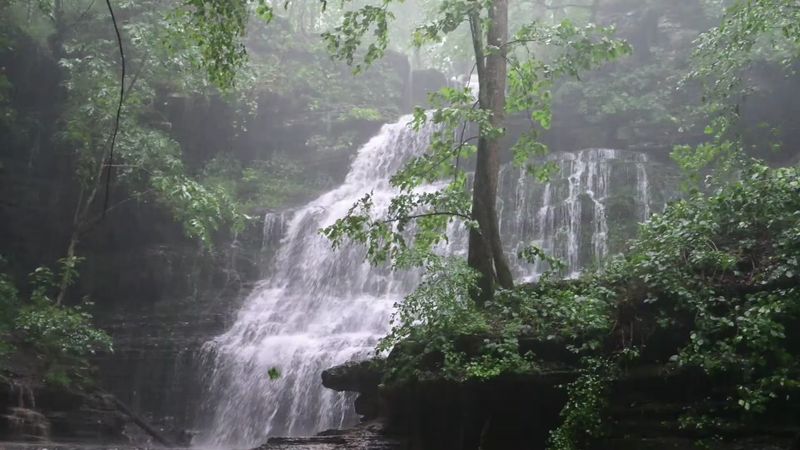
Geology is not always exciting, but here it is impossible to ignore. Short Springs State Natural Area sits at a dramatic boundary where the Highland Rim meets the Central Basin.
That collision of landforms created something genuinely unusual.
Hikers descending toward Machine Falls can spot exposed black Chattanooga shale along the trail walls and creek banks. This dark, ancient rock marks the geological border between two distinct Tennessee regions.
It is a rare opportunity to literally walk through a chapter of Earth’s history.
The sandstone layers above the shale are softer and more porous. Water has worked through them for thousands of years, carving the gorge and shaping the ledges that now define the waterfall’s tiered drop.
Every rock underfoot is part of that same long story. The trail is not just a path to a waterfall.
It is a slow-motion geology lesson delivered in roots, stone, and flowing water. Bringing curiosity along makes the hike feel twice as rewarding.
The Trail That Tests Your Legs
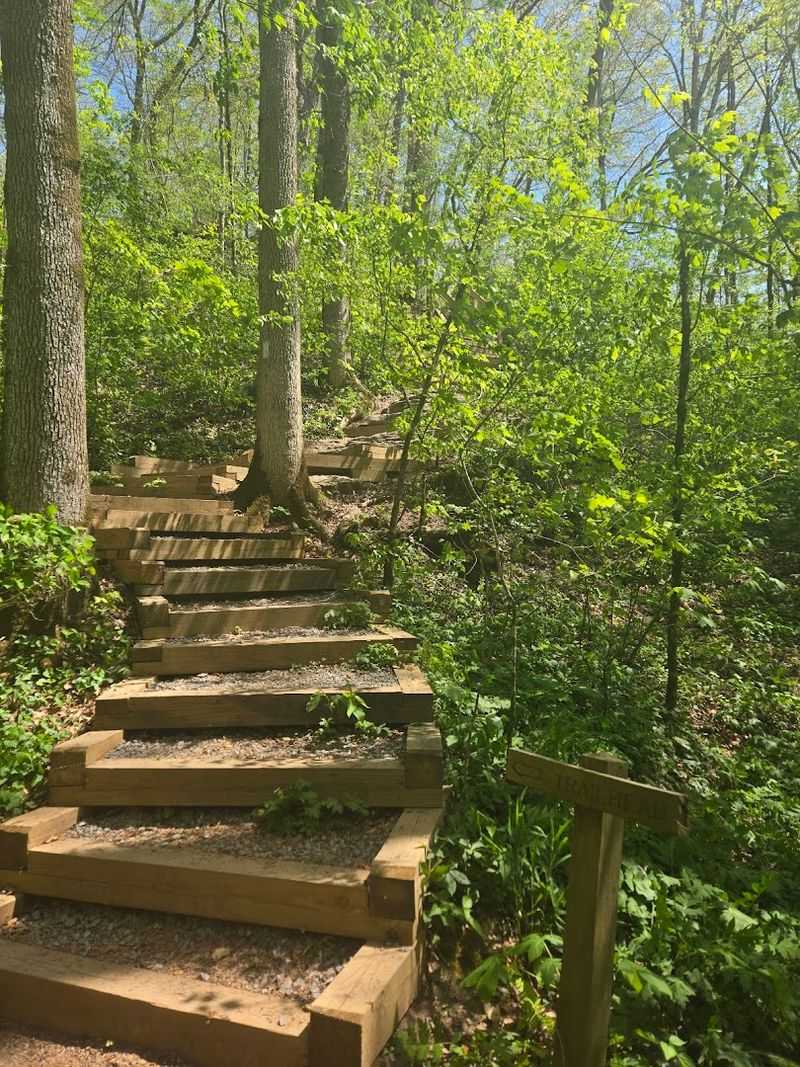
Flat this trail is not. The Machine Falls Loop Trail covers roughly 1.6 miles round trip, but those miles pack a serious punch.
The descent into the gorge is steep enough to make knees question every life decision.
Wooden staircases have been installed along the most demanding sections, which helps but does not eliminate the challenge. Tree roots cross the path constantly, demanding full attention on every step downward.
Rushing is not an option here.
The creek crossing adds another layer of adventure. Hikers must walk through the water to reach the base of the falls.
Shoes will get wet. Planning for that ahead of time saves a lot of frustration at the water’s edge.
The return trip is the part that surprises most first-timers. Climbing back out of the gorge is significantly harder than going down.
Pacing matters. Taking breaks is smart, not lazy.
The trail rewards persistence, and arriving back at the trailhead feels like its own small victory.
Six Trails, Endless Options
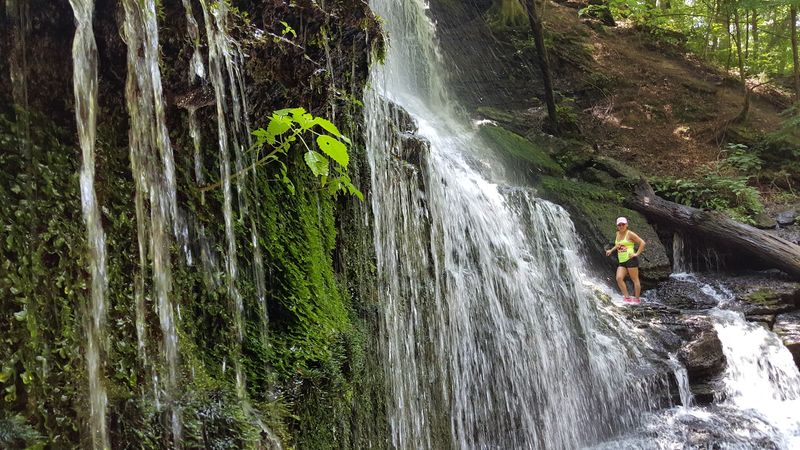
Machine Falls gets most of the attention, but the park around it offers far more than one trail. Short Springs State Natural Area maintains six distinct paths through its 420 acres.
The lineup includes the Machine Falls Trail, Busby Falls Trail, Adams Falls Trail, Wildflower Trail, Laurel Bluff Trail, and a Connector Trail that links several routes together. Most of these paths intersect, allowing hikers to build custom routes depending on time and energy levels.
A focused visit covering only Machine Falls can be done in roughly two miles round trip. Ambitious hikers who combine multiple loops can extend the adventure to five or six miles.
The variety keeps the park interesting across multiple visits.
A trail map kiosk sits near the main parking area. Taking a photo of it before heading in is one of the smartest moves a first-time visitor can make.
The trails are generally well-signed, but the network can feel confusing at junctions without a reference point handy.
When The Falls Run Wild
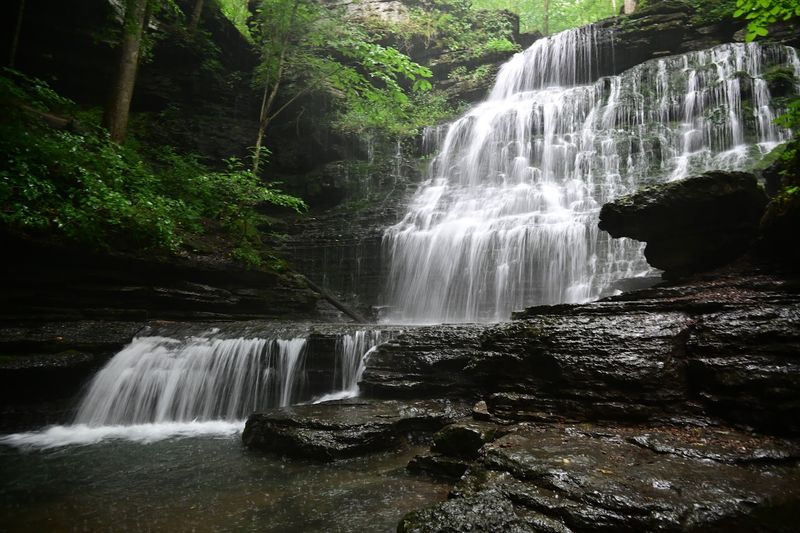
Timing a visit to Machine Falls makes a real difference. Winter and spring bring the highest water volume, fed by rainfall and snowmelt from the surrounding hills.
During these months, the falls become something close to overwhelming in the best possible way.
The cascade widens, the roar intensifies, and the mist reaches farther into the gorge. Crowds also tend to be thinner in cooler months, which means more space to stand, stare, and breathe it all in without jostling for a spot on the ledge.
Summer visits are still worthwhile, but water levels drop noticeably during dry stretches. The experience shifts from thunderous to scenic, which has its own appeal but lacks the raw energy of a spring visit.
Fall foliage adds color to the canopy, making the hike itself beautiful even if the falls run lower. Each season offers a different version of the same place.
Choosing based on what experience feels most appealing is the best approach.
A Wildflower Lover’s Dream
Spring brings something unexpected to Short Springs State Natural Area. The moist slopes around the gorge transform into one of Tennessee’s most celebrated wildflower destinations during the warmer months.
Trout lilies push up through the leaf litter in early spring. Virginia bluebells follow, turning the creek banks soft purple.
Dutchman’s breeches hang in delicate clusters from rocky outcrops. The variety is striking, especially for a park that most people visit purely for the waterfall.
Rarer species also make appearances here. Large flowered trillium is considered uncommon for the region, and Nestronia is one of two state listed endangered plants documented within the natural area.
Finding them requires slow, attentive walking rather than a hurried march to the falls.
Bringing a wildflower guide or a plant identification app adds a whole new dimension to the hike. The forest floor becomes its own attraction, layered with color and detail that most visitors walk right past.
Spring here rewards the observant visitor with more than just water and stone.
Trees That Own The Gorge
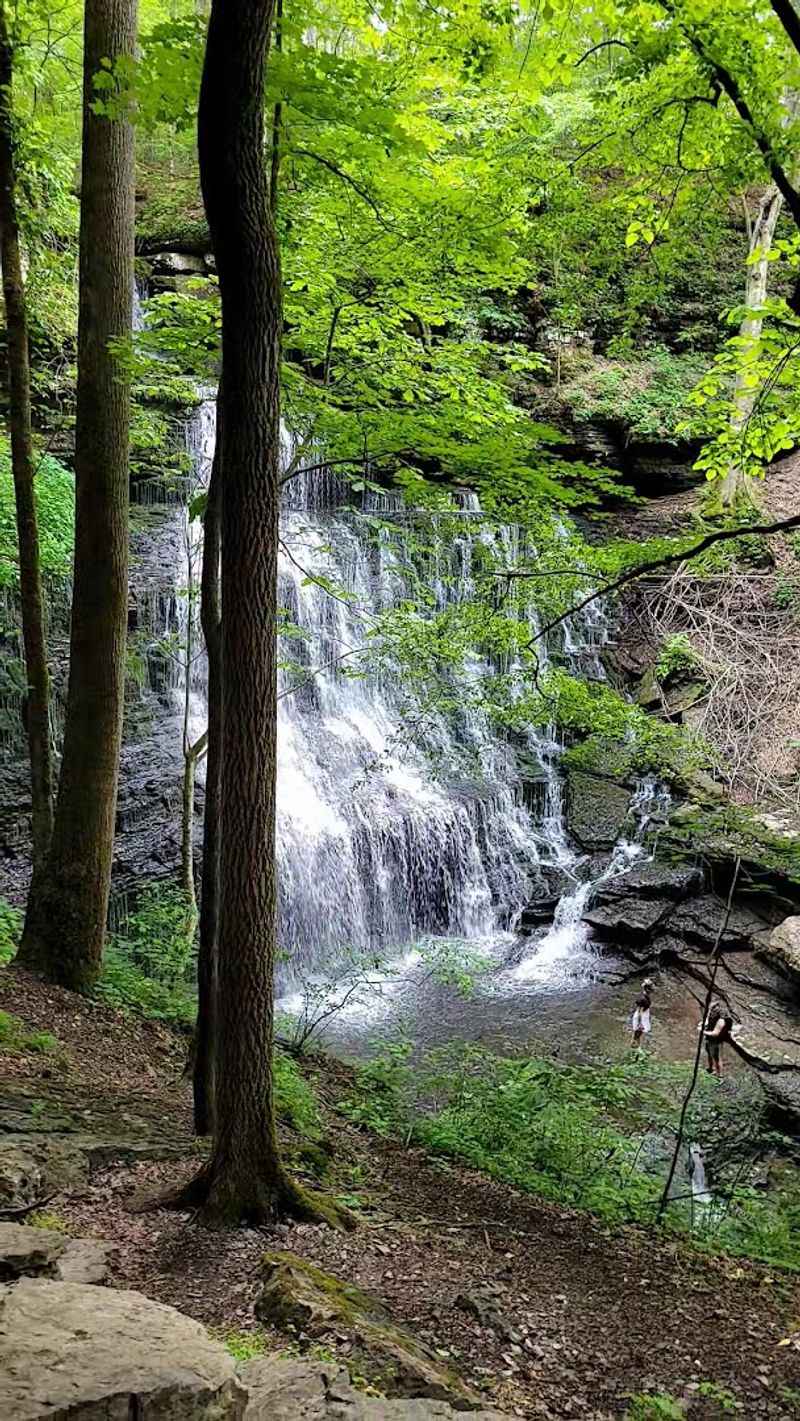
The plant life in this park does not play a supporting role. The forest is a major attraction in its own right, shifting dramatically between the upper slopes and the lower gorge.
Up top, dry oak and hickory trees dominate the canopy. Mountain laurel fills the understory with dense, evergreen growth that stays vivid even in winter.
The upper trail feels enclosed and shaded, like walking through a long green tunnel.
Down in the gorge, the trees change completely. Sycamores spread their pale, peeling trunks along the creek banks.
Buckeye, magnolia, beech, and tulip poplar rise to impressive heights in the richer, wetter soil. The canopy here is taller and more open, letting shafts of light reach the water below.
This layered ecosystem supports a wide range of wildlife. Birdwatchers have spotted woodpeckers and warblers moving through the trees at different elevations.
The forest rewards anyone willing to look up from the trail every now and then.
Parking, Planning, And Showing Up Smart
Getting to Machine Falls is easy. Staying frustrated in a full parking lot is easier.
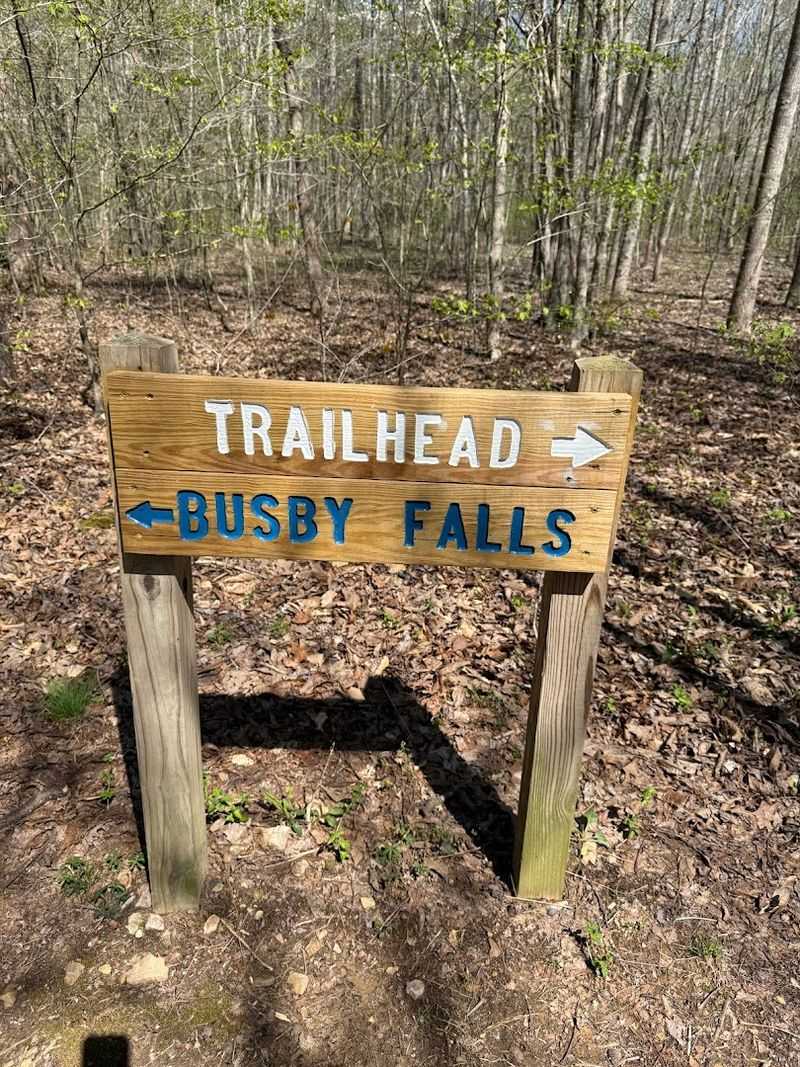
The trailhead sits on Powell Road in Tullahoma, Tennessee, at 1 Powell Rd, and a large water tower nearby makes it simple to spot from the road.
The parking lot is small. That is not an understatement.
On weekends and warm-weather days, it fills up fast, often before mid-morning. Official guidance is clear: if the lot is full, come back at a different time.
Parking outside designated spots can result in a ticket.
The trailhead sits directly across the road from the lot. Portable toilets are available near the parking area, but there are no facilities on the trails themselves.
Planning a stop in downtown Tullahoma before heading out covers any remaining needs.
Arriving early on weekdays gives the best chance at a quiet, uncrowded experience. Weekends in spring and summer are the busiest periods.
Adjusting the schedule even slightly can mean the difference between a peaceful hike and a wait in the car.
Other Falls Worth Chasing
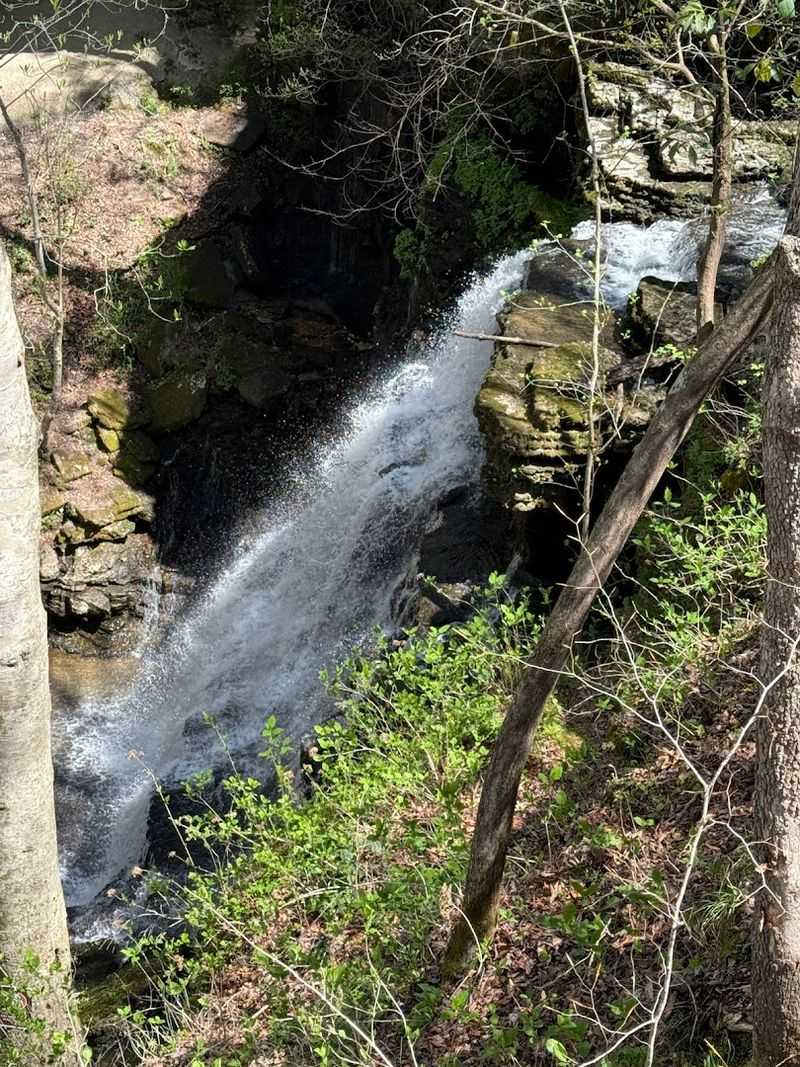
Machine Falls is the headline act, but the supporting cast deserves some credit too. Short Springs State Natural Area contains additional waterfalls reachable by extending the hike beyond the main loop.
Busby Falls, found along Bobo Creek, splits into upper and lower sections. Both require a bit more navigation than the main trail, and the path to reach them can be less obvious in spots.
Adams Falls rounds out the waterfall trio within the park.
A word of caution: these secondary falls depend heavily on rainfall. During dry stretches in late summer or fall, they can shrink to a trickle or disappear entirely.
Visiting after a period of rain gives the best chance of seeing them at their most impressive.
For those with extra time and energy after exploring the park, Rutledge Falls sits a short drive away and offers another beautiful cascade worth the detour. The greater Tennessee area around Tullahoma punches well above its weight in waterfall density.
What To Pack And How To Prepare
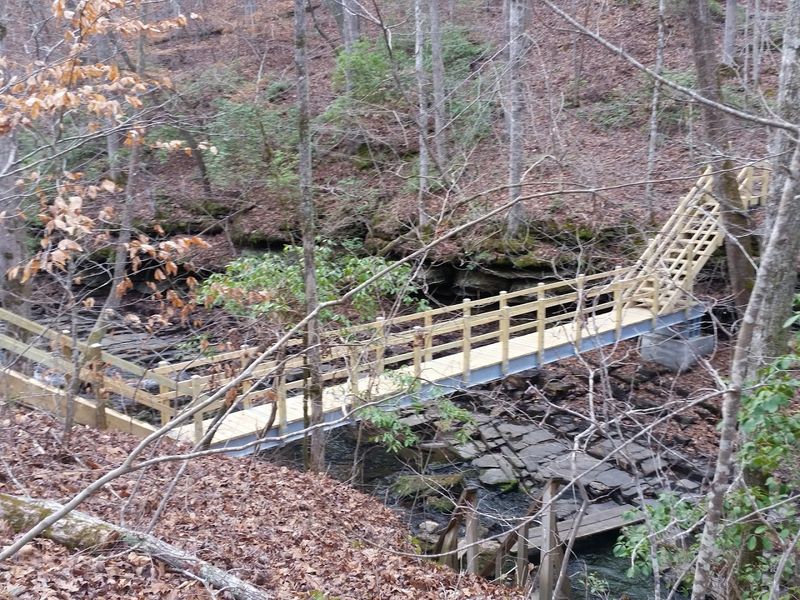
Preparation separates a great visit from a miserable one. The trail to Machine Falls involves creek crossings, steep descents, and wet rocks.
Wearing water shoes or sturdy trail shoes that can get wet is not optional, it is practical.
Bringing enough water is equally important. The hike is short in distance but demanding in effort, especially on the climb back out.
Running low on water halfway up a steep gorge is not a situation anyone enjoys.
A small first aid kit earns its place in the pack here. The rocks near the falls are sharp and uneven.
Slipping is a real possibility, especially on wet surfaces near the creek. Moving carefully and deliberately reduces the risk significantly.
Trash bins are available at the trailhead, and the pack-in, pack-out ethic is taken seriously by regular visitors. Leaving the trail cleaner than it was found is the kind of habit that keeps places like this worth visiting.
Dogs are welcome on the trails as long as they are kept on a leash.