
Tennessee Is Home To One Of The Most Beautiful Victorian Gothic Cathedrals In The Region
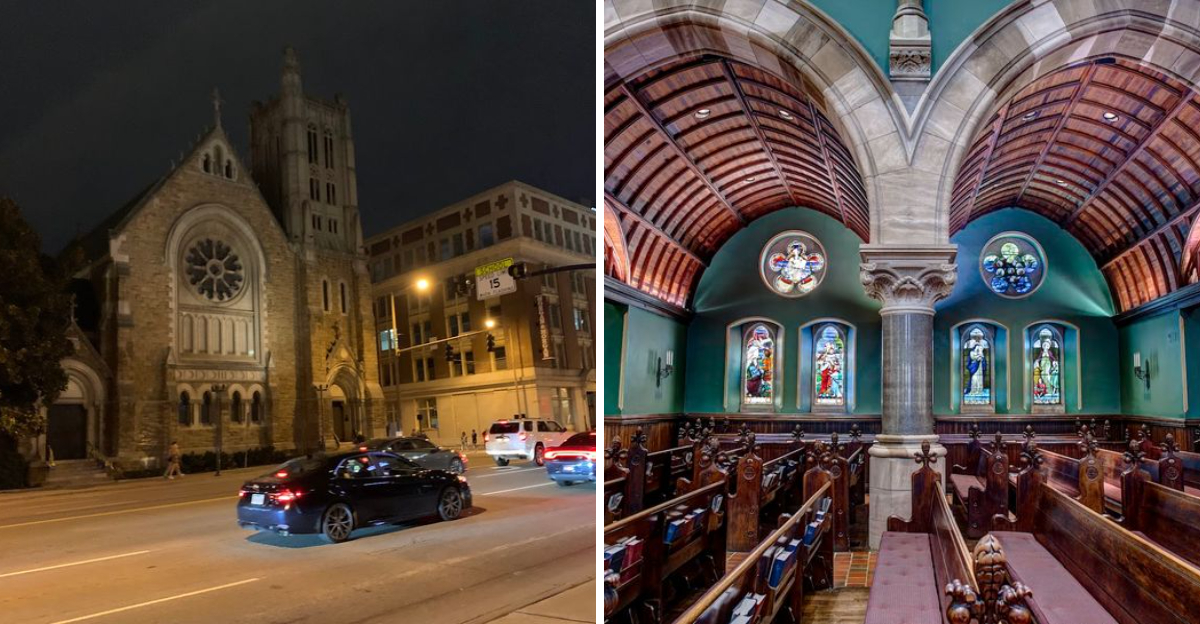
Some buildings look like they belong in another century. Tennessee has one that stops people mid step downtown.
Construction began in the late 1880s and finished a few years later, a project ambitious enough to bring in a well known New York architect. Stone gargoyles line the exterior, a rare detail for buildings in this part of the state.
A large rose window commands attention from the street. Enter and the space opens up fast, with soaring arches and stained glass casting color across the floor.
The tower took decades longer to complete than the rest of the building, finished well into the twentieth century. Chimes ring out from it every quarter hour, a small detail longtime locals barely notice anymore.
Choirs still perform here regularly, filling the space with sound the architecture seems built to hold.
This cathedral blends history, craftsmanship, and quiet beauty into one downtown landmark, and it rewards anyone willing to slow down and look up.
An Enduring Gothic Vision Carved In Tennessee Stone
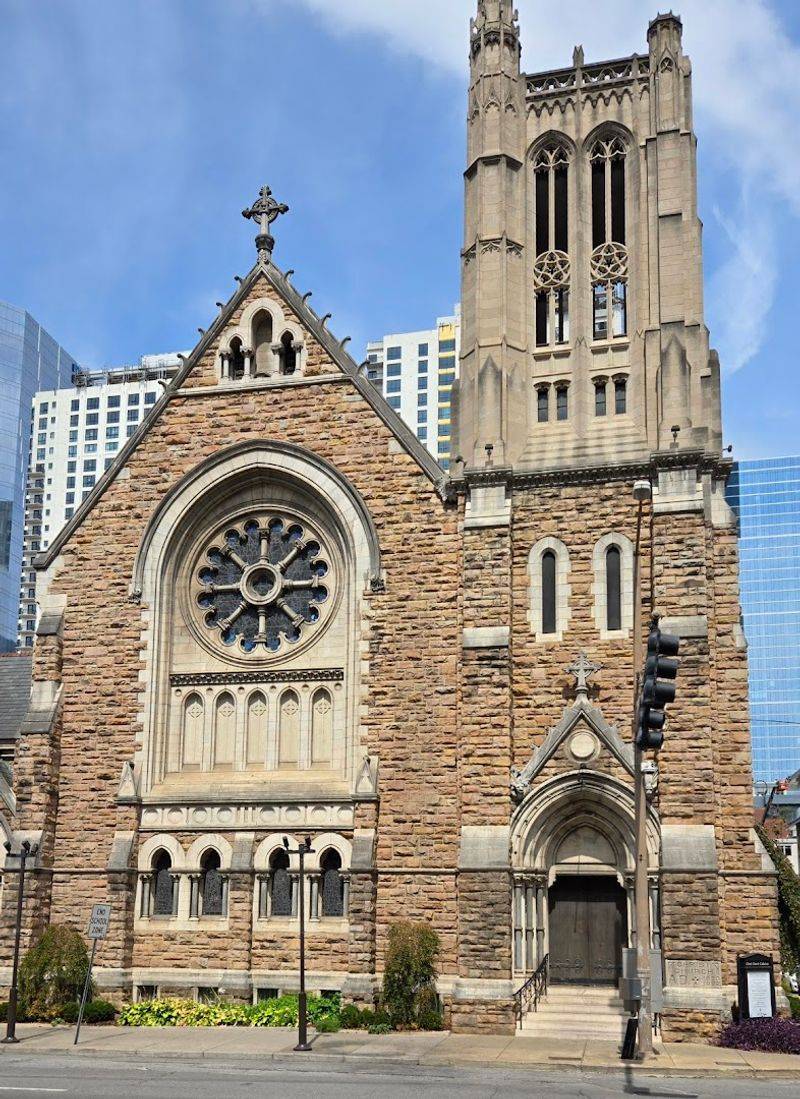
Few buildings on Broadway command attention quite like this one.
This cathedral and its Victorian Gothic design remains one of the most disciplined examples of that architectural movement in the entire southeastern United States.
The style itself was born from a deep admiration for medieval European cathedrals, favoring weight, verticality, and elaborate surface decoration over simplicity.
Every carved detail on this building was deliberate, meant to convey permanence and spiritual gravity in equal measure.
What makes the cathedral particularly compelling is how well it has aged. The stone walls carry the dignified patina of more than a century without appearing worn or neglected.
The building feels alive in the way only genuinely old structures do, as though the layers of history embedded in its masonry give it a kind of quiet authority that newer construction simply cannot replicate.
For anyone with even a passing interest in American architectural heritage, this cathedral is an essential stop.
The New York Architect Who Gave Nashville Its Cathedral
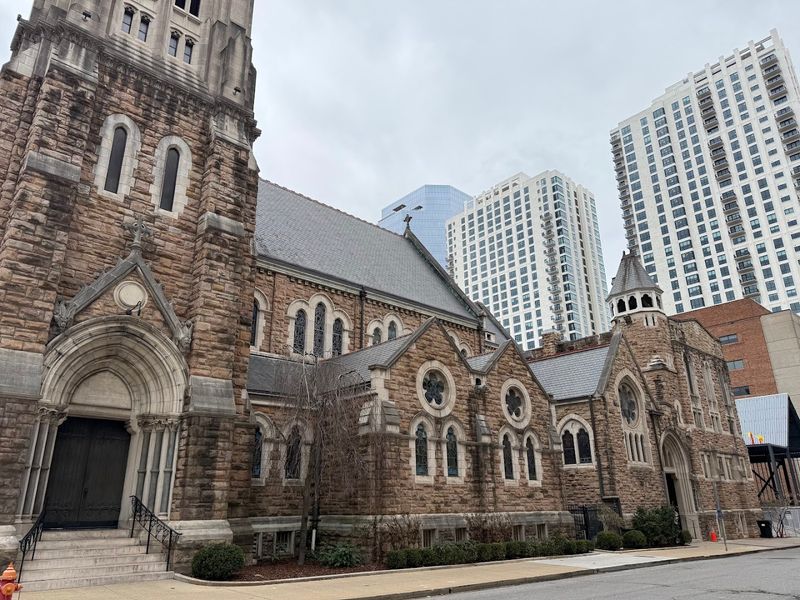
Behind every great building is a person with a clear and ambitious vision.
For Christ Church Cathedral, that person was Francis H. Kimball, a New York architect whose portfolio already reflected a mastery of Gothic ecclesiastical design before he ever turned his attention to Nashville.
Kimball conceived a structure that would feel genuinely European in its proportions and detail, not merely decorative but architecturally serious.
His design called for pointed arches, heavy stone construction, and intricate surface work that referenced the great cathedrals of England and France without copying them outright.
The main building was completed and opened for services on December 16, 1894, a date that marked the fulfillment of years of planning and labor.
What Kimball delivered was not simply a functional place of worship but a building with genuine artistic ambition, one that elevated its surrounding streetscape and gave Nashville a landmark worthy of its growing cultural identity.
His contribution to the city’s built environment remains significant, and the cathedral stands as one of his most enduring achievements, recognized today on the National Register of Historic Places.
Sewanee Sandstone And Kentucky Limestone Create A Striking Exterior
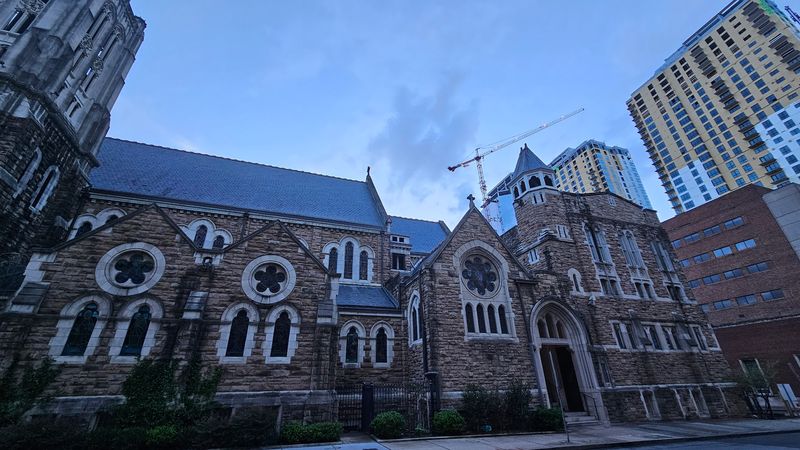
The exterior of Christ Church Cathedral is essentially a study in material contrast and harmony.
The primary walls are constructed from fine-cut Sewanee sandstone, a generous contribution from the University of the South, which lends the building its warm, earthy tone and robust texture.
Complementing those walls is Bowling Green stone, a honed oolite limestone quarried in Kentucky, used specifically for the cathedral’s more intricate decorative elements.
Doorway surrounds, window trimmings, and a remarkable collection of carved gargoyles depicting animals and birds all emerge from this lighter material, creating a visual dialogue between the two stone types that rewards careful observation.
Polished granite columns and marble colonnettes appear at key points throughout the exterior composition, adding further richness to an already layered material palette.
The result is a facade that feels genuinely handcrafted rather than assembled, each element chosen with purpose and executed with precision.
Standing before it, you begin to appreciate how much thought went into sourcing materials from the surrounding region, giving the building a geographic identity that connects it firmly to both Tennessee and its neighboring states.
Tiffany Studios Glass That Transforms Interior Light
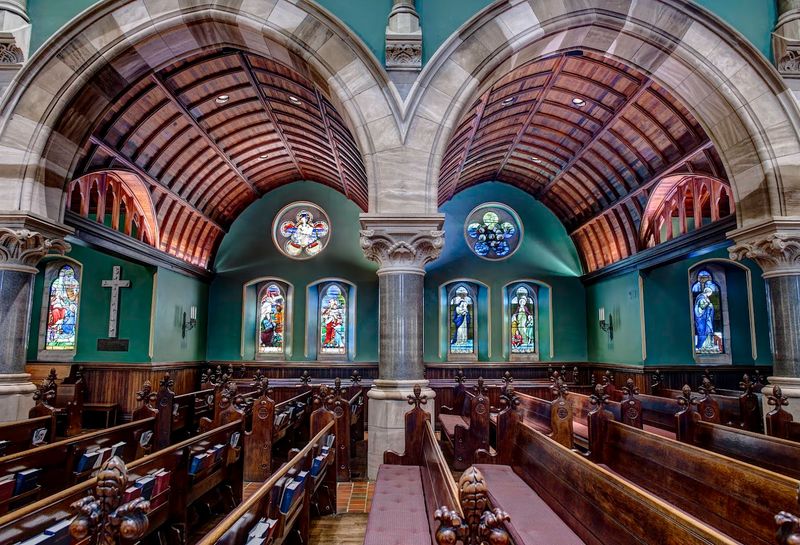
Natural light behaves differently inside Christ Church Cathedral than it does almost anywhere else in Nashville.
The reason is the extraordinary collection of stained glass windows created by Tiffany Studios of New York, some attributed directly to Louis Comfort Tiffany himself, whose work defined American decorative arts in the late 19th and early 20th centuries.
These windows do not merely filter sunlight. They translate it, breaking white light into deep jewel tones of blue, amber, red, and green that shift gradually across the stone columns and wooden pews as the hours pass.
The triptych arrangements are particularly striking, their symbolic imagery rendered with a painterly delicacy that still looks fresh more than a century after installation.
Visitors who arrive in the morning will experience the windows differently than those who come in the afternoon, which is part of what makes the interior so rewarding to explore at different times of day.
The atmosphere they create is one of focused calm, the kind of quiet that encourages reflection rather than demanding it.
For anyone interested in American decorative arts, these windows alone justify a visit to the cathedral.
The Sacred Interior And Its Remarkable Wooden Craftsmanship
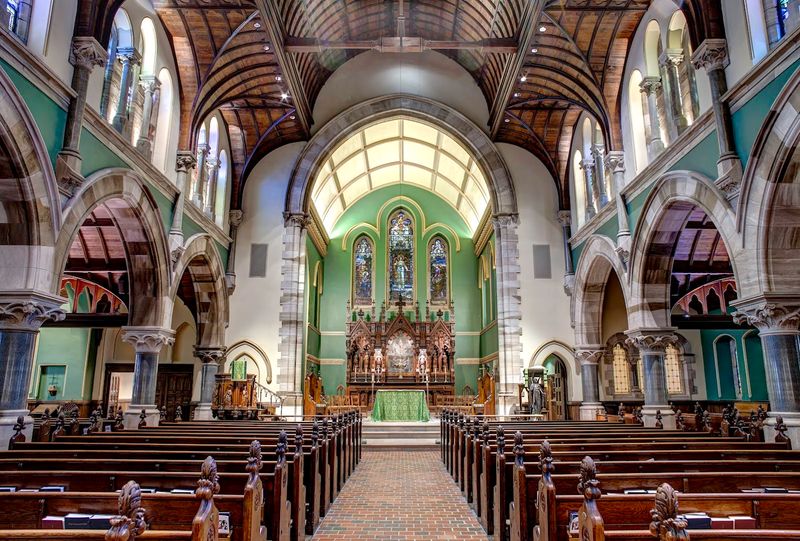
Walk through the main doors of Christ Church Cathedral and the scale of the interior registers immediately.
The broad nave stretches forward beneath a majestic wood tunnel vault, its slightly pointed barrel arches carried by polished granite columns with foliated capitals that catch the light with quiet elegance.
At the far end of the nave stands the wooden altarpiece, carved with exceptional skill by Melchoir Thoni, a Swiss emigrant whose craftsmanship brought a distinctly European sensibility to this Tennessee landmark.
The level of detail in the woodwork throughout the sanctuary is remarkable, the kind of patient, unhurried carving that speaks to a tradition of making things properly rather than quickly.
The pipe organ occupies a prominent position in the space, its ranks of pipes forming an architectural statement as much as a musical instrument.
The cathedral has long been celebrated for the quality of its choral and organ music, and standing beneath that vault it is easy to understand why the acoustics here feel so naturally suited to sacred music.
The interior as a whole carries what architectural historians often describe as an early English atmosphere, grounded, serious, and deeply considered in every detail.
The Tower That Completed A Vision Decades In The Making
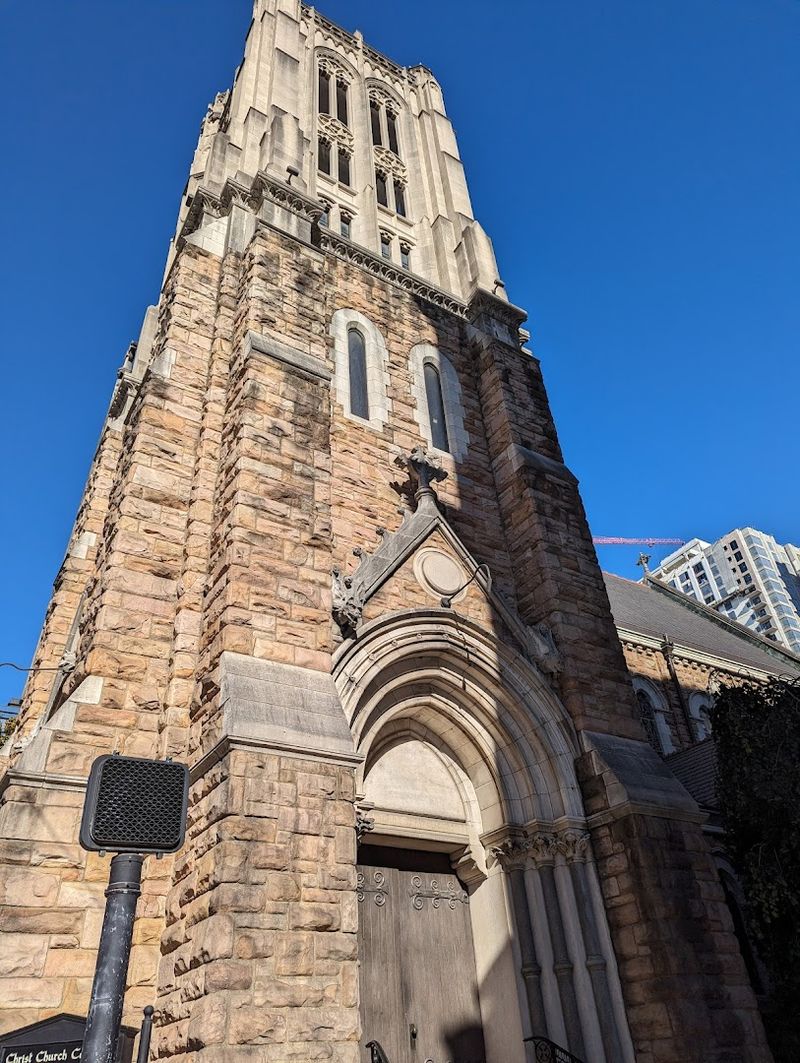
Great buildings are rarely finished in a single moment.
Christ Church Cathedral is a good example of how architectural visions can unfold across generations, with the striking corner tower representing a chapter of the story that took more than fifty years to close.
The tower was included in the original design plans drawn up in 1890, but construction did not begin until 1947, when Nashville architect Russell Hart supervised its realization.
The delay was not unusual for large ecclesiastical projects of that era, where funding, priorities, and circumstances could stretch timelines far beyond original expectations.
What Hart delivered was a tower with open-work tracery that harmonized seamlessly with the 1894 structure below it, as though no gap in time had ever separated the two phases of construction.
The tower now defines the cathedral’s corner silhouette and contributes significantly to its presence on the Nashville skyline.
It serves as a reminder that architectural patience sometimes produces better results than speed, and that a building completed thoughtfully across decades can feel more coherent than one rushed to completion in a single campaign.
A Congregation With Almost Two Centuries Of History
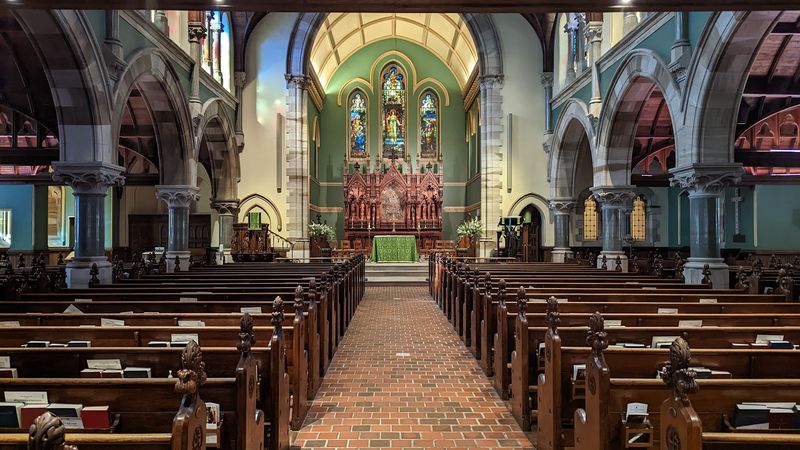
The physical building is only part of the story. The congregation that gathers within Christ Church Cathedral traces its origins to 1829, making it one of the oldest continuously active Episcopal communities in Tennessee.
The cornerstone for the first Episcopal church structure in the state was laid just one year after the congregation was established, in 1830.
The community acquired its current property on Broadway in 1883 and spent the following years planning and constructing the cathedral that opened in December 1894.
In 1997, Christ Church was formally designated the Cathedral of the Diocese of Tennessee, a recognition that elevated its already significant standing within the regional Episcopal community.
That long institutional history brings complexity alongside achievement.
The cathedral’s past includes ties to slavery and segregation during its earliest decades, chapters that the community has acknowledged as part of an honest reckoning with its own story.
Today the cathedral maintains an active presence in Nashville’s civic life, supporting social programs and welcoming visitors from across the country and beyond.
The depth of that history gives the building an additional layer of meaning that purely architectural appreciation alone cannot fully capture.
Why This Broadway Landmark Deserves Your Full Attention
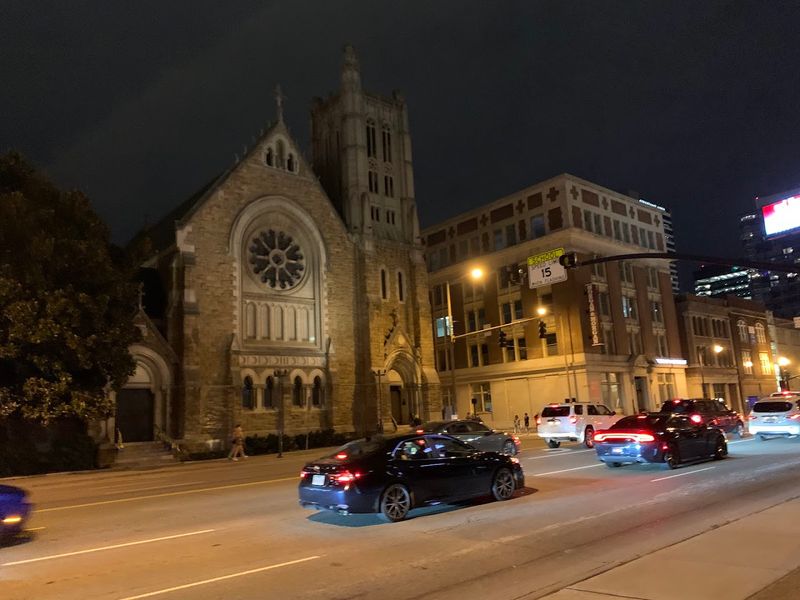
Broadway in Nashville is many things to many people, but few visitors expect to encounter a cathedral of this caliber along one of the city’s most energetic streets.
At 900 Broadway, Christ Church Cathedral offers something genuinely different from its surroundings, a space defined by stillness, craft, and accumulated history rather than noise and novelty.
The building is listed on the National Register of Historic Places, a formal acknowledgment of its architectural and cultural significance.
Guided tours are available for those who want a structured introduction to the building’s history and design, while the cathedral also remains an active place of worship with multiple Sunday services.
The pipe organ and choir are widely regarded as among the finest in the region, and the acoustic qualities of the nave make any musical event held here a genuinely memorable experience.
Whether you arrive as an architecture enthusiast, a curious traveler, or someone simply looking for a few quiet minutes away from the street, the cathedral receives you on its own unhurried terms.
It is the kind of place that stays with you long after you have returned to the ordinary rhythm of the day.