
Nevada Summer Comes Fully Covered On This Complete Bucket List Of Ideas
Fiery canyons, glacier blue lakes, and a dam splitting two states wait under blazing Nevada sun. This state does not have ordinary summers.
High above 10,000 feet, cool air and ancient bristlecone pines survive while desert floors bake below. Bighorn sheep watch quietly from the cliffs above.
Ancient petroglyphs still mark canyon walls, carved long before anyone thought to build a road out here. Turquoise water begs for one more dive, dark skies beg for stargazing, and canyon trails dare you to wander farther.
Every stop feels like a completely different world living inside Nevada. Consider this list your shortcut to the boldest summer ideas the state has to offer.
Pack water, sunscreen, and curiosity, because the season is calling.
Your Nevada Summer Starts Here
Nevada summers do not tiptoe around anything, and this roundup proves it. Expect a lineup built for adventure lovers who want more than neon lights and bright city energy on their radar.
Inside this guide, readers will find desert canyons blazing in red and orange, alpine lakes cold enough to wake up tired legs, and a legendary feat of engineering that reshaped an entire region. There is a national park with its own glacier, a lake sacred to a tribal community, and a mountain byway compared to the Alps.
Every stop comes with practical tips for beating the heat, since Nevada summer temperatures do not play games. Whether the plan is a quick weekend getaway or a full summer road trip, this list breaks down exactly where to go, what to expect, and how to stay safe while chasing bold, unforgettable scenery from one end of the state to the other.
Great Basin National Park
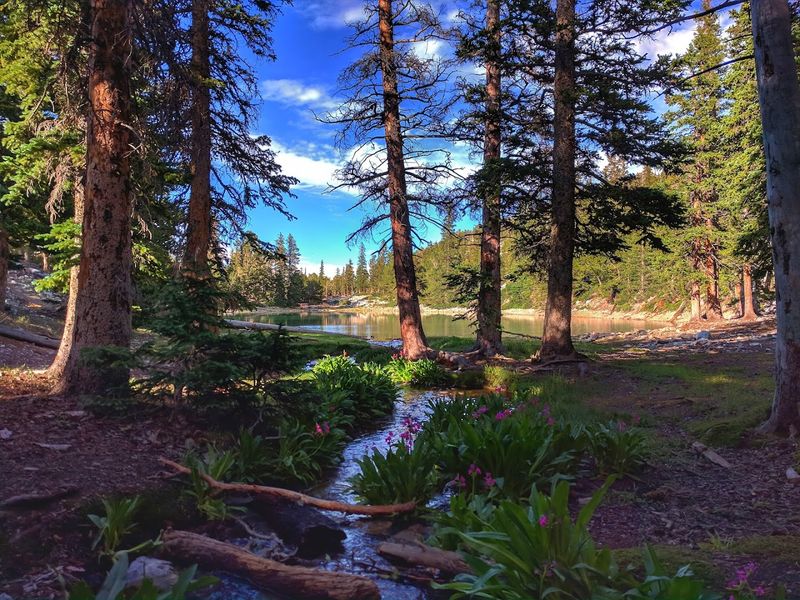
High above the desert floor, an entirely different Nevada reveals itself. Great Basin National Park, located near Baker, Nevada, functions as a sky island where mountains rise sharply from the surrounding basin.
Wheeler Peak, the second highest point in the state, hosts Nevada’s only glacier, a remarkable feature that surprises most visitors who expect only sand and heat.
Summer opens the entire park to exploration. The Wheeler Peak Scenic Drive becomes fully accessible, and snow retreats from high-elevation trails, unlocking routes to shimmering alpine lakes and ancient bristlecone pine groves.
Some of these bristlecone pines rank among the oldest living organisms on the planet, their twisted forms telling stories that stretch back thousands of years.
Campgrounds at various elevations offer cooler temperatures than the surrounding lowlands, making summer nights genuinely comfortable. Great Basin also earns recognition for having some of the darkest night skies in the entire country.
Stargazing here on a clear summer night is a genuinely unforgettable experience. Ranger-led tours of Lehman Caves, famous for rare cave shields found almost nowhere else, are available throughout the season.
Reservations for cave tours are strongly recommended to avoid disappointment on arrival.
Red Rock Canyon National Conservation Area
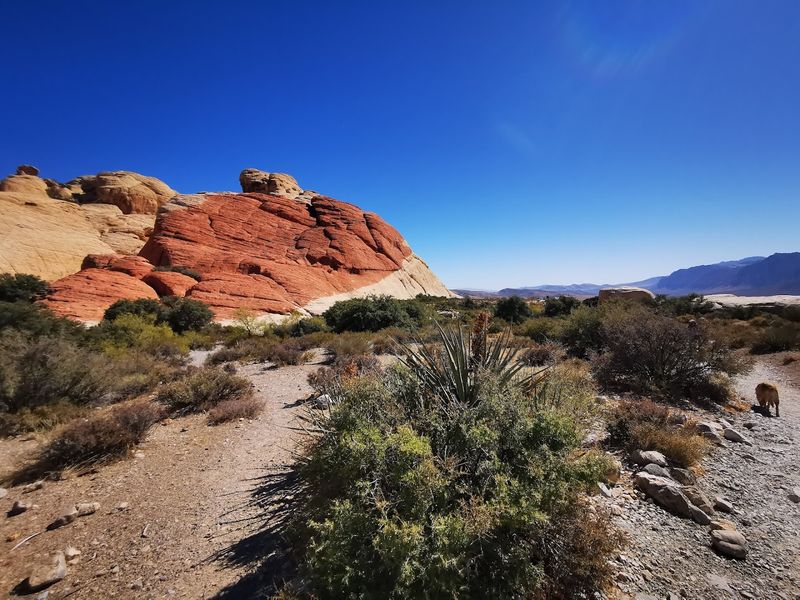
Just a short drive from the bright lights of Las Vegas sits a world that feels completely different. Red Rock Canyon National Conservation Area, near Mountain Springs, Nevada, covers over 195,000 acres of raw Mojave Desert beauty.
Towering sandstone peaks and the vivid Calico Hills dominate a skyline that surprises first-time visitors every single time.
The scenic drive is the most popular way to take in the canyon without overheating. No timed entry reservations are required between June and September, which makes spontaneous summer visits more manageable.
Hiking is absolutely possible, but the summer heat demands serious preparation. Temperatures regularly climb into the mid-90s and frequently push past 100 degrees Fahrenheit.
Early morning starts before the sun fully rises are the smartest strategy for hitting the trails. Carrying at least half a liter of water per person per hour is the baseline recommendation.
Light-colored, breathable clothing and a wide-brimmed hat are non-negotiable gear. Bighorn sheep sometimes appear on the cliffs above, watching hikers below with calm curiosity.
Ancient Native American rock art and agave roasting pits along certain trails add a rich cultural layer to the canyon’s already impressive natural story.
Valley Of Fire State Park
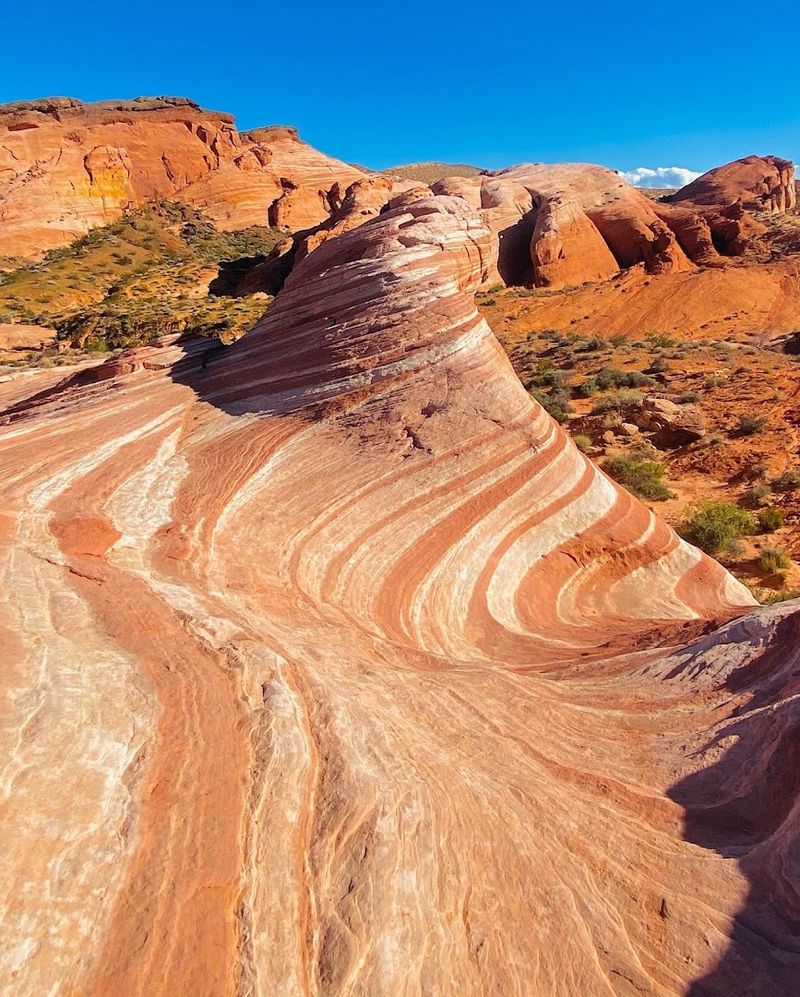
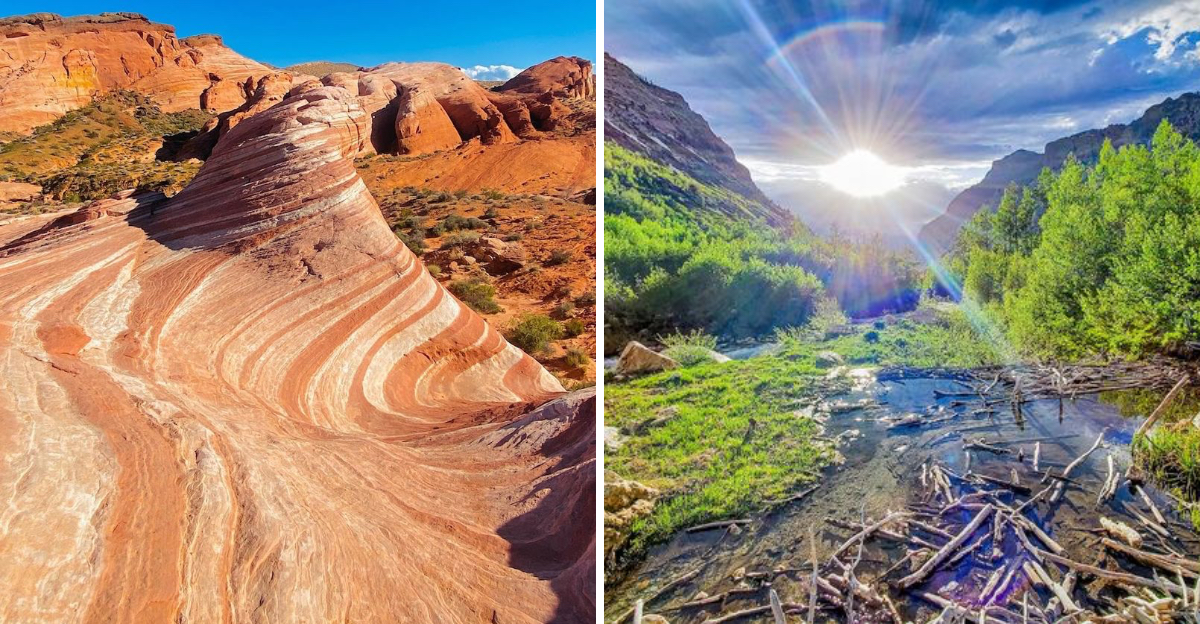
Red does not even begin to cover it. Valley of Fire State Park, near Moapa Valley, Nevada, blazes with ancient sandstone formations that shift from deep crimson to vivid orange depending on the angle of the sun.
The name is not marketing. It is a promise.
Petroglyphs etched by ancient peoples cover many rock faces throughout the park. Slot canyons offer narrow, shaded passages to explore when temperatures climb.
Swirling striped rock layers tell a geological story stretching back millions of years, and every photo taken here looks like something from a science fiction film set.
Summer heat here is serious business. Daily highs frequently exceed 100 degrees Fahrenheit, and park rangers strongly recommend limiting outdoor activity to early mornings before 10 AM or evenings after 6 PM.
Some popular trails, including the Fire Wave and White Domes Loop, close during peak summer months. Driving the scenic road still rewards visitors with incredible views of the Beehives, Elephant Rock, and Mouse’s Tank.
Carry far more water than you think you need, and respect the desert on its own terms.
Hoover Dam
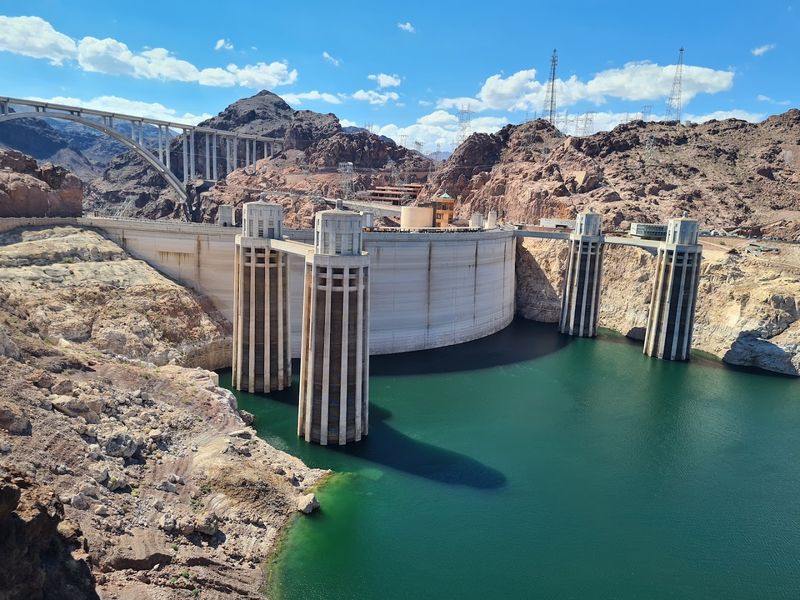
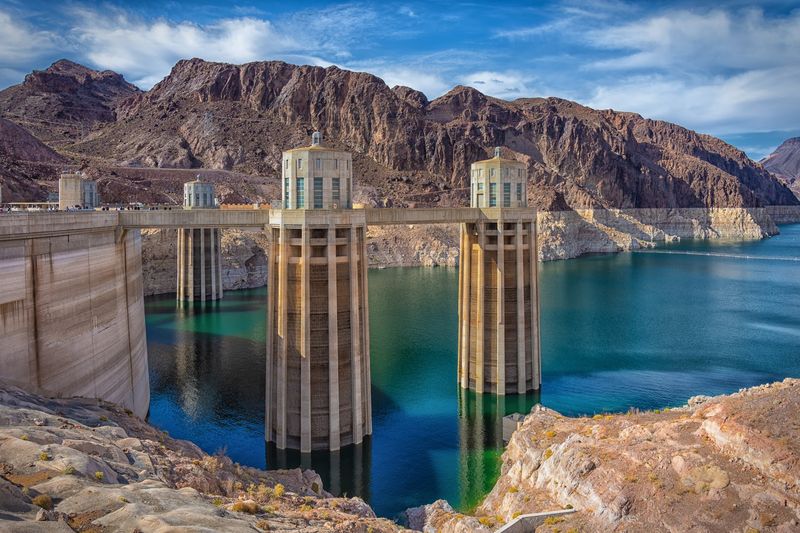
Few structures on Earth manage to feel both humbling and thrilling at the same time. Hoover Dam, located at Hoover Dam Access Rd, Boulder City, NV 89005, stands 726 feet high and stretches 1,244 feet across the Black Canyon of the Colorado River on the Nevada-Arizona border.
Built between 1931 and 1936, it put over 21,000 workers to work during the Great Depression.
The dam was originally called Boulder Dam before its name was officially restored to Hoover Dam in 1947. Its scale is difficult to fully grasp from photographs alone.
Enough concrete was used in its construction to pave a two-lane highway stretching from San Francisco to New York.
Beyond its engineering story, Hoover Dam created Lake Mead, the largest man-made reservoir in the United States. It supplies water and hydroelectric power to millions across Nevada, Arizona, and California.
The Visitor Center explains the dam’s history and function in engaging detail. Guided tours take visitors deep inside the tunnels and power plant.
Walking the crest of the dam means literally standing in two states at once. The Mike O’Callaghan-Pat Tillman Memorial Bridge nearby offers sweeping panoramic views of the entire structure from above.
Sand Harbor State Park
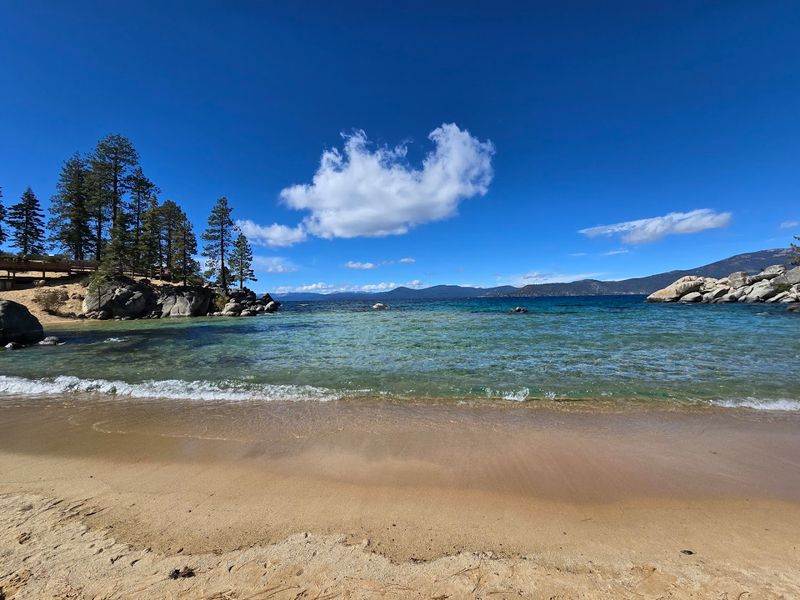
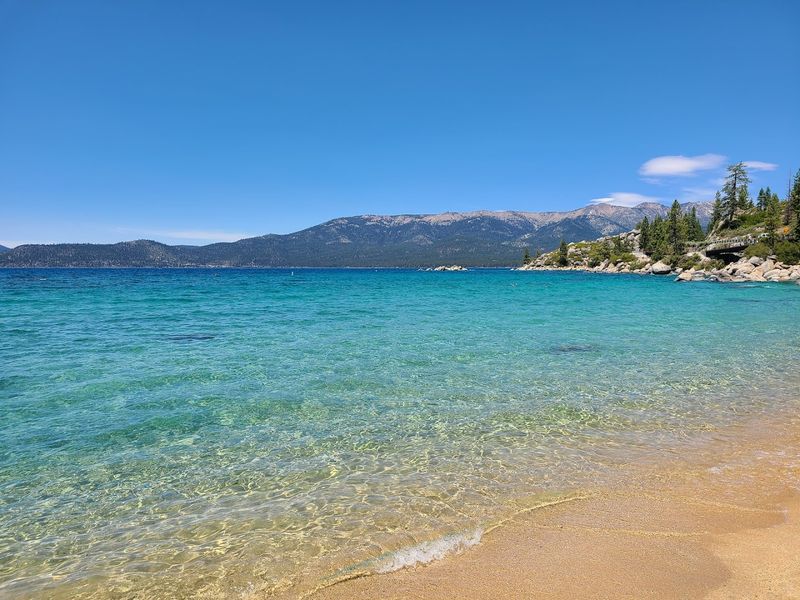
Crystal-clear water so blue it looks almost painted sits framed by massive granite boulders at Sand Harbor State Park. Located at 2005 NV-28, Incline Village, Nevada, this park sits along the eastern shore of Lake Tahoe and delivers a beach experience that feels almost too good to be real.
Swimming is the obvious crowd-pleaser here. The gently sloping sandy entry makes it easy for all ages to wade in without a fuss.
Kayakers and paddleboarders explore calm coves tucked between boulders, while scuba divers drop below the surface to discover surprisingly clear underwater worlds.
Boaters can use the wave-protected launch ramps available on site. Cyclists riding the East Shore Trail can access the park without dealing with summer parking headaches.
Tall Jeffrey pines and cedars provide natural shade over picnic areas, making midday lunches genuinely pleasant. Every summer, the Lake Tahoe Shakespeare Festival transforms the shoreline into an outdoor stage, blending live performance with one of the most striking natural backdrops in the entire state of Nevada.
Pyramid Lake
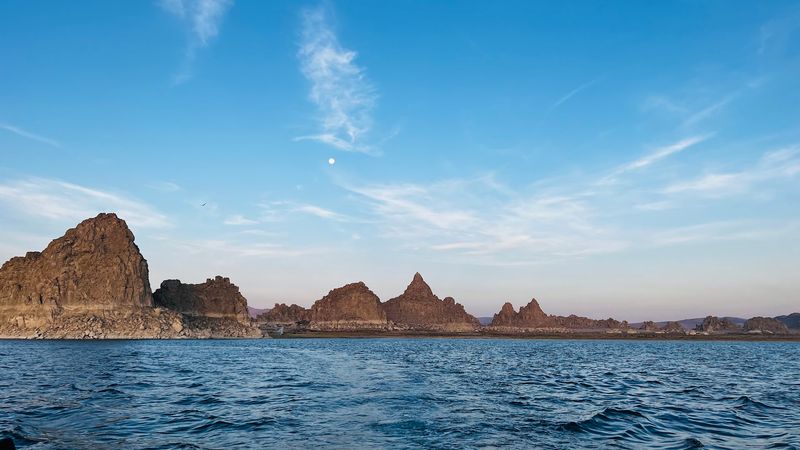
Ancient, vast, and strangely captivating, Pyramid Lake sits as one of Nevada’s largest and most historically significant natural lakes. This striking body of water is the most notable remnant of ancient Lake Lahontan, a massive prehistoric lake that once covered much of the Great Basin.
Its waters shift between vivid blue and steely gray depending on the mood of the sky above.
The lake holds deep cultural meaning for the Pyramid Lake Paiute Tribe, whose connection to this landscape stretches back generations. The Paiute Tribe’s Museum and Visitors Center offers exhibits that bring both the tribe’s heritage and the lake’s natural history into clear, respectful focus.
The iconic Stone Mother rock formation rises near the shore, visible from a distance since the tribe has closed direct public access to protect this sacred site.
Fishing draws serious anglers from far beyond Nevada’s borders. Lahontan Cutthroat Trout and the ancient Cui-ui fish make this one of the most distinctive fisheries in the western United States.
Kayaking, stand-up paddleboarding, hiking, and mountain biking round out the recreational options along the western shoreline. Anaho Island, a National Wildlife Refuge within the lake, protects a large colony of American White Pelicans.
Boaters are asked to keep a respectful distance from this critical nesting habitat.
Lamoille Canyon
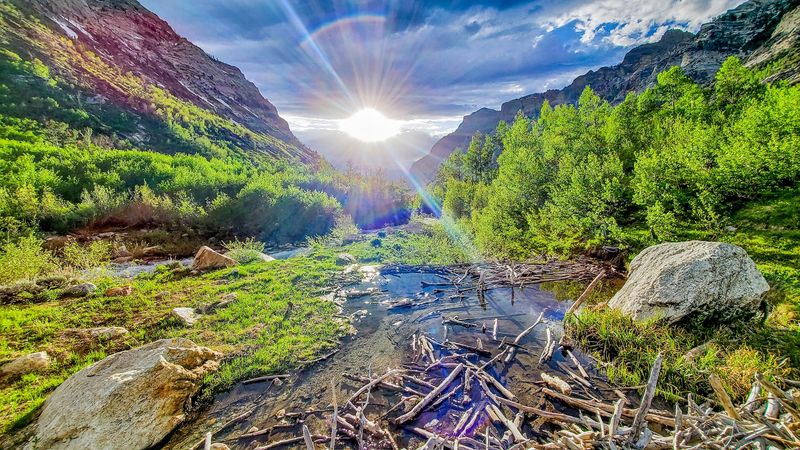
The Ruby Mountains of Nevada hide something that stops most first-time visitors cold. Lamoille Canyon, located near Lamoille, Nevada, is a glacier-carved valley of jaw-dropping scale.
Towering cliffs rise on both sides while clear mountain streams rush through meadows thick with summer wildflowers. The comparison to the Swiss Alps gets made often, and it is not hard to understand why.
The Lamoille Canyon Scenic Byway stretches nearly 12 paved miles into the heart of the canyon. It typically opens between May and October, weather permitting.
Photographers find no shortage of compositions at every pull-off along the route. Hikers have a solid range of trail options to choose from, spanning easy walks to demanding mountain treks.
The Lamoille Lake Trail covers around four miles round trip and leads to a sparkling high-altitude lake surrounded by rocky peaks. More experienced hikers push on to Liberty Pass for sweeping views across the Ruby Mountain range.
Fishing draws visitors to beaver ponds near the byway’s end, where trout species are stocked throughout the summer season. Mule deer graze calmly in open meadows, and mountain goats occasionally appear on the steep cliffs above.
Horseback riding through the canyon adds yet another dimension to this underrated corner of Nevada.
Nevada Summer Travel Tips
Nevada summers reward the well-prepared and humble the unprepared with equal enthusiasm. Temperatures across the lower elevations routinely exceed 100 degrees Fahrenheit, which means heat management is not optional.
Hydration is the single most important habit to build before setting foot on any trail or outdoor site across the state.
Early morning activity windows, typically before 10 AM, are the golden hours for hiking, sightseeing, and photography. The light is softer, the air is cooler, and the trails are less crowded.
Evenings after 6 PM offer a second window when the heat eases enough for comfortable outdoor time. Midday hours are best spent in shade, at higher elevations, or near water.
Packing lightweight, light-colored, and breathable clothing makes a noticeable difference over the course of a full day outdoors. A wide-brimmed hat and quality sunscreen are non-negotiable.
Driving between destinations is genuinely enjoyable in Nevada, where highways cut through stunning open landscapes that feel cinematic at every turn. Planning accommodations and cave tour reservations in advance avoids common summer frustrations.
The state rewards those who research before arriving and stay flexible enough to adjust when the desert decides to show who is really in charge.
Why Nevada Belongs On Every Summer Bucket List
Most people think they already know what Nevada offers. They picture bright lights, glittering towers, and flat desert stretching to the horizon.
The reality of a Nevada summer is something far richer, far more varied, and far more surprising than that familiar mental image suggests.
Within a single state, summer travelers can swim in one of the clearest lakes in North America, hike through ancient bristlecone pine forests older than most civilizations, stand on top of a dam that reshaped an entire region, and watch the Milky Way from skies so dark that stars feel close enough to touch. Few states deliver that kind of range.
The Silver State asks only that visitors come with curiosity, proper preparation, and genuine respect for landscapes that do not tolerate carelessness. Heat, altitude, and remote terrain are real factors, but they are manageable with planning.
Every destination on this bucket list offers something that cannot be found anywhere else. Nevada is not a backup plan or a stopover.
It is a destination that earns its place at the top of any serious summer travel list, and the landscapes here make sure that case is never hard to argue.