
We Stepped Into A Restaurant In New York And Ended Up In Vienna Because Of Their Game-Changing Apple Strudel
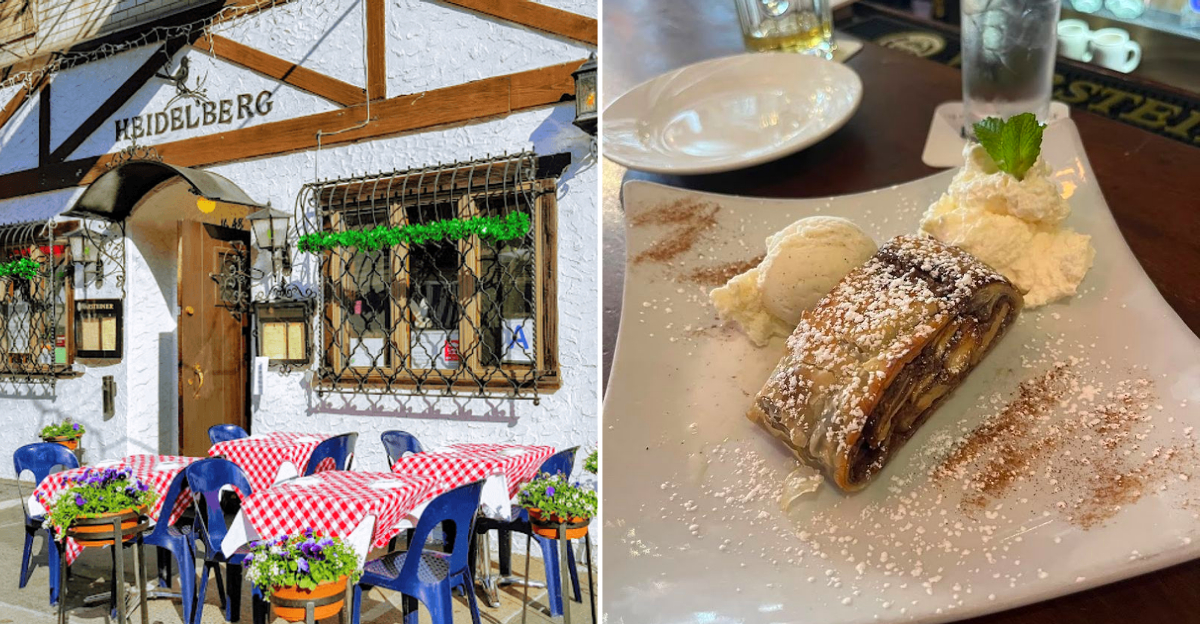
We stepped into a New York restaurant and somehow ended up somewhere that felt a lot closer to Vienna.
That is the strange charm of this old-school dining room, where heavy plates, polished wood, warm service, and a dessert case with serious main-character energy make the city outside feel miles away.
Long before every neighborhood had a new concept opening every week, places like this gave New Yorkers a taste of another world and made regulars out of anyone who loved honest, hearty cooking.
The menu leans rich, classic, and deeply comforting, with dishes that feel built for cold evenings, long conversations, and one more round at the table.
Then comes the Appel Strudel, which is not just dessert. It is the moment the whole visit starts making sense. In a city obsessed with what is new, this New York restaurant proves old-world magic still has plenty of pull.
A Room That Forgot To Move Forward (In The Best Way)
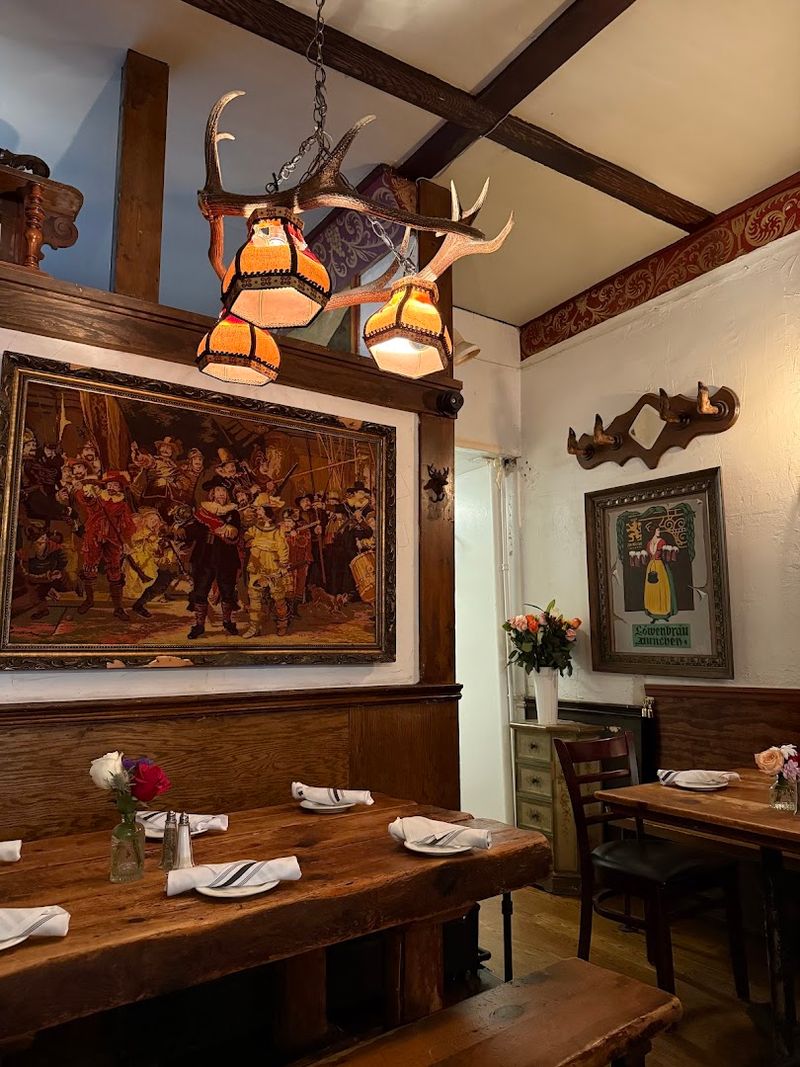
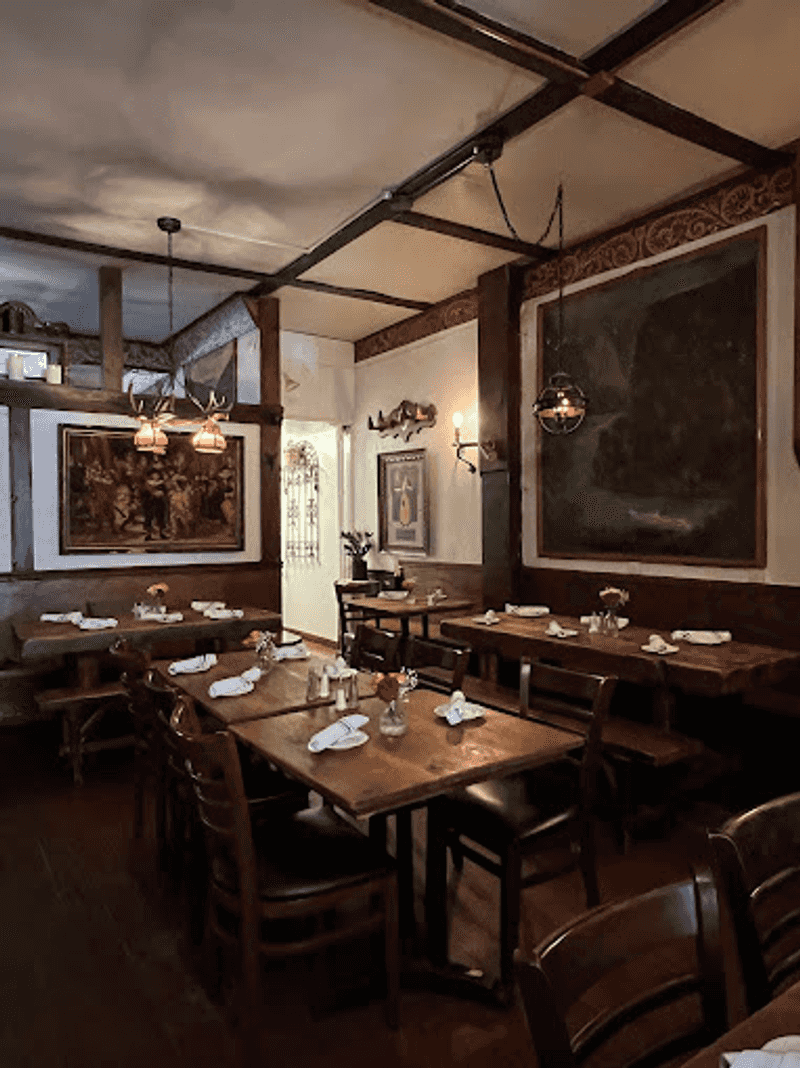
Some rooms carry a feeling you cannot manufacture. The moment you pull up a chair at this place, the checkered tablecloths and dark wood paneling tell you something real is happening here.
Dim lighting keeps things warm and unhurried. There is no rush, no noise, no trendy neon sign demanding your attention.
White lace curtains frame the windows. Original German paintings hang on the walls, some of them over a century old.
The stein glasses on the tables are not props for a photo op. They are part of a daily ritual that has been going on for decades.
Accordion music drifts through the air softly, not loudly enough to interrupt conversation but present enough to remind you where you are. The staff have worked here for years, sometimes decades, and that kind of loyalty shows in every interaction.
New York moves fast, but this room has chosen a different pace entirely. Sitting here feels like pressing pause on the whole city outside.
It is not a museum piece either. The food comes out hot, the portions are enormous, and the energy is alive. Old does not mean tired here. It means earned.
Heidelberg Restaurant On 2nd Ave Has Been Holding It Down Since 1939
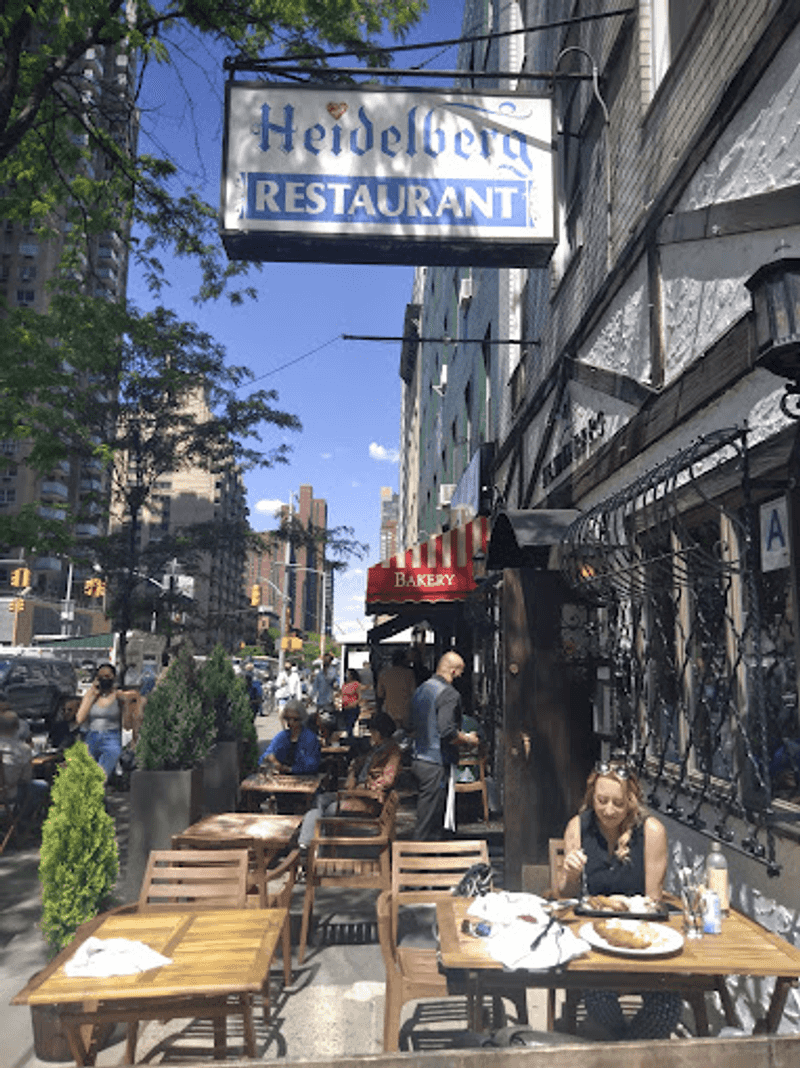
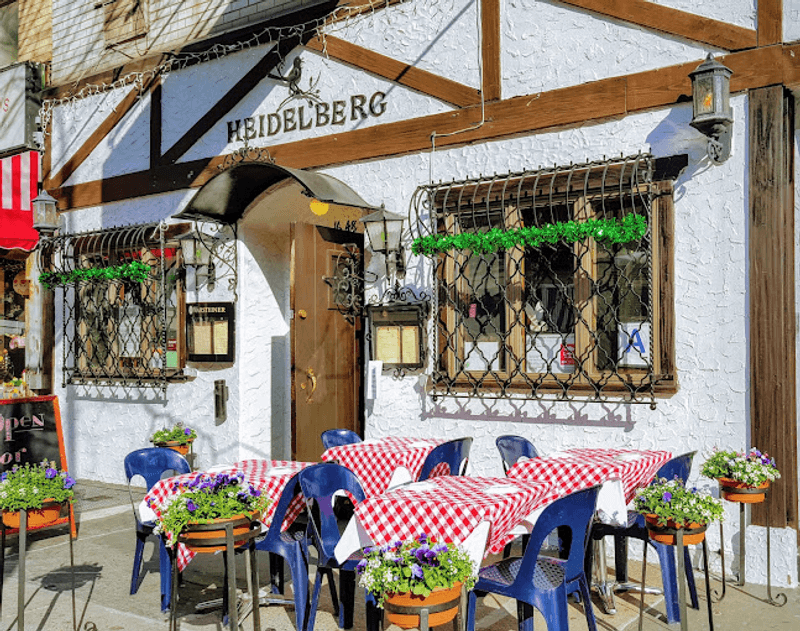
Heidelberg Restaurant at 1648 2nd Ave, New York, NY 10028 is one of the oldest family-run German restaurants in the United States. It officially opened in 1939 and has never stopped serving. That kind of staying power in New York City is not luck. It is conviction.
Yorkville, the Upper East Side neighborhood where Heidelberg sits, was once packed with German immigrants and their businesses. People called it German Broadway.
Called it Sauerkraut Boulevard. Over the decades, almost every German establishment in the area closed. Heidelberg kept going.
Luise Edler purchased the restaurant in 1964, and the family has owned it ever since. Her grandson Andreas now runs the operation, keeping the same spirit alive that his grandmother built.
The mission has always been simple: cook honest food, treat people well, and honor the culture. No reinvention needed.
The restaurant holds a 4.5-star rating, which says everything you need to know about consistency. You can reach them at 212-628-2332, and they open at 11 AM every day of the week.
Walk-ins only, no reservations. That policy alone tells you this place plays by its own rules.
The Pork Shank That Makes Grown Adults Go Quiet
There are dishes that arrive at the table and change the conversation entirely. The Pork Shank Platter, known in German as Schweineshaxe, is one of those dishes.
It arrives with a crackling golden exterior and meat so tender it practically introduces itself to the fork.
Heidelberg sources its meat from its own farm in the Catskills. No antibiotics, no hormones, no tenderizers.
The animals are grass and grain-fed, which means the flavor you taste is the real thing, not a chemical shortcut. A single portion is easily shareable between two or three people, so plan accordingly.
The shank comes with classic sides that earn their place on the plate. Sauerkraut, red cabbage, and potato dumplings round out the experience with balance and depth.
The crispy outside gives way to layers of juicy, well-seasoned meat that rewards every bite. It is the kind of dish that makes you understand why German cooking has endured for centuries.
No frills, no foam, no microgreens artfully placed on top. Just a magnificent piece of pork prepared with full commitment and served by people who know exactly what they are doing.
Schnitzel Done Right Is A Whole Conversation
Wiener Schnitzel has been on menus across the world for so long that most people assume they already know what it tastes like. A meal at Heidelberg corrects that assumption quickly.
The breaded veal is thin, perfectly fried, and delivers a crunch that holds up from the first bite to the last.
Heidelberg also offers Jägerschnitzel, which comes with a rich mushroom gravy that adds an entirely different layer to the dish. Regulars often recommend ordering the Jägerschnitzel gravy as a side with the Wiener Schnitzel, a move that results in something genuinely memorable.
Pair it with Spaetzle instead of potatoes and the whole plate becomes something worth talking about.
Spaetzle, the soft egg noodle that functions as both comfort food and side dish, is buttery and gentle in a way that balances the richness of the schnitzel beautifully. The lingonberries served alongside add a tart brightness that cuts through the breading.
Portions are generous enough that finishing everything in one sitting feels like an athletic achievement. German cuisine at this level is not heavy for the sake of being heavy.
Every component earns its spot on the plate with purpose and precision.
Sausage Platters And The Art Of Not Overthinking Dinner
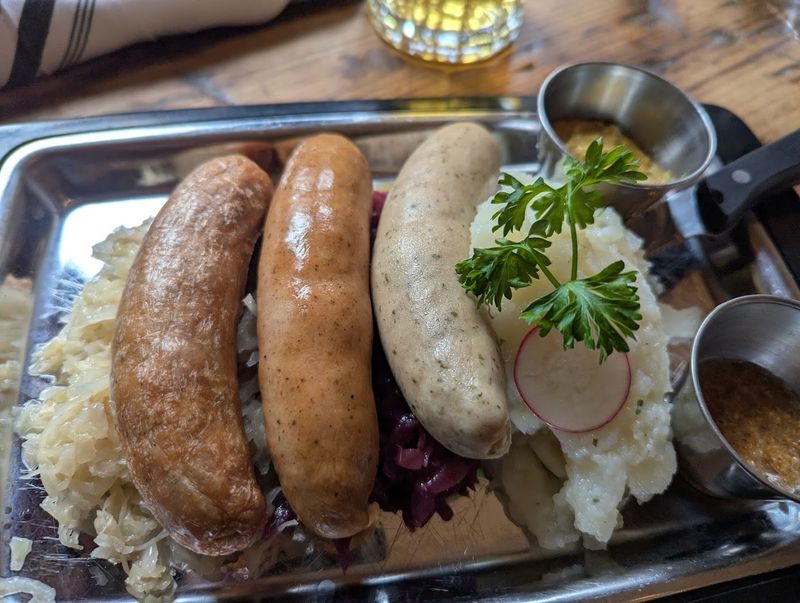
Sometimes the most satisfying meal is also the most straightforward one. The Sausage Platter at Heidelberg features Bratwurst, Bauernwurst, and Weisswurst arranged with sauerkraut, red cabbage, and German potato salad.
It is a complete picture of Bavarian eating culture served on a single plate.
The mustard selection deserves a mention of its own. Both regular and sweet mustard come alongside the sausages, and the contrast between the two keeps every bite interesting.
The sausages themselves are snappy, well-seasoned, and cooked with a confidence that only comes from years of practice.
A single platter can comfortably feed two people unless you arrive particularly hungry. The portions at Heidelberg are not designed for light appetites.
The farm-sourced meat policy applies here as well, meaning the Catskills supply chain that fuels the pork shank also backs up every sausage on the menu. That consistency matters.
Knowing where your food comes from changes how it tastes, or at least how it feels to eat it. There is a straightforward honesty to this platter that New York dining sometimes forgets to offer.
No concept, no narrative, just excellent sausage and the condiments that were always meant to go with it.
The Pretzel That Sets The Tone For Everything That Follows
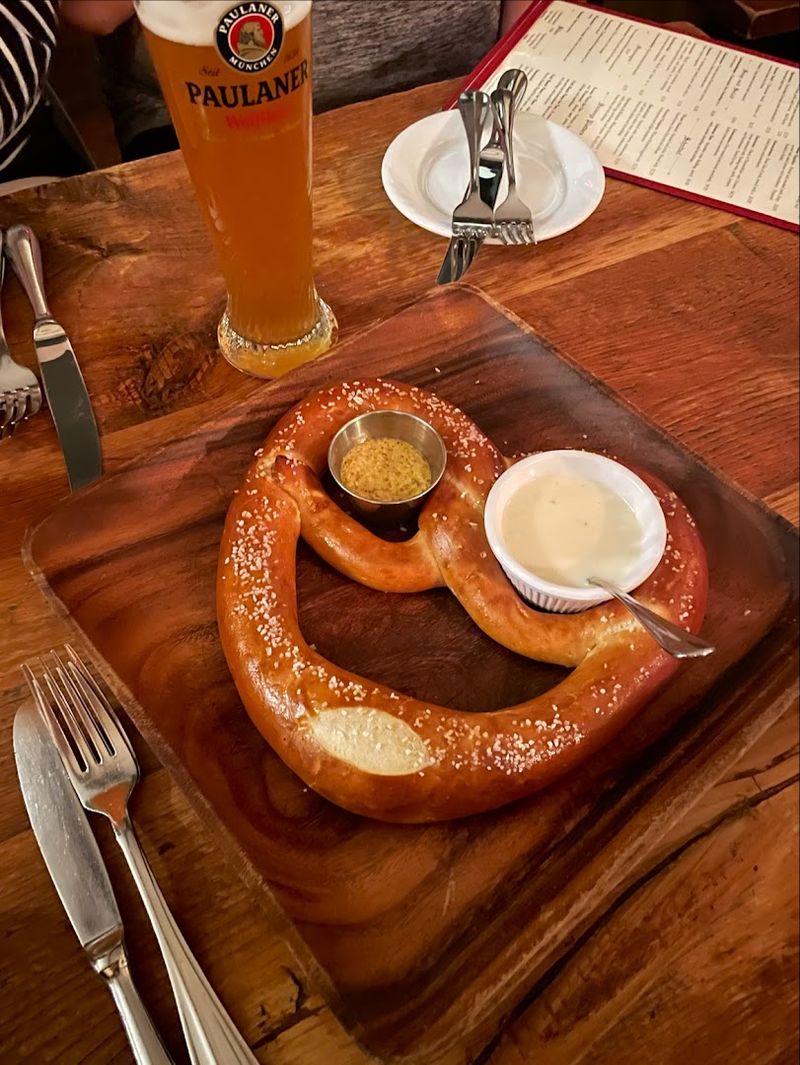
Starting a meal at Heidelberg with the large soft pretzel is less a suggestion and more a civic duty. It arrives golden and substantial, with coarse salt crystals on top and a crust that gives way to a soft, chewy interior.
It is the kind of pretzel that makes you reconsider every pretzel you have eaten before it.
Baked to a deep amber color, the exterior has that slight resistance that signals proper preparation. The inside stays tender and warm throughout the meal.
Paired with the mustard on the table, it functions as both appetizer and mood-setter. It tells you immediately what kind of meal is ahead.
Pretzels in New York are everywhere, but most of them are a disappointment wrapped in wax paper. Heidelberg’s version is a reminder that the original form of something, made with care and the right technique, will always outperform the shortcut version.
The restaurant has been serving food at this level since 1939, and the pretzel reflects that institutional knowledge. It is not flashy.
It does not need to be. A great pretzel in a room this full of history feels less like an appetizer and more like a proper welcome to the table.
Apple Strudel, Black Forest Torte, And The Sweet Finish You Earned
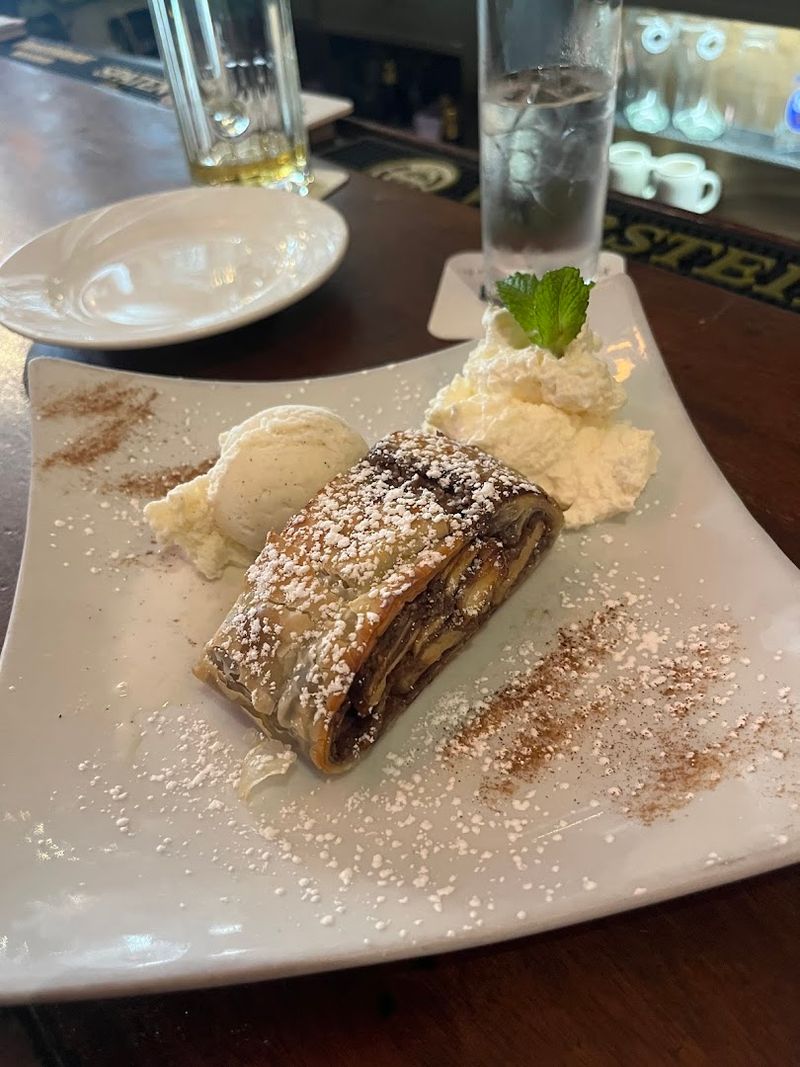
Reaching the dessert menu at Heidelberg feels like finishing a very good novel. You are full, satisfied, and somehow still curious about what comes next.
The Homemade Apple Strudel is the headline. Warm, flaky, and generously filled with spiced apples, it can be ordered with whipped cream or purchased whole to take home.
Both options are correct.
The Schwarzwalder Kirsch Torte, known more broadly as Black Forest Cherry Torte, is the kind of dessert that rewards patience. Layers of chocolate cake, cherries, and cream come together in a way that feels old-fashioned in the most complimentary sense of the phrase.
The title mentions a Sachertorte, and the spirit of that Viennese tradition lives in every dessert Heidelberg serves. Rich, precise, unapologetically indulgent.
Other options on the dessert menu include Palatschinken, which are thin crepes filled and folded with sweet toppings, Rote Grutze, a classic red berry pudding, and a Viennese Ice Cream Coffee that closes the meal with elegance.
New York has no shortage of dessert options, but few of them carry the weight of a century-old culinary tradition behind them. Ending a meal here is not just eating dessert. It is completing the experience.