
This Giant New York Peace Pagoda Is One Of The State’s Most Striking Sacred Sites
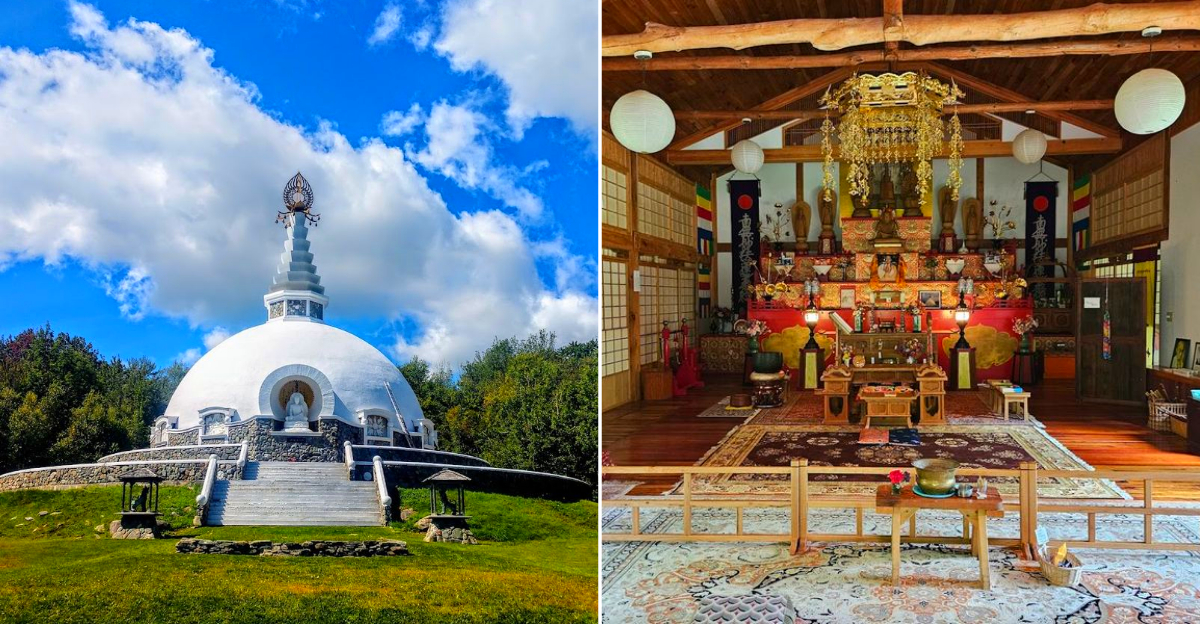
GPS has a funny way of testing your faith when it leads you toward something this unexpected in New York. Somewhere in the forested hills of New York, a massive white peace pagoda rises above the trees with a stillness that feels almost unreal.
It is not flashy, loud, or built for quick photo stops, yet it has the kind of presence that makes visitors lower their voices without thinking.
The structure stands as a symbol of peace, shaped by donated labor, deep devotion, and a message that feels especially powerful in a noisy world.
Travelers come for the sight of it, but many leave remembering the quiet more than the scale. Bells, prayerful details, wooded paths, and wide-open sky all add to the feeling that this is not an ordinary roadside attraction.
It is one of New York’s most striking sacred places, and the drive only makes its arrival feel more meaningful.
A Sacred Giant Hidden In Plain Sight
Not every extraordinary place announces itself with a sign on a highway. Some of the most remarkable destinations on earth sit quietly off a dirt road, waiting for the curious traveler to find them.
The Grafton Peace Pagoda is exactly that kind of place.
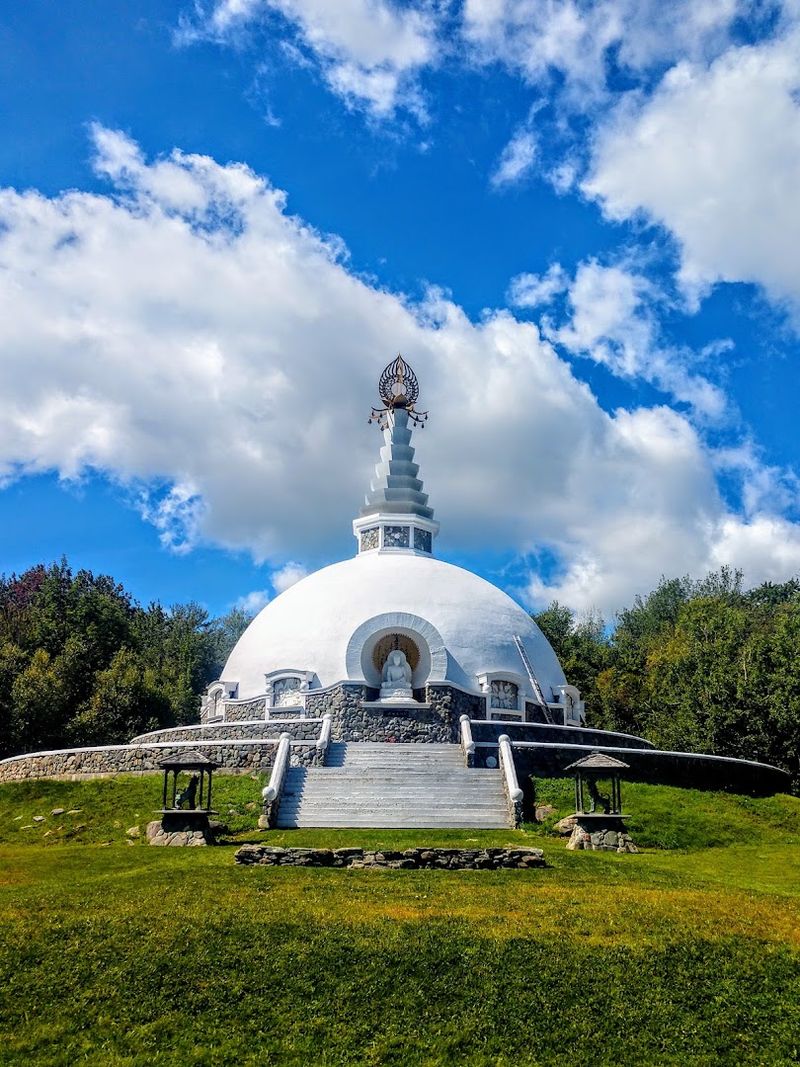
Standing 100 feet tall and 130 feet wide, the structure commands the landscape around it. When visitors emerge from the short woodland trail and see it for the first time, the sheer scale tends to stop people mid-step.
Nothing in the surrounding countryside prepares you for that first glance.
The pagoda rises above the treetops of Petersburgh, New York, built on ancestral Mohican land generously donated for the purpose of peace. It was not constructed by a corporation or funded by a government grant.
Every stone, every beam, and every sculpted relief was made possible through donated materials, volunteer hours, and a community commitment that spanned nearly a decade.
Over tens of thousands of volunteer hours went into its creation, and that devotion shows in every detail.
Recycled materials were used throughout, giving the site a warm, handcrafted character that polished tourist attractions rarely achieve.
Where To Find This New York Treasure
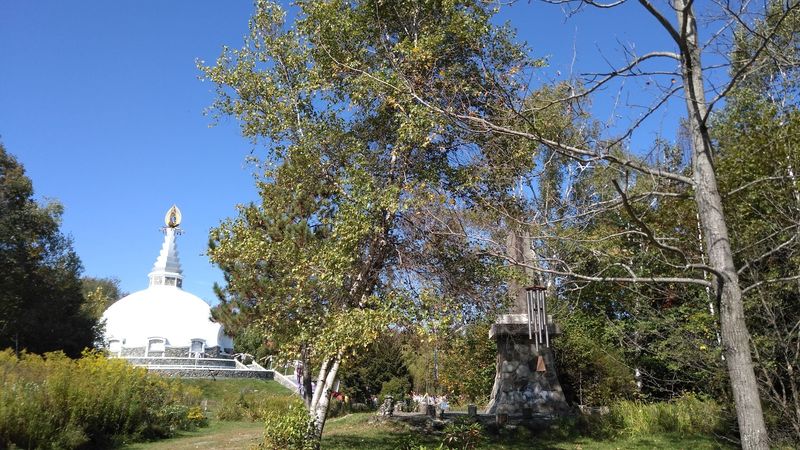
The Grafton Peace Pagoda sits at 87 Crandall Road, Petersburgh, NY 12138, and getting there is genuinely part of the experience. The road narrows, the trees close in, and the outside world begins to feel very far away before you even park the car.
A small parking area sits across from the entrance. From there, visitors can either follow a straight gravel path directly to the grounds or take a specially designed woodland trail that winds gently through the trees.
Both routes are short, but the forest path adds a meditative quality that sets the right tone before arrival.
The site is open daily from sunrise to sunset, and there is no admission fee. The Nipponzan Myohoji Buddhist order, which oversees the pagoda, does not solicit money.
Donations are accepted and genuinely appreciated, but no one will hand you a ticket or a price list at the gate. What greets visitors instead is birdsong, the rustle of leaves, and the growing sense that something remarkable is just around the next bend.
Elders and visitors with accessibility needs can park directly beside the temple, making the site welcoming to a wide range of guests.
The Monk, The Nun, And The Mission Behind It All
Behind every great structure is a story worth telling, and the Grafton Peace Pagoda has one of the most compelling origin stories in all of New York. Buddhist nun Jun Yasuda is the heart of this place.
She has walked thousands of miles across the United States, beating her hand drum and chanting for peace, often in conditions that would sideline most people twice her age.
The seeds of the pagoda were planted during The Longest Walk in 1978, when Jun Yasuda marched alongside Native Americans from San Francisco to Washington, D.C., advocating for indigenous rights.
Five years later, while fasting in Albany for Native American activist Dennis Banks, she met Hank Hazelton.
Hazelton was an indigenous rights advocate who had personally witnessed the atomic bombing of Nagasaki. He offered a parcel of his land in Grafton for a monument to peace, and the rest became history.
Construction began in October 1985 and continued for eight to nine years before the pagoda was formally dedicated in the fall of 1993.
The Nipponzan Myohoji order was founded in 1917 by Nichidatsu Fujii, a Buddhist monk deeply inspired by Mahatma Gandhi after the two met in 1931.
That connection between Eastern spirituality and nonviolent activism runs through every inch of this site.
Sculpted In Stone, Carved With Meaning
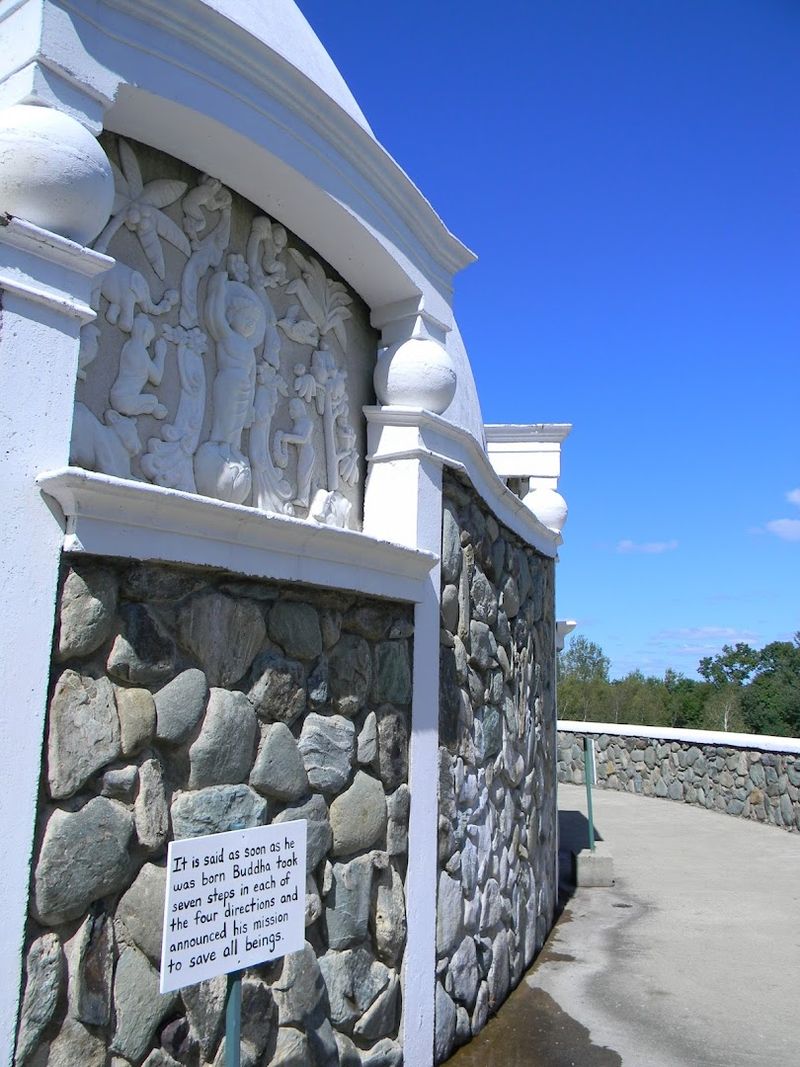
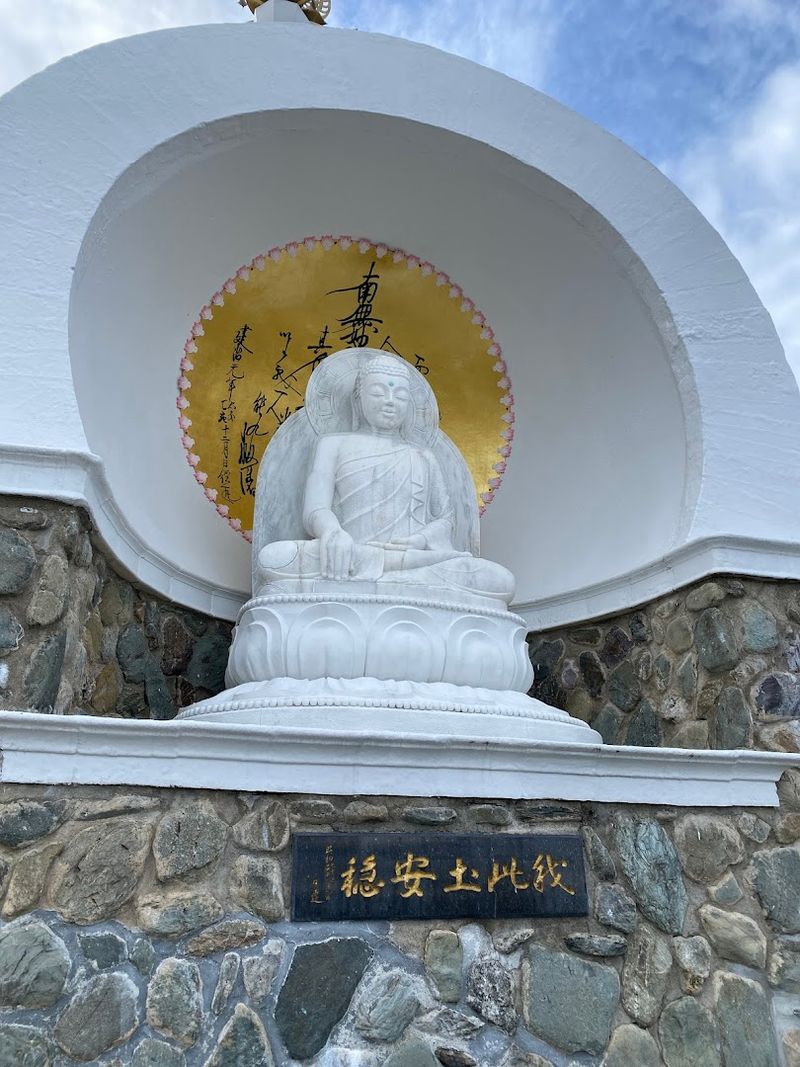
Art lovers will find something deeply satisfying about the pagoda’s exterior. The outer walls carry detailed bas-relief sculptures depicting scenes from the birth, life, and passing of Shakyamuni Buddha.
Walking around the structure feels less like circling a building and more like reading a story told in stone.
At the center of the pagoda stands a seven-ton statue of Shakyamuni Buddha carved from Vermont Marble. The statue rests on a sculpted concrete pedestal and radiates a calm authority that draws the eye from every angle on the grounds.
Marble from Vermont giving form to a Buddhist icon in rural New York is a quietly poetic detail that the pagoda wears without any fuss.
The interior of the pagoda is intentionally empty. That is not an oversight or an unfinished project.
Early pagodas across Asia were solid structures of stone and mud brick, with no hollow interior. The Grafton pagoda honors that original tradition deliberately.
The absence of interior space is itself a statement, a reminder that the meaning of a sacred place does not require filling every corner with objects.
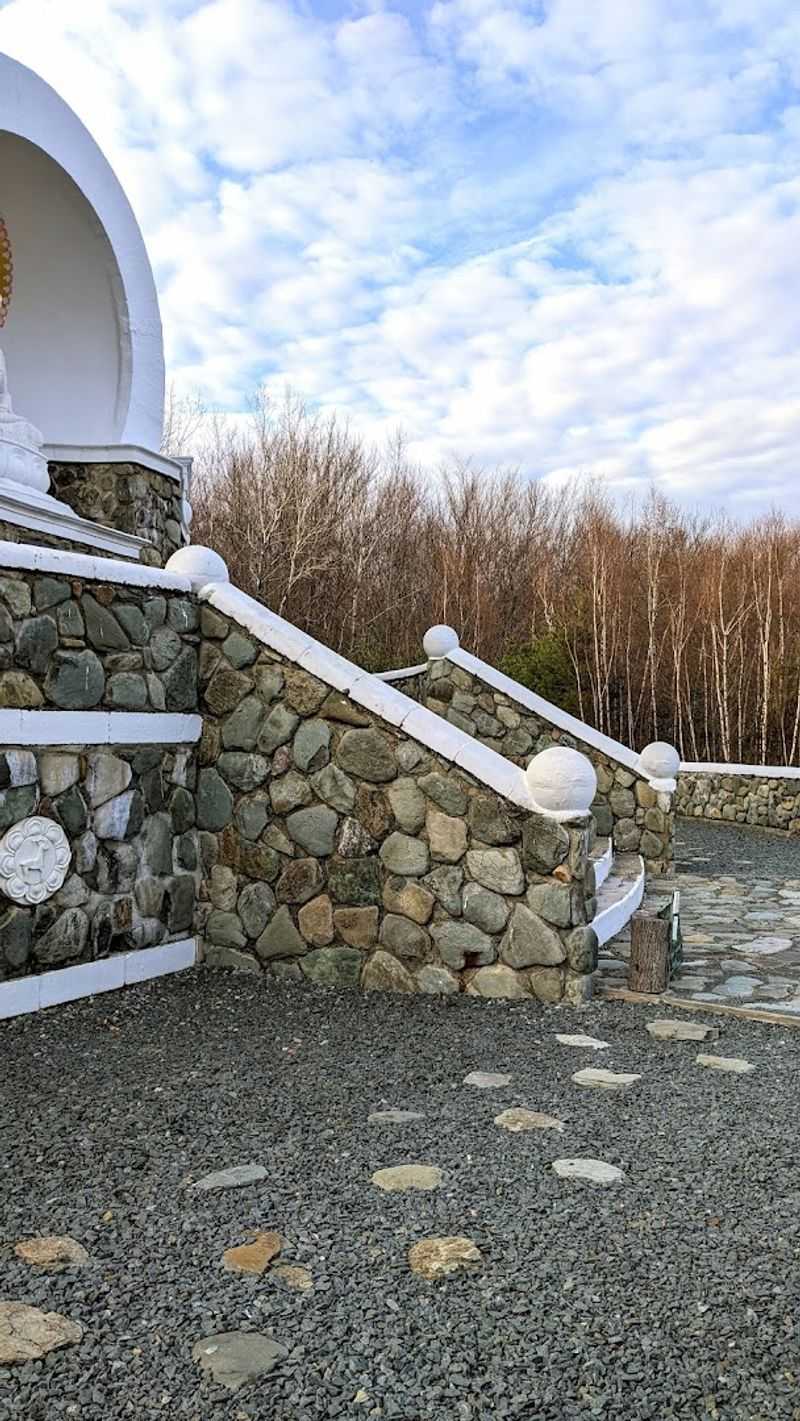
Visitors are encouraged to walk around both levels of the pagoda and take their time with each sculpted panel before moving on.
One Of Only Two In The Entire Country
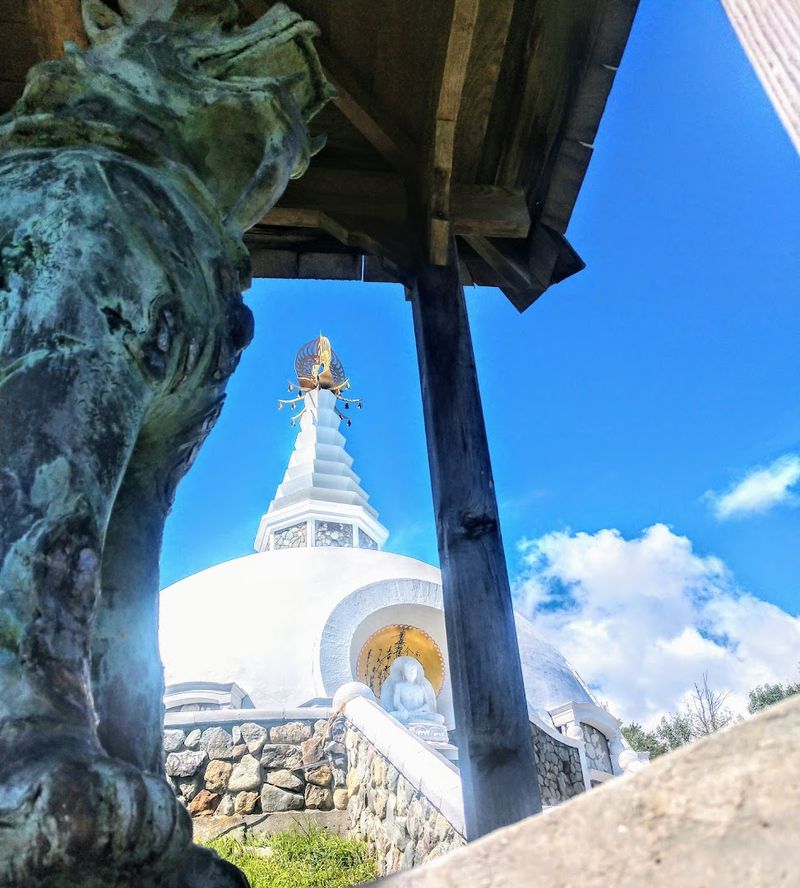
Here is a fact that tends to surprise even well-traveled visitors: the Grafton Peace Pagoda is one of only two Nipponzan Myohoji Peace Pagodas completed in the entire United States. The other stands in Leverett, Massachusetts, completed in 1985.
A third is currently under construction in Tennessee, which means the club is still very small and very exclusive.
Worldwide, over 80 Peace Pagodas have been built across Europe, Asia, and North America since Nichidatsu Fujii began constructing them in 1947 as symbols of world peace and anti-nuclear commitment. Each one serves as a focal point for people of all backgrounds, creeds, and spiritual traditions.
The message is deliberately universal.
For New York, having one of these rare structures within its borders is a genuine point of distinction.
The pagoda draws visitors from many nations and many faiths, including Christians, Jews, Muslims, Hindus, and Native Americans, all drawn by the same quiet pull of its message.
Knowing that you are standing at one of only two such completed sites in the country adds a layer of significance that turns an already meaningful visit into something truly memorable.
A third option may eventually exist in Tennessee, but for now, upstate New York holds something extraordinary.
The Grounds Beyond The Pagoda
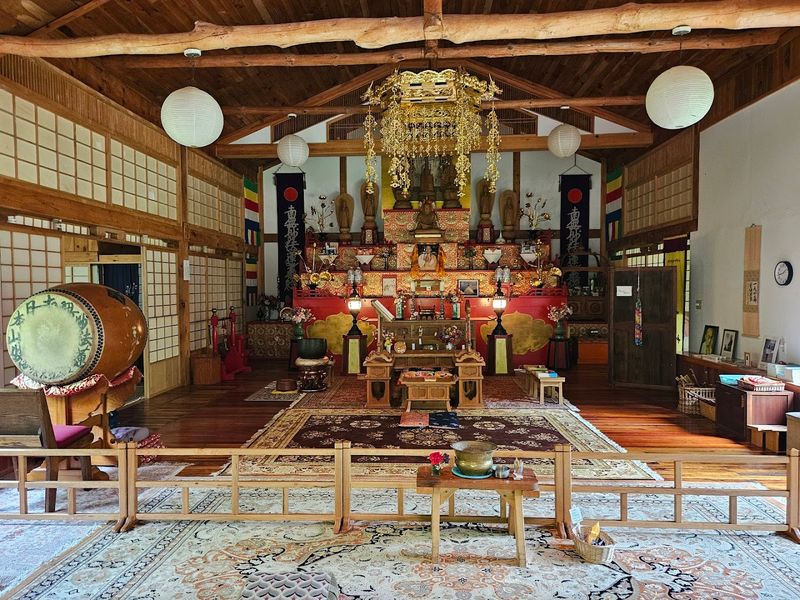
The pagoda itself earns the trip, but the surrounding grounds offer their own rewards. A beautiful temple sits near the pagoda, small but richly decorated, with an atmosphere that feels both intimate and reverent.
Paper cranes are available inside as remembrances, and the space invites quiet reflection even for visitors who are not Buddhist.
A serene pond anchors the lower part of the property, and its still surface catches the reflection of the pagoda and surrounding trees in a way that photographers and daydreamers both appreciate equally.
Gardens spread across the site with a natural, unhurried quality that feels tended rather than manicured.
Daily prayer services are held in the temple twice a day: from 5:00 AM to 6:30 AM and again from 5:30 PM to 6:30 PM. Visitors who attend services are asked to remove their shoes and sit on small rugs provided in the space.
The chanting of Namu Myoho Renge Kyo, sometimes accompanied by taiko drumming, fills the air with a resonance that is hard to describe but easy to feel.
Even visitors who arrive between services will find the grounds carry a lingering stillness that encourages people to slow down, breathe deeply, and simply be present for a while.
Annual Events That Bring The Pagoda To Life
Three times a year, the Grafton Peace Pagoda transforms from a quiet sanctuary into a vibrant gathering place. The Flower Festival celebrates Buddha’s birthday in late May or early June with traditional Buddhist ceremonies, interfaith prayers, music, and dance.
It is the kind of event that feels both ancient and alive at the same time.
On August 6th, the site observes Hiroshima Day, a solemn and moving commemoration that connects the pagoda’s history directly to its purpose.
Hank Hazelton, the man who donated the land, had witnessed the events of Nagasaki firsthand, and that history gives this annual gathering a weight that visitors feel deeply.
The event brings together people of many faiths in a shared expression of grief and hope.
The Pagoda’s Anniversary is celebrated in early October, timed near Mahatma Gandhi’s birthday, which is a fitting tribute given that the founder of the Nipponzan Myohoji order was profoundly shaped by Gandhi’s philosophy of nonviolence.
Peace walks also mark New Year’s Day and the anniversaries of the Hiroshima and Nagasaki bombings throughout the year.
Attending any one of these events turns a visit to the pagoda into a full experience rather than simply a scenic stop. Check the official website at graftonpeacepagoda.org for current event dates before planning a trip.
Planning Your Visit To This Peaceful New York Landmark
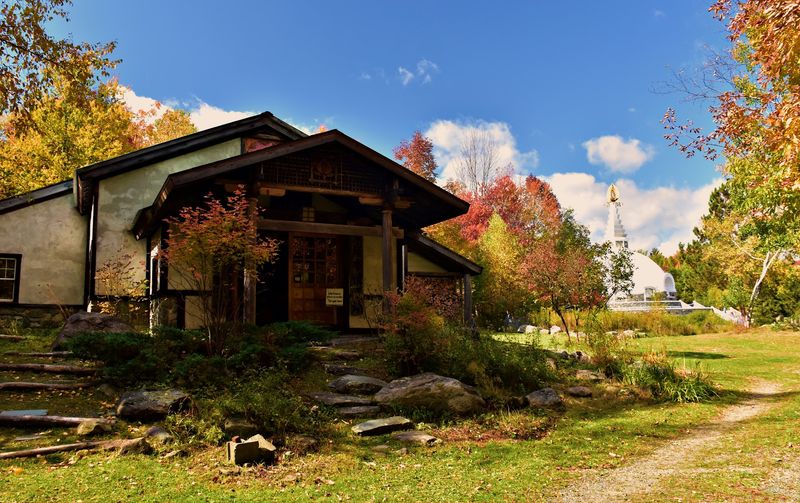
A visit to the Grafton Peace Pagoda rewards a little preparation. The site is open daily from sunrise to sunset, and the drive out to Petersburgh, New York, is part of the charm.
Follow GPS directions carefully, as the final stretch involves narrow country roads and a dirt road approach that surprises first-time visitors.
Dogs are not permitted on the property, so plan accordingly if you are traveling with pets. The parking area is small, fitting roughly five vehicles, so arriving early on weekends or during annual events is a smart move.
Elders and visitors with accessibility needs can park directly beside the temple on the handicap trail, which also leads to a restroom facility.
Wear comfortable shoes for walking on gravel and grass, and bring a layer if you are visiting in the cooler months, since the forested setting holds a chill even on mild days.
The Nipponzan Myohoji order accepts donations, and contributing something to support the site is a meaningful way to honor the community that built and maintains it.
No commercial vendors, no gift shops, and no crowds competing for your attention. Just a 100-foot pagoda, a serene pond, a welcoming temple, and the kind of quiet that most people spend their whole lives searching for.