
This Nevada Slot Canyon Is Narrow Enough To Touch Both Walls At Once
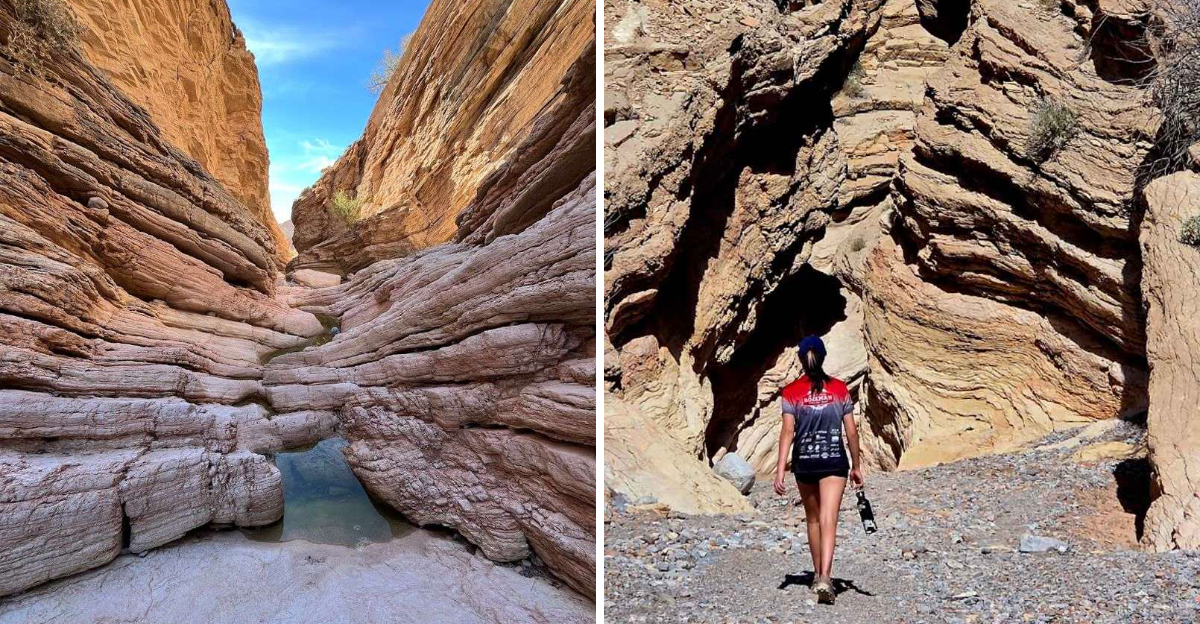
Sunlight slips through twisting limestone walls, turning every step into a new desert surprise. This Nevada canyon narrows so dramatically that hikers can touch both sides at once without stretching their arms.
The passage bends, squeezes, and opens again like a stone maze designed to keep visitors guessing. Lovell Wash carved these corridors over thousands of years, leaving smooth curves, sharp turns, and pockets of shadow that change by the minute.
Footsteps echo between the walls while light flashes overhead. Nothing stays visually still for long.
One corner feels wide and welcoming, while the next becomes an intimate hallway of rock. Bring sturdy shoes, watch the weather, and prepare for a walk that feels wonderfully unlike any ordinary desert trail.
Twisting Passageways Make Every Turn Feel Completely Different
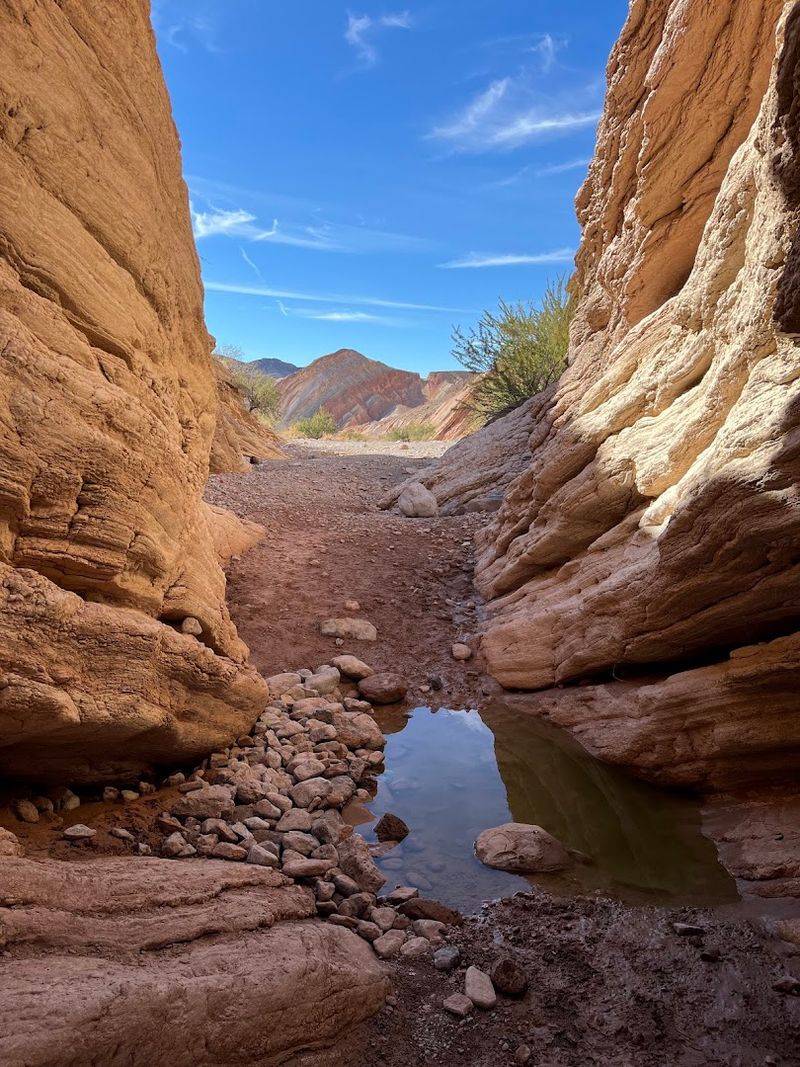
Anniversary Narrows refuses to follow a straight line. The canyon curves and bends in ways that make it impossible to see more than twenty or thirty feet ahead at any given moment.
Each turn reveals a completely new configuration of walls, shadows, and light, transforming the hike into a series of small discoveries rather than a predictable walk through uniform terrain.
The twisting layout means that the experience changes depending on the time of day. Morning light hits certain sections while leaving others in deep shadow, and by afternoon the pattern reverses entirely.
Some curves create natural alcoves where hikers can step aside and let others pass, while other bends form bottlenecks that require a bit of careful maneuvering.
Navigation through the passageways stays straightforward despite the curves because the canyon walls guide you naturally. There are no major side canyons to cause confusion, just one continuous path that winds through the limestone.
The lack of visibility around corners adds a sense of anticipation that keeps the walk engaging from start to finish.
The Canyon Gets So Tight You Can Touch Both Walls At Once
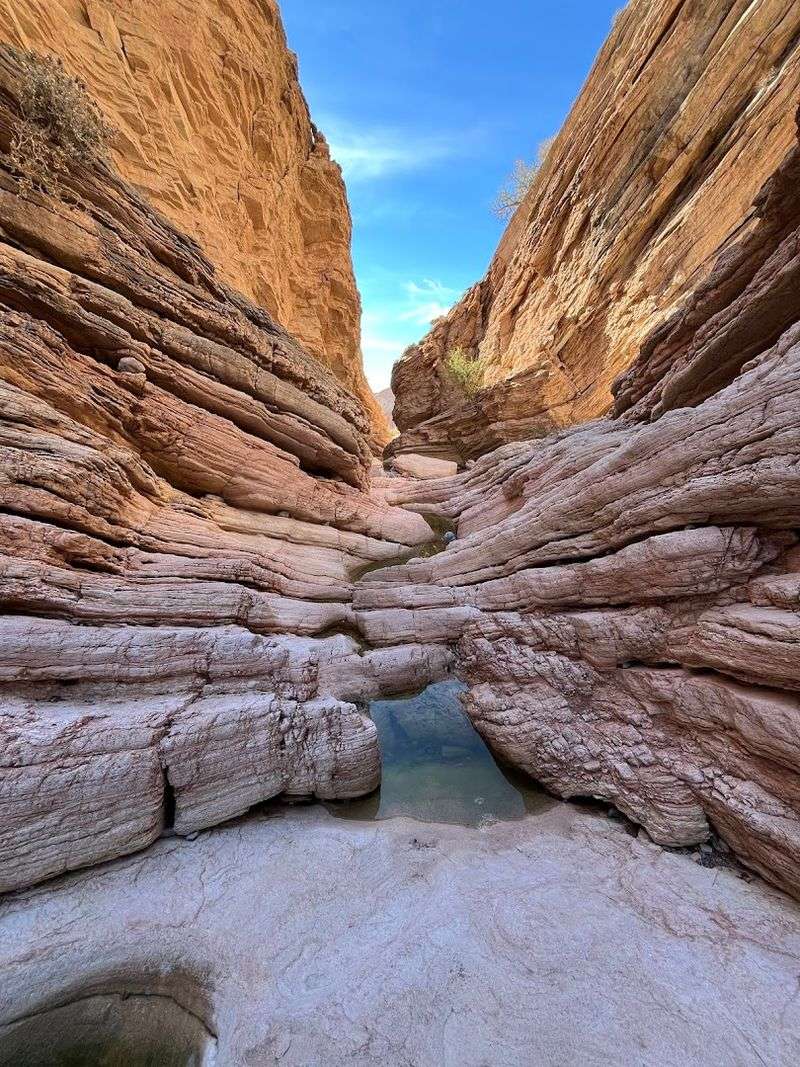
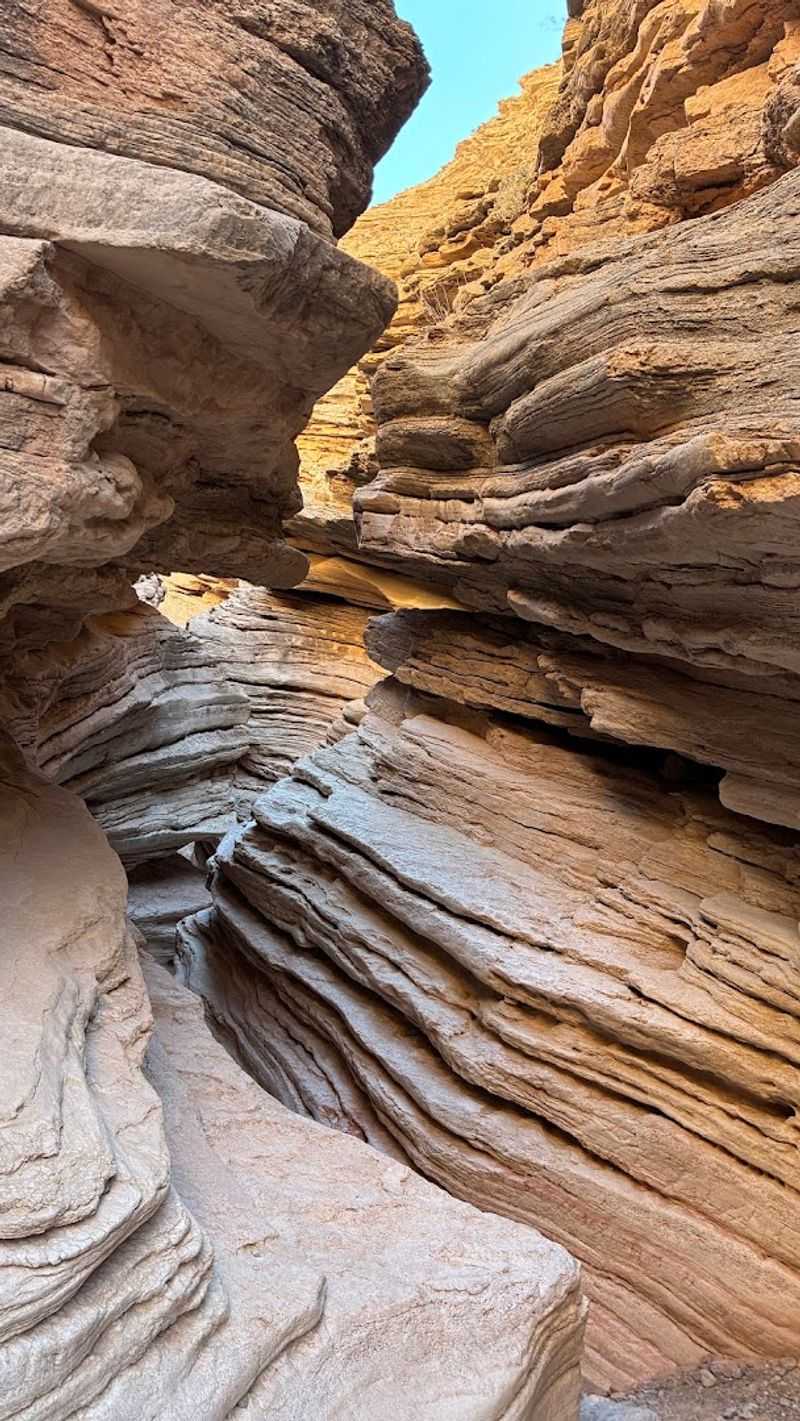
Walking through Anniversary Narrows feels like entering a natural hallway designed by geological forces that had no interest in human comfort. The walls press in from both sides, creating passages where an average adult can reach out and touch smooth limestone on the left and right at the same time.
Some sections narrow to barely three feet across, forcing hikers to turn sideways or adjust their backpacks.
The tightest spots occur roughly halfway through the main route, where the canyon floor dips and the walls seem to lean inward. Sunlight filters down from above in thin ribbons, illuminating dust particles and highlighting the texture of rock that has been shaped by water and wind.
The sensation of being enclosed by stone on all sides creates a quiet intensity that makes every sound seem amplified.
Photography becomes a challenge in these compressed spaces. Wide-angle lenses struggle to capture the full height of the walls while standing at the bottom, and the narrow width means you are always closer to the rock than your camera can comfortably frame.
Tilted Limestone Walls Create The Canyon’s Striking Shape
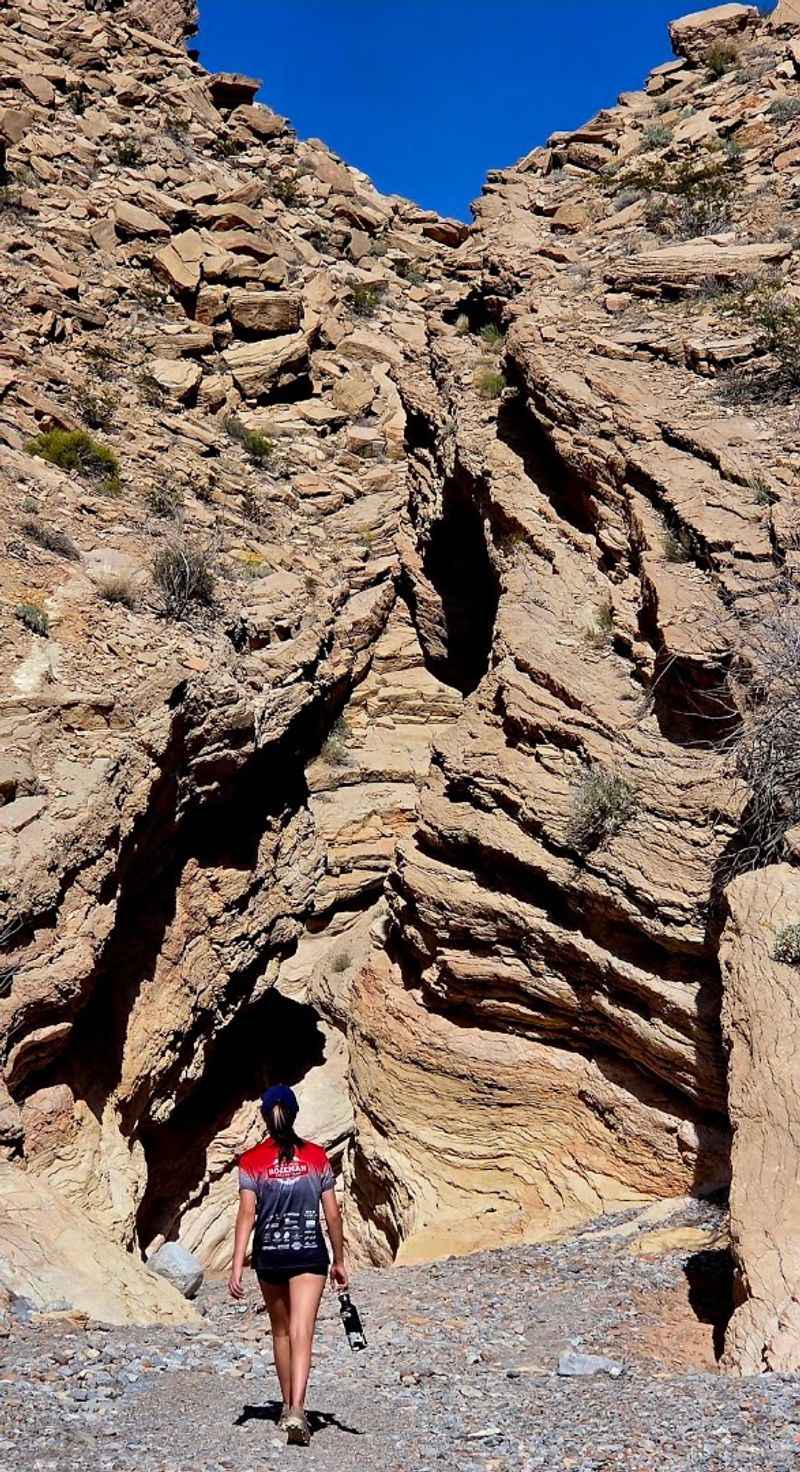
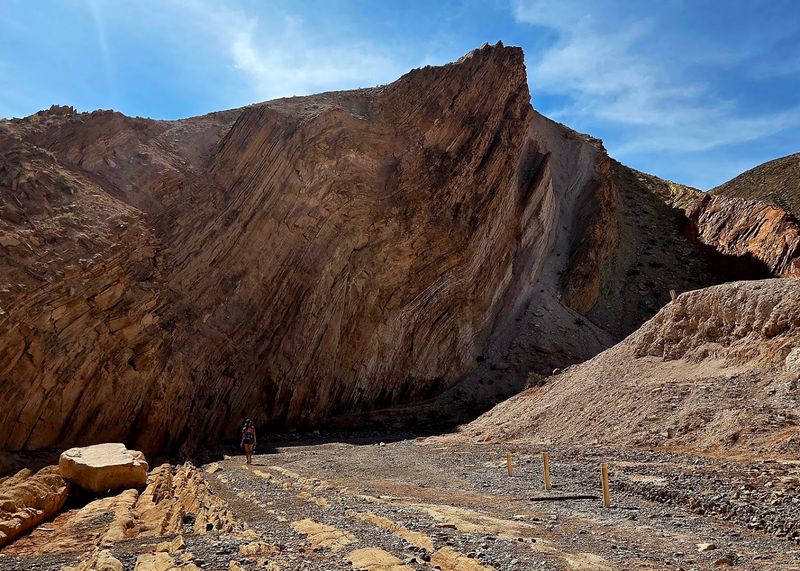
The walls of Anniversary Narrows do not stand perfectly vertical. Layers of limestone tilt at angles that reveal the geological history of the region, with distinct bands of rock visible from bottom to top.
These tilted formations give the canyon its distinctive appearance and explain why the passageways narrow and widen in irregular patterns rather than maintaining consistent dimensions.
Limestone forms from ancient marine sediments, and the layers visible in the canyon walls represent different periods of deposition. Over millions of years, tectonic forces tilted these horizontal layers, and then erosion carved through them to create the slot canyon.
The result is a cross-section of geological time displayed on both sides of the walking path.
The texture of the walls varies from smooth to rough depending on how water has interacted with different limestone layers. Some sections show polished surfaces where flash floods have scoured the rock, while others retain a rougher finish where erosion has been less aggressive.
Running your hand along the stone reveals these differences clearly.
Lovell Wash Carved A Path Through Layers Of Ancient Rock
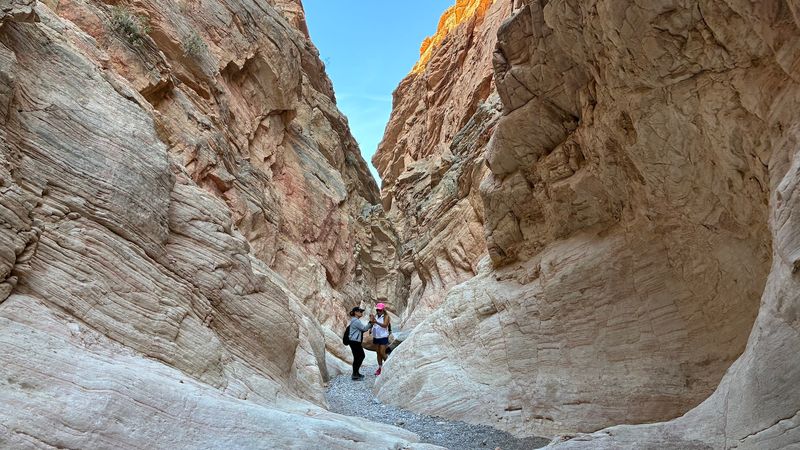
Lovell Wash created Anniversary Narrows through persistent erosion over thousands of years. During rare but intense desert rainstorms, water rushes through this drainage system with enough force to carve through solid limestone.
The wash remains dry most of the year, leaving behind a sandy floor that makes for relatively easy walking, but the power of occasional floods is evident in the smooth walls and sculpted rock formations.
The wash follows natural weaknesses in the limestone, exploiting fractures and softer layers to cut deeper into the rock. Over time, this process created the slot canyon by removing material from between the walls while leaving the harder limestone intact.
The canyon continues to evolve with each significant rainfall, though the changes happen slowly enough that the overall shape remains stable.
Hikers walking through the canyon are essentially following the same path that floodwaters take during storms. The sandy floor and occasional pools of standing water after rain serve as reminders that this landscape is far from static, even if it appears unchanging during a typical visit.
Changing Sunlight Gives The Canyon Walls Different Colors
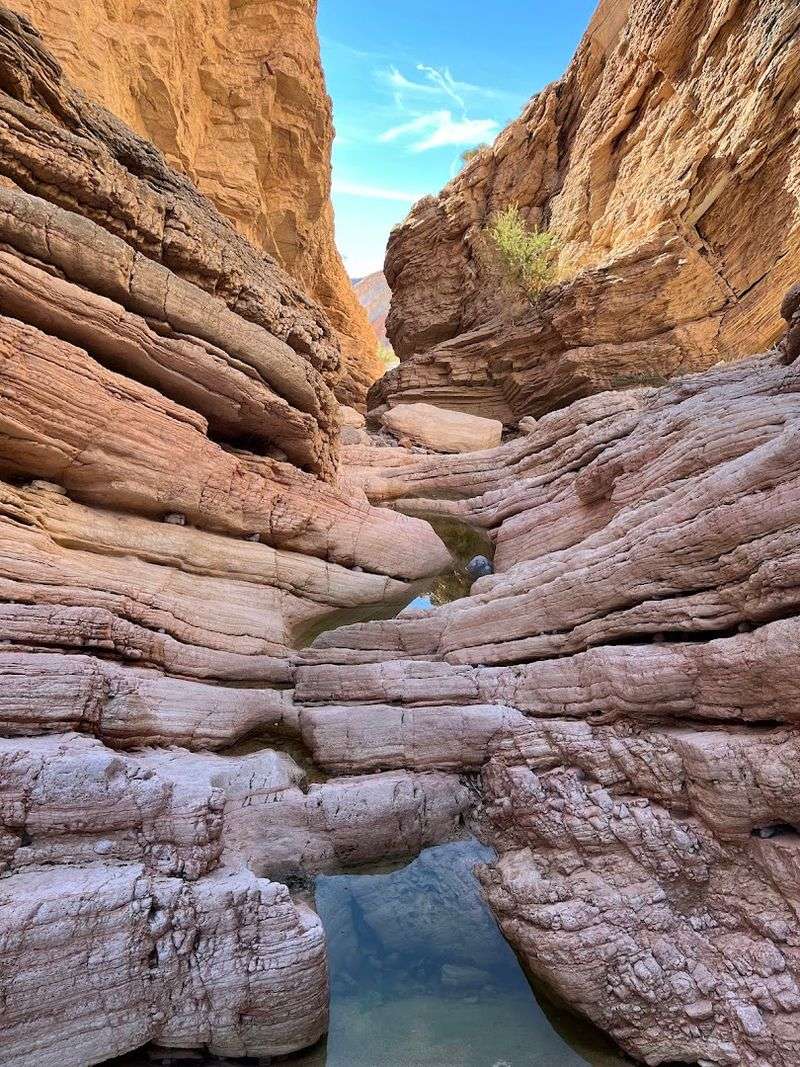
Sunlight transforms Anniversary Narrows throughout the day. Early morning brings cool tones to the limestone, with blues and grays dominating the shadowed sections.
As the sun climbs higher, warm colors emerge where light penetrates the narrow opening above, painting the walls in shades of orange, tan, and gold that shift position as the hours pass.
Midday offers the brightest conditions but also the harshest contrasts, with sections of the canyon plunged into deep shadow while others glow intensely. The narrow width of the canyon means direct sunlight only reaches the floor in a few spots, creating dramatic beams of light that photographers often seek out.
These shafts of illumination move across the canyon walls like spotlights on a slow track.
Late afternoon brings perhaps the most appealing light, when the sun angle creates a warm glow without the extreme contrasts of midday. The limestone seems to absorb and reflect the golden hour tones, giving the entire canyon a softer appearance.
Understanding how light changes helps visitors time their hike for the visual experience they prefer.
The Narrowest Sections Feel Like A Natural Stone Hallway
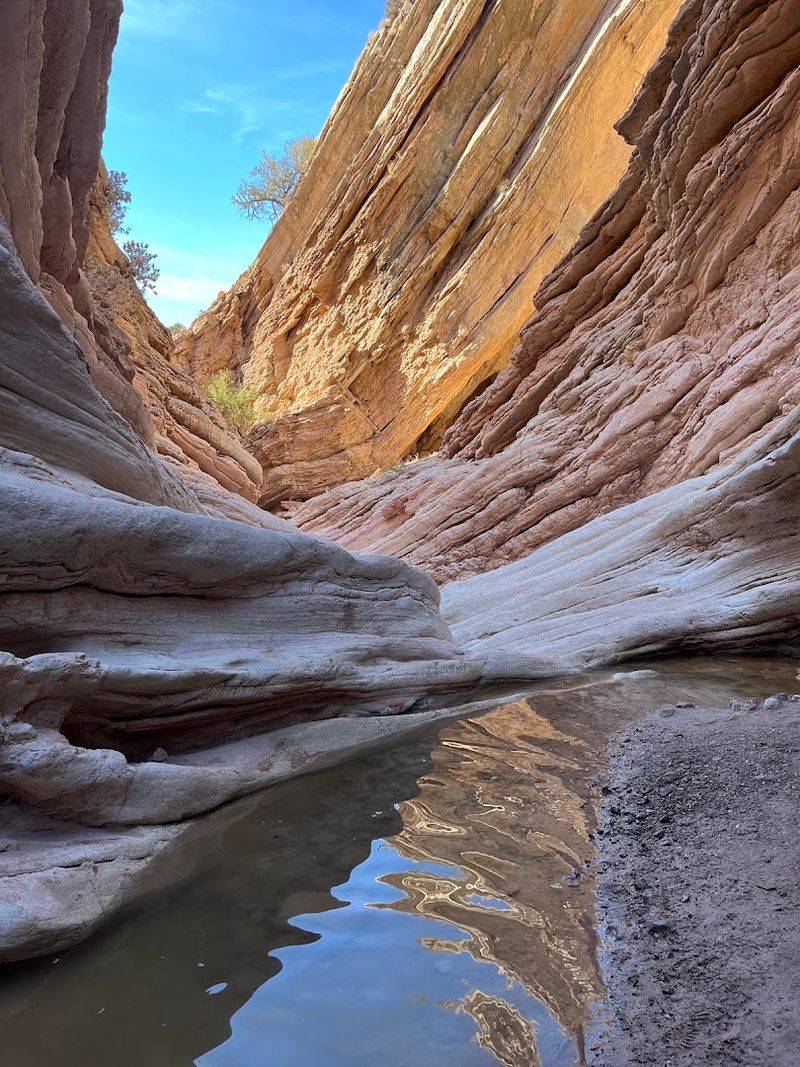
Certain stretches of Anniversary Narrows resemble architectural spaces more than natural formations. The walls run parallel for short distances, creating corridors that feel almost deliberately constructed.
The floor remains level through these sections, and the consistent width gives the impression of walking through a stone building rather than a geological feature carved by erosion.
These hallway-like passages occur where the limestone layers are particularly uniform and where erosion has worked evenly on both sides of the wash. The ceiling remains high overhead, but the walls close in to create a sense of enclosure that feels both protective and slightly confining.
Sound behaves differently here, with voices and footsteps echoing off the smooth surfaces.
The psychological effect of these narrow sections varies among hikers. Some find the enclosed spaces calming and meditative, while others feel a mild discomfort at being surrounded by stone.
The passages are never so tight that they require true squeezing or crawling, but they do demand a certain comfort level with confined spaces and an acceptance that the rock walls will remain close on both sides.
An Old Borax Mining Area Adds History To The Hike
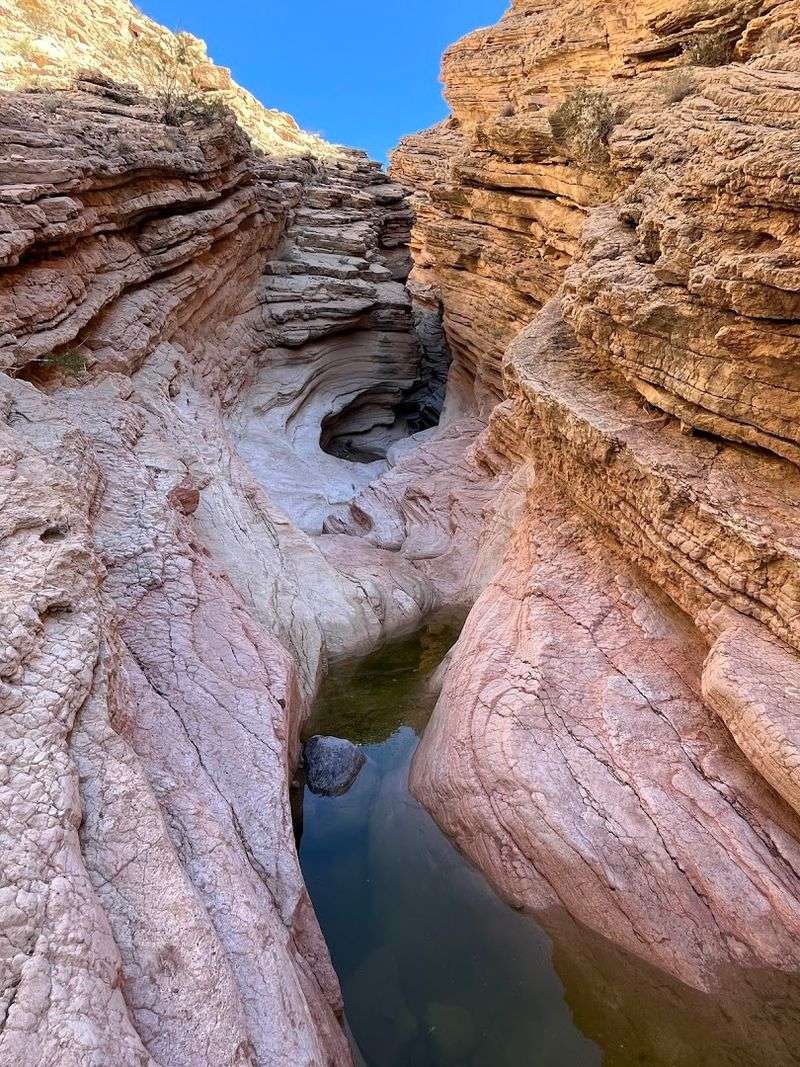
Anniversary Narrows sits within a region that saw significant borax mining activity in the late 1800s and early 1900s. The mineral deposits in this part of Nevada attracted prospectors and mining operations that left their mark on the landscape.
While the canyon itself was never mined, the surrounding area contains evidence of this industrial past, adding a layer of human history to the geological story.
Borax mining in Nevada helped supply a growing demand for the mineral in manufacturing and household products. The harsh desert conditions and remote location made the work difficult, and many mining ventures eventually ceased operations as more accessible deposits were found elsewhere.
The proximity of Anniversary Narrows to these historic sites creates an interesting contrast between natural processes and human enterprise.
Hikers approaching the canyon sometimes encounter old roads and disturbed ground from mining activities. These traces of past industry do not intrude directly on the slot canyon experience but serve as reminders that this desert has been explored and exploited by people seeking resources long before it became a hiking destination for those seeking geological wonders.
Mining Ruins Remain Part Of The Landscape Around The Narrows
Scattered around the Anniversary Narrows area are physical remnants of the mining era. Rusted equipment, collapsed structures, and tailings piles mark locations where workers once extracted minerals from the desert.
These ruins weather slowly in the dry climate, creating a visual record of industrial activity that has long since ceased. The structures lack the drama of well-preserved ghost towns but offer quiet evidence of human effort in an unforgiving environment.
Exploring these ruins requires caution, as old mining sites can contain unstable structures and hidden hazards. Most hikers heading to the slot canyon pass by these remains without extensive investigation, treating them as historical markers rather than destinations.
The juxtaposition of natural beauty and industrial decay creates an interesting dynamic, showing how the desert reclaims spaces once dominated by human activity.
The mining ruins add context to the hike by illustrating how different groups have valued this landscape for different reasons. Where miners saw economic opportunity, modern visitors see recreational and aesthetic value.
Both perspectives reflect the diverse ways humans interact with desert environments.
The Canyon Sits Near Nevada’s Lake Mead Country
Anniversary Narrows occupies a corner of the Mojave Desert not far from Lake Mead National Recreation Area. The canyon’s location at coordinates 36.2286622, -114.6839109 near Moapa Valley places it within reach of visitors exploring the broader Lake Mead region.
This proximity to a major recreation area means the slot canyon can be combined with other activities like boating, fishing, or visiting Hoover Dam as part of a larger desert itinerary.
The landscape around Lake Mead features dramatic contrasts between the blue water of the reservoir and the tan and red desert terrain. Anniversary Narrows fits into this geological context as another example of how water shapes the desert, though in this case through occasional flash floods rather than permanent bodies of water.
The connection to Lake Mead also means reasonable access via paved roads for most of the approach.
Visitors staying in the Lake Mead area will find Anniversary Narrows a worthwhile side trip that offers a completely different type of desert experience. The transition from open water views to narrow slot canyon passages demonstrates the variety packed into this region of Nevada.
Cooler Months Make The Desert Hike Much More Comfortable
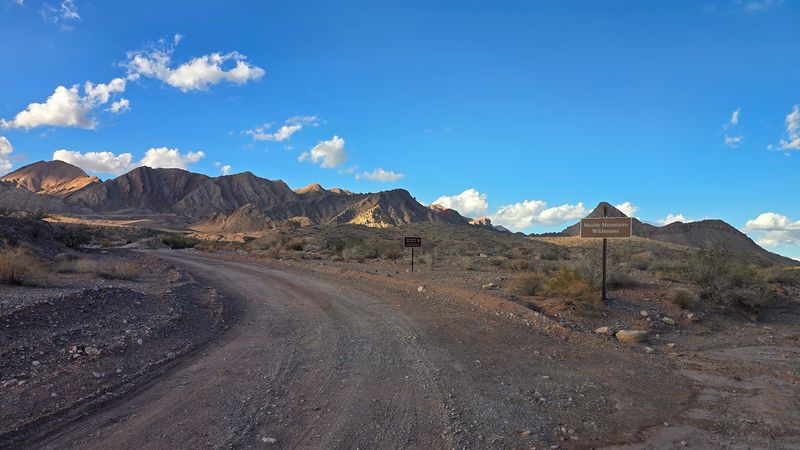
Summer temperatures in the Mojave Desert regularly exceed 100 degrees Fahrenheit, making Anniversary Narrows a punishing hike during the hottest months. The slot canyon provides some shade, but the approach involves exposed desert walking where the sun beats down relentlessly.
Smart hikers target the cooler months between October and April when daytime temperatures remain moderate and the risk of heat exhaustion drops significantly.
Winter brings the most comfortable conditions, with daytime highs often in the 50s and 60s. The desert sun still provides warmth even on cooler days, and the lack of humidity makes even chilly mornings tolerable.
Spring and fall offer slightly warmer temperatures but maintain the pleasant conditions that make desert hiking enjoyable rather than merely survivable.
The cooler months also reduce the likelihood of encountering rattlesnakes, which become less active as temperatures drop. Flash flood danger decreases during the drier winter months, though checking weather forecasts before entering any slot canyon remains essential regardless of season.
Planning a visit during the comfortable months transforms Anniversary Narrows from a challenging endurance test into an accessible adventure suitable for a wide range of fitness levels.