
This Tennessee Basilica Is One Of The Most Beautiful Gothic Landmarks In The Region
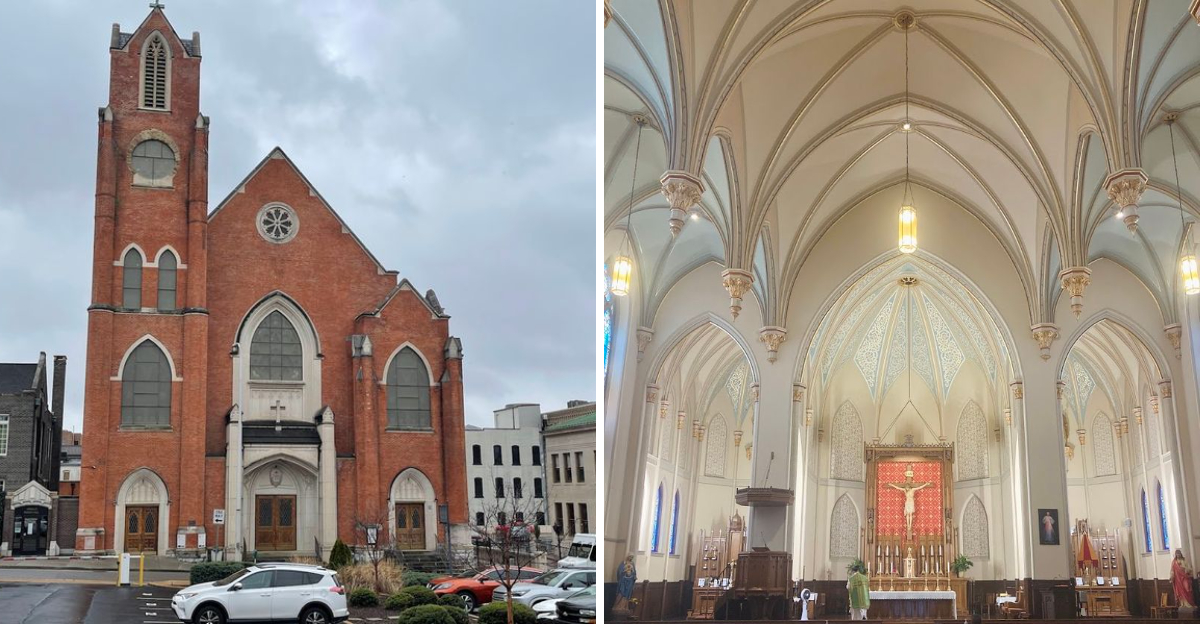
Have you ever seen a church so striking that you had to stop and look twice?
One remarkable Tennessee landmark rises above the city with pointed arches, towering spires, and stained glass that glows when sunlight pours through it.
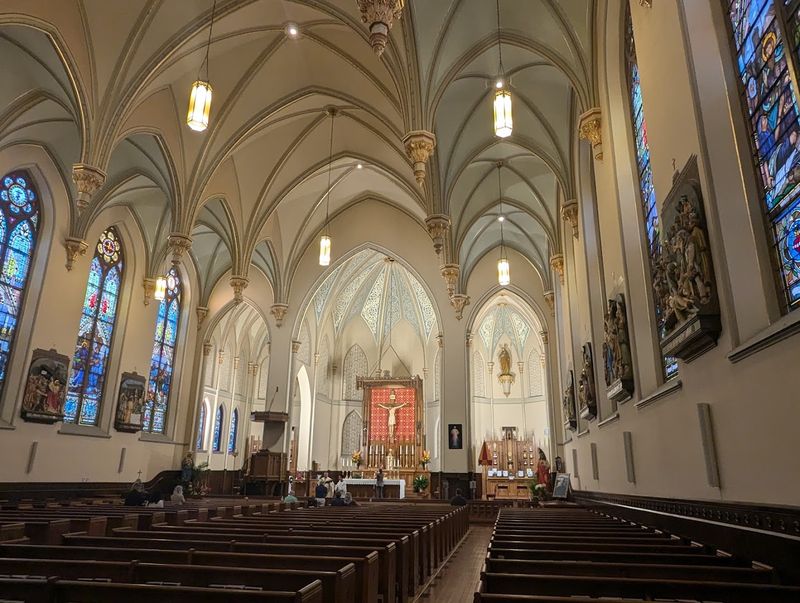
The exterior feels grand, but the interior is even more impressive. Tall columns lead the eye upward, detailed carvings cover the walls, and colorful windows fill the sanctuary with shifting light.
Every corner reveals another piece of careful craftsmanship.
Built more than a century ago, this basilica carries layers of history while remaining an active place of worship today. Visitors come for many reasons.
Some admire the architecture, while others enjoy the calm atmosphere and fascinating story behind the building.
You do not need to be an architecture expert to appreciate it. This Gothic landmark proves that one of the region’s most memorable sights may be standing right along a familiar city street.
A Soaring Gothic Revival Masterpiece
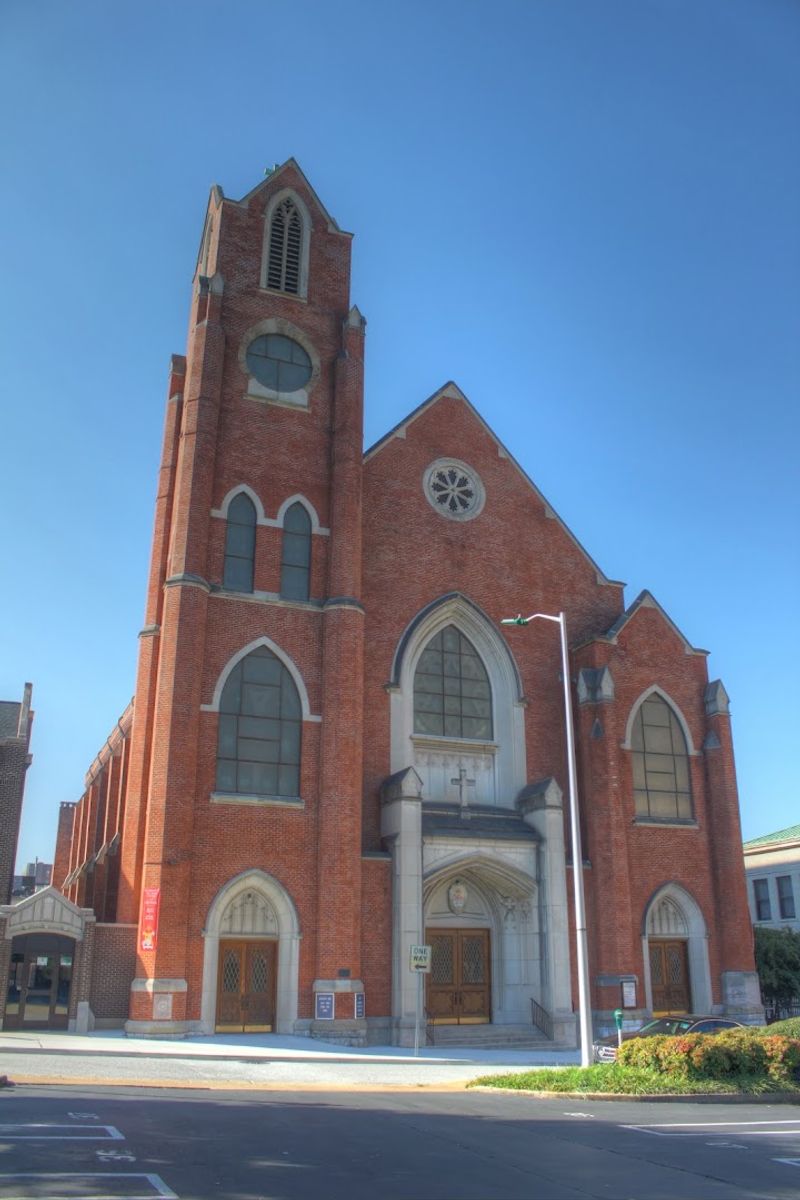
Standing on one of the highest points in downtown Chattanooga, the Basilica of Saints Peter and Paul commands attention long before you reach its front steps.
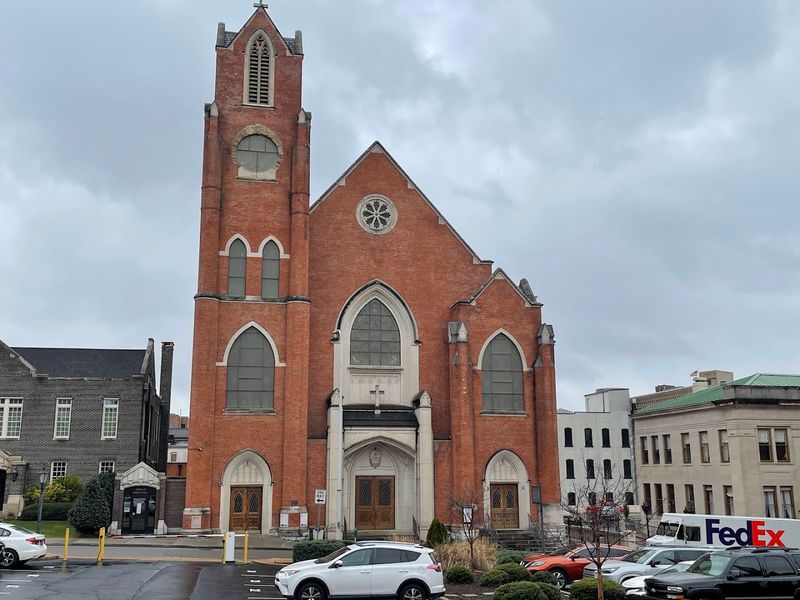
The building’s brick facade sits atop a solid limestone foundation, and its steeply pitched gable roof cuts a sharp silhouette against the Tennessee sky.
Architect Peter Dederichs Jr. of Detroit designed the structure, drawing inspiration from England’s York Minster cathedral.
That transatlantic influence is evident in every carved detail and arched opening. The proportions feel grand without being overbearing, and the overall composition has the kind of disciplined elegance that serious Gothic Revival architecture demands.
Dedicated on June 29, 1890, the church has anchored this corner of the city for well over a century.
Visitors approaching from E 8th Street get the full visual impact of the elevation and massing working together. The building does not shout for attention.
It simply stands there, confident and composed, letting its architecture do all the speaking. For anyone with even a passing interest in historic religious buildings, this structure is genuinely difficult to walk past without pausing.
A Legacy Etched In Stone
The parish of Saints Peter and Paul has roots stretching back to January 1852, making it one of the oldest Catholic communities in the Chattanooga area.
The congregation worshipped in earlier, smaller structures before the current church was completed and dedicated in 1890.
That long history gives the building a weight that goes beyond its physical mass.
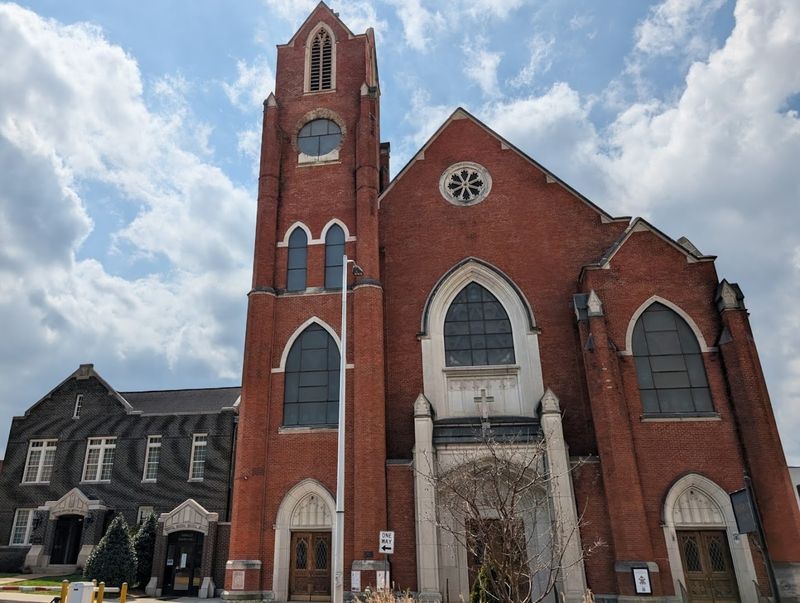
Originally, the church featured twin towers rising 174 feet into the air, each decorated with pinnacles and turrets. By 1939, crumbling sandstone forced the removal of those towers, and the east tower was shortened to its current height.
The loss changed the skyline profile, but the building retained its commanding presence on the hill.
What remains today is still deeply impressive. The limestone foundation has held firm through decades of Tennessee weather, and the brick walls carry the kind of character that only time can produce.
Walking around the exterior, you notice how thoughtfully each element was placed. This was not a building thrown together quickly.
The craftsmen who built it understood that they were creating something meant to outlast them by generations, and that intention is visible in every course of brick and carved stone detail.
Windows Of Sacred Narrative
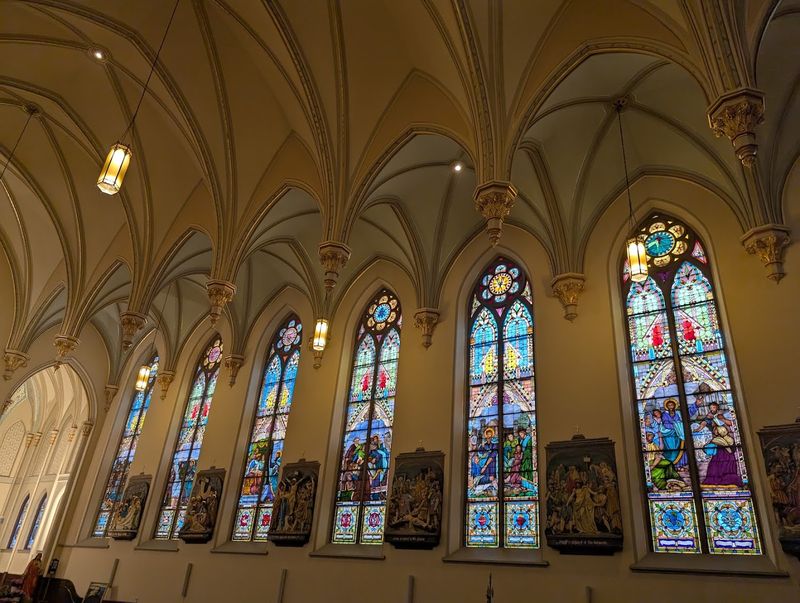
Louis Comfort Tiffany is one of the most celebrated names in American decorative arts, and the Basilica of Saints Peter and Paul holds a remarkable collection of his stained-glass windows.
The east-side windows illustrate key moments from the life of Saint Peter, while the west-side windows trace the story of Saint Paul.
Together they form a continuous visual scripture that runs the length of the nave.
The colors Tiffany achieved in his glass have a luminosity that paint simply cannot replicate. On a clear afternoon, sunlight passes through these windows and fills the interior with warm, layered tones that shift as the hours move.
Each panel rewards close attention, revealing figures, symbols, and narrative details that a quick glance will miss entirely.
For visitors who appreciate American art history, finding Tiffany windows in a Chattanooga church is a genuine surprise.
His work appears in major museums and prestigious institutions across the country, which makes the accessibility of these windows all the more appealing.
You can stand a few feet away and study them at your own pace. The basilica is open Monday through Friday from 7:30 AM to 4 PM, and on Sundays from 7 AM to 3 PM, giving plenty of time for an unhurried visit.
The Ceiling’s Celestial Grace
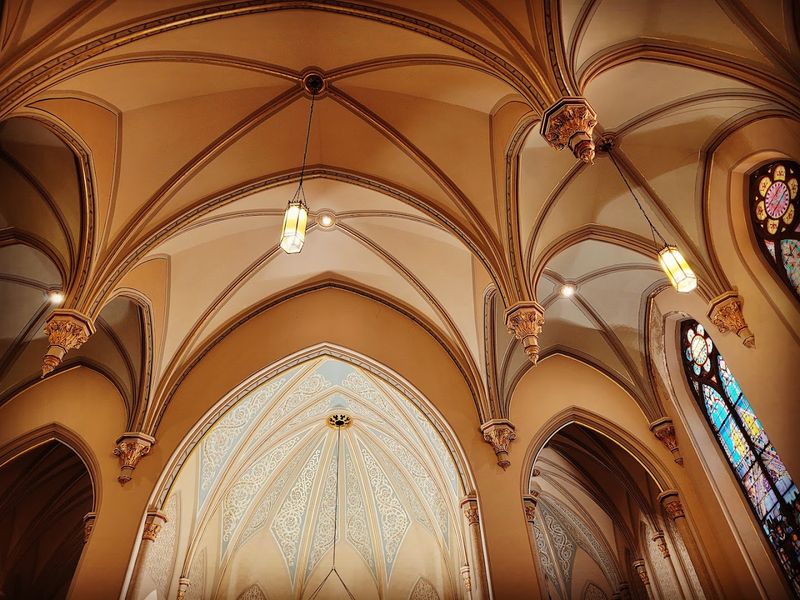
Look up inside the Basilica of Saints Peter and Paul and you will find one of the most satisfying interior ceilings in the region. A groined vault spans the nave and side aisles, creating the impression of a vast, open space that seems to breathe.
This structural choice is not merely decorative. It reflects a deep understanding of Gothic engineering, where the vault distributes weight while generating a sense of vertical lift.
Suspended ornate pendants hang from the ceiling at measured intervals, adding detail without cluttering the view. They draw the eye upward and reinforce the sense of height that Gothic architecture seeks to produce.
The interplay between the vault’s geometric ribs and the pendants below gives the ceiling a rhythm that feels both disciplined and alive.
Many visitors spend their first few minutes inside simply standing still and looking up. That reaction is understandable.
The ceiling creates a mood before anything else in the church has a chance to register. It establishes the scale of the space and signals that everything else inside was crafted with equal care.
For a building dedicated in 1890, the structural integrity and visual coherence of this ceiling remain extraordinary achievements worth admiring slowly and without distraction.
A Confluence Of Art And Craftsmanship
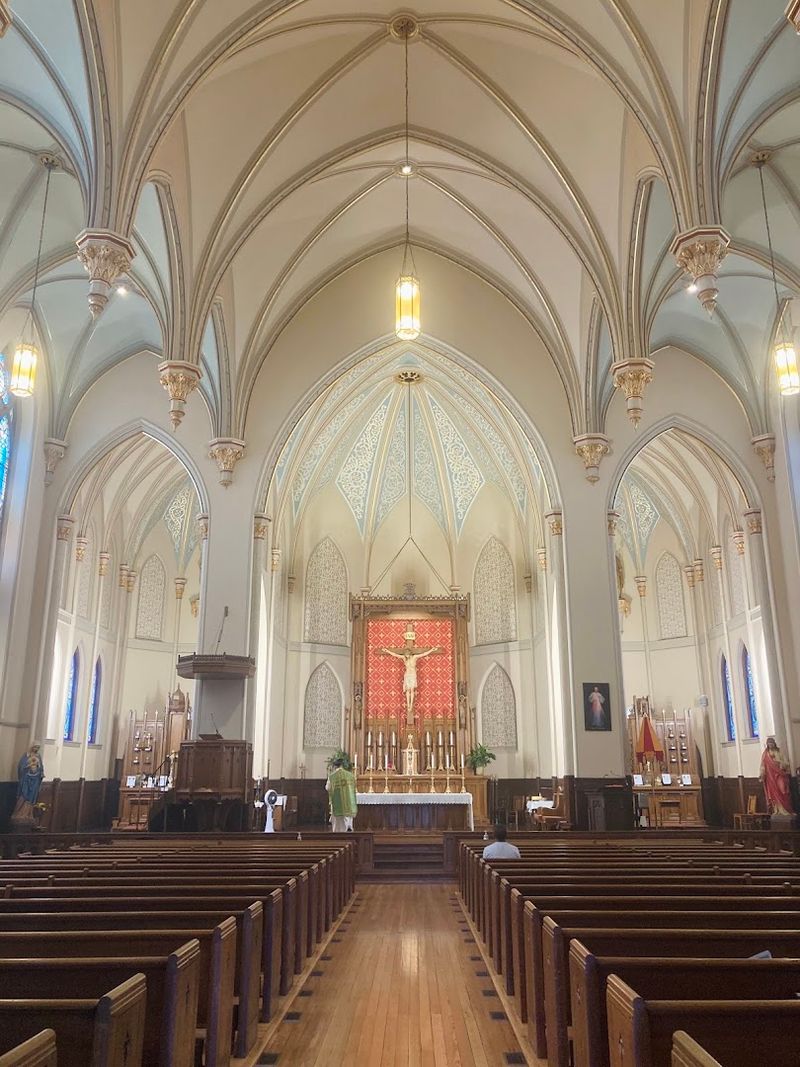
A French artist spent seventeen years designing the fourteen polychrome Stations of the Cross that line the nave of this basilica, and then devoted another three years to producing a model before the final pieces were created.
That level of commitment to a single devotional series is extraordinary by any standard.
The result is a set of panels that carry real artistic authority.
Polychrome work uses multiple colors to create depth and visual complexity, and these stations make full use of that technique. The figures are rendered with expressive faces and carefully observed drapery, giving each scene a sense of weight and emotional presence.
They are not decorative afterthoughts. They are fully realized works of art that happen to serve a devotional purpose.
Taken together with the Tiffany windows, the groined vault ceiling, and the historic pipe organ, these stations form part of an interior that functions as a coherent artistic environment. Every element was chosen and placed with intention.
The basilica at 214 E 8th St, Chattanooga, TN 37402 is not simply a place of worship.
It is a building where craftsmanship from multiple traditions and continents came together over decades to produce something genuinely unified and visually serious.
Chattanooga’s Spiritual Anchor
A church that has occupied the same hilltop for over 130 years becomes part of a city’s identity whether the city fully acknowledges it or not.
The Basilica of Saints Peter and Paul has served the Chattanooga Catholic community since the parish’s founding in 1852, and the building dedicated in 1890 has been a constant presence through every era of the city’s development.
That kind of continuity carries its own quiet authority.
The location on one of downtown Chattanooga’s highest hills means the basilica is visible from multiple vantage points across the city. It appears in the background of photographs taken from the waterfront and from the hills across the Tennessee River.
This visibility is not accidental. The placement was deliberate, designed to establish the church as a permanent fixture in the urban landscape.
For the congregation that calls it home, the basilica offers daily Mass, traditional liturgical practices, and a community built around shared devotion. Visitors attending services have noted the reverent atmosphere and the quality of the sacred music program.
The church phone number is +1 423-266-1618, and the website at stspeterandpaulbasilica.com provides detailed information about parking and service times for anyone planning a first visit.
Evolution Of A Landmark’s Silhouette
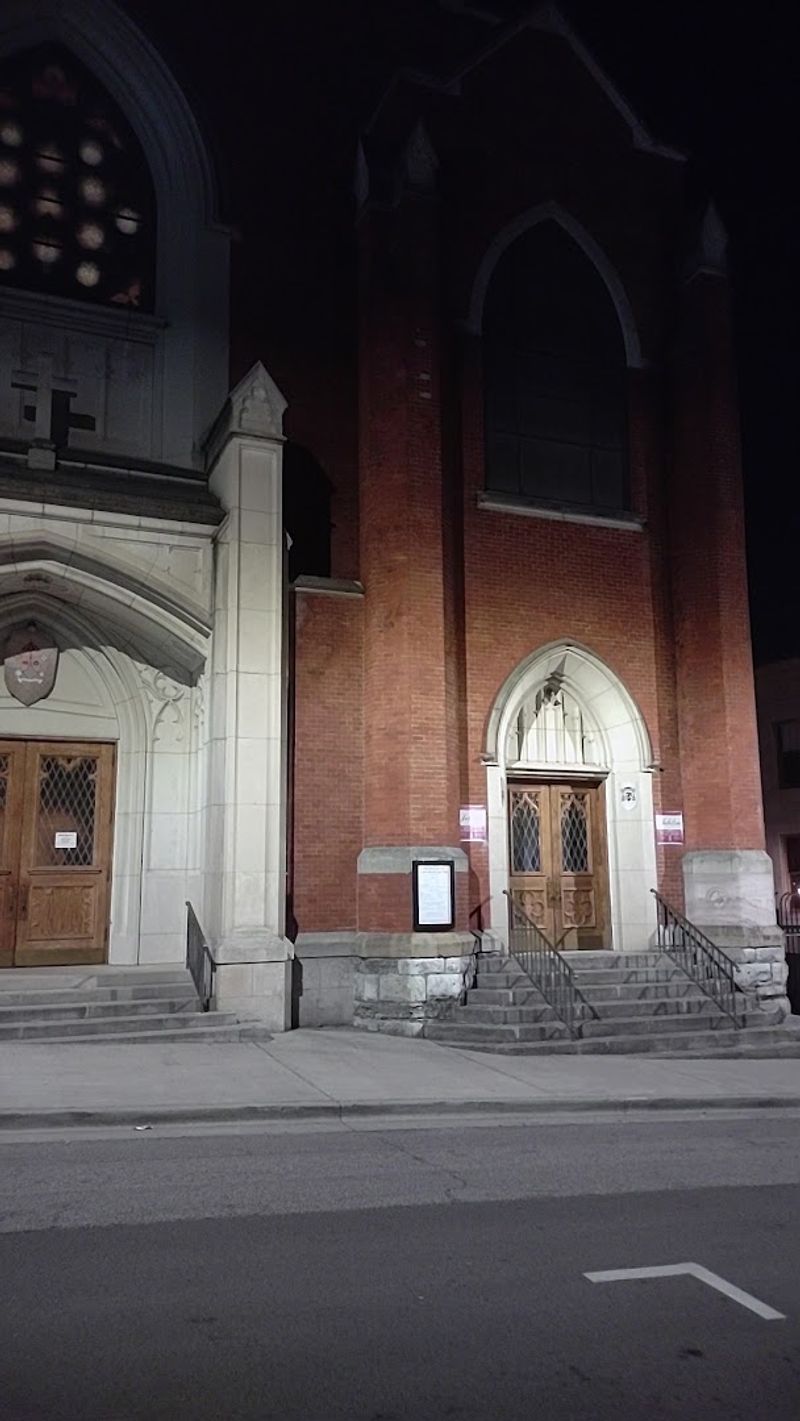
Architecture tells the story of the forces that act upon it over time, and the Basilica of Saints Peter and Paul carries visible evidence of one significant chapter in its history.
The original design included twin towers rising 174 feet above the hilltop, each finished with pinnacles and turrets that would have made the building visible from considerable distances across the city and the surrounding valley.
By 1939, the sandstone used in those towers had deteriorated beyond repair. The decision was made to remove both towers, and the east tower was cut down to a reduced height that remains today.
The change altered the building’s profile permanently. What had been a symmetrical twin-towered facade became something more asymmetrical and, in its own way, more historically interesting.
The modified silhouette is a reminder that historic buildings are not frozen objects. They respond to time, weather, and human decisions.
The basilica’s current form reflects both the original architect’s vision and the practical realities of maintaining a century-old structure in a challenging climate.
Far from diminishing the building’s character, the tower story adds a layer of historical depth that makes the facade more compelling to study.
Each visit offers a chance to read that history directly in the stone and brick.
From Parish Church To Minor Basilica
In 2011, Pope Benedict XVI elevated the Basilica of Saints Peter and Paul to the status of a minor basilica. That designation is not granted casually.
It recognizes a church’s historical significance, architectural merit, and importance to the broader Catholic community.
For a congregation in Chattanooga, Tennessee, the recognition placed their parish church in a category shared by some of the most significant Catholic sites in the world.
The title of minor basilica also carries certain liturgical privileges and responsibilities.
Visitors attending Mass here will notice details consistent with that elevated status, including an altar rail for communion, a raised pulpit, and liturgical practices carried out with careful attention to form.
The pipe organ, originally a Barckhoff instrument installed in 1890 and rebuilt by Kilgen and Son in 1936, provides music of genuine quality that suits the space beautifully.
The remains of Servant of God Father Patrick Ryan rest inside the church, adding another dimension of spiritual significance to the building.
For Catholic visitors and architecture enthusiasts alike, the basilica offers an experience that is difficult to find elsewhere in the southeastern United States.
The combination of artistic treasures, liturgical tradition, and architectural distinction makes this Chattanooga landmark well worth a considered, unhurried visit.