
This New York Rail Trail Winds 16 Quiet Miles Past Forgotten Train Depots
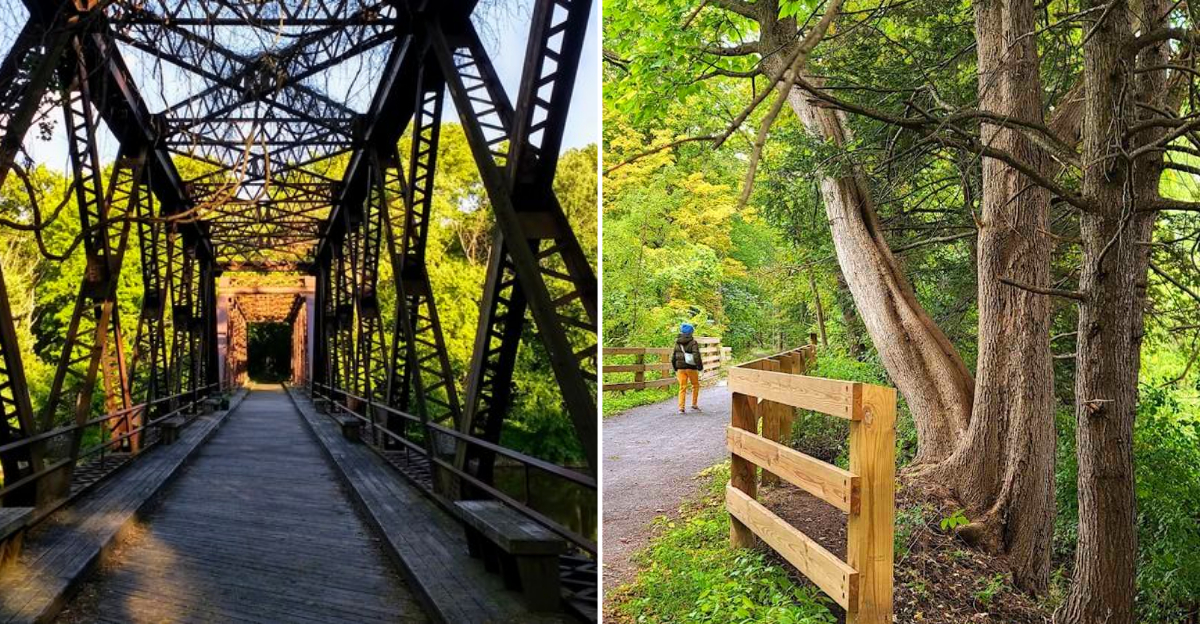
This valley railroad stopped running a long time ago. The depots went quiet. The freight cars moved on. And then Ulster County did something unexpected with what was left.
It turned sixteen miles of forgotten railroad corridor into one of the more quietly absorbing trails in the entire state.
Gravel now runs where the tracks did. Hikers and bikers move through the same Hudson Valley landscape that once hauled milk, lumber, and grain to places that needed them. The iron bridges are still there. The old depot bones are still there.
Open farmland stretches out on either side in a way that makes the trail feel like a good conversation with a version of New York that most people never slow down long enough to meet.
Sixteen miles is generous without being punishing. The history is the kind that does not announce itself with a placard every hundred feet but simply sits in the landscape, patient, waiting for someone paying close enough attention to notice.
A Trail Unlike Any Other In The Hudson Valley
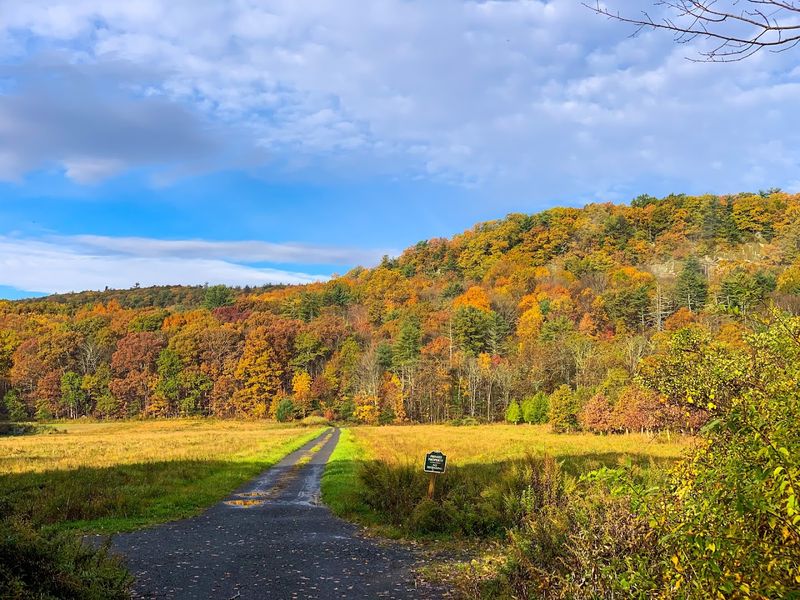
Not every trail earns its reputation the honest way. The Wallkill Valley Rail Trail does.
It runs along the old corridor of the Wallkill Valley Railroad, a line that first rolled in 1866 and carried everything from grain sacks to dairy crates until regular service stopped in 1977.
The tracks were pulled up by the early 1980s, leaving a quiet corridor through some of the most beautiful farmland in New York.
What replaced those tracks is a crushed stone path that stretches over 21 miles through fields, forests, and orchards. The trail moves at your pace, not the railroad’s.
You can walk it, bike it, jog it, or ride a horse along it. Cross-country skiers claim it in winter, and the trail does not argue.
The Wallkill Valley Land Trust started acquiring the corridor in 1991, and the first 12-mile section between New Paltz and Gardiner opened in 1993. More sections followed.
Today the trail is a designated National Recreation Trail by the National Park Service and forms part of the Empire State Trail. That is not a small achievement for a path that started as a forgotten railroad bed.
Wallkill Valley Rail Trail Gardiner NY 12525 And Where To Begin
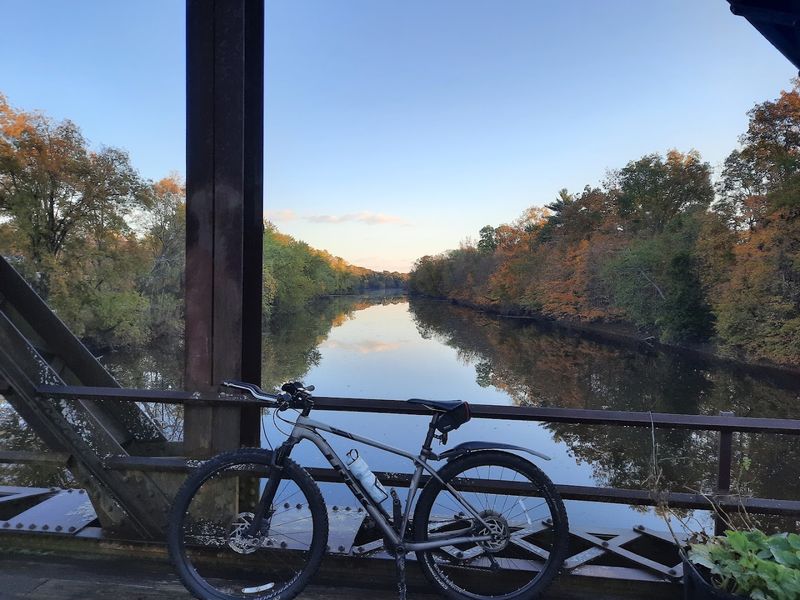
The southern end of the Wallkill Valley Rail Trail begins in Gardiner, a small town with a big outdoor personality. The official southern terminus sits at Denniston Road, Gardiner, NY 12525, where roadside parking is available for those ready to head north.
If you prefer more room for your car, ample parking is just two miles up the trail near Gardiner Center and Majestic Park.
Starting in Gardiner puts you right in the middle of some gorgeous Hudson Valley scenery. Orchards line the path early on, and the Shawangunk Ridge rises to the west like a long, steady exhale.
The trail surface is mostly unpaved crushed stone, which is easy enough for hybrid bikes and comfortable for a long walk.
Gardiner itself adds some extra appeal to the trailhead experience. Nearby you will find organic farms, farmers markets, and open fields that feel genuinely unhurried.
The town sits close to Minnewaska State Park Preserve, and the River to Ridge Trail connects from New Paltz to Mohonk Preserve. Starting here means you begin with space, fresh air, and a trail that only gets more interesting the further north you travel.
The Rosendale Trestle Stands Tall And Proud
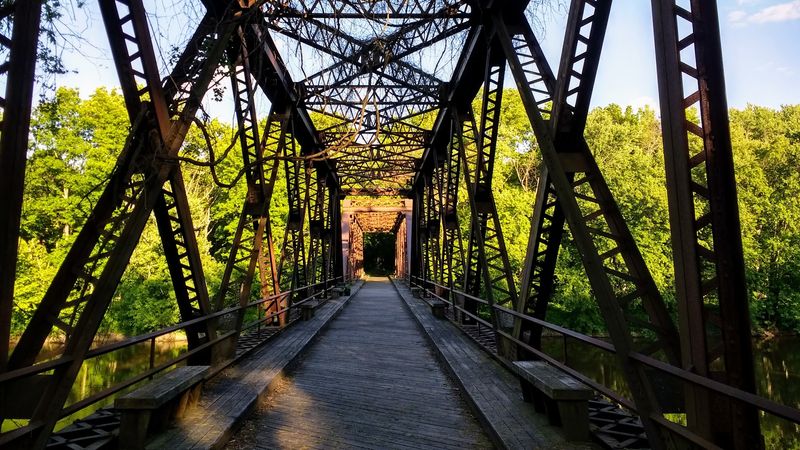
Some structures earn their place in history just by standing long enough. The Rosendale Trestle is one of them.
Built in 1872, this iron bridge stretches 940 feet across the Rondout Creek and the former Delaware and Hudson Canal. At the time of its construction, it was considered the highest span bridge in the United States, standing 150 feet above the valley floor.
Walking across it today feels like a reward. The views stretch wide in every direction, and the height gives you a genuine sense of the landscape the old railroad once crossed.
The trestle was rehabilitated and reopened to the public in 2013 after years of careful restoration work.
It is one of the most photographed spots along the entire trail, and for good reason. The ironwork is striking, the views are generous, and the history feels close enough to touch.
Engineers and hikers alike tend to stop mid-span just to take it all in. The trestle connects the Rosendale section of the trail to the northern reaches toward Kingston, making it both a visual highlight and a practical link in the trail’s long chain of connected paths.
Springtown Bridge Crosses The Wallkill With Style
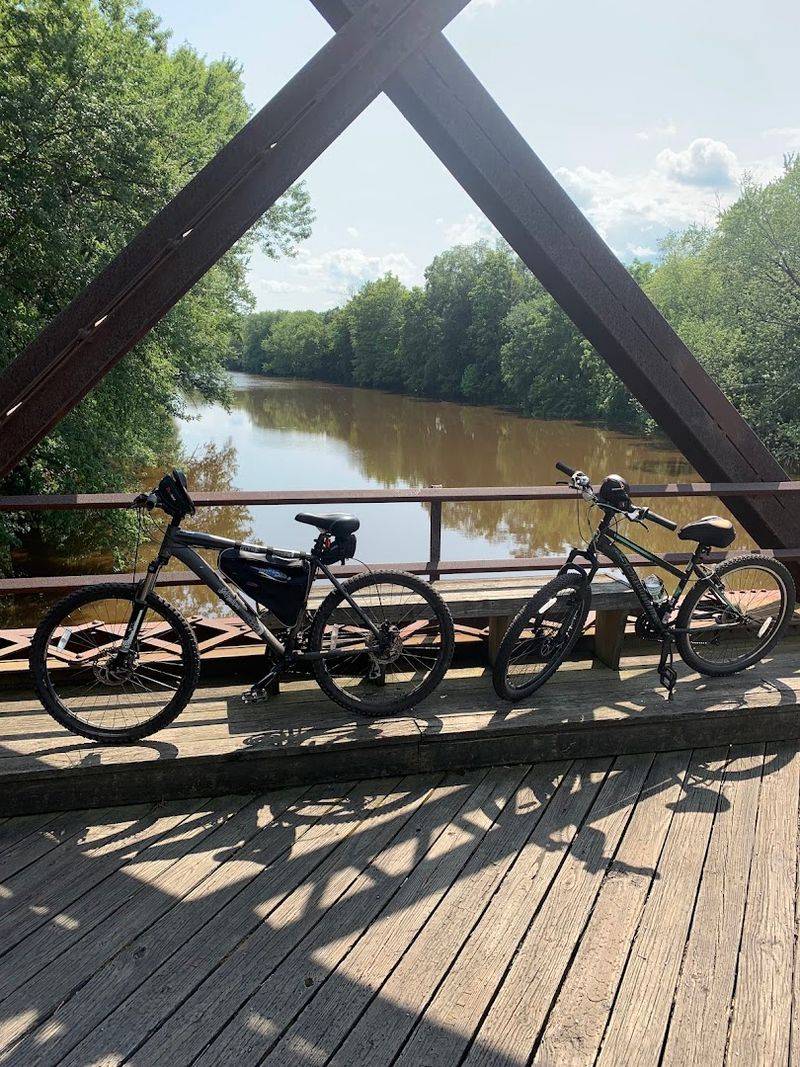
Every great trail has a bridge that makes you stop and look down. On the Wallkill Valley Rail Trail, the Springtown Bridge earns that moment.
At 413 feet long, it crosses the Wallkill River between New Paltz and Gardiner, offering a calm pause above the water that feels completely separate from the rest of the walk.
The bridge is sturdy, well-maintained, and wide enough to feel comfortable for both hikers and cyclists. Below, the Wallkill River moves at a relaxed pace that matches the trail’s overall mood.
It is a good spot to catch your breath, take a photo, or simply watch the water move.
Crossing the Springtown Bridge also marks a shift in the trail’s character. South of the bridge, the path opens into more agricultural land with orchard views and wide sky.
North of it, the trail edges closer to the energy of New Paltz and the connections to other major trails. The bridge sits at a natural midpoint that rewards you for the miles you have already covered.
It is not flashy, but it is exactly the kind of landmark that sticks with you long after the walk is over.
Forgotten Depots And The Ghosts Of Freight Past
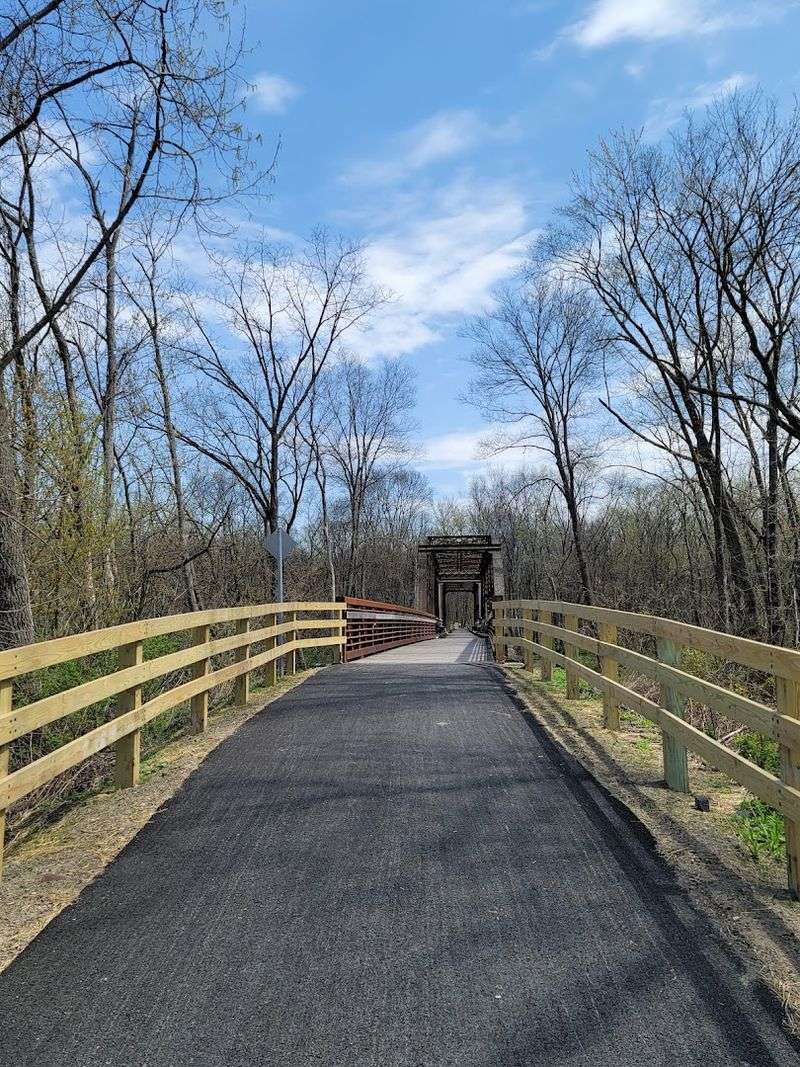
Railroad history has a way of showing up when you least expect it. Along the Wallkill Valley Rail Trail, the old station stops tell quiet stories of a working rail line that once connected small towns to the wider world.
The Wallkill Valley Railroad operated passenger service until 1937 and kept freight moving until 1977, serving communities like Gardiner, New Paltz, Rosendale, and Kingston.
The New Paltz station building still stands along the trail, making it one of the few physical remnants of the original railroad. The Gardiner station, unfortunately, burned down in 2002, leaving only memory and trail markers where it once stood.
Other former stations existed at Kingston, Binnewater, Rosendale, Wallkill, Walden, Montgomery, and Campbell Hall.
Passing through these former stops gives the trail a layered feeling that most recreational paths simply do not have. You are not just walking through scenery.
You are moving through a working history of agricultural New York, where produce, milk, and lumber once rode these same miles to reach bigger markets.
The depots may be mostly gone, but the corridor they served is very much alive, just quieter and considerably more scenic than a freight schedule ever allowed.
Shawangunk Ridge Views That Stop You Cold
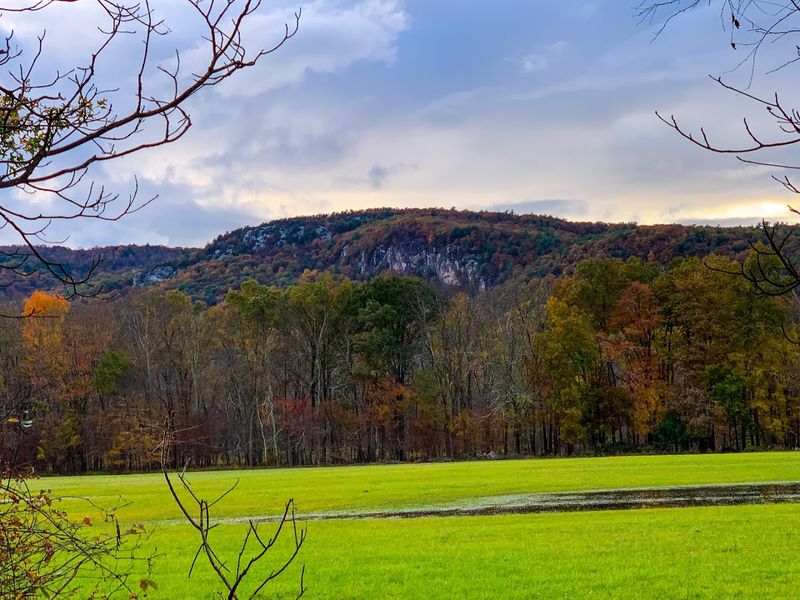
The Shawangunk Ridge does not ask for your attention politely. It simply appears to the west, long and steady, and holds your gaze until you remember to keep walking.
Along the Wallkill Valley Rail Trail, the ridge is a near-constant companion, visible from open stretches of farmland, orchard paths, and elevated sections of trail where the tree cover thins out.
The Shawangunks, as locals call them, are part of a larger ridge system that runs through Ulster County and into New Jersey.
The white conglomerate rock face is distinctive and recognizable, and on clear days the ridge reflects light in a way that makes the whole landscape feel sharper. Minnewaska State Park Preserve sits within the ridge, accessible from trail connections near New Paltz.
For trail users starting in Gardiner, the ridge is visible almost immediately. It frames the southern end of the trail beautifully and gives the entire experience a sense of geographic scale that flat trails simply cannot match.
Walking with that view to your left and open farmland to your right is the kind of sensory combination that turns a regular afternoon into something you talk about later. The Shawangunks deliver every time.
Binnewater And The Cement That Built America
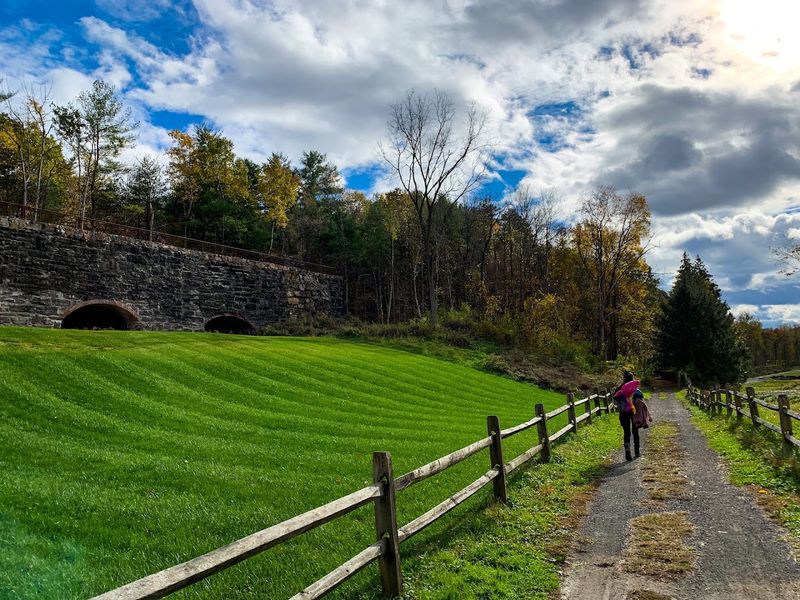
Rosendale cement built the Brooklyn Bridge, reinforced the Statue of Liberty, and helped construct the U.S. Capitol.
That is not a small legacy for a material quarried from a modest stretch of Ulster County hillside. The Binnewater Historic District in Rosendale sits along the Wallkill Valley Rail Trail and preserves the story of the quarrying operations that made all of that possible.
Old cement mines in the Binnewater area still exhale chilly air from their openings, a strange and memorable sensation on a warm trail day.
The landscape around the district carries the marks of heavy industrial history, with stone formations and remnant structures that hint at just how active this area once was during the 19th century cement boom.
Rosendale cement was prized for its hydraulic strength, meaning it could set and harden even underwater. That quality made it essential for foundations and large civic projects across the country.
Walking through the Binnewater district on the trail connects you to an industrial chapter of New York history that most people have never heard of.
It is the kind of detail that transforms a simple bike ride into something that genuinely expands what you know about the world around you.
Wildlife, Wildflowers, And Wide Open Miles
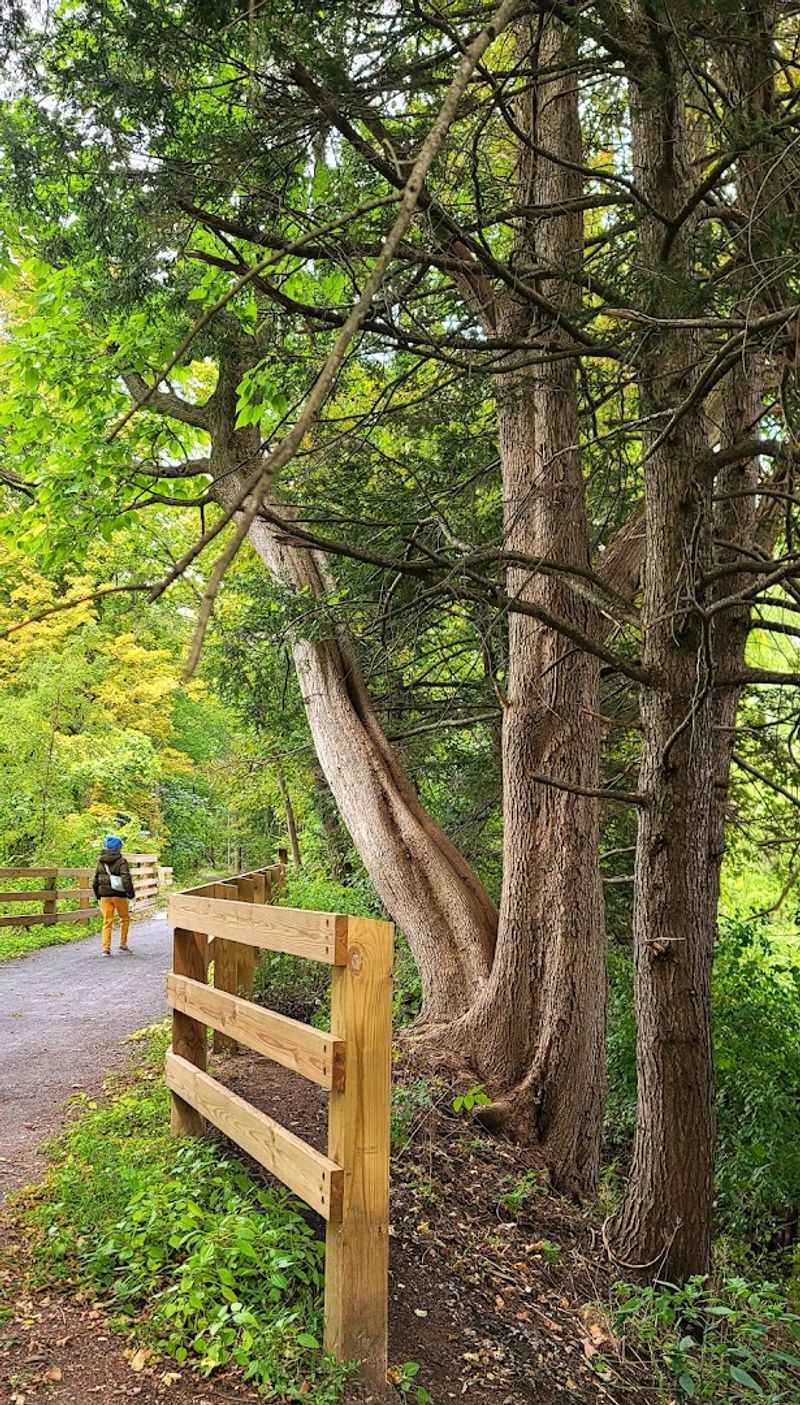
Rail trails have a particular gift for wildlife habitat, and the Wallkill Valley Rail Trail uses that gift well.
The corridor passes through dense woods, open fields, farmland, and orchards, creating a patchwork of environments that support a wide variety of birds, insects, and small animals.
Birders find the trail especially rewarding during migration seasons when the tree canopy fills with activity.
Wildflowers appear along the trail edges from spring through early fall, adding color to the stone path without any help from a landscaper.
The Wallkill River and Plattekill Creek both run near sections of the trail, drawing waterfowl and providing the kind of ambient sound that makes a walk feel genuinely restorative. The trail is open from dawn to dusk year-round, so early risers catch the best wildlife moments.
Motorized vehicles are not allowed on the trail, with the sole exception of Class 1 electric bikes. That rule keeps the experience peaceful and consistent.
Dogs are welcome on leash, and many people bring them along for the full experience. The absence of engine noise lets the natural sounds of the corridor come forward, which turns out to be one of the trail’s most underrated qualities.
How To Plan Your Best Day On The Trail
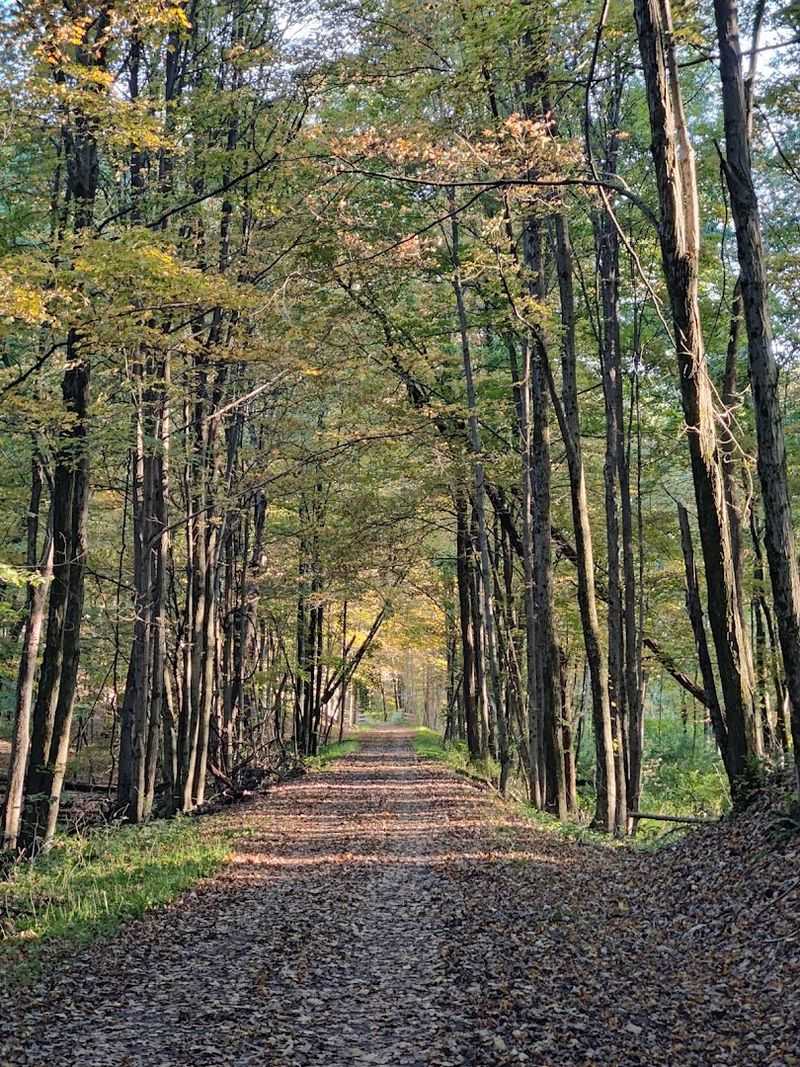
Planning ahead makes the Wallkill Valley Rail Trail experience noticeably better. The trail runs from Gardiner in the south all the way to the Kingston city line in the north, covering over 21 miles of connected path.
Most casual visitors pick a section and turn around at a comfortable midpoint rather than attempting the full length in one go. Starting from Gardiner gives you orchards and ridge views right away.
Parking near Gardiner Center and Majestic Park, about two miles north of the Denniston Road terminus, gives you more space and easier access than the roadside spots at the southern end. Bring water because there are no restrooms or water stations along the trail.
Signage is clear and marks distances along with connections to the Empire State Trail and other linked paths.
The trail surface handles hybrid bikes well and is comfortable for walking shoes. Fall is a particularly good time to visit because the foliage along the corridor turns the whole path into something close to a painting.
Spring brings wildflowers and bird activity. Winter offers cross-country skiing for those who like their trails with a little crunch underfoot. Any season works, but none of them disappoint.