
10 Best Historic Places To Visit In Tennessee’s Smoky Mountains
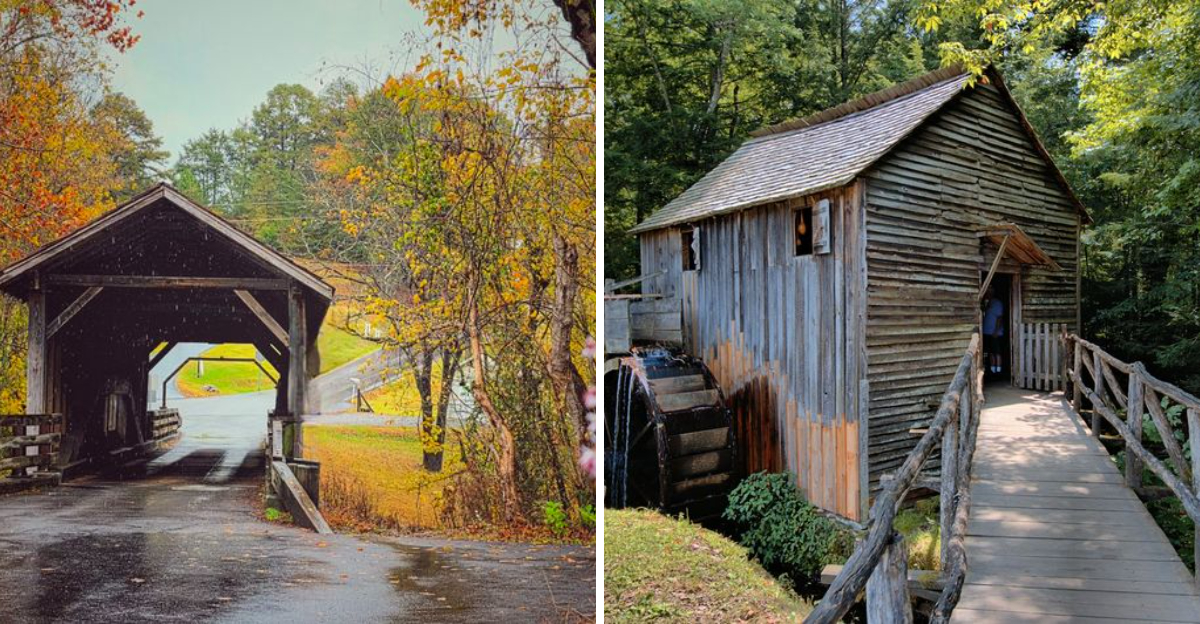
What if your Smoky Mountains trip could take you through centuries of stories without ever feeling like a history lesson?
Tennessee has preserved cabins, mills, museums, bridges, and mountain communities that still reveal how people once lived. Some places sit beside rushing creeks. Others wait along scenic roads or quiet woodland paths.
You can walk through old farmsteads, see working machinery, explore historic aircraft, and stand inside buildings that served families generations ago. Each stop adds another layer to a region many visitors only know for mountain views and outdoor adventures.
The best part is how naturally these places fit into a trip. You do not need to spend an entire day inside a museum or follow a strict schedule.
Ready to see the Smokies through a completely different lens? These historic Tennessee places bring the past close enough to see, hear, and experience for yourself.
1. Cades Cove, Townsend
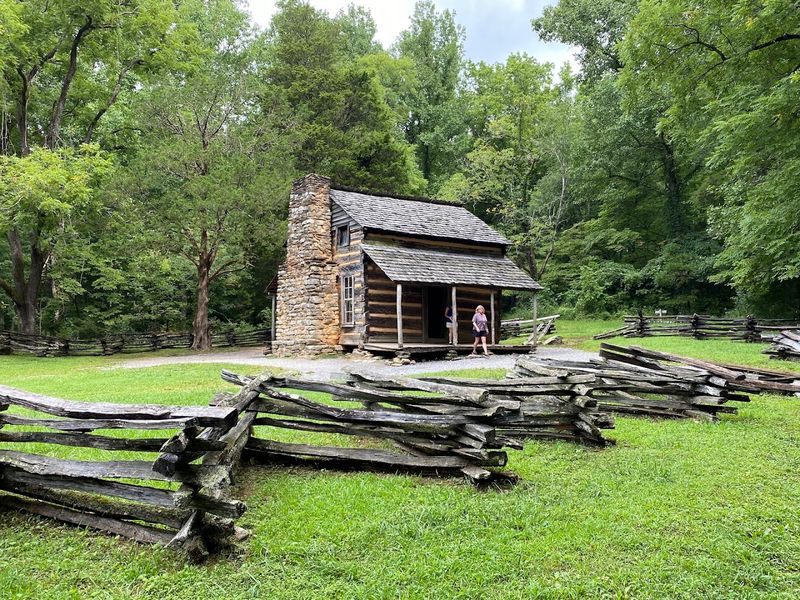
Long before it became one of the most photographed valleys in the eastern United States, Cades Cove was known to the Cherokee people as “Tsiya’hi,” meaning Otter Place.
John and Lurena Oliver arrived in 1818 as the first permanent Euro-American settlers, and by 1850 the valley had grown to nearly 700 residents.
The eleven-mile loop road that winds through the cove today is a living museum on wheels. Preserved homesteads, old churches, and a working gristmill line the route, each one anchoring a different chapter of the valley’s story.
Wildlife roams freely here, so white-tailed deer, wild turkeys, and black bears are regular sights against that stunning backdrop.
Every Wednesday through September 30, the loop closes to motor vehicles, transforming into a peaceful corridor for walkers and cyclists only.
If your vehicle parks for more than fifteen minutes, a valid parking tag is required. Few places in the Smokies pack this much history, scenery, and raw natural energy into a single eleven-mile stretch.
2. Elkmont Historic District, Gatlinburg
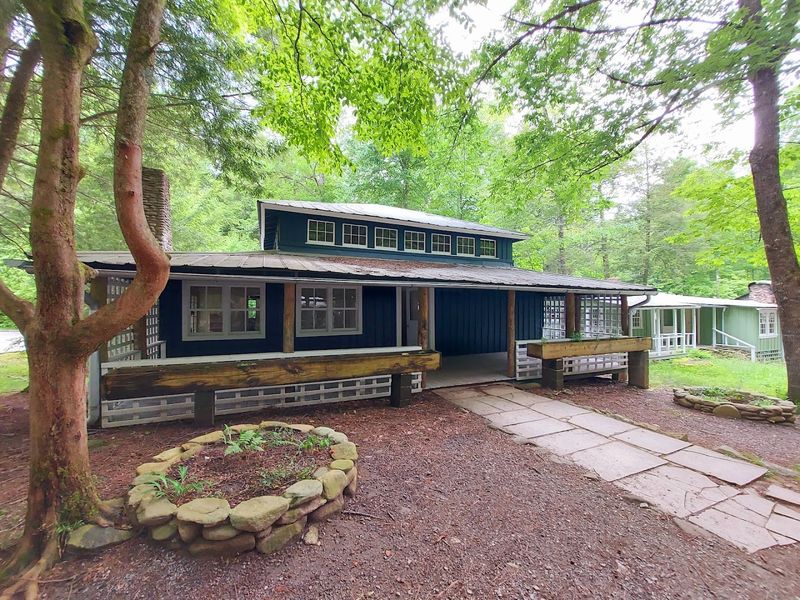
What started as a logging camp eventually reinvented itself as a fashionable mountain resort, and the Elkmont Historic District near Gatlinburg carries both identities with quiet dignity.
The Appalachian Club and the Wonderland Club brought city-dwellers here for summer escapes in the early twentieth century, turning the area into a social hub for Knoxville’s elite.
Restored cabins throughout the district showcase the architectural styles of those earlier eras. Exteriors reveal hand-crafted woodwork and rustic charm that speak louder than any museum placard ever could.
The Daisy Town area within the district is also accessible, adding another layer to the already rich story of this woodland community.
Strolling these grounds feels less like sightseeing and more like eavesdropping on conversations that happened a hundred years ago.
The surrounding forest has slowly reclaimed parts of the landscape, which gives Elkmont an atmospheric, almost cinematic quality that is hard to replicate anywhere else in the park.
It is a place where leisure, industry, and nature all took turns shaping the same patch of mountain ground.
3. Walker Sisters Spring House, Sevierville
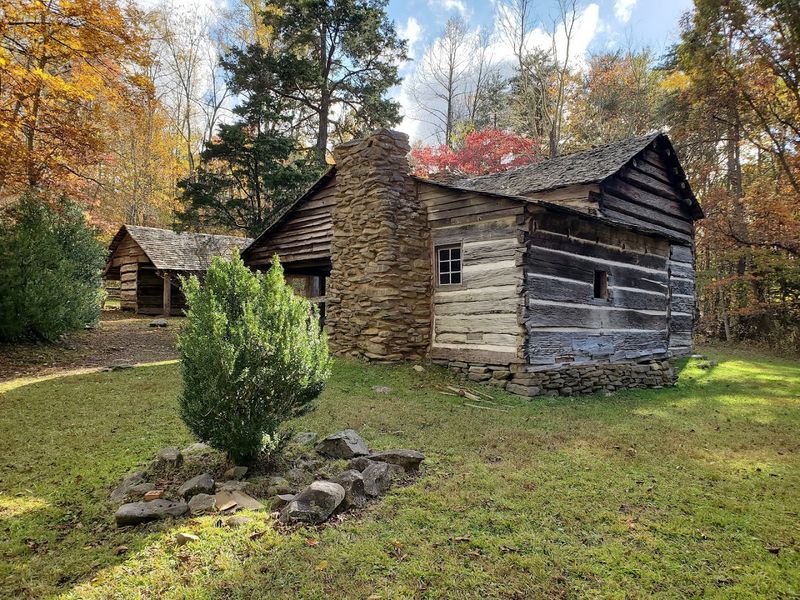
Five sisters once refused to leave their mountain home, and their stubborn devotion to the land created one of the most compelling stories in Great Smoky Mountains National Park history.
The Walker sisters held a special lifetime lease that allowed them to remain in their log cabin near Sevierville, long after the park was established around them.
Their father, John N. Walker, built the original structure from sturdy tulip-poplars, and the family’s self-sufficient lifestyle became widely known after a 1947 magazine article brought national attention to their remarkable story.
The corncrib and springhouse that accompany the main cabin round out a complete picture of mountain homesteading.
The cabin has been fully restored and remains open to those who make the trek via the Little Brier Gap Trail, which begins near the Little Greenbrier School.
The trail runs about one to one-and-a-half miles through quiet woodland before opening onto the homestead.
Standing on the porch of the Walker Sisters cabin, surrounded by the same trees and birdsong that kept five determined women company for decades, is a moment that tends to stay with you long after you head back down the trail.
4. Noah Bud Ogle Cabin, Gatlinburg
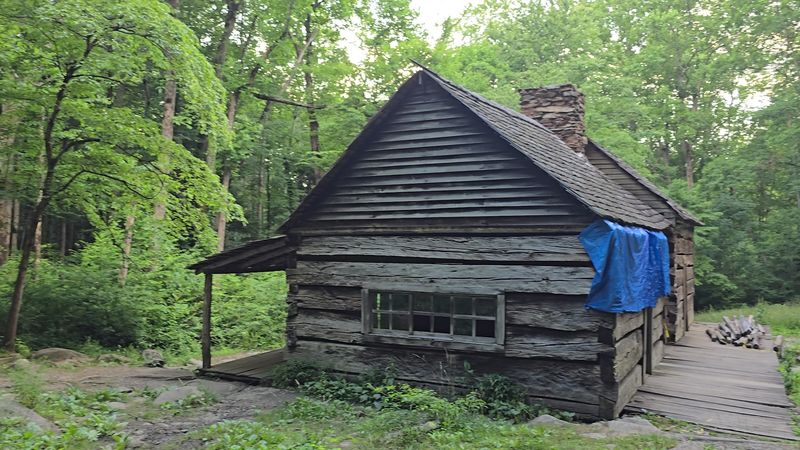
The saddlebag design of the Noah Bud Ogle Cabin is the first thing that catches your eye: two separate living quarters flanking a central chimney, an ingenious layout that made the most of limited building materials.
Noah Ogle began establishing his four-hundred-acre farm in 1879 on Cherokee Orchard Road in Gatlinburg, with the cabin taking shape in the early 1880s.
He was a descendant of the pioneering Ogle family who originally settled in the area then called White Oak Flats, the community that would eventually grow into modern Gatlinburg.
The farmstead also includes a barn that holds the distinction of being the only remaining four-pen barn in the entire national park.
A historic tub mill on the property is equally rare, as it is the last of its kind in the Smokies. A self-guiding nature trail of roughly 0.7 to 1 mile loops through the grounds, connecting all three structures in a single easy walk.
The cabin interior is unfurnished but open, which actually encourages the imagination to fill in the details. Few farmsteads in the region offer this kind of hands-on, unhurried access to genuine nineteenth-century Appalachian life.
5. Cades Cove Historical Grist Mill, Townsend
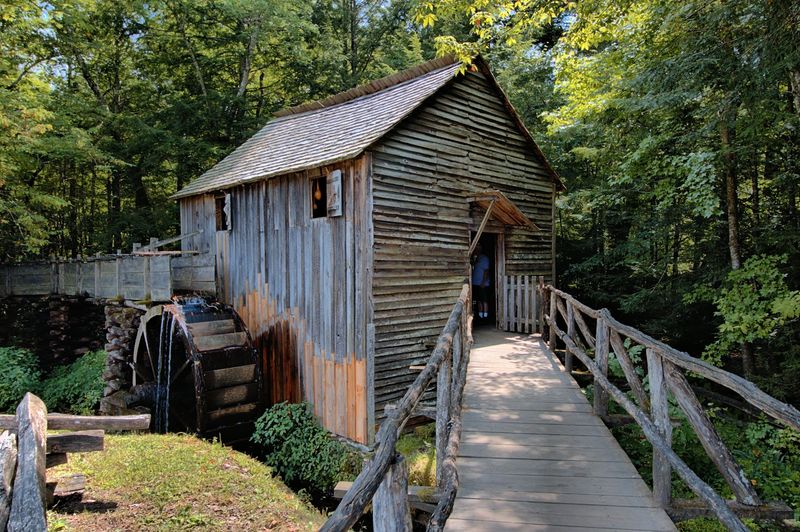
An eleven-foot water wheel has been turning at the Cades Cove Historical Grist Mill for well over a century, and the sight of it still working is genuinely impressive.
John P. Cable built the mill in 1867 along Cades Cove Loop Road in Townsend, harnessing the combined flow of Mill Creek and Forge Creek to power the operation.
He was a descendant of Peter Cable, who played a key role in draining the marshy lowlands of Cades Cove back in the 1820s, so the Cable family name is woven deeply into this valley’s foundation.
The original millstones that ground corn and wheat into flour are still in use today, which makes the mill a genuinely living piece of history rather than a static display.
Beyond grinding grain, the mill also powered sawmills that changed how homes in the cove were built by providing ready-cut lumber.
Nearby, the Gregg-Cable house stands as the only remaining all-frame house in Cades Cove, adding another architectural milestone to the same area.
Operating daily through November 29, 2026, from 9 a.m. to 5 p.m., the mill sits conveniently close to the Cades Cove Visitor Center. The whole Cable Mill area feels like a small town frozen at its most productive moment.
6. Great Smoky Mountains Heritage Center, Townsend
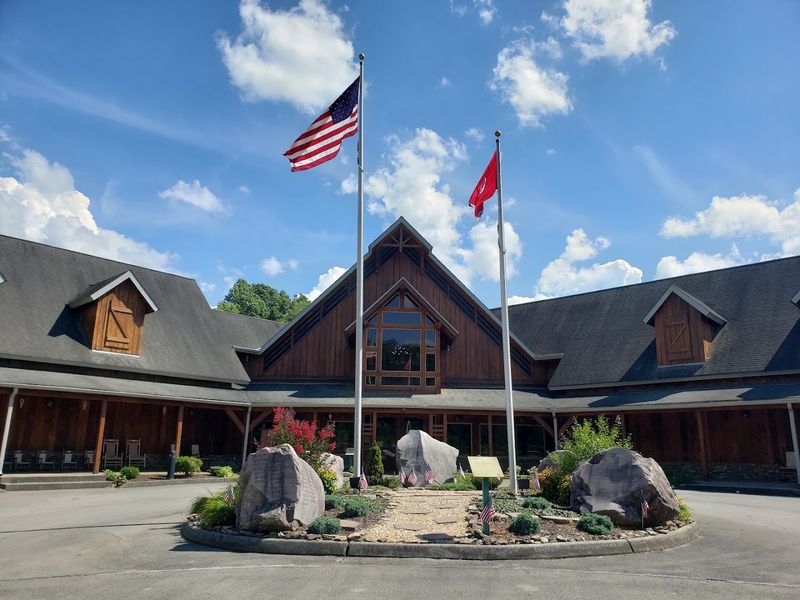
History gets a full-scale treatment at the Great Smoky Mountains Heritage Center at 123 Cromwell Drive in Townsend.
The center was built around a single mission: preserve and share the layered cultural story of everyone who has ever called this mountain region home, from the earliest Cherokee inhabitants to the European settlers who followed.
Gallery exhibits move through time with purpose, covering early Appalachian music, mountain education, historic weaponry, and even vintage vehicles. The breadth of subjects on display reflects just how complex and varied life in this region has always been.
Educational programs and live demonstrations bring specific crafts and traditions to life in ways that wall-mounted photographs simply cannot.
Special storytelling sessions are scheduled throughout the year, offering an especially intimate way to absorb local history.
The accompanying historic village on the grounds features authentic log structures that help ground all the indoor exhibits in physical, tangible reality.
The museum is open Monday through Saturday from 10 a.m. to 5 p.m. and Sunday from noon to 5 p.m., giving a generous window to take everything in at a comfortable pace.
7. Little River Railroad And Lumber Museum, Townsend
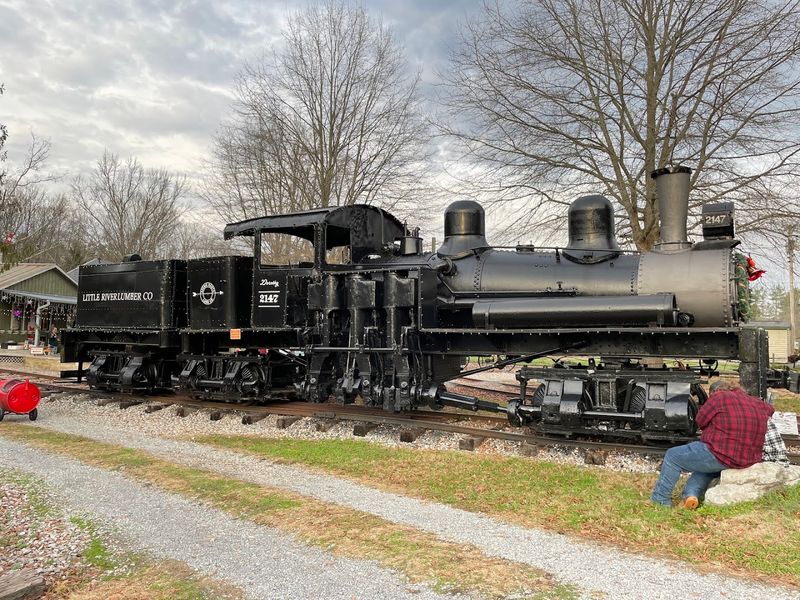
Before the Smoky Mountains became a national park, they were a working forest, and the Little River Railroad and Lumber Museum at 7747 East Lamar Alexander Parkway in Townsend tells that industrial story with remarkable detail.
Founded as a non-profit in 1982, the museum documents the sweeping impact of the Little River Lumber Company and the railroad that made its operation possible.
The Little River Railroad was a genuine engineering pioneer, credited with inventing the first 2-4-4-2 articulated Mallet locomotive and the smallest 4-6-2 Pacific ever built for North American standard gauge.
Those are serious credentials for a line that most people outside the region have never heard of.
Inside, exhibits feature equipment, personal artifacts, and historical photographs that together reconstruct the era in vivid terms. Interactive model train layouts add a hands-on element that younger visitors tend to appreciate just as much as the history buffs.
Outdoor railroad equipment and the museum grounds are always accessible, regardless of season.
The museum itself is open daily between May and October, and the Fall Railroad and Heritage Festival on September 25 and 26, 2026, turns the whole property into a lively celebration of the region’s logging and rail heritage.
8. The Old Mill, Pigeon Forge
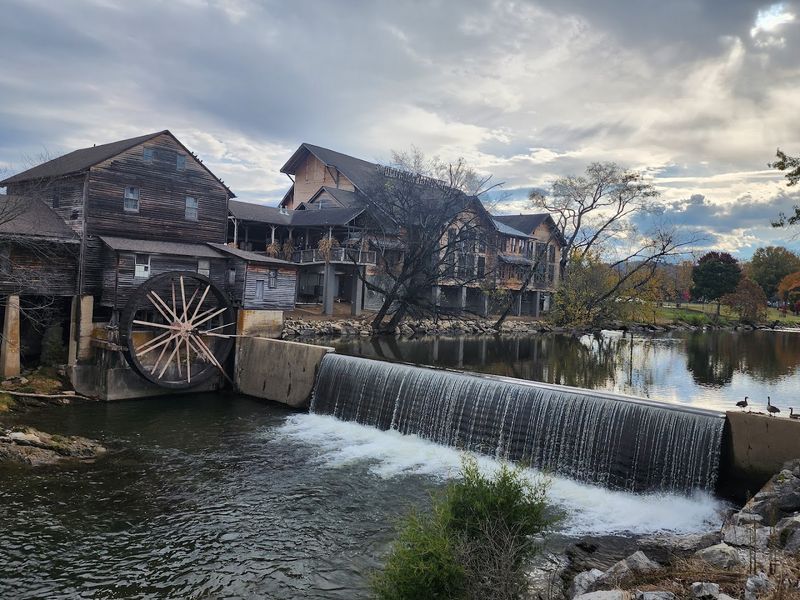
Isaac Love built The Old Mill in 1830 in Pigeon Forge and the structure has been grinding grain ever since, making it one of the oldest continuously operating mills in the entire country.
Love also built the iron forge that gave Pigeon Forge its name, so his fingerprints are essentially all over the town’s origin story.
The mill’s history took a dramatic turn during the Civil War, when it secretly powered looms producing cloth for the Union military and reportedly housed a field hospital on its third floor.
By the early 1900s, it had reinvented itself again, this time as a generator providing electricity to Pigeon Forge until 1930.
It is the only property in Pigeon Forge listed on the National Register of Historic Places, which says a great deal about its significance in a town that has changed considerably over the decades.
The complex surrounding the mill now includes restaurants, specialty shops, and a working pottery studio with roots on the same property.
Guided mill tours in 2026 walk you through the mechanics of grain grinding in a way that is far more fascinating than it sounds. The Old Mill manages to be genuinely historic and genuinely lively at the same time, which is a rare combination.
9. Harrisburg Covered Bridge, Sevierville
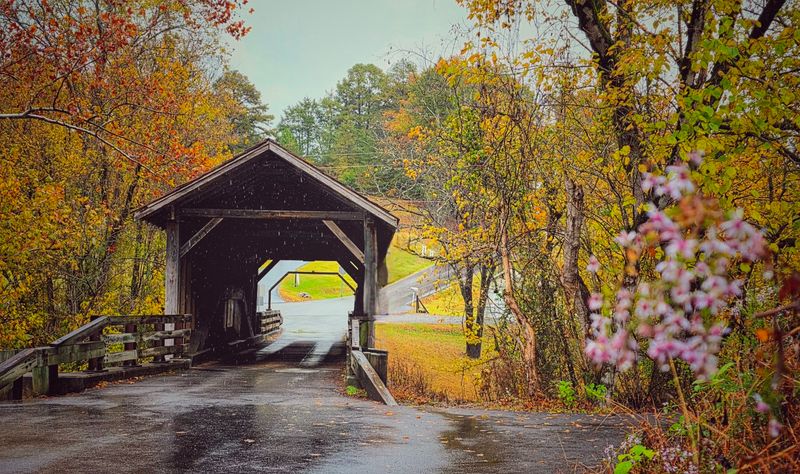
Built in 1875 by Elbert Stephenson Early, the Harrisburg Covered Bridge in Sevierville rose from the ruins of the original McNutt Bridge, which a flood had swept away earlier that same year.
The Queenpost pony truss design that Early chose has proven itself remarkably durable, keeping the bridge standing and functional for over 150 years on Old Covered Bridge Road.
Its historical and architectural significance earned it a spot on the National Register of Historic Places in 1975, exactly a century after its construction.
A complete restoration in 2005, funded in part by a federal grant, ensured the structure would carry on well into the twenty-first century.
Unlike many covered bridges that exist purely as pedestrian landmarks, this one still allows vehicles to pass through its narrow wooden passage, which makes crossing it feel like a brief but genuine time-travel experience.
The sound of planks underfoot and the dim, filtered light inside the bridge create an atmosphere that no modern overpass can replicate.
Surrounded by tall trees and the quiet murmur of the East Fork of the Little Pigeon River, the Harrisburg Covered Bridge is one of the few surviving covered bridges in Tennessee, and every inch of it earns that distinction.
10. Tennessee Museum of Aviation, Sevierville
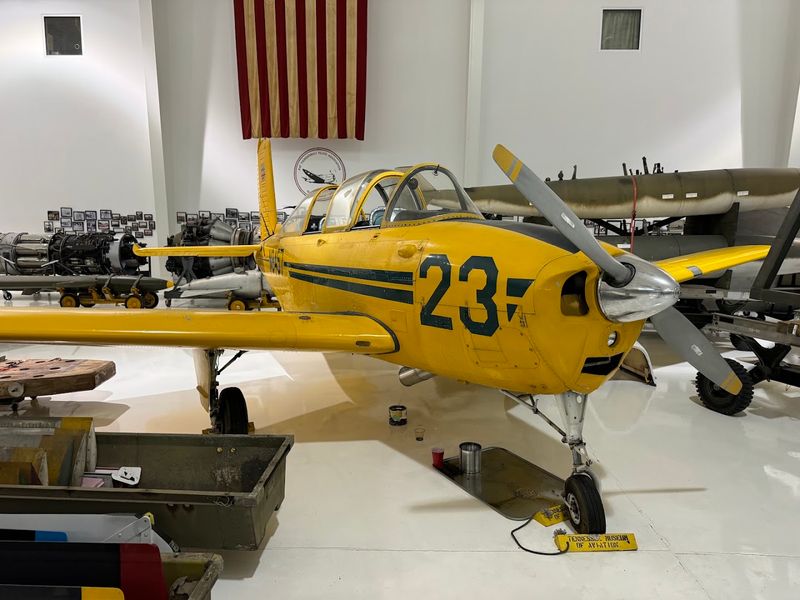
The Tennessee Museum of Aviation gives visitors a close look at the aircraft and stories that shaped American flight.
Its large hangar holds restored warbirds, military planes, helicopters, engines, and vehicles that span several decades of aviation history.
Many displays focus on the people behind the machines. Uniforms, photographs, personal items, and wartime memorabilia help explain what pilots and crews experienced during training and combat.
The museum also highlights Tennessee’s role in aviation, giving the exhibits a strong local connection.
One of the most exciting parts is seeing the aircraft at ground level. Visitors can examine their size, construction, and details without viewing them behind distant barriers.
Some planes in the collection remain airworthy, so guests may occasionally see historic aircraft moving outside near the runway.
The museum sits beside the Gatlinburg Pigeon Forge Airport, making it an easy addition to a day in Sevierville. It is also a useful option when rain or summer heat makes outdoor sightseeing less appealing.
A visit can take an hour or longer, especially for anyone interested in military history, engineering, or vintage aircraft. The collection makes the past feel immediate, personal, and much larger than photographs alone can show.