
This 85-Foot Tennessee Waterfall Has One Of The Park’s Most Peaceful Swimming Spots
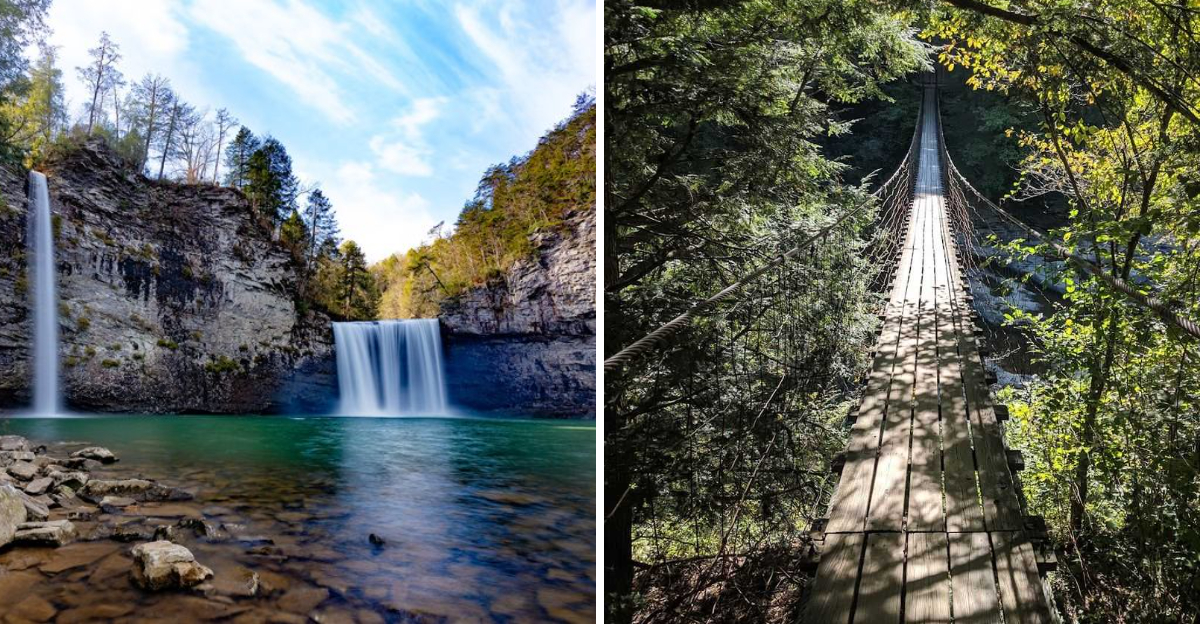
Craving a swim spot that feels worlds away from crowded pools and noisy lakes? Tennessee has an answer, and it comes with a dramatic backdrop.
Picture water crashing down a towering cliff before settling into a calm pool below. That contrast between powerful and peaceful is what makes this place so special.
Visitors often pause at the edge just to take it all in before stepping into the cool water. The hike leading up to it adds a sense of anticipation, building excitement with every step.
Once you arrive, the sound of rushing water creates an almost meditative atmosphere. Families spread out towels nearby while others float quietly, soaking in the scenery.
Summer days here move slower, quieter, and happier. Whether you come for photos, a swim, or simply the view, this spot delivers a memorable experience.
It proves that Tennessee’s natural wonders can be both thrilling and calming, all in the same breath.
The Gorge’s Ancient Call
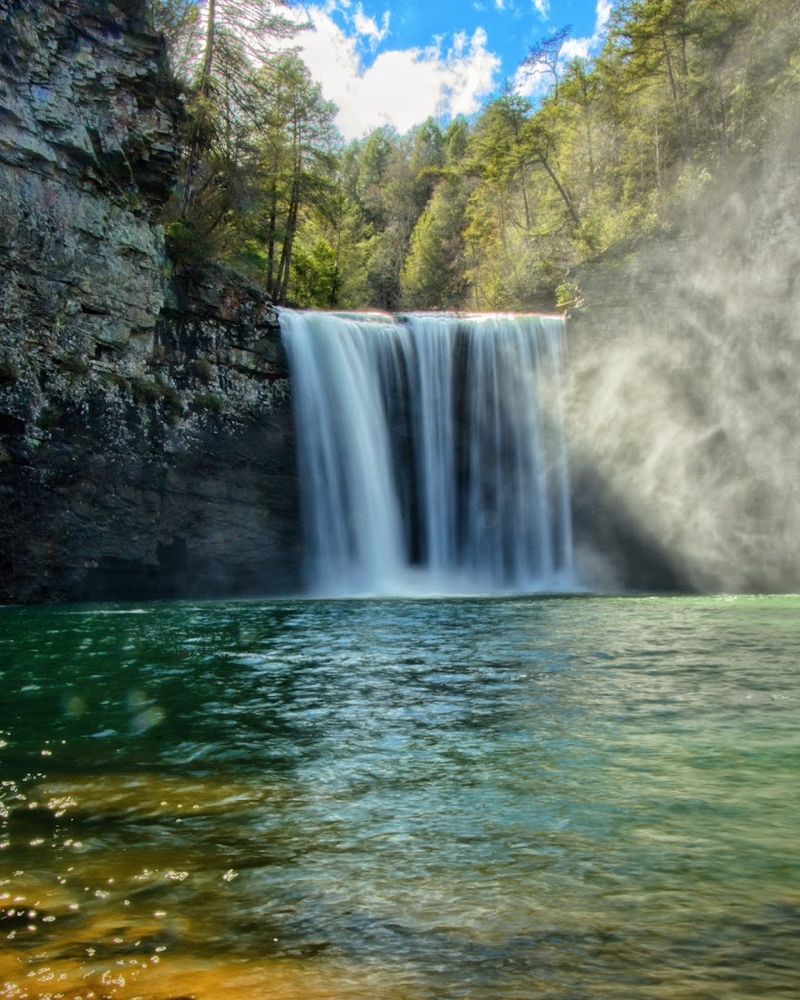
Long before any trail was cut or any cable was bolted into stone, the gorge surrounding Cane Creek Falls was already doing what it has always done: carving itself deeper with every passing season.
The rock walls here are not decorative. They are geological records, layered with time and shaped by water that never asked permission to change the landscape.
The gorge sits within Fall Creek Falls State Park in Tennessee 37367, and its depth gives the whole area a mood that is hard to describe without standing inside it. The air is noticeably cooler.
Sound travels differently. Even footsteps seem to soften against the stone.
What makes this gorge particularly compelling is how it frames the falls themselves. You are not simply looking at water from a distance.
You are inside the story, surrounded by walls that have been shaped over thousands of years. The scale puts everything in perspective, including whatever was weighing on your mind before you arrived.
This is a place that has been quietly extraordinary for far longer than anyone has been around to notice it.
Where Waterfalls Etch The Landscape
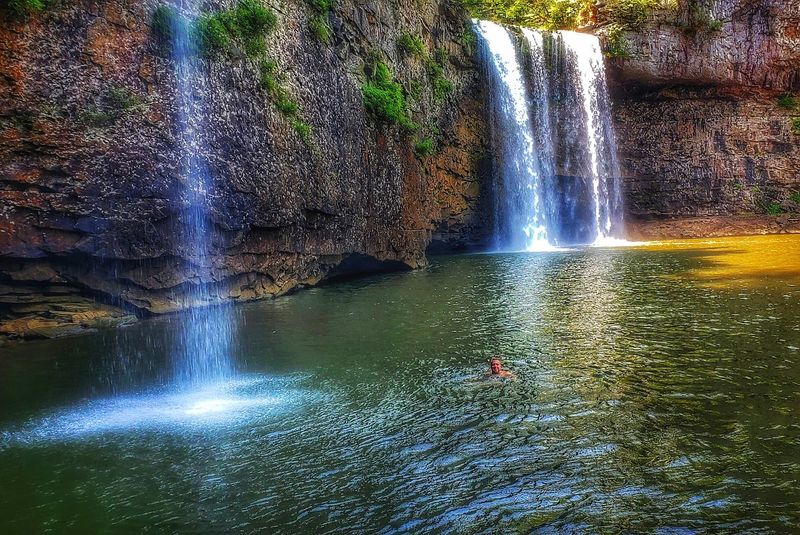
Cane Creek Falls does not ease its way down the cliff. It commits.
The full 85-foot drop sends water crashing into the basin below with enough force to create a fine mist that drifts outward and settles on everything nearby, including you.
Standing at the base, the sheer vertical scale of the falls is genuinely startling the first time you see it.
What sets this waterfall apart from others in the region is how it interacts with the rock face it travels over. The stone is not uniform.
There are ledges, recesses, and subtle variations in the cliff surface that give the falling water a layered, textured quality rather than a single clean sheet. It is more complex than a postcard image suggests.
The falls are part of a broader network of cascades within Fall Creek Falls State Park, but Cane Creek carries its own distinct character. The basin it feeds is calm and wide, a sharp contrast to the energy of the drop above.
That transition, from roaring descent to quiet pool, is one of the more memorable things about spending time here. Nature rarely stages that kind of contrast so cleanly.
A Plunge Into Peaceful Waters
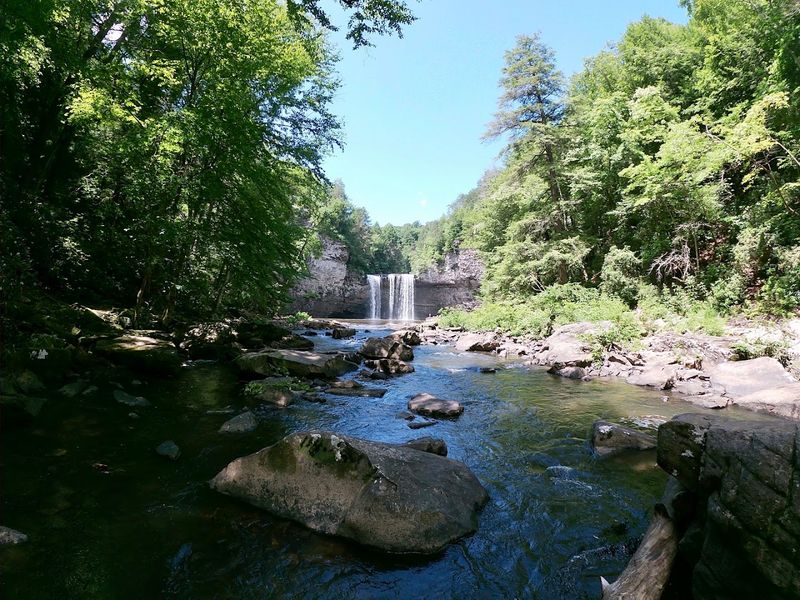
The swimming basin at the base of Cane Creek Falls earns its reputation for tranquility in a very practical way: it is not easy to reach.
The cable trail required to access the bottom of the falls keeps casual foot traffic low, which means the pool at the base tends to stay quiet even on busier park days.
The water is cold. That is not a complaint but a fact worth knowing before you commit to the plunge.
It runs clear and refreshing, fed directly by the falls above and cooled by the shade of the gorge walls on either side. Water shoes are a smart choice here, as the rocky bottom and surrounding stones can be uneven underfoot.
There is something genuinely restorative about sitting at the edge of that basin after the effort of the descent. The sound of the falls fills the space without overwhelming it.
The mist keeps the air comfortable. And the sense of having earned your way to this particular spot adds a quiet satisfaction that you simply cannot get from an overlook.
Peaceful is exactly the right word for what this place offers, and it delivers on that description without any exaggeration.
The Cable Trail’s Challenging Reward
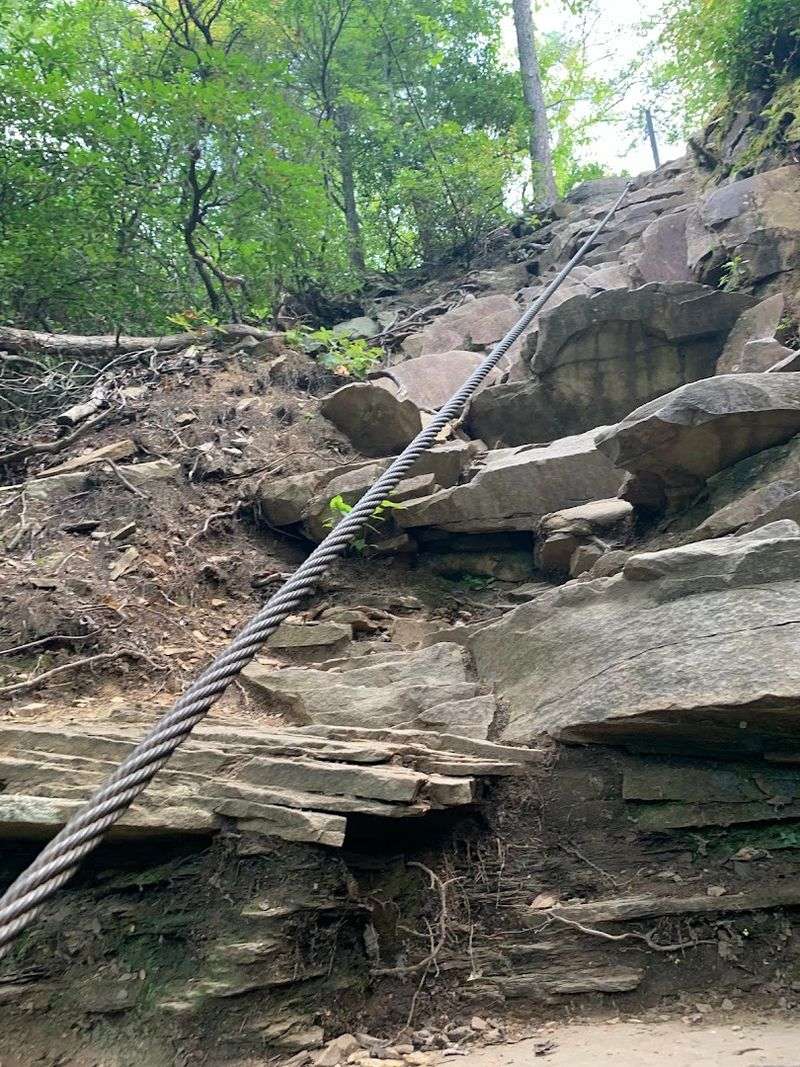
The cable trail at Cane Creek Falls is one of those hikes that sounds manageable until you are actually on it.
Described by park staff as the shortest but most strenuous trail in Fall Creek Falls State Park, it requires you to grip a steel cable anchored into the cliff face and use it to lower yourself down a steep, rocky slope into the gorge below.
About a third of the way down, the cable ends, and the route becomes straightforward rock scrambling. Sure footing matters here more than upper body strength.
The descent is not impossibly long, but it demands full attention and reasonable physical confidence. Flip flops are a poor choice.
Solid hiking shoes with grip make a real difference.
The return climb is where most people discover muscles they had forgotten about. Going back up the same route requires more effort than the descent, and the steepness feels more pronounced when you are working against gravity.
That said, the experience of reaching the base of the falls and standing inside the gorge makes the physical effort feel completely proportional.
The trail is a commitment, but it is the kind that pays off in a way that a simple walk to an overlook simply cannot match.
Exploring The Water’s Many Faces
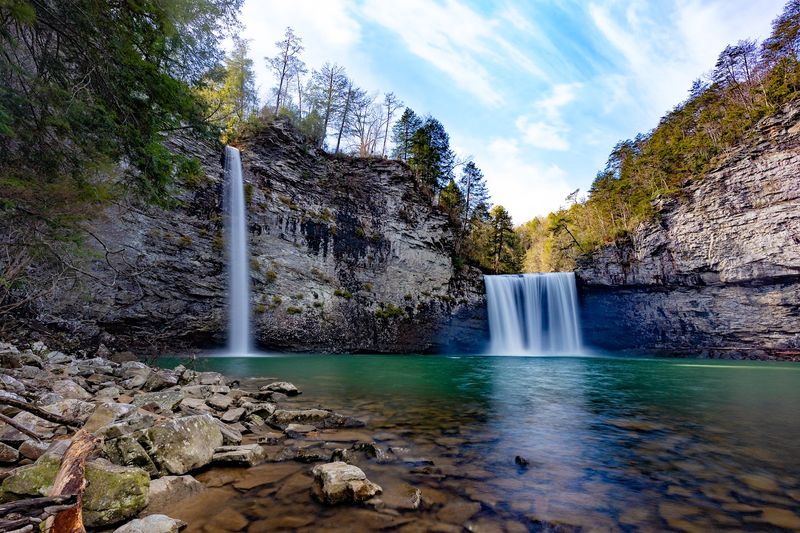
One of the more pleasant surprises about Cane Creek Falls is that it does not exist in isolation.
The overlook near the parking area offers a partial view of both Cane Creek Falls and Rockhouse Falls simultaneously, making it a two-for-one experience that requires almost no extra effort.
A few trees partially interrupt the sightline, but the view remains genuinely impressive.
The falls themselves change character depending on recent rainfall. After heavy precipitation, the flow is powerful and the mist reaches well beyond the basin.
During drier periods, the volume decreases and the water takes on a more delicate quality, revealing more of the rock face beneath. Both versions have their appeal, though the falls after a good rain are particularly dramatic.
Cane Creek Cascades, a separate feature within the same general area, offers a more accessible experience for those who prefer flatter ground and gentler terrain. It sits along a different section of trail and draws its own quiet crowd.
Exploring both the cascades and the main falls in a single outing gives a fuller picture of how water moves through this particular stretch of Tennessee landscape, each feature distinct in pace, scale, and atmosphere.
A Natural Amphitheater Of Sound And Sight

Standing at the bottom of the gorge near Cane Creek Falls, the acoustics become immediately apparent.
The rock walls on either side curve and rise in a way that captures and amplifies the sound of the falling water, creating a resonant, layered effect that fills the entire space.
It is not loud in an unpleasant way. It is immersive in a way that sharpens your awareness of where you are.
The visual experience matches the auditory one. The height of the gorge walls frames a vertical slice of sky above, while the falls anchor the far end of the basin with their constant motion.
Light enters from above and shifts throughout the day, changing the color of the water and the mood of the space in ways that make each hour feel slightly different from the last.
Morning light tends to reach the basin first and creates a warmer, softer atmosphere. By midday, the light is more direct and the colors more vivid.
Late afternoon brings longer shadows and a cooler feel to the air. Any time of day has its own character, but early arrivals consistently get the gorge to themselves, which allows the full sensory experience of the place to land without distraction.
The Surrounding Forest’s Embrace
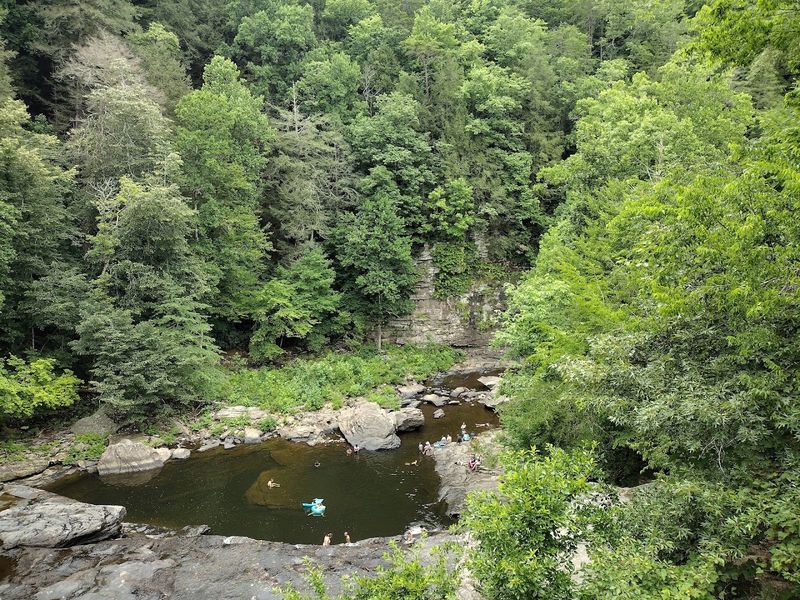
The trail to Cane Creek Falls does not begin at the edge of the gorge. It begins in the forest, and that approach matters.
The canopy overhead is thick and varied, with hardwoods that have been growing long enough to develop real character.
The light that filters through is dappled and shifting, and the path underfoot stays cool even on warm days because of the shade above.
Fall Creek Falls State Park contains one of the largest remaining stands of old-growth forest in the eastern United States, and sections of the trail to Cane Creek Falls pass through areas that reflect that distinction.
The trees are not just tall. They are old in a way you can sense without knowing the exact numbers. The forest floor beneath them is layered and active, full of ferns, mosses, and the occasional wildflower depending on the season.
Wildlife is present throughout, though rarely loud about it. Birds are the most consistent companions along the trail, and the insect population is enthusiastic in summer.
Spiders of impressive size have been noted near the base of the falls, which is simply part of the deal when you are deep inside a functioning ecosystem.
The forest is not a backdrop here. It is an active participant in the whole experience.
Pathways To Serenity
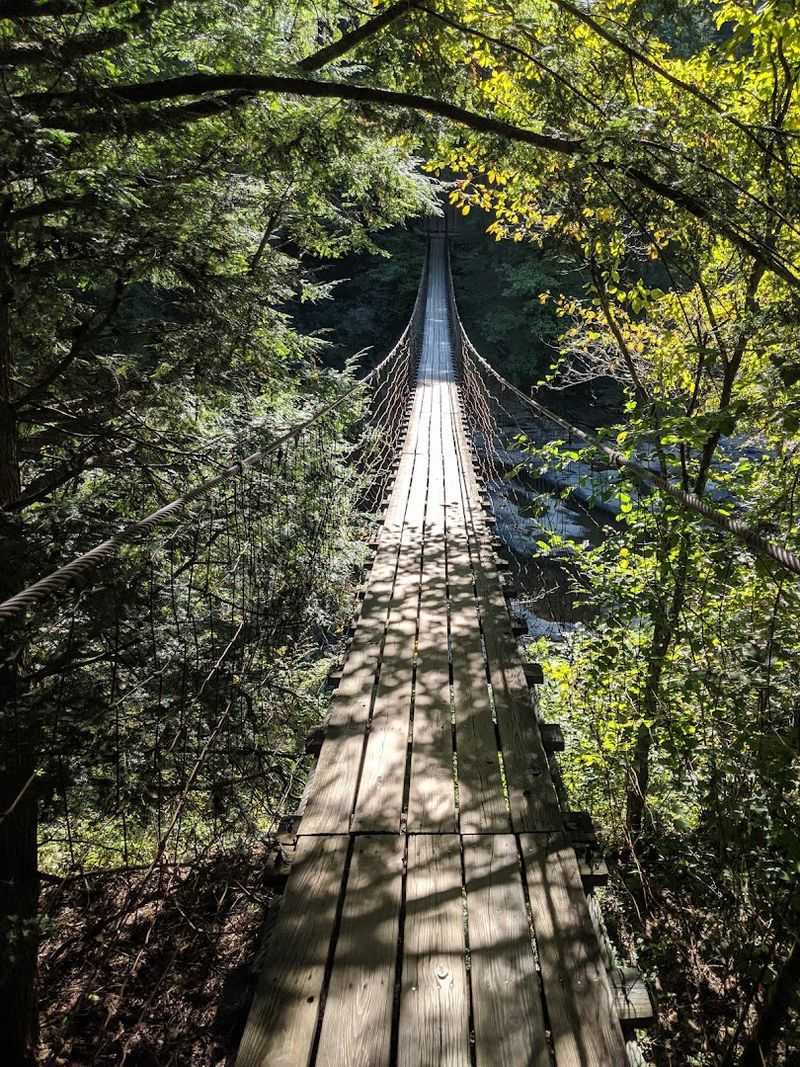
Getting to Cane Creek Falls involves more than one kind of path. The most talked-about route is the cable trail that drops into the gorge, but there are gentler options for those who prefer to experience the falls from a different angle.
The overlook near the nature center provides an elevated view of the falls without requiring any technical descent, and it is accessible to a much wider range of physical abilities.
Along the way, one of the trail system’s most distinctive features is the swinging suspension bridge that crosses the gorge.
It moves underfoot with a motion that takes a moment to adjust to, and the view from its midpoint is one of the better perspectives available in the park.
The bridge adds an element of mild adventure to what would otherwise be a straightforward walk.
The nature center near the parking area is worth a stop before or after the falls. It provides context for the geology, ecology, and history of the park in a format that is approachable without being overly simplified.
Taken together, the various pathways through this section of the park create an experience that can be as demanding or as relaxed as you choose to make it.
Reflections In The Falls’ Basin
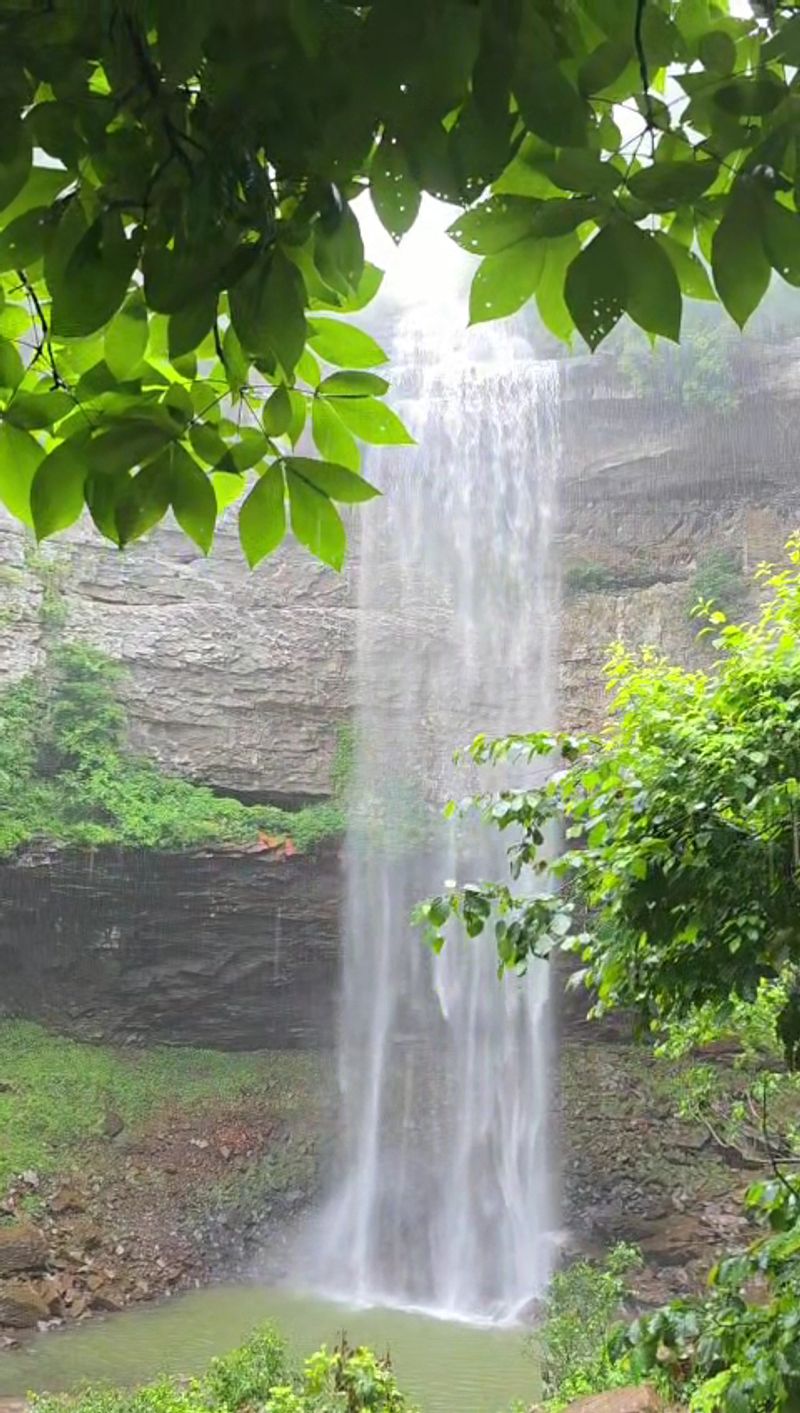
There is a particular quality to the basin at the base of Cane Creek Falls that becomes most apparent when the crowd is thin and the morning light is still low.
The water in the pool, fed constantly from above, holds a clarity that makes the rocky bottom visible even at depth.
When the surface is calm enough, the reflection of the gorge walls and the falls themselves appears in the water with surprising precision.
October is a notable month here. The surrounding hardwoods shift into color, and the palette of the gorge changes from the uniform green of summer into something considerably more complex.
The falls continue their constant descent regardless of the season, but the context around them transforms in ways that make repeat visits feel genuinely different rather than redundant.
Sitting quietly at the edge of the basin, the experience settles into something that resists easy description. It is not dramatic.
It is not the kind of moment that demands a photograph, though most people take one anyway.
It is simply the particular satisfaction of being in a place that operates entirely on its own terms, indifferent to schedules and unimpressed by urgency.
Cane Creek Falls, Tennessee 37367, offers that with remarkable consistency.