
Discover The Historic Ohio Barn That Draws Thousands Of Visitors With Its Hand-Painted Design
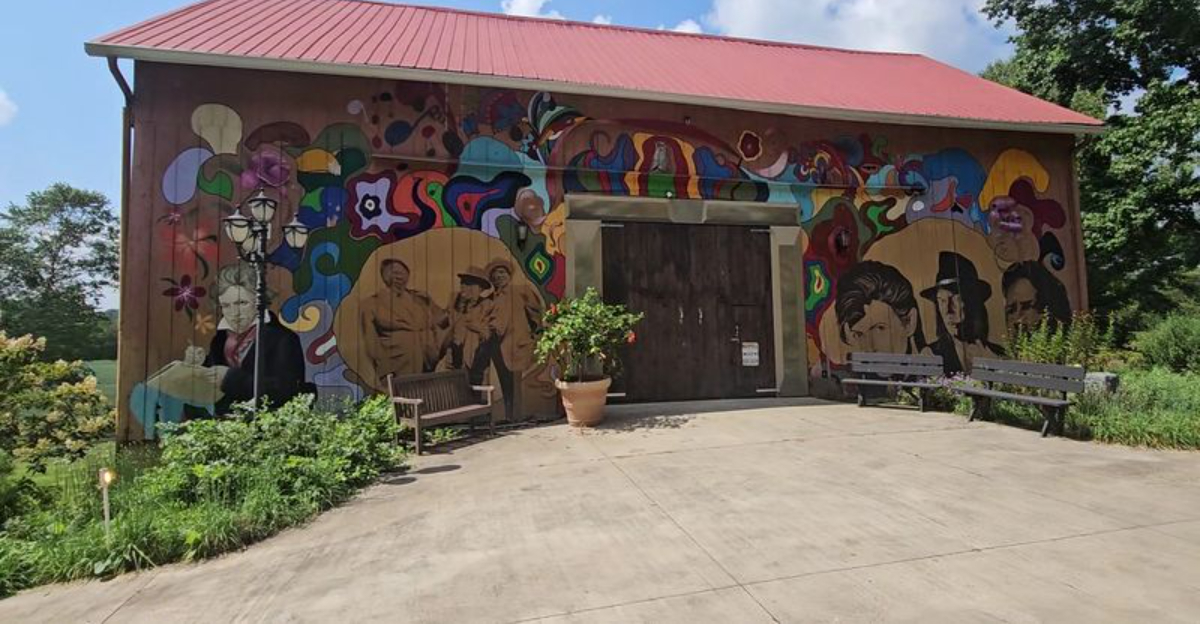
A massive canvas of weathered timber stands tall against the rural horizon, instantly commanding the attention of every passing vehicle. Most old agricultural structures slowly fade into the background of a farmland drive.
This historic barn does something completely different by making a bold artistic statement across its entire wooden facade. Intricate, hand-painted geometric designs cover the weathered planks with vibrant colors that refuse to wash away.
Drivers regularly pull onto the grass shoulder just to stare at the monumental display. Ohio proudly showcases this monumental landmark where folk art blends seamlessly with traditional farming history.
Thousands of tourists pull their vehicles over throughout the seasons to capture photos of the brilliant patterns. The visual impact proves that old buildings do not have to disappear into obscurity.
This striking landmark remains an enduring testament to rural creativity.
History Behind The Ohio
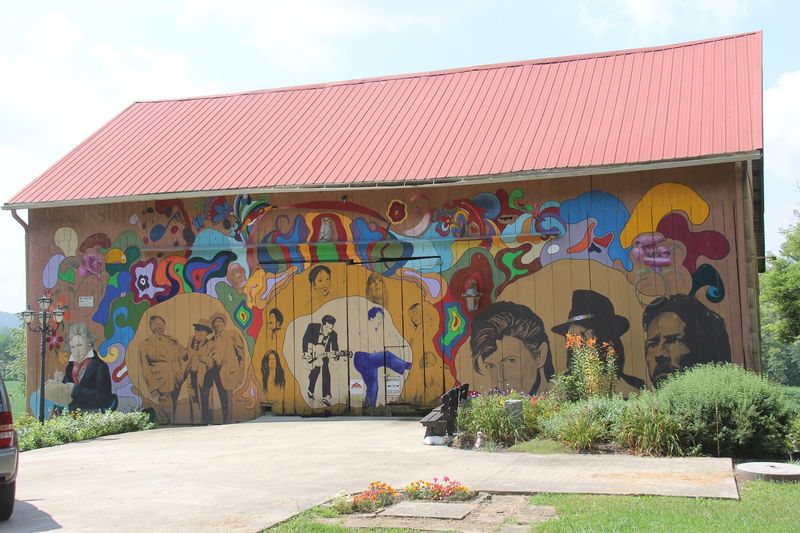
Artist Rusty Baker started painting the Legends Of Music Barn back in 2005. He had a vision to honor the musicians who shaped American music.
Nobody told him to do it. He just picked up a brush and got to work.
Baker used projected outlines to map each design onto the barn walls. From there, he filled in every detail by hand.
The process was slow, careful, and completely personal. Each figure on that barn meant something real to him.
Over the years, more and more musicians appeared on the exterior. The barn grew into a living tribute wall for music icons.
Baker passed away in April 2023 at age 64. His longtime partner, Claudia Rozuk, now carries the responsibility of preserving his work.
The barn sits at 1670-1684 County Rd 150, Millersburg, OH 44654. It started as one man’s passion project and became a Holmes County landmark.
The story behind it is just as powerful as the artwork itself. History here was made one brushstroke at a time.
Techniques Used In Hand Painted Designs
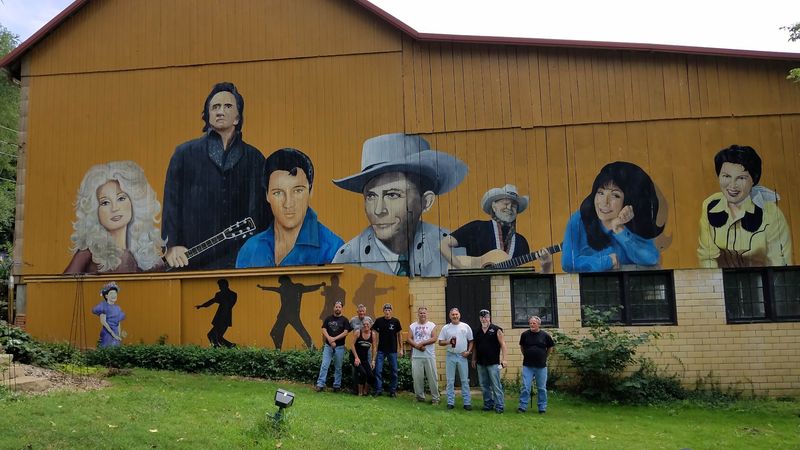
Rusty Baker did not just grab a brush and wing it. He developed a method he called architectural illusion.
The technique made flat barn walls look three-dimensional. People would stop their cars thinking they were seeing real structures.
He started each mural by projecting outlines directly onto the barn surface. This gave him a precise guide before any paint touched the wood.
From there, the real work began. Layer by layer, he built up color, shadow, and detail.
The realism Baker achieved was genuinely hard to believe. Faces looked like photographs.
Instruments looked like you could reach out and strum them. He had a talent for capturing light in a way that made the paintings pop from a distance.
Working on an outdoor barn means dealing with weather, rough wood, and changing light conditions. Baker handled all of that without skipping a beat.
His technique had to be durable as well as beautiful. The paint had to survive Ohio winters and summer heat alike.
What makes these murals stand out is the combination of precision and passion. This was not a commercial project.
Baker poured genuine love for music into every painted face. The technique was the tool, but the heart behind it is what made it extraordinary.
Cultural Significance Of Artwork
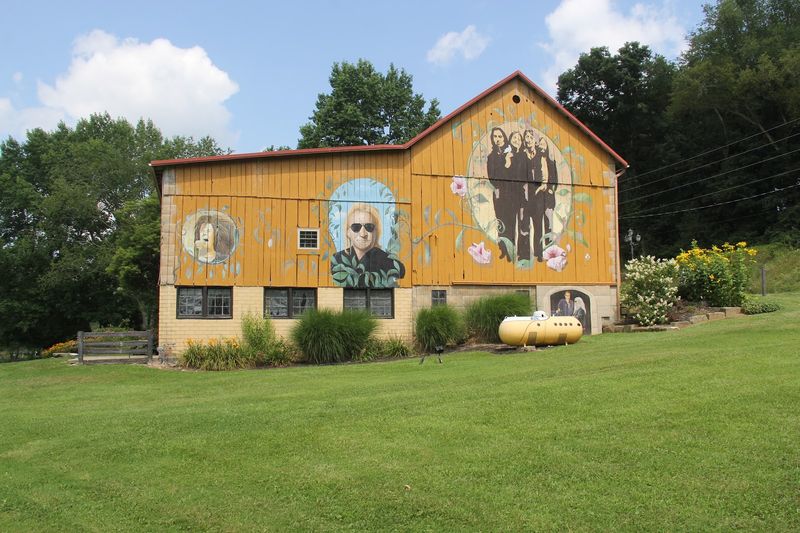
The Legends Of Music Barn is not just a cool photo spot. It is a genuine cultural landmark for music history in Ohio.
The murals pay tribute to artists who changed the way America listens to music. That is a big deal painted on a barn in rural Holmes County.
Each figure on the barn represents a chapter in American music history. From rock legends to blues icons, the roster is serious.
Stevie Ray Vaughan is there. David Bowie made it onto the barn too.
These are not random choices. Baker selected artists who left a real mark.
There is something powerful about seeing these icons in an unexpected place. You are driving through farmland and suddenly Jimi Hendrix is staring back at you.
It creates this collision between rural Ohio and music royalty. That contrast is part of what makes it so memorable.
Folk art has always carried cultural weight in America. It tells stories that museums sometimes miss.
The Legends Of Music Barn does exactly that. It honors artists in a way that feels human and unfiltered.
Communities need places like this. They remind people that culture does not only exist in big cities.
It lives in barns, on county roads, and in the hands of artists like Rusty Baker. The cultural value here is real and worth protecting.
Visitor Experiences And Attractions
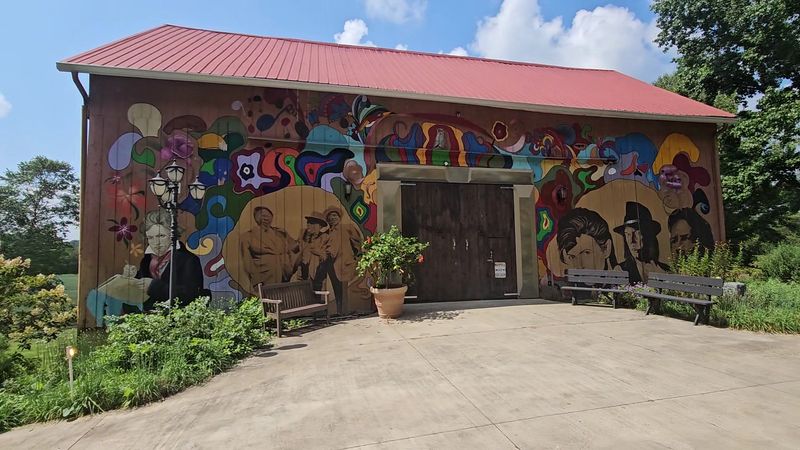
People come from all over the country to see this barn. And honestly, once you see photos of it, you completely understand why.
The murals are massive and packed with detail. Cameras come out immediately.
Walking the perimeter of the barn is the main attraction. Every wall offers something different.
You round a corner and discover a new musician staring back at you. It becomes a game of spotting who is painted where.
Some visitors have caught live music events at the property over the years. Jam sessions and musical gatherings have taken place right on the grounds.
The barn has a way of pulling musicians and fans into the same space.
One particularly famous attraction is the David Bowie Space Oddity tractor. Yes, a tractor.
It was originally a David Brown model and got transformed into a Bowie tribute. That alone is worth the drive.
The atmosphere around the barn is relaxed and open. There is no rush.
People take their time, walk around, and soak it all in. The surrounding Holmes County landscape adds a peaceful backdrop to the whole experience.
Visiting the Legends Of Music Barn is one of those experiences that sticks with you. It is not a theme park or a ticketed attraction.
It is raw, real, and genuinely one of a kind. Ohio has a lot going on, but this place is hard to top.
Preservation Efforts For Historic Barns
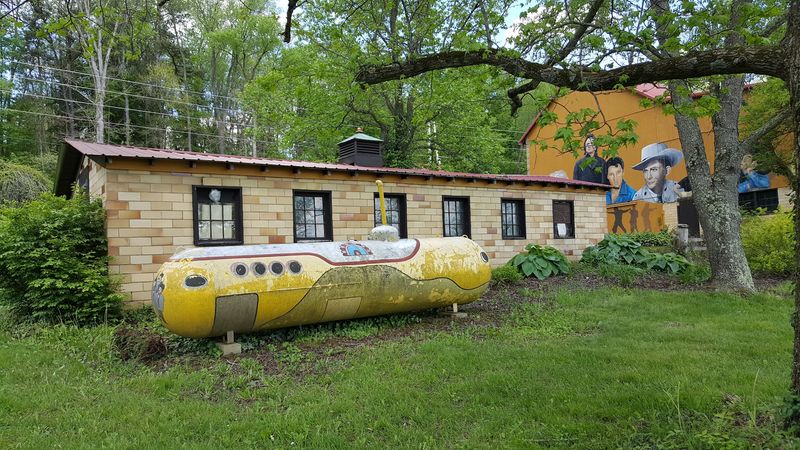
After Rusty Baker passed away in April 2023, a real question hung in the air. What happens to the barn now?
His partner, Claudia Rozuk, stepped up to make sure his legacy did not fade along with him. She is working to keep the artwork and the property alive.
Barn preservation in Ohio is already a challenge on its own. Wood weathers.
Paint peels. Structures settle and crack over time.
Add hand-painted murals to the equation and the stakes get even higher.
The Legends Of Music Barn is showing visible signs of deterioration. That is not a secret.
The elements have taken a toll on the exterior paint over the years. Keeping it looking the way Baker intended requires ongoing attention and resources.
Historic barn preservation efforts across Ohio have gained more attention in recent years. Organizations and local communities have rallied around protecting these structures.
The Legends Of Music Barn deserves that same energy and support.
Preserving this barn is about more than keeping wood from rotting. It is about protecting a piece of Ohio art history.
Baker spent nearly two decades building something truly unique. Letting it disappear would be a genuine loss for the state.
Anyone who cares about folk art, music history, or Ohio heritage has a reason to care about this barn. Preservation here means keeping a one-of-a-kind story standing for future visitors to discover.
Impact On Local Tourism And Community
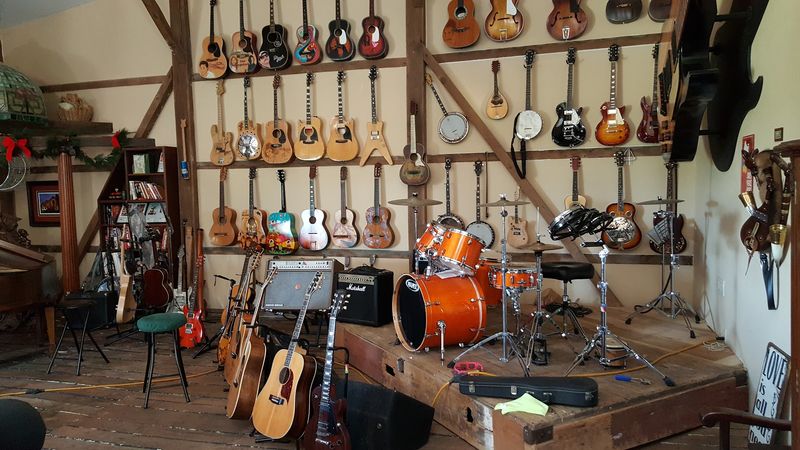
Holmes County is already known for its Amish community and scenic countryside. The Legends Of Music Barn adds a completely different flavor to the local tourism mix.
Music lovers and art fans now have a reason to make the Holmes County drive.
A roadside attraction like this creates ripple effects. People stop for the barn and then explore the area.
They grab food locally. They visit nearby shops.
One painted barn ends up supporting an entire local economy in ways that are hard to measure.
The barn also gives the community something to be proud of. It represents the kind of grassroots creativity that does not come from a city planning committee.
It came from one man with paint and a passion. That resonates with people.
Baker hosted musical events at the property that brought musicians and fans together. Those gatherings built a small but loyal community around the barn.
People came back not just for the art but for the connection it created.
Tourism dollars matter in smaller Ohio towns. Every visitor who makes the trip to Millersburg to see the barn contributes to that local economy.
The impact is real even if it is hard to put an exact number on it.
The Legends Of Music Barn has become part of Holmes County’s identity. It is the kind of place that makes a county road worth searching for on a map.
That kind of organic tourism is valuable and rare.
Seasonal Events And Activities Hosted
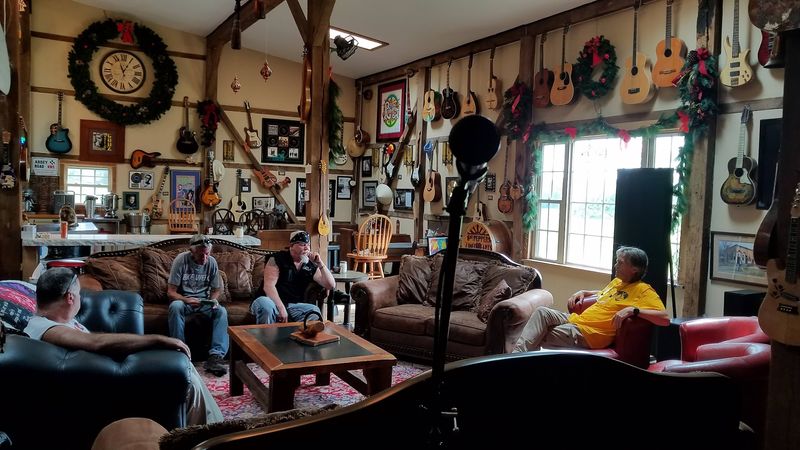
The Legends Of Music Barn has not just been a visual attraction. Over the years, it has also been a gathering place for live music.
Jam sessions happened right on the property. Musicians would show up and play in the shadow of those iconic murals.
Some events at the barn required an entrance fee. That kept things organized while also supporting the property.
Fans could show up, pay at the door, and spend an afternoon surrounded by music and art. Not a bad way to spend a Saturday.
The barn attracted both local musicians and traveling artists. There was something about the setting that inspired performance.
Playing music next to a hand-painted tribute to Stevie Ray Vaughan has a certain energy to it. Musicians felt that.
Seasonal visits to the barn also offered different experiences depending on the time of year. Summer visits meant longer daylight hours to explore the murals.
Fall brought the Holmes County foliage into the background, adding another layer of beauty to the scene.
Since Baker passed away, the future of hosted events remains uncertain. Claudia Rozuk continues to manage the property and its legacy.
Whether formal events return is still an open question. But the barn itself remains a destination regardless of programming.
Even without scheduled events, visitors create their own experience. People gather naturally around the barn.
They share stories, take photos, and connect over music. The barn has a way of hosting community without even trying.
Architectural Features Of Ohio Barns
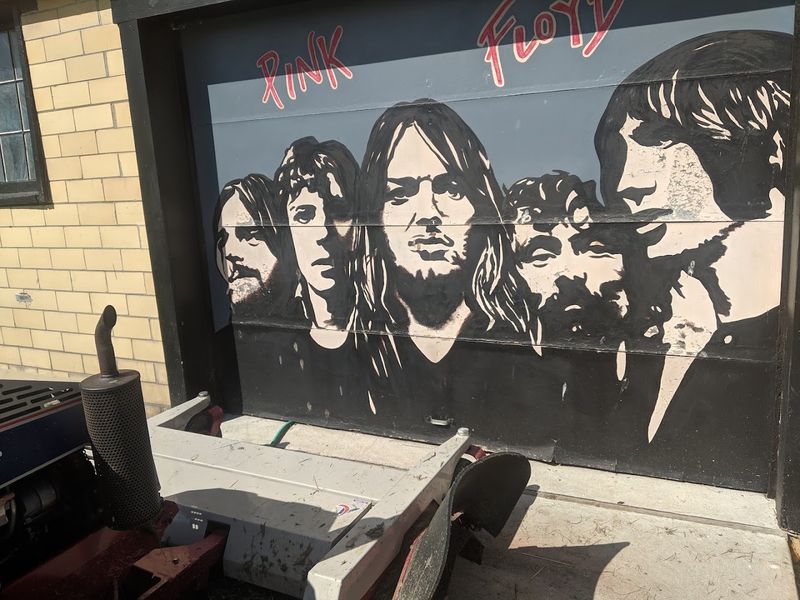
Ohio barns are built to last. They have wide, flat exterior walls that were designed to hold up against Midwest weather.
Those same walls turned out to be a perfect canvas for Rusty Baker. The barn structure itself made the artwork possible.
The Legends Of Music Barn is a classic large-frame barn typical of Holmes County construction. It has the kind of broad, uninterrupted wall space that most artists can only dream about.
Baker recognized that potential and used every inch of it.
Traditional Ohio barns were built for function first. Hay storage, livestock shelter, farm equipment.
The architecture is honest and practical. What Baker did was take that practical structure and give it a completely new purpose without changing a single board.
The scale of the barn is part of what makes the murals so impressive. These are not small paintings.
They are life-size and larger. The architecture demanded big art, and Baker delivered exactly that.
Barn architecture in Ohio reflects the agricultural history of the state. These structures were built by communities for communities.
The Legends Of Music Barn fits right into that tradition. It was built for one purpose and transformed into something that serves the whole community.
Standing in front of this barn, the size hits you first. Then the detail pulls you in closer.
The architecture and the artwork work together in a way that feels completely natural. Ohio barns were made for this kind of storytelling.