
10 Overcrowded New York Waterfall Trails And The Quieter Cascades Nearby
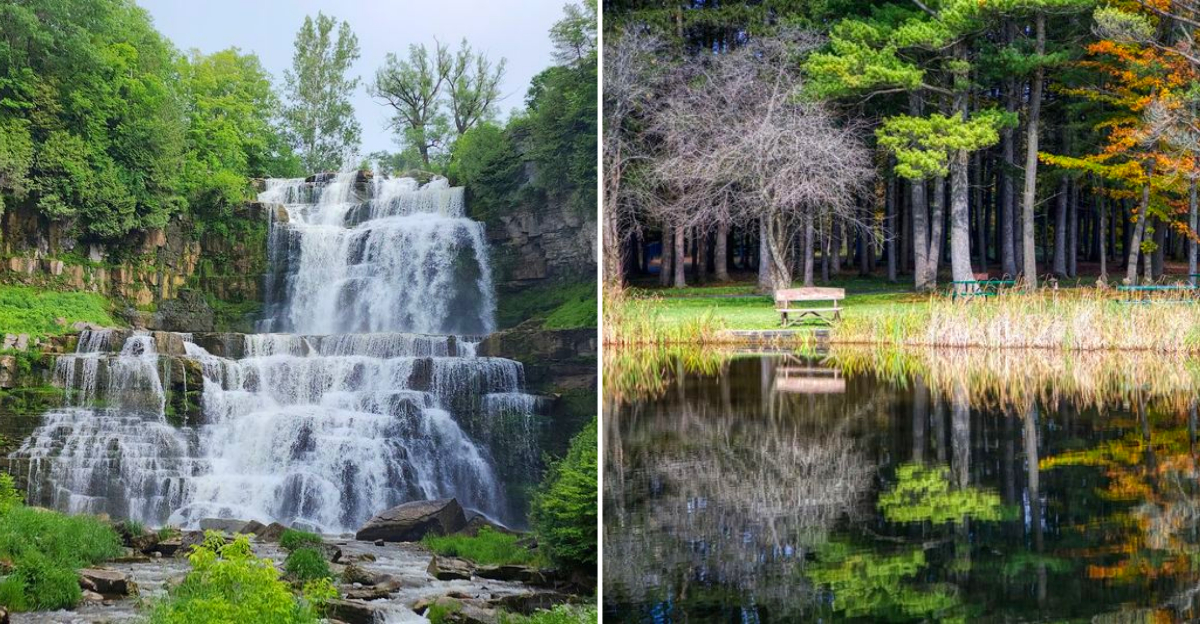
Waterfalls photograph beautifully, which is exactly the problem. Ten of New York’s most famous cascades now pull in so many visitors that the water sometimes gets lost behind a wall of phones and elbows.
Parking lots overflow by mid-morning. Trails turn into slow shuffling lines instead of peaceful walks. The view is still real, but the crowd makes it awfully hard to enjoy. Good news waits just a little further down the map.
Quieter cascades sit within reach of every overcrowded favorite, offering the same rushing water without the shoulder-to-shoulder scramble. Moss-covered rocks and cooler air greet visitors who bother to look past the obvious spot.
Fewer people means you can actually hear the water instead of someone’s ringtone. Sometimes the better waterfall is simply the one nobody bothered to Google first.
1. Kaaterskill Falls Vs. Awosting Falls
Kaaterskill Falls is the kind of place that shows up on every New York bucket list, and for good reason. At 260 feet tall, it is one of the tallest waterfalls in the state, drawing inspiration from Hudson River School painters and Washington Irving himself.
The problem? Everyone else knows about it too.
Parking along the road near 103 Laurel House Road in Haines Falls fills up fast, especially on summer weekends. Rangers issue tickets and tow cars regularly, so the adventure sometimes starts before you even reach the trail.
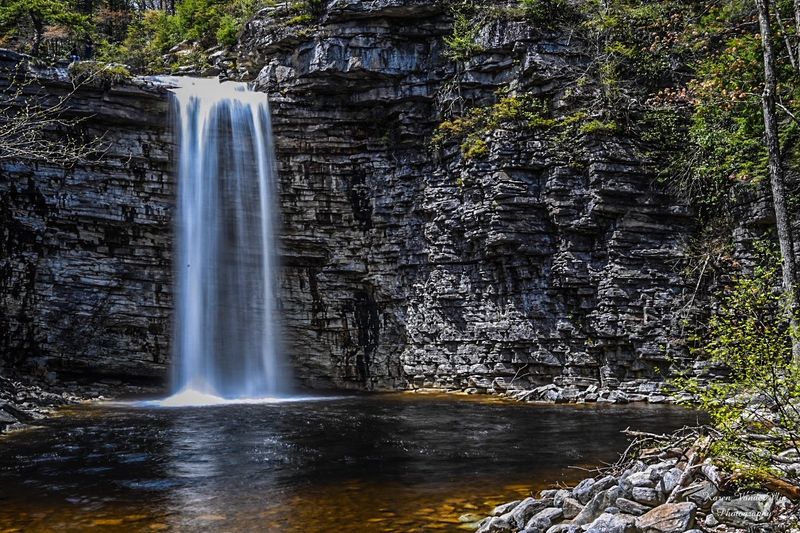
Awosting Falls in Minnewaska State Park Preserve offers a refreshing change of pace. The 60-foot drop into Peterskill Stream sits atop the dramatic Shawangunk Mountain ridge, and the water sometimes runs a reddish-brown hue from local plant life.
The trail from the lower parking area is flat, wide, and just about 1.1 miles round trip. Early mornings on weekdays feel almost meditative here.
You can find the main entrance at 5281 Route 44-55, Kerhonkson, NY 12446. Swimming is not permitted, but the scenery alone is worth every step.
2. Watkins Glen Vs. Havana Glen Park
Watkins Glen State Park is genuinely extraordinary. A 400-foot-deep canyon holds 19 waterfalls along a two-mile stretch, with stone staircases and tunnels carved right into the rock face.
Cavern Cascade even lets you walk behind the water. The park address is 1009 N Franklin St, Watkins Glen, NY 14891, and it ranks among the most visited state parks in the entire country.
Peak summer visits from June through September can feel shoulder-to-shoulder crowded. Arriving by 8 AM or after 4 PM helps, but even then the gorge buzzes with energy.
If you want the gorge experience without the crowd energy, keep driving.
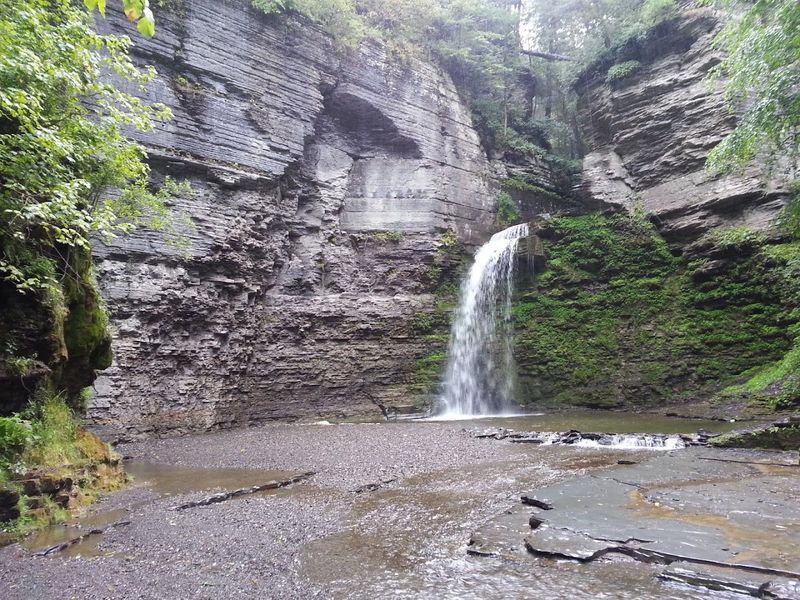
Havana Glen Park sits just five minutes away near Montour Falls. Eagle Cliff Falls drops 40 feet between towering rock walls that form a natural amphitheater, and the hike from the parking lot takes about five to eight minutes.
A modest $2 to $3 entrance fee keeps the crowds manageable. You can even swim at the base of the falls, which is a bonus Watkins Glen cannot offer.
Find it at 135 Havana Glen Rd, Montour Falls, NY 14865, and prepare to feel like you discovered something special.
3. Buttermilk Falls State Park Vs. Ithaca Falls Natural Area
Buttermilk Falls State Park south of Ithaca is a showstopper. Buttermilk Creek tumbles over ten waterfalls before reaching Cayuga Lake, and the namesake falls drop a dramatic 165 feet.
The natural swimming pool at the base is the real crowd magnet, turning into a packed scene on hot summer days.
The main entrance at 106 E Buttermilk Falls Rd, Ithaca, NY 14850 fills its parking lot quickly on weekends. The Gorge Trail and Rim Trail together form a satisfying loop, but you may spend more time navigating foot traffic than enjoying the scenery during peak hours.
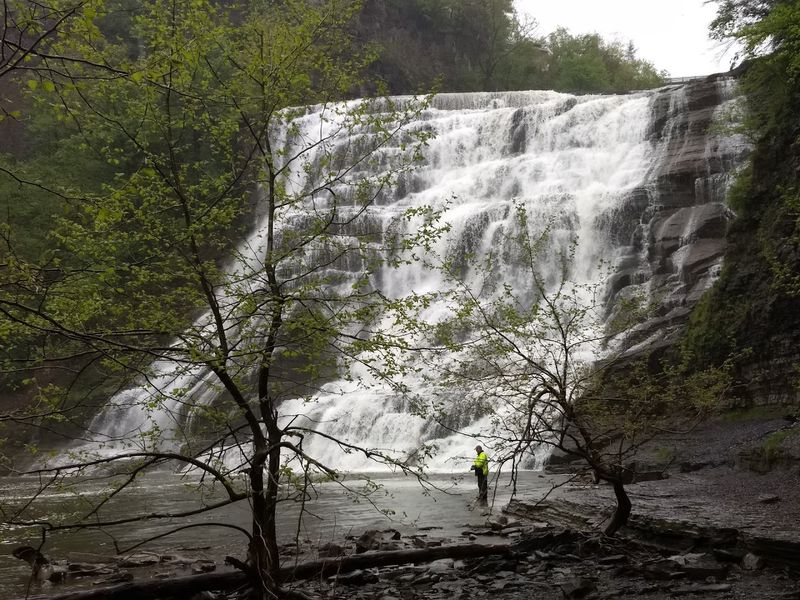
Ithaca Falls Natural Area offers an urban escape that surprises nearly everyone who finds it. The falls plunge 150 feet and stretch 175 feet across, making them one of the most powerful in the region.
You can spot them directly from Lake Street or take a 0.2-mile walk from the nearby parking, which is free. Historic 19th-century mill ruins line the south bank, adding a layer of character.
Swimming and fishing are strictly prohibited due to lead contamination from the former industrial site. Head to Lake St, Ithaca, NY 14850 for a waterfall experience that feels genuinely off the radar.
4. Taughannock Falls Vs. Robert H. Treman State Park
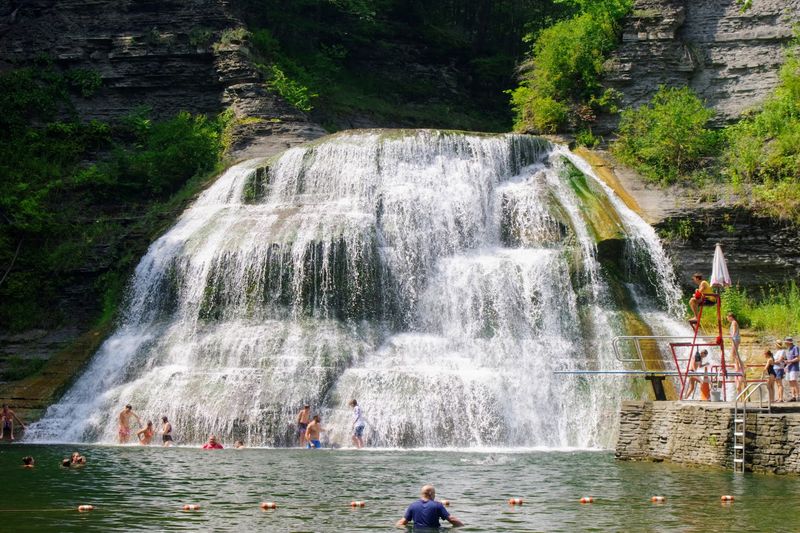
Taughannock Falls is genuinely humbling. At 215 feet, it stands taller than Niagara Falls, making it one of the tallest single-drop waterfalls east of the Rocky Mountains.
The falls carved a 400-foot gorge through sandstone, shale, and limestone over thousands of years. People drive from all over New York just for the view.
The main entrance sits at 1740 Taughannock Blvd, Trumansburg, NY 14886, and the park stays busy all summer long. Weekends and holidays bring lines at the overlook and crowded stretches of the flat, one-mile Gorge Trail.
Early mornings are your best bet for breathing room. Robert H. Treman State Park offers a worthy alternative with a completely different character.
The Enfield Glen gorge holds 12 waterfalls, including the 115-foot Lucifer Falls, and the creek drops nearly 500 feet over 2.2 miles of rugged terrain. The longer, stair-heavy trails naturally spread visitors out.
Lower Treman has a beloved natural swimming pool at the base of its 40-foot waterfall, reachable by an easy 0.3-mile paved loop. Find the park at 105 Enfield Falls Rd, Ithaca, NY 14850.
The trails challenge your legs, but the payoff is absolutely worth it.
5. Letchworth State Park Vs. Chittenango Falls State Park
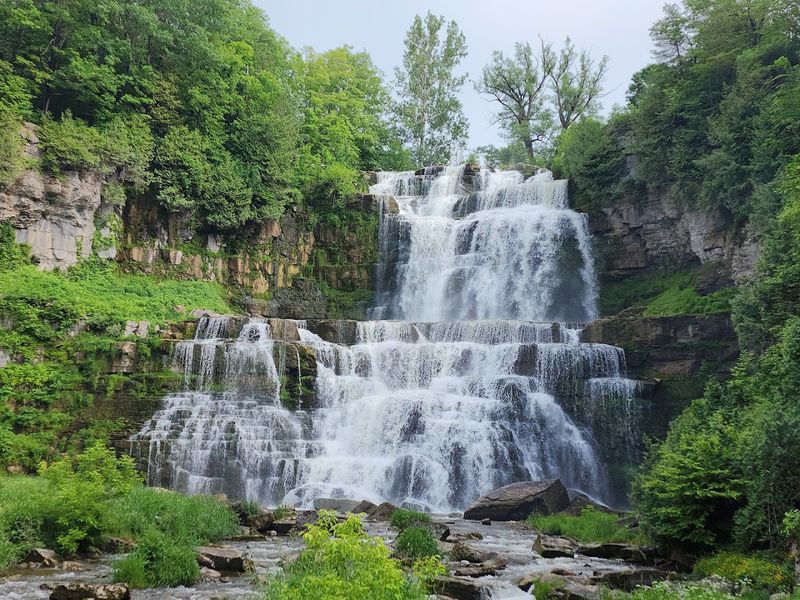
Letchworth State Park earns its nickname the Grand Canyon of the East without any exaggeration. The Genesee River gorge drops up to 600 feet, and three major waterfalls anchor the 17-mile stretch of dramatic scenery.
Middle Falls alone stands 107 feet tall. About 800,000 people visit each year, with October weekends being the absolute peak.
The entrance at 1 Letchworth State Park, Castile, NY 14427 leads to 66 miles of trails, including the popular 7-mile Gorge Trail. Arriving early is essential if you want a parking spot at any of the major overlooks during fall foliage season.
Chittenango Falls State Park delivers a breathtaking experience on a much more human scale. A 167-foot tiered waterfall cascades over 400-million-year-old bedrock into a gorge carved by Chittenango Creek.
Around 45,000 visitors come annually, which feels refreshingly low-key compared to Letchworth. The park is also the only habitat on Earth for the critically endangered Chittenango ovate amber snail, which is a genuinely cool fun fact.
A $5 vehicle fee applies during peak season. Swimming is prohibited to protect that rare snail.
You can reach this quiet wonder at 5241 Gorge Rd, Cazenovia, NY 13035, and the overlook near the parking lot is accessible for nearly everyone.
6. Niagara Falls State Park Vs. Eternal Flame Falls
Niagara Falls State Park needs no introduction. As the oldest state park in the nation, it draws millions of visitors annually to witness 3,160 tons of water surging over the falls every single second.
The park at 332 Prospect St, Niagara Falls, NY 14303 is free to enter on foot, but the crowds are legendary, especially from June through September.
Standing shoulder to shoulder with strangers while staring at one of the world’s most iconic waterfalls is memorable in its own way. Still, if you are chasing something more intimate and genuinely one-of-a-kind, there is a better option waiting.
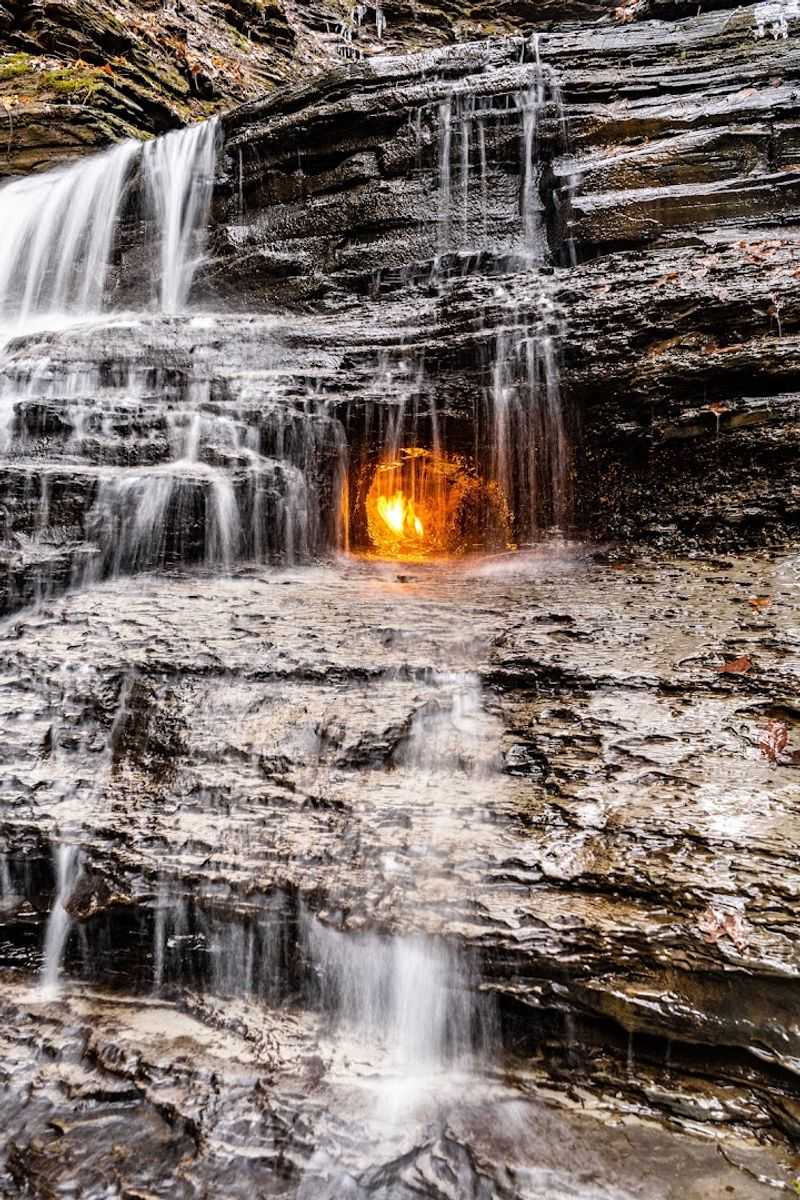
Eternal Flame Falls in Chestnut Ridge Park, Orchard Park, NY 14127 is one of the most fascinating natural phenomena in all of New York. A 30-foot waterfall conceals a natural gas leak in a grotto behind the cascade, producing a small but steady flickering flame.
The gas contains higher concentrations of ethane and propane, making it geologically rare worldwide. The hike covers about 0.5 to 1.4 miles round trip with some steep sections and stream crossings.
Waterproof footwear is strongly recommended. Even in winter, when the falls partially freeze, the flame often keeps burning. Nature showing off, as always.
7. Tinker Falls Vs. Pratts Falls Park
Tinker Falls near Tully, NY 13159 punches well above its weight. The 50-foot freefall drops into a natural rock amphitheater, and a cavern behind the falls stretches 100 feet wide and 30 feet deep.
That cavern is the kind of detail that makes people forget they were ever tired on the trail.
The waterfall sits within the 1,483-acre Labrador Hollow Unique Area, and its popularity has grown steadily thanks to social media. Weekend parking fills fast, and the stone stairs installed in 2014 see heavy foot traffic.
Winter brings ice climbers, which adds a whole different crowd dynamic.
Pratts Falls Park in Pompey, near Manlius, keeps things refreshingly calm. At 137 feet, Pratt’s Falls is taller than Tinker Falls and just as dramatic in a ribbon-style cascade shaped by retreating glaciers.
The park holds a piece of local history too, as it was the site of Onondaga County’s first mill operation back in 1796. A $2 to $5 seasonal vehicle fee keeps the overall crowd levels moderate.
A 0.6-mile Falls Trail leads to the base, and a paved 0.3-mile path goes to an overlook. Find it at 7671 Pratts Falls Rd, Manlius, NY 13104.
Picnic areas, fishing, and archery round out a full day.
8. Bash Bish Falls Vs. Grimes Glen Park
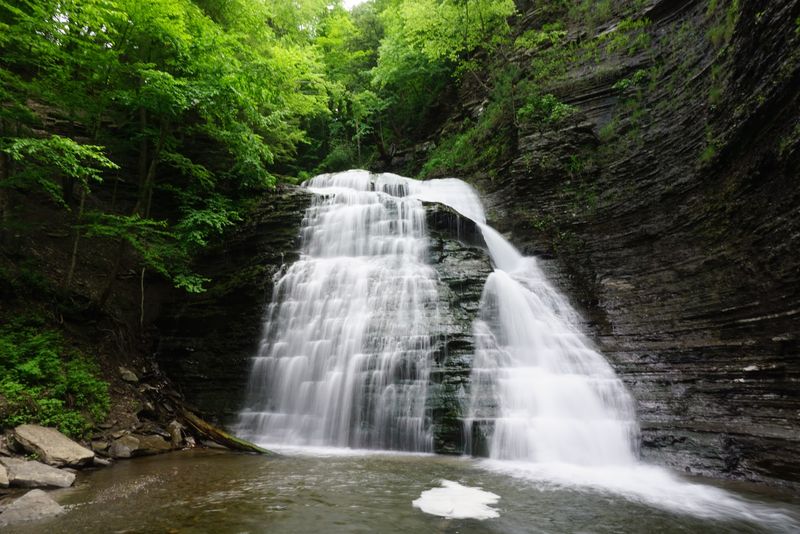
Bash Bish Falls straddles the Massachusetts and New York border in the Taconic Mountains, and both states claim it proudly. A massive boulder splits the final 60-foot cascade into twin falls that plunge into a vivid green plunge pool.
Reports from 2020 counted 1,000 to 1,500 visitors on a single hot summer weekend, which tells you everything.
Access from the New York side via Taconic State Park off NY Route 344 in Copake Falls offers a more gradual 1.5-mile round trip. Swimming is strictly prohibited due to dangerous currents.
Parking fills quickly, so arriving early is not a suggestion but a necessity.
Grimes Glen Park in Naples, NY 14512 offers a completely different kind of waterfall adventure. Two 60-foot waterfalls carved through shale and limestone await at the end of a creek walk, meaning you wade directly through Grimes Creek to reach them.
Pack waterproof shoes because dry feet are not part of the deal here. The park is entirely free to visit, which is a rare gift.
The small main lot at 4703 Vine St fills fast, but overflow parking on Mill Street adds only a short extra walk. The glen also holds the discovery site of New York’s oldest fossilized tree from 1882, now housed in Albany.
Truly a special place.
9. Chittenango Falls State Park Vs. Clark Reservation State Park
So, earlier I suggested Chittenango Falls as a replacement for Letchworth, but let’s take it a step further and find an alternative to the alternative itself.
This State Park near Cazenovia draws around 45,000 visitors annually to see a 167-foot tiered waterfall cascade over 400-million-year-old bedrock.
The accessible overlook near the parking lot means almost everyone can enjoy the view without breaking a sweat. That accessibility is a big part of why it stays consistently busy.
The park at 5241 Gorge Rd, Cazenovia, NY 13035 charges a $5 vehicle fee during peak season. The Gorge Trail descends with numerous stairs to a footbridge at the base, but swimming and wading are prohibited to protect the endangered Chittenango ovate amber snail.
Clark Reservation State Park in Jamesville offers something genuinely unlike any other park in New York. Thousands of years ago, a glacial waterfall possibly larger than Niagara Falls thundered over a limestone escarpment here.
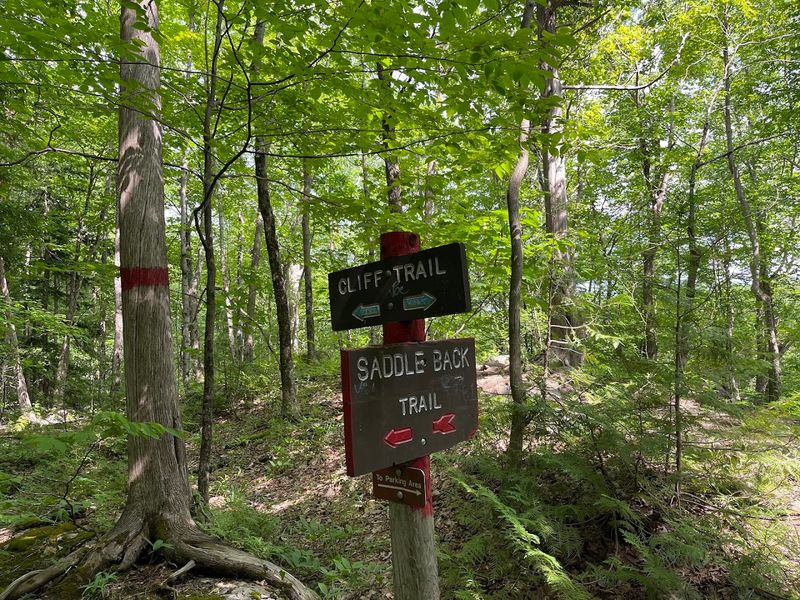
What remains is Glacier Lake, a rare meromictic lake where the upper and lower water layers never mix. Limestone cliffs rise up to 180 feet above the water, and the Cliff Trail delivers a ledge overlook 175 feet up that will make your palms sweat in the best possible way.
Over 160,000 people visit annually, yet one visitor noted it never feels overcrowded. Reach it at 6105 E Seneca Turnpike, Jamesville, NY 13078.
10. Robert H. Treman State Park Vs. Havana Glen Park
Another alternative for alternative case like the previous entry. Robert H.
Treman State Park recorded 365,400 visitors in 2025 alone, which makes it one of the busiest parks in the Ithaca area.
The 12 waterfalls along Enfield Glen are genuinely stunning, and the natural swimming pool at the base of Lower Falls is the kind of spot people plan entire road trips around. That popularity comes with a cost.
Summer weekends bring heavy congestion around the swimming area and the easier lower trails.
The park at 105 Enfield Falls Rd, Ithaca, NY 14850 splits into Upper and Lower Treman sections, and while the strenuous upper trails thin crowds out, the lower area stays packed throughout the season.
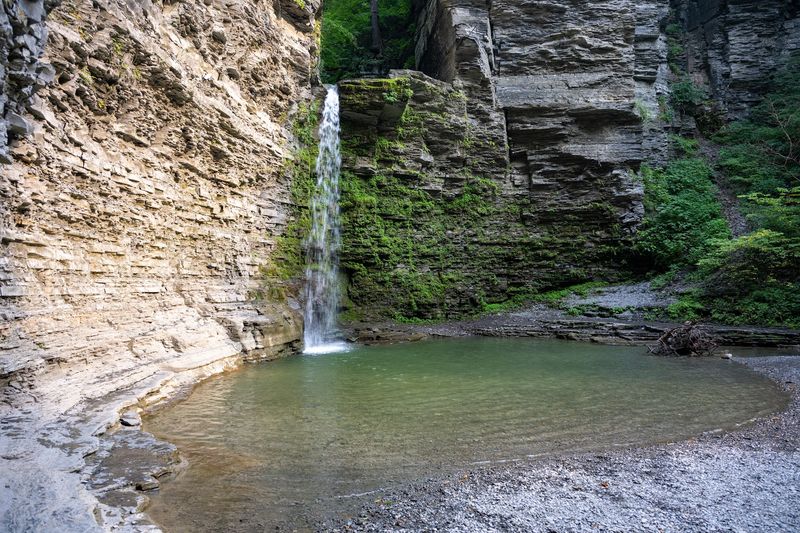
Havana Glen Park offers a low-key alternative that punches above its modest size. Eagle Cliff Falls drops 40 feet between rock walls that form a natural amphitheater, and the walk from the parking lot takes about five to eight minutes.
A $2 to $3 seasonal entrance fee keeps the vibe calm and the parking manageable. Swimming at the base of the falls is permitted, which is a genuine bonus.
The park at 135 Havana Glen Rd, Montour Falls, NY 14865 also offers camping, picnic pavilions, a playground, and a baseball field. Small park, big personality, zero subway-level crowding.