
This Coastal Massachusetts Town Has A Main Street That Feels Almost Unchanged Since The 1970s
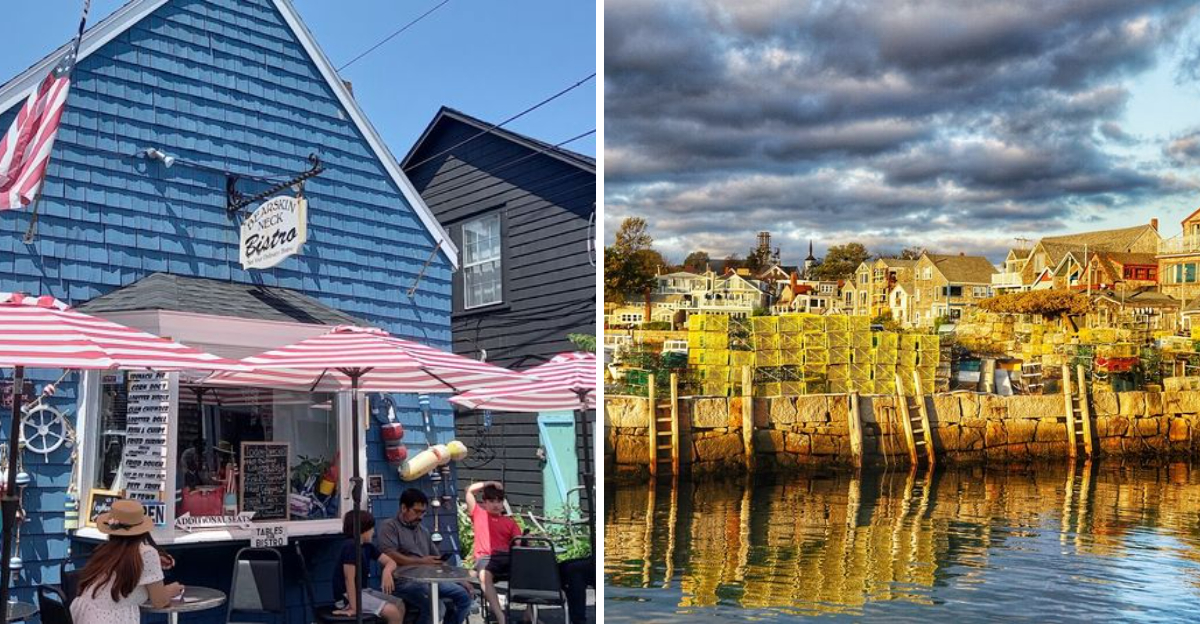
Some Main Streets race toward the future. This one seems perfectly happy keeping its old rhythm.
Set near the Massachusetts coast, the town center still carries the look and feel of another era.
Small storefronts line the street, signs stay simple, and local businesses give the area a personality that chain stores could never copy.
The setting feels familiar even on a first visit. You can browse independent shops, stop for something sweet, and catch glimpses of the harbor without rushing through the day.
What makes the street so special? Much of its character has survived since the 1970s, protected by people who value the town’s history and want new changes to fit the surroundings.
The result is a coastal downtown that feels genuine rather than staged. It offers the rare pleasure of slowing down, looking around, and enjoying a place that never felt the need to reinvent itself completely.
A Glimpse Into Enduring Coastal Character
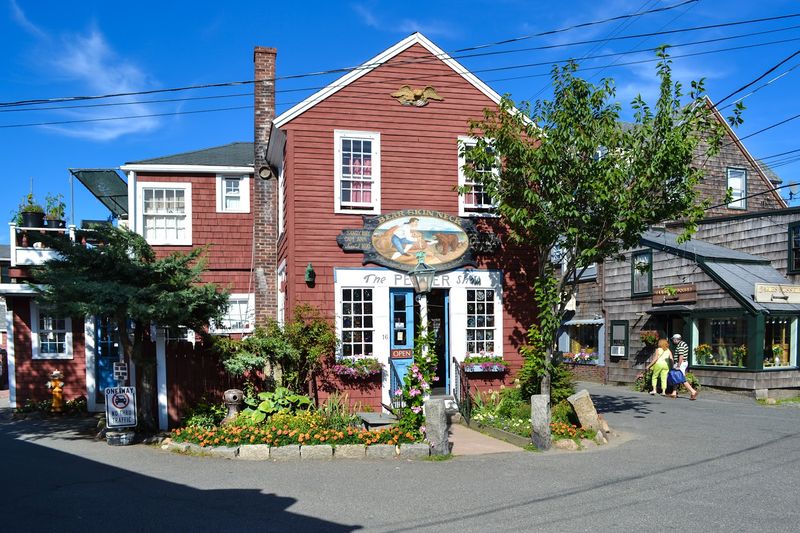
This place does not announce itself with grand gestures. It simply exists, steady and unhurried, at the tip of Cape Ann where the Atlantic wraps around it on nearly every side.
The town sits about 40 miles northeast of Boston, yet the distance feels much greater in spirit.
Main Street runs from Dock Square to Beach Street, and it carries the quiet authority of a place that has never felt the need to reinvent itself. Local zoning regulations have played a significant role in keeping development at bay.
Buildings have been maintained rather than replaced, and the scale of everything remains deeply human.
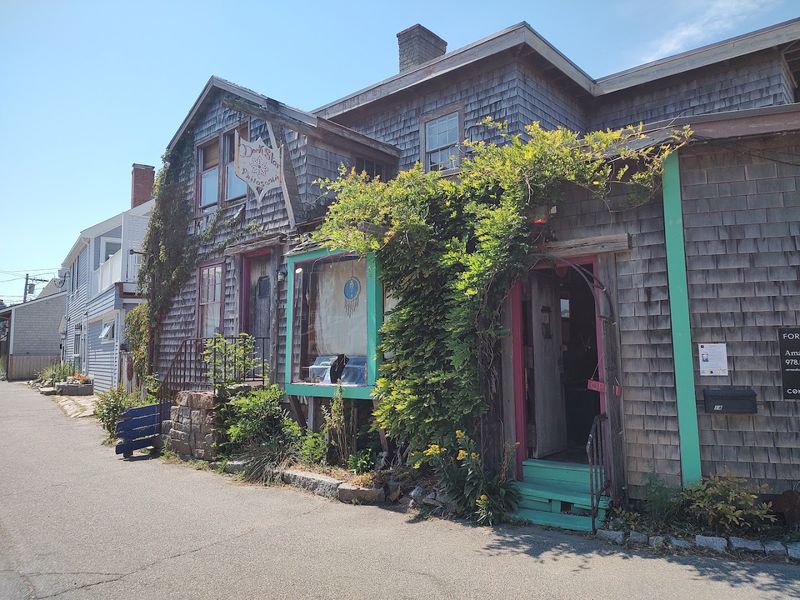
Walking through downtown Rockport is an experience in architectural honesty. The storefronts are modest, the signage is hand-painted in many cases, and the sidewalks are just wide enough for a comfortable stroll.
Nothing here screams for your attention, and that restraint is precisely what makes the town so compelling.
Recognized as a Cultural District, downtown Rockport preserves the kind of Main Street atmosphere that most American towns traded away decades ago for parking lots and chain stores.
Where Art Finds Its Perennial Canvas
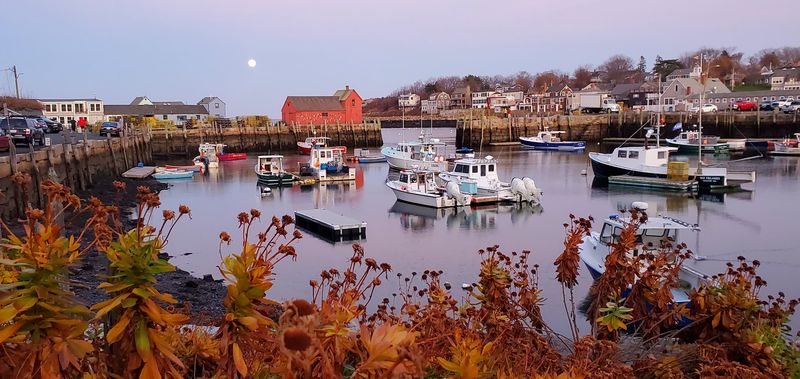
Rockport has been drawing artists since the late 19th century, and the reasons are not difficult to understand.
The quality of light along this coastline is something painters have described for well over a hundred years, sharp in the mornings, warm and diffuse by late afternoon, and entirely different again on overcast days when the harbor takes on a pewter tone.
Winslow Homer, Edward Hopper, and Theresa Bernstein all found their muse here, and the tradition they helped establish has never really faded.
Galleries and working studios line Bearskin Neck and continue throughout the downtown area, many of them operated by artists who live and work in Rockport year-round.
The art colony atmosphere is not a marketing invention. It is simply what this town has always been.
Browsing the galleries requires no particular expertise or intention to purchase.
The work on display tends to reflect the landscape directly outside the window, seascapes, harbor scenes, granite outcroppings, and the particular blue that the ocean turns on a clear October morning.
For anyone with even a passing interest in visual art, Rockport offers an afternoon that feels genuinely educational without ever feeling like a lesson.
The Cobblestone Veins Of Commerce
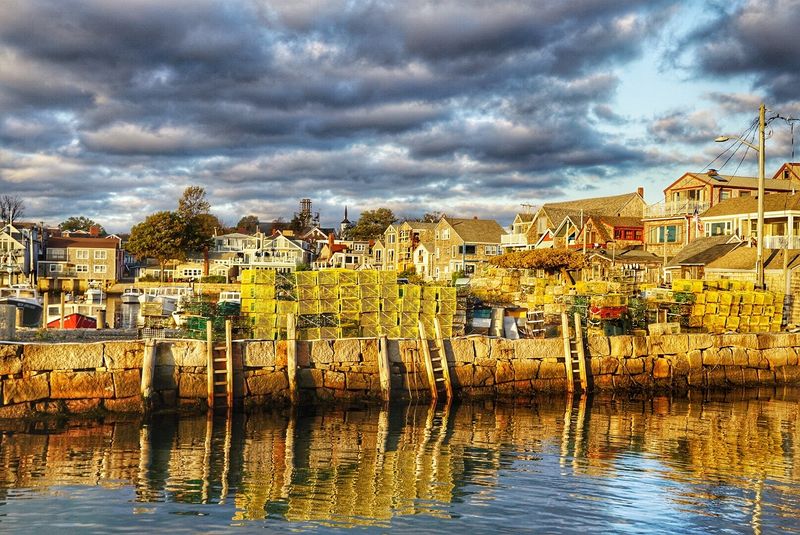
Bearskin Neck is the kind of place that rewards slow walking.
This slender peninsula juts into Rockport Harbor and was once a working commercial dock where fishing boats unloaded their catch and granite barges prepared for long coastal journeys.
Today, the same narrow lanes host studios, independent shops, and small dining spots.
The buildings lining Bearskin Neck date largely to the 19th century, constructed in Italianate and Federal styles that have aged with considerable grace.
Former quarry structures stand alongside active artist studios, giving the street a layered quality that no planned development could ever replicate.
The pathways are genuinely narrow, which means the experience of moving through them feels intimate rather than commercial.
What makes Bearskin Neck so unusual is the continuity of its purpose. It has always been a place of trade and craft, and it still is.
The goods have changed, the boats have quieted, but the essential rhythm of small-scale commerce continues.
Independent boutiques and galleries occupy spaces that have seen generations of owners, and that accumulated history gives even a simple afternoon of browsing a texture that feels genuinely irreplaceable.
The Steadfast Beacon Of The Harbor
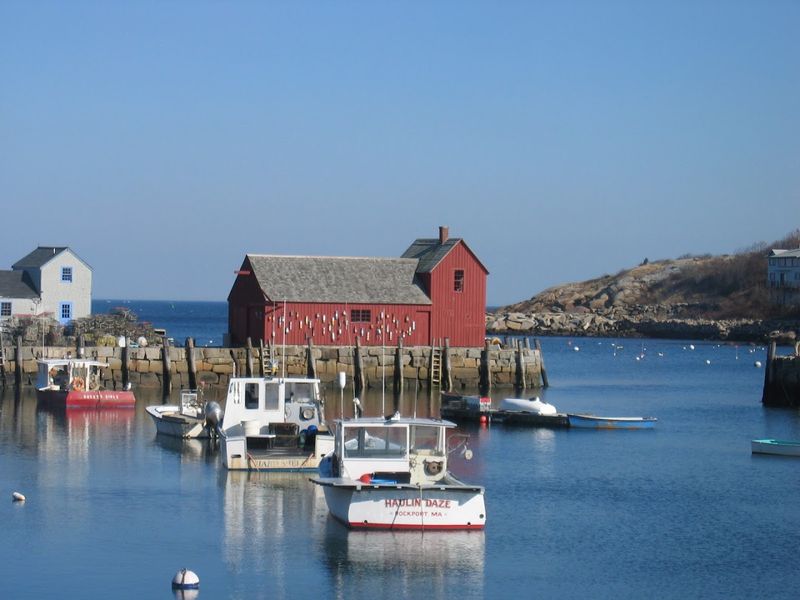
There is a red fishing shack on Bradley Wharf that has been painted more times than perhaps any other building in America.
Motif No. 1, as it is universally known, sits at the edge of Rockport Harbor with the kind of unpretentious confidence that only genuinely old things seem to possess.
Artists began painting it in the early 20th century, and the tradition has continued without interruption.
The original structure was built in 1884 and served as a working part of the harbor for decades. It was destroyed in the Blizzard of 1978, one of the most severe winter storms ever to strike the New England coast.
The town rebuilt an exact replica the same year, understanding that some landmarks carry a meaning that extends beyond their physical materials.
What makes Motif No. 1 endure as a symbol is not its size or grandeur but its absolute ordinariness. It is a weathered red shack with lobster traps stacked nearby and water lapping at the pilings below.
That simplicity is what artists keep returning to capture, and what continues to make it feel like the honest center of everything Rockport represents about maritime New England life.
Echoes Of The Tides And Traps
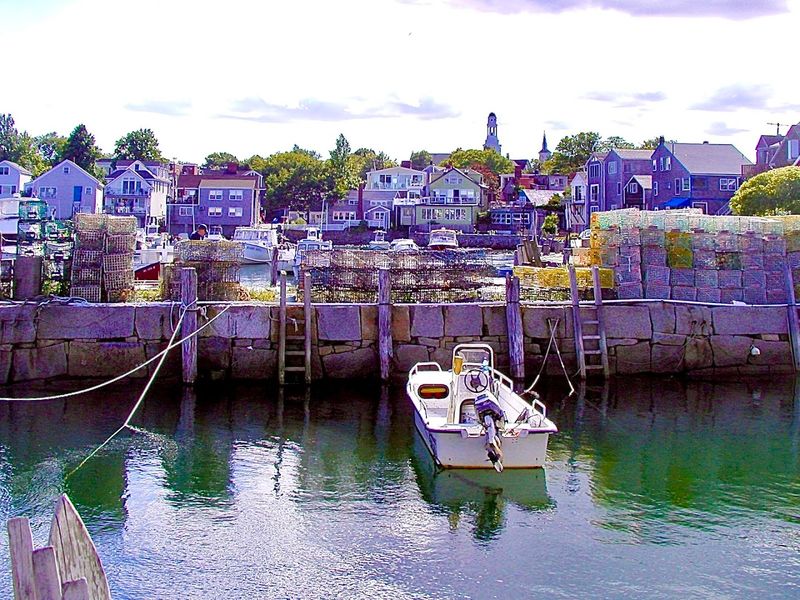
Rockport began as a fishing village in the late 17th century, and the harbor has never entirely shed that identity.
Lobster boats still move through the water with a purposeful ease, and the equipment of working fishermen remains a visible part of the landscape rather than a decorative afterthought placed there for atmosphere.
The maritime history of this town runs deep and practical. Fishing was the economic foundation long before tourism or the arts arrived, and it continued as a central activity even during the peak years of the granite industry in the 1800s.
That layering of industries, one built on top of another without displacing what came before, is part of what gives Rockport its particular density of character.
Roy Moore Lobster Company has been serving the community since 1918, which says something meaningful about the staying power of this town’s relationship with the sea.
Sitting near the harbor with a lobster roll and watching the boats return in the afternoon is not a curated tourist activity.
It is simply what people here have been doing for generations, and the fact that it remains available and unchanged is one of Rockport’s most honest pleasures.
Structures Recalling Earlier Centuries
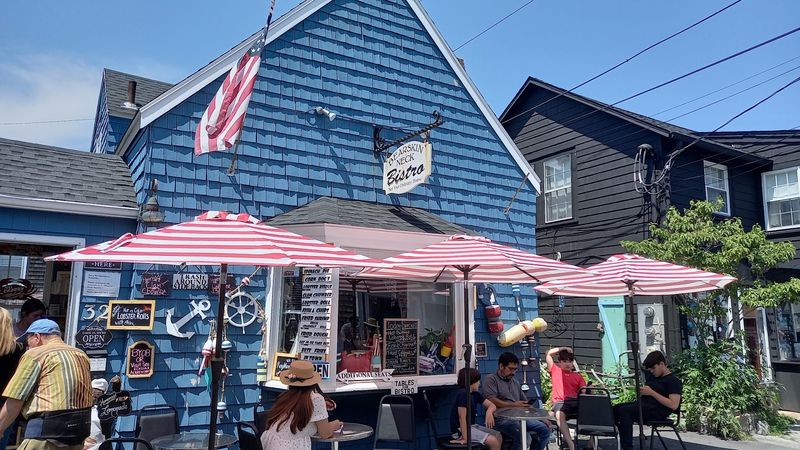
Architecture in Rockport tells a story that no historical marker could fully capture.
The buildings along Main Street and Bearskin Neck represent a concentrated collection of 19th-century commercial and residential construction that has survived with its essential character intact.
Italianate cornices, Federal-style proportions, and the occasional granite foundation all appear within a short walk of each other.
The preservation of these structures was not accidental. Zoning regulations and community investment have consistently prioritized maintenance over replacement.
When a building in Rockport is restored, the work tends to respect the original materials and proportions rather than update them into something more contemporary. The result is a streetscape that feels continuous with its own past.
One of the more striking aspects of walking through downtown Rockport is how the buildings seem to belong to each other. They were not built at the same time or by the same hands, yet they share a scale and a modesty that creates visual harmony.
The Pewter Shop, open since 1935, occupies one such space, its storefront unchanged in a way that makes the decades seem almost irrelevant. These are buildings that were built to last, and they have.
The Granite Embrace Of The Shore
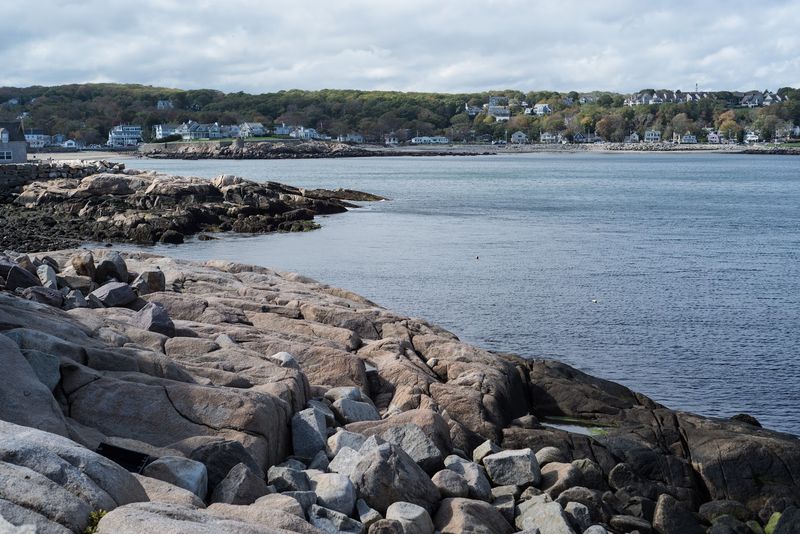
Before artists arrived and galleries opened, Rockport was known for something considerably heavier.
The granite quarries that operated here throughout the 1800s supplied stone to construction projects across the country, including buildings in Boston, New York, and Washington.
The industry transformed the local economy and left behind a physical record that remains visible today.
Halibut Point State Park, located at the northernmost tip of Cape Ann, preserves one of the most significant remnants of this industrial past.
The abandoned quarry at the park has filled with water over the decades, creating a striking pool surrounded by massive granite slabs that slope down toward the Atlantic.
The views from the rocky shoreline extend north toward New Hampshire and Maine on clear days.
The park itself covers about 54 acres and offers walking trails along the coast that reveal both the geological drama of the landscape and the quieter details of tidal pools and coastal vegetation.
Evidence of the quarrying operations, old machinery, cut stone, and loading areas, sits alongside the natural environment without apology.
Halibut Point is located off Gott Avenue in Rockport, and it represents one of those rare places where industrial history and natural beauty have reached an honest accommodation with each other.
A Rhythm Unbroken By Decades
There is something quietly radical about a town that simply refuses to hurry.
Rockport operates on a pace that feels inherited rather than chosen, a natural consequence of geography, community values, and the kind of stubborn local pride that does not make headlines but does make places last.
The Shalin Liu Performance Center adds a dimension that surprises first-time arrivals. This world-class music venue sits right on the water in downtown Rockport, with a stage backed by floor-to-ceiling windows that look directly out over the harbor.
Performances here range from chamber music to jazz, and the ocean view behind the musicians is entirely real, not a painted backdrop.
Main Street remains compact and deeply walkable, which is not a small thing. The ability to cover the essential character of a place entirely on foot, without a car, without a map application, and without a plan, is increasingly rare.
Rockport offers that without effort. The shops open, the boats go out, the galleries hang new work, and the lobster rolls appear at Roy Moore as they have for over a century.
The decades pass, and the rhythm holds. That, more than any single landmark, is what makes Rockport feel genuinely irreplaceable.