
This Small Massachusetts Lake Town Struggles With Heavy Summer Traffic
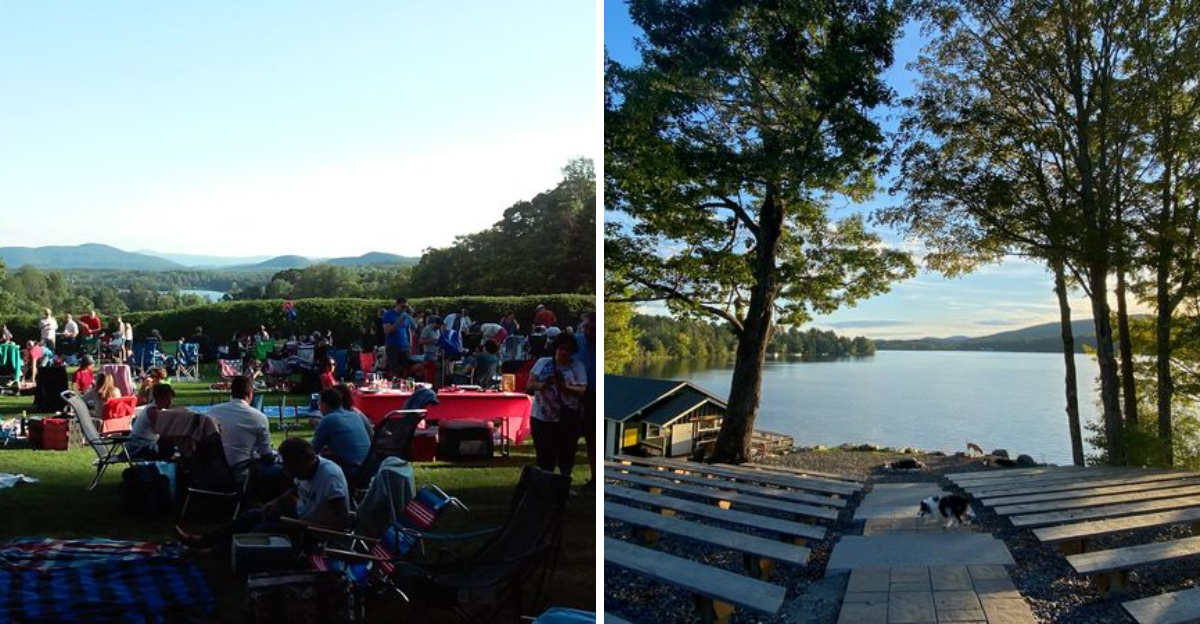
Summer changes everything here. Quiet roads fill quickly, parking spaces disappear, and a simple drive through town can suddenly take much longer than expected.
This small Massachusetts community draws visitors with its scenic lake, historic streets, local attractions, and storybook charm. Once warm weather arrives, the peaceful pace gives way to steady traffic and crowded sidewalks.
Residents may plan errands around the busiest hours or avoid popular areas altogether.
Why do so many people keep coming? The answer is easy to understand.
Beautiful water, classic architecture, inviting shops, and cultural landmarks create a destination that looks made for a summer getaway.
Popularity brings energy and supports local businesses, but it also creates real challenges. Narrow streets were never designed for heavy traffic, and limited parking can test everyone’s patience.
This Massachusetts lake town remains beautiful, yet summer reveals the complicated side of becoming a place everyone wants to visit.
An Enduring Canvas For American Life
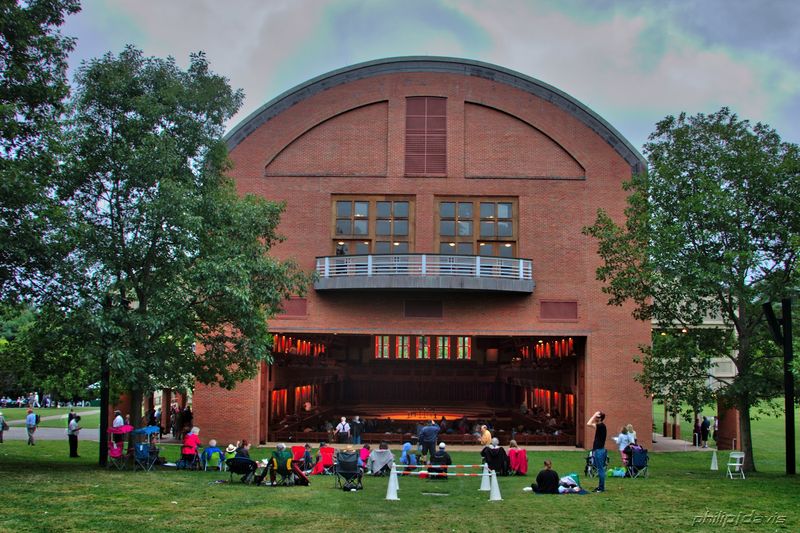
Few American towns have been painted into the national imagination quite like Stockbridge, Massachusetts.
Norman Rockwell chose this town as his home for the final 25 years of his life, and his presence left a mark that still shapes how people think about the place.
His studio, preserved exactly as he left it, sits on the grounds of the Norman Rockwell Museum at 9 Route 183.
Rockwell did not simply live here. He absorbed the town.
Its residents appeared in his paintings, its streets shaped his compositions, and its seasonal rhythms gave his work a particular warmth that resonated across the country. The museum now holds the largest collection of his original works anywhere in the world.
Walking through those galleries, one gets the sense that Rockwell was documenting something real rather than idealizing it. Stockbridge, in many ways, cooperated.
The town has a composed, unhurried quality that feels genuinely earned rather than manufactured for tourism. That quality is also what makes summer congestion feel so jarring to the people who live here year-round.
The contrast between the town’s painted serenity and its summer traffic reality is almost impossible to ignore.
Echoes Of Gilded Age Grandeur
Long before traffic studies and seasonal crowd management became local concerns, Stockbridge was already dealing with the consequences of its own appeal.
In the late 19th century, wealthy families from New York and Boston began building elaborate summer estates in and around town.
The Berkshires offered cooler air, scenic hills, and a cultural scene that felt sophisticated without being overwhelming.
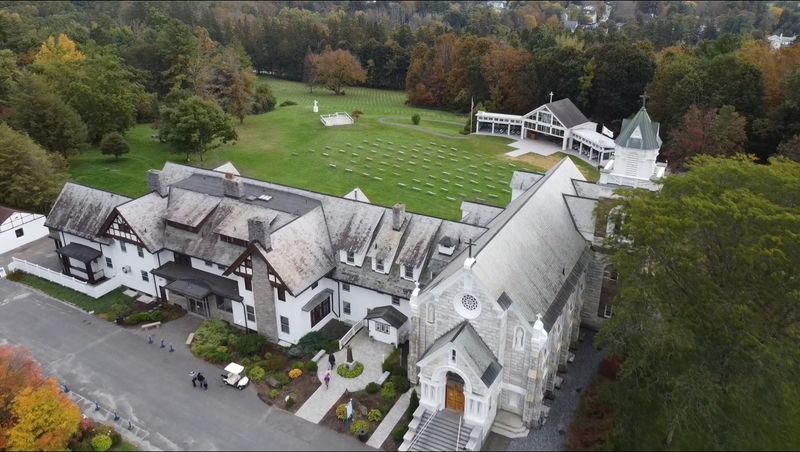
Naumkeag, the Gilded Age mansion on Prospect Hill Road, stands as one of the most vivid reminders of that era.
Built in 1886 for attorney Joseph Hodges Choate, the property features an 1886 Stanford White-designed house and gardens that were developed over decades.
The famous Blue Steps, a cascading series of curved staircases lined with birch trees and fountains, have become one of the most photographed spots in the Berkshires.
Chesterwood, the former home and studio of sculptor Daniel Chester French, adds another layer to this Gilded Age story.
French created the seated Lincoln for the Lincoln Memorial in Washington, D.C., and his Stockbridge studio still holds working models and casts from that period.
Both properties operate today under the stewardship of the Trustees of Reservations, drawing steady crowds throughout the warmer months.
You Can Feel The Village Come Alive Along Main Street
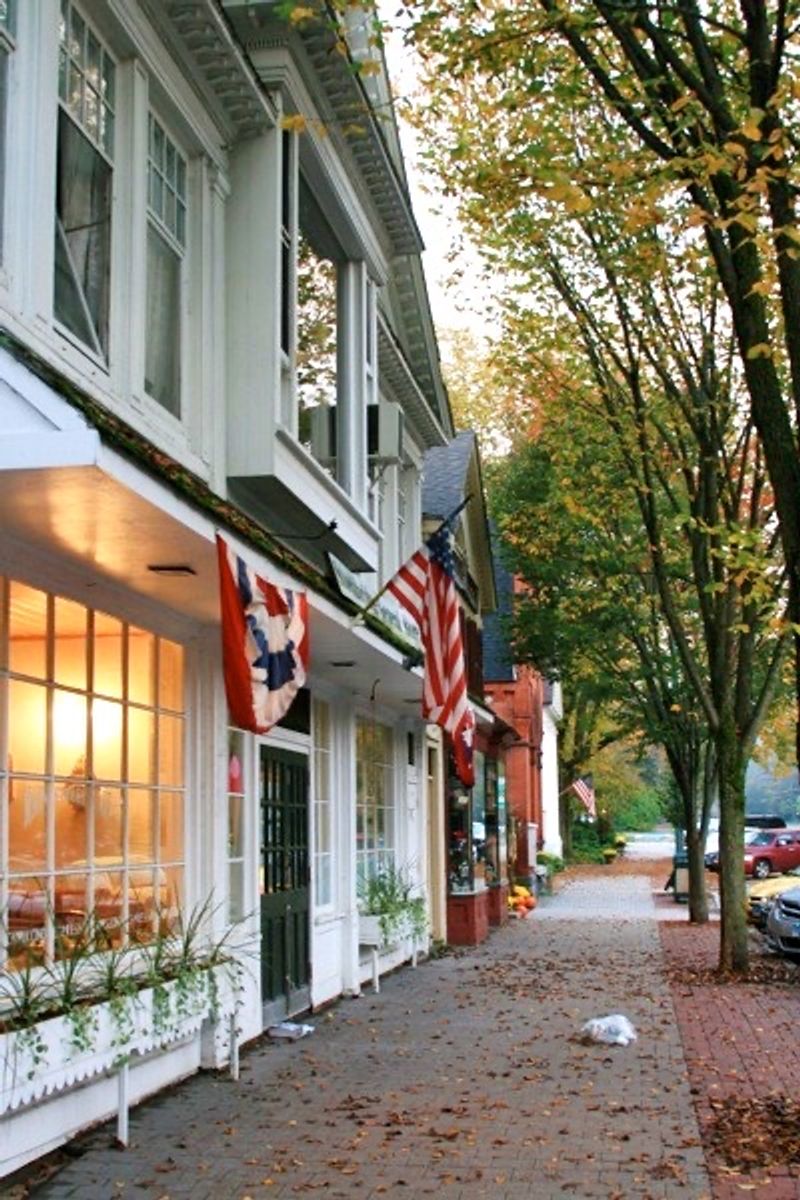
Main Street in Stockbridge has a particular kind of quiet confidence. It does not try too hard.
The buildings are well-kept but not over-restored, the sidewalks are manageable, and the Red Lion Inn anchors the whole scene with the authority of something that has been standing since 1773.
Originally a stagecoach stop, the inn has operated continuously for over two centuries and remains one of the most recognized landmarks in western Massachusetts.
Rockwell immortalized this very street in his 1967 painting “Stockbridge Main Street at Christmas,” a work so widely reproduced that many people feel they have already been here before they arrive.
That sense of recognition is part of the town’s peculiar charm. The street looks like a memory even on a first visit.
During summer weekends, however, the charm gets tested. Parking becomes scarce, foot traffic thickens, and the road itself can slow to a crawl as drivers look for spaces or simply take in the scenery at five miles per hour.
Residents have learned to run their errands early in the morning or late in the evening. Main Street belongs to everyone in summer, and that generosity comes with a cost that locals absorb quietly every year.
A Berkshire Cultural Nexus
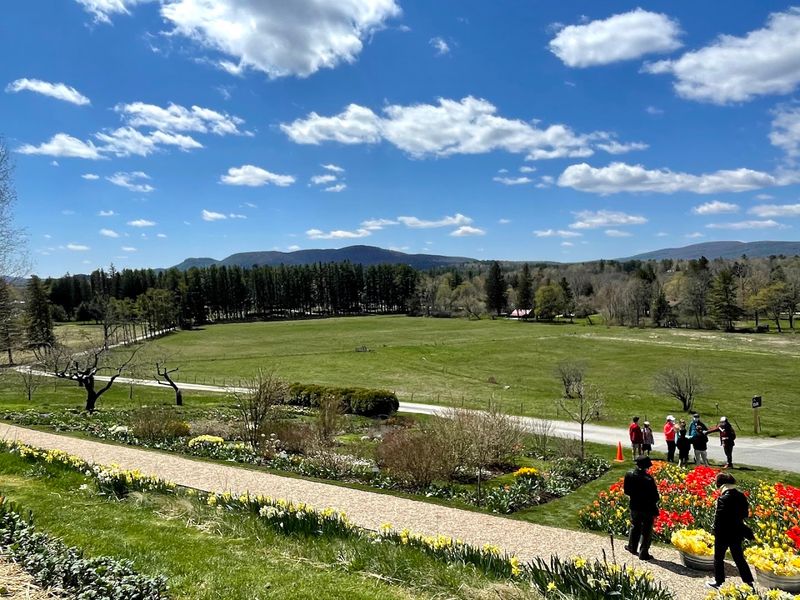
Stockbridge does not operate in isolation. It sits at the center of a cultural web that spans the entire Berkshire region, and that web pulls enormous numbers of people into a relatively small geographic area every summer.
Tanglewood, the summer home of the Boston Symphony Orchestra, is located just a short drive away in Lenox. Its festival season runs from late June through August and draws audiences from across the country.
The Berkshire Theatre Group, which has roots in Stockbridge going back to 1928, continues to stage productions that attract theater-goers alongside the museum crowds and estate admirers.
Add the Berkshire Botanical Garden on Routes 102 and 183, which displays diverse plant collections across 24 acres, and the picture becomes clear.
Stockbridge and its immediate surroundings offer more concentrated cultural programming per square mile than almost anywhere else in rural New England.
All of that programming arrives by car. Public transportation options in this part of Massachusetts remain limited, which means that every concert, exhibition opening, and garden tour translates directly into vehicles on the road.
Route 183, which connects several of these destinations, has seen a measurable increase in truck traffic as well, compounding the seasonal pressure on roads that were not designed for modern volume.
Where History Lingers And Art Thrives
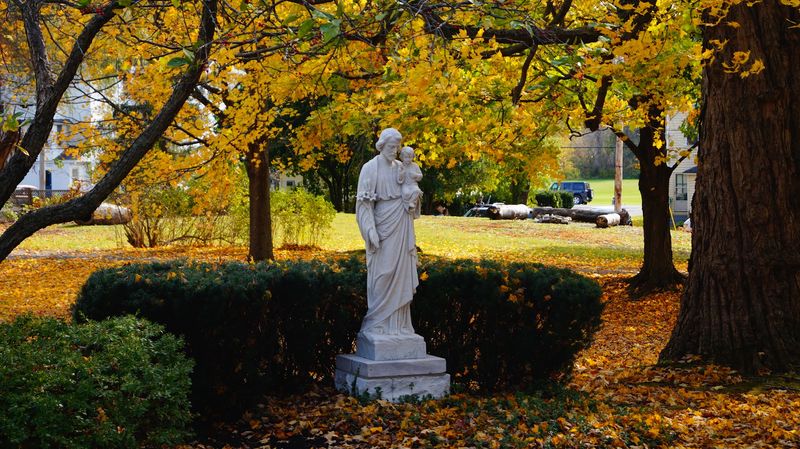
Stockbridge has been a place of cultural significance for far longer than most people realize.
The town’s recorded history stretches back to 1739, when English settlers established a mission among the Mohican people who had lived in the region for generations.
That layered history, Indigenous and colonial, agricultural and artistic, gives Stockbridge a depth that sets it apart from towns that simply look historic without truly being so.
The Mohican connection is not merely a footnote. The tribe called this area home long before European contact, and their presence shaped the landscape and the waterways that would later attract painters, sculptors, and summer residents.
The name Mahkeenac, still used for the lake north of town, comes directly from the Mahican language.
On the artistic side, Stockbridge has drawn creative figures beyond Rockwell. Sculptor Daniel Chester French found in Chesterwood the ideal combination of privacy and inspiration.
The property at 4 Williamsville Road now functions as a museum, with rotating outdoor sculpture exhibitions set against the Berkshire hills.
For a town of under 2,000 people, Stockbridge holds an almost disproportionate share of the country’s artistic heritage, which is precisely why the summer crowds keep coming, year after year, with their cars and their cameras.
The Allure Beyond The Season
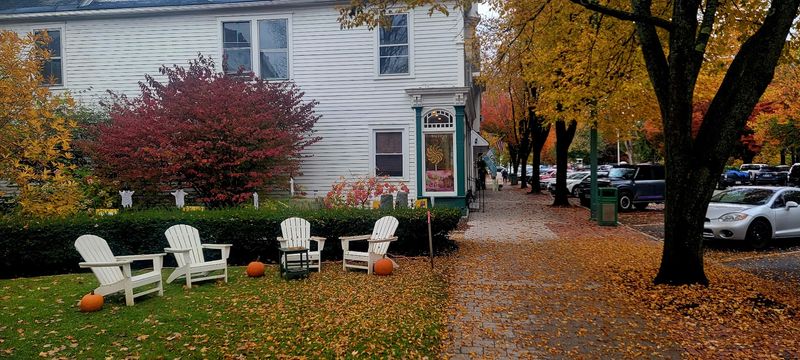
Summer gets most of the attention, but Stockbridge has a second season that rivals it in beauty and arguably surpasses it in atmosphere.
Fall foliage season, which typically peaks in early to mid-October in this part of the Berkshires, draws its own significant wave of travelers.
The hills surrounding the town turn amber, rust, and gold, and the roads fill up all over again, though with a slightly different crowd and a slightly cooler temperament.
Winter and spring, by contrast, belong almost entirely to residents. The town settles into a slower rhythm that feels closer to what it must have been like before tourism became the economic backbone of the local community.
Shops keep shorter hours, the Red Lion Inn maintains a quieter pace, and Main Street regains its unhurried character.
For those who can arrange a visit outside of peak periods, the experience of Stockbridge shifts considerably. The museums remain open, the estates accept visitors on reduced schedules, and the roads move freely.
Locals tend to be more available for conversation, the restaurants less pressured, and the whole place more legible as an actual community rather than a destination.
The town’s appeal does not evaporate when the summer crowds leave. If anything, it becomes easier to appreciate.
Mahkeenac’s Ancient Waters
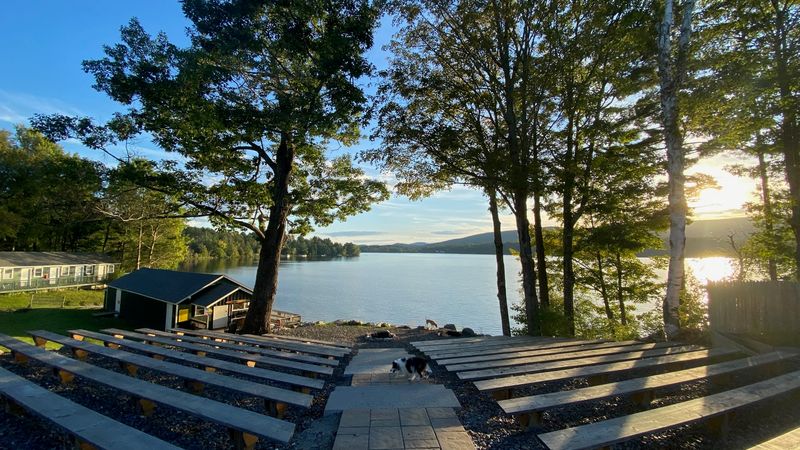
About 2.5 miles north of Stockbridge’s village center, the land opens up and Lake Mahkeenac appears. Known locally as Stockbridge Bowl, this 372-acre lake has a name that carries centuries of meaning.
The Mahican people called it Mahkeenac, meaning “home of the Mahekanus,” and that sense of belonging to the land rather than simply occupying it runs through the lake’s long history.
In 2018, a three-acre island within the lake was renamed Kwuniikwat Island in collaboration with the Stockbridge-Munsee Band of Mohicans, a meaningful acknowledgment of the Indigenous heritage tied to these waters.
The gesture was small in scale but significant in intention, connecting the present-day community to a history that predates the Gilded Age estates and the summer festival crowds by many generations.
The lake itself measures roughly 1.7 miles long and 0.6 miles wide, with depths reaching 48 feet at maximum. Its shoreline extends approximately six miles, much of it lined with private homes, historic estates, and patches of natural vegetation.
As a designated Great Pond under Massachusetts law, the lake is owned by the Commonwealth, meaning public access is protected even as private development presses close to its edges.
That legal distinction matters more than most people passing by on Route 183 ever stop to consider.
A Summer Retreat’s Aquatic Pulse
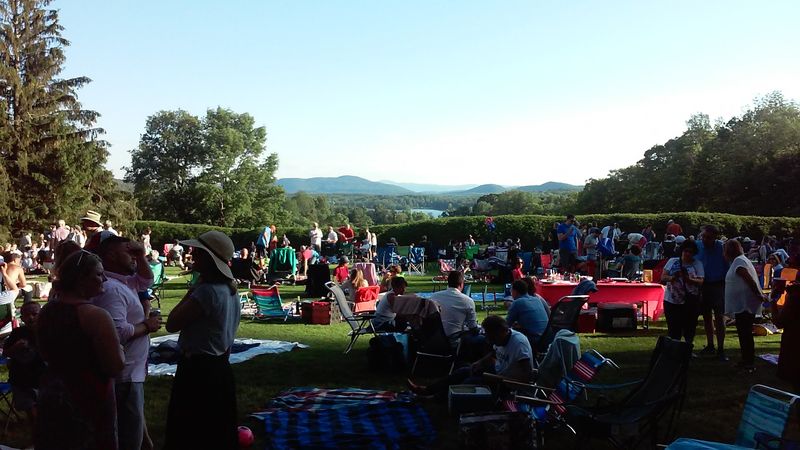
The lake does not sit quietly through the summer. Stockbridge Bowl functions as an active recreational hub, drawing paddlers, anglers, sailors, and swimmers from across the region.
A public boat ramp off Route 183 provides access for those arriving by water, and the town beach on the southeast side of the lake offers a more casual entry point for families and swimmers.
Fishing on Stockbridge Bowl is a serious pursuit for many. The lake holds bass, trout, perch, and salmon, making it attractive across different angling styles and seasons.
Sculling crews, kayakers, and canoeists share the water with powerboats and water-skiers, which requires a degree of coordination that the lake manages reasonably well during quieter periods. Summer weekends are a different matter.
The historic weight of the shoreline adds an unexpected layer to any afternoon on the water. Shadowbrook, once one of the grandest estates on the lake, now operates as the Kripalu Center for Yoga and Health.
Seranak, the former summer residence of Boston Symphony Orchestra conductor Serge Koussevitzky, is now owned by the BSO itself. Paddling past these properties gives the lake a quality that goes beyond recreation.
It feels like moving through a living archive of American cultural history, which is not something most lakes can claim.
Guardians Of The Lake’s Pristine State
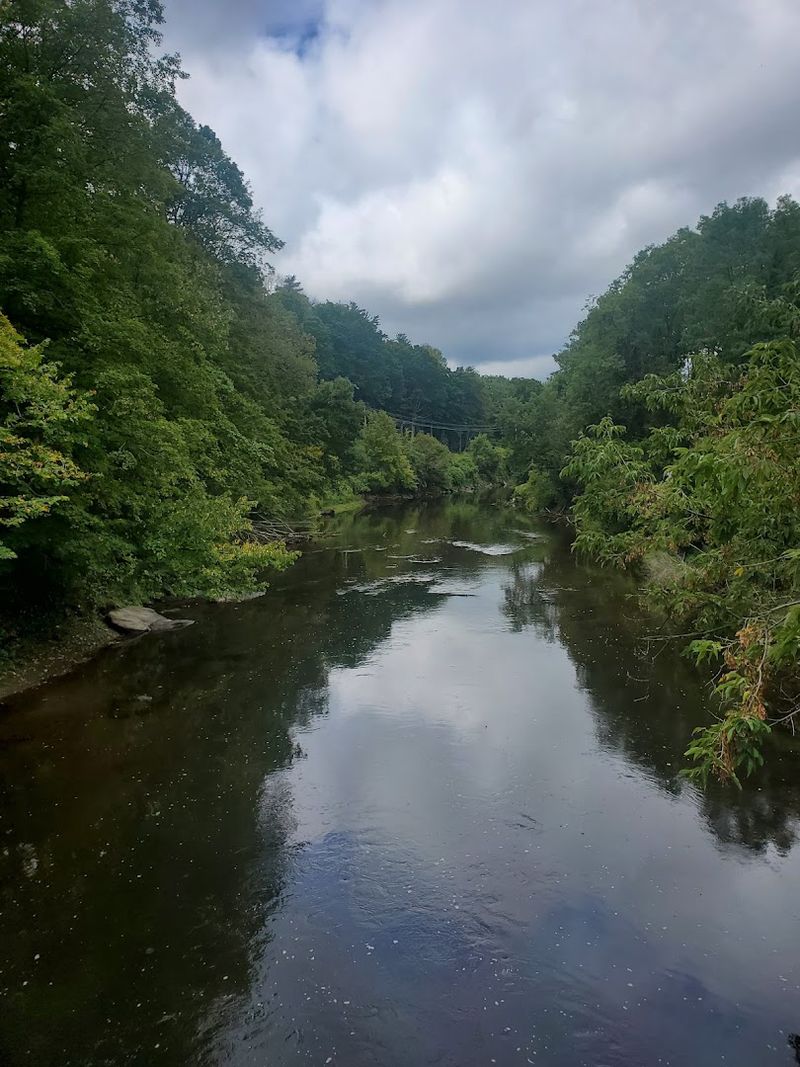
Beauty requires maintenance, and Stockbridge Bowl is no exception. The lake faces a set of environmental pressures that have been building for decades.
Invasive aquatic plant species have established themselves in parts of the lake, competing with native vegetation and affecting water clarity.
Low dissolved oxygen levels in deeper sections create conditions that stress fish populations and complicate the broader aquatic ecosystem.
Algae blooms, fed by nutrient runoff from surrounding properties and roads, represent another persistent challenge. Sediment accumulation at the lake bottom compounds these issues over time, gradually reducing depth and water quality.
The potential arrival of zebra mussels, an invasive species that has devastated freshwater ecosystems across the northeastern United States, is a current concern that lake managers are actively working to prevent.
The Stockbridge Bowl Association, established in 1946, works alongside the Town of Stockbridge to address these challenges through a combination of strategies. Periodic partial drainages of the lake help control invasive plant growth.
Weed harvesting removes biomass before it can decompose and release additional nutrients. A specialized drain system allows water levels to be lowered in a controlled manner.
Public education about cleaning watercraft before launching is also part of the effort, since many invasive species arrive on boats traveling between lakes. The work is ongoing, unglamorous, and absolutely necessary.