
8 Old-School New York Grocery Markets That Will Make You Feel Like You Stepped Back In Time
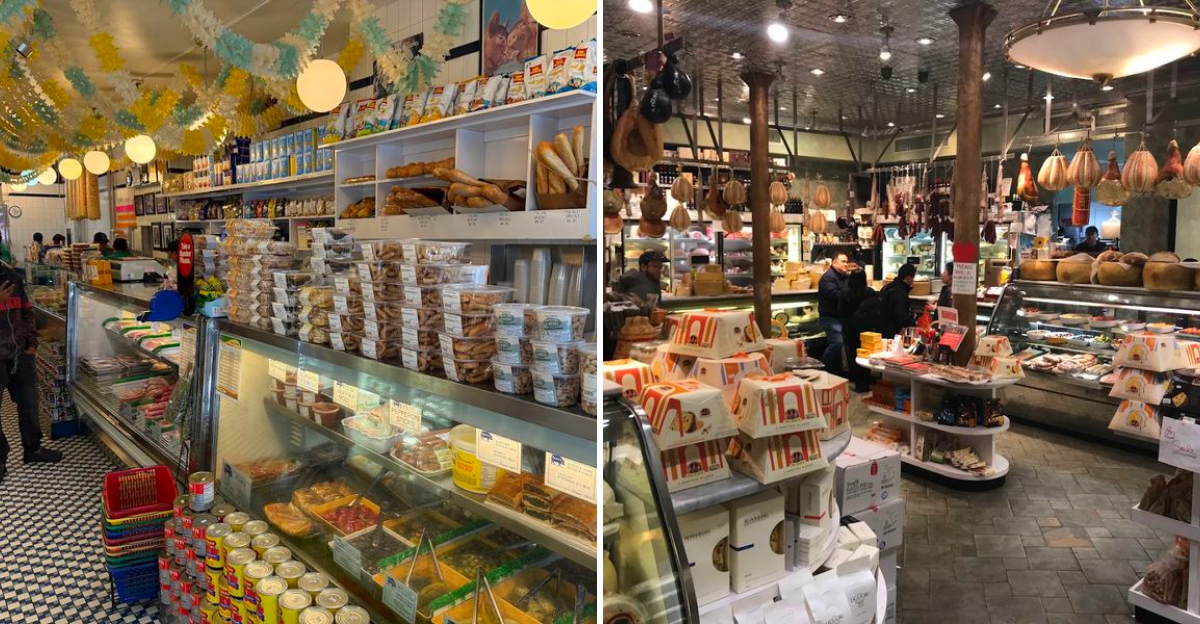
Time travel usually requires more than a grocery cart, yet eight old-school New York markets manage it anyway. Modern grocery stores chase efficiency, but these eight chase something closer to nostalgia instead. Deli counters slice meat to order, no prepackaged shortcuts involved.
Hand-lettered signs mark prices instead of digital displays. Customers linger longer than usual, chatting with owners who clearly remember when the whole neighborhood looked different.
Eight markets, endless memories, and a shopping trip that feels like visiting family instead of running errands. Wooden shelves creak the same way they probably did decades ago.
Cash registers ring with an actual bell instead of a beep. Owners greet regulars by name, remembering orders from years back without needing a loyalty app to jog their memory.
Modern grocery stores chase efficiency, but these eight chase something closer to nostalgia instead. Deli counters slice meat to order, no prepackaged shortcuts involved.
Hand-lettered signs mark prices instead of digital displays. Customers linger longer than usual, chatting with owners who clearly remember when the whole neighborhood looked different.
1. Russ & Daughters
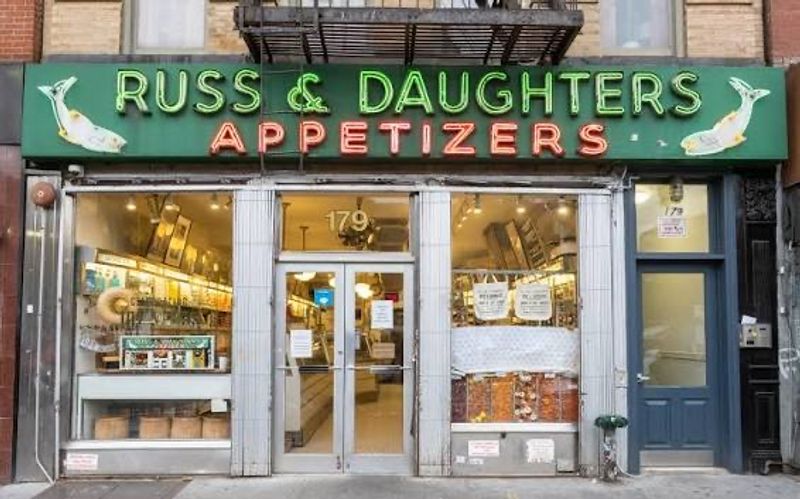
A pushcart. That is how it all started.
Joel Russ, a Jewish immigrant from Poland, began selling pickled herring from a pushcart on the streets of Manhattan before eventually moving his shop to 179 E Houston St, New York, NY 10002, where it has stood proudly since 1920. The man had guts, and apparently, very good fish.
In 1933, Joel did something bold for the era. He made his three daughters, Hattie, Anne, and Ida, full business partners and renamed the store Russ and Daughters.
Historians point to this as the first known American business to use “and Daughters” in its official name. That is a legacy worth savoring.
Four generations of the Russ family have kept this appetizing store running since 1914, and the quality has never slipped. The smoked fish selection is extraordinary, ranging from velvety lox to briny caviar spreads that would make any Sunday morning feel like a celebration.
Pickled herring still holds a place of honor here, just as it did over a century ago.
Bagels, bialys, and babka round out the menu in a way that feels both timeless and deeply satisfying. Every item behind the counter has been thoughtfully sourced and expertly prepared.
You do not just buy food at Russ and Daughters. You participate in a tradition that New York City has protected for more than 110 years.
The staff knows their product with the kind of confidence that only generational knowledge can build. First-timers often leave wide-eyed and very well fed, clutching bags of smoked fish like they just found buried treasure on Houston Street.
2. Zabar’s
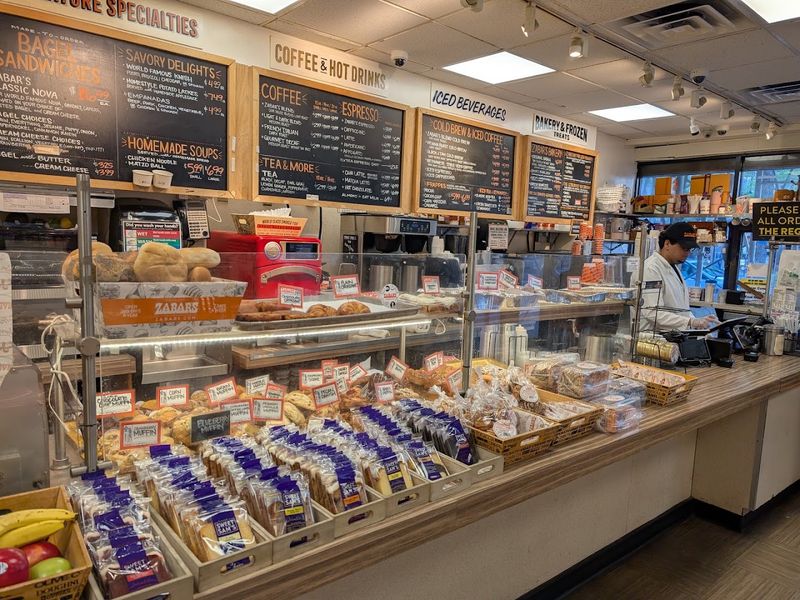
Few places in New York City carry the kind of lively, chaotic, deeply lovable energy that Zabar’s delivers on a regular Saturday morning. Louis and Lillian Zabar opened this Upper West Side institution in 1934, and it has been drawing thousands of devoted customers every single week ever since.
The store at 2245 Broadway, New York, NY 10024 is not just a grocery shop. It is a full sensory experience.
Zabar’s has been called an “Aladdin’s cave” of food, and that description holds up beautifully. The cheese section alone could occupy a serious food lover for a solid hour.
Smoked fish, olives, fresh bagels, and specialty pantry items pack every aisle with the kind of abundance that feels almost theatrical. The aromas hit you before you even reach the counter.
Here is a fun fact that most people do not know. Zabar’s was the first store in the United States to sell drip coffee makers, introducing the Wigomat to American kitchens back in the late 1960s.
So the next time you brew a pot of morning coffee, you can quietly thank Zabar’s for helping start that tradition.
The coffee selection remains a point of pride, with whole beans and blends that have loyal fans across the entire city. The banter between staff and regulars is part of the charm, quick, warm, and completely unrehearsed.
Shopping at Zabar’s feels like being in on a very good secret that just happens to be shared by an entire neighborhood. If the Upper West Side had a heartbeat, it would sound a lot like the buzz inside this remarkable store on a busy afternoon.
3. Di Palo’s Fine Foods
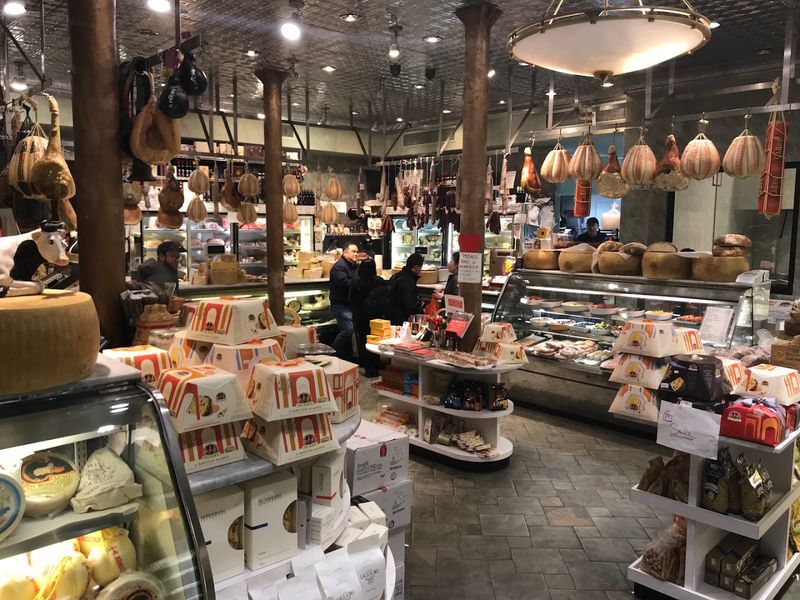
Fresh mozzarella made by hand, every single day. That sentence alone should be enough to send you straight to 200 Grand St, New York, NY 10013, where Di Palo’s Fine Foods has been doing exactly that since Concetta Di Palo opened the current shop in 1925.
Her father Savino had started a dairy store on the same block back in 1910, so the roots here run deep and delicious.
Di Palo’s is a fourth-generation family business, and the pride in that heritage shows in every product behind the counter. The fresh ricotta is creamy and mild in a way that store-bought versions simply cannot replicate.
The imported Italian cheeses span every region of Italy, from aged Parmigiano-Reggiano to sharp Pecorino to soft Taleggio that practically melts on the spot.
The salumi selection is equally impressive, featuring hand-cut cured meats that arrive directly from artisan producers the Di Palo family knows personally. They have maintained real relationships with makers across Italy for decades, which means the quality control is as personal as it gets.
You are not just buying prosciutto. You are buying the result of a trusted handshake across the Atlantic Ocean.
Little Italy has changed a great deal over the years, but Di Palo’s has remained a constant and comforting presence on Grand Street. Regulars often wait patiently in line, knowing the experience inside is worth every minute.
The staff is knowledgeable, enthusiastic, and genuinely happy to let you try something before you buy it. That kind of hospitality is rare, and in today’s fast-moving world, it feels like a true gift every time you visit.
4. Kalustyan’s
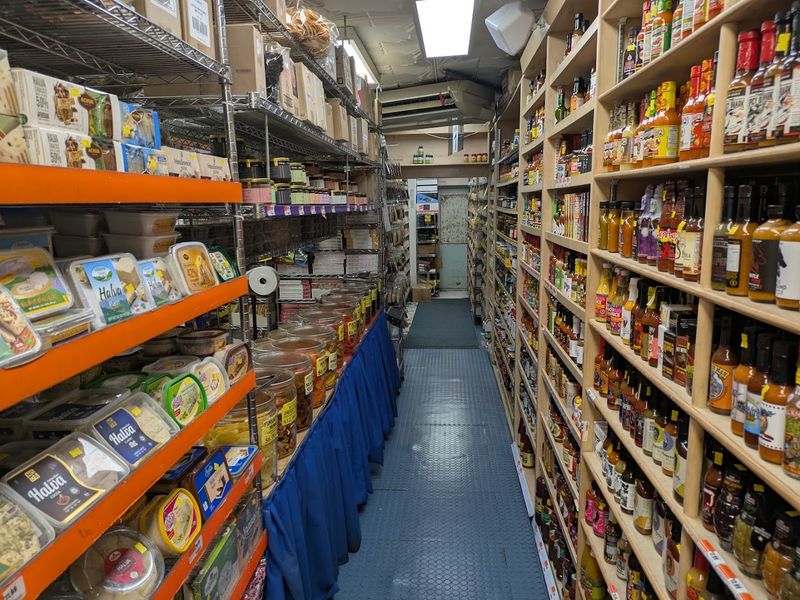
Over 80 countries represented on one set of shelves. That is the kind of grocery store that makes a home cook feel like a world traveler without ever leaving Manhattan.
Kalustyan’s at 123 Lexington Ave, New York, NY 10016 has been the city’s go-to destination for rare and hard-to-find ingredients since Kerope Kalustyan, an Armenian immigrant from Turkey, founded the shop in 1944.
The store sits in a neighborhood affectionately known as Curry Hill, a stretch of Lexington Avenue packed with South Asian restaurants and specialty food shops. Kalustyan’s began with a focus on Middle Eastern spices and pantry staples, but over the decades it grew into something far more ambitious.
Today the shelves hold dried chilies from every corner of the globe, natural herbs, exotic beans, imported teas, and coffees that serious chefs seek out specifically.
Professional cooks and curious home cooks shop here side by side, united by the thrill of finding an ingredient they could not locate anywhere else in the city. The staff is remarkably well-informed and genuinely enthusiastic about helping customers track down exactly what they need.
That kind of expertise is worth the trip alone.
Here is a detail that adds an extra layer of intrigue to the whole experience. The building at this address was originally constructed in the 1860s for Chester A.
Arthur, who was inaugurated as the 21st President of the United States on an upper floor of that very structure. So when you are browsing sumac and Aleppo pepper, you are technically standing in a piece of American presidential history.
Not many grocery stores can say that with a straight face.
5. Faicco’s Italian Specialties
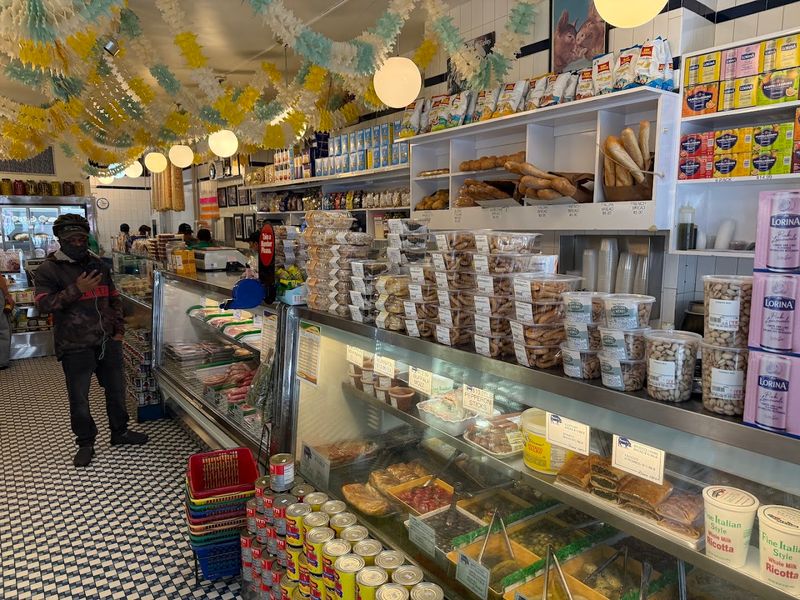
More than 125 years of sausage-making is not something you stumble across every day. Eduardo Faicco opened his first pork store in 1900, and the family eventually brought their Manhattan operation to its current home at 260 Bleecker St, New York, NY 10014, where the West Village has been grateful ever since.
The math on that kind of longevity is genuinely staggering.
Faicco’s built its reputation on handmade sausages crafted from recipes that have been passed down through multiple generations. The prosciutto is sliced by hand with the kind of care that turns a simple ingredient into something almost ceremonial.
The soppressata has a bold, satisfying depth of flavor that reminds you why Italian charcuterie became world-famous in the first place.
In 1999, the store officially broadened its identity from a traditional pork store to a full Italian specialties shop, adding prepared foods rooted in cherished family recipes. That transition made Faicco’s even more of a neighborhood staple, giving regulars a reason to stop in for lunch as well as for their weekly grocery haul.
The sandwiches here are generous and deeply satisfying in a way that chain delis simply cannot compete with.
Fresh mozzarella is also made in-house, soft and milky and best eaten as soon as possible, which is honestly not a difficult instruction to follow. The shop carries the kind of lived-in warmth that only a century of community presence can create.
Bleecker Street has seen a lot of change over the decades, but Faicco’s has remained a steady, welcoming constant that longtime New Yorkers and curious newcomers both depend on with equal enthusiasm and appetite.
6. Alleva Dairy
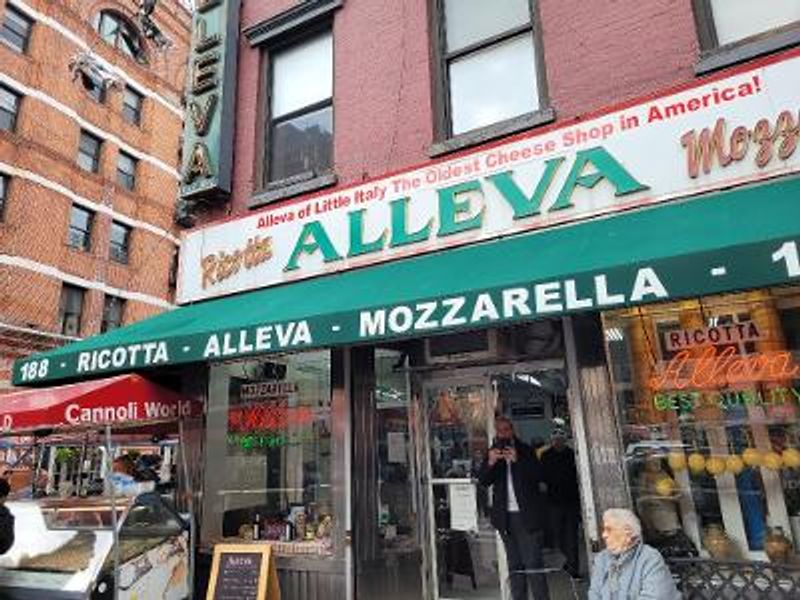
Founded in 1892, Alleva Dairy holds a title that very few food businesses in America can claim. It was recognized as the oldest cheese shop in the entire United States.
Pina Alleva, an immigrant from Benevento, Italy, built something at 188 Grand St, New York, NY 10013 that outlasted generations, neighborhoods, and decades of relentless change in one of the world’s most competitive cities.
The shop became a cornerstone of Little Italy, known for its fresh homemade mozzarella and ricotta that locals swore by for over a century. Imported Italian cheeses lined the shelves alongside cured meats, pasta, salami, sausages, and high-quality imported olive oil.
It was the kind of shop where the smell alone told you something special was happening inside.
Alleva Dairy carried 130 years of history before the original New York City location closed on March 1, 2023, due to financial difficulties that included unpaid rent. It was a genuinely sorrowful moment for Little Italy and for food lovers across the city who had grown up visiting the shop with their families.
Losing a business that old feels like losing a chapter of the city itself.
The story does not end there, though. The owner announced plans to reopen Alleva Dairy at a new location in Lyndhurst, New Jersey, keeping the legacy alive outside of Manhattan.
For anyone who remembers standing at that Grand Street counter and watching fresh mozzarella being pulled by hand, the name Alleva still carries enormous weight. It represents what New York’s immigrant food culture built, something so good and so enduring that even a closure cannot fully erase it from the city’s collective memory and appetite.
7. Raffetto’s Fresh Pasta
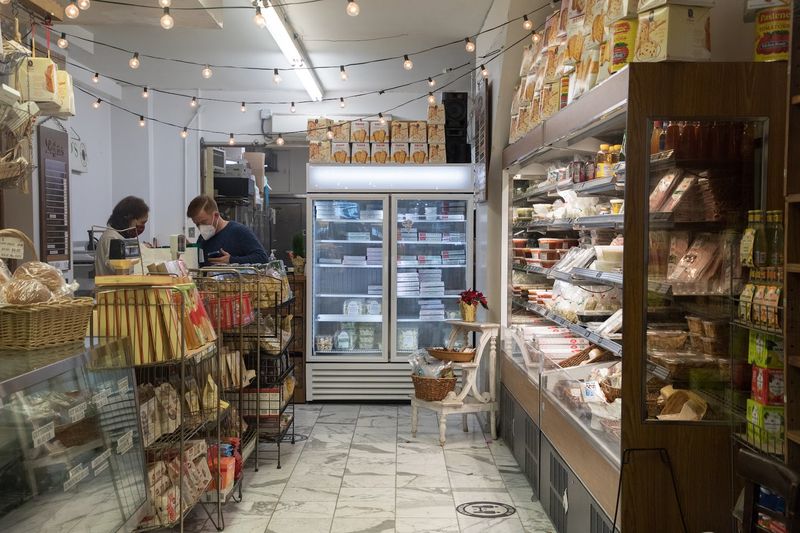
A pasta roller purchased in 1916 is still in use at this shop today. Let that sink in for a moment.
Raffetto’s Fresh Pasta at 144 W Houston St, New York, NY 10012 has been making fresh pasta in Greenwich Village since Marcello Raffetto, an immigrant from Genoa, Italy, opened the doors in 1906. The fourth generation of the family is now actively involved, and the craft has not wavered one bit.
Around 50 different kinds of fresh pasta are available here on any given visit, which is a number that should make any pasta enthusiast stop mid-stride. Classic egg noodles sit alongside more inventive creations like pumpkin ravioli, black squid ink linguine, and rosemary pappardelle.
The variety is genuinely impressive, and every option is made with the kind of attention that mass production simply cannot replicate.
Raffetto’s also produces approximately 19 types of ravioli, each one filled with care and sealed with precision. The sauces are equally acclaimed, with the house pesto earning particular devotion from regulars who pick it up weekly without fail.
Watching the staff work behind the counter feels like observing a form of edible art in real time.
Greenwich Village has transformed dramatically over the past century, with rents rising and beloved businesses disappearing at an uncomfortable pace. Raffetto’s has somehow held on, anchored by quality, reputation, and a family commitment that transcends market pressures.
The shop is proof that doing one thing exceptionally well, for a very long time, is its own kind of superpower. Fresh pasta made this morning, using a machine from 1916.
That is a sentence that New York only gets to say once, and Raffetto’s owns it completely.
8. Despaña
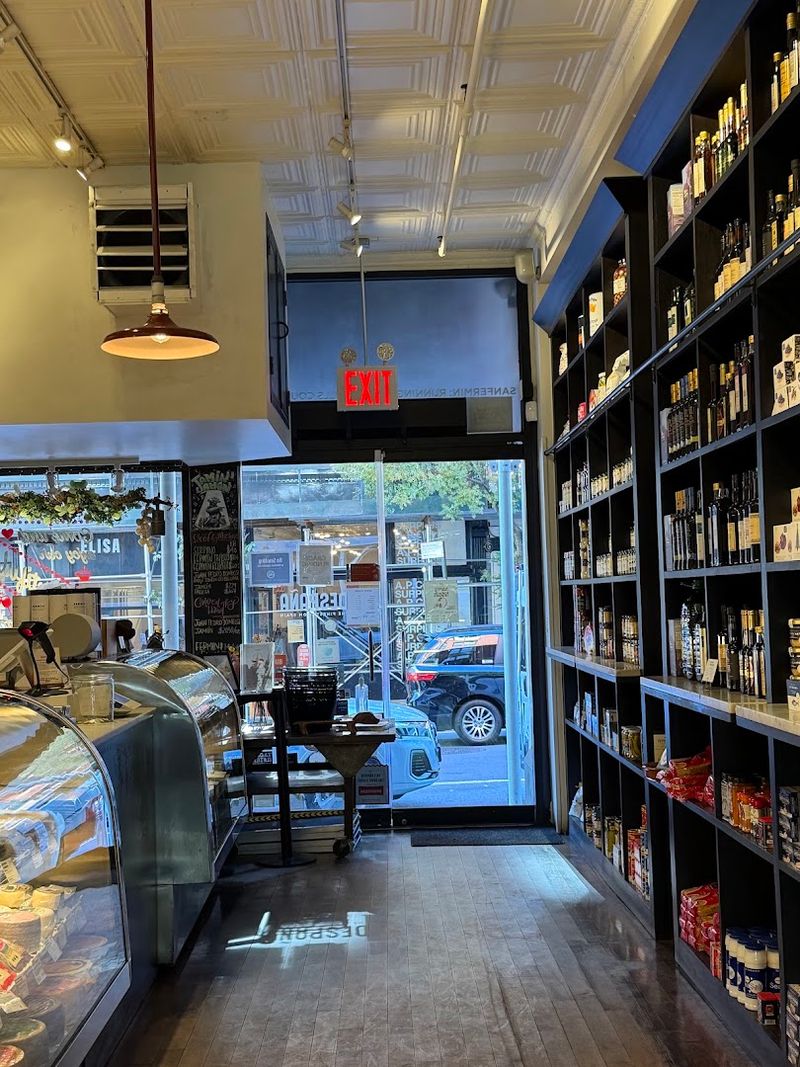
Spain showed up in SoHo, and the neighborhood has been better for it ever since. Despaña at 408 Broome St, New York, NY 10013 is a one-of-a-kind Spanish grocery, café, and retail boutique that has been bringing authentic Iberian flavors to Manhattan since the SoHo location opened in 2006.
The brand itself has deeper roots, starting in 1971 as a manufacturer of Spanish-style chorizos.
The grocery shelves are stocked with ingredients imported directly from artisan producers across Spain. Manchego cheese in multiple aged varieties, rich olive oils, bold sauces, tinned fish of exceptional quality, and aged cheeses fill the space with the kind of selection that makes serious cooks genuinely excited.
Every product on those shelves was chosen with real intention.
The bocadillos, which are traditional Spanish sandwiches, have built their own devoted following among New Yorkers who take their lunch very seriously. The tuna Pescador sandwich in particular has earned near-legendary status, built on quality fish and flavorful peppers that come together in a way that is hard to stop thinking about after the first bite.
It is the kind of sandwich that ruins lesser sandwiches for you permanently.
Despaña also handcrafts artisanal Iberian charcuterie at its Jackson Heights factory, which means the chorizo and cured meats on the shelves are produced with genuine expertise and not simply imported for convenience. The combination of a full grocery, a working charcuterie operation, and a café counter under one roof makes Despaña a truly layered experience.
For anyone curious about Spanish food culture, this SoHo shop offers a remarkably accessible and delicious place to begin that education with great enthusiasm.