
The Montana Lake That Changed From A Hidden Spot Into A Major Destination
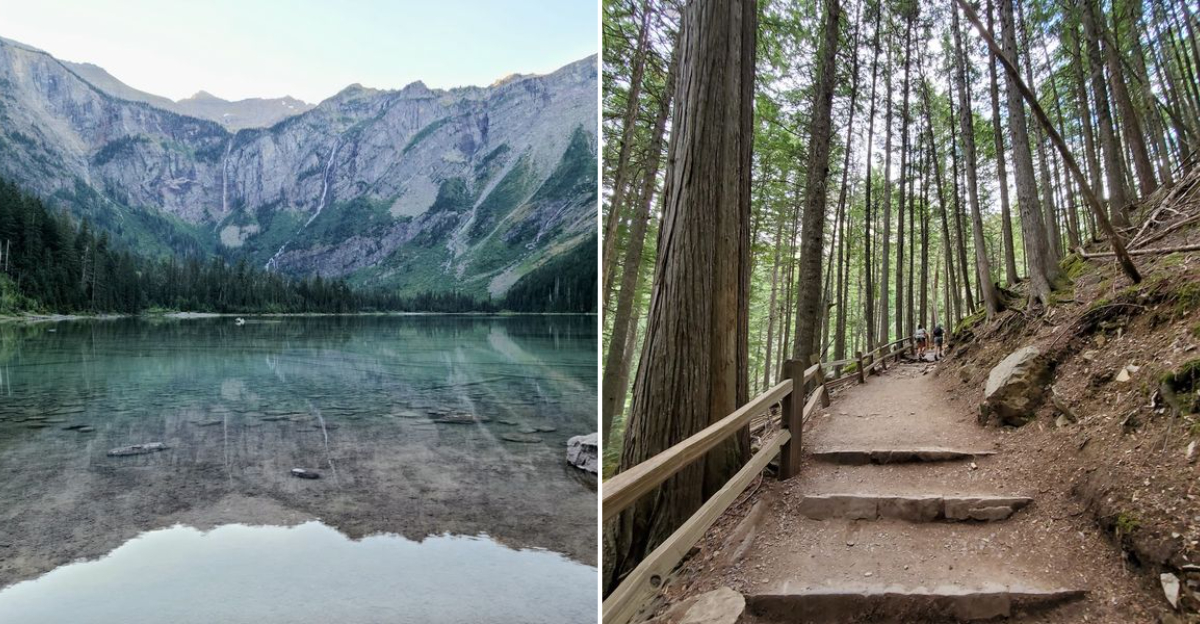
Glacier-carved peaks look down on water so clear it seems to vanish entirely against the rocky bottom. Longtime locals remember when a single dirt road offered the only access to this pristine shoreline.
Today, trucks towing shiny fiberglass boats crowd the newly paved parking lots before sunrise. Montana witnessed a quiet sanctuary transform into a bustling summer hotspot almost overnight.
Cabins replaced empty pine groves, and upscale coffee shops now line the nearby highway. You can still find moments of absolute stillness if you launch a kayak before the morning fog clears.
However, the secret slipped out through viral photographs and travel blogs. The ripples from that sudden popularity continue to reshape the entire community with each passing season.
Geological Formation And Natural Landscape
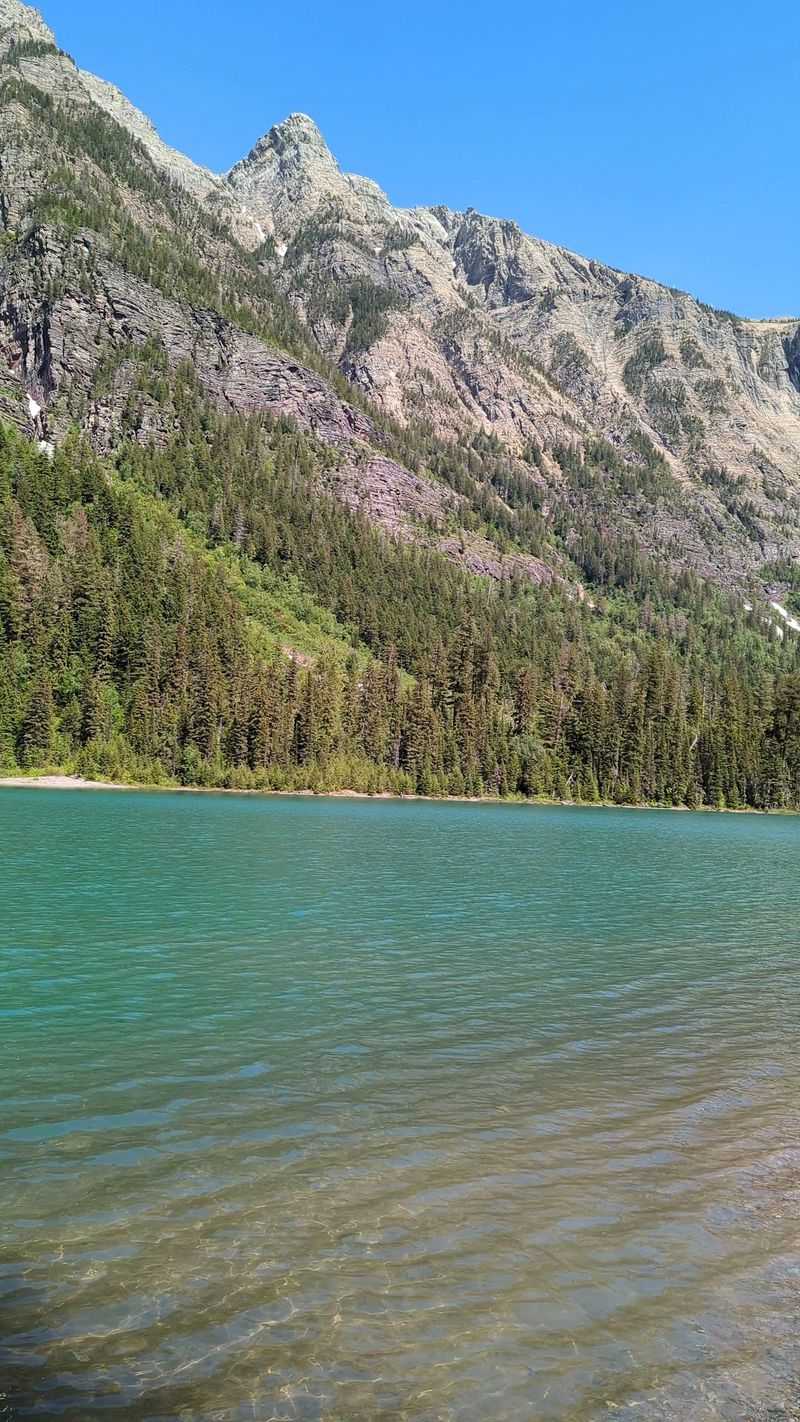
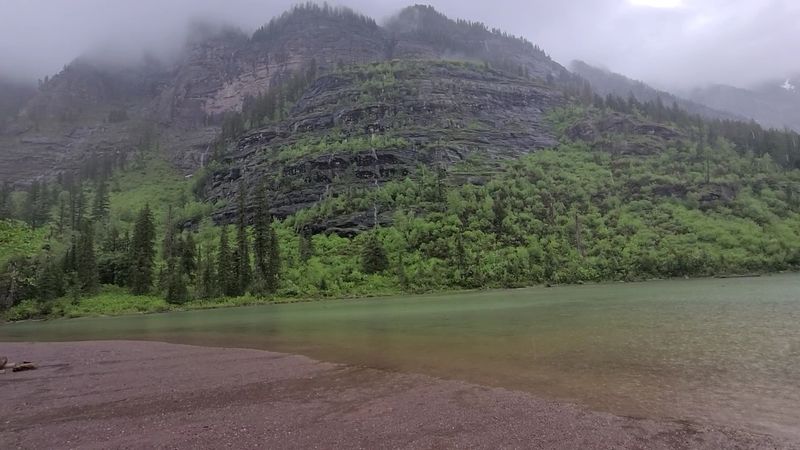
This lake sits inside a glacial cirque, which is basically a natural bowl carved out by ancient glaciers over thousands of years. The shape creates a dramatic amphitheater effect.
Mountains rise sharply on nearly every side.
Water from Sperry Glacier feeds the lake through snowmelt. That glacial melt carries fine silt particles into the water.
Those particles scatter light in a way that gives the lake its vivid turquoise color.
Waterfalls pour off Bearhat Mountain and drop into the lake from multiple directions. Spring and early summer bring the most powerful flows.
The sound alone is worth the hike.
Avalanche Creek drains the lake and cuts through a deep gorge on its way downhill. The gorge walls are smooth and sculpted.
Centuries of rushing water shaped every curve.
Dense forest rings the lake, similar to what you would find in the Pacific Northwest. High rainfall west of the Continental Divide keeps everything lush and green.
Cedar and hemlock trees grow thick here.
The geology tells a long story. Ice once covered this entire valley.
What remains today is a landscape shaped by forces that operated on a scale hard to fully picture. You can find Avalanche Lake, Montana 59936, inside Glacier National Park, one of the most geologically rich parks in North America.
Diverse Wildlife Inhabiting The Lake Area
Glacier National Park holds over 70 mammal species, and the Avalanche Lake area gives you a real shot at spotting several of them. Deer are common on the trail.
Marmots pop up near rocky open areas and are not shy at all.
Grizzly bears and black bears both live within the park. Sightings near the Avalanche corridor happen regularly.
Always carry bear spray and make noise on the trail.
Moose roam the wider park area, especially near marshy zones and creek edges. They are large, unpredictable, and genuinely impressive up close.
Keep your distance if you spot one.
The lake itself supports native Westslope Cutthroat Trout. This fish species has lived in these waters for a very long time.
Fishing is allowed with the proper permit.
Bird watchers have plenty to look for too. The park hosts nearly 300 bird species.
Steller’s Jays are a colorful and vocal presence along the trail.
Chipmunks are everywhere near the lakeshore, and they are bold about it. If you have snacks out, they will notice fast.
The old-growth forest creates layered habitat that supports animals from the ground up to the canopy. Every part of this ecosystem connects to the next in ways that are genuinely fascinating to observe.
Seasonal Activities Available For All Ages
Summer is peak season at Avalanche Lake, and for good reason. Hiking the Avalanche Lake Trail from late June through September gives you the best conditions.
The trail is moderate and works well for families with kids of various ages.
The trail follows Avalanche Creek the whole way up. You get the sound of rushing water almost from the start.
It makes the climb feel shorter than it actually is.
Winter brings a completely different experience. Snowshoeing becomes the main way to explore the area.
Ranger-led snowshoe walks are offered inside Glacier National Park during the colder months.
Ice formations develop on the lake surface in winter. The frozen waterfalls and snow-draped trees create a scene that looks almost unreal.
Cross-country skiing is also possible in the broader Lake McDonald and Avalanche area.
Spring brings powerful waterfall flows as snowmelt kicks in. The falls off Bearhat Mountain are at their loudest and most dramatic.
Early season hiking requires caution on wet and muddy sections.
Fall is underrated. The forest changes color, the crowds thin out, and the light hits the water differently.
Photographers especially love the autumn palette against the turquoise lake. No matter when you visit, there is always something worth seeing at Avalanche Lake.
Historical Significance And Local Legends
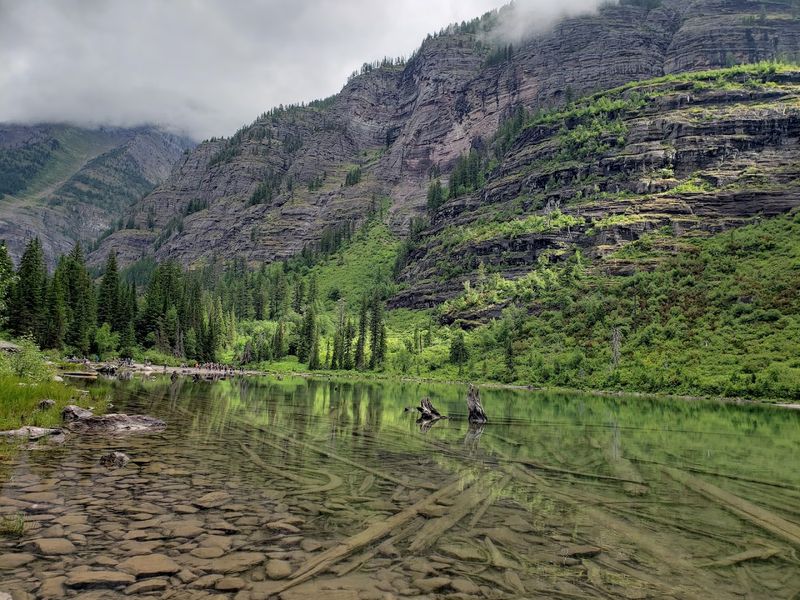
Dr. Lyman Sperry gave Avalanche Lake its name in 1895 after his party witnessed multiple avalanches during their visit. The name stuck.
It is one of the more straightforward naming stories in the park’s history.
Before Sperry, a homesteader named Charles Howe spotted the lake from the summit of Mount Brown in 1894.
He was one of the first non-Native Americans to document the area and later shared his discovery with Sperry, who organized an expedition.
Long before any of that, the land belonged to several Native American peoples. The Blackfeet, Salish, Pend d’Oreille, and Kootenai tribes all have deep connections to this region.
Their presence here stretches back thousands of years.
The Kootenai people harvested cedar bark near this area for generations. They used it to make baskets, canoes, and bowls.
The cedar forest you walk through today is part of that same ancient landscape.
In 1895, the Blackfeet Nation sold 800,000 acres of the western part of their reservation to the U.S. government. That transaction opened the area to exploration and eventually to the creation of Glacier National Park in 1910.
During the negotiations, Blackfeet leaders made clear they were selling under duress, weakened by disease and famine.
The history here is layered and complex. What looks like a pristine wilderness today carries centuries of human story within it.
Knowing that history changes how you see the place.
Ecological Preservation Efforts And Challenges
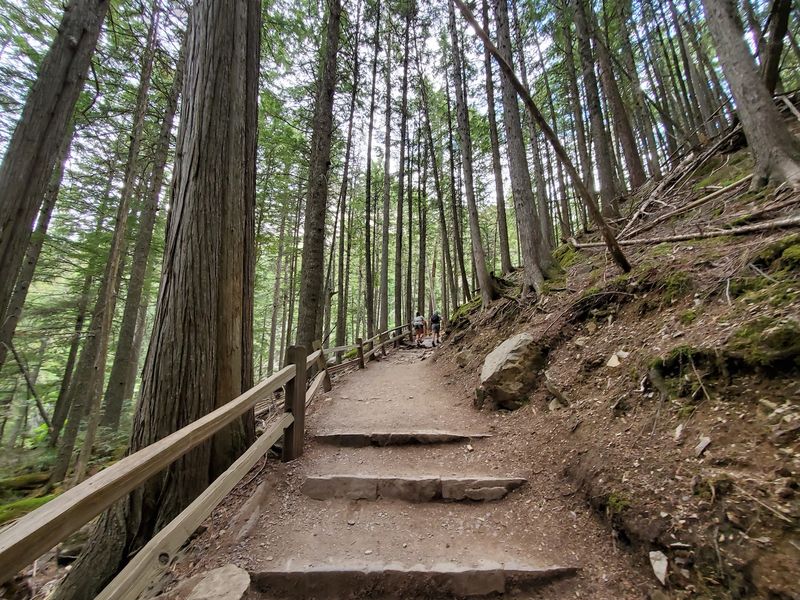
Glacier National Park is warming at nearly twice the global average rate. That is not a small detail.
The glaciers that carved and still feed Avalanche Lake are disappearing fast.
In 1850, the park had around 150 glaciers. By 2015, only 26 remained that were larger than 25 acres.
Scientists predict the remaining glaciers could be gone by 2030.
Sperry Glacier, which feeds Avalanche Lake, is among those at risk. As it shrinks, the water supply and temperature of the lake will change.
That affects the native fish, the vegetation, and the entire ecosystem.
The park actively monitors environmental changes and works on restoration projects. Preventing aquatic invasive species from entering the water system is a major priority.
Non-native species can destroy native habitats quickly.
Protecting the native Westslope Cutthroat Trout is part of that conservation work. This fish is sensitive to water temperature changes.
Warmer water from reduced glacial input is a real threat to its survival.
Tourism itself creates pressure. The Avalanche Lake Trail is one of the most visited in the park.
Overcrowding damages trailside vegetation and disturbs wildlife patterns. Visitors are encouraged to follow Leave No Trace principles.
Stay on marked trails, pack out all waste, and respect the landscape. Every small action adds up across thousands of visitors each year.
Scenic Hiking Trails Surrounding The Lake
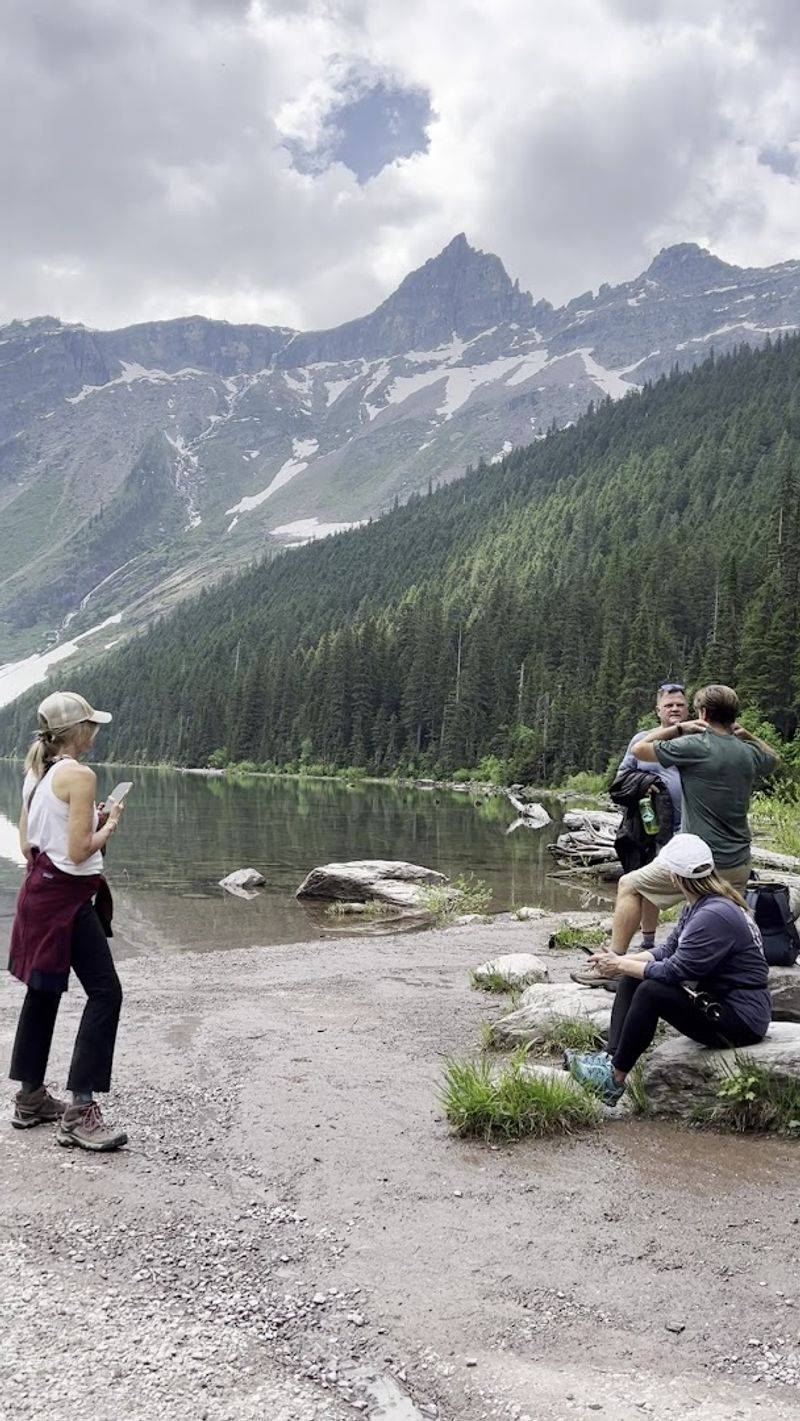
The Avalanche Lake Trail is the main route, and it earns its popularity. The hike runs roughly 4.5 to 5.9 miles round-trip, depending on how far you explore.
Elevation gain sits around 730 to 757 feet total.
The trail begins at the Trail of the Cedars, a 0.6 to 1 mile boardwalk loop that is universally accessible. Wheelchair users and strollers can enjoy this section fully.
Beyond the boardwalk, the trail becomes rocky and uneven.
Old-growth cedar and hemlock trees line the path the entire way up. The canopy is thick enough to keep the trail shaded on warm days.
That shade is a genuine relief in July and August.
Avalanche Creek runs alongside the trail for much of the route. The water is a vivid blue-green color, even before you reach the lake.
Overlooks into Avalanche Creek Gorge reveal small waterfalls carved into smooth rock walls.
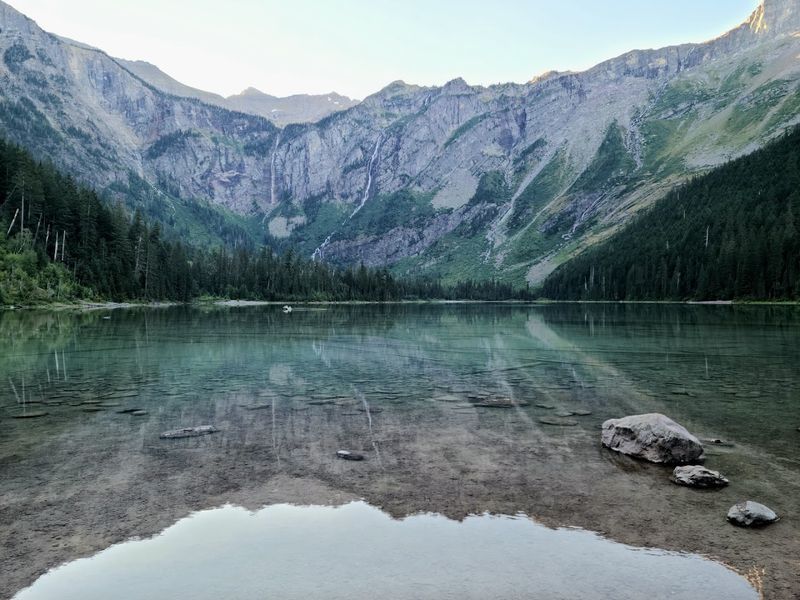
The trail opens up dramatically when you reach the lake. The cirque walls surround you on three sides.
Multiple waterfalls drop from the cliffs above directly into the water.
Hiking to the far side of the lake rewards you with different views and fewer people. The fishing trail branches off near the shoreline.
Both directions offer something worth seeing. Plan to spend time at the lake, not just pass through it.
Photographic Opportunities Throughout The Year
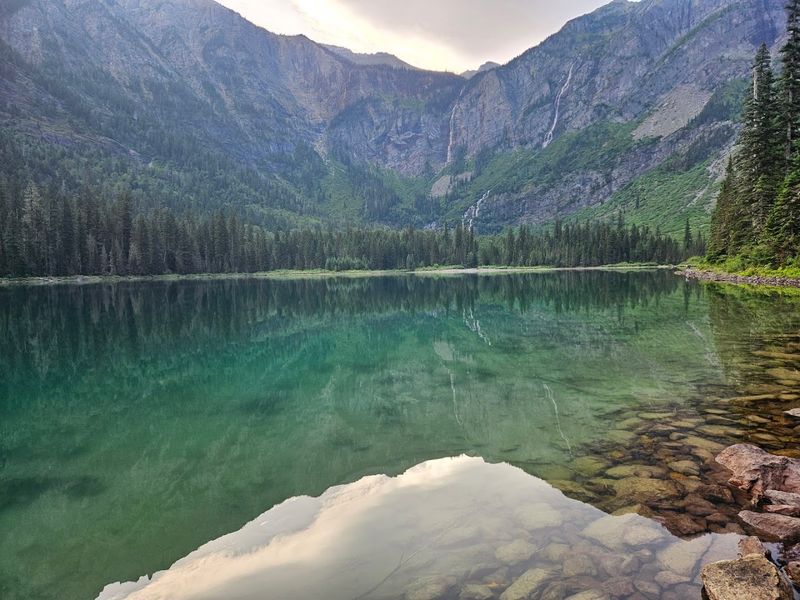
Avalanche Lake is one of those places that makes photography almost effortless. The turquoise water, the towering cliffs, and the multiple waterfalls all exist in one frame.
You barely have to try.
Early morning is the best time to shoot. The water is calm, the light is soft, and the crowds have not arrived yet.
Reflections of the surrounding peaks appear clearly on the still surface.
Spring and early summer bring the waterfalls to full power. The falls off Bearhat Mountain are dramatic and fast-moving.
Long exposure shots of the falls during this period produce incredible results.
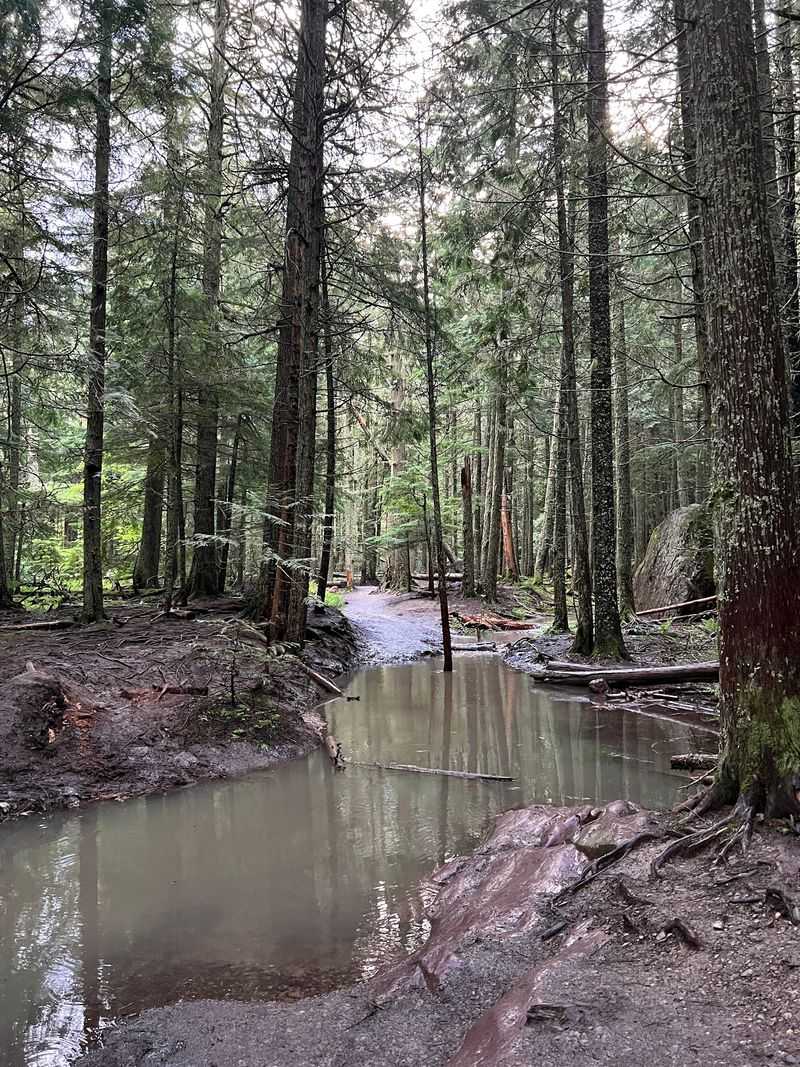
The old-growth cedar forest along the trail offers its own scenes. Moss-covered trunks, filtered light through the canopy, and the rushing creek below all make for layered compositions.
Rainy days actually enhance waterfall detail and deepen the green tones.
Fall changes everything. The forest turns gold and orange while the lake stays turquoise.
That color contrast is rare and visually striking. Many photographers consider autumn the best season here.
Winter visits reward the patient. Ice formations on the lake surface and snow-covered branches create a quiet, still scene very different from summer.
The park sees far fewer visitors in winter, which means you often have entire viewpoints to yourself. Cloudy skies diffuse harsh light and work well for landscape photography.
Bring extra batteries because cold temperatures drain them fast.
Visitor Amenities And Accessibility Options
Restrooms are available at the main Avalanche Picnic Area trailhead. A pit toilet also sits near the lake itself.
Bring your own toilet paper and hand sanitizer just to be safe.
Parking fills fast, especially in summer. The lot is often over half full before 7 a.m. on busy days.
Arriving by 6:30 a.m. gives you a real chance at a spot without waiting.
The park’s free shuttle system serves the Avalanche Creek stop. The shuttles are ADA-accessible and run regularly during peak season.
Using the shuttle removes the parking stress entirely and is worth planning around.
The Trail of the Cedars boardwalk at the trailhead is fully wheelchair-accessible. It offers a genuine forest experience without requiring any difficult terrain.
Beyond that point, the trail becomes rocky and uneven and is not accessible by wheelchair.
Avalanche Campground sits close to the trailhead. It offers tent and RV sites with flush toilets, running water, and bear boxes for food storage.
Reservations fill up months in advance, so book early.
Cell service near Avalanche Lake is very limited. Download offline maps before you go.
Let someone know your plan and expected return time. The lake sits at a location where self-sufficiency matters.
Carry enough water, snacks, and layers for changing mountain weather. The park entrance requires a fee or a valid America the Beautiful pass.