
This West Virginia Train Day Trip Feels Like A Mini Vacation On Rails
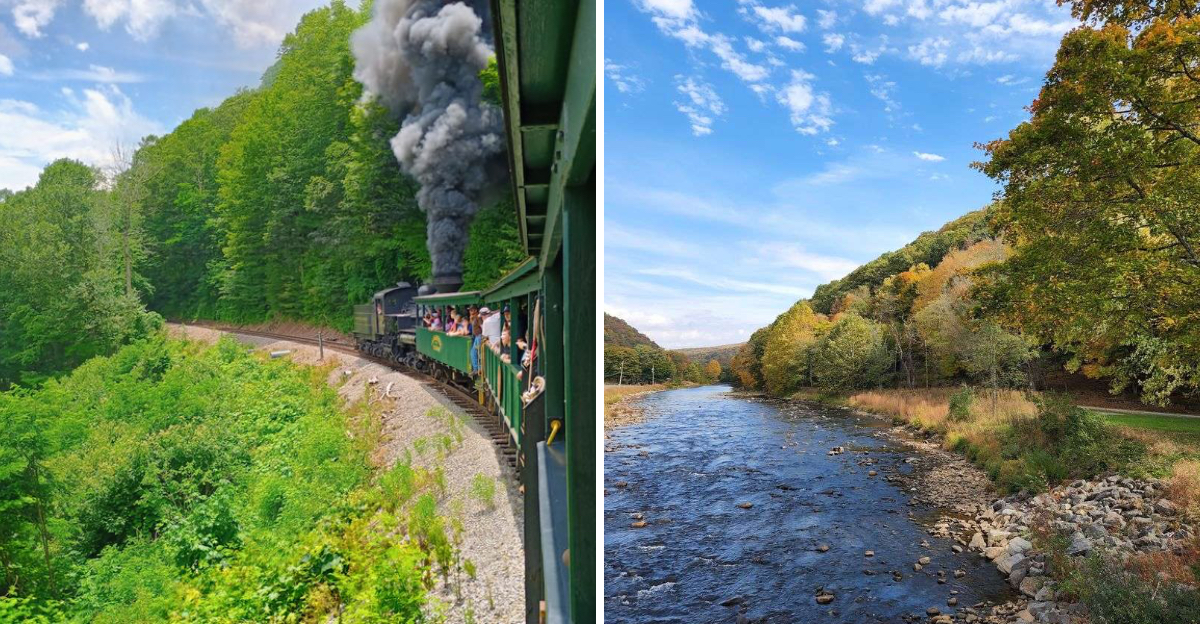
A steam engine that claws straight up a mountain sounds impossible, yet West Virginia has been running one for over a century.
Wooden benches. Open sides.
Smoke drifts past your shoulder while a whistle cracks off the rock walls above. Switchback after switchback, the train claws upward on a climb that would break most locomotives.
The higher it climbs, the wilder the view gets, and West Virginia spreads out below in a way no photo can fully capture.
A mountain camp waits further up the line, complete with old tools and buildings frozen in another era. There’s even a chance to spend the night in houses built for workers a century ago.
Grab a jacket before you go. The ride up is only half of this story.
The Lumber Town That Refused To Disappear
Most company towns vanished when the industry did. Cass did not.
Built in 1901 by the West Virginia Pulp and Paper Company, the town was designed to house the workers who harvested spruce and hemlock from the surrounding mountains.
At its peak, the sawmill here was considered the largest double-band sawmill in the world. It processed over a billion board feet of timber across its lifetime.
That is a staggering number for a small mountain community.
When the mill closed in 1960, the town could have crumbled. Instead, West Virginia stepped in.
The state acquired the property in 1961 and transformed it into a state park. The first tourist train ran in 1963.
The full company town joined the park system in 1977.
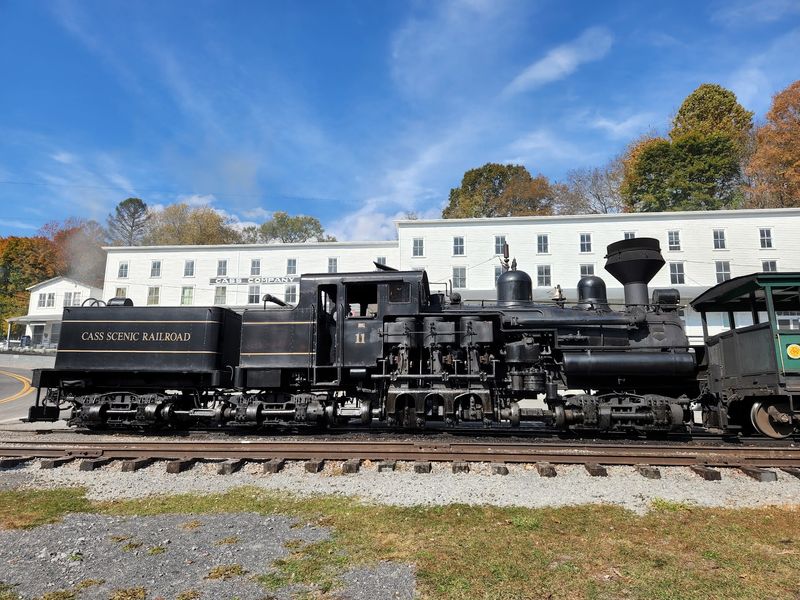
Today, Cass Scenic Railroad State Park at 12363 Cass Rd, Cass, WV 24927 stands as one of the most authentic preserved industrial communities in the country. The buildings are still there.
The railroad still runs.
The story still holds.
Steam Power That Still Turns Heads
Most scenic railroads run diesel under a steam costume. Not here.
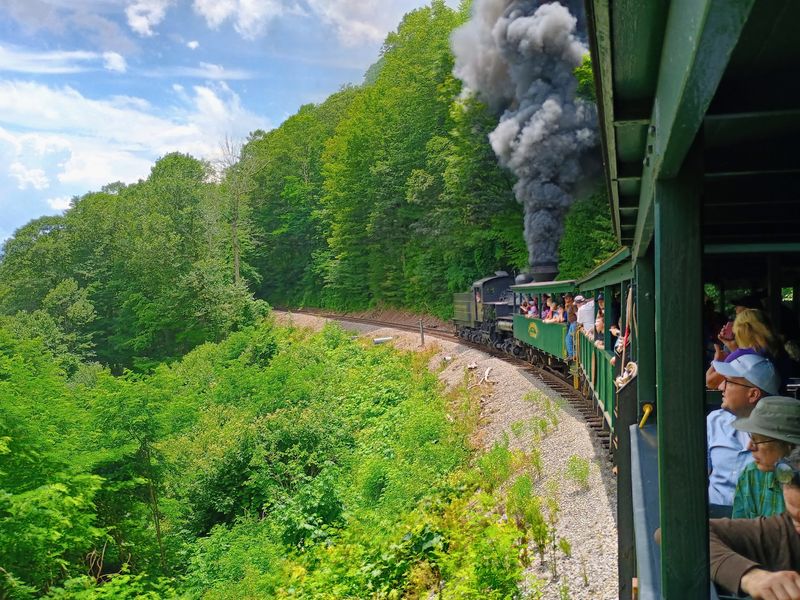
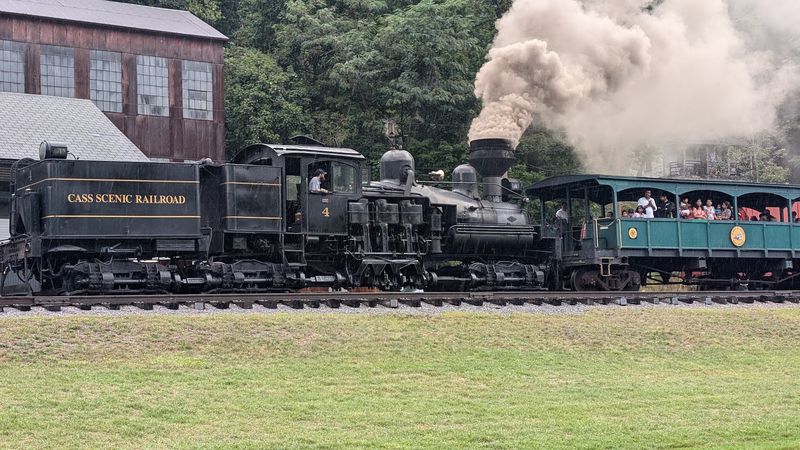
The locomotives at Cass are the real thing, and they are genuinely rare. The park operates one of the world’s largest collections of working geared Shay locomotives.
Shay, Heisler, and Climax engines all share one key trait. They were built specifically for steep, uneven terrain.
Standard locomotives struggle on sharp inclines. These machines were engineered to thrive on them.
Watching one of these engines work is a full sensory experience. The hiss of steam, the mechanical clatter, the deep whistle echoing off the mountain walls.
It is loud, smoky, and completely captivating.
Riders on the open-air flatcars get an unobstructed view of the locomotive working hard on the grade. Sitting toward the front means more smoke and soot, but also a better show.
Bring a layer you do not mind getting a little dirty.
The authenticity is part of the charm, and it is absolutely worth it.
Two Switchbacks And A Mountain To Climb
The railroad line stretches 11 miles and climbs Back Allegheny Mountain with serious intention. This is not a flat countryside loop.
The grades here are steep enough that standard locomotives simply could not handle them.
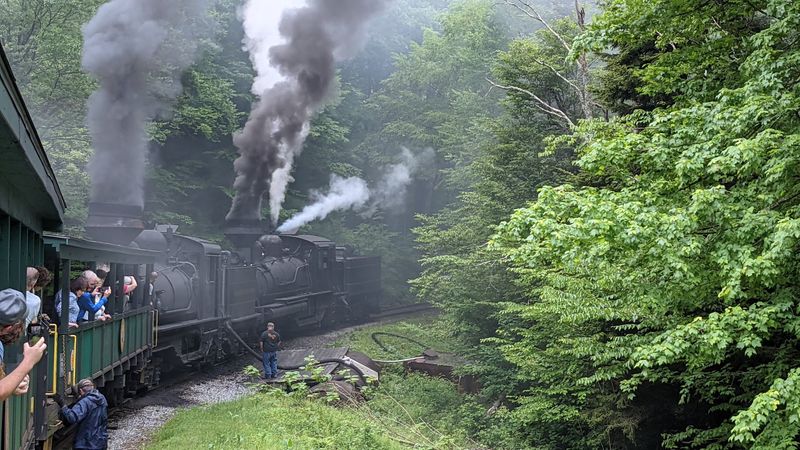
Two switchbacks are built into the route. These engineering solutions allow the train to reverse direction and gain elevation on slopes that would otherwise be impossible to climb in a straight line.
Watching the crew execute these maneuvers is quietly fascinating.
The locomotive pushes, then pulls, then repositions. Each move is deliberate and precise.
It is a reminder that the people who designed this railroad over a century ago were solving hard problems with clever hands-on thinking.
The full climb takes the train from the valley floor up toward Bald Knob, gaining significant elevation along the way. Passengers feel the grade beneath them as the engine works harder.
The mountain does not give anything away for free, and the locomotive earns every foot of it.
The Whittaker Station Stop For First-Timers
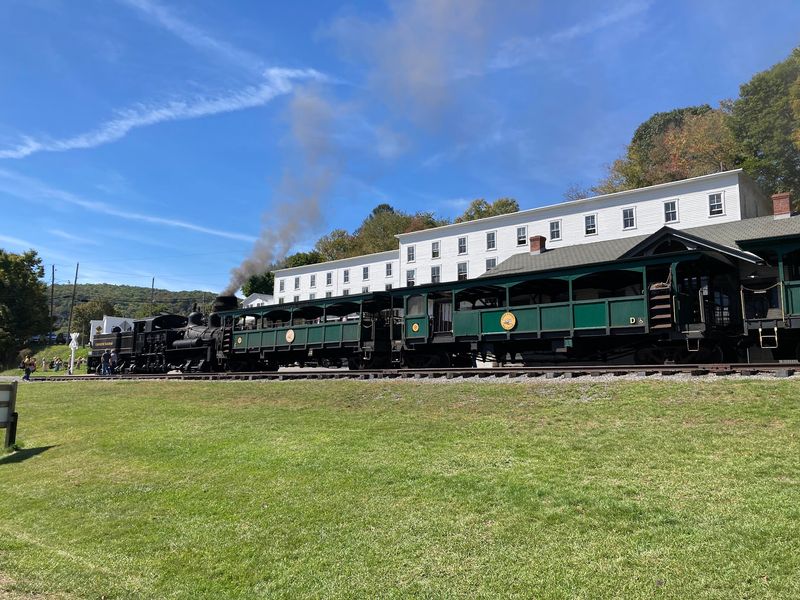
Not everyone has four or five hours for the full mountain excursion. The Whittaker Station trip offers a shorter option that still delivers plenty of atmosphere.
It runs as a round trip of about two hours.
The train stops at a recreated 1940s logging camp. Historic equipment sits on display, and the setting gives visitors a tangible sense of how loggers lived and worked in this rugged landscape.
Green meadows surround the station, which feels almost surreally peaceful.
This excursion works well for families with younger children or anyone who wants to test the waters before committing to the longer Bald Knob journey. The ride itself is still scenic and the locomotive experience is identical.
First-time visitors often find this shorter trip a smart starting point. It covers the essentials without overwhelming the schedule.
The logging camp display adds real educational value, and the meadow setting at Whittaker makes for some of the better photographs of the whole trip.
Worth every minute of the two hours.
Bald Knob And The View That Earns Its Name
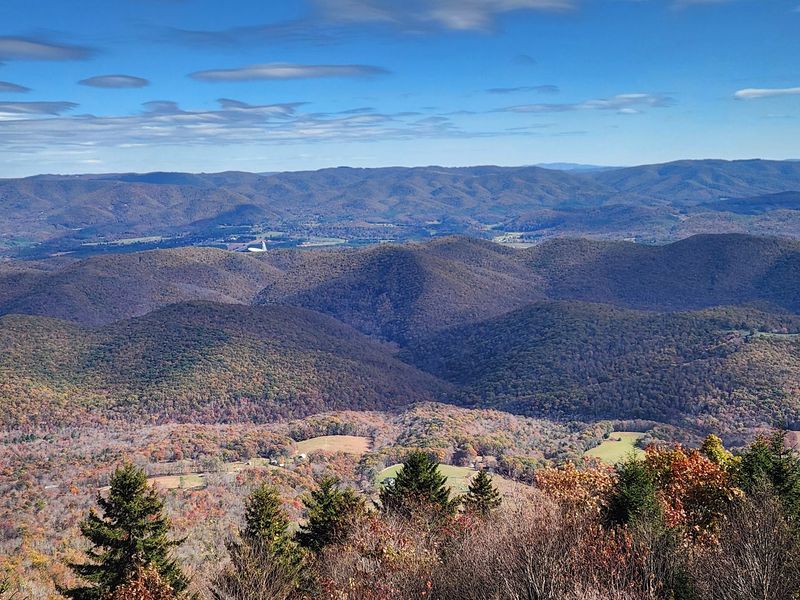
Bald Knob sits at 4,842 feet. That makes it the third-highest point in all of West Virginia, and the destination of the park’s most ambitious excursion.
The round trip runs roughly four and a half to five hours.
From the summit on a clear day, the Greenbrier Valley spreads out below in every direction. Views reach into neighboring Virginia.
The scale of it is hard to prepare for. It feels genuinely earned after the long climb up.
Fall is the most popular season for this trip, and the reason is obvious. The mountainsides shift into deep reds, oranges, and golds.
The contrast between the sky, the ridgelines, and the foliage creates something that photographs struggle to capture fully.
The summit is open and exposed, so temperatures run cooler than in the valley. Layers are a smart idea regardless of the season.
The ride back down the mountain offers its own set of views.
The whole excursion feels less like a day trip and more like a proper mountain adventure.
Open-Air Cars And The Soot That Comes With Them
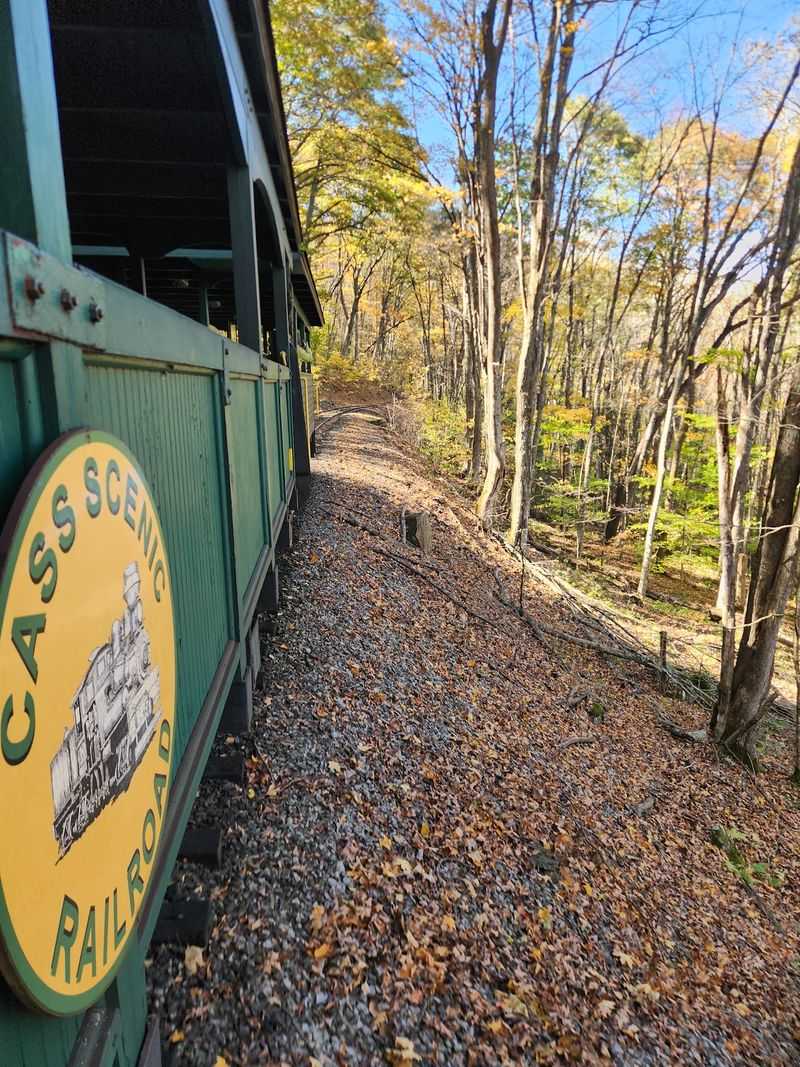
Riding in an open-air car converted from a logging flatcar is not glamorous. The seats are wooden benches.
The roof is there, but the sides are open. Wind, smoke, and the occasional fleck of soot are part of the package.
That openness is also exactly what makes the experience so vivid. Nothing sits between the passenger and the mountain air.
Every sound, smell, and view arrives unfiltered. The steam whistle does not just echo nearby.
It rolls right through the car.
Practical preparation makes a real difference. A cushion helps on the long Bald Knob trip.
Layers are smart because the temperature drops at elevation. Clothes that can handle a bit of soot are the sensible choice.
Earplugs are worth considering, especially for children sensitive to loud sounds.
Sitting farther back in the train means less smoke exposure. Sitting up front means a better view of the locomotive doing its work.
Both positions have their own appeal.
Most riders find the trade-off worth thinking about before they board.
A Living Museum Disguised As A Town
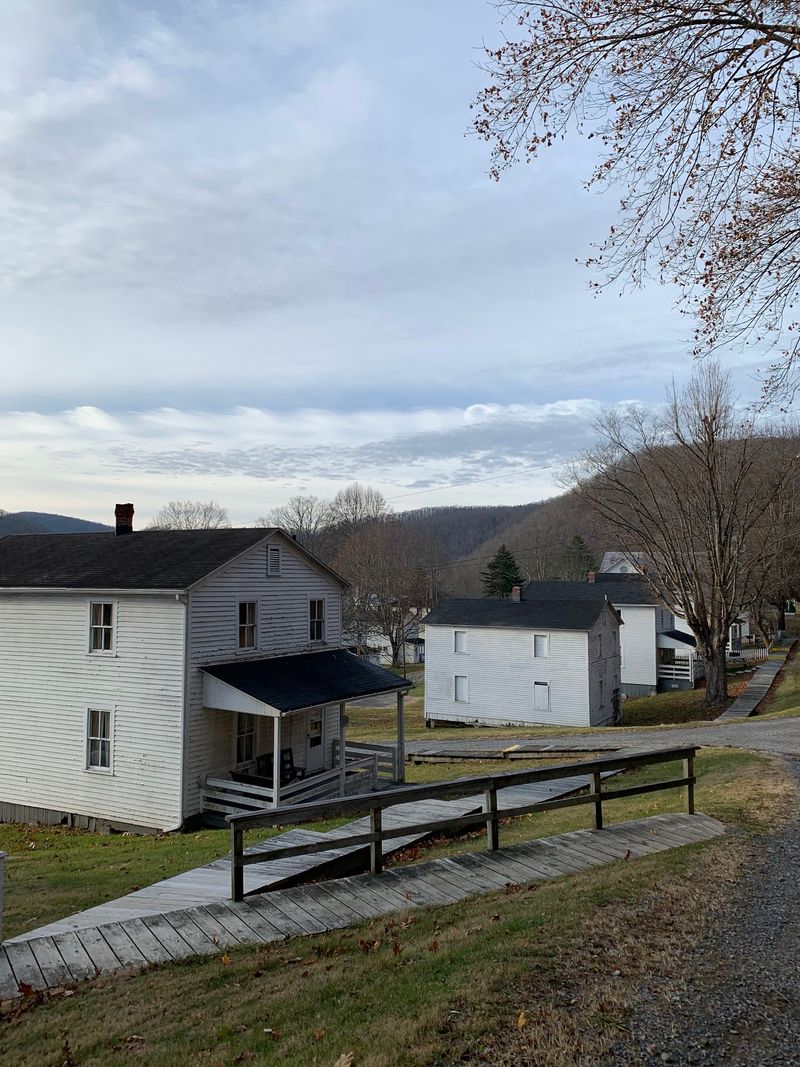
The town of Cass itself functions as a living exhibit. Its structures remain largely unchanged since 1901.
Walking the main street feels less like visiting a park and more like stepping into a film set that nobody bothered to take down.
The historic Company Store now sells souvenirs and local goods. It once stocked everything a logging family could need, from tools to food to clothing.
The building still carries that same practical, no-nonsense energy.
The Cass Historical Theater and Historical Museum offers a deeper look at the railroad and the community it supported. The museum is compact but dense with photographs, artifacts, and detailed descriptions.
Visitors who spend real time inside leave with a much fuller picture of what this place once was.
The restored company houses are available as overnight cottages, which turns a day trip into a proper stay. Even for those just passing through, the town rewards slow exploration.
Every building has a story, and the whole place tells it without needing a single tour guide.
The Greenbrier River Trail Right At The Doorstep
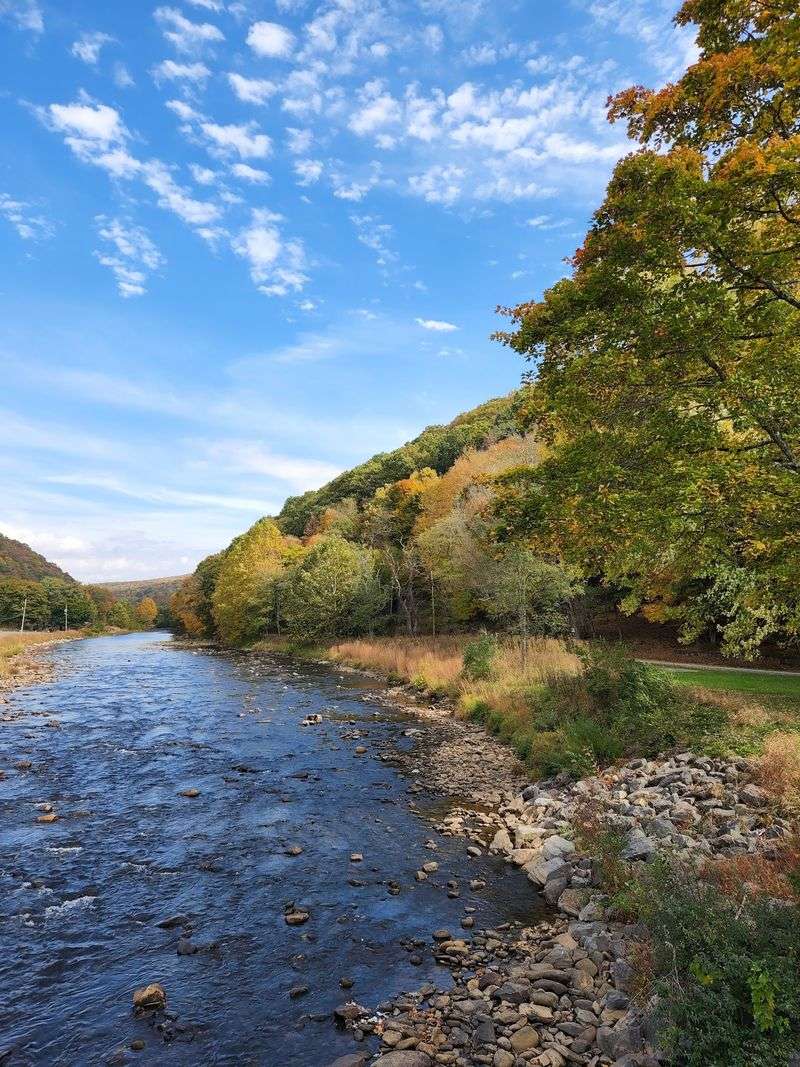
The train is the headline act, but the surrounding landscape offers its own set of reasons to stay longer. The Greenbrier River Trail begins right at Cass and runs for miles along the river on a converted rail bed.
Hikers and cyclists both use the trail regularly. The surface is relatively smooth and the grade stays gentle, which makes it accessible for most fitness levels.
The river runs alongside much of the route, adding both scenery and sound.
Kayak rentals are available for those who prefer to be on the water rather than beside it. The Greenbrier River also offers good fishing, with smallmouth bass being a common target for anglers.
The water is clear and the setting is genuinely beautiful.
Wildlife sightings are common in this part of West Virginia. Deer appear frequently.
River otters have been spotted along the banks. Black bears roam the wider forest.
Hawks and ospreys circle overhead with some regularity.
The outdoor options here extend the visit well beyond the train ride itself.
Spruce Timber And The Wright Brothers Connection
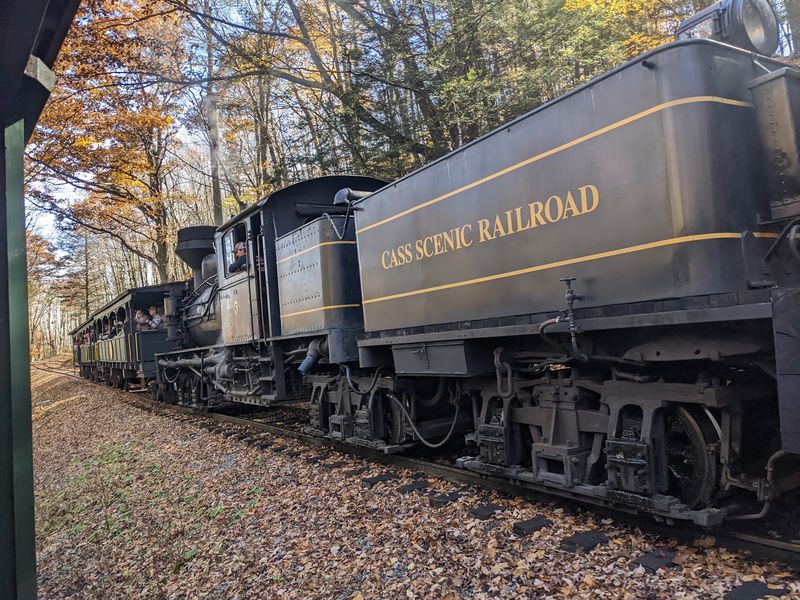
The logging operation at Cass harvested spruce and hemlock from the surrounding mountains. Spruce from these hills was prized for its strength-to-weight ratio.
That specific quality caught the attention of some very notable customers.
The Wright brothers used West Virginia spruce in the construction of their early aircraft. The timber offered exactly what early aviation needed: light weight combined with structural reliability.
It is a connection that most visitors do not expect to encounter at a mountain railroad park.
This detail adds a layer to the story that goes well beyond local history. The logs hauled down these tracks on geared locomotives contributed to one of the most significant technological leaps in human history.
That is not a small thing for a remote Appalachian lumber operation.
The museum in Cass touches on this history among its many exhibits. It is the kind of fact that reframes the whole experience.
What looks like a preserved logging railroad turns out to be a thread in a much larger story about American industry and ingenuity.
Seasonal Rides That Change The Whole Experience
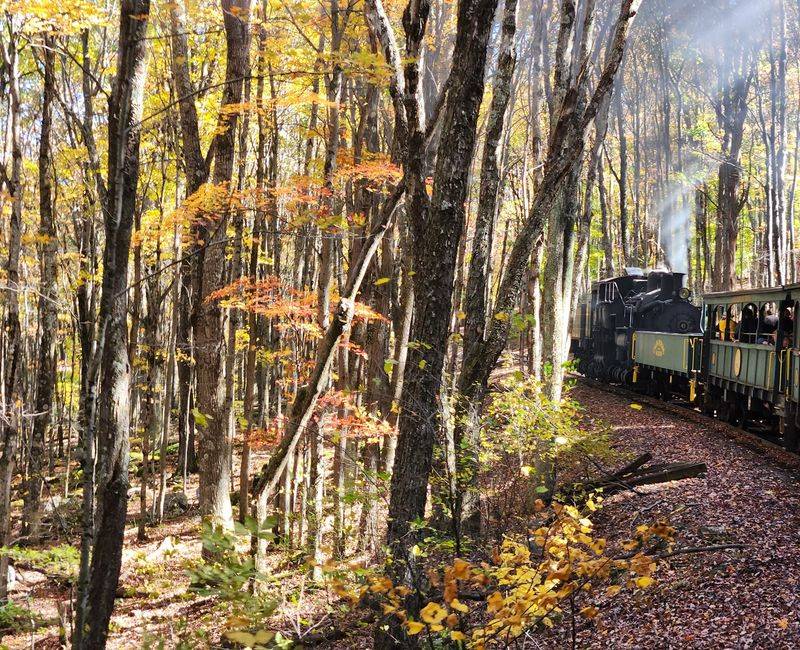
The park runs different excursions across the seasons, and each one offers a genuinely different experience. Fall is the most popular, for obvious reasons.
The foliage along the mountain grades turns spectacular, and the Bald Knob trip becomes especially dramatic.
Winter brings a Christmas train that has built a loyal following. The cars are warmed for cold-weather rides.
A meal is typically included on certain excursions, giving the longer trips a more complete feel. Snow on the mountain landscape adds a quiet, almost cinematic quality to the journey.
Spring and summer offer lush green scenery and cooler mountain temperatures that feel refreshing after the heat of lower elevations. The Greenbrier Express runs alongside the river during warmer months, offering a gentler alternative to the steep Bald Knob climb.
Each season shifts the mood of the place noticeably. Regulars often return multiple times a year specifically to experience those differences.
Planning around a preferred season is worth the effort.
Reservations are strongly recommended regardless of when the visit falls.
Overnight Stays In The Old Company Houses
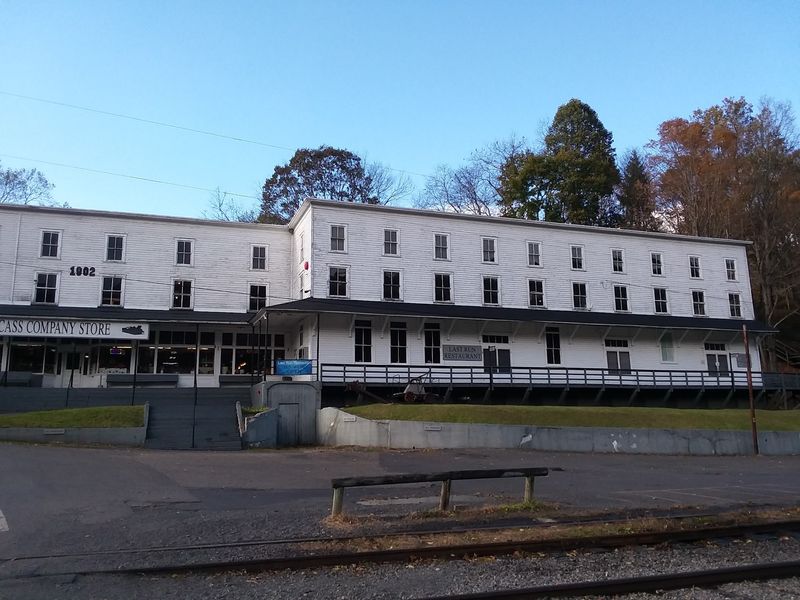
A day trip to Cass is satisfying. An overnight stay turns it into something else entirely.
The restored company houses are available as vacation cottages, and sleeping in one of these historic structures is a genuinely unusual experience.
The houses date back to the original company town. They have been updated enough for comfort but retain their historic character.
Multi-bedroom layouts make them practical for families or small groups. The setting, surrounded by mountains with no cell service and minimal light pollution, adds to the feeling of real disconnection.
The lack of phone signal is worth noting before arrival. Downloading offline maps and entertainment ahead of time is a practical move.
Some visitors find the forced quiet to be one of the best parts of the stay.
Shays Restaurant and the Company Store handle meals and supplies without requiring a drive out of town. For anyone who has ever wanted to spend a night in a living piece of American history, this is a rare opportunity.
Planning Your Visit Without The Surprises
A few practical details make the difference between a smooth trip and a frustrating one. Cell service is essentially nonexistent in and around Cass.
That is not a complaint from visitors so much as a consistent observation. Plan accordingly before leaving home.
Reservations are highly recommended. The park books up regularly, especially during fall foliage season and holiday excursions.
Showing up without a ticket and hoping for the best is a risk that does not always pay off.
Comfortable, layered clothing is the right call for any season. The open-air cars expose passengers to whatever the mountain weather decides to do.
A cushion for the wooden bench seats makes a real difference on the longer Bald Knob excursion. Closed-toe shoes are practical for boarding and disembarking.
Parking at the park is free and plentiful. The gift shop, museum, restaurant, and Company Store are all within easy walking distance of the train platform.
Arriving with some extra time to explore before boarding makes the whole day feel more complete and unhurried.