
We Found The Perfect Little Connecticut Waterfront Spot For Laid-Back Beach Views

A quarry, a fish factory, and a forgotten shoreline all collided to create one of the dreamiest beach days on the Connecticut coast.
Soft white sand meets water so calm it feels made for slow mornings and long afternoons. The kind of laid-back beach view that turns a quick visit into an all-day stay.
Trains rumble by close enough to feel, while a century-old stone pavilion holds its own quiet drama nearby, its walls stacked with local stone and decades of stories.
Trails twist through salt marsh where herons and ospreys steal the show, and quiet coves keep surprising those who wander further.
Connecticut has more of this waiting than most people realize, and once you catch a glimpse, planning the trip becomes impossible to resist.
A Shoreline With A Surprisingly Industrial Past
Before the soft sand and salt breezes, this land had a much grittier story to tell. Rocky Neck State Park sits on property that once functioned as a stone quarry and a dairy farm back in the 1800s.
By the early 1900s, a fish mill and fertilizer factory had taken over the site. The smell from those operations was reportedly strong enough to prompt public complaints from surrounding communities.
After the factory went bankrupt in the 1920s, a group of forward-thinking conservationists stepped in and purchased the land. Their goal was straightforward: preserve it for the public.
Connecticut officially acquired the property in 1931, and the park was born.
That industrial-to-natural transformation is part of what makes visiting here feel meaningful. The land carries history in its bedrock.
Knowing what stood here before makes the peaceful shoreline views feel even more earned.
The Pavilion That Depression-Era Workers Built By Hand
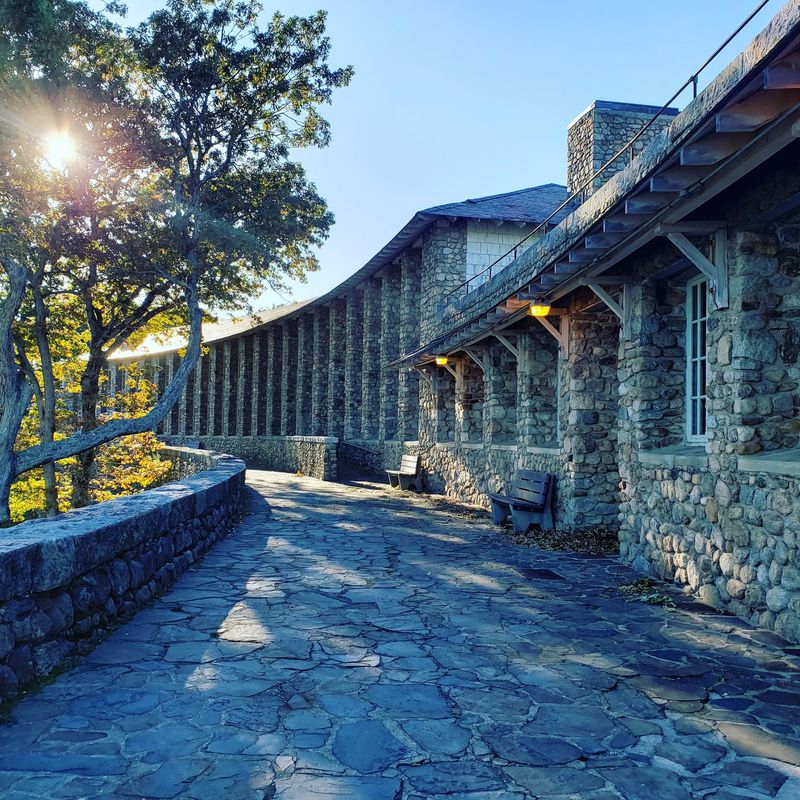
Few park buildings in New England carry the kind of weight that the Ellie Mitchell Pavilion does. Built between 1934 and 1936, it stands as one of the largest Depression-era structures in Connecticut.
Workers from federal relief programs, including the Works Progress Administration and the Civilian Conservation Corps, constructed it using native materials. Local fieldstone and quarried rock form its walls.
Trees cut from various state parks and forests became the interior support pillars.
The result is a structure that feels rooted in the landscape rather than placed on top of it. Stone fireplaces anchor the interior, and the pavilion offers a sweeping vantage point overlooking Long Island Sound.
Visitors who pass by without stopping often double back once they realize how impressive it looks up close. Reviews from park visitors frequently mention that the pavilion appears much larger in person than expected.
It is a genuine piece of living history worth exploring slowly.
The Beach That Keeps People Coming Back Every Summer

Soft, stone-free white sand and a gently sloping shoreline make this beach the kind of place people return to year after year. The crescent shape of the beach invites long, unhurried walks along the water’s edge.
Long Island Sound keeps the waves subtle and manageable, making it ideal for families with younger children. The shallow end near the tidal river allows kids to wade out surprisingly far without the water getting deep.
Early mornings are especially peaceful, with the beach nearly empty and the light hitting the water in that golden way that makes everything look better. As the day moves on, the energy picks up with families, swimmers, and day-trippers filling the sand.
The beach is regularly maintained, and the sand stays impressively clean throughout the season. An ice cream truck tends to appear around midday in summer, which is always a welcome sight.
This stretch of Connecticut coastline earns its reputation without trying too hard.
The park is located at 244 West Main Street, Niantic, CT 06357, just off Interstate 95, which makes it easy to reach from most parts of Connecticut and neighboring states.
Trails That Go Well Beyond The Sand
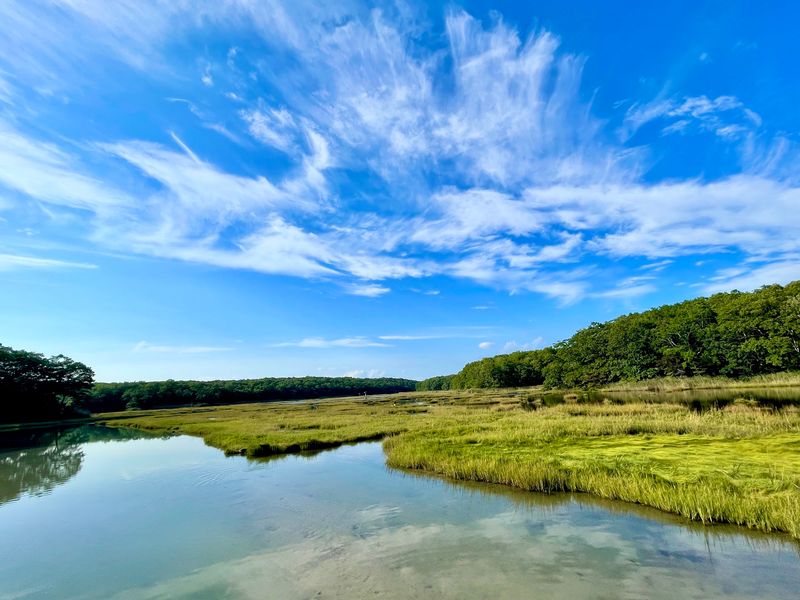
The beach is just the beginning. Rocky Neck State Park offers around five miles of hiking trails that cut through a surprisingly diverse range of ecosystems.
Coastal thickets, salt marshes, and wooded stretches all appear along the trail network. The Rocky Neck Loop, stretching about 2.5 miles, is a popular choice for visitors looking for an easy-to-moderate outing with plenty of scenic payoff.
Along the way, curious hikers can discover Baker’s Cave and a spot called Tony’s Nose. Remnants of an old shipyard graveyard also appear on certain routes, adding an unexpected historical dimension to the walk.
The trails are well-marked and accessible for most fitness levels, making them a solid option for anyone who wants to explore beyond the shoreline. Birdwatchers tend to linger on the paths near the salt marsh, where wildlife sightings are frequent.
Poison ivy does grow in certain off-trail areas, so staying on marked paths is genuinely worth the reminder.
Fishing And Crabbing In A Tidal Wonderland
The water here does not just look good, it also produces. Fishing is a popular activity at Rocky Neck State Park, with opportunities available across different seasons and designated areas throughout the park.
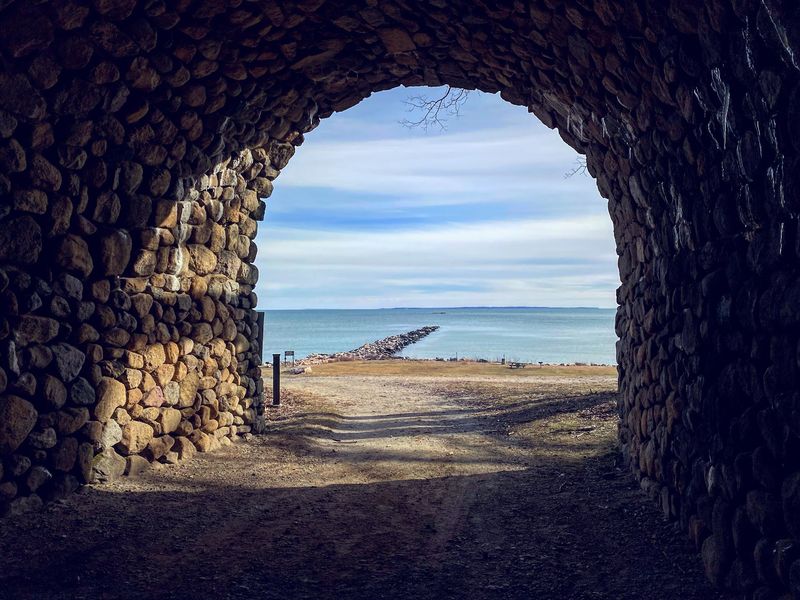
The jetty on the right side of the beach is a go-to spot for anglers. Common catches include striped bass, mackerel, flounder, bluefish, tautog, and scup.
The tidal Four Mile River and Bride Brook estuary create a rich marine environment that supports a wide variety of fish species.
Crabbing is permitted in specific areas within the salt marsh, and the low-tide zone near the river side of the beach is where kids tend to find hermit crabs, snails, and small critters tucked into the shallows.
During the off-season, the entire beach opens up for fishing, giving anglers much more room to spread out. The park’s varied water environments make it appealing for both casual crabbers and more serious fishing enthusiasts looking for a productive Connecticut shoreline spot.
A Birdwatcher’s Coastal Playground
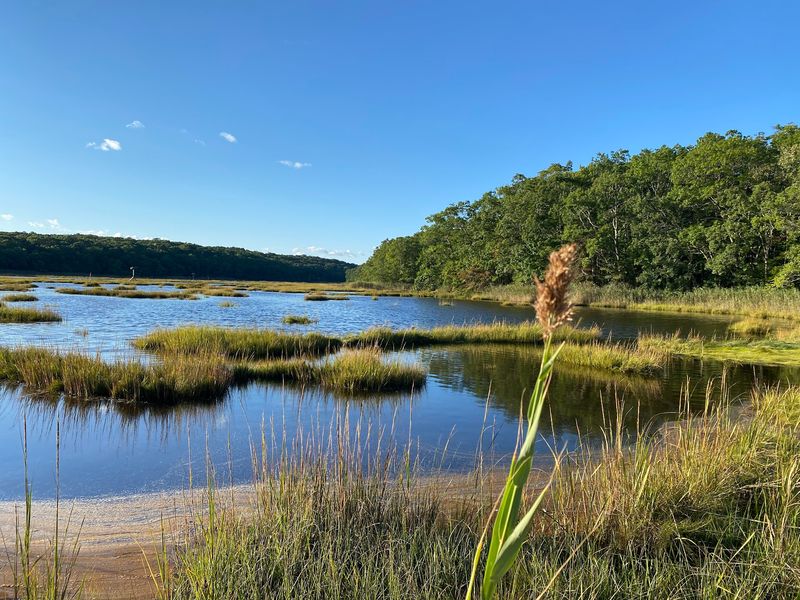
The salt marsh at Rocky Neck is not just scenery, it is a functioning ecosystem that draws an impressive variety of bird species throughout the year. Osprey are regular early summer visitors, often spotted hovering above the water before diving for fish.
Autumn brings a different cast of characters. Graceful herons, cranes, and mute swans move through the cattails and rose mallow that line the marsh edges.
The changing light of fall makes birdwatching here feel almost theatrical.
The Bride Brook estuary adds another layer of ecological richness, supporting what is reportedly Connecticut’s largest alewife population. During high spring tides, these herring swim upstream to their inland spawning grounds, creating a natural spectacle worth timing a visit around.
Birdwatching platforms within the park give enthusiasts a stable and elevated vantage point for observation. Binoculars are strongly recommended.
Campers who stay overnight frequently report seeing egrets, cormorants, grebes, and ducks during their morning walks through the marsh.
Ancient Rock, Glacial Scars, And Geological Stories
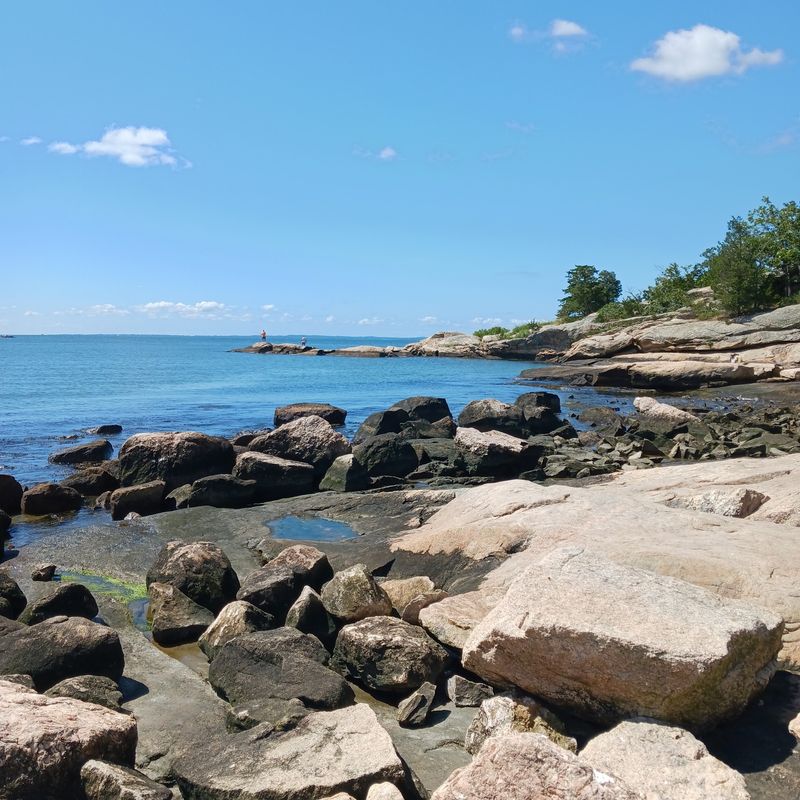
The ground beneath Rocky Neck State Park has been shaped by forces far older than any building or trail. The park’s underlying bedrock consists of granitic gneiss, specifically the Potter Hill Granite Gneiss, which dates back to the Proterozoic era.
This high-grade metamorphic rock displays a distinct banded texture formed by segregated light and dark minerals. Outcrops near the Ellie Mitchell Pavilion offer some of the clearest views of this ancient material.
Glacial activity left its mark across the landscape as well. Steep walls, enormous boulders, potholes, and areas of glacial polishing are visible throughout the park.
These features tell the story of massive ice sheets that once covered this part of the northeastern United States.
Loose sediments once protected Connecticut’s coastline from erosion, but their removal re-exposed the bedrock over time, shaping the topography visitors see today. The park sits within the larger geological formation known as the Lyme Dome.
It is the kind of detail that makes a beach walk feel like a geology lesson.
Camping Close Enough To Hear The Water

Pitching a tent within walking distance of the beach is one of those simple pleasures that never gets old. Rocky Neck State Park offers 160 campsites spread across five loops named after local bird species: Heron, Egret, Crane, Osprey, and Seagull.
Sites are divided between wooded areas and more open grassy terrain, giving campers options depending on their preference for shade and privacy. Each loop has its own restroom and shower facilities, along with access to potable water.
Campers appreciate pitching on actual soil rather than gravel pads, a small but meaningful detail.
The campground sits close enough to both the beach and the salt marsh trails to make early morning walks easy and rewarding. Fire pits are standard at each site, and the general atmosphere after dark tends to be quiet and unhurried.
Bringing a cart to haul gear from the parking area to the campsite is a practical tip worth following. The walk is manageable, but having wheels makes it noticeably easier, especially for longer stays.
Two Wheels, One Scenic Salt Marsh Loop

Biking at Rocky Neck State Park is one of those activities that sounds casual but ends up being genuinely memorable. Paved loops run throughout the campground, and a particularly scenic path connects the campground directly to the beach by winding through the salt marsh.
The route is flat and easy, making it accessible for riders of all ages and fitness levels. Egrets hunting in the shallow marsh water are a common sight along this stretch, and the views across the wetland are surprisingly expansive for such a compact park.
Bikes are not permitted directly on the beach, but the dedicated paths provide more than enough distance to make a ride worthwhile. The combination of coastal scenery, wildlife, and the gentle rhythm of pedaling through open marshland creates a relaxed but engaging experience.
Families with younger riders tend to find this loop particularly well-suited to their pace. The flat terrain removes the stress of hills, and the natural surroundings keep the ride interesting from start to finish.
It is a low-effort, high-reward way to explore the park.
Trains, Tracks, And A Bridge Built In 1934
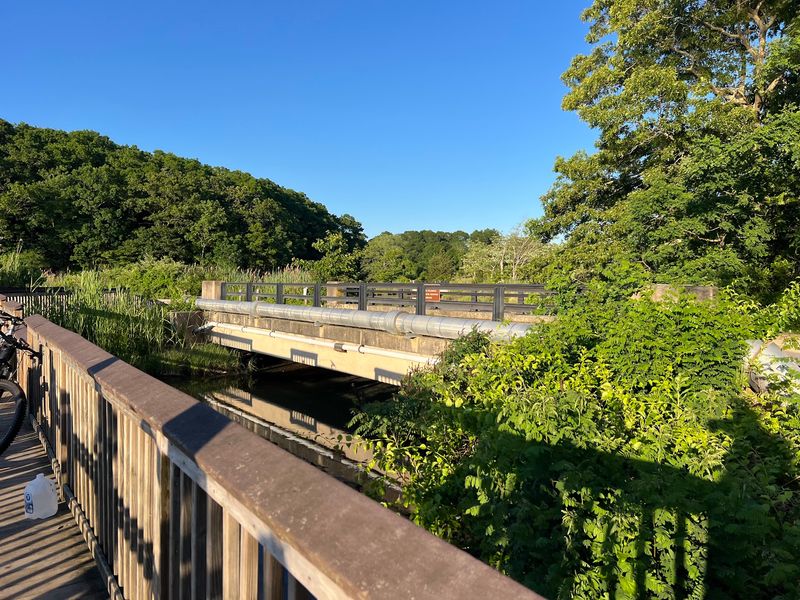
Not many beaches come with a built-in train show, but Rocky Neck State Park delivers exactly that. An active Amtrak route runs directly behind the beach, and the sight of a train rumbling past while waves lap the shore is genuinely one of the park’s most distinctive features.
Kids especially tend to light up when a train appears, and even adults who have visited many times admit it never quite loses its novelty. The contrast between the quiet beach atmosphere and the sudden rush of a passing train creates an oddly satisfying moment.
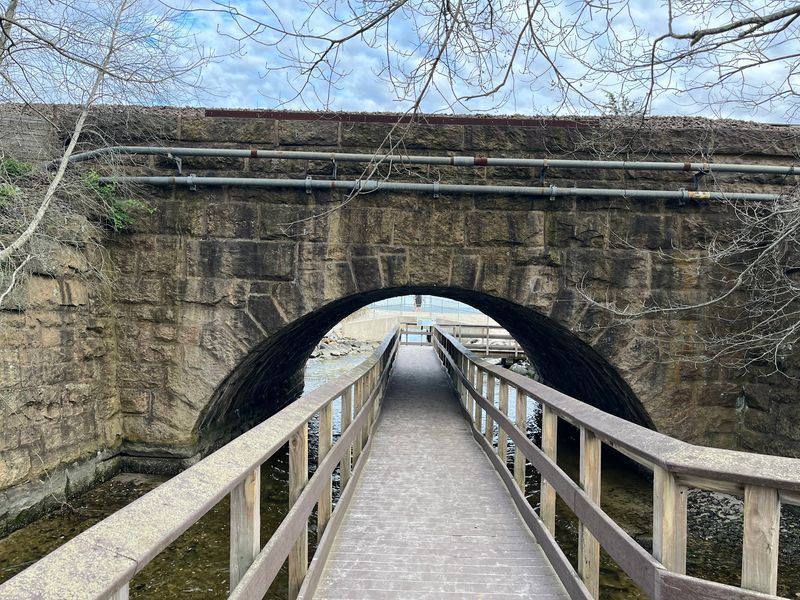
A historic railroad bridge, constructed in 1851, adds architectural interest to the landscape. A separate footbridge built in 1934 provides safe passage over the tracks, connecting different sections of the park and making it easy to move between the beach, pavilion, and parking areas.
This quirky layer of transportation history gives Rocky Neck a personality that sets it apart from other Connecticut shoreline parks. It is the kind of unexpected detail that visitors mention long after the visit is over.
Every Season Brings Something Worth Showing Up For

Summer gets most of the attention, but Rocky Neck State Park earns its keep across all four seasons. The park stays open daily from 8:00 AM to sunset year-round, which means there is always a reason to make the drive.
Fall transforms the trail network into a quieter, more contemplative experience. Foliage changes color along the wooded paths, and the marsh takes on a golden-brown palette that feels completely different from the green-and-blue palette of summer.
Birdwatching also peaks during migration seasons, making autumn visits particularly rewarding for wildlife enthusiasts.
Winter visits are sparse but peaceful. The beach stretches out empty and wide, and the pavilion stands against a grey sky in a way that feels almost cinematic.
The off-season also opens the entire beach and jetty for fishing, which draws a dedicated crowd even in cold weather.
Spring brings the alewife run up Bride Brook, a natural event that draws birds and curious onlookers alike. Each season layers a new mood over the same familiar landscape.
Practical Details For Planning A Visit

Getting to Rocky Neck State Park is straightforward.
Day visitors from outside Connecticut typically pay a parking fee during peak season, which runs from Memorial Day through Labor Day. Ample parking is available inside the park.
Facilities include restrooms, seasonal showers near the beach, and a concession stand that operates during summer months.
Picnic areas with tables and grills are scattered throughout the grounds, offering shaded spots away from the main beach crowd. Dogs on leashes are welcome on hiking trails and in picnic areas north of the train tracks, though they are not permitted on the beach itself or within the campground.
Arriving early on summer weekends is a practical move. The park fills up quickly once the weather turns warm.
Visiting on a weekday or arriving shortly after the gates open tends to reward visitors with more space and a noticeably calmer atmosphere.