
Buckle Up For This Nevada Scenic Route You Will Never Forget
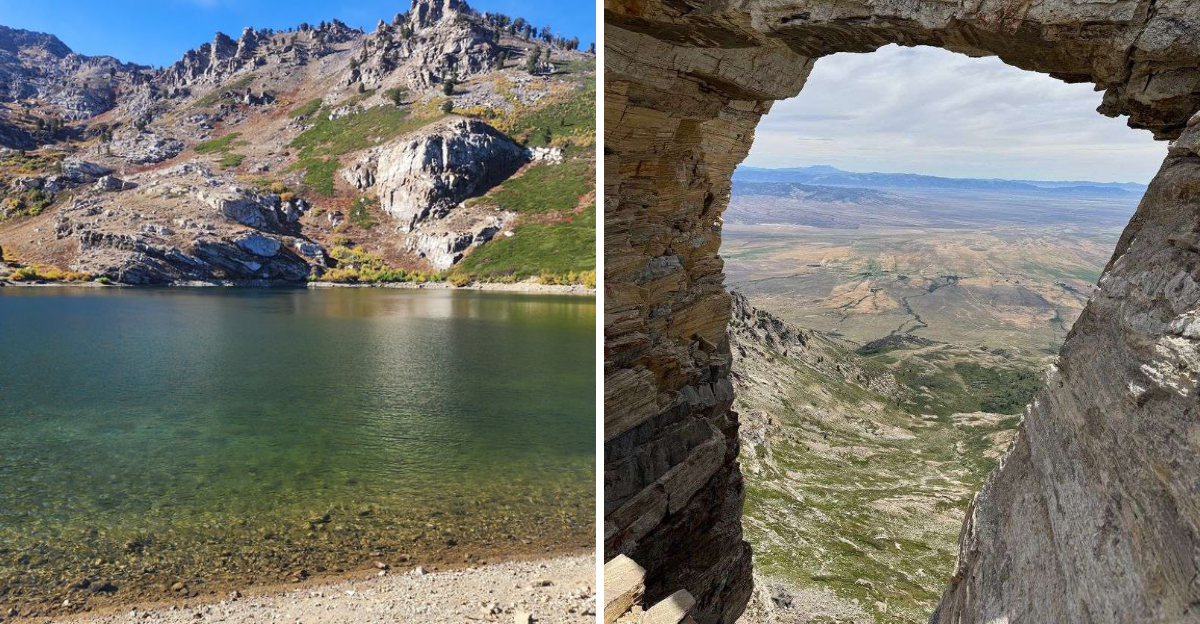
Bold and unpredictable, this Nevada drive rewrites what a road trip can feel like. Golden aspens flash past the window while granite peaks climb straight into the clouds.
One stretch of pavement carries you from grassy foothills into an alpine world carved by ancient ice, all in a single afternoon.
Quiet fishing coves, a secret arch, and a summit view that stops conversation cold are all waiting along this Nevada byway.
A jagged rock spire pokes the sky like it has something to prove. Wildlife shows up when you least expect it, and the higher you climb, the wilder the scenery gets.
Plenty is still ahead once the road starts winding upward, and the best parts have not shown themselves yet.
Angel Creek Campground – Your Mountain Base Camp
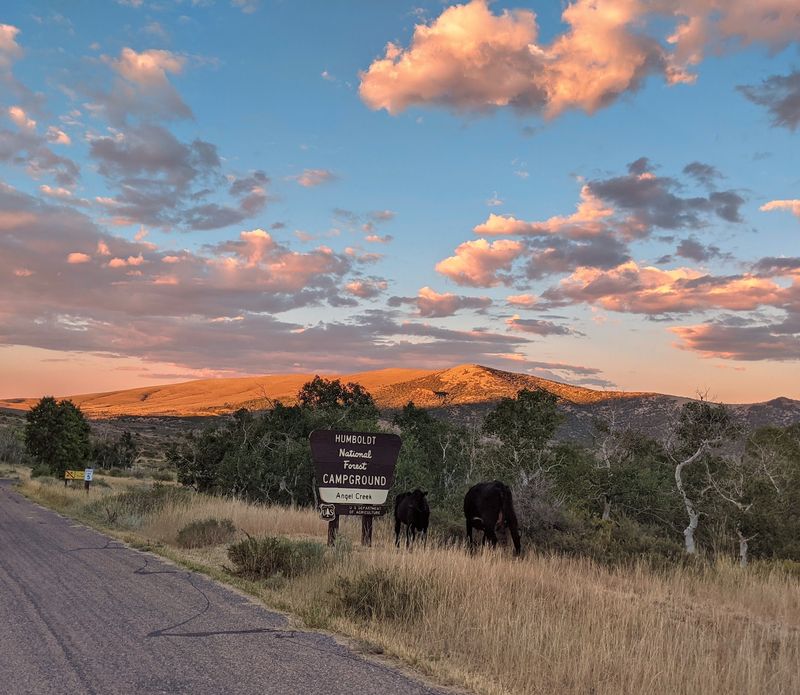
Picture pulling into a campsite where golden aspens shimmer overhead and the air smells like pine and cool mountain wind. Angel Creek Campground sits roughly eight miles southwest of Wells, Nevada, at an elevation of about 6,200 feet.
The Humboldt-Toiyabe National Forest manages this inviting spot tucked into the grassy foothills of the East Humboldt Range.
The campground welcomes tent campers, RV travelers, and group camping parties alike. Vault toilets, potable water, picnic tables, and fire rings make the setup comfortable without feeling over-developed.
It is the kind of place where you actually unplug and breathe.
Fall is when Angel Creek Campground truly earns its reputation. The mature aspens ignite in brilliant shades of gold and amber, turning the entire hillside into a living painting.
Photographers, hikers, and weekend warriors all show up for this annual display.
Beyond the scenery, the campground serves as the perfect launchpad for exploring the rest of the byway’s highlights. Angel Lake, Chimney Rock, and several challenging trails are all within easy reach.
Starting your adventure here means waking up already surrounded by the best of what Nevada’s mountain wilderness has to offer.
Trails And Wildlife Right Outside Your Tent
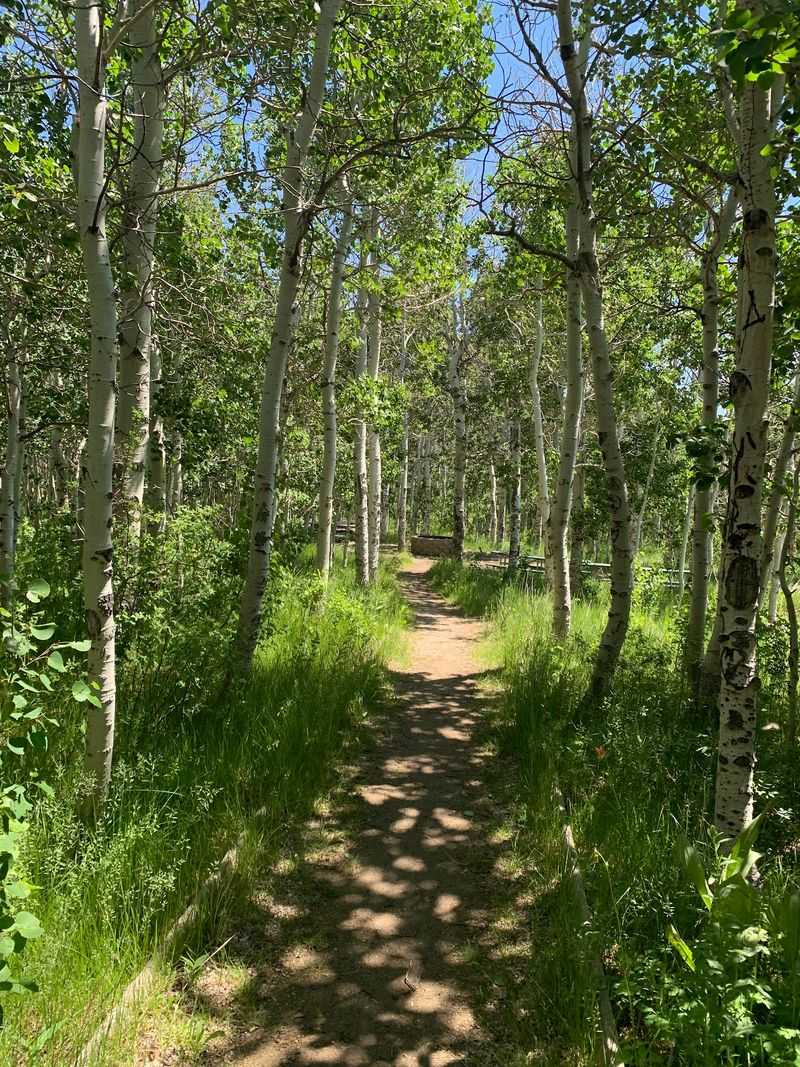
Wake up at Angel Creek Campground and wildlife greets you before breakfast. Mule deer frequently wander the meadows at dawn, moving quietly between the aspens and sage.
Birdwatchers spot raptors circling overhead most mornings, riding thermals above the canyon walls.
The trails that branch out from the campground cater to a range of fitness levels. Casual walkers enjoy flat creek-side paths where wildflowers carpet the ground in summer.
More ambitious hikers push upward toward ridgelines that open into sweeping panoramic views of the surrounding Nevada peaks.
Bighorn sheep occasionally appear on the rocky slopes above the campground. Spotting one feels like a genuine reward for getting up early and staying quiet.
This kind of wildlife encounter is hard to find in more heavily visited parks.
The creek itself adds a constant, soothing soundtrack to the experience. Anglers sometimes try their luck in the clear mountain water, though the main fishing action happens higher up at Angel Lake.
Still, sitting beside the creek with a cup of coffee while the mountains wake up around you is an experience that needs no improvement. Angel Creek Campground is not just a place to sleep; it is a destination in its own right.
Angel Lake – An Alpine Jewel Above The Desert
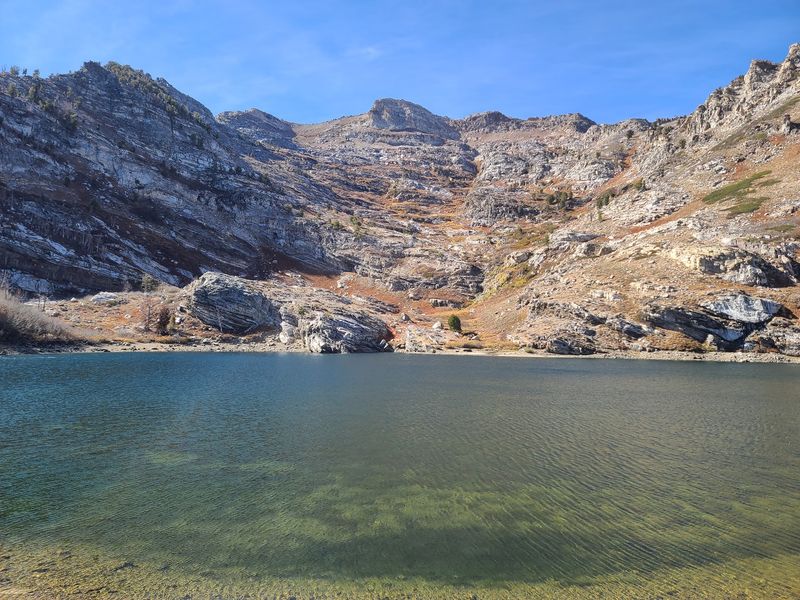
Few places in Nevada reward a short drive with such a dramatic payoff. Angel Lake sits at an elevation between roughly 8,378 and 8,400 feet, cradled in a steep granite cirque carved by ancient glaciers.
State Route 231, also called the Angel Lake Scenic Byway, delivers visitors directly to its eastern shore about 12 miles from Wells.
The lake itself is a glacial tarn, meaning it fills a bowl-shaped hollow that ice once occupied. The water is clear, cold, and remarkably blue on sunny days.
Steep cliffs rise sharply on three sides, creating a natural amphitheater that makes the lake feel both intimate and grand at the same time.
Fishing is a major draw here. The Nevada Department of Wildlife regularly stocks Angel Lake with rainbow, brook, and tiger trout, making it a reliable destination for anglers.
Kayaking and canoeing are also popular, and the brave ones even swim in the brisk water.
Trailheads at the lake’s edge lead into the broader wilderness of the East Humboldt Range. Paths climb toward Smith Lake and other hidden alpine destinations above.
The combination of easy access and breathtaking scenery makes Angel Lake one of the most rewarding stops along the entire scenic byway.
Fishing, Paddling, And Pure Mountain Calm
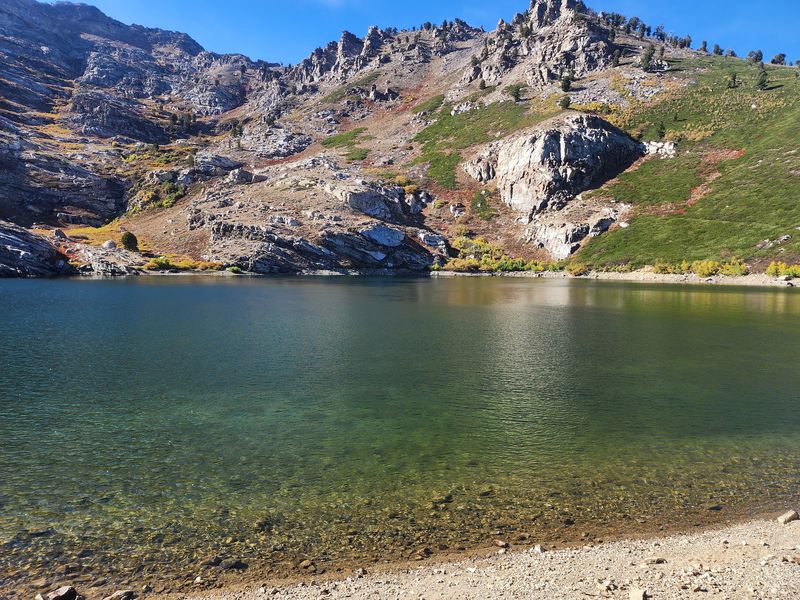
Quiet mornings at Angel Lake have a particular kind of magic. The water sits still, the cliffs reflect perfectly off the surface, and the only sounds are wind and the occasional splash of a rising trout.
This is exactly what draws people back to this high-elevation retreat year after year.
Fishing at Angel Lake is accessible even for beginners. The Nevada Department of Wildlife stocks the lake consistently, so anglers have a solid chance of success without needing expert skills or specialized gear.
Rainbow and brook trout are the most common catches, with tiger trout adding an exciting wild card to the mix.
Paddlers find the lake’s calm surface ideal for kayaks and canoes. The relatively small size of the lake makes it easy to explore every corner without covering huge distances.
Bring a waterproof bag and spend a few hours drifting near the base of those towering cliffs.
Swimming is possible during the warmer summer months, though the water stays cold even at peak season. The lake sits high enough that temperatures remain refreshing rather than warm.
For those who prefer staying dry, the shoreline offers excellent spots for picnicking and simply absorbing the scenery. Angel Lake delivers a complete mountain experience without requiring any advanced outdoor skills.
Chimney Rock – The Skyline Signature Of The East Humboldts
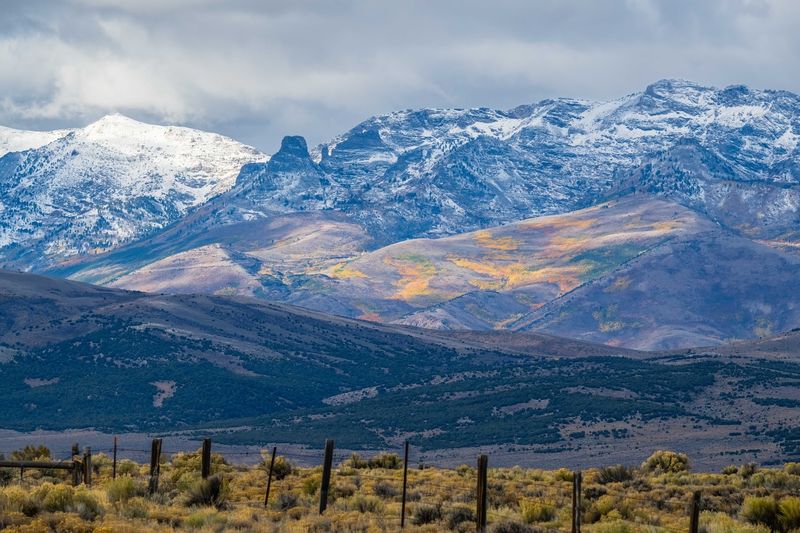
Bold, jagged, and impossible to ignore, Chimney Rock announces itself the moment it comes into view. Located near Angel Lake in Elko County, Nevada, this striking formation consists of a prominent cluster of rocky pinnacles that jut sharply above the surrounding ridgeline.
It is one of the most visually distinct landmarks in the entire East Humboldt Range.
Elevations cited for Chimney Rock vary slightly depending on the source, with figures ranging from approximately 9,783 feet to around 10,023 feet. Regardless of which measurement you trust, the scale is undeniably impressive.
The pinnacles rise dramatically from the mountain terrain, adding a jagged accent to an already rugged skyline.
Geologically, Chimney Rock represents the kind of erosion-resistant rock formation that survives long after softer surrounding material has worn away. Wind, ice, and time conspired over millennia to produce this distinctive shape.
Standing near the base and looking straight up gives a clear sense of how powerful those natural forces truly are.
Photographers target Chimney Rock during golden hour, when the low-angle light catches every crack and texture in the rock face. Hikers passing through the area on the way to higher destinations often pause here to take it all in.
As Nevada landmarks go, Chimney Rock earns its reputation with zero effort.
A Geological Story Written In Stone
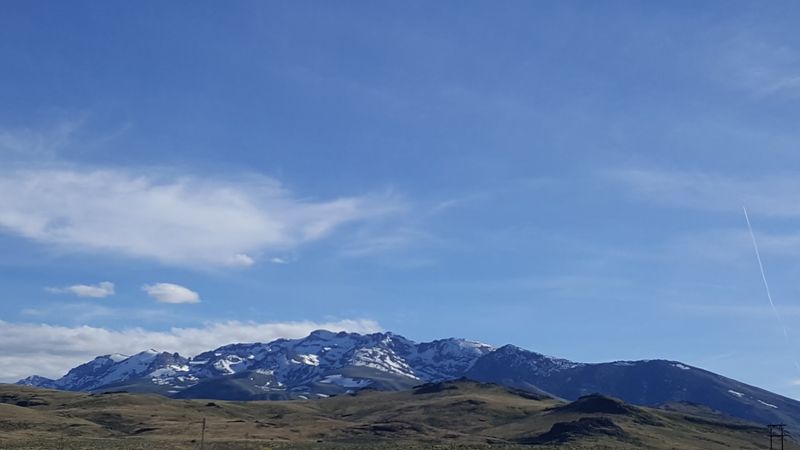
Every crack and ledge on Chimney Rock tells part of a much longer story. The forces that shaped this formation began long before humans arrived in Nevada, driven by glacial activity, freeze-thaw cycles, and the slow persistence of erosion over thousands of years.
What remains is a natural monument to geological patience.
The East Humboldt Range itself shows clear signs of ancient glaciation throughout. U-shaped valleys, moraines, and cirque lakes like Angel Lake all point to a time when ice covered much of this high terrain.
Chimney Rock fits into that broader story as a remnant of harder rock that simply outlasted its surroundings.
Scrambling near the base of the formation offers a hands-on way to appreciate the geology. Textures in the rock face vary from smooth and polished to rough and fractured, each section reflecting different stages of the erosion process.
It rewards close observation.
For visitors without a geology background, Chimney Rock still delivers on a purely visual level. The pinnacles create a dramatic silhouette against the Nevada sky that feels almost cinematic.
Whether you are drawn by science or simply by the spectacle, this formation is the kind of thing that makes the long drive up the mountain feel completely worthwhile.
Hole In The Mountain Peak – Nevada’s Most Surprising Summit
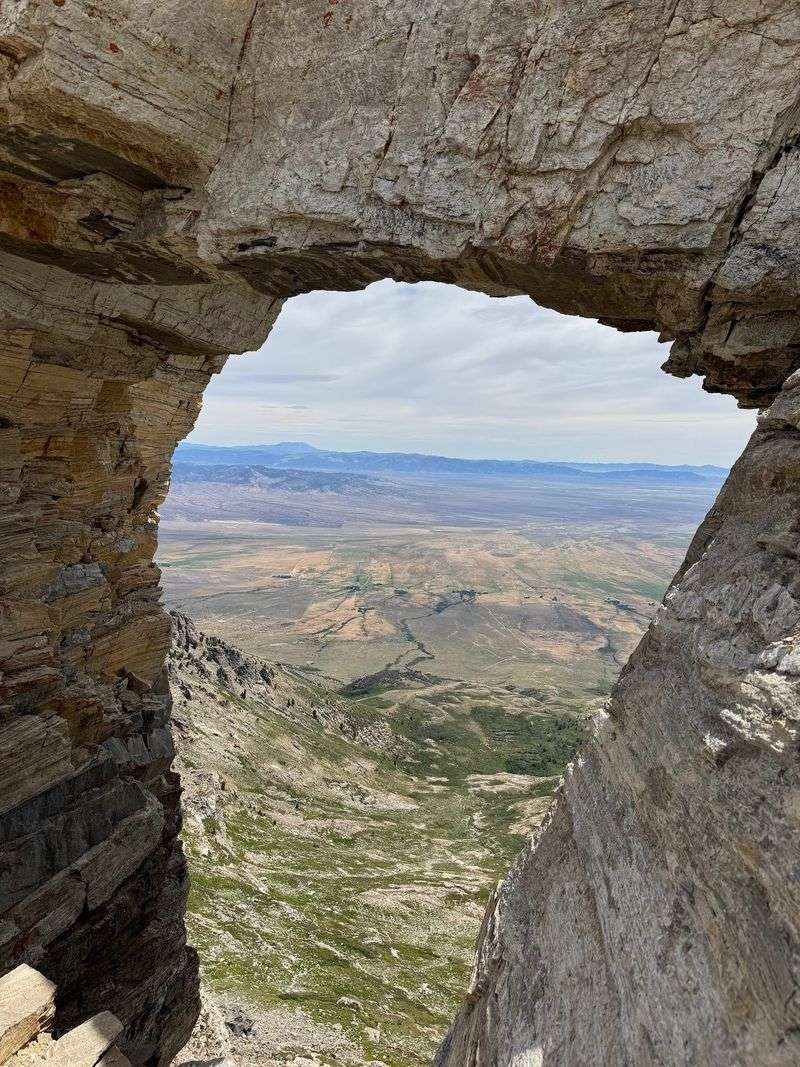
Nature punched a literal hole through a Nevada mountain and somehow made it look intentional. Hole in the Mountain Peak is the highest summit in the East Humboldt Range, reaching an elevation of roughly 11,306 to 11,311 feet.
It sits approximately 14 to 16 miles southwest of Wells, Nevada, and dominates the skyline for miles in every direction.
The peak’s most remarkable feature is a natural arch near the ridgeline, sometimes called “Lizzie’s Window” or simply “Hole in the Mountain.” This opening sits about one-third of a mile south of the main summit at an elevation of around 11,127 feet. On clear days, drivers on Interstate 80 and US 93 can spot this geological curiosity from the valley floor below.
Reaching the summit requires serious effort. The terrain is steep, rocky, and unforgiving in places.
Most routes involve a combination of sustained hiking and scrambling across exposed ridgelines. The reward at the top is a panoramic view that stretches across a vast swath of Nevada wilderness.
The arch itself adds a layer of wonder that sets this peak apart from other high-elevation destinations in the region. It is not just a mountain; it is a mountain with a window.
And that window frames one of the most dramatic views the Silver State has to offer.
The Challenge Of Reaching The Top
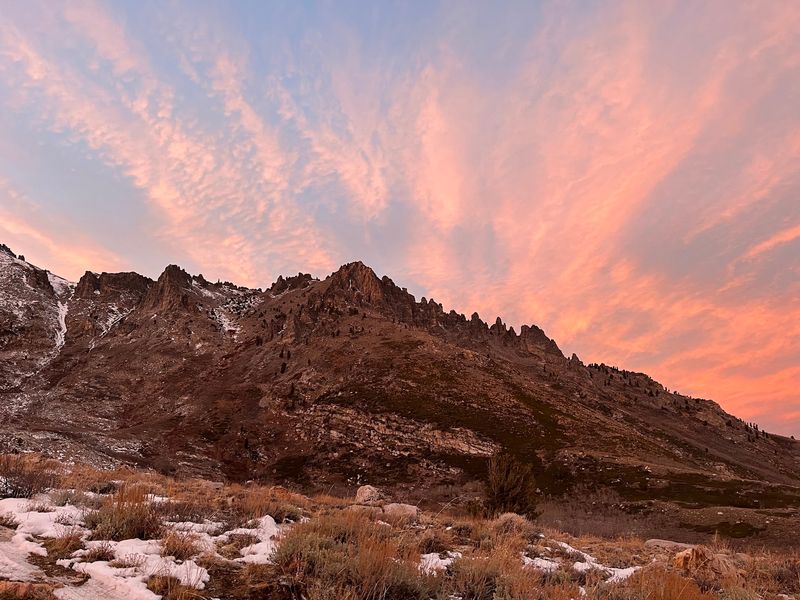
Ambitious climbers who take on Hole in the Mountain Peak earn every single foot of elevation gain. The ascent is not technical in the traditional mountaineering sense, but it demands strong legs, solid footing, and a willingness to scramble across loose and uneven terrain.
This is not a casual afternoon stroll.
Routes typically approach from the Angel Lake area, climbing steadily through the alpine zone before hitting the exposed upper ridgeline. The last push to the summit involves careful navigation across rocky terrain where the path is not always obvious.
Trekking poles and sturdy boots are strongly recommended.
Weather on the upper mountain changes fast. Clear skies at the trailhead can give way to afternoon clouds and gusty winds near the summit.
Reaching the top of Humboldt Peak on a clear Nevada morning, with nothing but open sky and rolling mountains in every direction, puts the whole scenic drive into perspective. Flexibility and awareness matter more than speed up here.
Standing on the summit of Hole in the Mountain Peak, with the natural arch visible just below and the Nevada desert spreading out in every direction, is a genuinely hard-to-describe experience. The scale of the landscape from that height reframes everything.
It is the kind of view that makes even the toughest sections of the climb feel like a fair trade.
Humboldt Peak – The Southern Anchor Of The Range
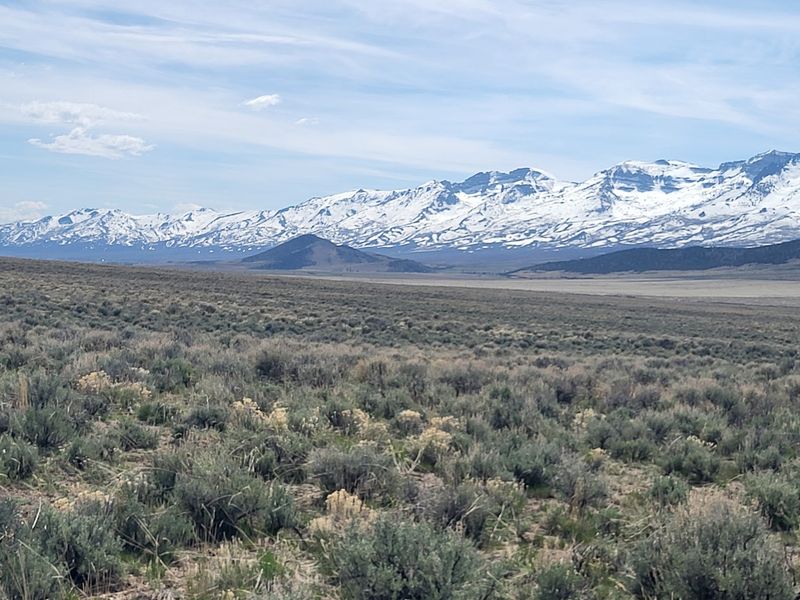
Commanding, broad-shouldered, and quietly impressive, Humboldt Peak marks the southern boundary of the East Humboldt Range in Elko County, Nevada. It rises to an elevation of 11,025 feet and holds the distinction of being the fourth highest peak in the entire range.
Sitting roughly 16 miles southwest of Wells, it presents a formidable presence on the landscape.
The most practical route to the summit typically starts above Steele Lake, following the ridge through a combination of hiking and scrambling. The terrain is demanding but manageable for experienced hikers who come prepared.
Loose rock near the upper sections requires careful foot placement and steady concentration.
Views from the top stretch across a wide panorama of Nevada’s high desert and mountain terrain. The contrast between the rocky alpine summit and the vast, open valleys below is striking.
On clear days, the visual range extends far beyond the immediate peaks of the East Humboldts.
Humboldt Peak does not attract the same attention as Hole in the Mountain Peak, partly because it lacks a dramatic geological feature like an arch. But that relative obscurity works in its favor.
Visitors who make the effort find a quieter, more solitary summit experience. The mountain rewards patience and persistence with some of the most honest wilderness views in all of Nevada.
Where Solitude Meets Sweeping Scenery
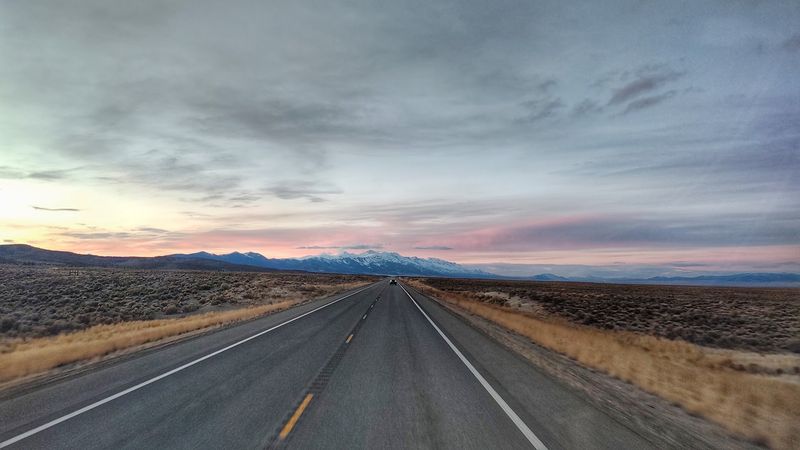
Solitude is not something you have to search hard for on Humboldt Peak. While more famous Nevada destinations fill up with visitors during peak season, this southern summit often sees only a handful of people on any given day.
The relative quiet makes the experience feel more personal and more rewarding.
The approach from Steele Lake takes hikers through varied terrain that shifts from grassy meadow to open ridge as elevation increases. Each zone offers its own character.
Lower sections feature wildflowers and the occasional glimpse of wildlife, while the upper ridge opens into a raw, wind-scoured environment that feels genuinely remote.
Wildlife sightings along the route are not unusual. Bighorn sheep and mountain goats inhabit the higher elevations of the East Humboldts, and patient hikers sometimes spot them moving across the rocky slopes above.
These encounters add an unpredictable element to the climb that no trail map can account for.
Reaching the top of Humboldt Peak on a clear Nevada morning, with nothing but open sky and rolling mountains in every direction, puts the whole Highway 232 experience into perspective. This route is not just a drive through pretty scenery.
It is a corridor into one of the most underappreciated mountain ranges in the American West, and Humboldt Peak is its quiet, confident finale.