
Summer Crowds Have Changed This South Carolina Beach Town For Good Say Locals
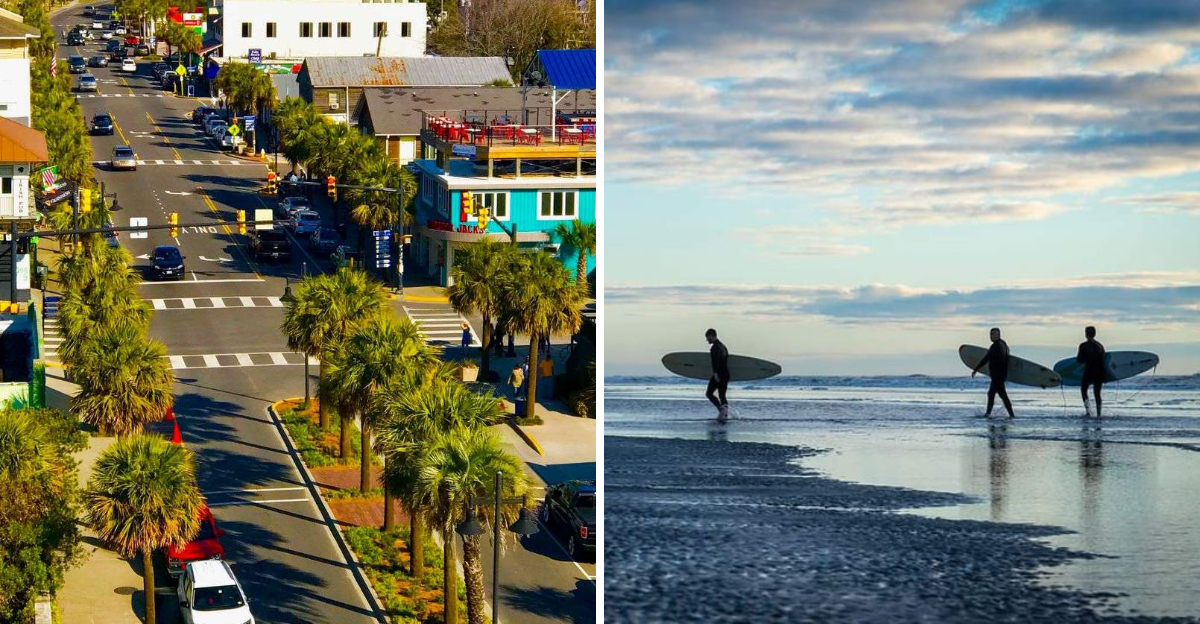
The parking line stretched past the bridge before sunrise even broke. That’s what summer looks like now on this stretch of South Carolina sand.
Somebody’s board is already riding a wave born from a storm that rearranged the coastline decades ago. Nearby, a weathered boat sits covered in strangers’ handwriting, holding stories nobody fully knows.
The island fought to keep its personality, banning chains and capping rentals before crowds like this felt normal. Now the debate never really stops, whether at the coffee counter or a packed city meeting.
South Carolina keeps sending more visitors this way each year, and the answer has been fierce, protective rules.
There’s a version of this place only early risers and stubborn locals truly know, worth chasing down yourself.
A Laid-Back Legacy That Refuses To Quit
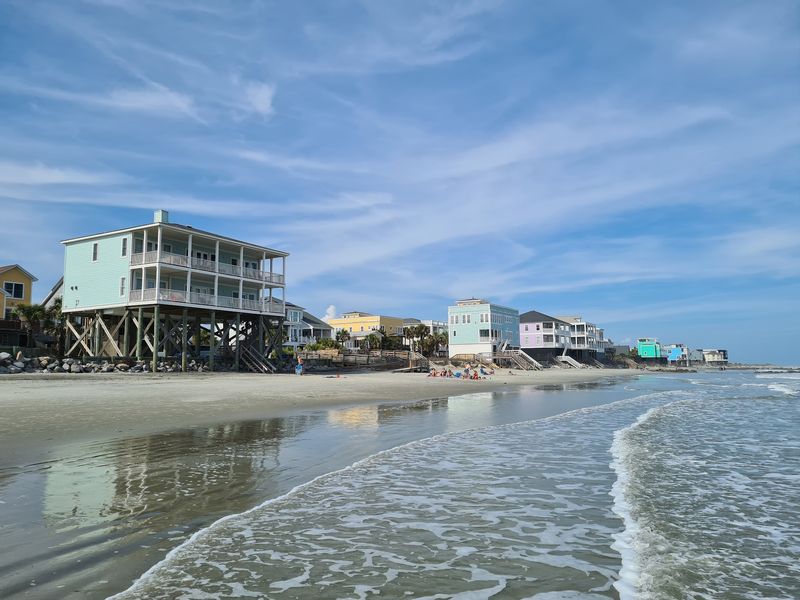
Long before the parking lots filled up and the wait times stretched past an hour, Folly Beach was Charleston’s best-kept secret. Locals came here to shed the city routine and breathe something simpler.
The island never tried to be glamorous. It was proudly rough around the edges, and that was exactly the point.
The name “Folly” likely traces back to dense coastal foliage, though some historians suggest it referenced the perceived recklessness of building on such an exposed island. Either way, the name stuck, and so did the attitude.
After World War II, surfers and artists discovered the place and never really left.
The sandy terrain made large-scale development difficult, which accidentally preserved the island’s wild character. Small beach houses, casual seafood spots, and surf shacks shaped the landscape.
Folly Beach, South Carolina built its identity on authenticity, not polish. That foundation still holds, even as the crowds keep multiplying every single summer season.
When The Crowds Arrived And Stayed
Peak summer at Folly Beach now looks nothing like the quiet escape locals once knew. Traffic backs up for miles on weekends.
Parking becomes a competitive sport. The narrow streets that once felt leisurely now feel like a slow-moving puzzle with no easy solution.
Residents have started using words like “trapped” to describe the summer experience. The charm is still there, but it gets harder to find beneath the noise.
South Carolina’s growing popularity as a travel destination has sent visitor numbers climbing year after year, and Folly Beach absorbs much of that wave.
In response, the city made a bold move. Officials approved a cap on short-term vacation rentals, limiting them to around 800 properties, down from over 1,100.
The ordinance sparked fierce community debate. Supporters say it protects neighborhood character.
Critics argue it limits economic opportunity. Whatever side locals take, everyone agrees that the summer crowd question is no longer something the island can afford to ignore.
South Carolina’s Surf Capital Earns Its Crown
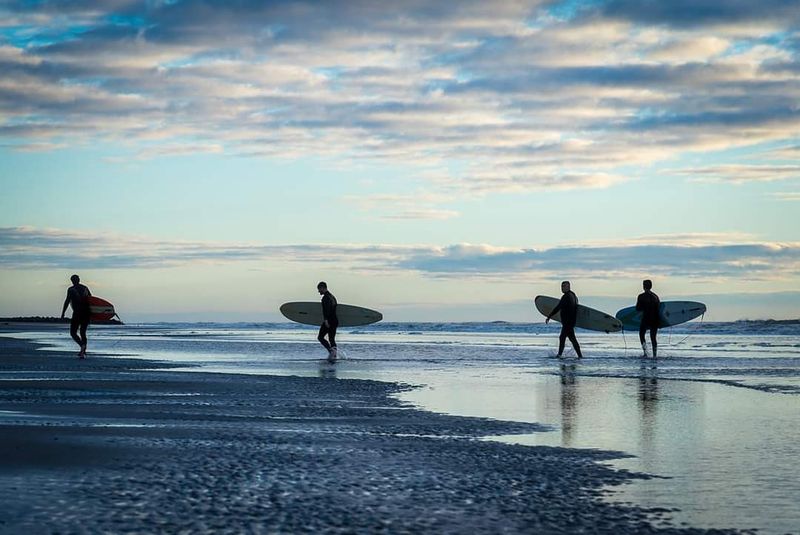
Folly Beach wears the title of South Carolina’s surf capital with zero apology. Riders of every skill level find their place here, from first-timers wobbling on foam boards to experienced surfers reading swells like a second language.
The ocean here has a personality, and the surf community matches it perfectly.
The most legendary break on the island is called The Washout, located along East Ashley Avenue. Hurricane Hugo tore through in 1989 and cleared out coastal structures, accidentally creating one of the most consistent surf spots on the East Coast.
Storms still make it better. After a big system rolls through, the lineup fills fast.
Local surf schools and rental shops keep the culture accessible and alive. The surfing community here is tight-knit and deeply passionate.
They track incoming swells with the same intensity that others track sports scores. For many, catching a wave at Folly is not just a hobby.
It is a daily ritual that defines life on this island.
The Pier That Pulls Everyone In
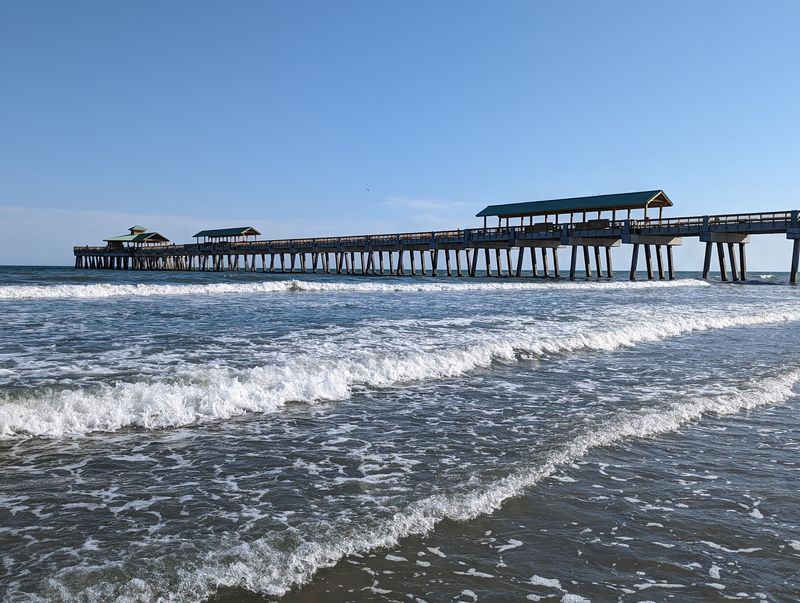
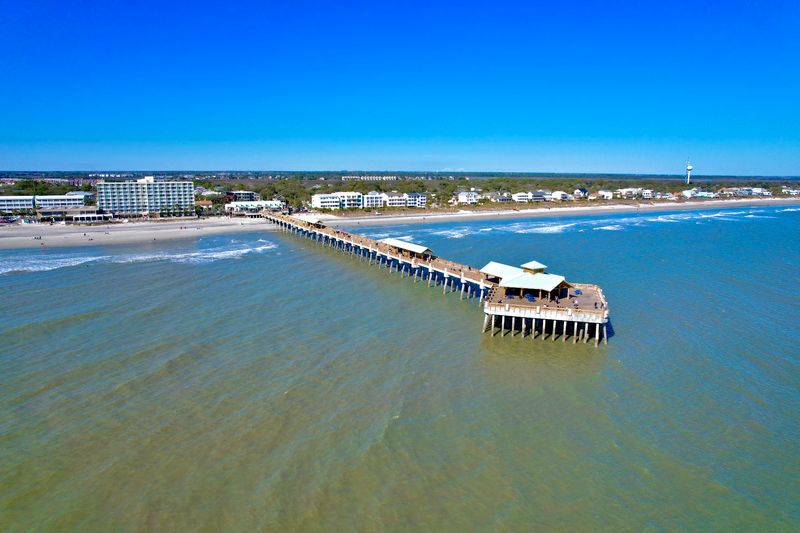
Few structures on the South Carolina coast command attention quite like the Folly Beach Pier. Stretching more than 1,000 feet into the Atlantic Ocean, it serves as the island’s unofficial gathering place.
Fishermen claim their spots at dawn. Families stroll its length at midday.
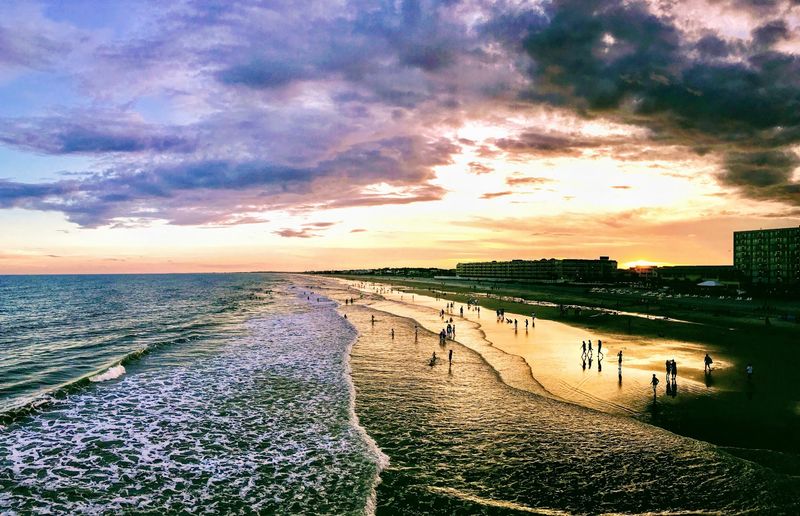
Couples linger at the railing as the sun drops below the horizon.
The views from the pier are genuinely hard to beat. Dolphins appear in the water below with surprising regularity.
Pelicans glide past at eye level. On clear mornings, the light on the water looks almost unreal.
Photographers and phone-camera enthusiasts alike set up here for sunrise shots that rarely disappoint.
Just offshore, the Morris Island Lighthouse adds another layer of visual drama. Built in 1876 and decommissioned in 1962, it stands as the tallest lighthouse in South Carolina.
Now surrounded by water, it is no longer accessible by foot, but it remains one of the most photographed landmarks on the entire coastline. The Lighthouse Inlet Heritage Preserve offers the best viewing angle.
Sand Today, Gone Tomorrow – The Erosion Battle
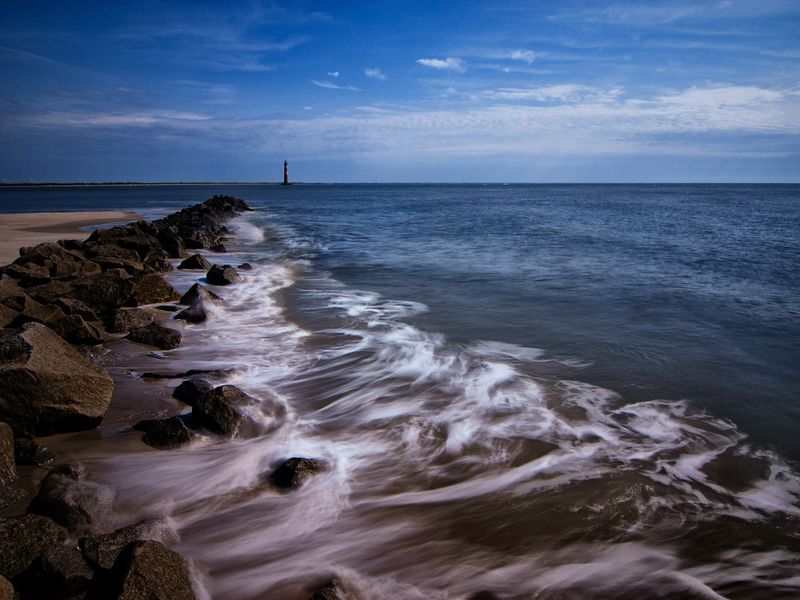
Folly Beach is fighting a slow battle with the ocean, and the ocean does not play fair. Chronic erosion has been reshaping this barrier island for decades.
The Charleston Harbor jetties, built in the late 1800s, disrupted the natural movement of sand along the coast. The beach has been paying for that engineering decision ever since.
Beach renourishment projects have become a regular part of island life. Massive amounts of sand get pumped onto the shoreline to replace what the tides take away.
These projects protect beachfront properties, preserve dune systems, and keep the beach wide enough to attract the visitors the local economy depends on. Without them, the shoreline would shrink considerably.
The dunes themselves are not just scenery. They act as natural storm barriers and provide critical nesting habitat for coastal wildlife.
Signs throughout South Carolina’s Folly Beach remind visitors to stay on marked paths and use designated walkovers. Climbing the dunes accelerates their breakdown.
Protecting them is not optional. It is essential to the island’s long-term survival.
Rules That Actually Matter Here
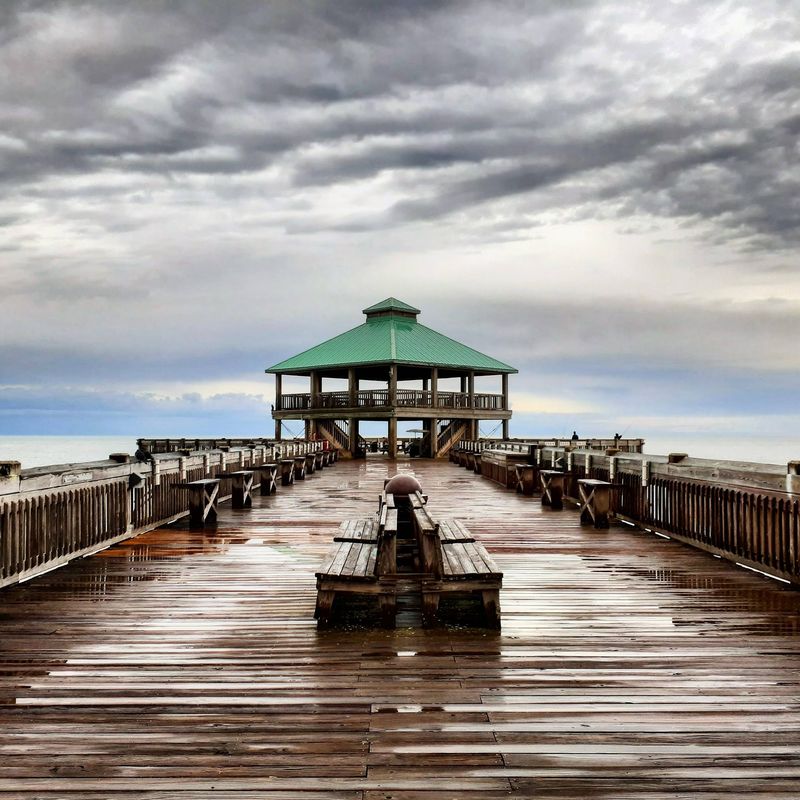
Folly Beach takes its environmental rules seriously, and that is not an accident. The island has learned hard lessons about what happens when natural systems get ignored.
The result is a clear and enforced set of beach regulations designed to protect what makes this place worth visiting in the first place.
Glass containers are banned on the beach. Plastic and styrofoam face the same restriction.
Balloons and smoking are also prohibited. Dogs are not allowed on the main beach during peak daylight hours in summer, though leashed pets are welcome in the early morning and evening.
These rules exist because the dune systems and nesting wildlife cannot absorb the impact of careless visitors.
Loggerhead sea turtles nest along this stretch of South Carolina coastline, and their protection is taken seriously. Volunteers monitor nests throughout the season.
Lights near the beach are managed carefully to avoid disorienting hatchlings. The conservation culture here runs deep.
Locals treat these rules not as restrictions but as basic respect for a place they genuinely love.
Center Street – The Heartbeat Of The Island
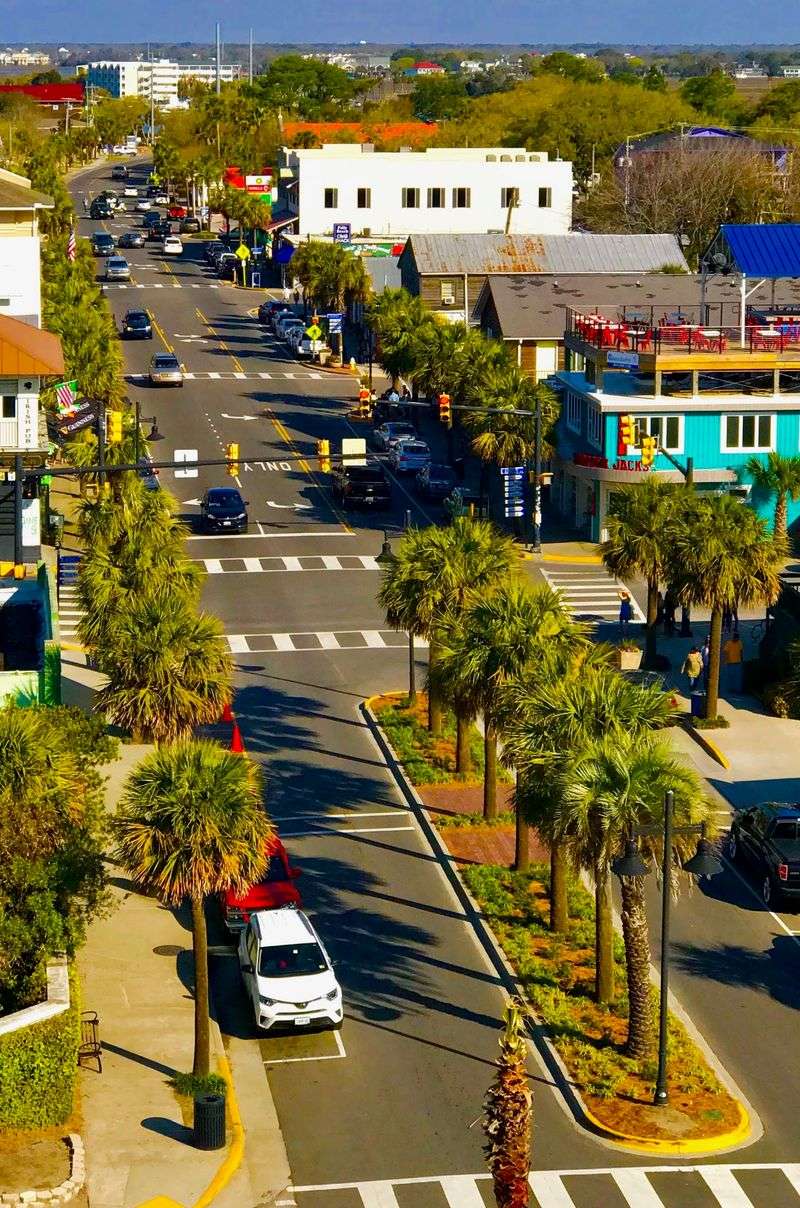
Center Street is where the island’s personality comes through most clearly. This main drag is lined with locally owned surf shops, casual restaurants, quirky boutiques, and a general sense that nobody here is in a rush to be anywhere else.
The vibe is relaxed, colorful, and unapologetically independent.
Folly Beach passed an ordinance banning formula businesses, which means no chain stores are allowed to set up shop here. The decision was deliberate.
Local business owners are considered the soul of the island, and protecting them protects the character that draws visitors in the first place. Bert’s Market, a beloved corner store open around the clock, has become something of a community institution.
Open-air spots with live music, fresh food, and ocean breezes capture the essence of what Center Street does best. The street changes slightly with each passing year as new businesses open and old ones evolve.
But the core identity holds. South Carolina beach towns do not get much more authentic than what Center Street delivers on any given afternoon.
The Folly Boat – A Town’s Unofficial Mascot
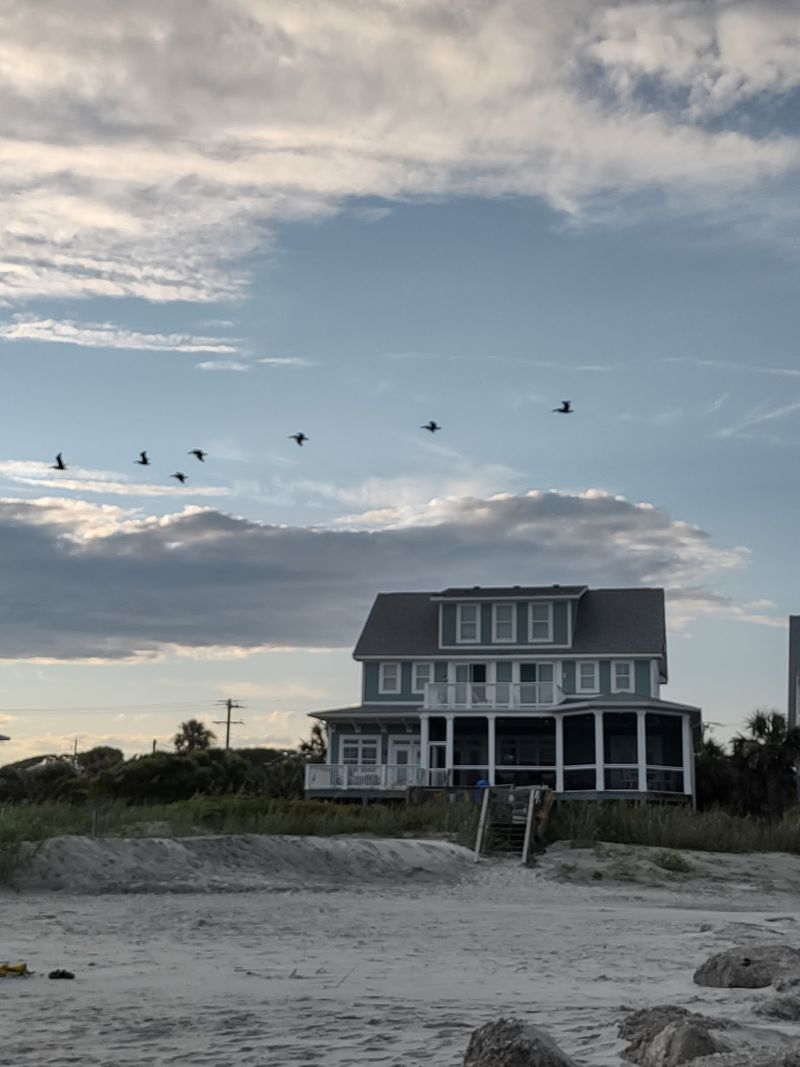
Near the entrance to the island sits one of the most unexpected landmarks on the South Carolina coast. A weathered boat rests permanently on the shore, its hull covered in paint, messages, and declarations from strangers and regulars alike.
This is the Folly Boat, and it has its own kind of magic.
Hurricane Hugo pushed the vessel ashore in 1989. Its owner never came back for it.
Over time, the community adopted it. People started painting messages on the hull.
Birthday wishes, marriage proposals, memorials, and jokes all share space on its sides. The boat gets repainted constantly, making it a living, evolving piece of community art.
Stopping to read the Folly Boat is a ritual for many visitors. It tells the story of the island in layers of color and handwriting.
The boat is also a favorite photography spot, particularly for those who want a picture that actually captures the town’s spirit. It is weathered, unplanned, and deeply loved, which makes it a perfect symbol for Folly Beach itself.
Wild Spaces Beyond The Beachfront
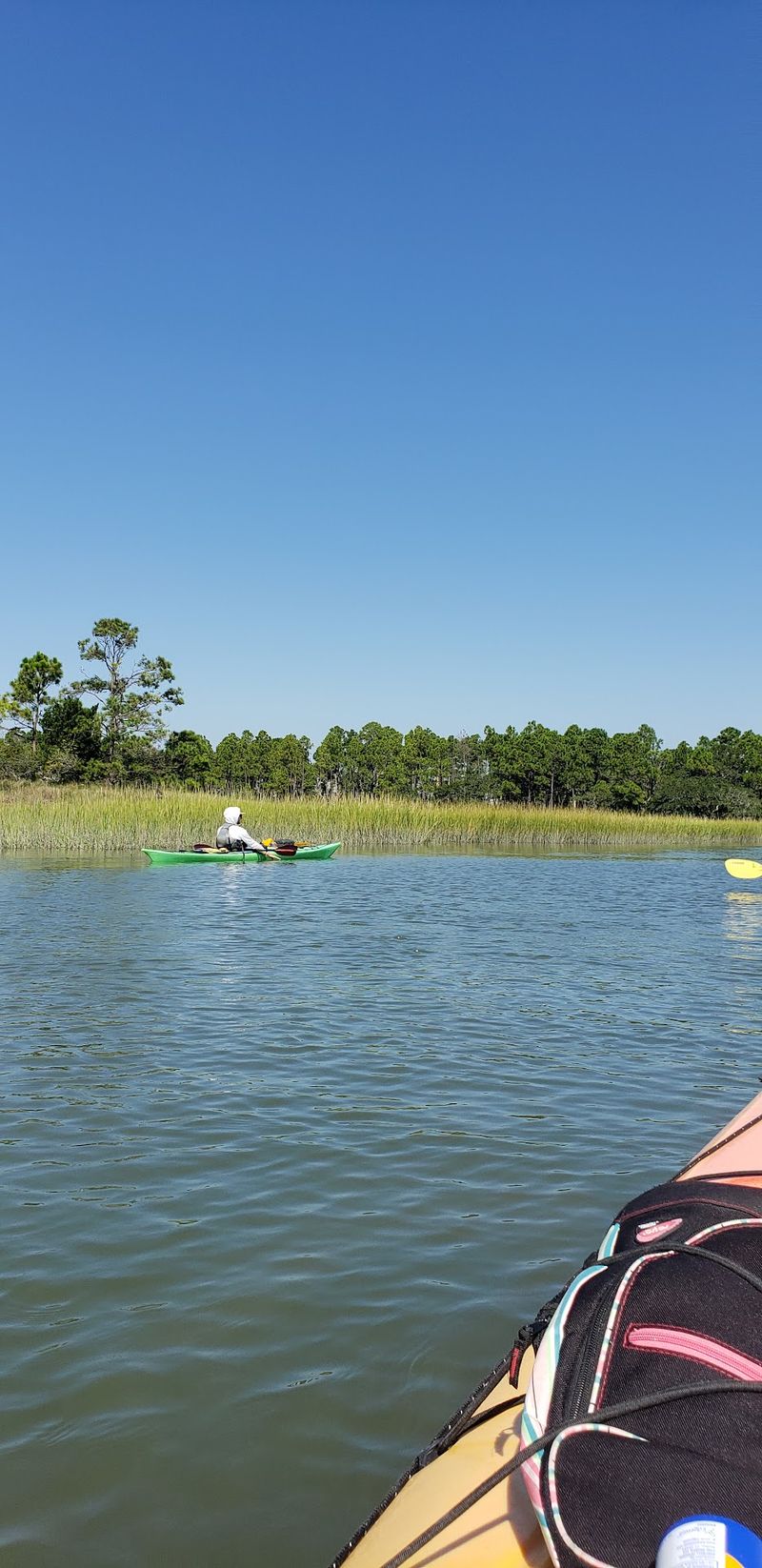
The beach gets all the attention, but the wild edges of Folly Beach reward those willing to look beyond the shoreline. Tidal creeks wind through the salt marshes surrounding the island, offering a completely different experience from the crowded main beach.
Kayaking through these waterways feels like stepping into a quieter, older version of the coast.
Paddlers move through narrow channels lined with marsh grass, spotting herons, egrets, and the occasional dolphin cutting through the shallows. Dolphin watching tours also operate in the area, giving visitors a chance to see pods of bottlenose dolphins up close in their natural habitat.
The Lowcountry landscape here is striking in its stillness.
The Lighthouse Inlet Heritage Preserve covers roughly 80 acres of maritime forest and salt marsh at the island’s northeastern tip. Birdwatchers find it particularly rewarding.
The preserve also offers the best land-based views of the Morris Island Lighthouse. For anyone feeling overwhelmed by the summer crowds, this untamed corner of South Carolina provides a genuinely restorative escape.
What Comes Next For The Edge Of America
The question hanging over Folly Beach is not whether it will change. It already has.
The real question is how much of its original spirit survives the next decade of growth. Locals are asking it openly.
City officials are debating it in meetings. The rental cap, the chain store ban, the dune protection rules, they all point to a community actively choosing its own future.
South Carolina’s coast is under pressure from all directions. Rising seas, increasing storm intensity, and relentless tourism demand are forces that no ordinance fully controls.
Folly Beach knows this. The response has been a mix of practical policy and stubborn community pride.
Neither alone is enough, but together they create something worth watching.
The island remains imperfect, loud in summer, quieter in winter, and always a little rough around the edges. That roughness is not a flaw.
It is the feature. Folly Beach, South Carolina keeps evolving, but the free-spirited core that gave this place its name has not washed away yet, and the locals intend to keep it that way.