
This Colorado Aquarium Transforms Into A Magical Adults-Only Underwater Experience At Night
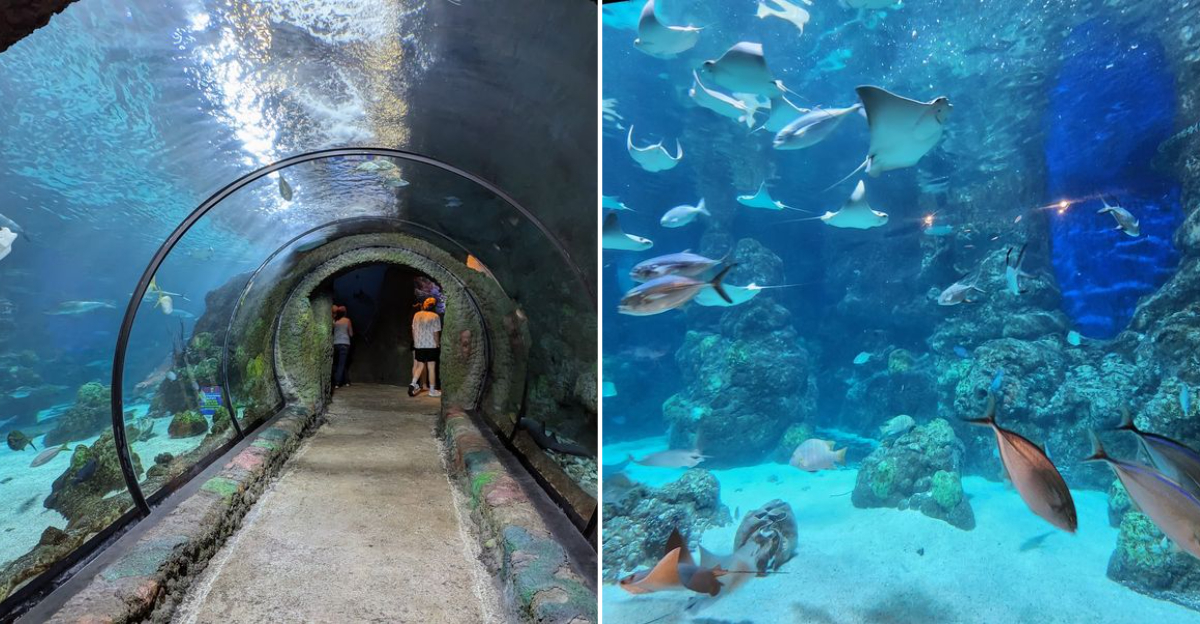
Aquariums usually belong to school field trips and family outings. This Colorado spot flips that expectation entirely once night falls.
Adults-only hours transform the space into something calmer, without the noise young crowds normally bring during the day. Lighting shifts throughout the building, casting tanks in colors that highlight marine life differently than daytime visits allow.
Exhibits stay open, just without the rush of families moving quickly between displays. Regulars treat the evening version as a completely different experience from a typical daytime visit.
Music plays softly throughout certain sections, adding atmosphere without overwhelming the underwater views. This aquarium proved that adults deserve their own version of wonder long after the kids go home.
Atmospheric Lighting Effects Enhancing Marine Life
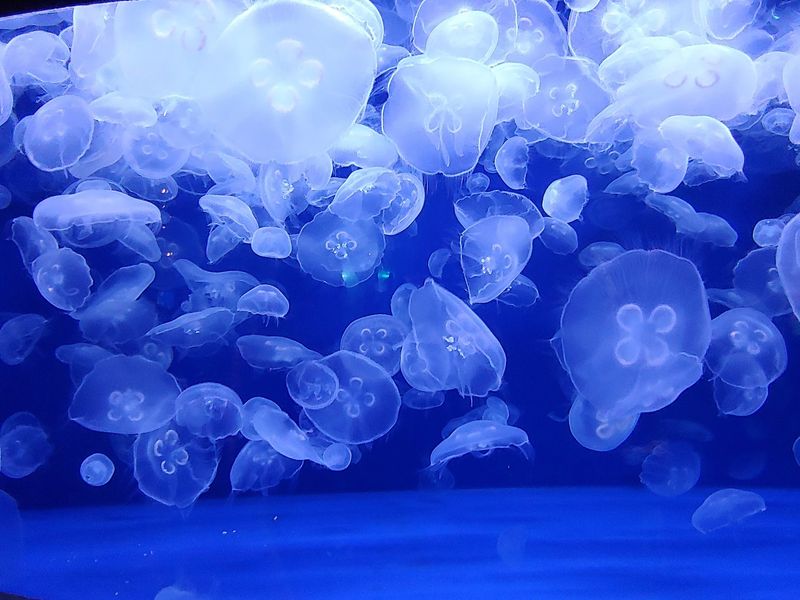
The moment the lights shift at night, the entire aquarium feels like a different world. Deep blues and soft purples wash over every tank.
The fish seem to glow from within, and the whole space gets quietly electric.
The lighting here is not just decoration. It is designed to highlight natural colors in marine life that regular daylight tends to wash out.
Jellyfish pulse with neon brightness. Reef fish pop against dark backgrounds in ways that feel almost unreal.
The effect is calming and exciting at the same time. You slow down.
You start noticing details you would normally walk past. The lighting pulls focus exactly where the aquarium wants it.
Adults especially appreciate this atmosphere because it removes the chaotic daytime energy. The space feels more intentional and curated.
It is the kind of environment that makes you forget you are standing in the middle of Denver, Colorado.
The aquarium uses layered lighting at different tank depths too. Shallow zones get warmer tones.
Deeper exhibits shift into cooler, darker hues. That contrast makes the whole journey through the space feel like a slow descent into the ocean itself.
You can find this experience at 700 Water St, Denver, CO 80211.
Specialized Exhibits Showcasing Nocturnal Fish Species
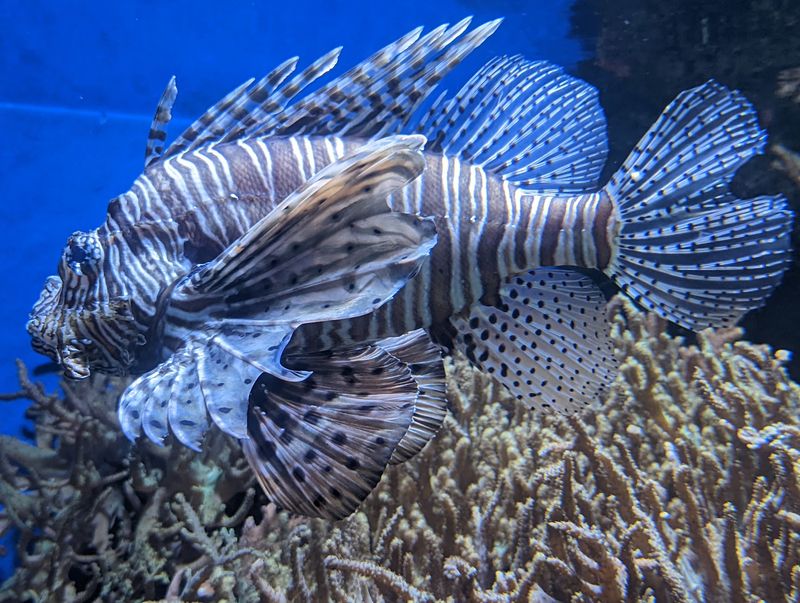
Not every fish punches the clock at sunrise. Some of the most fascinating creatures in the ocean only get moving after dark.
The Downtown Aquarium leans into this fact with exhibits built around species that thrive in low-light conditions.
Moray eels become noticeably more active during evening hours. They weave through rock formations with a purpose that daytime visitors rarely get to see.
Watching them move is genuinely mesmerizing.
The aquarium houses over 500 species total. A good number of those are naturally nocturnal or crepuscular, meaning they are most active at dawn and dusk.
Evening visits give you a front-row seat to behaviors that happen on their natural schedule.
Flashlight fish are a personal highlight. They carry bioluminescent bacteria beneath their eyes.
In a dark exhibit, those little flickers of light look like tiny signals from a deep-sea world humans rarely access.
The staff designs the evening exhibit rotation to match natural light cycles as closely as possible. That means the animals you see at night are often behaving the way they would in the wild.
It adds a layer of authenticity that makes the whole experience feel more like real ocean exploration than a simple walk-through attraction.
Interactive Displays Designed For Adult Visitors
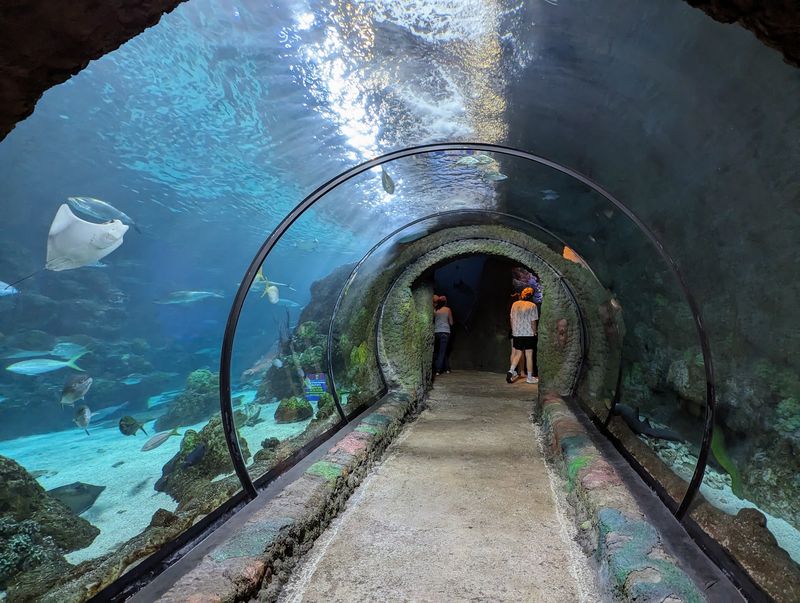
Stingray Reef is one of those exhibits that adults secretly love just as much as kids do. You reach into shallow water and suddenly a stingray glides across your palm.
It is smooth, surprisingly warm, and completely surreal.
The interactivity at Downtown Aquarium goes beyond just touching things. Adults can book snorkel experiences inside large tanks.
Shark encounters are available for those who want something with a little more adrenaline attached.
Evening events are specifically designed with adult curiosity in mind. The programming skips the simplified explanations and goes deeper into marine biology, animal behavior, and conservation challenges.
It respects your intelligence and rewards your attention.
The stingray feeding sessions are a crowd favorite at any hour. Staff members walk you through the feeding process and explain the biology behind stingray anatomy.
You leave knowing things you definitely did not know before you arrived.
There is also a lounge area where adults can decompress between exhibits. It overlooks one of the larger tanks and creates a genuinely relaxing pause in the middle of the experience.
You get to watch fish drift by while you collect your thoughts. That combination of activity and stillness is something most attractions completely miss.
It makes the whole visit feel balanced rather than exhausting.
Underwater Soundscapes Creating Immersive Experiences
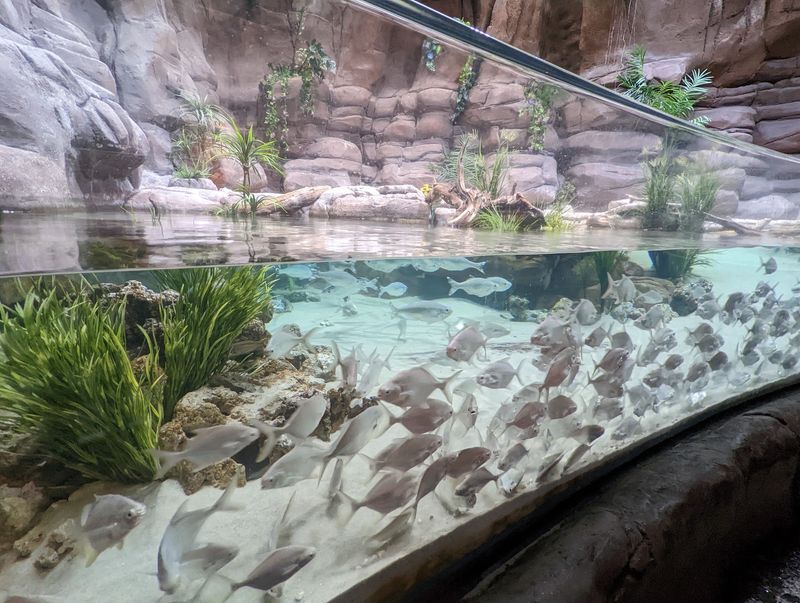
Sound does something to your brain that visuals alone cannot. The Downtown Aquarium understands this completely.
The ambient audio throughout the exhibits layers ocean sounds in ways that quietly shift your entire mental state.
Water moving through rocks, distant whale calls, the soft click of crustaceans. These sounds run beneath everything.
You might not consciously notice them at first. But after a few minutes, your shoulders drop, and your breathing slows.
Evening visits amplify this effect significantly. Without the daytime crowd noise competing, the soundscapes become the dominant sensory experience.
You hear the aquarium the way it was actually designed to be heard.
Certain exhibits have their own distinct audio environments. The deep-sea zone uses low-frequency tones that feel almost physical.
The reef section plays warmer, lighter sounds that match the visual brightness of tropical fish.
This level of audio design is not common in most aquariums. It moves the experience from passive observation into something closer to active immersion.
Your brain starts filling in the gaps between what you see and what you hear. The result is a surprisingly emotional response to fish swimming in circles, which sounds funny until it actually happens to you.
The soundscape is one of those invisible details that separates a good aquarium from a genuinely unforgettable one.
Educational Talks Focused On Deep Sea Creatures
Marine biologists at the Downtown Aquarium do not just stand near tanks and answer questions. They lead structured talks that cover real science in accessible ways.
The topics range from deep-sea pressure physics to the evolutionary quirks of anglerfish.
Evening programming tends to attract a more curious crowd. The questions get better.
The conversations go longer. Staff members visibly enjoy the engagement because they get to share information at a level that daytime tours rarely reach.
Deep-sea creatures are genuinely strange. Giant isopods look like oversized roly-poly bugs from a nightmare.
Gulper eels have jaws that unhinge to swallow prey larger than their own bodies. The talks make these animals feel less like curiosities and more like proof that evolution is wildly creative.
Conservation topics come up naturally during these sessions. Staff connect the biology of deep-sea species to broader ocean health conversations.
You walk away with context that makes the exhibits feel more meaningful.
The format is conversational rather than lecture-style. Questions are encouraged throughout rather than saved for the end.
That keeps the energy moving and prevents the glazed-eye effect that hits during traditional educational programming.
If you have ever wanted to actually learn something at an aquarium instead of just looking at fish, these talks are exactly what you have been waiting for.
Unique Visual Displays Highlighting Coral Reefs
Coral reefs cover less than one percent of the ocean floor. They support roughly twenty-five percent of all marine species.
That contrast is exactly what makes the reef exhibits at Downtown Aquarium feel so important.
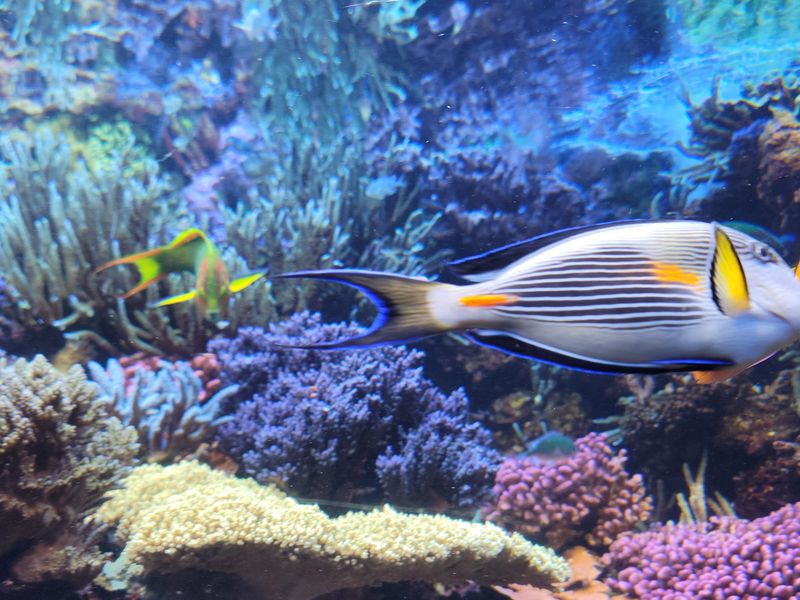
The 5,000-gallon reef tank is a showstopper. Dense stands of staghorn coral frame tropical fish in colors that look digitally enhanced but are completely real.
Clownfish dart between anemones. Parrotfish cruise the perimeter with an almost casual confidence.
The visual design of the Coral Lagoon exhibit uses layered depth to create a sense of looking into an actual reef rather than a flat tank wall. Foreground corals give way to midground structures and then to open water behind.
Your eye travels naturally through the whole scene.
Evening lighting on reef exhibits is particularly effective. The warmer tones used during daytime shift to more naturalistic blue-spectrum light after hours.
Coral fluorescence becomes visible in ways that daylight completely masks. Some corals glow orange, green, or pink under UV light.
The reef displays also serve an educational function without being heavy-handed about it. Information panels are placed at natural pausing points.
You read them because you are already stopped and staring. It is a smart design choice that makes learning feel like a side effect of being amazed rather than a separate task you have to complete.
Exclusive Events Featuring Marine Biology Experts
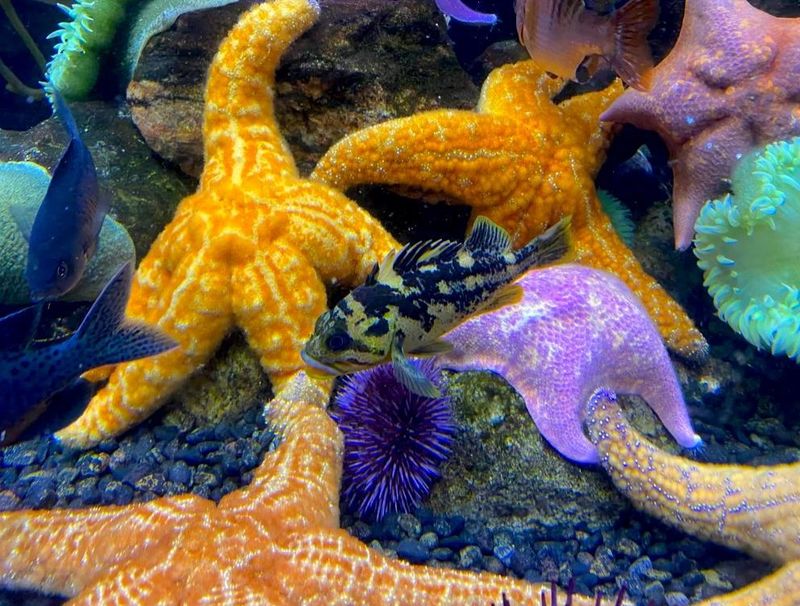
Getting a behind-the-scenes look at how an aquarium actually operates is rarer than most people realize. The Downtown Aquarium offers exclusive evening events that bring marine biology experts into direct conversation with adult visitors.
These are not basic tours.
Experts who lead these events have fieldwork backgrounds. They talk about research dives, tagging programs, and species recovery efforts with the kind of detail that only comes from direct experience.
You are not getting a rehearsed script.
Close encounters with exotic species are part of what makes these events worth booking in advance. Some sessions include supervised access to areas not open during regular hours.
The perspective shifts completely when you are standing somewhere most visitors never get to go.
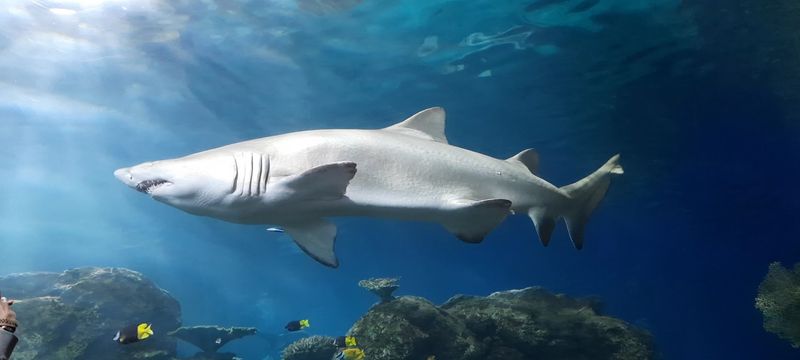
The shark tank backdrop during some presentations adds an obvious visual punch. Watching a three-hundred-pound sandbar shark cruise past while someone explains its hunting strategy is the kind of moment that sticks with you for years.
These events also connect guests with ongoing conservation work. Experts discuss how captive populations contribute to research that supports wild species.
It reframes the aquarium from entertainment venue to active participant in ocean science. That shift in framing changes how you look at every exhibit for the rest of the night.
The whole visit starts feeling like a contribution rather than just a fun evening out in Denver.
Creative Use Of Technology To Simulate Ocean Depths
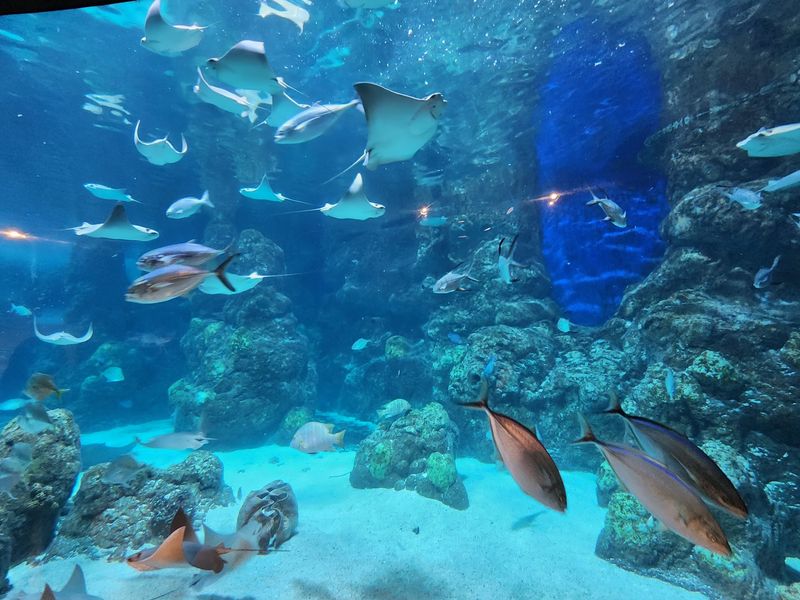
The 4D theater at Downtown Aquarium is included with general admission. That alone makes it worth mentioning.
Most attractions charge separately for this kind of experience and deliver far less than what this theater actually pulls off.
The simulation uses physical effects alongside the screen experience. Water mist, seat movement, and directional air bursts combine to make the ocean environment feel tactile.
You are not just watching depth being simulated. You are briefly inside it.
Two different show options give repeat visitors a reason to come back. Each version covers different aspects of ocean environments, from shallow coastal zones to genuine deep-water territory where sunlight does not reach.
The contrast between the two is striking.
Beyond the theater, the aquarium uses technology throughout its exhibits to tell the story of water’s journey from Colorado’s mountain snowpack all the way to the ocean.
That narrative thread connects something locally familiar to a globally important system. It makes the science personal.
Lighting rigs, projection mapping, and environmental controls all work together across the main exhibit halls. Nothing feels like a gimmick because everything serves the storytelling.
Technology here is a tool rather than the attraction itself. The result is an experience that feels more coherent than most aquariums three times its size.
Denver does not need to be near an ocean to offer a world-class underwater experience. This place proves that clearly.