
This Small Upstate New York Town Has So Many Black Bear Sightings Locals Know To Stay Alert
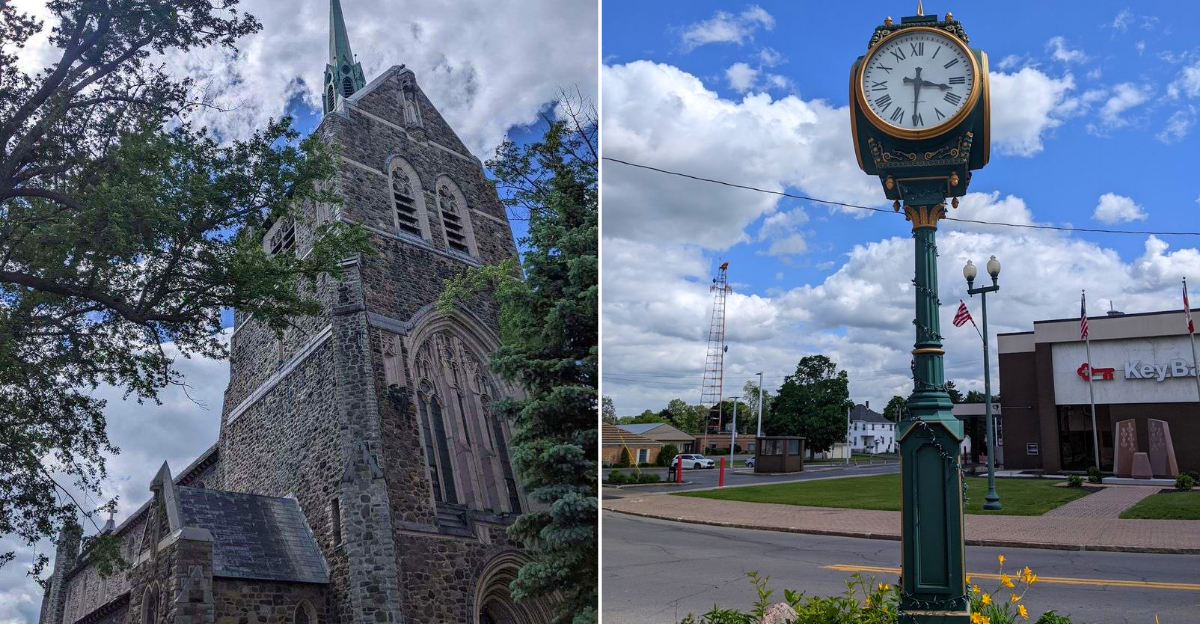
Some towns have a raccoon problem. One small river town in the northern corner of New York has something considerably larger wandering down its streets.
Black bears show up often enough here that residents built whole routines around it, locking up trash and hauling bird feeders inside before dark without giving it a second thought.
That level of casual preparedness tells you almost everything about how wild this corner of the state still is. The forest never really pulled back to make room for the town, so the two just learned to share.
Neighbors trade bear stories the way people elsewhere complain about parking. And honestly, a place still green enough to host that kind of neighbor has plenty else going for it too.
Below are seven reasons this riverside community earns a spot on your travel list, bears very much included.
A Corner Of The State Where The Wild Still Sets The Rules
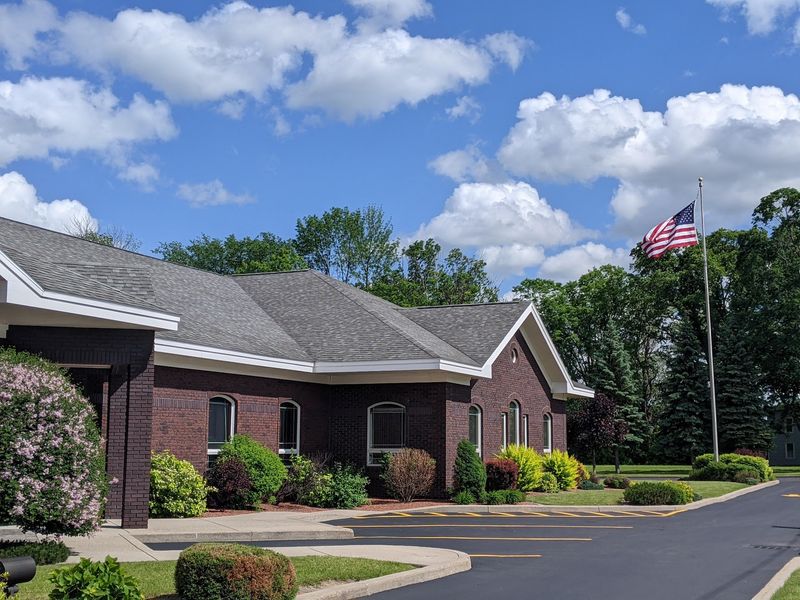
Three rivers meet in one small town, and the effect is instant. The land feels older here, quieter, more sure of itself.
Traffic thins out and the treeline thickens.
Roughly 12,400 people live in this stretch of St. Lawrence County, which means the forest still holds the majority vote. Deer step onto lawns.
Herons stalk the shallows. Bears amble across back roads like they pay taxes.
Residents have learned the local etiquette. Garbage cans get secured.
Grills get scrubbed. Pet bowls come inside before sundown.
None of it comes from fear, just plain good sense about sharing space.
What makes the atmosphere so appealing is the balance. You get sidewalks, a hospital, a mall, and hydroelectric engineering on a massive scale.
You also get five mile trail networks and river currents strong enough to move freighters.
Summers run warm and partly cloudy, generally late June through early September. Winters bring snow deep enough for cross country skis.
Both seasons show off the region differently.
Visitors who slow down notice the most. The rustle in the brush might be a squirrel.
It might not be. That small uncertainty keeps the whole trip interesting.
Meet Massena, The Town Held By Three Rivers
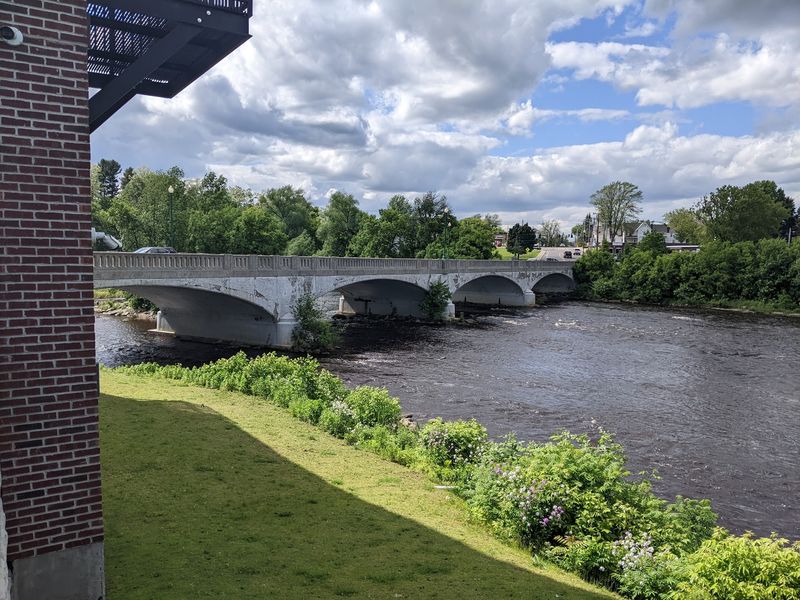
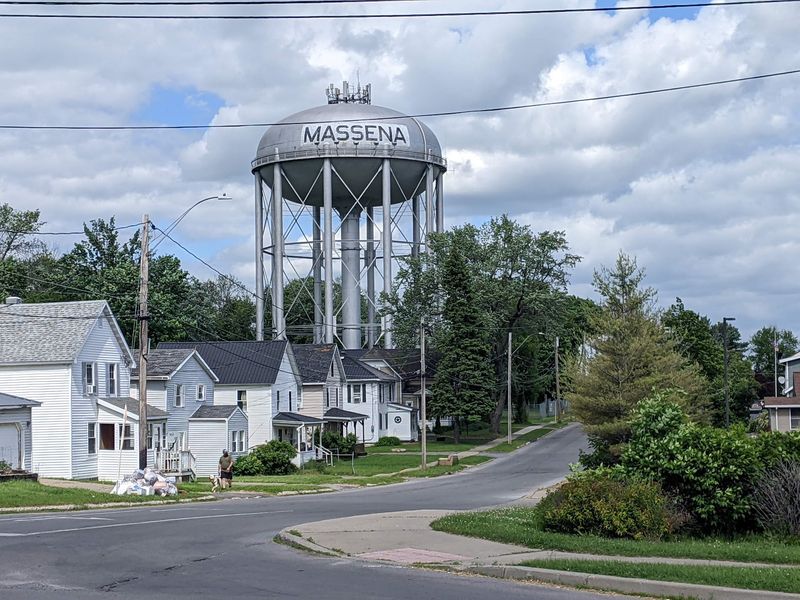
Say hello to Massena, New York, a St. Lawrence County town pressed right against the Canadian border. The St. Lawrence River runs along its northern edge while the Grasse and Raquette Rivers thread through the village itself.
Water shapes nearly everything about the place.
The best introduction comes from the Seaway Visitor Center at Eisenhower Lock, 76 Barnhart Island Road, Massena, NY 13662. Ocean freighters rise and lower through that concrete chamber, and watching one pass never gets old.
Founded in 1792, the town carries the name of Andre Massena, a general who served under Napoleon Bonaparte. Before that, Mohawk people called the settlement Nikentsiake, meaning where the fish live.
That name still fits.
The village earned attention in the 1800s for sulfur mineral springs along the Raquette River. Native Americans valued them for healing and called them Kanaswastakeras, or the place where the mud smells bad.
Honest naming, that.
Industry followed water. Alcoa operates here as the oldest continuously running aluminum plant in the Western Hemisphere.
Nearby, the St. Lawrence Franklin D. Roosevelt Power Project turns river force into electricity for the region.
Bears On The Block, And Why Nobody Panics
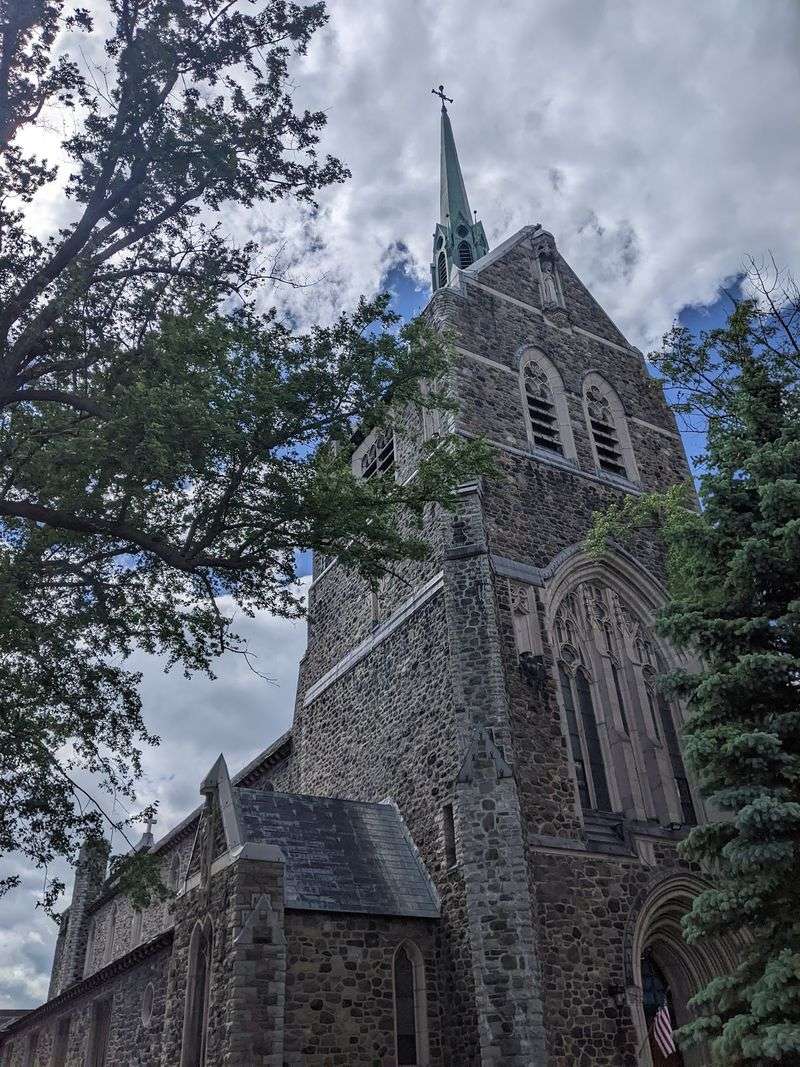
Sharing a neighborhood with black bears sounds dramatic. In practice it looks like locking a lid and calling it a night.
Village police have urged residents to take precautions during periods of increased activity, and folks simply comply.
Transient bears show up regularly across the St. Lawrence Valley. They are curious, smart, and constantly searching for calories.
Bird feeders, loose garbage, and pet food left outdoors are basically neon signs to a hungry bear.
Removing those attractions works better than any fence. Neighbors take feeders down in spring.
Grills get degreased after every use. Trash waits inside a garage until pickup morning.
The goal is keeping bears wary of people. A bear that never finds an easy meal near houses keeps moving toward berries and beechnuts where it belongs.
Everybody wins.
What surprises first time visitors is the tone of these conversations. There is no alarm in it.
Bears register the way icy sidewalks register, as a seasonal condition worth respecting.
Fun detail: bears have a sense of smell far sharper than a hound. Skipping that outdoor cleanup is a message they receive from a mile away.
Smart Moves If A Bear Says Hello
Composure matters more than courage. New York State Department of Environmental Conservation guidance, often called BearWise basics, keeps things simple and calm.
Never feed a bear and never approach one. Speak up in a firm voice so the animal knows exactly what you are.
Then back away slowly and steadily.
Running is the wrong instinct. Walking backward while facing the bear works far better.
Give it a clear escape route and it usually takes it.
Noise helps too. Yelling and clapping often send a bear packing.
Waving your arms above your head makes you look bigger, which is precisely the impression you want.
A bear standing on its hind legs is almost always gathering information. It wants a better look or a clearer scent.
Curiosity, not confrontation.
Attacks are extremely rare. Should one ever happen, fighting back hard is the recommended response, aiming for the snout or eyes.
Hikers here carry these habits automatically. Food stays sealed.
Groups stay chatty on blind corners. Trash goes home in a pack.
Follow the same playbook and your odds of a peaceful encounter climb sharply. Most sightings end with a bear trotting off, unbothered.
Nicandri Nature Center Turns Curiosity Into Understanding
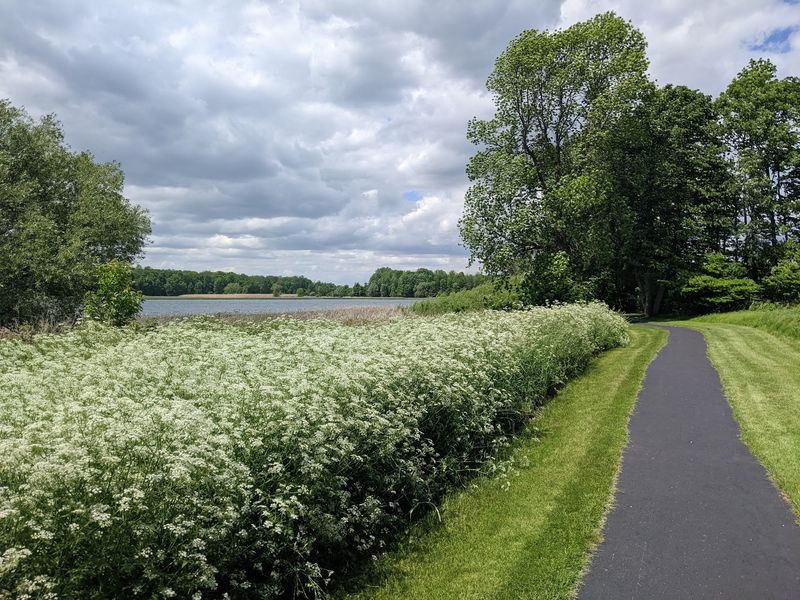
Learning about North Country wildlife indoors has real appeal, especially on a raw April afternoon. The Nicandri Nature Center sits inside Robert Moses State Park on Robinson Bay Road, and it punches well above its size.
Interactive exhibits explain the habitats surrounding the town. Live fish and turtle displays hold kids in place longer than any screen would.
Adults tend to linger just as long.
The building itself is bright and modern, with big windows that pull the forest inside. Staff know the local species intimately and enjoy talking about them.
Outside, roughly five miles of trails branch away from the center. Warm months bring hikers and walkers.
Snow months bring cross country skiers gliding through hushed woods.
Interpretive stops along the paths connect what you read indoors with what grows and moves outdoors. Tracks in mud suddenly make sense.
Bird calls get names.
Anyone nervous about bear country should start right here. Understanding how animals behave replaces worry with respect pretty quickly.
Bring layers and decent footwear. River wind cuts through thin jackets, and trail sections stay damp well into spring.
A thermos of something hot never hurts either.
Whalen Park And The Pull Of Open Water
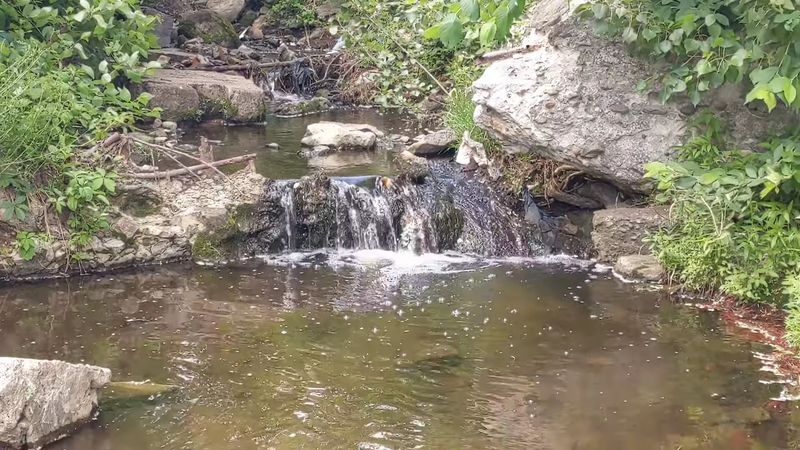
Some trails earn loyalty fast. Whalen Park offers a 3.2 mile round trip path running alongside the St. Lawrence River, and locals treat it like a second living room.
Hikers, runners, walkers, and cyclists all share the route. Tall trees shade long stretches while gaps open onto broad water views.
Freighters occasionally slide past like moving buildings.
Morning light on the river has a soft silver quality that photographs beautifully. Evening brings cooler air and the sound of frogs from the shallows.
Anglers consider these waters exceptional. The river supports strong sport fishing, and boat launches make access easy for anyone with a rod and patience.
Paddlers get plenty too. Kayaks and canoes suit the quieter bays, and swimming spots cool off July afternoons nicely.
Wildlife shows up constantly along the shoreline. Ospreys, turtles, and the occasional otter make appearances.
Bear signs turn up in wooded sections now and then, which is why walkers stay chatty and alert.
Pack water and sunscreen. Shade disappears in patches, and river breezes hide how strong the sun actually is.
Sunglasses help with the glare bouncing off the surface.
Small Shops, Big Neighborly Energy
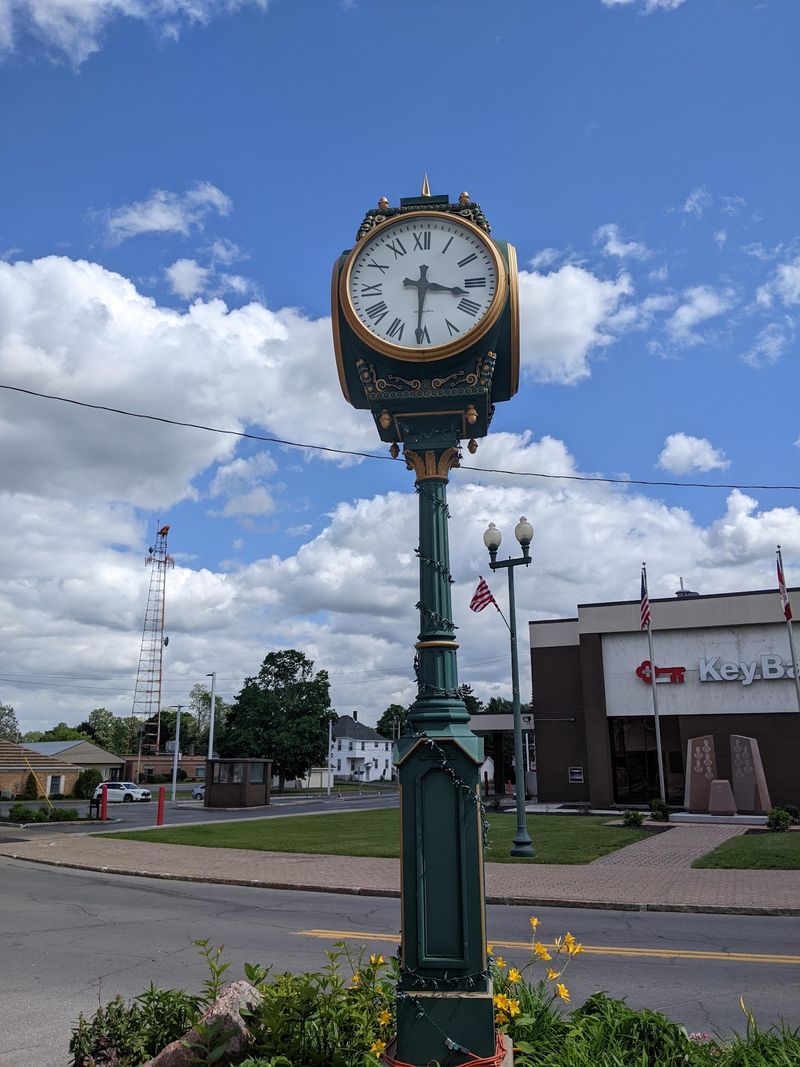
Community here has a distinct texture. Neighbors recognize each other by vehicle, not just by face.
That familiarity gives the whole town an at home feeling.
Downtown revitalization continues steadily, with waterfront development and growing arts programming shaping a cultural corridor. Progress arrives without erasing character, which is harder than it sounds.
Shoppers get variety. The St. Lawrence Centre Mall covers regional retail needs, while smaller storefronts handle the interesting stuff.
Look for 2 Mama Birds, The Mustard Tin, Peet’s Jewelry, and North Country Showcase. Handcrafted goods and artisan pieces fill their shelves, much of it made nearby.
Massena Marketplace and Journeyman Antiques and Gifts reward slow browsing. Old tools, vintage glass, and odd treasures turn up in corners you almost walked past.
Conversation comes free with every purchase. Ask about bear sightings and you will get directions, opinions, and probably a laugh.
New York holds plenty of pretty towns, but few blend heavy industry, working locks, deep forest, and genuine warmth quite like this one. Come for the rivers and the wildlife.
Stay because someone remembered your name on day two.