
The Colorado Steakhouse Where Ranchers Share Stories Over Hearty Steaks And Western Traditions
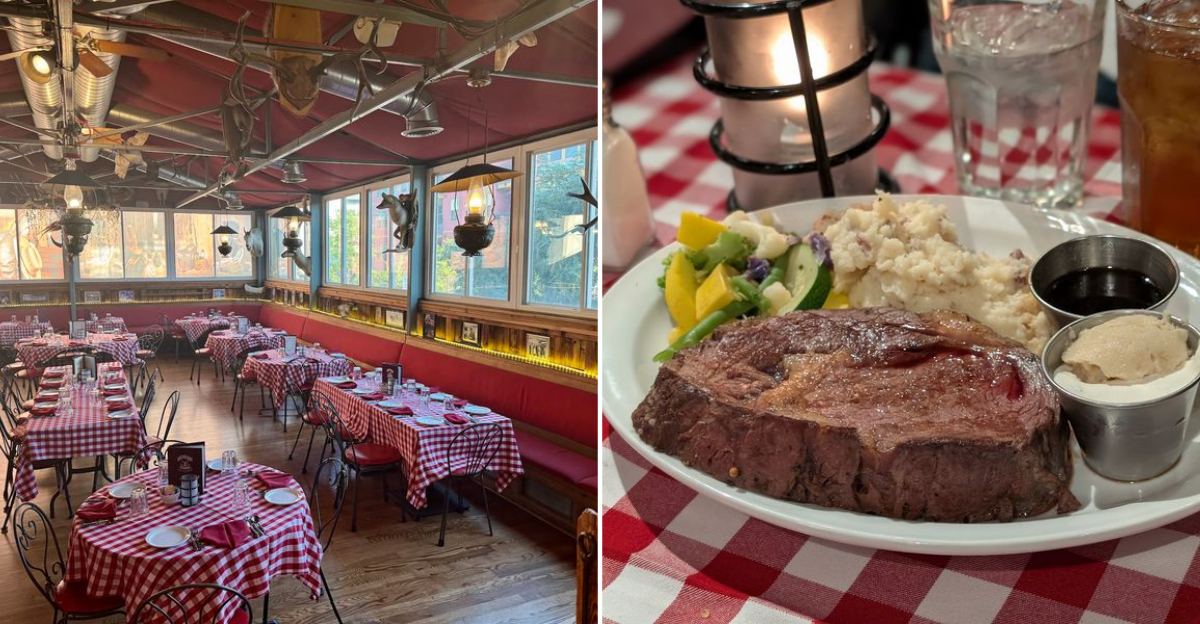
There’s a line from an old western that goes something like this, a man’s word is worth more than gold out here. This Colorado steakhouse still runs on that same code of honor.
Ranchers gather here after long days, sharing stories over steaks that taste like they’ve barely changed in decades. Recipes stay simple, letting quality beef speak for itself instead of relying on unnecessary tricks.
Nothing about the atmosphere feels staged for tourists passing through looking for authenticity. Regulars know each other well, treating dinner here as much a tradition as an actual meal.
Portions stay generous, matching the hard work behind every ranch story shared at the table. This steakhouse proved that some traditions taste even better shared with people who understand them.
History Of Colorado Steakhouse Culture
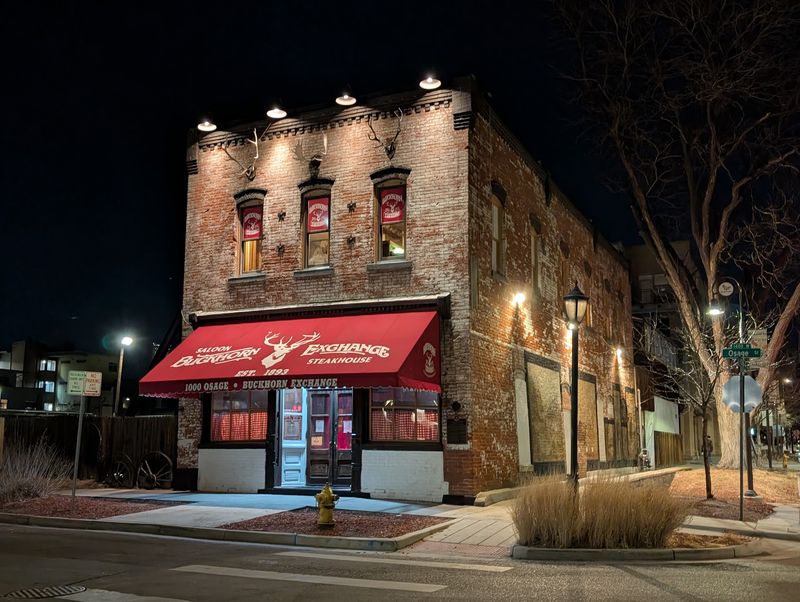
Denver’s oldest restaurant opened its doors in 1893, and the Buckhorn Exchange has never looked back. Founded by Henry H. “Shorty Scout” Zietz, a real-life scout for Buffalo Bill Cody, this place has roots that run deep into Colorado’s frontier past.
Railroaders, miners, cattlemen, and silver barons all made it their go-to gathering spot.
Five U.S. Presidents have dined here over the years.
That alone tells you something about the kind of reputation this place carries. It is not just a steakhouse.
It is a living piece of American history that happens to serve incredible food.
During Prohibition, Zietz converted the saloon into a grocery store to keep things running. Once Prohibition ended, the Buckhorn received Colorado’s very first liquor license.
That original license is still displayed behind the upstairs bar, and yes, you can walk up and see it for yourself.
The restaurant earned its status as a National Historic Landmark, which is a big deal. Not many restaurants in the country can claim that title.
Every corner of the building reflects the bold, rough-and-ready spirit of early Colorado. You can find the Buckhorn Exchange at 1000 Osage St, Denver, CO 80204.
It opens at 5 PM on weekdays and 4 PM on weekends, so plan accordingly.
Signature Steak Cuts And Preparation Methods
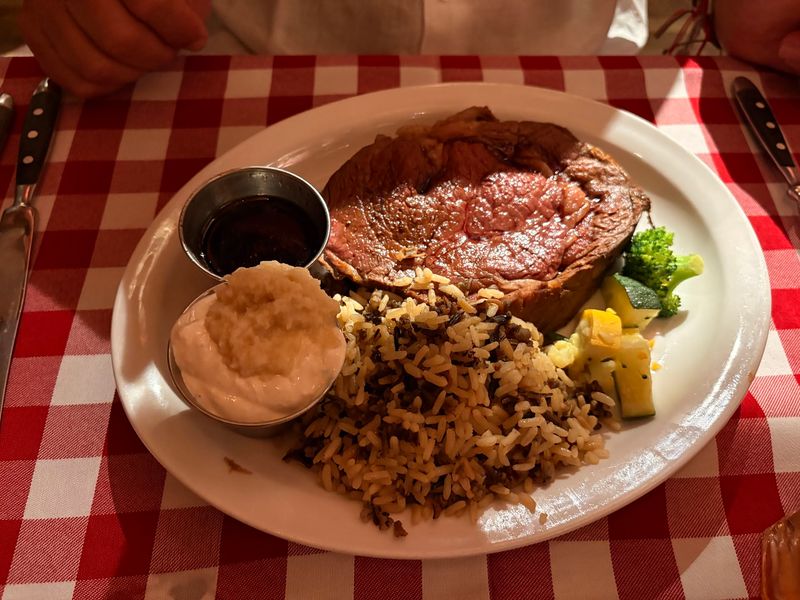
The Buckhorn Exchange does not mess around when it comes to beef. Every steak on the menu is USDA prime grade, which is the top tier of beef quality available in the United States.
Getting prime beef at a restaurant is actually rarer than most people think.
The menu features a 24-ounce Porterhouse T-Bone that could make a grown rancher weep with joy. Beef Tenderloin and New York Strip are also on the list.
For bigger groups, the “Big Steaks” are cut from New York strip loins and can feed anywhere from two to five people comfortably.
One of the coolest traditions here is tableside carving. Your steak gets carved right in front of you, which feels both dramatic and satisfying.
Steaks come with sautéed mushrooms and onions, adding a rich, earthy flavor to every bite.
Beyond beef, the menu goes full Colorado wild with buffalo, elk medallions, and Colorado lamb chops. Quail and Cornish game hen also make appearances.
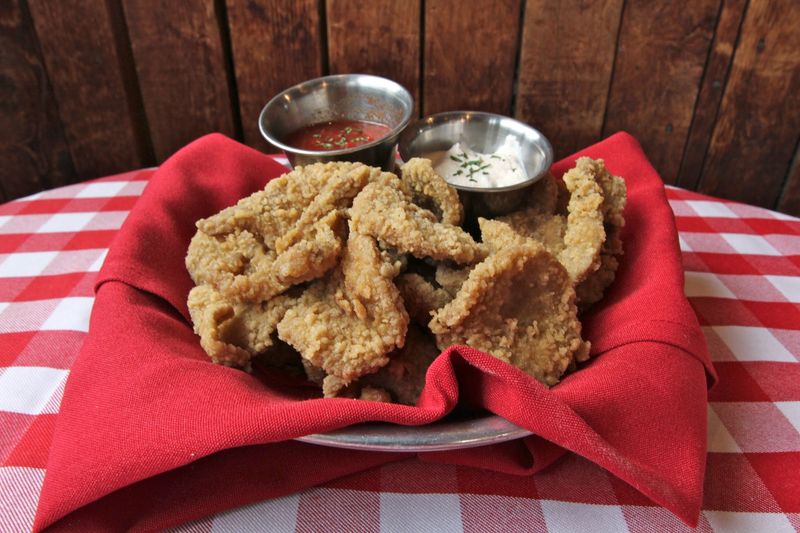
If you want to be adventurous, Rocky Mountain Oysters and fried alligator tail are on the appetizer list. Fresh salmon rounds out the options for anyone who wants something from the water.
The variety here is genuinely impressive for a place with such deep steak roots.
Traditional Western Recipes Passed Down Generations
Some recipes at the Buckhorn Exchange are older than most grandparents alive today. Gramma Fanny’s Pot Roast has been a house specialty since the restaurant first opened in 1893.
That is over 130 years of the same beloved recipe showing up on the menu.
President Theodore Roosevelt reportedly had a favorite dish here: ham and beans soup. That recipe is still available today, which is a fun connection to American presidential history.
Knowing a sitting president loved a bowl of soup at your table adds a layer of cool to any meal.
Rocky Mountain Oysters are a frontier classic, and the Buckhorn has been serving them for generations. Buffalo and elk dishes are equally rooted in traditional Western cooking.
These were not trendy menu additions.
They were staples of the Colorado frontier diet long before anyone called them “elevated cuisine.”
Smoked buffalo sausage with red chile polenta is another standout that blends old-school Western flavors with bold Southwestern influence. The recipe lineup here reads like a culinary time capsule.
Each dish carries a story about how early Colorado settlers ate, survived, and celebrated. Eating here is less like ordering off a menu and more like sitting down at a table that has fed generations of real Western families.
That continuity is genuinely rare in the modern restaurant world.
Role Of Storytelling In Rancher Communities
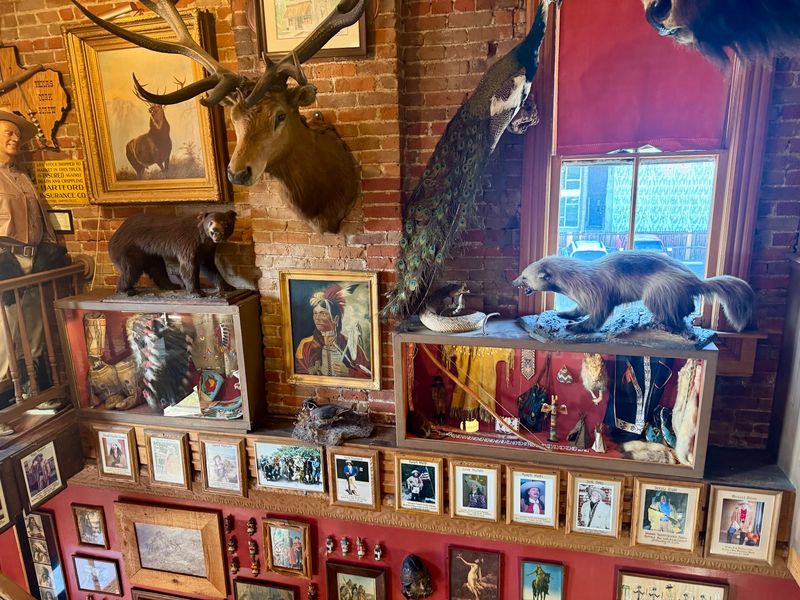
Walk into the Buckhorn Exchange, and the walls start talking immediately. Every piece of memorabilia, every mounted animal, and every framed photograph carries its own story about early Colorado.
The place chronicles the bold, unpredictable days of frontier life in a way no history book quite manages.
Rancher communities have always passed knowledge and identity through storytelling. The Buckhorn became a natural hub for that tradition.
Cattlemen, scouts, and miners would gather here not just to eat but to share what they had seen and survived out on the land. That oral culture is baked into the building itself.
Each display throughout the restaurant holds what regulars lovingly call a “tall tale.” Some of those stories are wild enough to make you question what was real. Others are quietly moving reminders of how hard early Colorado life actually was.
The decor is not just decoration. It is a carefully assembled archive of human experience.
The menus themselves are printed to look like old newspapers, complete with actual articles on the front and back. Guests are openly encouraged to get up, walk around, and read the history surrounding them.
Staff members are also known for sharing stories about the building and its famous past guests. The Buckhorn does not just serve food.
It keeps a living conversation going between the present and the past.
Dining Ambience Reflecting Ranch Lifestyle
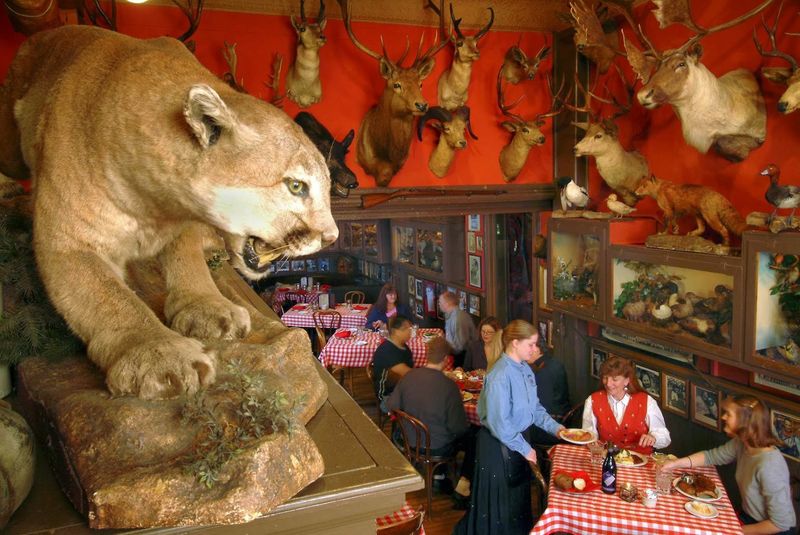
More than 500 pieces of taxidermy cover the walls of the Buckhorn Exchange. Deer, moose, buffalo, and bighorn sheep gaze down at diners from every direction.
For some people, that is a bit surprising at first, but most visitors end up completely fascinated by the collection within minutes.
A 125-piece antique gun collection also lines the walls, adding to the frontier atmosphere. American Indian artifacts and historic photographs fill in the remaining spaces.
The building maintains its original decorative metal ceiling and original hardwood floors, both of which have survived since the 1890s.
The ornate white-oak bar is one of the most impressive features in the entire building. It was crafted in Germany in 1857 and shipped to Colorado, which is a remarkable journey for a piece of furniture.
Running your hand along that bar means touching something that has existed for over 160 years.
Guests can sit at poker tables that are as old as the restaurant itself. Upstairs seating offers a second-floor view of the space, along with the bar area and even more taxidermy, including grizzly bears and black bears.
Country and Western music plays softly in the background, tying everything together. The entire environment feels like a ranch house that grew into a landmark over a century of continuous use.
Pairing Local Produce With Classic Steak Entrees
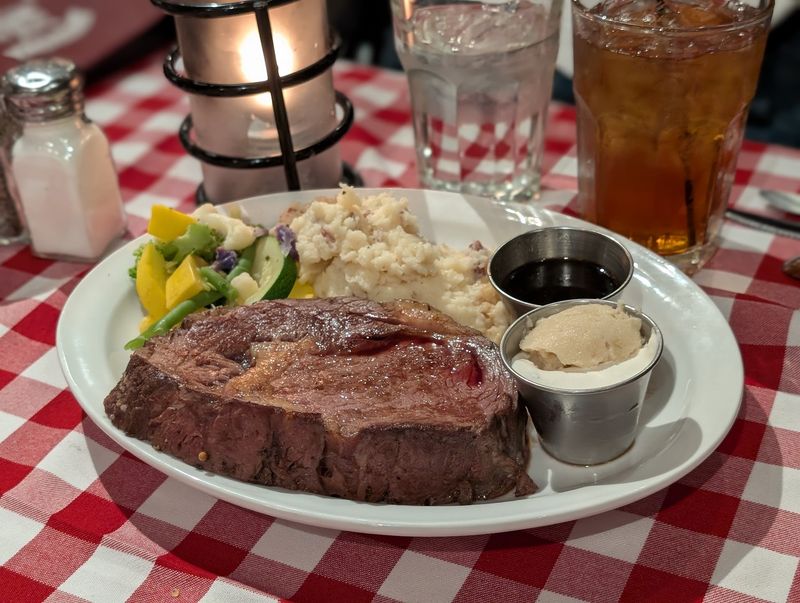
Every dinner entree at the Buckhorn Exchange comes with a choice of soup or salad, which is a solid start to any meal. The buffalo wild rice soup has become a crowd favorite.
Salads often include toppings like pecans, which add a nice crunch alongside the heartier main courses.
Side dish options include garlic mashed potatoes, baked potatoes, wild rice, natural potato chips, and baked beans. The garlic mashed potatoes in particular get mentioned constantly by people who have eaten here.
They are creamy, well-seasoned, and pair perfectly with a prime steak or a wild game cut.
Local lamb and farm-raised elk appear on the menu, reflecting a commitment to regionally sourced proteins.
Steaks are consistently paired with sautéed fresh mushrooms and onions, which complement the natural richness of the beef without overpowering it. The kitchen keeps the pairings straightforward and honest.
Some dishes get more creative with local flavor profiles. Cornish game hen comes with an orange chipotle sauce that adds a Southwestern kick.
Quail is served with a prickly pear and apricot glaze, which brings a uniquely Colorado sweetness to the plate.
These combinations show that the kitchen understands local ingredients and knows how to use them in ways that enhance rather than mask the quality of the main protein. Every plate feels intentional.
Seasonal Ingredients Influencing Menu Options
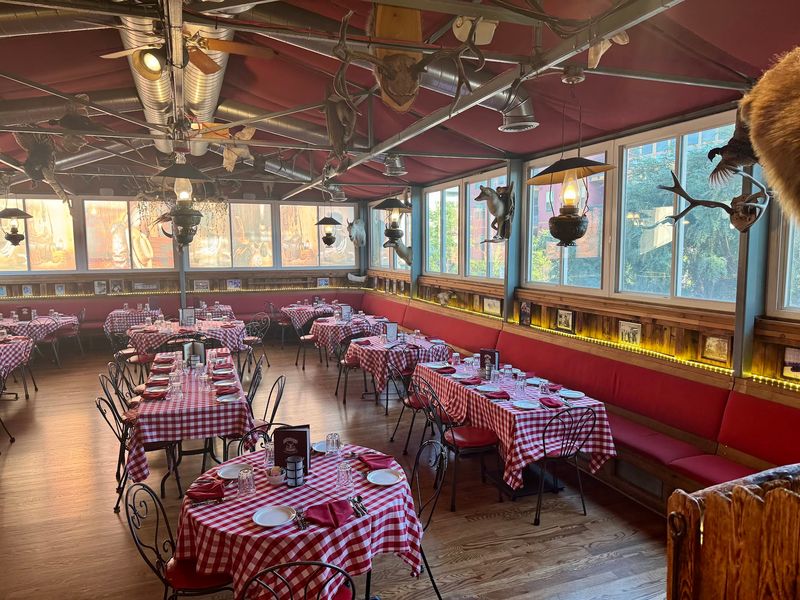
The Buckhorn Exchange keeps its menu fresh by rotating seasonal specials throughout the year. Sirloin game tips, for example, can feature a different sauce on any given day.
That kind of daily variation keeps the menu interesting for regulars who visit more than once a season.
Fresh salmon appears on the menu as a lighter option, and its presence signals that the kitchen pays attention to ingredient availability. Wild game proteins like elk and buffalo naturally follow seasonal patterns as well.
The menu reflects what is genuinely available and at its best during any given time of year.
The elk and buffalo combination platter has become a popular seasonal special that guests talk about long after their visit. It typically comes with garlic mashed potatoes and a choice of soup or salad.
Sauces rotate to match seasonal flavor profiles, with richer berry preparations in cooler months and brighter citrus notes in warmer seasons.
Seasonal eating at the Buckhorn is not a marketing gimmick. It connects back to how ranchers and frontier communities actually ate, working with what the land and the season provided.
The kitchen honors that tradition without making a big fuss about it. Freshly baked bread also arrives at the table, and guests have noted it tastes as if it came straight out of the oven.
Small seasonal details like that add up to a meal worth remembering.
Community Events Highlighting Western Heritage
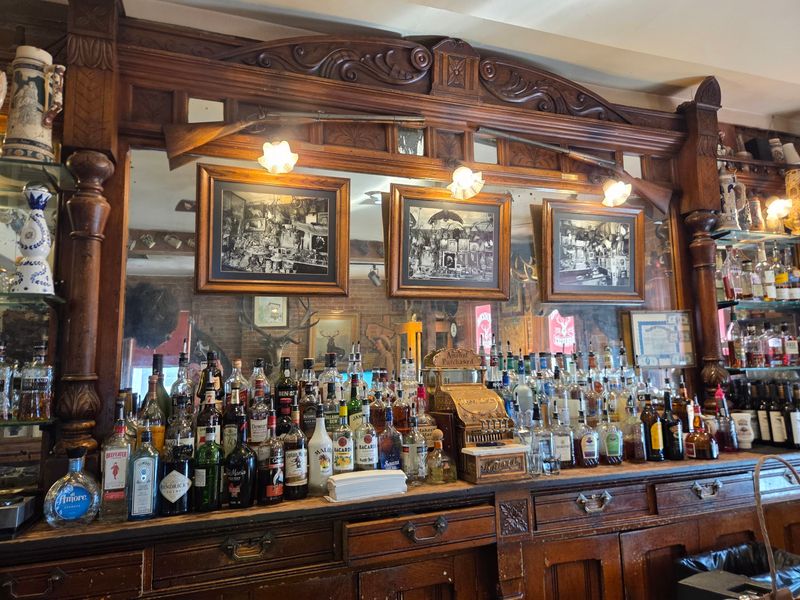
This place functions as both a restaurant and a Western museum, and that dual identity shapes everything about how the space is used.
Guests are actively encouraged to walk around, explore the building, and engage with the historical artifacts on display. It is not a passive dining experience.
The founder, Shorty Scout Zietz, was a genuine Old West figure with a documented history as a Buffalo Bill scout. His story is woven into the fabric of the building.
Artifacts connected to his life and the broader frontier era are displayed throughout the restaurant for anyone curious enough to look closely.
A 150-plus-year-old European bar serves as one of the centerpiece artifacts in the building. It draws attention not just for its beauty but for the conversation it starts about how far this piece traveled to end up in Denver.
History buffs and casual diners alike find themselves stopping to take it in.
The Buckhorn has served as a constant reminder of Denver’s frontier past for over 130 years. Its National Historic Landmark designation means the building and its contents are officially recognized as part of America’s cultural heritage.
Walking through the restaurant during any visit feels like attending a living exhibition of Colorado and Western history. No ticket required, just a reservation and an appetite for something real.
The Buckhorn keeps Western heritage alive every single night it opens its doors.